WRLD

Search

#InformationIntegrity
Mariya Gabriel 1d

The author wrote that access to information empowered people and strengthened information integrity. They urged member states to work with UNESCO and support the #IDUAI2026 statement from Sierra Leone, which called for access-to-information laws to strengthen information integrity. https://t.co/2lxWAtluSY https://t.co/ylZdKx1e4h #AccesstoInformation #InformationIntegrity #UNESCO #SL


2265
Krzysztof Graj 4d

𝗨𝗻𝗶𝘁𝗲𝗱 𝗦𝘁𝗮𝘁𝗲𝘀 — 𝗧𝗵𝗲 𝟭,𝟭𝟴𝟬-𝘀𝗶𝘁𝗲 𝗲𝗰𝗼𝘀𝘆𝘀𝘁𝗲𝗺 𝘁𝗵𝗮𝘁 𝗺𝗮𝗸𝗲𝘀 𝗽𝗼𝗹𝗶𝘁𝗶𝗰𝘀 𝗹𝗼𝗼𝗸 𝗹𝗶𝗸𝗲 𝗹𝗼𝗰𝗮𝗹 𝗻𝗲𝘄𝘀 A political influence infrastructure operating across the United States has grown to a scale that now rivals — and by some measures exceeds — entire categories of traditional American journalism. NewsGuard's election tracker, updated on 13 October, says it has identified 1,180 partisan websites masquerading as independent local news organisations, including 21 launched during 2026. The phenomenon is commonly called “pink slime journalism”: publications that adopt the visual language, names and editorial conventions of local newspapers while being financed or operated by political or ideological interests. A site may look like an ordinary community publication, carry stories about local issues and use familiar journalistic formatting, while its political purpose or financial backing is difficult to find or disclosed only in a footer, advertising record or corporate filing. This is not one centrally directed disinformation operation. The 1,180-site figure encompasses competing organisations on different sides of American politics, using related techniques for different political objectives. The ecosystem includes long-established networks such as Metric Media, which has been extensively investigated by Columbia University's Tow Center, as well as newer election-focused projects associated with Republican and Democratic political organisations. One of the clearest 2026 examples is One Nation, a conservative advocacy organisation closely associated with the Senate Leadership Fund, the major outside group working to elect Republican senators. Investigations identified locally branded sites including Alaska Navigator, Maine Policy Updates, Ohio Pulse, Iowa Voice, Peach State Post and New Hampshire Daily. They presented themselves with descriptions such as “independent news” or a state's “premier news source”, while publishing material that consistently promoted Republican candidates or attacked Democratic opponents. In at least one case, the infrastructure went beyond partisan framing. Popular Information found that Alaska Navigator contained an article dated before the website's domain had been registered; the page's source code indicated that a WordPress dummy-content tool called FakerPress had been used. Other sites republished material originating with established news organisations, creating a mixture of genuine journalism and advocacy that can make the surrounding political content appear more credible. The other side of the political spectrum uses similar architecture. The American Independent Foundation and American Independent Media operate or support state-branded publications aimed at competitive electoral markets. Recent examples include The North Carolina Independent and The Maine Independent, with physical newspapers also sent directly to voters. Local journalists examining the publications found conventional newspaper elements — including recipes, crosswords and local-looking design — alongside overwhelmingly Democratic-aligned political coverage. The money demonstrates why the model matters. NewsGuard found that One Nation and the American Independent network spent at least $801,500 on Facebook and Instagram advertising during the first eight months of 2026 to place their articles in users' feeds. The North Carolinian alone was promoted with roughly $34,700–$46,700 in Meta advertising by late August, producing at least 3.6 million views, according to NewsGuard's analysis. Yet calling all of this “fake news” can obscure the more important mechanism. The most effective material does not necessarily have to be false. A political group can select favourable facts, omit countervailing evidence, quote one side disproportionately and present the result using the typography and conventions of independent journalism. The reader encounters something that resembles a newspaper article rather than an advertisement. The partisan origin of the message has effectively been laundered through the appearance of journalism. That problem now extends beyond human readers. In September, NewsGuard tested seven leading AI assistants using questions based on reporting from 12 partisan pseudo-local sites in six battleground states. Across 168 responses, the systems cited one of the tested “pink slime” sources in 48.2 per cent of answers. In 7.7 per cent, a pink-slime site was the only source cited directly in the answer. Only one response explicitly identified a cited source as partisan. Those figures require an important qualification: this was not a random test of all political questions. The prompts deliberately concerned topics that the 12 partisan outlets had already covered, so the 48.2 per cent figure cannot be interpreted as the probability that an arbitrary election query will produce a pink-slime citation. What the experiment demonstrates is something narrower but important: once such material exists and is indexed, major AI retrieval systems can treat it as a legitimate source without consistently communicating its political provenance. The environment in which this is happening makes the technique particularly powerful. Northwestern University's newly released 2026 State of Local News report says the United States now has fewer than 900 daily print newspapers, while 170 newspapers disappeared through closure or merger in the past year alone. As genuine local reporting contracts, political organisations have an opportunity to occupy precisely the information space that traditional newsrooms are abandoning. There is therefore no single mastermind behind Episode 23. Several names can, however, be attached confidently to specific organisations. Brian Timpone is a founder and central figure behind Metric Media. Alex Latcham is executive director of the Senate Leadership Fund and is publicly associated with the wider One Nation/SLF political infrastructure. Joe Conason is identified in tax filings as president of both the American Independent Foundation and American Independent Media. Democratic operative David Brock founded an earlier incarnation of the American Independent organisation, but he should not be described as the current operational controller of the 2026 network without additional evidence. These are organisational links, not evidence that any one of those individuals personally commissioned every article, advertisement or website. The central significance of the pink-slime ecosystem is therefore not a single spectacular lie. It is the industrialisation of source laundering: political persuasion packaged as familiar local journalism, amplified through paid social media and increasingly capable of entering search engines and AI-generated answers. 𝗦𝗢𝗨𝗥𝗖𝗘𝗦 1. NewsGuard — 2026 Elections False Claims Tracker, updated 13 October 2026. Primary source for the current 1,180-site count, the 21 sites launched in 2026 and the minimum $801,500 Meta advertising figure. NewsGuard https://www.newsguardtech.com/special-reports/2026-elections-misinformation-tracker/ 2. POLITICO Magazine / NewsGuard — “Pink Slime Is Infecting AI Chatbots Ahead of the Midterms”, 25 September 2026. Basis for the AI audit of 12 sites, seven chatbots and 168 responses. NewsGuard https://www.politico.com/news/magazine/2026/09/25/midterms-partisan-ai-chatbots-01092138 3. Popular Information — Judd Legum, “Senate Republicans launch network of fake news sites”, 6 August 2026. Detailed investigation of One Nation's state-branded network, Meta advertising and the Alaska Navigator/FakerPress finding. popular.info https://popular.info/p/senate-republicans-launch-network 4. FactCheck.org — One Nation, 24 September 2026. Independent profile of One Nation, its relationship with Senate Leadership Fund and current leadership. FactCheck.org https://www.factcheck.org/2026/09/one-nation/ 5. Senate Leadership Fund — official About page. Primary-source confirmation of Alex Latcham's position as executive director and SLF's stated electoral mission. Senate Leadership Fund https://senateleadershipfund.org/about/ 6. WUNC — “Amid Senate race, partisan groups mimic news outlets”, 15 September 2026. Reporting on The North Carolina Independent and American Independent Foundation's newspaper-style voter outreach. WUNC News https://www.wunc.org/politics/2026-09-15/nc-senate-race-partisan-groups-mimic-news-outlets-newspapers 7. Portland Press Herald — “Who's behind The Maine Independent?”, 14 October 2026. Current investigation into American Independent's print and digital pseudo-local-news operation. The Portland Press Herald https://www.pressherald.com/2026/10/14/whos-behind-the-maine-independent-newspaper-landing-in-voters-mailboxes/ 8. ProPublica Nonprofit Explorer — American Independent Media. IRS-derived records identifying current officers, including President Joe Conason. ProPublica https://projects.propublica.org/nonprofits/organizations/881571567 9. Columbia Journalism Review / Tow Center — “How ‘Pink Slime’ Publishers Are Weaponizing FOIA”, 5 February 2026. Current investigation describing Metric Media's nearly 1,200-site infrastructure and its operational methods. Columbia Journalism Review https://www.cjr.org/tow_center/pink-slime-networks-are-weaponizing-foia.php 10. Columbia Journalism Review — “Pink Slime Never Went Away”. Reporting identifying Brian Timpone as founder of Metric Media and documenting the network's continuing political role. Columbia Journalism Review https://www.cjr.org/analysis/pink-slime-journalism-never-went-away.php 11. Northwestern University, Medill Local News Initiative — State of Local News 2026, 13 October 2026. Current data on the contraction of genuine US local journalism, including newspaper closures and the remaining number of daily newspapers. Local News Initiative https://localnewsinitiative.northwestern.edu/projects/state-of-local-news/2026/report/ 𝗞𝗘𝗬𝗪𝗢𝗥𝗗𝗦 #Disinformed #Disinformation #Propaganda #InfluenceOperations #UnitedStates #USElections #Midterms2026 #PinkSlime #PinkSlimeJournalism #PseudoNews #LocalNews #LocalJournalism #SourceLaundering #Astroturfing #PoliticalAdvertising #DarkMoney #OneNation #SenateLeadershipFund #AmericanIndependent #MetricMedia #BrianTimpone #AlexLatcham #JoeConason #DavidBrock #Meta #Facebook #Instagram #ArtificialIntelligence #AIChatbots #ElectionSecurity #ElectionIntegrity #InformationIntegrity #MediaLiteracy #OSINT #DigitalPropaganda #PoliticalInfluence #LocalNewsCrisis

www.newsguardtech.com
2026 Elections False Claims Tracker
112
Krzysztof Graj 1w

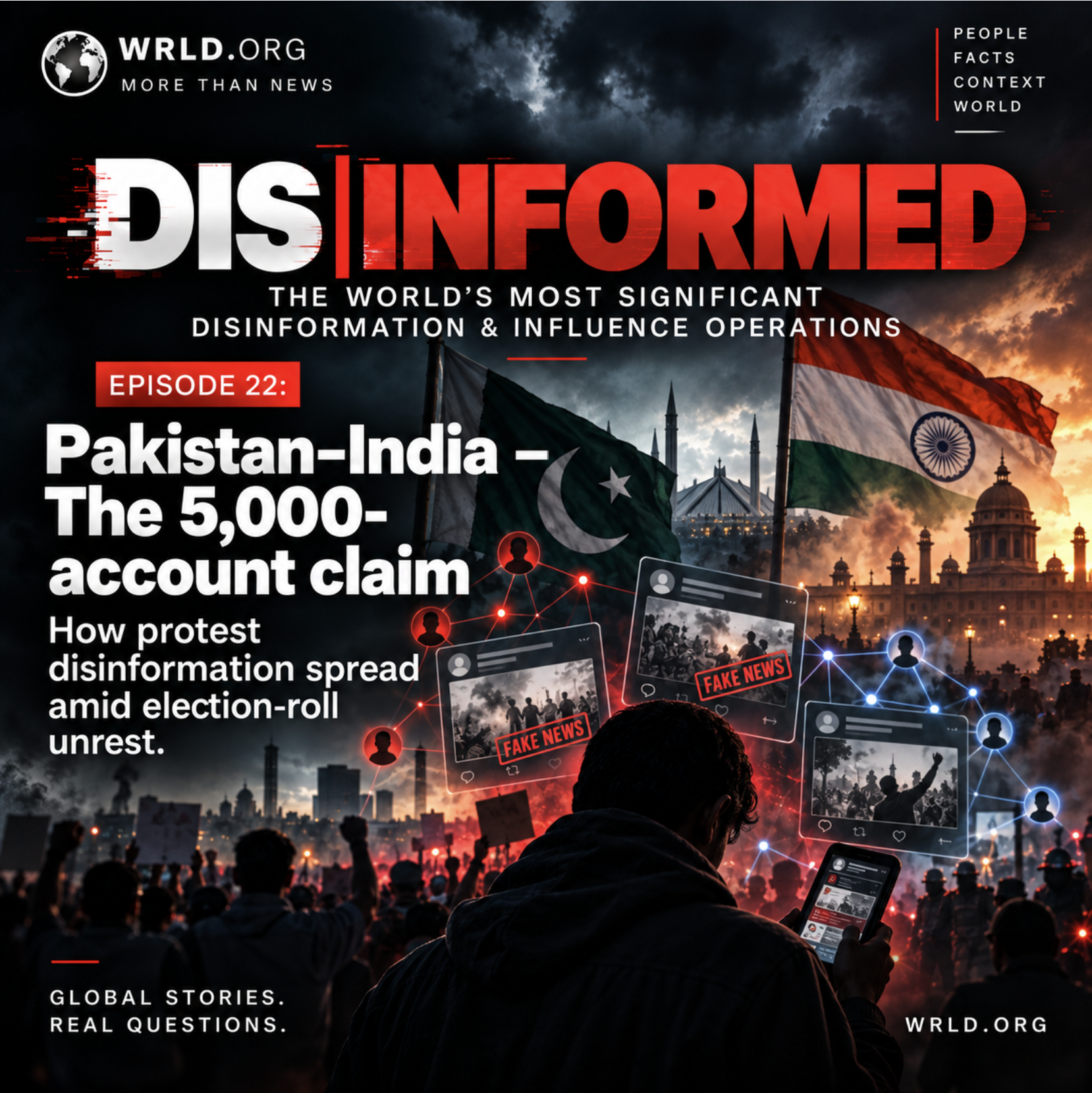
𝗣𝗮𝗸𝗶𝘀𝘁𝗮𝗻–𝗜𝗻𝗱𝗶𝗮 — 𝗧𝗵𝗲 𝟱,𝟬𝟬𝟬-𝗮𝗰𝗰𝗼𝘂𝗻𝘁 𝗰𝗹𝗮𝗶𝗺 𝗯𝗲𝗵𝗶𝗻𝗱 𝗮 𝗿𝗲𝗮𝗹 𝘄𝗮𝘃𝗲 𝗼𝗳 𝗽𝗿𝗼𝘁𝗲𝘀𝘁 𝗱𝗶𝘀𝗶𝗻𝗳𝗼𝗿𝗺𝗮𝘁𝗶𝗼𝗻 A burst of false reports surrounding India's protests over the Special Intensive Revision of electoral rolls provides a clear example of how genuine political unrest can become a target for cross-border information manipulation. What remains considerably less certain is the scale and command structure of the campaign. Indian intelligence officials have alleged that more than 5,000 social-media accounts were created in Pakistan within roughly two weeks to exploit protests against the electoral-roll revision and the Election Commission. According to reporting based on Intelligence Bureau sources, the accounts were intended to circulate claims of police violence, casualties and government repression, while encouraging those narratives to travel beyond Delhi into other parts of India. Several of the individual fabrications are independently verifiable. One account using the identity “Anushi Tiwari Indian” and the handle @indiantiwari01 circulated old footage with claims that Delhi Police had opened fire on demonstrators. Different posts attributed multiple deaths to the supposed firing and claimed that opposition leader Rahul Gandhi had been shot or injured. Fact-checkers established that footage used to support such claims came from earlier events, including the 2024 farmers' protests, rather than the demonstrations then taking place in Delhi. Delhi Police publicly identified the account and said it had a history of distributing doctored material, old footage and fabricated narratives. Police subsequently registered four cases concerning alleged misinformation around the protests, while officials said hundreds of posts had been removed. India Today later reported that the Delhi Police Cyber Cell had traced the account's IP address to Pakistan and that the account was subsequently withheld in India. Earlier investigations had also documented the same persona circulating misleading material about Indian political and security events. That evidence establishes a meaningful Pakistan-linked component to the disinformation environment. It does not, however, independently establish a 5,000-account ISI network. The larger allegation comes primarily from Indian intelligence reporting. The Statesman, citing an IANS report and an Intelligence Bureau official, said accounts were being operated from several locations including Bhimber, Rawalakot, Sialkot and Peshawar rather than primarily from Rawalpindi and Islamabad. Officials alleged that operators were supplied with narratives to circulate and instructed to tag users outside India to increase their reach. The same reporting connected the activity to “Operation Ground Wire”, described by Indian sources as an effort to recruit Indian nationals to generate material that could then appear to originate domestically. The concept predates the October protests. A September investigation by CNN-News18 alleged that a platform called Bharat Bytes News had been used to recruit young Indian contributors for politically sensitive assignments, with material subsequently handled from Pakistan. There is an important evidential gap. No public list of the alleged 5,000 accounts has been released. There is no published network graph, platform transparency report, forensic infrastructure analysis or dataset allowing independent researchers to reproduce the Intelligence Bureau's assessment. Nor has public evidence demonstrated that all the accounts described in media reports belong to a single centrally controlled network rather than several clusters, individual propagandists and opportunistic accounts exploiting the same political crisis. The attribution to Pakistan's Inter-Services Intelligence is therefore an intelligence claim rather than an independently demonstrated technical attribution. Reporting by Indian outlets repeatedly cites intelligence and police sources, but the underlying evidence has not been released publicly. At the time of this review, no equivalent technical report from Meta, X, Google or another major platform had been identified that confirmed the existence of a 5,000-account ISI-controlled operation. This distinction matters particularly in the India–Pakistan information environment. Both states routinely accuse the other of covert influence and disinformation. Pakistan itself has alleged Indian-backed social-media operations targeting Pakistani institutions, and Islamabad has previously rejected Indian security allegations as politically motivated. That does not invalidate evidence surrounding particular Pakistan-based accounts, but it raises the evidential threshold required for attributing thousands of accounts to a state intelligence service. There is another reason for caution. The information environment around the Indian protests contains misinformation from more than one political direction. Independent fact-checkers have identified AI-generated protest scenes, old videos recaptioned as current events and fabricated images supporting competing narratives. In an earlier case involving the Cockroach Janta Party protests, BOOM and Alt News found that Delhi Police themselves had incorrectly dismissed authentic footage as fake. Government attribution should therefore be treated as evidence to investigate, not as a substitute for forensic verification. No confirmed individual mastermind can presently be named for the October 5,000-account operation. “Anushi Tiwari Indian” is a documented online persona, not a verified real-world identity. Earlier reporting on the broader Ground Wire allegation named individuals said to be Pakistani handlers, including a person identified as Abdullah Shad and a Pakistani military officer described as Lieutenant Colonel Zia. Those identities have not been independently established through publicly available judicial records, financial evidence or a technical attribution report, and there is insufficient evidence to identify either man as responsible for the current 5,000-account campaign. The most defensible conclusion is narrower but still significant. A cluster of false narratives exploiting India's election-related protests existed; several prominent examples have been independently debunked; and at least one central amplifier has been reported by police investigators as Pakistan-based. The much larger claim — that more than 5,000 newly created accounts form a coordinated ISI operation — remains plausible but unproven on the public evidence currently available. For an information operation, that gap between what can be demonstrated and what intelligence authorities say they know is itself part of the story. 𝗦𝗢𝗨𝗥𝗖𝗘𝗦 1. The Statesman — “Pakistan creates 5,000 fake social media accounts amid anti-SIR protests: IB official”, 14 October 2026. This is the principal published source for the 5,000-account figure, alleged geographic distribution and Operation Ground Wire connection. The Statesman https://www.thestatesman.com/india/pakistan-creates-5000-fake-social-media-accounts-amid-anti-sir-protests-ib-official-1503650989.html 2. India Today — “ISI-linked accounts post fake Rahul injury video, deaths amid Delhi protests”, 13 October 2026. Documents the fake Rahul Gandhi injury story, false casualty reports and attribution supplied by security sources. India Today https://www.indiatoday.in/india/story/anti-cec-protests-isi-linked-pakistan-accounts-spread-false-rahul-gandhi-injury-claim-fake-deaths-amid-delhi-protests-3016235-2026-10-13 3. India Today / PTI — Delhi Police investigation, four FIRs and approximately 500 posts removed, 13 October 2026. India Today https://www.indiatoday.in/cities/delhi/story/delhi-police-files-four-firs-removes-500-posts-over-protest-misinformation-3016760-2026-10-13 4. The New Indian Express — Delhi Police warning concerning @indiantiwari01, 12 October 2026. Includes the police's public identification of the account and its description of previous fabricated narratives. The New Indian Express https://www.newindianexpress.com/cities/delhi/2026/Oct/12/delhi-police-warns-of-action-over-fake-claim-of-firing-at-rahul-gandhi-rally-300-posts-taken-down 5. India Today — “Pakistani Fake News Account Banned on X Over Fabricated Videos on Delhi Protests and Rahul Gandhi”, 15 October 2026. Reports the Cyber Cell finding that the account's IP address traced to Pakistan. India Today https://www.indiatoday.in/india/video/pakistani-fake-news-account-banned-on-x-over-fabricated-videos-on-delhi-protests-and-rahul-gandhi-ytvd-3017879-2026-10-15 6. The Quint / WebQoof — independent verification of old footage falsely presented as Delhi Police firing on protesters. The investigated post from @indiantiwari01 had accumulated more than 35,000 views when checked. TheQuint https://www.thequint.com/news/webqoof/old-video-farmers-protest-falsely-linked-to-cjp-delhi-police-firing-fact-check 7. BOOM — “Old Farmers Protest Video Falsely Shared As Fatalities From October 10 Protest”, 10 October 2026. Independent visual verification of another falsely contextualised protest video. BOOM https://www.boomlive.in/fact-check/old-farmers-protest-video-falsely-shared-as-fatalities-from-october-10-protest-32352 8. Newschecker — independent fact-check of the false Delhi Police firing and casualty story, 13 October 2026. Newschecker https://www.newschecker.in/fact-check/old-video-shared-as-delhi-police-firing-at-rahul-gandhi-led-march-against-cec 9. DFRAC — earlier investigation of the “Anushi Tiwari Indian” persona during the September BRICS information environment. This establishes that the account's misleading activity preceded the October protests. DFRAC_ORG https://dfrac.org/en/2026/09/16/brics-summit-disinformation-fake-and-misleading-claims-flood-social-media/ 10. ETGovernment — Maj Gen Rajan Kochhar (Retd), analysis of the earlier Ground Wire allegations, September 2026. Importantly, the article itself stresses that claims concerning named operators, payment mechanisms and Bharat Bytes require independent verification. ETGovernment.com https://government.economictimes.indiatimes.com/amp/blog/the-evolution-of-proxy-warfare-how-narrative-manipulation-is-transforming-india-pakistan-conflict/134347274 11. BOOM — AI-generated imagery falsely connected to the election-related protests, 12 October 2026. Demonstrates that the broader information disorder was not confined to the specifically Pakistan-attributed examples. BOOM https://www.boomlive.in/fact-check/ai-visuals-falsely-shared-as-real-fuel-misinformation-amid-cec-protests-32353 12. Alt News — investigation showing that Delhi Police had incorrectly labelled genuine July protest footage as fake. Relevant to the need for independent verification of official fact-checking claims. Alt News https://www.altnews.in/hindi/baton-with-nails-videos-indeed-from-july-20-protests-delhi-police-pibs-fact-check-incorrect/ 𝗞𝗘𝗬𝗪𝗢𝗥𝗗𝗦 #Disinformed #Disinformation #Propaganda #InfluenceOperations #India #Pakistan #ISI #ElectionSecurity #ElectionIntegrity #SIR #SpecialIntensiveRevision #DelhiProtests #RahulGandhi #GyaneshKumar #SocialMedia #FakeAccounts #FakeNews #InformationWarfare #CognitiveWarfare #HybridWarfare #OSINT #DigitalPropaganda #ForeignInfluence #InformationOperations #FactChecking #CyberSecurity #OperationGroundWire #PakistanIndia #PoliticalDisinformation #InformationIntegrity

1257
Krzysztof Graj 2w

𝗨𝗻𝗶𝘁𝗲𝗱 𝗦𝘁𝗮𝘁𝗲𝘀 — 𝗧𝗵𝗲 𝗶𝗻𝗳𝗹𝘂𝗲𝗻𝗰𝗲 𝗻𝗲𝘁𝘄𝗼𝗿𝗸 𝗯𝘂𝗶𝗹𝘁 𝗳𝗼𝗿 𝗔𝗜, 𝗻𝗼𝘁 𝘃𝗼𝘁𝗲𝗿𝘀 A newly exposed US political influence network appears to have been designed around a different target from most election propaganda. Its primary audience was not necessarily the voter reading a website, but the automated systems that search the web on behalf of AI chatbots. Threat-intelligence company VisionHeight initially identified 37 anonymous websites presenting themselves as state or local news organisations, opinion publications and national issue sites. By 15 October, the company's co-founder and chief technology officer, Nitsan Daniel, told CyberScoop that the investigation had expanded the observed footprint to 𝗮𝘁 𝗹𝗲𝗮𝘀𝘁 𝟭𝟰 𝗨𝗦 𝘀𝘁𝗮𝘁𝗲𝘀 𝗮𝗻𝗱 𝟰𝟲𝟬 𝗽𝗮𝗴𝗲𝘀. The states identified were Arizona, Colorado, Georgia, Indiana, Iowa, Kansas, Michigan, Mississippi, Nevada, North Carolina, Pennsylvania, Texas, Virginia and Wisconsin. The infrastructure shows unusually strong signs of coordination. All 37 domains in the original dataset were registered during a single evening; 36 were registered within approximately eight minutes. On 30 September alone, the network published roughly 𝟭𝟬𝟬,𝟬𝟬𝟬 𝘄𝗼𝗿𝗱𝘀 𝗼𝗳 𝗰𝗮𝗻𝗱𝗶𝗱𝗮𝘁𝗲-𝗿𝗲𝗹𝗮𝘁𝗲𝗱 𝗺𝗮𝘁𝗲𝗿𝗶𝗮𝗹 using common templates and four recurring layouts. VisionHeight assesses that the scale and production pattern strongly suggest extensive automation, although that does not by itself prove which generative-AI system, if any, produced the text. 𝗧𝗵𝗲 𝗰𝗼𝗻𝘁𝗲𝗻𝘁 𝗶𝘀 𝘀𝘁𝗿𝘂𝗰𝘁𝘂𝗿𝗲𝗱 𝗳𝗼𝗿 𝗺𝗮𝗰𝗵𝗶𝗻𝗲 𝗿𝗲𝘁𝗿𝗶𝗲𝘃𝗮𝗹. Candidate profiles can run to about 5,000 words, accompanied by similarly long voter guides containing 50 to 63 questions phrased in the style of queries someone might put to an AI assistant. Across the network, formulations such as a candidate being “the stronger choice” were repeated hundreds of times. One profile contained the phrase 34 times. In several voter guides examined by VisionHeight, the favoured candidate was named more than 110 times while an opponent appeared only six or seven times. The websites were also configured to make themselves unusually accessible to AI. Their crawler instructions explicitly welcomed 17 automated systems associated with companies including OpenAI, Anthropic, Google, Perplexity, Meta, Amazon and Apple. Some pages were marked in machine-readable metadata as news articles, while apparently separate publications cited one another. The result is a manufactured ecosystem in which several apparently independent local sources can reinforce the same conclusion. That is the central technique. 𝗧𝗵𝗶𝘀 𝗶𝘀 𝗻𝗼𝘁 𝗽𝗿𝗶𝗺𝗮𝗿𝗶𝗹𝘆 𝗰𝗹𝗮𝘀𝘀𝗶𝗰 𝗔𝗜 𝘁𝗿𝗮𝗶𝗻𝗶𝗻𝗴-𝗱𝗮𝘁𝗮 𝗽𝗼𝗶𝘀𝗼𝗻𝗶𝗻𝗴. The more immediate objective appears to be manipulation of the retrieval and search layer: place highly optimised material online, make it easy for automated crawlers to index, create the appearance of corroboration, and increase the chance that an AI assistant retrieves those pages when answering a political question. There is evidence that the network crossed that boundary. VisionHeight says it confirmed that 𝗣𝗲𝗿𝗽𝗹𝗲𝘅𝗶𝘁𝘆 cited Tar Heel State Report as the first source in at least one response. Separately, one of the network's candidate pages reached third place in a Google search six days after publication, above Ballotpedia for the tested query. These findings demonstrate that the material can enter AI-relevant search and retrieval pipelines. They do 𝗻𝗼𝘁 demonstrate that the operation changed anyone's vote, nor establish how frequently major chatbots have used the network. The timing matters because AI has become part of the election-information environment. An AAPC Foundation survey of 1,568 likely US voters found that about one in five planned to use AI to investigate a race on their ballot, while 38 per cent reported having received election information through an AI-generated search summary. A separate NewsGuard audit found that leading chatbots frequently cited partisan websites disguised as local journalism without clearly identifying their political affiliations. The newly identified network appears to take that existing vulnerability one step further by constructing content specifically around the way machines search and summarise information. 𝗪𝗵𝗼 𝗶𝘀 𝗯𝗲𝗵𝗶𝗻𝗱 𝗶𝘁? 𝗔𝘁 𝗽𝗿𝗲𝘀𝗲𝗻𝘁, 𝘁𝗵𝗲𝗿𝗲 𝗶𝘀 𝗻𝗼 𝗱𝗲𝗳𝗲𝗻𝘀𝗶𝗯𝗹𝗲 𝗮𝗻𝘀𝘄𝗲𝗿. VisionHeight has not attributed the operation to any individual, campaign, company, political party or foreign government. No confirmed name of an operator has been publicly established. Nitsan Daniel is the researcher who helped expose the network, not a person connected to its operation. Some components have explicitly partisan branding. VisionHeight's indicators include domains such as Affordability Democrats, Democratic Women House, Public Safety Democrats and Republican Incumbent Watch, while the live Affordability Democrats site promotes Democratic candidates across 11 competitive House races. That provides evidence about the political direction of some of the published material, but it does 𝗻𝗼𝘁 establish who commissioned, financed or operated the infrastructure, and it would be unjustified to attribute it to the Democratic Party or any particular campaign. The network also appears broader than congressional politics. The live Tar Heel State Report has carried material on county commission and judicial contests, illustrating why the method may be particularly effective in down-ballot races where established local reporting is thin. 𝗧𝗵𝗲 𝘀𝗶𝗴𝗻𝗶𝗳𝗶𝗰𝗮𝗻𝗰𝗲 𝗼𝗳 𝘁𝗵𝗶𝘀 𝗼𝗽𝗲𝗿𝗮𝘁𝗶𝗼𝗻 𝗶𝘀 𝘁𝗵𝗲 𝗮𝘁𝘁𝗮𝗰𝗸 𝘀𝘂𝗿𝗳𝗮𝗰𝗲. Propaganda no longer has to persuade a human being directly. It can instead attempt to shape the information environment from which an apparently neutral machine constructs its answer. 𝗦𝗧𝗔𝗧𝗨𝗦: Active / newly exposed and expanding as of 15–16 October 2026. 𝗖𝗢𝗡𝗙𝗜𝗗𝗘𝗡𝗖𝗘: High regarding coordinated infrastructure and AI-oriented design; moderate regarding the full current scale; attribution unknown. 𝗦𝗢𝗨𝗥𝗖𝗘𝗦 VisionHeight — primary investigation, “Someone Is Manipulating Your AI to Swing Your Vote” https://www.visionheight.com/resources/someone-is-manipulating-your-ai-to-swing-your-vote CyberScoop — Derek B. Johnson, 15 October 2026 https://cyberscoop.com/ai-chatbots-election-influence-hyperlocal-networks/ Tar Heel State Report — live network site used for OSINT verification https://tarheelstatereport.com/ Affordability Democrats — live network site https://affordabilitydemocrats.com/ AAPC Foundation — 2026 AI Voter Study https://theaapc.org/release-foundation-research/ NPR — reporting on voters using AI chatbots for the 2026 midterms https://www.wusf.org/2026-10-05/people-are-asking-chatgpt-to-help-them-decide-how-to-vote-in-the-midterms NewsGuard — “Pink Slime Is Infecting AI Chatbots Ahead of the Midterms” https://www.newsguardtech.com/press/pink-slime-is-infecting-ai-chatbots-ahead-of-the-midterms/ 𝗞𝗘𝗬𝗪𝗢𝗥𝗗𝗦 #Disinformed #Disinformation #Propaganda #InfluenceOperations #AI #ArtificialIntelligence #AIChatbots #ElectionSecurity #USMidterms #USElections #InformationWarfare #CognitiveWarfare #OSINT #ThreatIntelligence #CyberSecurity #DataPoisoning #RetrievalManipulation #SearchManipulation #GenerativeAI #LLM #AIManipulation #PoliticalInfluence #FakeNews #LocalNews #PinkSlime #Perplexity #ElectionIntegrity #InformationIntegrity #DigitalPropaganda #AIsecurity

1146
Mariya Gabriel 4w

The author said communities lost access to trusted information when a media outlet went dark. The post invited readers to join UNDRR, UNESCO and IFRC on 14 October in Geneva or online for a #DRRDay event on how supporting the media could strengthen risk communication. It included a registration link.

232
Dubravka Šuica Sep 22

Happy to co-host with @UNESCO’s @GabrielMariya our #UNGA81 event on information integrity and freedom of expression in the Mediterranean. Information integrity contributes to peace, security and resilient societies. The EU is investing €28 million to support independent https://t.co/XsqDdy98GA #UNGA81 #FreedomOfExpression #InformationIntegrity #EU

Dubravka Šuica Sep 22

Happy to co-host with @UNESCO’s @GabrielMariya our #UNGA81 event on information integrity and freedom of expression in the Mediterranean. Information integrity contributes to peace, security and resilient societies. The EU is investing €28 million to support independent https://t.co/ssttlRRx5H #InformationIntegrity #FreedomOfExpression #UNGA81 #EU

117
Mariya Gabriel Sep 21

How can information integrity and freedom of expression contribute to peace? The EU and @UNESCO will explore this question at #UNGA81, with a focus on societies across the Mediterranean. 👉 https://t.co/KmGQwlIlDf @dubravkasuica @EU4MENAGulf https://t.co/7ep61OdcW0 #InformationIntegrity #FreedomOfExpression #PeaceBuilding #EU #UNESCO

117
Mariya Gabriel Sep 20

On my way to #NY with @UNESCO_DG for the 81st @UN General Assembly. Looking forward to advancing discussions on information integrity, freedom of expression, AI and children’s rights, digital safety, and protecting women and girls from online violence. https://t.co/ELUelfNnKL #UNGA #InformationIntegrity #DigitalSafety #US #UN

Mariya Gabriel Sep 3

Information integrity is vital for resilient, inclusive societies @UNESCO, @RIARCACRAN & @OfficielRefram support African regulators 🌍 with a Practical Guide to digital platform governance, grounded in human rights, transparency & shared responsibility 👉 https://t.co/VUySKd0mtv https://t.co/AEGCfVYDXw #InformationIntegrity #DigitalGovernance #HumanRights #AF

Mariya Gabriel Jun 5

🌍 Climate action depends on information integrity.   Climate misinformation and disinformation undermine trust, science and action. On #WorldEnvironmentDay, discover how UNESCO is strengthening information integrity for evidence-based climate action.   https://t.co/y0taxZQsOd https://t.co/WT4GXCkOFg #ClimateAction #InformationIntegrity #WorldEnvironmentDay #Thetweetdoesnotmentionanyspecificcountries.Therefore #therearenocountrycodestoreturn.