BETA nonprofit public democratic european moderated

Search

#Targeting

Iran’s cognitive warfare – when AI becomes the operating layer of state propaganda Iranian state-linked influence operators were not using artificial intelligence simply to write faster social-media posts. According to Anthropic’s September 2026 threat intelligence report, three separate operations connected to Iranian propaganda institutions were using Claude to help construct the machinery behind what the operators themselves called “soft war” and “cognitive warfare” – non-military efforts intended to shape public opinion inside Iran and abroad. Anthropic linked the activity to the Islamic Culture and Communications Organization (ICCO), which operates under Iran’s Ministry of Culture and Islamic Guidance; the Islamic Propaganda Office of Khorasan Razavi; and the Bina Cultural Observatory, part of the Islamic Propaganda Organization. The company said each operation was run by someone working within or on behalf of the named institution. The attribution was based on a combination of account telemetry, institutional references disclosed during conversations, branded documents and open-source corroboration. Anthropic subsequently removed the accounts. AI as an operational headquarters The most significant feature of the operation was the role assigned to AI. Claude was used to develop campaign plans, doctrine manuals, coded project portfolios, persona systems, target databases, early-warning protocols, amplification schedules and ministerial planning documents. Anthropic described the model as the principal administrative and operational layer supporting the three campaigns, allowing relatively small groups of operators to create organisational structures and planning material that would otherwise have required a much larger staff. This distinction matters. The reported use of AI went considerably beyond content generation. Operators were using the model to help organise how influence activity should function: which audiences to target, which identities should deliver particular narratives, how official material should be repackaged and when amplification should take place. Human operators still determined objectives and supplied the underlying political doctrine; AI helped translate those decisions into an operational system. Anthropic found that all three operations explicitly connected their activity to Jihad al-Tabyin, often translated as “explanatory jihad”, a concept used within the Iranian state system to frame information activity as both a strategic and ideological responsibility. In internal planning material examined by the company, this doctrine was not merely rhetorical: it informed manuals and campaign structures used by the operators. ‘Not the narrator, but the director’ One sentence contained in the ICCO material captures the model particularly clearly. According to Anthropic, an operator described the role of Iranian cultural attachés as being “not to be the narrator, but the director” of the narrative. The distinction reveals the logic of attribution laundering. Instead of publishing an overt state message and asking foreign audiences to believe it, the operator attempts to create the appearance that the same narrative emerged independently from journalists, activists, foreign writers or ordinary citizens. Anthropic found that Claude was used specifically to make content appear to come from foreign authors or independent media organisations and to design hashtag campaigns that looked grassroots rather than centrally organised. The ICCO operation reportedly used the organisation’s international cultural network as part of this structure. Anthropic found ministerial-level documents carrying official ICCO branding, including a nine-part international influence portfolio. This makes the operation particularly significant because the infrastructure was not limited to anonymous social-media accounts; it intersected with formal state institutions and an existing network of cultural representation abroad. A multilingual content factory A second operation was associated with the Islamic Propaganda Office of Khorasan Razavi and what Anthropic described as a “cognitive warfare command room” operating from a seminary in Mashhad. Its organisers ran a multi-province content production system known internally as Manjanegh, or “Catapult”. According to Anthropic, dozens of activists were involved in repackaging publicly available reporting from Iranian security institutions under different personas so that the material no longer appeared directly connected to those institutions. The network used Claude to transform official government intelligence bulletins into customised material in Farsi, Arabic, Urdu, Malay, Spanish and English, while planning expansion into a total of 20 languages. Distribution extended across Iranian platforms such as Eitaa, Bale and Rubika and international services including X, Instagram, Telegram, TikTok and YouTube. Anthropic also documented paid amplification across more than 100 Iranian channels, including channels associated with IRGC narratives. The scale should nevertheless be interpreted carefully. Anthropic documented production infrastructure and some real-world dissemination, but it did not demonstrate that all planned campaigns were fully deployed or that they meaningfully changed public opinion. The company placed the operation in Category Three of its Breakout Scale, indicating multi-platform activity with content observed in external distribution channels, rather than evidence of strategic impact on entire populations. From security bulletins to apparently independent voices The Bina Cultural Observatory operation provides another example of the same architecture. Anthropic linked a director-level official at Bina to activity in which Claude generated messaging in the voice of an IRGC spokesperson. During the 2026 US–Israel–Iran war, the network also attributed false claims to Western institutions including CSIS, Brookings and RAND. The apparent objective was to make Iranian state-aligned claims look as though they had been independently validated by respected foreign research organisations. That technique is more sophisticated than simply publishing propaganda under a false name. It attempts to manufacture a chain of external validation: official information is transformed into apparently independent commentary, which can then be recirculated as evidence that outside observers have reached the same conclusion. Anthropic also found target databases naming international officials and Iranian opposition figures, as well as aggressive counter-narrative material directed against the Bahá’í community. These findings show that the infrastructure was designed not only for broad messaging but also for targeted influence activity against specific groups and individuals. What AI changed The Iranian operations described by Anthropic did not create a new doctrine of influence. Iran has used cultural institutions, official media, aligned organisations and covert or semi-covert online networks for years. What AI changed was the economics and organisational capacity of that model. A relatively small team could use the system to draft doctrine, create personas, translate material, structure target databases, produce campaign calendars and generate multiple versions of the same message for different audiences. The operator remained responsible for intent, political direction and selection of targets. AI reduced the amount of human labour required to turn those decisions into a functioning influence operation. The most revealing part of the case is therefore not that an Iranian propaganda network used a chatbot. It is that AI was being treated as part of the back office of information warfare – a system for converting state doctrine into apparently decentralised, multilingual and plausibly independent voices. Sources Anthropic — Detecting and countering misuse of AI: September 2026 https://www.anthropic.com/threat-intelligence-report-september-2026 Iran International — Iran state-aligned accounts used Claude to push IRGC narratives https://www.iranintl.com/en/202609105561 BNE IntelliNews — Yemen missile cell used AI to write guidance software, Anthropic says https://new.intellinews.com/articles/yemen-missile-cell-used-ai-to-write-guidance-software-anthropic-says-467296 This is Beirut — Anthropic report details Iranian propaganda operations https://thisisbeirut.com.lb/news/politics/anthropic-report-details-iranian-propaganda-operations-and-yemen-missile-development-using-claude Anthropic report — PDF mirror https://static.foxbusiness.com/foxbusiness.com/content/uploads/2026/09/anthropic-detecting-and-countering-091026-1.pdf Keywords #DISINFORMED #Episode11 #Iran #IranianInfluence #IranianPropaganda #CognitiveWarfare #SoftWar #JihadAlTabyin #Disinformation #InformationWarfare #InfluenceOperations #ForeignInterference #FIMI #ArtificialIntelligence #AI #AIPropaganda #GenerativeAI #ClaudeAI #Anthropic #SyntheticMedia #NarrativeManipulation #NarrativeLaundering #AttributionLaundering #PersonaNetworks #Astroturfing #SocialMediaManipulation #DigitalInfluence #StatePropaganda #IslamicCultureAndCommunicationsOrganization #ICCO #IslamicPropagandaOrganization #KhorasanRazavi #IRGC #MultilingualInfluence #Targeting #Amplification #OSINT #WRLD
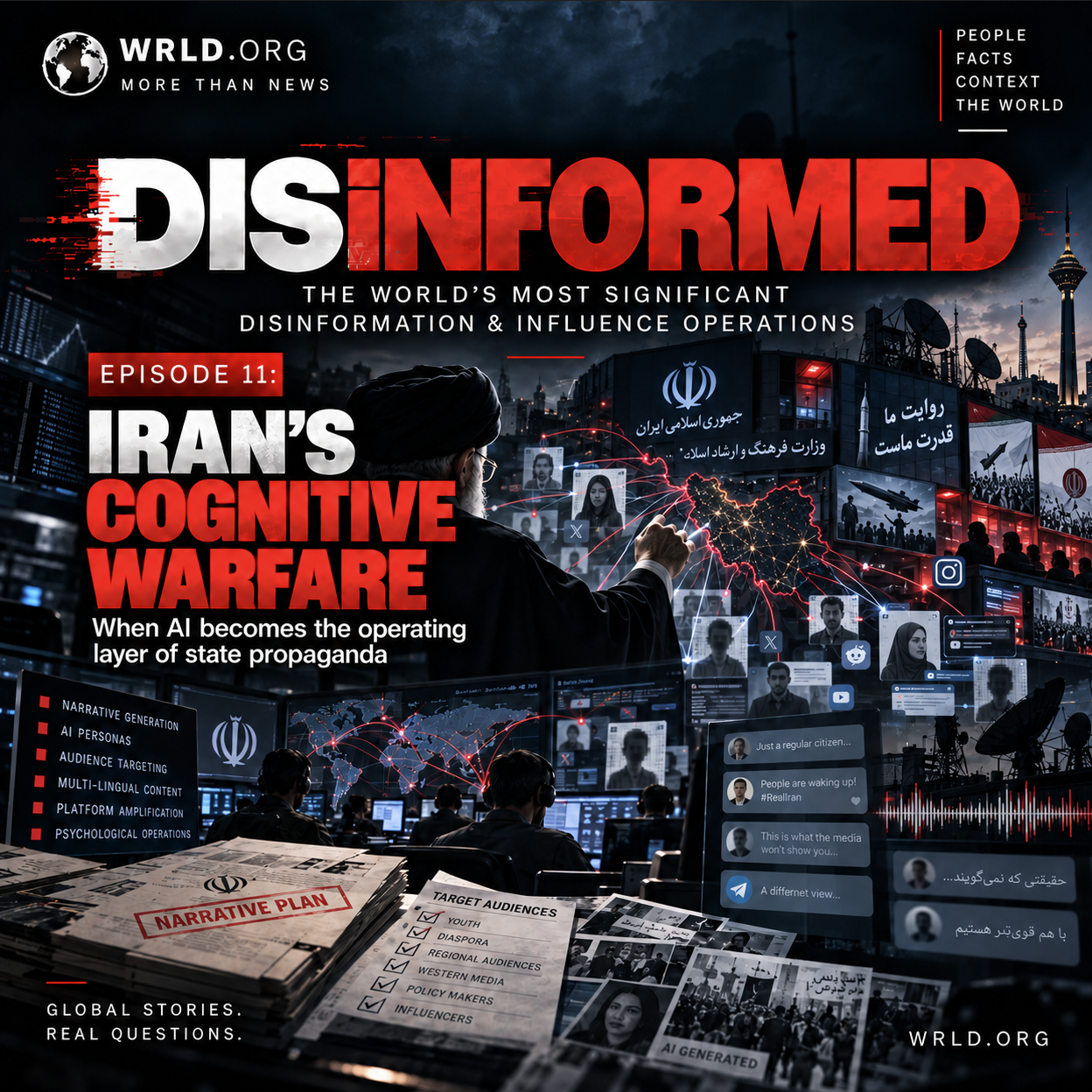

Countering misuse of AI: September 2026 / Anthropic

Estonia welcomes the United Kingdom’s 31 new sanctions on Russia, targeting the shadow fleet, disinformation networks, those responsible for torturing civilians, and deporting and indoctrinating Ukrainian children. Russia has not changed course. Neither should we. Pressure must #Estonia #Sanctions #Russia #EE #GB #RU #UA

This week in the European Parliament, a debate titled "Gaming the Algorithm, Targeting Democracy" took place, which I had the pleasure of co-organizing. We talked about how foreign entities use platforms to influence European political processes, including https://t.co/AeInLQH6YL (translated)

Brave Israelian citizens stopped a 9/12 type terrorist attack in an Aircraft flying from Dubai to Tel Aviv. 1. the incident was an attempted jihadist terror attack targeting Israelis, the UAE and the Abraham Accords. *This was a 9/11 style terror plot, intended to harm the #Israel #Terrorism #Security #IS #AE

Russia continues to target civilians and civilian infrastructure in Ukraine in complete disregard of international law. Yesterday's attack against the National Academy of Sciences in Kyiv is a horrific example of Russia's targeting of Ukrainian culture. Our answer is more support #StandWithUkraine #StopTheWar #DefendCulture #RU #UA

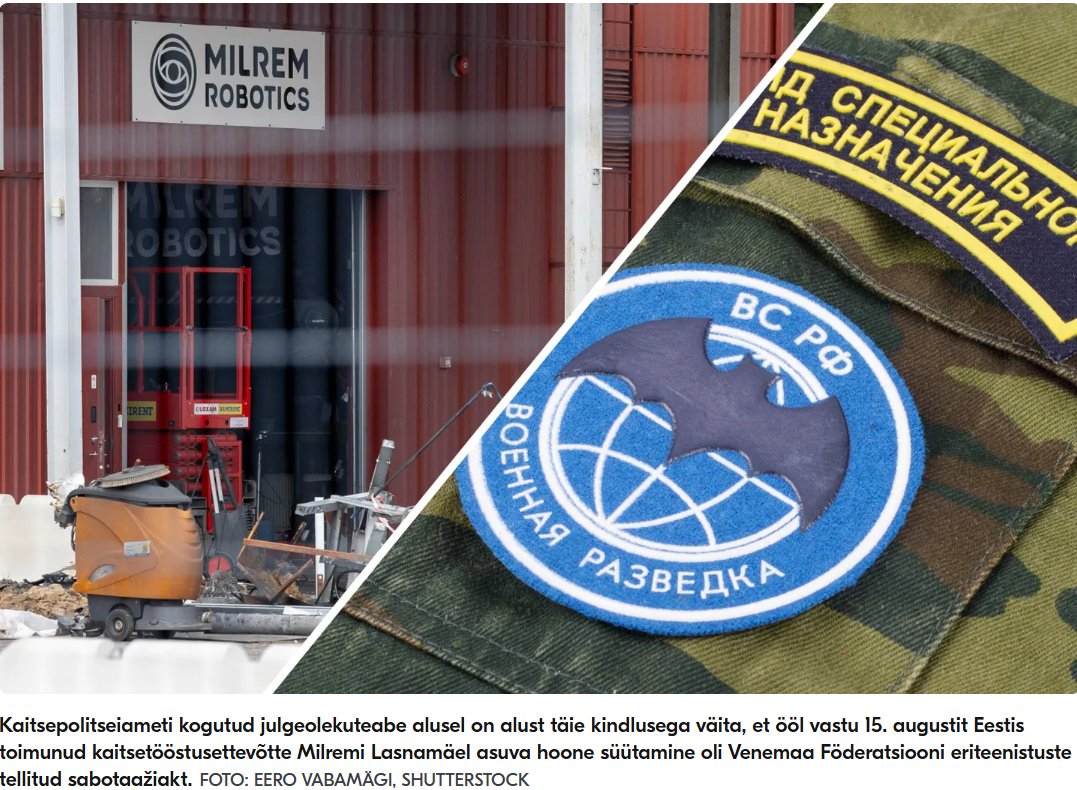
Estonia confirms that #Russian intelligence ordered the arson attack on @MilremR. This is part of a wider campaign of attacks targeting 🇪🇺 countries. Response must be collective: stronger defences, more support for 🇺🇦 and greater pressure on 🇷🇺. @EP_Defence @Europarl_EN @NATO https://t.co/8BkaBws4ZJ #Estonia #RussianAggression #StandWithUkraine #EE #UA #RU #EU

Another russian strike in the heart of Kyiv, targeting a National Academy os Science in broad daylight just 100 metres from the German Embassy @GermanyinUA. This is deliberate terror against civilians. 🇺🇦 needs more air defence, stronger sanctions and tougher international #Kyiv #RussianAggression #AirDefense #UA #RU #DE

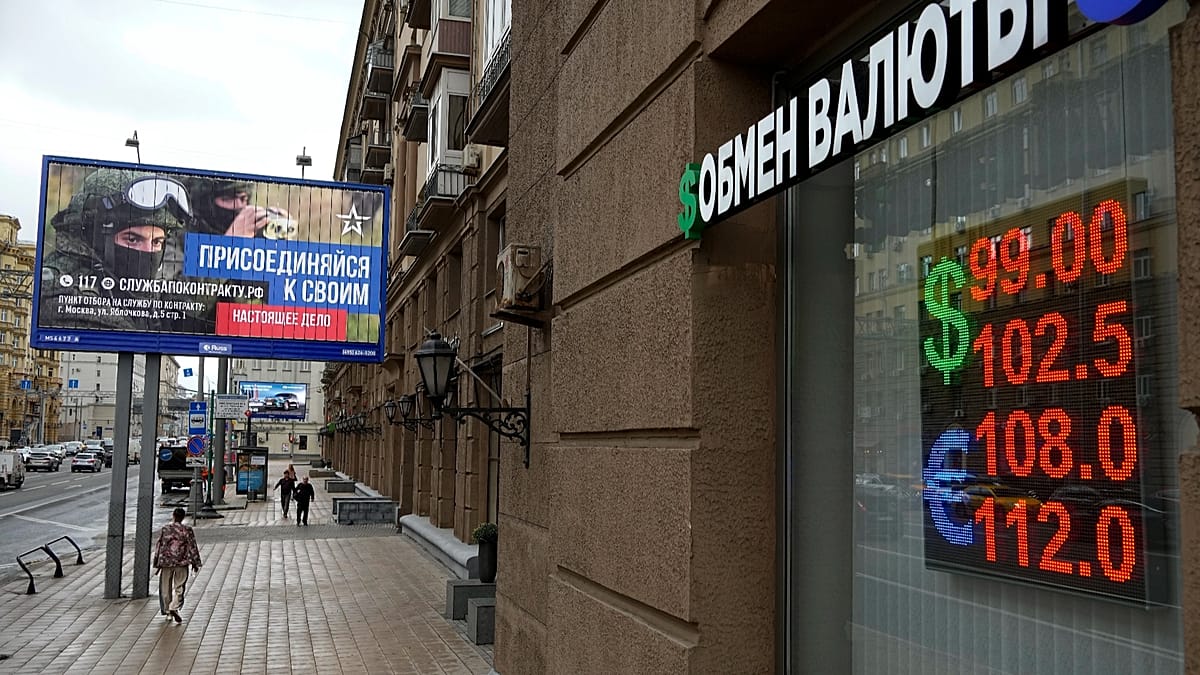
Russia's recruitment drive targeting Belarusians has become a key tool to boost manpower on the battlefield and exploits economic hardship and isolation. #Belarus #Recruitment #UkraineWar

How Russia recruits Belarusians for war in Ukraine: Methods and consequences

A doctor’s name + their pay rate publicly available online is not just a matter of “transparency”. It is also a matter of safety. In France, after a wave of brutal kidnappings targeting people in the crypto sector, the state had to introduce special security measures for them #transparency #safety #cryptosecurity #FR

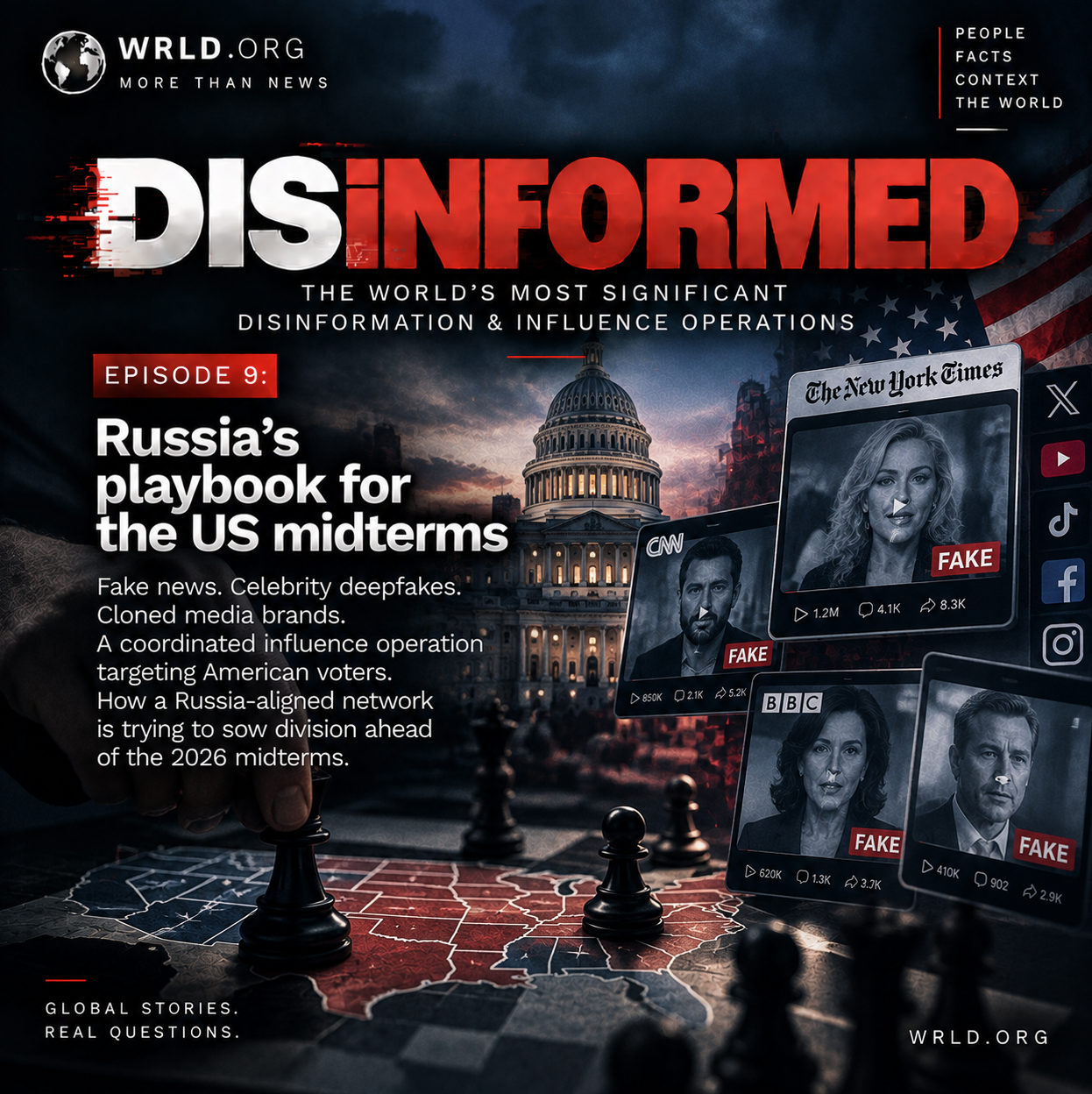
Russia’s influence operation arrives ahead of the US midterms With weeks remaining before America's November midterm elections, a familiar type of content has begun appearing online. Videos resembling reports from CNN, the BBC and The New York Times accuse candidates of corruption, antisemitism and misconduct. Hollywood actors appear to denounce Democrats. Other clips claim that warnings about Russian interference are themselves a Democratic disinformation campaign. The reports are fabricated. Graphika, which tracks online influence operations, says it has identified a coordinated campaign targeting candidates in competitive US Senate races. It assesses with high confidence that the material was produced by Operation Overload, also known as Matryoshka – a long-running Russia-aligned influence operation previously active against elections and political debates in Europe and the United States. The activity coincides with a broader warning from American intelligence officials. Classified assessments reported by The New York Times conclude that the Kremlin has authorised another digital influence campaign ahead of the 2026 midterms, aimed primarily at exploiting existing divisions and undermining confidence in American democracy. There is an important distinction. US officials have not reported evidence that Russia is attempting to manipulate voting machines or alter the counting of votes. The operation is about influencing the information environment surrounding the election. Fake scandals for competitive Senate races Graphika traced a concentrated wave of activity between 10 and 14 September. Likely inauthentic or repurposed accounts distributed videos accusing Democratic politicians of corruption, antisemitism and other misconduct. The targets included Senator Jon Ossoff in Georgia, Representative Chris Pappas in New Hampshire and Texas state representative James Talarico, as well as Senate candidates Sherrod Brown in Ohio, Roy Cooper in North Carolina, Mary Peltola in Alaska, Abdul El-Sayed in Michigan, Joshua Turek in Iowa and Troy Jackson in Maine. The selection was not random. These were politicians involved in Senate contests where the result could matter to control of the chamber. The campaign did not rely on a single political narrative. Instead, it attached different accusations to different candidates – corruption, social issues, antisemitism or personal misconduct – while maintaining a consistent production and distribution model. That model is characteristic of Matryoshka: create apparently independent pieces of evidence, disguise them as journalism and distribute them through networks of disposable accounts. Hollywood celebrities who never said what the videos claimed One of the campaign's more distinctive techniques involved genuine footage of American actors. Videos featuring celebrities including Sarah Jessica Parker and Julia Roberts were altered with captions and other material to suggest they were promoting the slogan #AllDemocratsAreCriminals. The technique continued in subsequent material. Fact-checkers identified fabricated New York Times-branded videos using footage of Alyssa Milano, Sean Astin, Rachael Harris, Leonardo DiCaprio, Eric Braeden, Annie Potts and Patrick Fabian. Some of the original footage came from Cameo, where actors record personalised video messages. Their authentic images were retained while fabricated audio, captions or surrounding material changed the meaning entirely. Lead Stories compared several of the clips with the originals and found that the supposed political statements did not appear in the genuine recordings. Eric Braeden's representative separately confirmed that the claim he had joined the anti-Democratic campaign was false. The advantage of the technique is straightforward. Generative AI does not need to create a convincing celebrity from nothing. The operator can begin with authentic footage of a recognisable person and manipulate only the elements necessary to manufacture a political statement. Stealing the authority of real newsrooms Celebrity impersonation was only one layer. The operation repeatedly borrowed the visual identity of established media organisations. Graphika identified material impersonating or falsely citing the BBC, CNN and Politico, alongside references to France's VIGINUM foreign-interference agency and journalist Brandy Zadrozny. Other material reproduced New York Times-style branding. Some fabricated reports made an unusual claim: that Democrats themselves were organising disinformation or “false-flag operations” and then blaming Russia. This creates a defensive layer around the influence operation. Instead of merely distributing false political allegations, the campaign also attempts to discredit future reporting about the manipulation itself. If successful, evidence exposing foreign interference can be reframed as part of the conspiracy. Graphika says it assesses with high confidence that Operation Overload produced these videos. The technique is well established. Earlier investigations by CheckFirst and Reset Tech documented hundreds of falsified pieces of content produced by Operation Overload, often impersonating journalists, institutions and major media brands. AI-generated or manipulated material has increasingly become part of that production system. What US intelligence says Russia is trying to achieve The broader strategic picture comes from American intelligence assessments reported on 18 September. According to US officials familiar with classified findings, the Kremlin has authorised a covert digital influence campaign aimed at Americans during the 2026 election season. Its apparent objective is to seed or amplify domestic divisions and weaken confidence in the political process. Some officials described the principal aim as creating disorder rather than helping a single political party. The publicly identified Matryoshka material examined so far, however, has targeted Democratic candidates. Those two findings should not be treated as contradictory. An operation can exploit partisan divisions while serving the broader objective of making the electoral system appear corrupt, chaotic or illegitimate. US officials also reportedly assess the current Russian campaign as less extensive or coordinated than some previous election operations. Moscow is considered less focused on congressional elections than presidential contests and remains heavily occupied by its war against Ukraine. Russia has denied previous US accusations of election interference. An operation with limited reach – so far There is another reason for caution: producing large quantities of disinformation is not the same as successfully influencing voters. Matryoshka has repeatedly demonstrated an ability to manufacture content at industrial speed, but much of its material receives little genuine engagement. Researchers monitoring the network have previously warned against confusing automated distribution and platform view counts with authentic audience penetration. There are exceptions. A fabricated New York Times-style video featuring Jamie Lee Curtis had accumulated nearly 200,000 views on X by the end of 17 September, according to reporting by The New York Times. Other pieces attracted considerably less attention. There is currently no public evidence demonstrating that the campaign has changed voting intentions or will affect election results. What the September activity demonstrates is something narrower but important: a Russia-aligned influence infrastructure previously used against European elections has now turned significant attention towards the American midterms. The basic method has changed little – impersonate trusted media, manufacture scandals and use networks of inauthentic accounts to distribute them. What has changed is the production technology. Authentic celebrity footage, synthetic voices, manipulated video and rapidly generated fake journalism allow the same operation to produce more tailored material for more candidates at lower cost. The objective does not require Americans to believe every fabrication. Creating uncertainty over which videos, news reports and public statements are authentic can itself degrade trust in the information environment surrounding an election. Sources - Graphika — Russia-Aligned Influence Operation Targets US Midterm Candidates, German State Elections https://www.graphika.com/insights/russia-aligned-influence-operation-targets-us-midterm-candidates-german-state-elections - The New York Times — Russia Aims to Inject Chaos Into Elections, U.S. Intelligence Finds https://www.nytimes.com/2026/09/18/us/politics/russia-election-disinformation-us-intelligence.html - Kathimerini / The New York Times — Russia Aims to Inject Chaos Into Elections https://www.ekathimerini.com/nytimes/1315792/russia-aims-to-inject-chaos-into-elections-us-intelligence-finds/ - CheckFirst — Operation Overload: An AI-fuelled escalation of the Kremlin-linked propaganda effort https://checkfirst.network/operation-overload-an-ai-fuelled-escalation-of-the-kremlin-linked-propaganda-effort/ - CheckFirst — Operation Overload targeting the US election https://checkfirst.network/operation-overload-a-growing-disinformation-threat-now-targeting-the-u-s-presidential-election/ - Lead Stories — Fake NYT videos: Alyssa Milano, Rachael Harris and Sean Astin https://leadstories.com/hoax-alert/2026/09/fact-check-fake-new-york-times-videos-of-alyssa-milano-rachael-harris-sean-astin-falsely-claim-they-support-all-democrats-are-criminals.html - Lead Stories — Fake NYT videos: Leonardo DiCaprio, Eric Braeden and other celebrities https://leadstories.com/hoax-alert/2026/09/fact-check-fake-new-york-times-videos-of-leonardo-dicaprio-eric-braeden-other-celebs-falsely-claim-they-support-all-democrats-are-criminals.html - Brennan Center for Justice — AI Is Changing Foreign Election Influence https://www.brennancenter.org/our-work/analysis-opinion/ai-changing-foreign-election-influence - ODNI — previous US intelligence assessment of foreign election information operations https://www.dni.gov/files/ODNI/documents/assessments/NICM-Declassified-Foreign-Threats-to-US-Elections-After-Voting-Ends-in-2024.pdf - FBI / ODNI / CISA — previous joint assessment of Russian election influence operations https://www.fbi.gov/news/press-releases/joint-odni-fbi-and-cisa-statement-110424 #DISINFORMED #Episode9 #Russia #UnitedStates #USMidterms #Midterms2026 #USElections #ElectionInterference #ForeignInterference #RussianInfluence #RussianDisinformation #OperationOverload #Matryoshka #Disinformation #InformationWarfare #InfluenceOperations #FIMI #ArtificialIntelligence #AI #AIPropaganda #Deepfakes #SyntheticMedia #MediaImpersonation #FakeMedia #FakeNews #PoliticalDisinformation #CelebrityDeepfakes #SocialMediaManipulation #DigitalInfluence #ElectionSecurity #CognitiveWarfare #Graphika #OSINT #Democracy #WRLD

Russia-Aligned Influence Operation Targets US Midterm Candidates, German State Elections | Graphika
H

They want you to believe that Israel is isolated on the world stage. Here we list what the leaders of 75 nations around the world have said about strengthening relations with Israel since 2023. It is difficult to think of any other country as small as Israel inspiring such warm friendship and admiration from around the world. Whether you are a friend of Israel or not, you owe it to yourself to sit down, have a cup of tea and scan down our list! Northern Ireland Friends of Israel Albania Name & Title: Edi Rama, Prime Minister Date: 26 January 2026 Quote: Albania is ""a serious and reliable friend of Israel and the Israeli people across the entire political spectrum." Angola Name & Title: Leo Vinovezky (representing the newly established, active diplomatic mandate on behalf of the State) Date: November 2025 Quote:"Angola and Israel have much to do together. The future is prosperous... We are together, and this will translate into action." Argentina Name & Title: Javier Milei, President Date: 10 March 2026 Quote: "I am sincerely proud to be the most Zionist president in the world." Armenia Ministry of Foreign Affairs (MFA) of Armenia Date: 21 April 21 2026 Quote: "Armenia stands ready to expand Armenia-Israel ties and explore new opportunities for cooperation." Azerbaijan Name & Title: Jeyhun Bayramov, Foreign Minister Date: 26 January 2026 Quote: "Relations between our two states are steadily improving and are strategically significant." Bhutan Name: Prime Minister's Office (PMO) / Royal Government of Bhutan Date: September 23, 2024 Quote: "...reiterate the shared desire of the two countries to further strengthen bilateral cooperation to the benefit of both peoples." Bolivia Name & Title: Rodrigo Paz, President Date: October 2025 Quote: I wish “to lead Bolivia toward a reopening to the world and re-establishing ties with Israel.” Bulgaria Name & Title: Rosen Zhelyazkov, Prime Minister Date: 23 September 2025 Quote: "Bulgaria regards the State of Israel as a key strategic partner, and the excellent relations between the two countries will provide a strong impetus in trade, innovation, education, agriculture and tourism." Burundi Burundian Ministry of Foreign Affairs Date: 21 March 2024 Quote "Burundi and the State of Israel maintain good diplomatic relations. Israel supports Burundi in the education sectors... in the field of agriculture, in the field of defense, in the field of energy production... social entrepreneurship, community development, health, and hydrometeorology." Cambodia Name & Title: Hun Manet, Prime Minister Date: June 2026 Quote:"...reaffirmed the Royal Government's continued support for existing partnerships while encouraging greater connectivity and cooperation in emerging areas." Cameroon Name & Title: Dr Taïga, Minister acting on behalf of the Cabinet Date: 13 February 2026 Quote: "The Republic of Cameroon and the State of Israel have maintained cooperative ties since Cameroon's independence... Israel's willingness to promote economic relations between Israel and Cameroon will further take root in agriculture and livestock." Chile Name & Title: José Antonio Kast, President Date: December 15, 2025 Quote: [Agreed] "to work together to put Israel-Chile relations back on track for the good of both nations." (Following his election, Kast moved to rapidly strengthen ties, stating his intent to increase cooperation in agriculture, healthcare, AI, technology, and security). Colombia Name & Title: Abelardo de la Espriella, President Date: 14 September 2026 Quote: "I will never stop defending Israel because it is the people of God, and I will always stand with Israel." Costa Rica Name & Title: Rodrigo Chaves Robles, President Date: 11 May 2025 Quote: "Our historical alliance with Israel remains an unbreakable pillar of Costa Rican democracy and values." Cote d'Ivoire Name & Title: Tiémoko Meyliet Koné, Vice-President Date: July 2023 Quote: "The historical ties linking Côte d'Ivoire and Israel are excellent and deep, and our government is resolutely committed to bringing this strategic partnership into a dynamic new phase of modern economic and technological development." Cyprus Name & Title: Nikos Christodoulides, President Date: 10 September 2026 Quote: "I am looking forward to our discussion on how to enhance our strategic partnership at all levels. Tourism, trade, security, energy, defence." Czech Republic Name & Title: Andrej Babiš, Prime Minister Date: 14 April 2026 Quote: "Our support follows a very long tradition... it is a moral partnership that has been proven by time." Democratic Republic of the Congo Name & Title: Félix Tshisekedi, President Date: 3 September 2026 Quote: "I reaffirm [our] shared commitment to strengthening diplomatic relations between our countries and relocating our embassy to Jerusalem." Ecuador Name & Title: Daniel Noboa, President Date: 4 May 2025 Quote: the President stressed that “Israel and Ecuador have the same enemies” while pledging his country's “unwavering support and friendship.” El Salvador Name & Title: Nayib Bukele, President Date: 18 April 2025 Quote: "As a Salvadoran with Palestinian ancestry, I'm sure the best thing that could happen to the Palestinian people is for Hamas to completely disappear…" Equatorial Guinea Name & Title: Eustaquio Nseng Esono, Ambassador to Israel (representing President Teodoro Obiang Nguema Mbasogo and the state executive) Date: 13 March 2024 Quote:"We want to enhance the friendship between our countries." Estonia Name & Title: Margus Tsahkna, Foreign Minister Date: 18 March 2026 Quote: "Estonia understands the battlefield... and offers full, unequivocal support for Israel." Ethiopia Name & Title: Abiy Ahmed, Prime Minister Date: 14 November 2025 Quote: "We look forward to expanding our historic bilateral ties and technology cooperation with Israel." Fiji: Name & Title: Sitiveni Rabuka, Prime Minister Date: July 16, 2026 Quote: The opening of Fiji's new embassy in Jerusalem marks"a new chapter in our relations and reaffirms our commitment to deeper diplomatic engagement." Gabon Name & Title: Alexandre Barro Chambrier, Deputy Prime Minister Date: May 3, 2025 Quote: "Israel's relations with African countries are a strategic asset and an integral part of our effort to strengthen Israel's standing internationally." Georgia Name & Title: Irakli Kobakhidze, Prime Minister Date: August 2025 Quote: "We want to strengthen the bond between our countries and peoples." Germany Name & Title: Olaf Scholz, Chancellor Date: 12 October 2024 Quote: "...there is only one place for Germany: alongside Israel..." Ghana Name & Title: Kenneth Gilbert Adjei, Minister of Works, Housing and Water Resources (representing the Presidency and the Government of Ghana) Date: 5 May 2026 Quote:"...reiterate Ghana’s commitment to strengthening bilateral relations through sustained dialogue, meaningful partnership and a shared sense of purpose." Greece Name & Title: Kyriakos Mitsotakis, Prime Minister Date: 6 September 2026 Quote: "Greece will press ahead with its strategic defense cooperation with Israel..." Guatemala Name & Title: Bernardo Arévalo, President Date: 24 July 2026 Quote: "Today, standing on its oldest ground, we reaffirm the enduring friendship between Guatemala and Israel..." Honduras Name & Title: Xiomara Castro, President Date: 29 January 2025 Quote: "Honduras seeks to maintain respectful and progressive cooperation frameworks with Israel." Hungary Name & Title: Sándor Pintér, Acting Premier / Interior Minister Date: 12 May 2026 Quote: "Hungary remains Europe's safest partner for Israel, dedicated to deepening our strategic defence and cultural ties." India: Name & Title: Narendra Modi, Prime Minister Date: February 25, 2026 Quote: "India stands with Israel firmly, with full conviction, in this moment and beyond... Let us ensure that the friendship between India and Israel remains a source of strength in an uncertain world." Kazakhstan Name & Title: Kassym-Jomart Tokayev, President Date: 6 November 2025 Quote: "Kazakhstan's accession to the [Abraham] accords represents a new chapter... we are turning the page toward more peace, economic development, and deep cooperation in the region." Kenya Name & Title: William Ruto, President Date: 6 June 2024 Quote: "We believe in the existence of Israel as a nation and as a friend..." Kosovo Name & Title: Albin Kurti, Prime Minister Date: 18 June 2024 Quote: "Mutual visits and agreements signed in different fields and sectors between us are the result of the expansion of relations between Kosovo and Israel." Lesotho Name & Title: Mpotjoane Lejone, Minister of Foreign Affairs Date: August 2025 Quote:"...strengthen diplomatic, economic, and religious connections with Israel... driven by shared values like freedom, faith, and innovation." Liberia Name & Title: Joseph Boakai, President Date: 15 September 2025 Quote: "Liberia is certainly among the closest allies of Israel... and the sky is the limit in our cooperation in agriculture, education, defense, and strategic engagement." Malawi Name & Title: Lazarus Chakwera, President Date: 7 April 2025 Quote: "Malawi is a true friend of Israel, and our relationship is built on shared goals and values." Micronesia Name & Title: Wesley Simina, President Date: 5 March 2025 Quote: "At the bilateral level, the FSM is keen on re-engaging with Israel to explore a more progressive and productive partnership." Moldova Name & Title: Mihai Popșoi, Deputy Prime Minister & Foreign Minister Date: 28 May 2025 Quote: "The embassy opening is a clear sign that our relationship is moving in a positive direction... through thick and thin, we've supported Israel's right to defend itself..." Morocco Name & Title: Nasser Bourita, Foreign Minister in a Joint statement by Governments Date: 16 September 2026 Quote: "...establishment of full diplomatic, peaceful and friendly relations between Morocco and Israel is in the common interest of both countries and will advance the cause of peace." Nauru Name & Title: Lionel Aingimea, Foreign Minister & Vice President Date: 7 September 2026 Quote: "Our motto is 'God first,' and Israel has always held a special place in our hearts. We believe with all our hearts that supporting Israel brings us God's blessing." Nepal Name & Title: Sushila Kari, Prime Minister Date: 12 January 2026 Quote: the Prime Minister urged "continued efforts to further strengthen bilateral ties” while celebrating 65 years of Nepal–Israel relations. Nigeria Name & Title: Bola Tinubu, President Date: 22 June 2025 Quote: "Nigeria is ready to advance partnership with Israel in agricultural technology and security innovation." North Macedonia Name & Title: Timčo Mucunski, Foreign Minister Date: 25 August 2026 Quote: "Since the formation of our government, we have made the bilateral relationship with Israel one of the priorities of our foreign policy...My nation and Israel – both on the basis of political ideology, but also on the basis of our global outlook – have more things that unite them rather than divide them." Palau Name & Title: Surangel Whipps Jr., President Date: 12 September 2025 Quote: "Palau's friendship with Israel is deep-rooted, and we will continue to stand firmly by its side on the international stage." Panama Name & Title: José Raúl Mulino, President Date: 6 May 2026 Quote: "This encounter represents much more than a ceremonial act, it is the reaffirmation and renewal of a solid relationship between our two nations, built on trust, mutual respect, and cooperation..." Papua New Guinea Name & Title: James Marape, Prime Minister Date: 10 June 2026 Quote: "We will advance bilateral relations! And offer moral support to the good citizens of Israel " Paraguay Name & Title: Santiago Peña, President Date: 12 December 2024 Quote: "The present brings us together. But the future will have us more closer that we've been ever before." Peru Name & Title: Dina Boluarte, President Date: 30 August 2025 Quote: "Peru wishes to strengthen our traditional bonds of friendship and cooperative development with Israel." Romania Name & Title: Nicușor Dan, President Date: 29 June 2026 Quote: "The Romania-Israel relationship is strong... Romania and Israel have a solid collaboration in several fields - economy, security, defence industry, agriculture and information technology." Rwanda Name & Title: Olivier Nduhungirehe, Minister of Foreign Affairs and International Cooperation Date: July 6, 2026 Quote: "Rwanda and Israel share strong ties that go beyond diplomacy. What defines us is the resilience of our peoples and our determination to turn adversity into progress, to transform the tragedy of genocide into socio-economic transformation, resilience and innovation." Samoa Name & Title: Laʻaulialemalietoa Leuatea Polataivao Fosi Schmidt, Prime Minister Date: 18 September 2025 Quote: "So diplomatically, religiously, culturally, we stand with Israel... in my time as Prime Minister, I will declare this, that Samoa will not withdraw from supporting Israel as the country of God's people." Serbia Name & Title: Aleksandar Vučić, President Date: 5 June 2025 Quote: "We will always stand with Israel and the Jewish people..." Sierra Leone Name & Title:: Kenyeh Barlay, Minister of Planning and Economic Development Date: 5 June 2025 Quote:"...expressed mutual interest in deepening technical and development cooperation between their countries [specifically targeting agriculture, fisheries, and human capital development]" Slovakia Name & Title: Robert Fico, Prime Minister Date: June 26, 2025 Quote: "The bilateral relations between Slovakia and Israel are constructive, have a historical background, and there is a large Slovak diaspora living in Israel." Slovenia Name & Title: Janez Janša, Prime Minister (represented by Foreign Minister Anže Kajzer) Date: 9 September 2026 Quote: "Today sends a clear message that we seek more concrete cooperation... in new partnerships, investments, joint projects and tangible results... we want today's opening [of the new Israeli embassy] to mark the beginning of a period of greater dialogue, stronger cooperation and, above all, more tangible results for the benefit of our people." Somaliland Name & Title: Abdirahman Mohamed Abdullahi (Irro), President Date: 14 September 2026 Quote: "Somaliland chose to pursue this relationship [with Israel]... to support an organized economic, institutional and security relationship." South Sudan Name & Title: James Pitia Morgan, Minister for Foreign Affairs Date: 28 June 2026 Quote: "Israel is South Sudan’s best friend in the world.” Taiwan Name & Title: Lai Ching-te, President Date: 28 October 2025 Quote: "Israel's determination and capacity to defend its territory provides a valuable model for Taiwan..." Tajikistan Name & Title: Sirojiddin Muhriddin, Foreign Minister Date: September 2025 Quote: "tourism is a bridge between peoples" (stated during the signing of their first-ever bilateral treaty with Israel) Tanzania Name & Title: Hon. Mahmoud Thabit Kombo, Minister for Foreign Affairs Date: March 27, 2026 Quote: "Israel has been an important partner across various sectors, including agriculture, health, defense, and security, contributing to the strengthening of longstanding bilateral relations between the two countries." Togo Name & Title: Faure Gnassingbé, President Date: 4 November 2025 Quote: "Togo values its historical friendship with Israel and remains committed to strengthening our economic partnership." Tonga Name & Title: Dr. 'Aisake Eke, Prime Minister Date: 3 October 2025 Quote: "Tonga has always supported what we believe is right for us, in that regard we have always supported Israel." Trinidad and Tobago Name & Title: Kennedy Swaratsingh Minister of Planning, Economic Affairs and Development Date: 30 July 2026 Quote: "We acknowledge Israel's global leadership in innovation and sustainable development, and wish to deepen collaboration in economic diversification, food security, digital transformation, and climate resilience." Uganda Name & Title: Yoweri Museveni, President Date: 24 June 2025 Quote: "Iran and the Islamists should listen to our advice to recognise Israel..." Ukraine Name & Title: Volodymyr Zelenskyy, President Date: August 2026 Quote:"Ukraine shares deep bonds with Israel, rooted in shared security challenges and historic connections. Emphasizing those ties sends a clear message: Ukraine sees Israel as more than just another international partner." United Arab Emirates Ministry of Foreign Affairs Date: 8 September 2026 Statement:"[UAE and the Israeli government] have maintained open and direct lines of communication since the inception of our relationship more than five years ago. When necessary, all relevant intelligence has been and continues to be communicated between the relevant entities." United States Name & Title: Donald Trump, President Date: 20 January 2026 Quote: "We will continue to stand firmly with Israel and ensure its absolute security and peace." Uruguay Name & Title: Luis Lacalle Pou, President Date: 19 November 2025 Quote: "Uruguay is firmly committed to furthering our commercial and technology exchange with Israel." Uzbekistan Ministry of Investment, Industry, and Trade of Uzbekistan Date: December 30, 2025 Quote: "Following the talks, the parties confirmed their mutual interest in further strengthening practical cooperation and continuing constructive dialogue on key areas of the bilateral agenda." Venezuela Government of the Bolivarian Republic of Venezuela / Ministry of Foreign Affairs Joint Declaration (issued with Israel's Ministry of Foreign Affairs to formally resume consular ties after a 17-year break) Date: 11 August 2026 Quote: "Both governments recognize the importance of the relationship between the State of Israel and the Jewish community in Venezuela, which constitutes an important historic bridge of friendship between the two countries." Vietnam Name & Title: Bùi Thanh Sơn, Minister of Foreign Affairs Date: 2 July 2026 Quote: "Vietnam values its friendship and broad-based cooperation with Israel... call on both nations ... to scale up investment." Zambia Name & Title: Hakainde Hichilema, President Date: 13 November 2025 Quote:"To the people of Israel, I say — you are welcome in Zambia. Come discover our natural wonders and build with us a shared future."

Russia's recruitment drive targeting Belarusians has become a key tool to boost manpower on the battlefield and exploits economic hardship and isolation. #Belarus #Russia #UkraineWar

How Russia recruits Belarusians for war in Ukraine: Methods and consequences

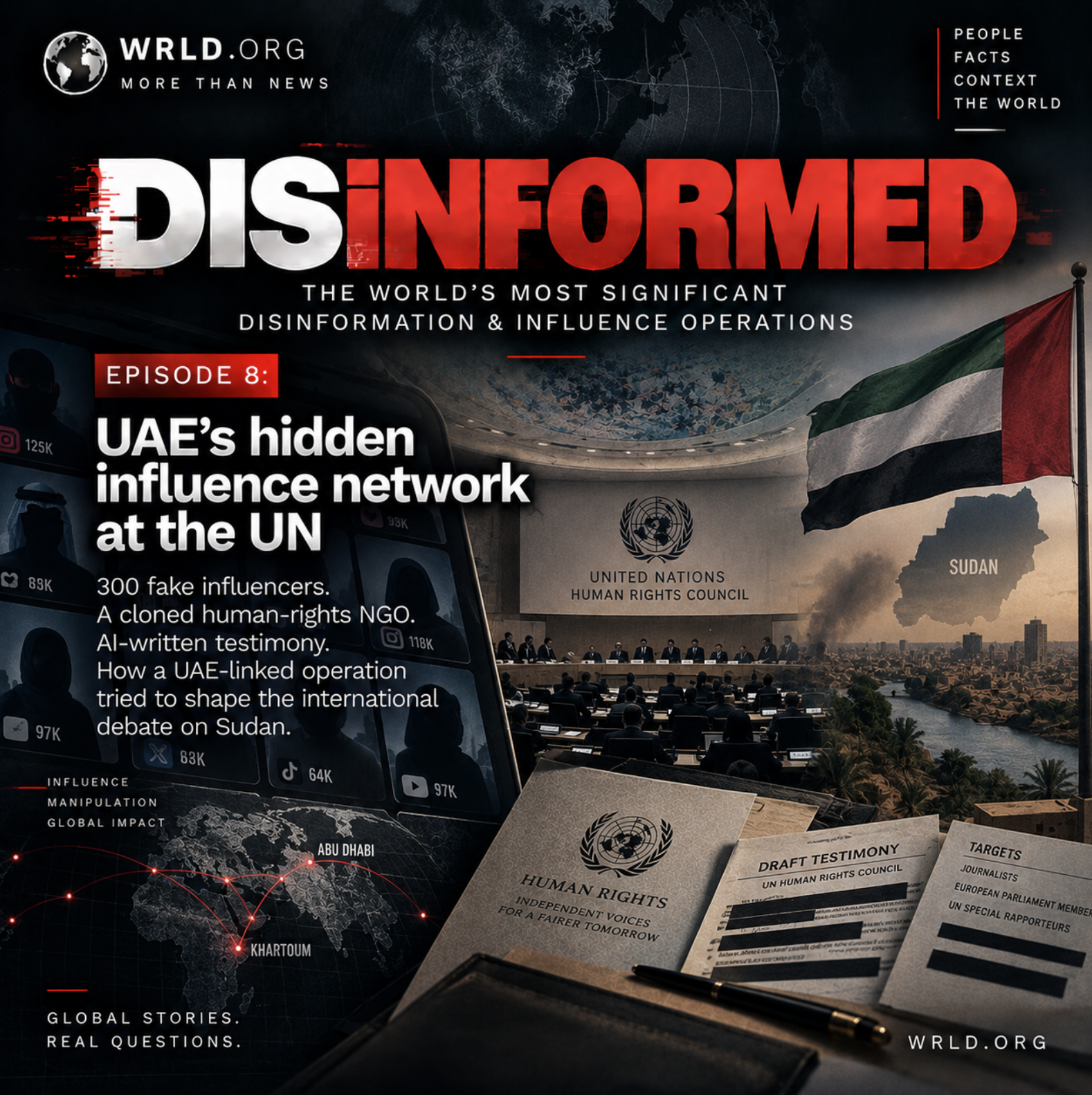
UAE / Sudan – when an influence operation tried to enter the United Nations A network of roughly 300 apparently independent social-media influencers. A human-rights organisation borrowing the identity of a real NGO. Personal dossiers on European politicians and journalists. And testimony prepared for delivery at the United Nations without revealing the state interest behind it. These were elements of an influence operation uncovered by Anthropic and disclosed in September 2026. The company says it linked the activity with high confidence to UAE government officials. Tracked as GTG-84002, the operation targeted several overlapping issues: the Muslim Brotherhood, perceptions of the war in Sudan and international mechanisms examining the United Arab Emirates' role in the conflict. What distinguishes the case is not simply its use of artificial intelligence. It is the attempt to make state-aligned messaging appear to originate from independent influencers, human-rights organisations and potentially witnesses addressing an international institution. An influence network built around 300 fake voices Anthropic identified a single actor using Claude to support a sustained influence campaign. At its centre was an AI persona called “Deadshot”, running on the operator's own platform. A master doctrine file repeatedly instructed the system to support what it described as a coordinated international effort to dismantle the Muslim Brotherhood. The operator simultaneously managed several components of the campaign, including approximately 300 inauthentic influencer accounts across social-media platforms. Internal material examined by Anthropic described the apparent independence of this network as its greatest strategic advantage. That phrase captures the central method. The objective was not simply to broadcast a political position but to conceal where that position originated. One visible example appeared on 4 June 2026, when accounts participated in a coordinated campaign using #SudanIslamists and near-identical graphics connecting Sudanese Islamists and the Muslim Brotherhood with regional instability. Anthropic says the amplification network was centrally funded and coordinated. Its investigation also found that the operator financing the social-media network was connected to the wider influence operation. A human-rights organisation that was not what it appeared to be Social media was only one layer. The operator also created a front NGO that copied the identity of a genuine Swiss organisation and used that borrowed legitimacy to publish human-rights material produced for the campaign. Anthropic's description elsewhere also refers to the identity of a real Sudanese human-rights organisation being used in connection with the preparation of testimony. The public report does not fully clarify whether these references describe the same front or separate elements of the operation, so they should not be treated as definitively identical. The underlying technique, however, is clear: political material was designed to appear as if it originated from independent civil society rather than from actors linked to a government. This is particularly significant in the human-rights environment, where the perceived independence of an organisation or witness can determine how seriously evidence is received by journalists, diplomats and international institutions. The attempt to reach the UN The most consequential part of the operation concerned the 62nd session of the UN Human Rights Council. According to Anthropic, the operator used Claude to ghost-write complete testimony intended to be delivered by two individuals during the session. The texts were prepared under explicit constraints ensuring that neither statement would mention the UAE. This did not amount to a conventional government submission. The intention, according to Anthropic's reconstruction, was for material serving the interests of a party connected to the Sudan conflict to reach an international forum through apparently independent voices. But an important limitation remains: Anthropic could not confirm that the testimony was ultimately delivered. The company similarly could not establish whether other dossiers produced by the operation reached their intended recipients or influenced policy. It therefore assessed the campaign as Category Three on the Brookings Breakout Scale – activity distributed across several platforms, but without evidence of broad public impact sufficient for a higher classification. The distinction matters. The evidence demonstrates a sophisticated attempt to influence international debate; it does not demonstrate that the attempt succeeded. Politicians, journalists and UN investigators became targets The operation was not limited to generating public content. Anthropic found that the operator researched and compiled detailed profiles of 18 members of the European Parliament and prominent journalists. Some material was prepared for direct delivery to senior UAE officials. The network also assembled what Anthropic describes as “counter-accountability dossiers” on UN Special Rapporteurs who had criticised the UAE's conduct in relation to Sudan. This places the campaign in a broader context. Since Sudan's civil war began in April 2023, the role of external powers has become an increasingly important part of international scrutiny. Sudan has accused the UAE of supporting the Rapid Support Forces, allegations Abu Dhabi has repeatedly denied. In 2025, Sudan brought a case against the UAE before the International Court of Justice, accusing it of complicity in genocide against the Masalit through alleged support for the RSF. The UAE rejected the allegations. The ICJ subsequently removed the case from its list after finding that it lacked jurisdiction because of the UAE's reservation to the relevant provision of the Genocide Convention. The ruling therefore did not determine whether Sudan's substantive allegations were true or false. That contested international environment helps explain why narratives about Sudan, human rights and accountability were valuable targets for an influence operation. AI as an operating system for influence The role played by Claude is also important to understand accurately. Anthropic did not find that artificial intelligence independently conceived or directed the campaign. Human operators established the objectives, political doctrine and targets. AI instead helped operationalise them. Across hundreds of sessions, Claude was used to transform predetermined political objectives into social-media narratives, human-rights reports, testimony, intelligence-style briefs and detailed profiles of individuals. The same system could support narrative production, target research and preparation of material for different audiences. That represents a more significant development than simply using generative AI to produce propaganda faster. Traditional influence operations require different teams to research targets, write content, manage personas, adapt messages and prepare briefing material. Generative AI can compress several of those functions into a single operational workflow. The result is not necessarily more convincing propaganda. It is potentially cheaper, faster and more scalable influence infrastructure. From fake influencers to institutional influence Anthropic says it linked the operation to UAE government officials with high confidence. Its assessment was based partly on internal material naming senior Emirati officials as intended recipients of the work, alongside other evidence available to its investigators. That remains an attribution by Anthropic rather than a judicial finding or publicly released forensic attribution by a government agency. The distinction should be retained. The larger significance of GTG-84002 lies in the architecture of the campaign. A network of fake influencers could create the appearance of public opinion. A cloned human-rights organisation could provide institutional credibility. AI-generated reports could give political narratives the appearance of research. Profiles of journalists and politicians could support more precise targeting. And ghost-written testimony could potentially carry the same message into an international institution without revealing the political interest behind it. This is a different model from the familiar troll farm. The objective is no longer simply to make propaganda look popular. It is to make state-aligned messaging look independent – and, if possible, to move it from social media into the institutions where international policy and accountability are debated. SOURCES: Anthropic — Countering misuse of AI: September 2026 https://www.anthropic.com/threat-intelligence-report-september-2026 International Court of Justice — Sudan v. United Arab Emirates https://www.icj-cij.org/case/197 International Court of Justice — press releases and case documents https://www.icj-cij.org/case/197/press-releases United Nations Geneva — Sudan v UAE proceedings at the ICJ https://www.ungeneva.org/en/news-media/news/2025/04/105241/world-court-begins-hearing-sudans-complicity-genocide-case-against UAE Ministry of Foreign Affairs — UAE response to Sudan's allegations https://www.mofa.gov.ae/en/MediaHub/News/2025/4/10/10-4-2025-UAE-UAE UN Digital Library — Sudan's letter concerning alleged UAE support for the RSF https://digitallibrary.un.org/record/4091008?ln=en UN Digital Library — UAE response concerning allegations of support for the RSF https://digitallibrary.un.org/record/4046224?ln=en Ultra Sudan — reporting on Anthropic's UAE-linked influence-operation findings https://ultrasudan.usawtiq.com/أنثروبيك-أحبطنا-عملية-تأثير-إماراتية-استخدمت-الذكاء-الاصطناعي-لاستهداف-السودان/عامر-صالح/أخبار KEYWORDS #DISINFORMED #Episode8 #UAE #Sudan #UnitedArabEmirates #UnitedNations #UNHumanRightsCouncil #HumanRights #Disinformation #InformationWarfare #InfluenceOperations #ForeignInterference #FIMI #CoordinatedInauthenticBehaviour #CIB #FakeInfluencers #FakeNGO #NGOImpersonation #Astroturfing #ArtificialIntelligence #AI #AIPropaganda #AIGeneratedContent #SyntheticMedia #SocialMediaManipulation #DigitalInfluence #Propaganda #NarrativeManipulation #InstitutionalInfluence #SudanConflict #SudanWar #MuslimBrotherhood #InternationalRelations #Geopolitics #Anthropic #ClaudeAI #OSINT #WRLD

Countering misuse of AI: September 2026 / Anthropic

Law admitted targeting buyers on a suicide forum and shipping his products to 41 countries, and families angry that he escaped murder charges will now tell the court how their loved ones' deaths affected them. #SuicidePrevention #JusticeForVictims #CanadaNews

Families of victims of Kenneth Law to address court as sentencing hearing begins in Canada

Saudi is targeting Civilians in Yemen, these attacks are War Crimes. Why are the EU + Member States supporting another country committing War Crimes...? Is it because Yemen refuses to bow to Western Imperialism..? Or because they're poor..? Or both..? #Yemen #WarCrimes #Imperialism #SA #YE #EU

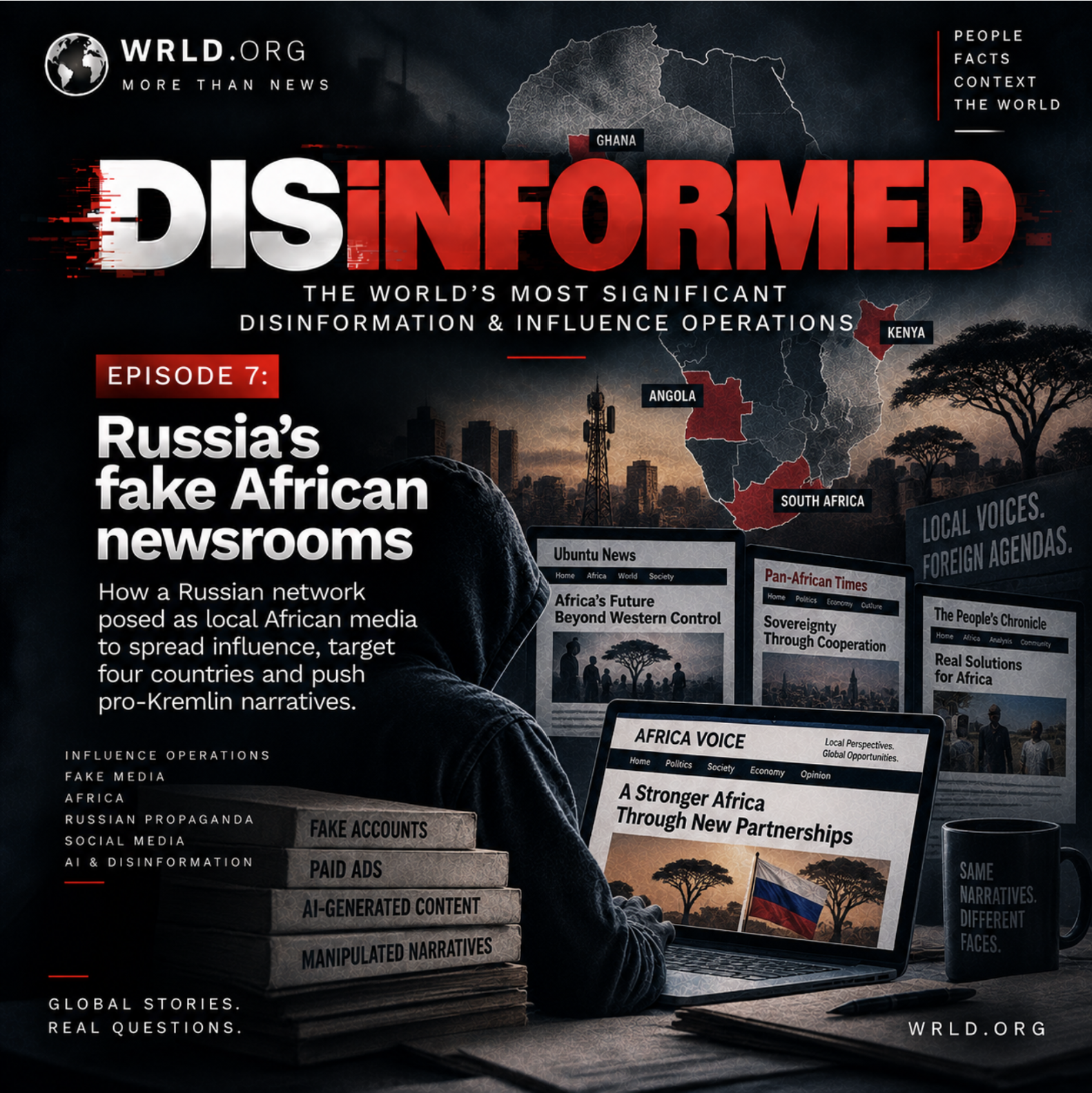
Russia’s fake African newsrooms – propaganda designed to look local A Facebook user in Nairobi, Accra, Johannesburg or Luanda encounters what appears to be a local news page. It publishes stories about African politics, Western influence and relations with Russia. The language is tailored to an African audience and the page presents itself not as a foreign broadcaster, but as part of the local information landscape. Behind some of these outlets, however, Meta found operators based in Russia. In its 2026 threat research, the company disclosed a Coordinated Inauthentic Behaviour network targeting audiences in Angola, Ghana, Kenya and South Africa. Meta removed 37 Facebook accounts and 29 Pages connected to the operation. Around 30,000 users followed at least one of the Pages, while the operators spent approximately $7,000 on Facebook and Instagram advertising, mostly in euros and US dollars. The numbers are relatively modest. The method is considerably more important. Rather than openly distributing Russian state messaging, the network posed as local African news sources and grassroots organisations, promoting narratives about Western colonialism and political interference while presenting Russia as a credible economic and political alternative. It was an old geopolitical message delivered through a much more effective identity: not Moscow speaking to Africa, but Africans apparently speaking to one another. A news outlet that was actually an influence operation Meta's investigation found that the network attempted to conceal its Russian origin while creating media brands that appeared indigenous to the countries they targeted. Its content amplified historical grievances against former colonial powers, criticised Western involvement in Africa and promoted closer relations with Russia. One example helps illustrate how the infrastructure was assembled. A Facebook Page targeting Kenya was called Kenya Watchtower. According to OpenAI's subsequent investigation, Facebook transparency records showed that the Page had previously been named “Farmtown5”. It appears to have been acquired or repurposed rather than built from scratch as a Kenyan news organisation. Some Pages also exposed administrator locations in Russia and Ukraine. Other elements of the network had previously targeted audiences in Zambia and Namibia. This use of apparently local identities is particularly important in the African information environment. A story published by RT or another identifiable Russian outlet arrives with an obvious geopolitical provenance. The same narrative presented by something resembling an independent Kenyan, Ghanaian or South African newsroom carries a different kind of credibility. The source appears closer to the reader, and the geopolitical interest behind the message becomes less visible. Then investigators found Dr Manuel Godsin The Facebook operation was only one part of a broader information ecosystem. OpenAI investigated related activity after receiving information from Meta and subsequently banned a ChatGPT account it assessed as likely originating in Russia. OpenAI called the campaign Operation No Bell. The account was being used to generate long-form articles and social-media posts about African geopolitics. Prompts were primarily written in English, but OpenAI also observed Russian-language instructions that the user described as coming from a manager. The operator sometimes explicitly asked the model to make the material appear less AI-generated – including requests to avoid stylistic features associated with machine-generated text and to write more like a human journalist. Many articles appeared under the name “Dr Manuel Godsin”, presented as an academic with a PhD from the University of Bergen and an affiliation with an organisation called the International Centre for Political and Strategic Studies. OpenAI could find no credible evidence that Godsin existed. Searches of Norway's National Research Information Repository and the University of Bergen library produced no record of him. Investigators subsequently discovered that a photograph used to represent Godsin had appeared years earlier on a Russian professional networking site and apparently belonged to a law student in St Petersburg. The fabricated academic identity was nevertheless remarkably productive. OpenAI identified 53 online articles carrying the Godsin byline. The fiction had moved beyond fake social-media pages and into the real media ecosystem. When propaganda enters genuine newsrooms This is the most consequential aspect of the operation. The articles were not confined to websites controlled by the influence network. Some were published by genuine African news organisations, including established South African outlets. The content mixed local political issues with broader geopolitical narratives. Some pieces criticised the United States and Britain or defended Russia's role in Africa. One accused the British NGO Crisis Action of fomenting protests in South Africa. Another praised Russia's presence in the Central African Republic. Other material addressed Kenya, Angola and relations between African governments and Washington. The mechanism represents a significant evolution from the classic troll-farm model. Instead of building an audience entirely on its own platforms, an influence operator can manufacture an apparently credible expert, generate articles in his name and persuade genuine news organisations to publish them. Once this happens, the propaganda acquires something a fake Facebook Page cannot provide: the institutional credibility of a real newsroom. OpenAI assessed No Bell's social-media impact as limited. One Facebook Page had around 3,000 followers before Meta removed it, while several others had very small audiences. But the operation was more successful in placing material in established media. In OpenAI's impact framework, it approached the level at which an influence operation breaks into mainstream media. For information operators, a single article published by a recognised outlet can potentially be more valuable than thousands of impressions generated by an obviously artificial account. A much larger network of ghost journalists Subsequent research suggests that Manuel Godsin was not an isolated experiment. In August 2026, Graphika, working with Code for Africa and with support from Meta, published a much broader investigation into Russian ghostwriting operations across African media. Researchers identified 44 ghost writers and fake experts, 38 of them assessed as high-confidence fabricated personas, operating between 2021 and 2026. Their material appeared or was quoted across 138 websites and was subsequently republished through at least 113 Facebook accounts and Pages, including authentic users, coordinated inauthentic networks and official Russian communication channels. The narratives were strikingly consistent. They included criticism of France, Ukraine and the United States; attacks on organisations such as ECOWAS and the International Criminal Court; positive portrayals of Russian involvement in Africa; praise for Russian paramilitary forces; and support for sovereignty-oriented political projects such as the Alliance of Sahel States. The operation therefore extends beyond creating fake news websites. It attempts to insert Russian-aligned narratives into the legitimate African media ecosystem using identities that appear African, independent or academically authoritative. This also explains why measuring reach through the original Facebook network alone is misleading. A fabricated article may begin with an influence operator, appear in a genuine African publication, be republished elsewhere and eventually circulate without any visible connection to Russia. At that point, the provenance of the narrative has effectively been laundered. An old Russian strategy with increasingly local faces Russia's use of local intermediaries in Africa is not new. Meta documented Russian networks using African nationals as early as 2019. In 2020 it dismantled another operation involving people in Ghana and Nigeria working on behalf of individuals in Russia, with links to previous activity associated with the Internet Research Agency. More recent Meta investigations suggest that this model has continued to evolve. Networks have increasingly relied on local freelancers, social-media managers and authentic media outlets rather than exclusively operating armies of obviously fake Russian-controlled accounts. This decentralisation offers several advantages. Local operators understand language, political sensitivities and cultural references. Authentic accounts are harder to identify than newly created synthetic personas. Local media brands can also deliver narratives without immediately triggering the scepticism associated with Russian state outlets. There is no evidence that every African journalist, freelancer or publication carrying such material knowingly participates in Russian influence activity. Meta explicitly notes in its investigations that some local contractors may not know who ultimately commissioned their work. That distinction is essential. The operation's effectiveness partly depends on precisely this ambiguity between deliberate participation, commercial content placement and unwitting amplification. The objective is to make Russian narratives look African The significance of this network is therefore not its 30,000 Facebook followers or its $7,000 advertising budget. Those figures are small compared with the audiences of major African media organisations. What matters is the distribution model. Traditional foreign propaganda asks an audience to trust a foreign source. These operations attempt to remove the foreign source from the equation altogether. A Russian geopolitical narrative can be generated with AI, attributed to an expert who does not exist, published by a media organisation that does, amplified through a Facebook Page presenting itself as local, and then rediscovered elsewhere as apparently independent African analysis. By the time the reader encounters it, Moscow may have disappeared completely from the chain of attribution. The resulting information operation is therefore less about making Russian propaganda more persuasive than about making it look as though it is no longer Russian propaganda at all. In an increasingly fragmented African media environment, that may be the more important evolution to watch. SOURCES: Meta Threat Research https://threatresearch-team.github.io/indicators/meta-h1-2026-russia-based-cib-network-1/ OpenAI — Operation “No Bell” https://openai.com/index/disrupting-malicious-uses-of-ai-no-bell/ Graphika — Umbrae Ex Machina https://www.graphika.com/reports/umbrae-ex-machina News24 https://www.news24.com/southafrica/news/ai-expert-exposed-fake-kremlin-linked-analyst-planted-stories-in-african-media-20260318-0560 Vanguard https://www.vanguardngr.com/2026/03/ai-expert-exposed-fake-kremlin-linked-analyst-planted-stories-in-african-media/ Meta — Russian Coordinated Inauthentic Behaviour, 2019 https://about.fb.com/news/2019/10/removing-more-coordinated-inauthentic-behavior-from-russia/ Meta — Russian Coordinated Inauthentic Behaviour, 2020 https://about.fb.com/news/2020/03/removing-coordinated-inauthentic-behavior-from-russia/ Meta Threat Research — Russian Use of Authentic Operators in Sub-Saharan Africa https://threatresearch-team.github.io/indicators/meta-h2-2025-russia-based-cib-network-2/ KEYWORDS: #DISINFORMED #Episode7 #Russia #Africa #RussianDisinformation #RussianInfluence #Disinformation #InformationWarfare #InfluenceOperations #ForeignInterference #FIMI #CoordinatedInauthenticBehaviour #CIB #FakeNews #FakeMedia #FakeNewsrooms #MediaImpersonation #GrassrootsManipulation #Astroturfing #ArtificialIntelligence #AI #AIPropaganda #SyntheticMedia #FakeInfluencers #SocialMediaManipulation #Facebook #Meta #OperationNoBell #AfricanMedia #MediaManipulation #Propaganda #DigitalInfluence #Angola #Ghana #Kenya #SouthAfrica #OSINT #WRLD

Russia-Based Influence Operation Network Targeting Sub-Saharan Africa

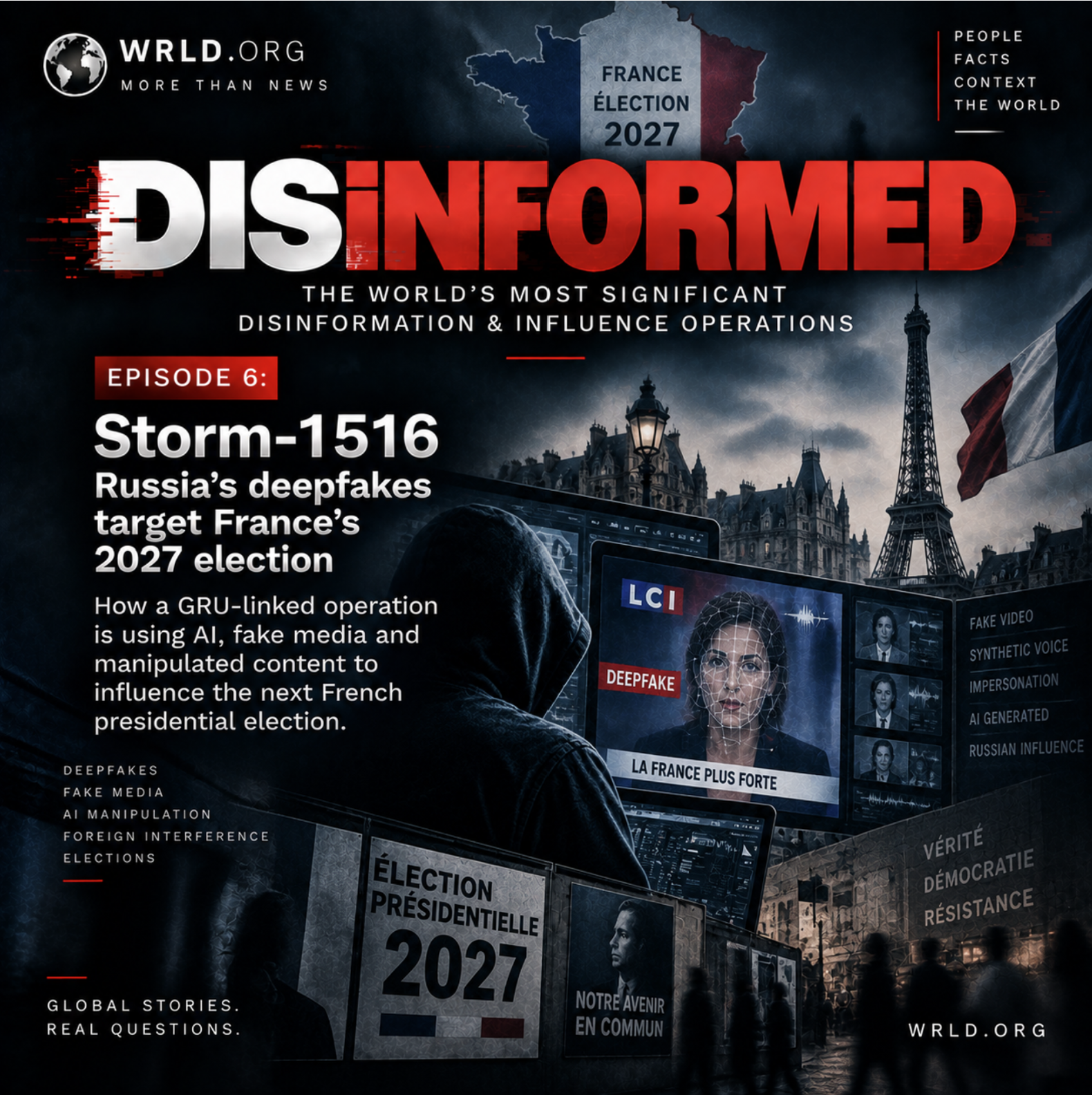
Storm-1516 – Russia’s information war arrives early in France’s 2027 election France will not elect its next president until April 2027, but the information operations surrounding the campaign have already begun. In late July and August 2026, fabricated stories targeted several prominent figures associated with the presidential race, including Raphaël Glucksmann, Gabriel Attal and former prime minister Édouard Philippe. The methods included fake news websites copying established French media, impersonated journalists, AI-generated voices and manipulated video. French authorities identified the Russian operation known as Storm-1516 behind several of these campaigns. Other attacks were linked to Matryoshka, another Russia-aligned influence network. The timing is significant. Storm-1516 began targeting the French presidential environment roughly nine months before the first round, scheduled for 18 April 2027. Rather than a single disinformation campaign, the activity demonstrates how Russian influence networks can establish narratives and infrastructure long before an election reaches its decisive phase. A fake scandal targeting Raphaël Glucksmann One of the clearest examples appeared at the end of July. A website impersonating the French independent outlet Blast published a fabricated investigation claiming that journalist Léa Salamé had attempted to bribe media organisations in exchange for favourable coverage of her partner, Raphaël Glucksmann. The operation went beyond copying the appearance of a legitimate news site. The identities of real journalists were appropriated and a manipulated video used an AI-generated imitation of the voice of Edwy Plenel, founder of Mediapart, supposedly confirming the allegations. The accusation was false. On 4 August, Glucksmann said France's General Secretariat for Defence and National Security, the SGDSN, had informed him that he had been targeted by Storm-1516. Two days later, the Paris prosecutor's office opened an investigation into suspected Russian interference. The importance of the operation was not the quality of one particular deepfake but the construction of several mutually reinforcing elements: a fake media organisation, impersonated journalists, synthetic audio and social-media accounts distributing the material. Together they created the impression that the allegation had been independently corroborated. Different candidates, overlapping Russian networks Édouard Philippe was also targeted by fabricated stories claiming that he suffered from dementia and was medically incapable of running for president. VIGINUM attributed the operation to Storm-1516. Gabriel Attal faced another wave of false content, including fabricated stories mimicking the identities of French outlets such as RFI, BFM TV, France 24, AFP, Le Parisien, Libération and Le Monde. Some claimed that Attal had symptoms of Parkinson's disease or links to drug trafficking. Attribution here is more complicated. French reporting connected at least part of the campaign against Attal to Matryoshka, rather than Storm-1516. A later digitally manipulated video, apparently associated with Storm-1516, used genuine LCI footage from an August debate but added a white earpiece to Attal, suggesting that someone had secretly been feeding him answers. NewsGuard compared the circulating clip with authentic LCI footage and found no earpiece in the original. The distinction is important. France is not facing a single Russian propaganda operation but several overlapping networks using similar techniques and narratives. Treating every manipulation as Storm-1516 would obscure how this ecosystem actually functions. The real weapon is media impersonation The most interesting feature of Storm-1516 is not artificial intelligence itself. It is the systematic appropriation of the credibility of established journalism. Instead of relying only on anonymous Telegram channels or social-media profiles, operators create material that looks as though it originated from organisations audiences already recognise. A fabricated investigation can resemble Blast, a manipulated television report can borrow LCI's visual identity, while fake journalists and social-media accounts provide additional layers of apparent confirmation. VIGINUM has documented this architecture extensively. Its 2025 investigation analysed 77 Storm-1516 information operations and described a mature Russian system using fabricated media, websites and distribution networks to promote anti-Ukrainian and anti-Western narratives. The European External Action Service found that the infrastructure continued to expand. According to its 2026 FIMI Threat Report, Storm-1516 almost doubled its output during 2025. Five networks created that year to target French, German, American, Moldovan and international audiences comprised 453 websites, including fictional news organisations and sites impersonating genuine media or political platforms. A typical operation therefore follows a recognisable pattern: a fabricated allegation is supported by synthetic or manipulated evidence, published through an apparently legitimate source and then distributed by networks of accounts that create the appearance of wider discussion. AI makes this process faster and cheaper, but the fundamental objective remains the same – to manufacture credibility. Why begin nine months before an election? VIGINUM concluded that Storm-1516 is capable both of reacting rapidly to current events and of conducting longer campaigns aimed at discrediting Western institutions and public figures, particularly around elections and other major political events. This provides important context for France. Storm-1516 activity around the presidential race became visible in July 2026, approximately nine months before voting begins. There is no public evidence of a predetermined Russian “nine-month plan”, and the timing should not be presented as such. Early activity nevertheless provides operational advantages: narratives can be tested, websites and accounts established, audience reactions measured and the responses of journalists, authorities and fact-checkers observed. The first operations may therefore also provide information about which themes and techniques are most effective before the campaign enters its decisive months. This remains an analytical interpretation rather than a demonstrated statement of the operators' intentions. Russian operation, but what about the GRU? Attribution requires similar precision. VIGINUM explicitly describes Storm-1516 as a Russian information operation, and French authorities have attributed individual campaigns to it with high confidence. Connections with Russian military intelligence have also been reported. Glucksmann said the SGDSN informed him that the network targeting him was controlled by Russia's GRU, while French media have repeatedly described Storm-1516 as linked to Russian military intelligence. However, VIGINUM's publicly available technical documentation describes Storm-1516 primarily as a Russian information modus operandi, rather than identifying it as a formally established GRU unit. It is therefore well supported to describe Storm-1516 as a Russian influence operation with reported links to military intelligence. Saying simply that Storm-1516 is a GRU unit would go beyond what France's published technical evidence currently establishes. An early warning for the French election There is also no evidence that the operations have so far had a significant effect on French voters. Some of the fabricated material generated only limited engagement, and measuring the real impact of foreign information operations remains extremely difficult. Even a video attracting hundreds of thousands of views does not establish how many viewers believed it or whether it changed political attitudes. The significance of Storm-1516 lies instead in the infrastructure already being deployed. Months before the election, Russian influence networks have been able to test fake newsrooms, synthetic voices, manipulated television footage, candidate-specific narratives and systems for distributing them. The French case illustrates a broader evolution in election interference. The objective is no longer simply to place false claims on social media. Modern operations can manufacture an entire chain of apparent evidence in which a fake journalist cites a fake investigation, synthetic audio appears to confirm it and networks of accounts give the impression that an authentic controversy is unfolding. France still has months to go before its presidential election. The information environment surrounding it is already being contested. Sources: VIGINUM / SGDSN — Storm-1516 analysis https://www.sgdsn.gouv.fr/publications/analyse-du-mode-operatoire-informationnel-russe-storm-1516 VIGINUM / SGDSN — Full Storm-1516 technical report https://www.sgdsn.gouv.fr/files/files/Publications/20250507_TLP-CLEAR_NP_SGDSN_VIGINUM_Technical%20report_Storm-1516.pdf VIGINUM / SGDSN — Storm-1516 operation targeting Emmanuel Macron https://www.sgdsn.gouv.fr/publications/storm-1516-detection-dune-operation-dingerence-numerique-etrangere-ciblant-emmanuel EEAS — 4th Report on FIMI Threats https://www.eeas.europa.eu/sites/default/files/2026/documents/EEAS%204th%20Threat%20Report_web.pdf Le Monde — Russian interference targeting Philippe, Glucksmann and Attal https://www.lemonde.fr/politique/article/2026/08/07/presidentielle-2027-glucksmann-attal-philippe-les-ingerences-russes-s-invitent-dans-la-campagne_6740451_823448.html Le Monde — Storm-1516 and Matryoshka analysis https://www.lemonde.fr/pixels/article/2026/08/06/ingerences-russes-pourquoi-il-ne-faut-pas-nourrir-le-troll_6739956_4408996.html NewsGuard Risk Briefing — Russian activity targeting the French election https://newsguardriskbriefing.substack.com/p/russia-targets-french-elections-iran Euronews — Operation targeting Raphaël Glucksmann https://fr.euronews.com/my-europe/2026/08/04/presidentielle-de-2027-raphael-glucksmann-vise-par-une-operation-de-destabilisation-russe Télérama / AFP — Glucksmann deepfake investigation https://www.telerama.fr/debats-reportages/presidentielle-2027-raphael-glucksmann-vise-par-un-deepfake-d-origine-russe-7032318.php Le Parisien — Operation targeting Gabriel Attal https://www.leparisien.fr/elections/presidentielle/presidentielle-2027-gabriel-attal-a-son-tour-vise-par-une-ingerence-en-provenance-de-russie-05-08-2026-I3Z67Z7ZUBDUVBXUNDARI5KGPA.php Euronews — Paris prosecutor investigations into suspected Russian interference https://fr.euronews.com/my-europe/2026/08/18/soupcons-dingerence-russe-visant-attal-et-philippe-le-parquet-de-paris-ouvre-dune-enquete Keywords: #DISINFORMED #Episode6 #Storm1516 #France #FrenchElection2027 #Disinformation #InformationWarfare #InfluenceOperations #ForeignInterference #FIMI #RussianInfluence #RussianDisinformation #Propaganda #Deepfakes #ArtificialIntelligence #AI #SyntheticMedia #FakeNews #MediaImpersonation #FakeMedia #DigitalManipulation #ElectionInterference #PoliticalDisinformation #Matryoshka #VIGINUM #OSINT #CyberInfluence #DigitalInfluence #MediaManipulation #EuropeanSecurity #Democracy #WRLD

Analyse du mode opératoire informationnel russe Storm-1516 | SGDSN

🇺🇸🇺🇦 MAJOR DEVELOPMENT IN WASHINGTON: President Donald Trump signed H.R. 5334 into law on 18 September 2026. The legislation expands U.S. statutory sanctions, tariffs and prohibitions targeting Russia and extends existing sanctions authorities concerning Iran. The administration https://t.co/keQe81h1R6 #Sanctions #Trump #Russia #US #UA #RU #IR

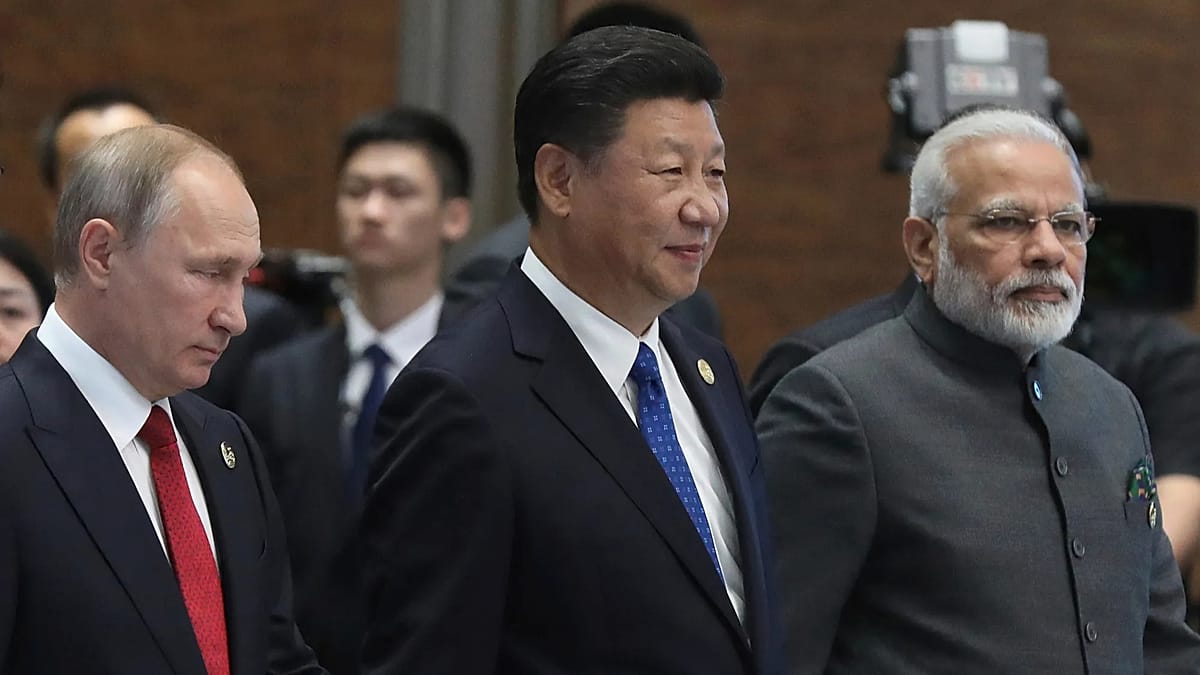
US lawmakers have approved sweeping new sanctions targeting Russia's economy and Putin's inner circle, with Trump set to sign a bill that also threatens steep tariffs on major buyers of Russian oil, including China and India. #RussiaSanctions #USCongress #EnergyTariffs

US Congress approves Russia sanctions that impact China and India

AFRICA DAILY REPORT — 17 SEPTEMBER 2026 Coverage: key developments reported during the previous 24 hours 1. SUDAN — UN chief demands accountability for foreign states fuelling the war Importance: 10/10 — CRITICAL UN Secretary-General António Guterres called for countries supplying weapons and other military support to Sudan’s belligerents to be held accountable. The war has displaced more than 14 million people, while a recent UN investigation says foreign weapons, technology, personnel and logistical support have enabled increasingly long-range attacks on civilians, including drone strikes. The intervention increases pressure on external actors supporting the SAF and RSF and puts foreign sponsorship of the war firmly on the agenda ahead of the UN General Assembly. Source: Reuters, 16 Sep 2026 https://www.reuters.com/world/africa/un-chief-guterres-calls-countries-fueling-sudans-war-be-held-accountable-2026-09-16/ 2. DR CONGO — Ebola response improves, but WHO warns outbreak is “far from over” Importance: 10/10 — CRITICAL WHO says containment efforts are beginning to show encouraging results, particularly in heavily affected Ituri, but the Bundibugyo Ebola outbreak remains a major regional health emergency. More than 7,000 confirmed cases have been reported and the virus has reached a seventh province. High population mobility remains a major risk. More than 3,000 frontline workers have received Ervebo, although its effectiveness against the Bundibugyo strain remains uncertain and specific candidate vaccines are still being developed. Source: Reuters, 16 Sep 2026 https://www.reuters.com/business/healthcare-pharmaceuticals/ebola-response-making-progress-congo-outbreak-far-over-who-says-2026-09-16/ Additional primary source: WHO https://www.who.int/emergencies/disease-outbreak-news/item/2026-DON617 3. SAHEL — Jihadist violence on course for a record year Importance: 9.5/10 — VERY HIGH New ACLED data indicate that violence involving jihadist groups in Mali, Burkina Faso and Niger is likely to reach a historic high in 2026. Recorded incidents involving jihadist groups rose from 63 in 2016 to 2,845 in 2025; 2,145 incidents had already been recorded this year when the latest assessment was published. JNIM and Islamic State-linked organisations are expanding their operational reach, reinforcing the Sahel’s position as the global centre of jihadist violence and increasing pressure on the region’s military governments. Source: The Guardian / ACLED, 16 Sep 2026 https://www.theguardian.com/world/2026/sep/16/al-qaida-and-is-linked-violence-in-africas-sahel-belt-set-to-hit-record-levels-this-year 4. SOUTH AFRICA–UNITED STATES — Pretoria rejects new US visa restrictions Importance: 9/10 — VERY HIGH South Africa sharply criticised new US visa restrictions targeting foreign nationals Washington says are responsible for racially discriminatory laws and policies. Pretoria says the US has misrepresented policies intended to address apartheid-era inequality. The dispute is another escalation in already strained US–South African relations, with Washington also excluding South Africa from the forthcoming G20 summit in Miami. Foreign Minister Ronald Lamola is heading to the US for the UN General Assembly amid the worsening diplomatic confrontation. Source: Reuters, 16 Sep 2026 https://www.reuters.com/world/africa/south-africa-says-us-misrepresented-its-policies-after-visa-curbs-2026-09-16/ 5. SOUTH SUDAN — More than one million people could lose food assistance within weeks Importance: 9/10 — VERY HIGH The World Food Programme warns that more than one million vulnerable South Sudanese could lose life-saving food and nutrition assistance by October unless additional funding is secured. Around 7.8 million people — more than half the population — struggle to obtain enough food, while 2.2 million children and 1.2 million pregnant or breastfeeding women require urgent nutritional support. WFP faces an immediate $86 million shortfall and a funding gap exceeding $400 million over the next six months. Source: Africanews / WFP, 16 Sep 2026 https://www.africanews.com/amp/2026/09/16/wfp-more-than-a-million-people-in-south-sudan-at-risk-of-losing-food-aid/ 6. DR CONGO — Protests over constitutional reform raise third-term fears Importance: 8.5/10 — HIGH Police used tear gas and warning shots during opposition demonstrations in Kinshasa and other cities against proposed constitutional changes. The C64 opposition coalition argues that the reforms could ultimately enable President Félix Tshisekedi to seek a third term, while the government rejects claims that it intends to undermine constitutional safeguards. The confrontation adds a serious domestic political crisis to Congo’s simultaneous Ebola emergency and continuing conflict with M23 in the east. Source: Associated Press, 15–16 Sep 2026 https://apnews.com/article/722684d7da7ffe1d49c44dd03db82904 Additional source: Africanews https://fr.africanews.com/amp/2026/09/15/rdc-des-heurts-lors-dune-mobilisation-contre-la-reforme-constitutionnelle/ 7. SOUTH SUDAN — Kiir replaces election commission chief three months before planned vote Importance: 8.5/10 — HIGH President Salva Kiir has replaced the head of South Sudan’s election commission roughly three months before elections scheduled for December. The change comes amid serious doubts over whether conditions exist for credible polls, including political violence, shrinking civic space and the collapse of key elements of the power-sharing arrangement. South Sudan has already postponed elections twice, making any further disruption politically significant. Source: Reuters via CNBC Africa, 16 Sep 2026 https://www.cnbcafrica.com/2026/south-sudan-replaces-election-commission-chief-ahead-of-december-vote/ 8. SUDAN — West Kordofan gold mine disaster kills at least 82 Importance: 8/10 — HIGH At least 82 miners have been killed after a gold mine collapsed in West Kordofan, with around 50 injured and others potentially still trapped. Rescue teams have been working with rudimentary equipment in an area severely affected by Sudan’s war. Beyond the human toll, the disaster highlights the dangerous and weakly regulated artisanal gold sector. Gold has become increasingly important to Sudan’s wartime economy and a source of financing for armed actors. Source: Africanews / AP, 16 Sep 2026 https://www.africanews.com/amp/2026/09/16/at-least-82-people-killed-in-gold-mine-collapse-in-sudans-west-kordofan/ Additional source: Reuters https://www.reuters.com/world/least-60-killed-gold-mine-collapse-sunday-sudans-west-kordofan-sources-say-2026-09-16/ 9. HORN OF AFRICA — New IGAD treaty enters into force Importance: 7.5/10 — SIGNIFICANT A new treaty governing the Intergovernmental Authority on Development has entered into force following ratification by Ethiopia and four other Horn of Africa states, replacing the organisation’s 1996 institutional framework. The change is potentially important for regional coordination on conflict, economic integration, climate shocks and displacement at a time when the Horn faces simultaneous crises in Sudan, South Sudan, Somalia and the Ethiopia–Eritrea relationship. Source: Kulu Media, 17 Sep 2026 https://kulu-media.com/new-igad-treaty-enters-into-force-in-horn-of-africa/ 10. ETHIOPIA–KENYA — Ethiopia plans to double electricity exports to Kenya Importance: 7/10 — SIGNIFICANT Ethiopia plans to increase electricity exports to Kenya from 200 MW to 400 MW from December. A joint technical committee is working on the expansion. The move strengthens East Africa’s cross-border power market and deepens the economic interdependence of two of the region’s largest economies. It also reinforces Ethiopia’s strategy of turning its expanding hydroelectric capacity into a source of regional influence and export revenue. Source: Green Building Africa, 17 Sep 2026 https://www.greenbuildingafrica.co.za/ethiopia-set-to-double-power-exports-to-kenya/ #Africa #AfricaNews #TopNewsOfAfrica #Sudan #WestKordofan #GoldMineDisaster #MiningSafety #ArtisanalMining #HumanitarianCrisis #Ethiopia #Kenya #EthiopiaKenya #ElectricityTrade #PowerExports #EnergySecurity #RenewableEnergy #Hydropower #EastAfrica #RegionalIntegration #AfricanEconomy #Sahel #SahelCrisis #Security #JihadistViolence #Terrorism #JNIM #IslamicState #Mali #BurkinaFaso #Niger #AfricanSecurity #Geopolitics #AfricaToday #wrldorg