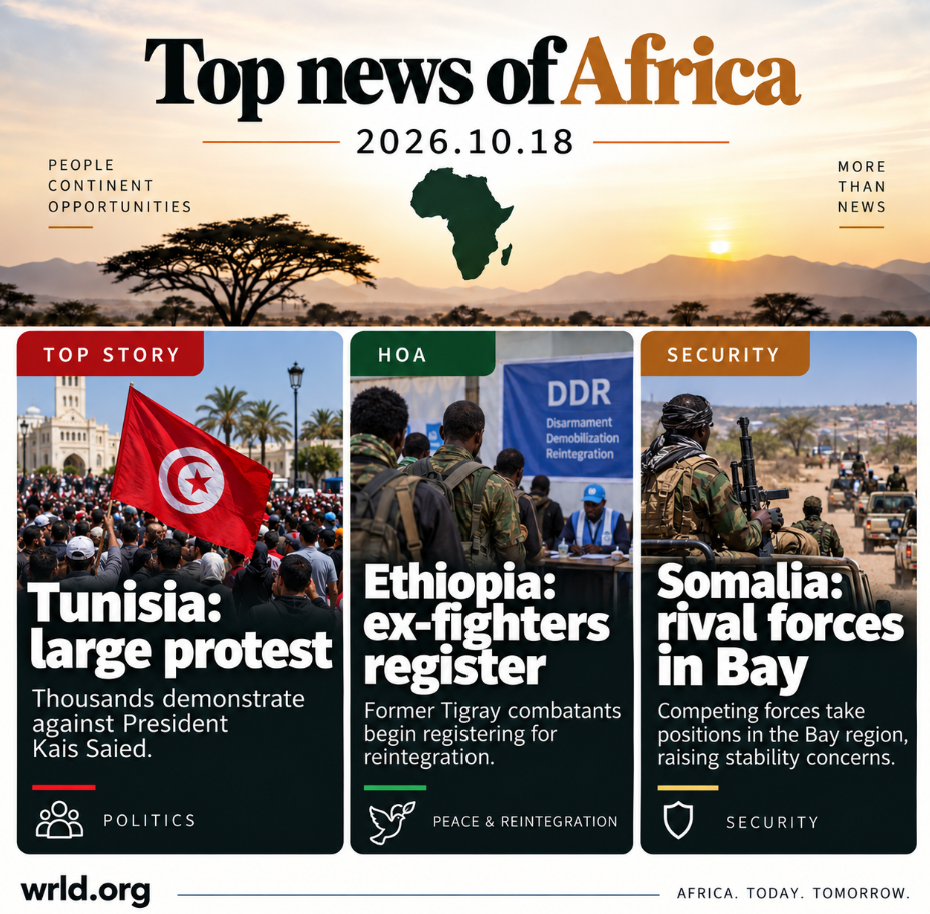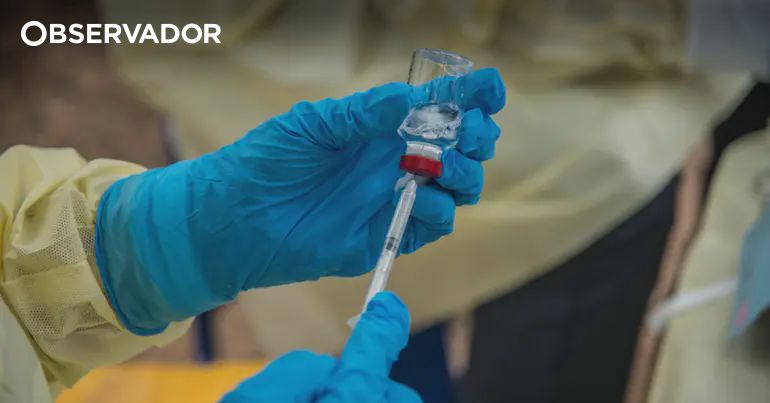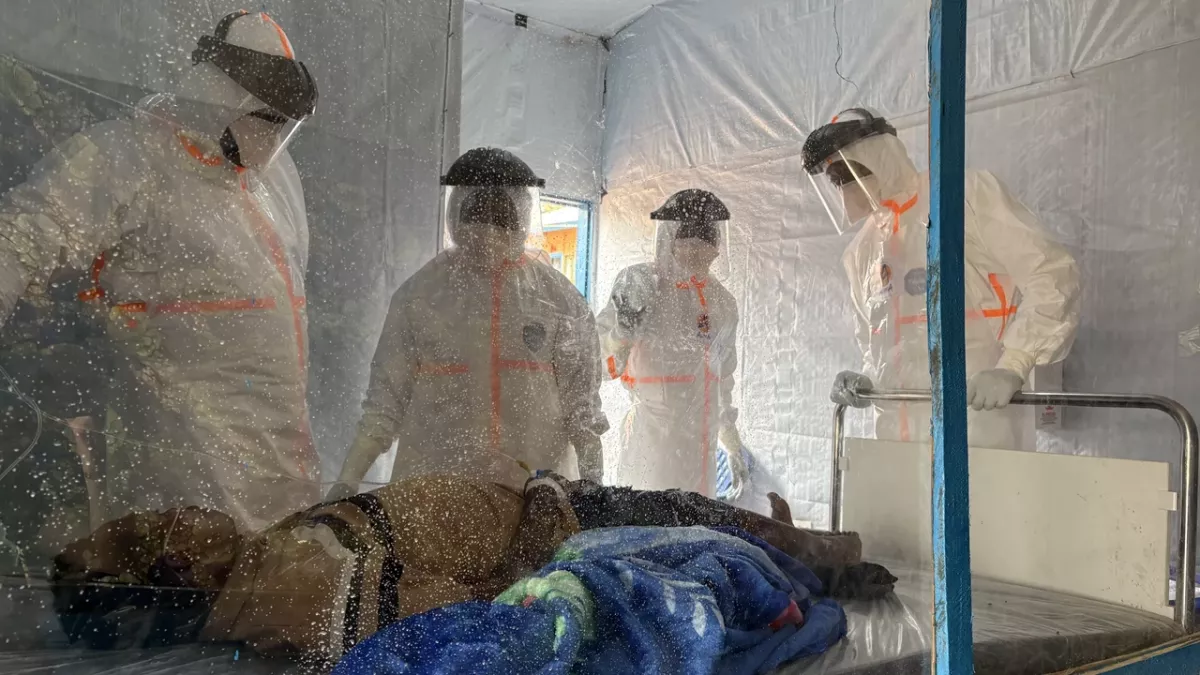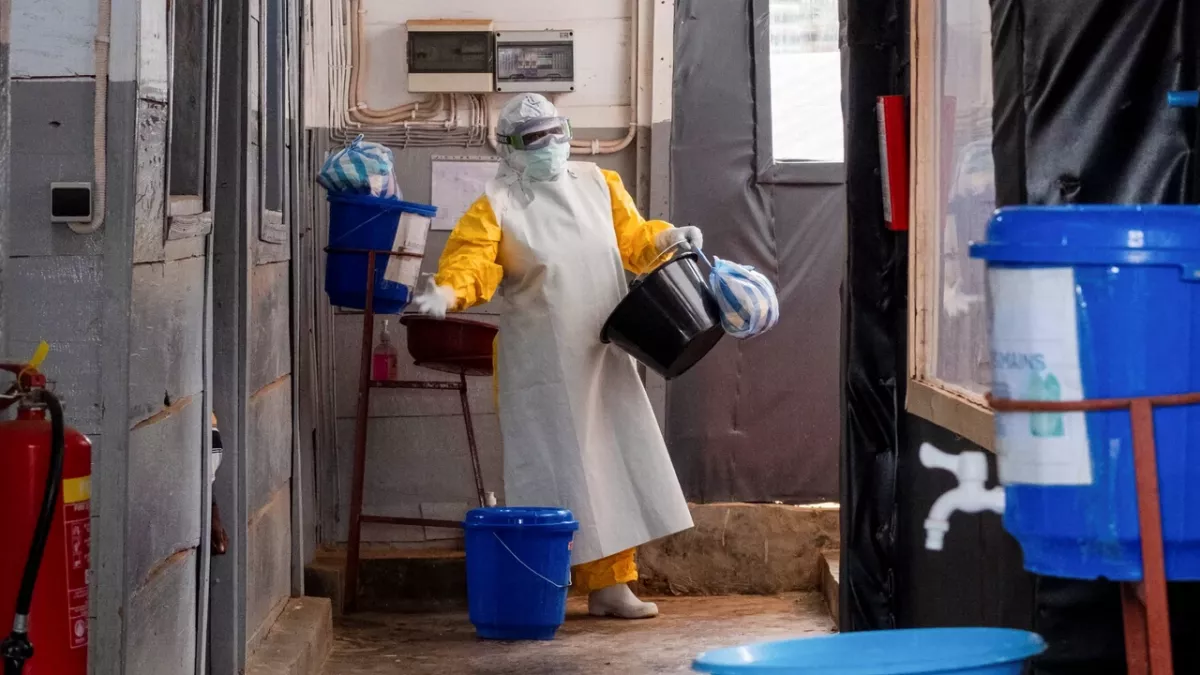
AFRICA DAILY REPORT — 18 OCTOBER 2026 Key news of past 24 hours 1. Kenya — Ebola infections rise to seven Importance: 10/10. Four additional Bundibugyo Ebola cases were confirmed, including three health workers. All four were already quarantined; officials said there was no evidence of uncontrolled community transmission. SOURCE (DIRECT ARTICLE URL): https://www.reuters.com/business/healthcare-pharmaceuticals/kenya-confirms-four-new-ebola-cases-bringing-total-number-seven-2026-10-17/ 2. Tunisia — Large protest against President Kais Saied Thousands demonstrated in Tunis over economic conditions, public services and political freedoms. Supporters and critics differ sharply on the president's record. SOURCE (DIRECT ARTICLE URL): https://www.reuters.com/business/media-telecom/tunisians-stage-biggest-protest-years-against-president-saied-2026-10-17/ 3. Somalia — Rival forces take positions in Bay region Local reporting described territorial advances by forces loyal to former South West State leader Laftagareen, raising concerns about instability and civilian movement. SOURCE (DIRECT ARTICLE URL): https://www.hiiraan.net/news4/2026/Oct/206547/forces_loyal_to_laftagareen_seize_several_districts_and_strategic_areas_in_bay_region.aspx 4. DR Congo — Ebola vaccination for frontline workers Importance: 10/10. Healthcare workers in Beni began receiving Ervebo under an emergency programme. Its effectiveness against the outbreak's Bundibugyo strain remains unproven. SOURCE (DIRECT ARTICLE URL): https://www.africanews.com/2026/10/17/frontline-workers-in-drc-receive-ervebo-vaccine-amid-growing-ebola-outbreak/ 5. Egypt — Sisi says he intends to leave office in 2030 President Abdel Fattah el-Sisi said he intends to leave office when his current term ends and not seek a constitutional extension. No detailed transition arrangements were announced. SOURCE (DIRECT ARTICLE URL): https://www.africanews.com/2026/10/17/egypts-president-sisi-will-step-down-when-term-expires-in-2030/ 6. Senegal — Macky Sall withdraws from UN leadership race Former president Macky Sall withdrew his candidacy for UN secretary-general amid Security Council consultations on a successor to António Guterres. SOURCE (DIRECT ARTICLE URL): https://www.africanews.com/2026/10/17/senegals-macky-sall-withdraws-from-race-for-un-top-job/ 7. Ethiopia — Former Tigray fighters register for reintegration Importance: 9/10. Former combatants in Mekelle began registering for civilian reintegration under a fragile post-conflict process. SOURCE (DIRECT ARTICLE URL): https://www.africanews.com/2026/10/17/ex-fighters-in-ethiopias-tigray-region-register-for-reintegration-programme/ 8. Morocco — First woman-led government appointed King Mohammed VI formally appointed a new cabinet led by Fatima Ezzahra El Mansouri, following parliamentary elections. SOURCE (DIRECT ARTICLE URL): https://www.africanews.com/2026/10/17/moroccos-king-mohammed-vi-formally-appoints-first-woman-led-government/ 9. Somalia — President visits Turkish offshore drilling vessel Importance: 8/10. President Hassan Sheikh Mohamud visited the Çağrı Bey drillship as exploration at the Curad-1 offshore well continued. No commercial discovery was announced. SOURCE (DIRECT ARTICLE URL): https://www.hiiraan.net/news4/2026/Oct/206548/somali_president_visits_turkish_drillship_as_offshore_oil_exploration_advances.aspx 10. African economies — Debt and declining development aid Importance: 9/10. IMF–World Bank discussions highlighted rising debt costs, lower official development assistance and pressure to find sustainable financing models. SOURCE (DIRECT ARTICLE URL): https://www.reuters.com/world/high-debt-growing-strains-put-focus-need-new-development-approaches-2026-10-17/ #Africa #AfricaNews #AfricaDaily #TopNewsOfAfrica #Tunisia #KaisSaied #TunisiaProtests #PoliticalProtests #Democracy #PoliticalFreedoms #Ethiopia #Tigray #Peacebuilding #Disarmament #Demobilization #Reintegration #Somalia #BayRegion #SomaliaSecurity #HornOfAfrica #Kenya #EbolaOutbreak #PublicHealth #DRCongo #Egypt #Senegal #Morocco #AfricanEconomy #DevelopmentFinance #wrldorg