BETA nonprofit public democratic european moderated

Search

#Displacement

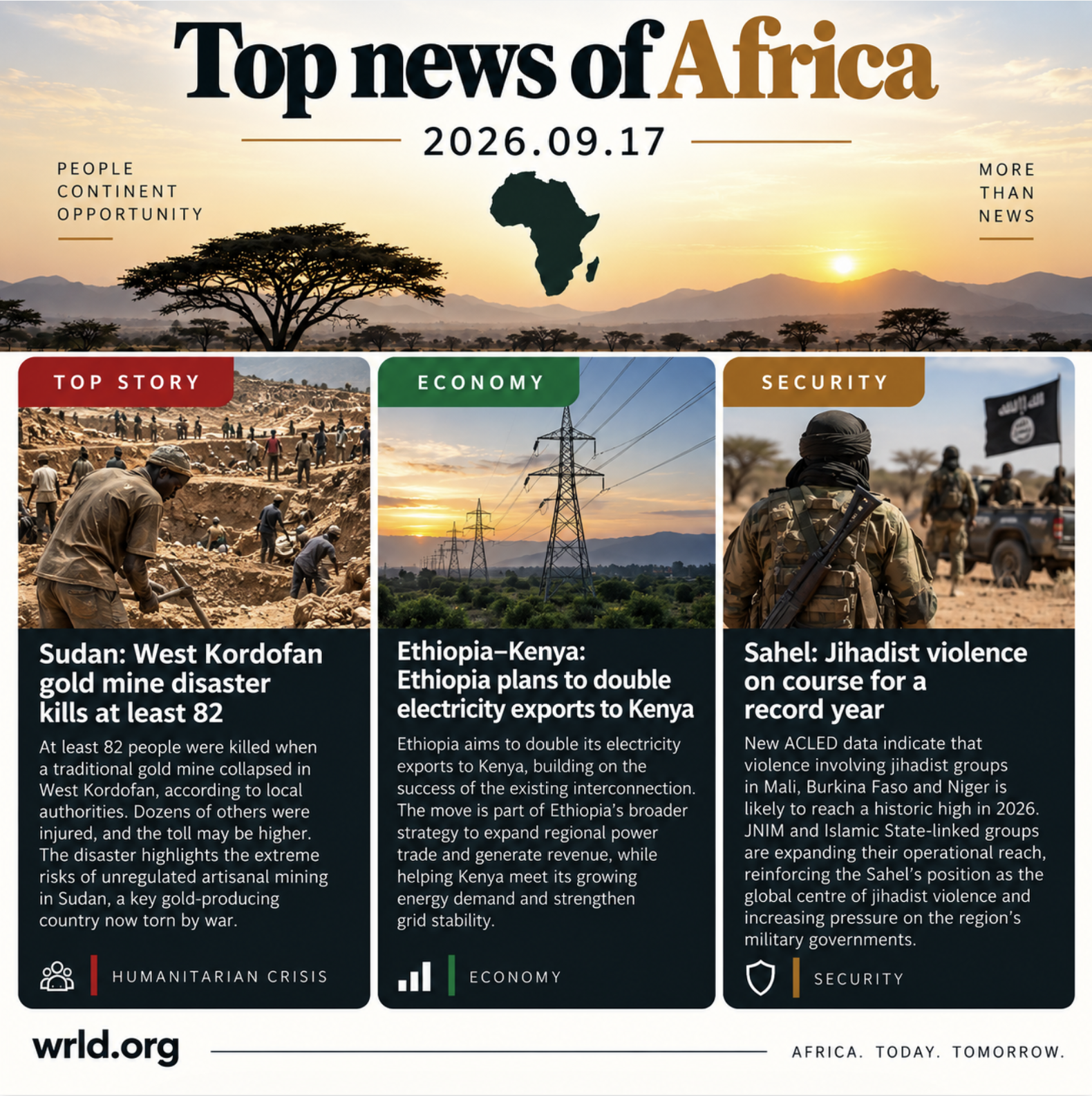
AFRICA DAILY REPORT — 17 SEPTEMBER 2026 Coverage: key developments reported during the previous 24 hours 1. SUDAN — UN chief demands accountability for foreign states fuelling the war Importance: 10/10 — CRITICAL UN Secretary-General António Guterres called for countries supplying weapons and other military support to Sudan’s belligerents to be held accountable. The war has displaced more than 14 million people, while a recent UN investigation says foreign weapons, technology, personnel and logistical support have enabled increasingly long-range attacks on civilians, including drone strikes. The intervention increases pressure on external actors supporting the SAF and RSF and puts foreign sponsorship of the war firmly on the agenda ahead of the UN General Assembly. Source: Reuters, 16 Sep 2026 https://www.reuters.com/world/africa/un-chief-guterres-calls-countries-fueling-sudans-war-be-held-accountable-2026-09-16/ 2. DR CONGO — Ebola response improves, but WHO warns outbreak is “far from over” Importance: 10/10 — CRITICAL WHO says containment efforts are beginning to show encouraging results, particularly in heavily affected Ituri, but the Bundibugyo Ebola outbreak remains a major regional health emergency. More than 7,000 confirmed cases have been reported and the virus has reached a seventh province. High population mobility remains a major risk. More than 3,000 frontline workers have received Ervebo, although its effectiveness against the Bundibugyo strain remains uncertain and specific candidate vaccines are still being developed. Source: Reuters, 16 Sep 2026 https://www.reuters.com/business/healthcare-pharmaceuticals/ebola-response-making-progress-congo-outbreak-far-over-who-says-2026-09-16/ Additional primary source: WHO https://www.who.int/emergencies/disease-outbreak-news/item/2026-DON617 3. SAHEL — Jihadist violence on course for a record year Importance: 9.5/10 — VERY HIGH New ACLED data indicate that violence involving jihadist groups in Mali, Burkina Faso and Niger is likely to reach a historic high in 2026. Recorded incidents involving jihadist groups rose from 63 in 2016 to 2,845 in 2025; 2,145 incidents had already been recorded this year when the latest assessment was published. JNIM and Islamic State-linked organisations are expanding their operational reach, reinforcing the Sahel’s position as the global centre of jihadist violence and increasing pressure on the region’s military governments. Source: The Guardian / ACLED, 16 Sep 2026 https://www.theguardian.com/world/2026/sep/16/al-qaida-and-is-linked-violence-in-africas-sahel-belt-set-to-hit-record-levels-this-year 4. SOUTH AFRICA–UNITED STATES — Pretoria rejects new US visa restrictions Importance: 9/10 — VERY HIGH South Africa sharply criticised new US visa restrictions targeting foreign nationals Washington says are responsible for racially discriminatory laws and policies. Pretoria says the US has misrepresented policies intended to address apartheid-era inequality. The dispute is another escalation in already strained US–South African relations, with Washington also excluding South Africa from the forthcoming G20 summit in Miami. Foreign Minister Ronald Lamola is heading to the US for the UN General Assembly amid the worsening diplomatic confrontation. Source: Reuters, 16 Sep 2026 https://www.reuters.com/world/africa/south-africa-says-us-misrepresented-its-policies-after-visa-curbs-2026-09-16/ 5. SOUTH SUDAN — More than one million people could lose food assistance within weeks Importance: 9/10 — VERY HIGH The World Food Programme warns that more than one million vulnerable South Sudanese could lose life-saving food and nutrition assistance by October unless additional funding is secured. Around 7.8 million people — more than half the population — struggle to obtain enough food, while 2.2 million children and 1.2 million pregnant or breastfeeding women require urgent nutritional support. WFP faces an immediate $86 million shortfall and a funding gap exceeding $400 million over the next six months. Source: Africanews / WFP, 16 Sep 2026 https://www.africanews.com/amp/2026/09/16/wfp-more-than-a-million-people-in-south-sudan-at-risk-of-losing-food-aid/ 6. DR CONGO — Protests over constitutional reform raise third-term fears Importance: 8.5/10 — HIGH Police used tear gas and warning shots during opposition demonstrations in Kinshasa and other cities against proposed constitutional changes. The C64 opposition coalition argues that the reforms could ultimately enable President Félix Tshisekedi to seek a third term, while the government rejects claims that it intends to undermine constitutional safeguards. The confrontation adds a serious domestic political crisis to Congo’s simultaneous Ebola emergency and continuing conflict with M23 in the east. Source: Associated Press, 15–16 Sep 2026 https://apnews.com/article/722684d7da7ffe1d49c44dd03db82904 Additional source: Africanews https://fr.africanews.com/amp/2026/09/15/rdc-des-heurts-lors-dune-mobilisation-contre-la-reforme-constitutionnelle/ 7. SOUTH SUDAN — Kiir replaces election commission chief three months before planned vote Importance: 8.5/10 — HIGH President Salva Kiir has replaced the head of South Sudan’s election commission roughly three months before elections scheduled for December. The change comes amid serious doubts over whether conditions exist for credible polls, including political violence, shrinking civic space and the collapse of key elements of the power-sharing arrangement. South Sudan has already postponed elections twice, making any further disruption politically significant. Source: Reuters via CNBC Africa, 16 Sep 2026 https://www.cnbcafrica.com/2026/south-sudan-replaces-election-commission-chief-ahead-of-december-vote/ 8. SUDAN — West Kordofan gold mine disaster kills at least 82 Importance: 8/10 — HIGH At least 82 miners have been killed after a gold mine collapsed in West Kordofan, with around 50 injured and others potentially still trapped. Rescue teams have been working with rudimentary equipment in an area severely affected by Sudan’s war. Beyond the human toll, the disaster highlights the dangerous and weakly regulated artisanal gold sector. Gold has become increasingly important to Sudan’s wartime economy and a source of financing for armed actors. Source: Africanews / AP, 16 Sep 2026 https://www.africanews.com/amp/2026/09/16/at-least-82-people-killed-in-gold-mine-collapse-in-sudans-west-kordofan/ Additional source: Reuters https://www.reuters.com/world/least-60-killed-gold-mine-collapse-sunday-sudans-west-kordofan-sources-say-2026-09-16/ 9. HORN OF AFRICA — New IGAD treaty enters into force Importance: 7.5/10 — SIGNIFICANT A new treaty governing the Intergovernmental Authority on Development has entered into force following ratification by Ethiopia and four other Horn of Africa states, replacing the organisation’s 1996 institutional framework. The change is potentially important for regional coordination on conflict, economic integration, climate shocks and displacement at a time when the Horn faces simultaneous crises in Sudan, South Sudan, Somalia and the Ethiopia–Eritrea relationship. Source: Kulu Media, 17 Sep 2026 https://kulu-media.com/new-igad-treaty-enters-into-force-in-horn-of-africa/ 10. ETHIOPIA–KENYA — Ethiopia plans to double electricity exports to Kenya Importance: 7/10 — SIGNIFICANT Ethiopia plans to increase electricity exports to Kenya from 200 MW to 400 MW from December. A joint technical committee is working on the expansion. The move strengthens East Africa’s cross-border power market and deepens the economic interdependence of two of the region’s largest economies. It also reinforces Ethiopia’s strategy of turning its expanding hydroelectric capacity into a source of regional influence and export revenue. Source: Green Building Africa, 17 Sep 2026 https://www.greenbuildingafrica.co.za/ethiopia-set-to-double-power-exports-to-kenya/ #Africa #AfricaNews #TopNewsOfAfrica #Sudan #WestKordofan #GoldMineDisaster #MiningSafety #ArtisanalMining #HumanitarianCrisis #Ethiopia #Kenya #EthiopiaKenya #ElectricityTrade #PowerExports #EnergySecurity #RenewableEnergy #Hydropower #EastAfrica #RegionalIntegration #AfricanEconomy #Sahel #SahelCrisis #Security #JihadistViolence #Terrorism #JNIM #IslamicState #Mali #BurkinaFaso #Niger #AfricanSecurity #Geopolitics #AfricaToday #wrldorg
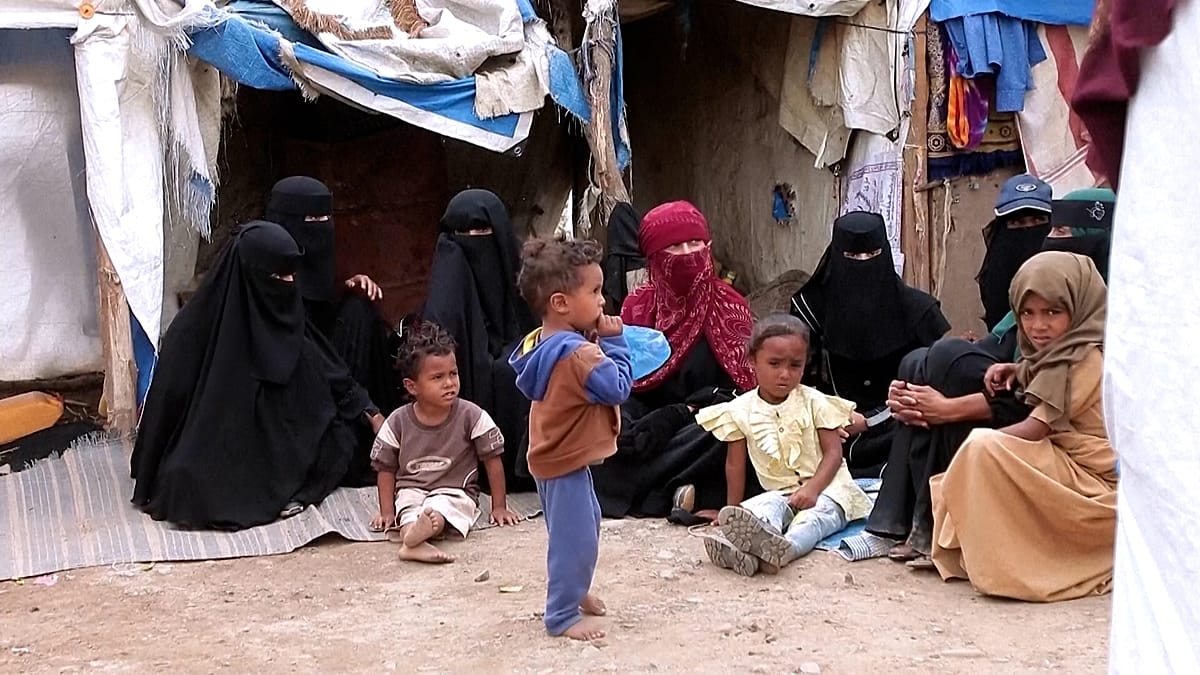
As fighting intensifies in Yemen, people are being forced from their homes, with displacement spreading quickly. @eu_echo is responding fast. With € 2.8 million mobilised for Yemen & Djibouti, we will help people meet urgent needs, like health, food, shelter, & protection. https://t.co/oFw4Q7EIlS #YemenCrisis #HumanitarianAid #Displacement #YE #DJ

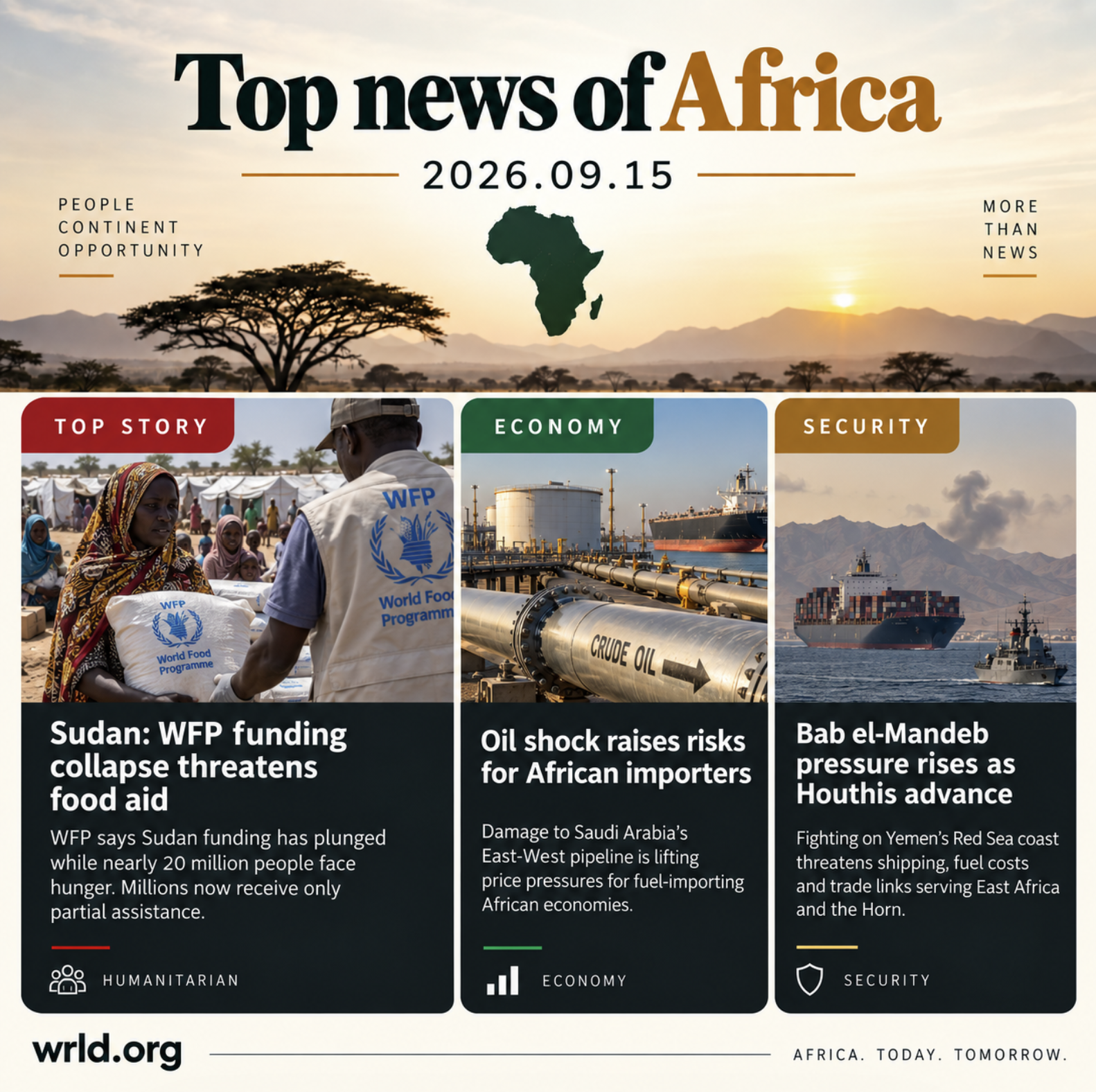
AFRICA DAILY REPORT — 15 SEPTEMBER 2026 Coverage: key developments identified in the latest 24-hour news cycle 1. SUDAN — WFP funding collapse threatens food aid Importance: 10/10 — CRITICAL The World Food Programme says its Sudan budget has fallen to roughly $206 million this year from $645 million last year, while nearly 20 million people face hunger. WFP says it needs almost $300 million more to sustain current operations. Funding constraints have forced the agency to concentrate assistance on about five million of the most vulnerable people, with roughly four million currently receiving partial rations. The funding shock risks deepening what is already one of the world's largest humanitarian emergencies. Source: Reuters, 14 Sep 2026 https://www.reuters.com/world/africa/world-food-programme-funding-sudan-plummets-more-go-hungry-head-says-2026-09-14/ 2. RED SEA / HORN OF AFRICA — Houthi advances increase pressure around Bab el-Mandeb Importance: 9.5/10 — CRITICAL Fighting in Yemen is intensifying along the Red Sea coast, with Houthi territorial gains creating additional risk around the Bab el-Mandeb shipping corridor. More than 82,000 people have reportedly been displaced since early September, and over 2,000 have crossed to Djibouti. For Africa, the significance extends beyond the humanitarian impact: disruption around Bab el-Mandeb threatens trade, fuel costs and shipping links serving East Africa, the Horn and the Suez route. Sources: Reuters/AP, 14 Sep 2026 https://www.reuters.com/world/middle-east/yemens-displaced-long-loved-ones-stability-houthis-advance-2026-09-14/ https://apnews.com/article/90dc86201ef51410ebcdd913837d741d 3. GLOBAL ENERGY / AFRICA — Saudi pipeline damage raises oil-price risk for African importers Importance: 9/10 — VERY HIGH Saudi Arabia's strategically important East-West oil pipeline is expected to remain largely out of service for three to five weeks after a drone attack. Oil prices rose as markets assessed the disruption alongside instability around Gulf and Red Sea routes. The consequences are especially important for oil-importing African economies, where higher crude prices can quickly feed into fuel costs, inflation, currencies and transport prices. Source: AP, 14 Sep 2026 https://apnews.com/article/8c18d82c109a8ea91347ce53c0096c53 4. SOUTH AFRICA — Rand falls sharply as oil prices surge Importance: 8.5/10 — VERY HIGH The South African rand fell around 1.1% against the dollar during Monday trading as rising oil prices increased pressure on Africa's most industrialised economy. South Africa is a major net oil importer and therefore particularly exposed to the current energy shock. The JSE Top-40 also weakened, while government bond yields moved higher. The development illustrates how the Middle East/Red Sea crisis is transmitting directly into African financial markets. Source: Reuters, 14 Sep 2026 5. DR CONGO — Ebola outbreak remains a continental-level health emergency Importance: 10/10 — CRITICAL The Ebola epidemic remains one of Africa's most serious current risks. The outbreak has spread to seven Congolese provinces, including Sud-Ubangi in western DRC, raising concern about further cross-border transmission toward the Republic of Congo and Central African Republic. Latest reported figures exceed 7,000 cases and 3,300 deaths. Conflict, displacement, health-worker strikes and population movement continue to obstruct containment. Sources: AP / public-health reporting, latest updates through 14 Sep 2026 https://apnews.com/article/58a2b25c752eaa8344ff16564a8e3547 6. EASTERN DR CONGO — Bukavu mourns 27 students killed in school fires Importance: 8/10 — HIGH Hundreds gathered in Bukavu for a mass funeral after fires at two neighbouring schools killed 27 students. The tragedy is particularly significant because it occurred in an already severely stressed city: Bukavu is controlled by the M23/AFC movement and local medical capacity is simultaneously under pressure from conflict and the Ebola epidemic. The disaster highlights the fragility of civilian infrastructure in eastern Congo. Source: AP, 14 Sep 2026 https://apnews.com/article/fd1aea4738a9a686fc6f0d45997a2be3 7. SOUTH AFRICA — Major road disaster kills at least 21 people in Western Cape Importance: 7.5/10 — HIGH At least 21 people were killed in a multi-vehicle collision on the N1 between Prince Albert and Leeu-Gamka in Western Cape. Two minibus taxis collided head-on before an SUV struck the wreckage. Together with another fatal accident near Ermelo, at least 29 people died on South African roads over the weekend, renewing scrutiny of road and minibus-taxi safety. Source: AP, 14 Sep 2026 https://apnews.com/article/9ae8e6beeb75cc307be24e15e9ec1fad 8. SUDAN — International leverage constrained as humanitarian needs rise Importance: 8.5/10 — VERY HIGH The widening humanitarian funding gap comes as diplomatic pressure on Sudan's belligerents remains limited. The UN Security Council recently extended the Darfur arms embargo only temporarily while members continue debating a U.S. proposal for a nationwide ban. Russia and China have raised objections to expanding the restrictions. The combination of weak humanitarian financing and diplomatic deadlock increases the risk of further deterioration. Sources: Reuters/AP https://apnews.com/article/fde2c6880c80343bebffb83c243fd3f4 9. UGANDA / SOUTH SUDAN — Climate stress is fuelling violence against traditional rainmakers Importance: 6.5/10 — SIGNIFICANT AP reports growing violence against traditional rainmakers in parts of Uganda and South Sudan as increasingly erratic rainfall damages subsistence agriculture. Farmers facing droughts, floods and crop losses have sometimes blamed spiritual practitioners for failed rains. The story is locally focused but illustrates a broader African security issue: climate disruption increasingly interacts with poverty, social tension and traditional belief systems. Source: AP, 15 Sep 2026 https://apnews.com/article/6080fa9dbc838ba75b9bab29cfd48fc9 10. AFRICA'S ECONOMIC OUTLOOK — Oil shock becomes the key near-term macro risk Importance: 8/10 — HIGH The combination of damaged Saudi export infrastructure, instability around Bab el-Mandeb and elevated crude prices is becoming an important macroeconomic risk for African oil-importing states. South Africa's currency reaction is an early indicator. If elevated prices persist, Kenya, Ethiopia, Morocco, Senegal and other net importers could face renewed inflation and balance-of-payments pressure, while African oil exporters could receive a revenue boost. This is a cross-cutting issue to watch closely over the coming days. Sources: Reuters/AP, 14 Sep 2026 TODAY'S ASSESSMENT The three developments with the greatest strategic significance are: (1) the sharp deterioration in humanitarian financing for Sudan; (2) the continuing Ebola emergency in DR Congo; and (3) the expanding Red Sea/Middle East energy shock, which is increasingly transmitting into African currencies, inflation and trade risks. #Africa #AfricaNews #TopNewsOfAfrica #Sudan #SudanCrisis #HumanitarianCrisis #WFP #WorldFoodProgramme #FoodSecurity #HungerCrisis #HumanitarianAid #RedSea #HornOfAfrica #BabElMandeb #Houthis #MaritimeSecurity #Shipping #GlobalTrade #EnergySecurity #OilPrices #OilMarket #AfricanEconomies #AfricanMarkets #EconomicRisk #Geopolitics #MiddleEast #EastAfrica #GlobalSouth #AfricaToday #wrldorg

I am deeply concerned by the escalation of Israeli military operations in southern Lebanon. I condemn the mounting civilian casualties, the distress & displacement caused by the evacuation orders, and the scenes of massive destruction & devastation. Civilians & civilian objects #Israel #Lebanon #CiviliansMatter #IL #LB

The Psychologist – The British Psychological Society – When Walls Become Wellness SOURCE: https://www.linkedin.com/pulse/psychologist-british-psychological-society-when-walls-sardella-ph-d--pu8sf/ Dr Luciano Magaldi Sardella and Professor Matteo Mantuano on how ‘Stramurales Participatory Street Art’ transforms urban mental health. Link: https://www.bps.org.uk/psychologist/when-walls-become-wellness The Psychologist, The British Psychological Society by esteemed Dr. Joe Sutton, Head of Science Communication at BPS Contenuto dell’articolo On a sweltering afternoon in June 2018, we stood in the central square of Stornara, a small agricultural town in Puglia, Southern Italy, watching something extraordinary unfold. Local artist Lino Lombardi was facilitating a heated discussion among residents about which mural designs should adorn their town's crumbling walls. What struck us wasn't the art itself, but the transformation we witnessed in the eyes of people who, just months before, had described their hometown as a place to escape. These were individuals reclaiming their narrative, voting on their future, literally painting over decades of decline. We are environmental and community psychologists who have spent over a decade studying how built environments shape mental health outcomes. Dr Luciano Magaldi Sardella's research focuses on participatory arts interventions in declining rural communities, while Professor Matteo Mantuano specialises in the psychological mechanisms of community empowerment and collective agency. When we first learned about the Stramurales festival in early 2018, we recognised it as a rare opportunity to observe participatory urban art as a potential tool for addressing the mental health crisis plaguing Southern Italy's depopulating towns. Over the past seven years, we have conducted extensive fieldwork in Stornara – interviewing residents, documenting the festival's evolution, and analysing its psychological and social impacts. What we found in Stornara was something far more significant than an innovative community-led arts initiative. It was environmental psychology in action – reshaping how we understand the relationship between built environments, participatory arts, and mental health. The Crisis Hiding in Plain Sight Recent research reveals an alarming convergence of environmental and mental health crises that remains curiously underexamined in psychological discourse. Mental health research receives a mere 2.3 per cent of overall National Institute of Health funding. We cannot know how much of that concerns our environments – both natural and built – which fundamentally shape our psychological wellbeing. The newly proposed field of 'EnvironMental Health' emphasises that deteriorating built environments correlate significantly with elevated stress, social isolation, and worsening mental health outcomes. Southern Italy's rural communities embody this crisis. Between 2002 and 2017, South Italy region lost approximately two million residents to migration, predominantly young adults aged 15-34. This exodus created what Johan Galtung described as 'structural violence' – systematic arrangements preventing communities from realising their potential. The mental health toll manifests not just in individual diagnoses, but in collective despair, eroded social capital, and communities watching their futures literally emigrate. Stornara exemplified this trajectory. By 2017, this municipality of 6,000 residents faced the familiar spiral: economic contraction precipitating youth emigration, accelerating infrastructure deterioration, driving further decline. Walls crumbled. Businesses shuttered. Hope evaporated. Then something changed. The Stramurales Revolution: Democracy through Design What emerged in Stornara transcends conventional cultural tourism. The Stramurales International Street Art Festivalworks through three foundational democratic mechanisms that distinguish it from superficial beautification projects. Organised through Stornara Life APS – an open-membership association founded by Maestro Lino Lombardi – the festival prevents elite capture through voluntary property owner participation ensuring no coercion; democratic content selection through annual community voting on festival themes and mural proposals; and transparent, inclusive governance that gives all residents a voice in the festival's direction. This participatory architecture facilitates what the World Health Organization describes as 'community empowerment' – processes enabling communities to increase control over determinants affecting their health. Recent field studies in Vienna demonstrate that urban art interventions reduce stress and anxiety while improving mood states, but Stramuralesgoes further by embedding art creation within democratic decision-making structures. When residents voluntarily offer walls and vote on content, they perform acts of material and psychological investment. This restoration of collective agency – the belief that residents can shape their hometown's future rather than merely witnessing decline – directly addresses the structural violence that erodes mental health. Between 2020 and 2025, Stornara experienced a huge increase in tourism revenue despite pandemic disruption. New businesses opened. A Stornara-born emigrant who returned reluctantly in 2017 to provide parental care, now works as a tour guide and describes Stornara as 'the coolest town in Italy'. These aren't just economic indicators. They're mental health outcomes. The Science behind the Transformation Contemporary research across multiple disciplines validates what Stornara residents experience viscerally. A 2024 systematic review examining 79 peer-reviewed articles identified how arts places – from permanent museums to temporary public installations – stimulate community engagement, enhance cultural identity, and foster social cohesion. Community-driven mural projects specifically strengthen local identity and pride, creating new routines for individuals to interact and build relationships. Recent experimental research in Berlin found that sidewalk-level art exhibitions significantly altered visitors' connection to and satisfaction with their neighbourhoods, improving overall wellbeing. This aligns with emerging theories on art viewing's impact on mental health, which identifies five key mechanisms: affective processes regulating emotions and stress; cognitive processes providing sensory stimulation and learning; social processes creating shared experiences; self-transformation through reflection; and resilience building for coping with challenges. Environmental psychology research demonstrates that built environments operate as therapeutic interventions. Studies on mental health inpatient facilities reveal that design elements affecting privacy, control, daylight access, and particularly the inclusion of artwork significantly impact patient outcomes. If hospital walls matter therapeutically, how much more do the walls we encounter daily in our communities? The Stramurales model harnesses these mechanisms through the recent concept of 'visual health activism'. Several murals explicitly engage health and human rights themes: Alaniz Niz's 'Refuge for All Migrants' represents exploited African agricultural workers; Sabotaje al Montaje's 'Turning Our Backs on Migration' challenges exclusionary policies; Devil Art Design's 'African Child at Sunset' portrays migrant youth seeking dignified futures. These works address social determinants of health through human rights advocacy. Migration policies denying basic rights create health vulnerabilities – including restricted healthcare access, hazardous working conditions, and psychological trauma from discrimination. The murals perform dual public health functions, in addressing residents' mental health while advocating for populations whose health rights face systematic violation. Place Attachment and Community Resilience The relationship between environmental perception, cultural identity, and community resilience has received substantial scholarly attention in 2024-2025. Research in rural China demonstrates that environmental perception of public spaces influences community resilience through chain mediating effects of cultural identity and place attachment. When communities transform their physical environments through participatory processes, they simultaneously strengthen the psychological bonds that underpin resilience. This explains why Stramurales succeeds where traditional economic development approaches falter. The festival doesn't just create economic value – though over 150 murals by international artists now attract thousands of visitors annually. It fundamentally reshapes residents' relationship with their environment, transforming narratives of decline into evidence of vitality. Each democratically selected mural becomes what resilience researchers call an 'anchor of hope' – tangible proof contradicting despair. Contemporary resilience theory emphasises that strength resides not merely in physical infrastructure but in social cohesion. A recent analysis of resilient urban design in marginalised American neighbourhoods found that residents' message – 'We like our neighbours, we like the character of where we live' – revealed that resilience is fundamentally about people and community. Design interventions succeed when they preserve and strengthen these social bonds, rather than imposing external visions. Stramurales embodies this principle. The democratic voting mechanisms ensure art reflects genuine community values rather than artist or curator preferences. This prevents the cultural displacement often accompanying urban regeneration, where improvements benefit newcomers while alienating existing residents. By centering resident agency, Stramuralesbuilds what researchers describe as 'critical resilience' – capacity addressing underlying inequalities rather than merely adapting to them. The Participation Gap and Universal Access These findings resonate profoundly with longstanding concerns about arts accessibility. The 2015 Warwick Commission documented that the wealthiest, most educated 8 per cent of the UK population accounted for 44 per cent of live music attendance and 28 per cent of visual art visits. This participation gap particularly affects communities that would benefit most from arts engagement for health and wellbeing. But Stramurales challenges this narrative. Street art as public health infrastructure requires no admission fees, no advance booking, no cultural capital to appreciate. It exists where people live, transforming daily commutes into encounters with beauty and meaning. The democratic selection process ensures accessibility extends beyond consumption to co-creation – residents don't just view art, they determine what appears on their walls. Recent research on participatory arts and social cohesion emphasises that successful interventions share common features: delivery in local communities, non-stigmatising approaches, flexibility, promoting social engagement, involvement of exhibitions, and delivery within specific timeframes. Stramurales incorporates all these elements while adding genuine democratic governance. This matters urgently. Mental health conditions among young people globally are rising, and traditional mental health services remain chronically underfunded. If we cannot scale clinical interventions to meet demand, we must invest in preventive public health approaches targeting social determinants. From Stornara to the World: Implications for Practice The Stramurales model offers a replicable template requiring modest financial investment but substantial community participation. Essential elements include voluntary engagement, democratic decision-making, strategic social media use for marketing, and integration of local narratives with global artistic practices. Several cities have implemented variations with promising results. Research on artistic interventions in urban spaces across Europe and Asia demonstrates that participatory art projects can serve as 'social prescribing', improving psychological resilience and enhancing public engagement. Tactical urbanism approaches – small-scale, low-cost interventions improving public spaces – increasingly incorporate art as core rather than supplementary elements. The implications extend beyond individual communities. International frameworks including the International Covenant on Economic, Social and Cultural Rights enshrine rights to health and cultural participation. State obligations to conserve, develop and diffuse culture should support community-driven cultural initiatives demonstrably impacting health outcomes. As pandemic governance analyses emphasise, future health policy reforms must address not only biomedical preparedness but underlying vulnerabilities in community resilience and social cohesion. Street art operating through participatory structures directly strengthens these dimensions. What Psychologists Can Do We have roles to play at multiple levels. First, we must conduct research documenting the mental health impacts of participatory arts interventions. While promising evidence exists, methodologically rigorous studies with adequate sample sizes and long-term follow-up remain scarce. We need experimental designs, not just observational studies, examining mechanisms through which environmental transformations affect psychological outcomes. Second, we should advocate for policy recognising arts engagement as health intervention. This means supporting public health funding for community arts initiatives, particularly in economically deprived areas where traditional development approaches have failed. We should work with urban planners, architects, and artists to integrate participatory arts into neighbourhood regeneration from inception, not as afterthoughts. Third, we must ensure interventions embody genuine participation rather than tokenistic consultation. The Stramuralesmodel succeeds because residents hold real power. Without this, arts interventions risk replicating existing power structures and potentially accelerating gentrification that displaces the communities they ostensibly serve. Fourth, we should employ arts-based research methods that centre community voices. Collaborative approaches like participatory theatre, photovoice, and collaborative poetics enable communities to articulate their experiences and aspirations in ways traditional psychological assessments cannot capture. These methods acknowledge that communities possess expertise about their own needs and potential solutions. Finally, we must situate arts interventions within broader frameworks addressing social justice. Art should not function as a 'sticking plaster' masking underlying inequalities. Instead, we should harness arts' disruptive potential to promote what researchers term 'critical resilience' – capacity challenging systemic injustices rather than merely helping people adapt to them. This means addressing not just symptoms (mental distress) but causes (structural violence, economic abandonment, policy failures). Reimagining Health Infrastructure The Stramurales case compels fundamental reconsideration of what constitutes health infrastructure. We typically envision clinics, hospitals, pharmacies – biomedical institutions delivering treatments for diagnosed conditions. But what if the most effective mental health intervention for a declining community isn't a new psychiatric facility, but democratic processes enabling residents to transform their visual environment? Walls covered with democratically selected art, created through genuine community participation, demonstrably improve community mental health while operationalising cultural rights described in international law. The modest financial investment required pales beside costs of clinical services treating preventable distress. For communities experiencing decline where traditional economic development has failed, participatory street art may offer the most cost-effective, accessible, and sustainable mental health intervention available. This isn't about romanticising art or dismissing serious mental illness requiring clinical care. It's about acknowledging that population mental health requires addressing social determinants – and that participatory arts targeting built environments, social capital, and collective agency directly address these determinants. The question facing psychology isn't whether art can function as health intervention – Stramurales and growing evidence demonstrate it can. Rather, the question is whether we possess imagination to rethink health infrastructure, recognising that effective mental health promotion may require democratic decision-making and community participation as much as clinical expertise. As we watched Stornara residents voting on murals that June afternoon, we witnessed people exercising a fundamental human capacity too often denied in our field: the power to shape their own environments and, through that shaping, to heal. Perhaps that's the most vital lesson Stramurales offers psychology – that sometimes the most therapeutic intervention isn't administered by professionals, but created by communities reclaiming their agency… one democratically selected wall at a time. Dr Luciano Magaldi Sardella holds a PhD in Cognitive Leadership at Aspire Institute, Harvard Business School. Professor Matteo Mantuano is Professor of Social Sciences and Psychoeducational Health, Unitré University of Milan, Italy. Photo: 'Kid trapped in a box' mural by Leticia Mandragora References: All-Party Parliamentary Group on Arts, Health and Wellbeing (2017). Creative Health: The Arts for Health and Wellbeing (2nd ed.). Belfiore, E. & Bennett, O. (2024). The social impact of the arts: An intellectual history. London: Palgrave Macmillan. Bone, J.K., Bu, F., Fluharty, M.E., Paul, E., Sonke, J.K. & Fancourt, D. (2024). Who engages in the arts in the United States? A comparison of several types of engagement using data from The General Social Survey. PLOS ONE, 19(1), e0296743. doi:10.1371/journal.pone.0296743 Chatterjee, H.J. & Noble, G. (2024). Museums, health and well-being: A preliminary report for Phase I. UCL Museums & Public Health Research Group. Cohen, G.D., Perlstein, S., Chapline, J., Kelly, J., Firth, K.M. & Simmens, S. (2006). The impact of professionally conducted cultural programs on the physical health, mental health, and social functioning of older adults. The Gerontologist, 46(6), 726–734. Daykin, N., Mansfield, L., Meads, C., Julier, G., Tomlinson, A., Payne, A., Grigsby Duffy, L., Lane, J., D'Innocenzo, G., Burnett, A., Kay, T., Dolan, P., Testoni, S. & Victor, C. (2024). What works for wellbeing? A systematic review of wellbeing outcomes for music and singing in adults. Perspectives in Public Health, 138(1), 39–46. doi:10.1177/1757913917740391 Fancourt, D. & Finn, S. (2019). What is the evidence on the role of the arts in improving health and well-being? A scoping review. World Health Organization, Health Evidence Network Synthesis Report 67. Flores González, L.M. & Rodríguez Sánchez, I. (2024). The transformative power of art in marginalized communities: Case studies from Latin America. International Journal of Community Well-Being, 7(2), 145–167. Galtung, J. (1969). Violence, peace, and peace research. Journal of Peace Research, 6(3), 167–191. Hart, A., Gagnon, E., Eryigit-Madzwamuse, S., Cameron, J., Aranda, K., Rathbone, A. & Heaver, B. (2016). Uniting resilience research and practice with an inequalities approach. Sage Open, 6(4), 1–13. Johnson, H., Carson-Apstein, E., Banderob, S. & Macualay-Rettino, X. (2017). 'You kind of have to listen to me': Researching discrimination through poetry. Forum Qualitative Sozialforschung/Forum Qualitative Social Research, 18(2). doi:10.17169/fqs-18.3.2864 Kaplan, S. (1995). The restorative benefits of nature: Toward an integrative framework. Journal of Environmental Psychology, 15(3), 169–182. Kim, J. (2017). Effects of community-based group music therapy for children exposed to ongoing child maltreatment and poverty in South Korea: A block randomized controlled trial. Arts Psychotherapy, 54, 69–77. doi:10.1016/j.aip.2017.01.001 Li, Y., Zhang, H. & Chen, T. (2024). Environmental perception, cultural identity and community resilience: Chain mediating effects of place attachment in rural China. Journal of Rural Studies, 98, 103– 115. Marmot, M., Atkinson, T., Bell, J., Black, C., Broadfoot, P., Cumberlege, J., Diamond, I., Gilmore, I., Ham, C., Meacher, M. & Mulgan, G. (2010). Fair society, healthy lives: The Marmot Review. Strategic Review of Health Inequalities in England Post-2010. Mulligan, M., Scanlon, C. & Welch, N. (2008). Renegotiating community life: Arts, agency, inclusion and wellbeing. Gateways: International Journal of Community Research and Engagement, 1, 99–115. doi:10.5130/ijcre.v1i0.591 Neelands, J., Belfiore, E., Firth, C., Hart, N., Perrin, L., Brock, S., Holdaway, D. & Woddis, J. (2015). Enriching Britain: Culture, creativity and growth. The 2015 Report by the Warwick Commission for the Future of Cultural Value. Packer, J. & Ballantyne, R. (2024). The role of museums and art galleries in promoting wellbeing: Insights from the United Kingdom and Australia. International Journal of Heritage Studies, 30(3), 234–251. Papies, E.K., Best, M., Gelibter, E. & Stroebe, W. (2024). The role of mental simulation in desire and motivation: A systematic review. Motivation Science, 10(1), 1–18. Pykett, A.A., Osborne, T., Resch, B., Nielek, R., Krukar, J. & Malleson, N. (2024). From smart to sustainable cities: The role of environmental psychology in urban transformation. Cities, 144, 104644. Roe, J. & Aspinall, P. (2024). The restorative benefits of walking in urban and rural settings in adults with good and poor mental health. Health & Place, 71, 102654. Stuckey, H.L. & Nobel, J. (2010). The connection between art, healing, and public health: A review of current literature. American Journal of Public Health, 100(2), 254–263. Theorell, T. (2024). Psychological health effects of musical experiences: Theories, studies and reflections in music health science. Stockholm: Springer Nature. Ulrich, R.S., Simons, R.F., Losito, B.D., Fiorito, E., Miles, M.A. & Zelson, M. (1991). Stress recovery during exposure to natural and urban environments. Journal of Environmental Psychology, 11(3), 201–230. Van den Berg, A.E., Wesselius, J.E., Maas, J. & Tanja-Dijkstra, K. (2024). Green space as a buffer between stressful life events and health: A longitudinal analysis. Social Science & Medicine, 310, 115270. WHO (2019). WHO housing and health guidelines. Geneva: World Health Organization. Zarobe, L. & Bungay, H. (2024). The role of arts activities in developing resilience and mental wellbeing in children and young people: A rapid review of the literature. Perspectives in Public Health, 137(6), 337–347. doi:10.1177/1757913917712283.

The Psychologist – The British Psychological Society – When Walls Become Wellness
H

The Therapy State Western society has traded moral language for therapy-speak, losing moral grammar and replacing it with clinical categories that don’t work the same way. About 25% of American adults suspect they have ADHD, though prevalence is 6%; on TikTok, most top ADHD videos include unsupported claims. People misdiagnose themselves far more often than they correctly identify mental illness—and yet self-diagnosis persists because it serves a social function. Moral categories allow disagreement: you can argue about right and wrong, measure choices against standards, and debate what those standards require. Psychological categories pathologize disagreement: diagnosis becomes identity, and identity becomes a shield. When someone claims ADHD, anxiety, or trauma, they’re not just describing symptoms—they’re setting a boundary you’re not allowed to question. The shift from “what we should aim for” to “what we are” ends the conversation. Jung saw this displacement mechanism: modern gods and demons don’t vanish; they become neuroses, anxieties, addictions, and therapeutic labels. The question of conscience and choice becomes a fixed identity that must be accepted. Unlike religious frameworks that locate forces outside you and invite struggle, therapy culture internalizes the forces—so the label replaces agency. You don’t resist weakness; you *are* it. And because boundaries can’t be crossed, change becomes harder. When a civilization loses the ability to say “wrong,” it doesn’t become more tolerant—it becomes more rigid. The therapy state replaces moral authority, with disastrous results.

I ACCUSE SLOBODAN MILOŠEVIĆ. I accuse the Milošević regime of conducting a campaign of mass persecution, killing, forced displacement and terror against Kosovo Albanians in 1998–1999. Hundreds of thousands of Kosovo Albanians were driven from their homes. Civilians were https://t.co/b8XXmRgKZl #Milošević #Kosovo #Genocide #XK #RS

Hadja Lahbib Aug 2

In Gaza, health supply shortages hinder care for the sick & injured, while overcrowding in displacement sites and hygiene conditions fuel disease. Yet, another 🇮🇱 attack destroyed 2 medical warehouses & claimed more lives. The ceasefire must hold. Vital supplies must flood in. #GazaCrisis #HealthCare #Ceasefire #PS #IL #PS

Ceuta's crisis is likely to be quickly contained. But if Europe’s reaction to an immigration surge is to isolate affected states, not to use the tools it created to protect freedom and manage human displacement in a globalized world, Schengen is at risk https://t.co/pnbFgNejaw #CeutaCrisis #Schengen #ImmigrationPolicy #ES #EU

They keep telling you and the European right keep putting their hands to their ears and going "la la la la la la la". Israel is directly behind European migration patterns through both war displacement and interference like Ceuta. (That doesn't mean EU leaders are good or #EuropeanPolitics #MigrationCrisis #IsraelPolicy #EU #IS

Gérard Araud Jul 27

Playing on an outdated property registry in Jerusalem, based on Ottoman documents, Israel is dispossessing Arab inhabitants house by house. #Jerusalem #PropertyRights #Displacement #IL #PS

I've just concluded a deeply meaningful visit of solidarity with Syria & its wonderful people. I've seen the scars left by years of conflict. I’ve heard about pain, loss, displacement & fear. But I’ve also seen resilience, courage & determination. I’ve felt a profound sense https://t.co/5RDMm0RYGU #Syria #Solidarity #Resilience #SY

Journalists in Lebanon 🇱🇧 report from the frontlines while facing their own displacement and trauma. With the Union of Journalists and funding from the Multi-Donor Programme for FoE&SoJ, @UNESCO provides psychosocial care and field assistance to help them keep reporting safely. https://t.co/5SZ5edPf4P #Journalism #PressFreedom #Lebanon #LB

In the Dutch newspaper @NRC, a reviewer calls the mass displacement of Arabs in 1948 a "taboo" in Israeli literature — and then proceeds to review an influential Israeli novel that appeared no less than a year later, was placed on the Israeli high school reading list in 1964, and https://t.co/t19UsduN1O #IsraeliLiterature #1948 #TabooTopics #NL #IL #PS

tagesschau.de Jul 15

V článku se uvádí, že čísla o hitzetodech, která zveřejňuje Robert Koch-Institut, jsou považována za spolehlivá a přestože se často zakládají na odhadech, ukazují na významné zvýšení úmrtnosti v důsledku veder, přičemž potíže se správným zařazením úmrtí k teplu a fenomén mortality displacement komplikuje celkové posouzení skutečného dopadu veder na zdraví populace. #Hitzetote #Klimawandel #Übersterblichkeit

Übersterblichkeit: Wie die Zahl der Hitzetoten ermittelt wird
Hadja Lahbib Jul 8

Ebola is a crisis within a crisis, spreading in a region affected by conflict, displacement and fragile health systems. The 🇪🇺 is providing €493M in immediate and long term support for humanitarian aid, vaccines, treatments and health security. https://t.co/Da0RpXFdPq #EbolaCrisis #HumanitarianAid #HealthSecurity #EU

That's why knowing what happened in 1947–49 and in 1967 again, within days after Oct 7 I could foresee Israel would respond with mass destruction, displacement and killing. What I couldn't foresee even in my darkest thoughts was the scale of the savagery. https://t.co/bQ4gY8mb1u #Israel #History #Conflict #IL #PS

🧵Before becoming a UN expert I spent years researching forced displacement in Palestine since the advent of Zionism and British colonialism. A refuge for millions, for Palestine's Indigenous people Israel meant catastrophe. Once you know you cant unknow. The rest is integrity 👇 #Palestine #ForcedDisplacement #IndigenousRights #PS #IL