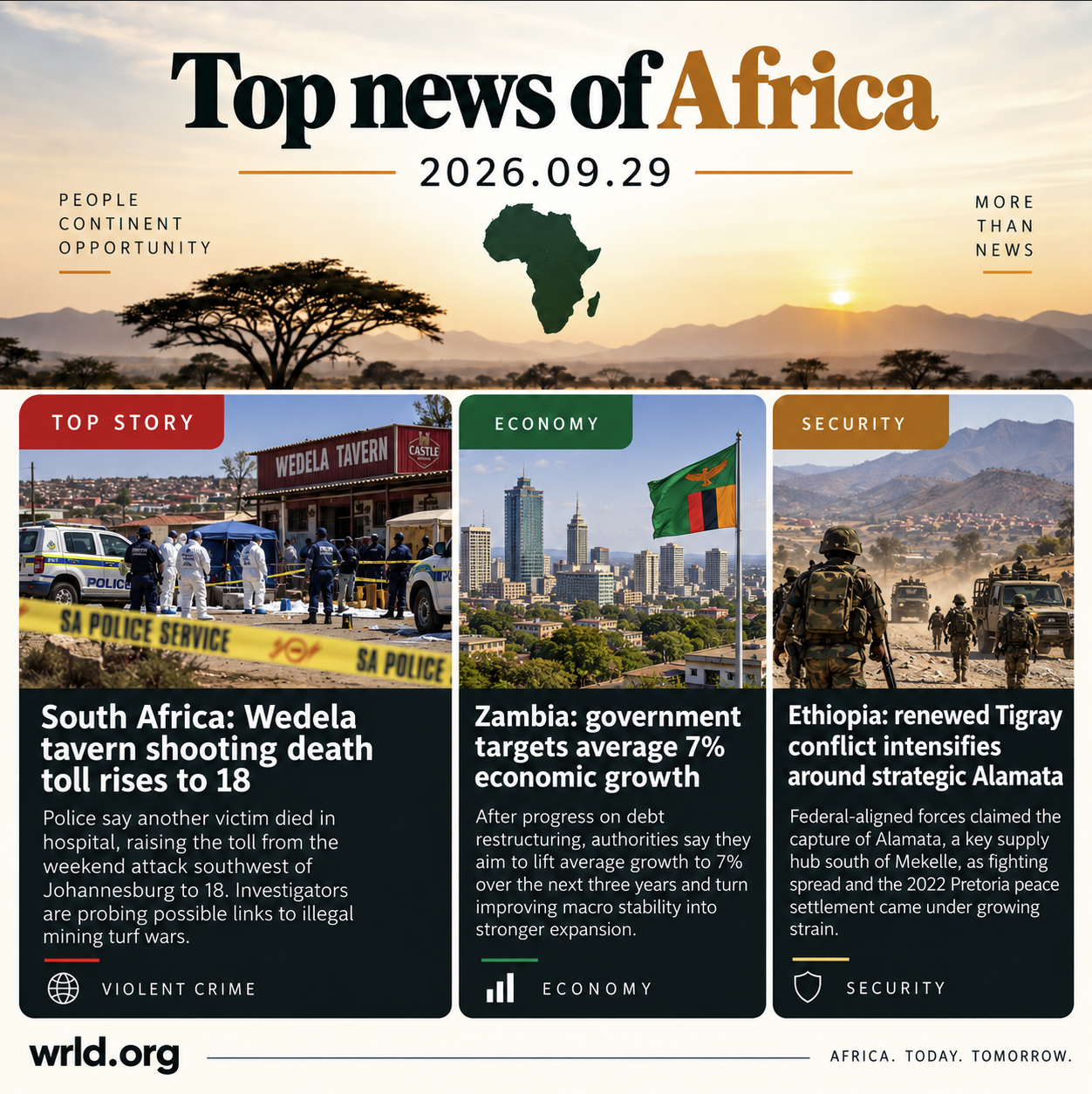
AFRICA DAILY REPORT — 29 SEPTEMBER 2026 Major developments reported during the previous 24 hours. 1. ETHIOPIA — Renewed Tigray conflict intensifies around strategic Alamata Federal-aligned forces claimed the capture of Alamata, an important supply hub south of Mekelle, after a TPLF-led offensive widened fighting into Afar and Amhara. Diplomatic sources cited by Reuters said the town had fallen or federal-aligned forces had entered it, while communications remained disrupted across Tigray. The renewed conflict is raising serious concerns about the survival of the 2022 Pretoria peace settlement. Source: https://www.reuters.com/world/africa/ethiopian-pro-government-forces-claim-capture-strategic-tigray-town-2026-09-28/ 2. DR CONGO — Ebola outbreak passes 8,000 confirmed cases Importance: 10/10 — Critical Government data showed 8,067 confirmed Ebola cases and 3,901 deaths as of September 26. The Bundibugyo-virus outbreak is now the largest and deadliest Ebola epidemic recorded in the DRC and has spread across 63 health zones in seven provinces; shortages of health workers and weaknesses in contact tracing continue to impede containment. Source: https://www.timeslive.co.za/news/africa/2026-09-28-drc-ebola-infections-cross-8000-confirms-government/ 3. SOUTH AFRICA — Death toll from Wedela tavern shooting rises to 18 Importance: 9/10 — Very High Police said another victim died in hospital, raising the death toll from the weekend attack in Wedela, southwest of Johannesburg, to 18. Authorities are searching for the attackers and examining a possible connection to turf wars in illegal gold mining; a separate weekend shooting near Cape Town killed another 10 people. Source: https://currently.att.yahoo.com/att/south-african-police-death-toll-062225459.html 4. ZAMBIA — Government targets average 7% economic growth Importance: 8/10 — High Zambia's finance ministry says the government aims to raise average economic growth to 7% over the next three years. The target follows progress in restructuring the country's external debt and represents an attempt to translate improving macroeconomic stability into stronger sustained growth. Source: https://www.reuters.com/world/africa/zambia-aims-lift-economic-growth-7-over-next-three-years-2026-09-28/ 5. MALI — Barrick and unions reach agreement, averting gold-mine strike Importance: 8/10 — High Barrick Mining signed a new collective bargaining agreement with unions at the Loulo-Gounkoto gold complex, and planned strike action was withdrawn. The agreement reduces immediate operational risk at one of Mali's most important gold-producing assets following a prolonged period of tension involving the miner, workers and the Malian authorities. Source: https://www.brecorder.com/news/40441512/mali-gold-mine-barrick-mining-reaches-deal-with-unions 6. KENYA — Court of Appeal upholds Affordable Housing Levy Kenya's Court of Appeal dismissed challenges to the Affordable Housing Act and levy, upholding the legal framework underpinning one of President William Ruto's major domestic programmes. The judges also upheld the Kenya Revenue Authority Commissioner's role in collecting the levy, although they found that the Commission on Revenue Allocation should have been consulted before parliamentary debate. Source: https://allafrica.com/stories/202609280027.html 7. ETHIOPIA–SUDAN — Accusations over support for armed groups deepen regional tensions Ethiopia's army chief accused Eritrea, Sudan and Egypt of supporting forces fighting federal troops amid renewed warfare in northern Ethiopia. Sudan rejected the allegations as baseless and counter-accused Ethiopia of facilitating support for Sudan's paramilitary RSF, adding another interstate dimension to the conflicts destabilising the Horn of Africa. Source: https://apnews.com/article/6b3208122a4221f3c2e8dcbe21630016 8. UGANDA — Police confirm detention of activist Praise Aloikin Ugandan police confirmed that activist Praise Aloikin Opoloje is in custody after activists and associates had reported her missing. Police said she had been arrested and would be brought before a court; Aloikin participated in the 2024 anti-corruption protests and has publicly criticised political and security figures. Source: https://allafrica.com/stories/202609280365.html 9. SOUTH AFRICA — Rand weakens as high oil prices increase economic pressure Importance: 7.5/10 — High The rand weakened about 0.5% against the dollar in early Monday trade as Middle East tensions pushed Brent crude above $107 per barrel. Because South Africa imports most of its fuel, sustained high oil prices pose risks through higher import costs and inflationary pressure. Source: https://www.channelafrica.co.za/channelafrica/news/rand-slips-as-us-iran-stalemate-pushes-oil-prices-higher/ 10. AFRICA — AFCON 2027 qualification moves into Matchday 2 Importance: 6/10 — Moderate The latest qualifying round opened with Burkina Faso beating Central African Republic 1–0, Equatorial Guinea defeating Sierra Leone 1–0, DR Congo beating Zimbabwe 2–1 and Tunisia drawing 2–2 with Botswana. September 29 brings a large slate including Ethiopia–Senegal, South Sudan–Egypt, Ghana–Gambia, Guinea-Bissau–Nigeria and Zambia–Togo. Source: https://english.ahram.org.eg/NewsContentP/6/577635/Sports/Africa-Cup-of-Nations-qualifiers-results-amp%3B-fixt.aspx #Africa #AfricaNews #TopNewsOfAfrica #SouthAfrica #Wedela #Johannesburg #TavernShooting #MassShooting #ViolentCrime #IllegalMining #PublicSafety #Zambia #ZambianEconomy #EconomicGrowth #GDPGrowth #DebtRestructuring #Macroeconomics #AfricanEconomy #Ethiopia #Tigray #Alamata #TigrayConflict #PretoriaPeaceAgreement #HornOfAfrica #ArmedConflict #RegionalSecurity #AfricanSecurity #Geopolitics #AfricaToday #wrldorg