AI texts now receive an invisible watermark to identify whether they were created by artificial intelligence, which has been mandatory in Europe since September 2026 to combat misinformation. (translated)

AI texts now receive an invisible watermark to identify whether they were created by artificial intelligence, which has been mandatory in Europe since September 2026 to combat misinformation. (translated)

An opinion piece warns that the rise of artificial intelligence increases the risk of thoughtless military decisions, which could lead to the end of NATO and a higher chance of nuclear conflicts. (translated)

Fei-Fei Li, often referred to as the 'godmother of AI', has taught computers to see by establishing ImageNet and is now focusing on the development of spatial AI, advocating for a human-centered approach to artificial intelligence amid technological and ethical challenges. (translated)

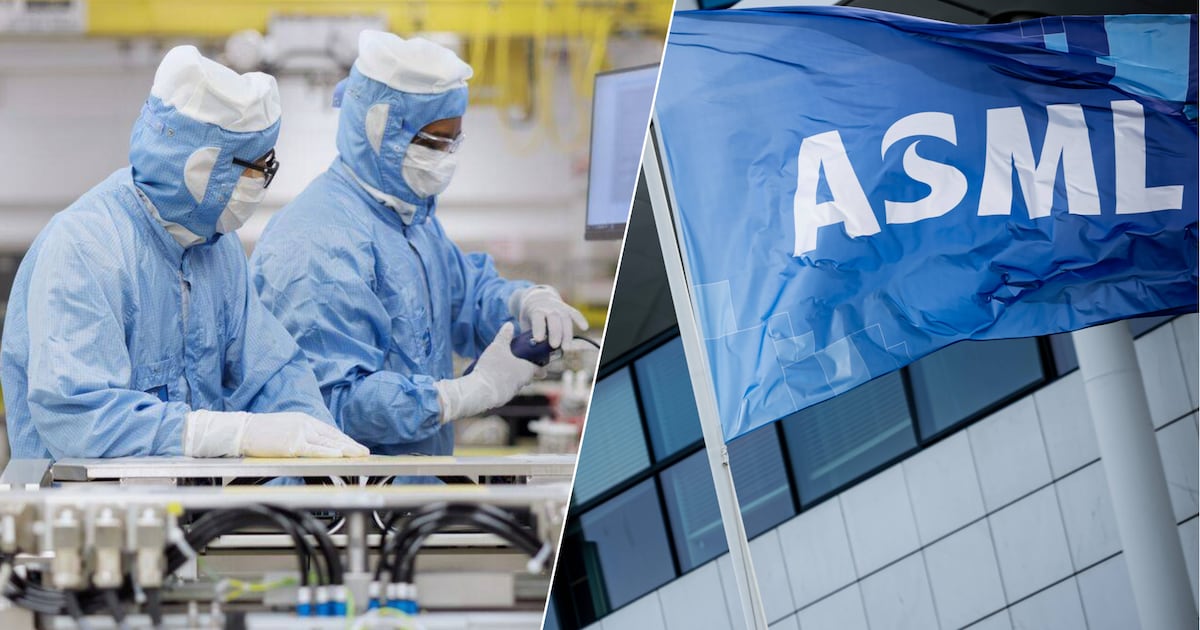
Investors react enthusiastically to Nvidia's record figures, which ignite the enormous demand for chips and data centers for artificial intelligence, allowing Dutch tech companies such as ASML, ASMI, and Besi to benefit as well. (translated)

Liang Wenfeng, the CEO of the Chinese AI company DeepSeek, is a techno-optimist with remarkable learning ability, who, after his company’s breakthrough, serves as a figurehead of 'Team China' in the technological battle with the US, while expressing his vision on AI and the impact of politically sensitive topics such as US chip dependency. (translated)

The article examines how Dutch journalism experiments with AI technologies like ChatGPT, with both enthusiasm and skepticism among journalists regarding its use, amid concerns about intellectual property rights and content quality, while guidelines and transparency remain essential for maintaining reliability and independence in the media. (translated)

The Chinese robotics company Unitree recently celebrated a successful IPO in Shanghai, solidifying its position as a leader in humanoid robot production, even though this technology is not yet fully suitable for practical applications. (translated)

Elianne Anemaat argues that Europe should not try to compete with American and Chinese tech giants by building its own Big Tech sector, but should rather invest in specialized, decentralized AI companies that can compete by focusing on specific markets and needs. (translated)

Google has purchased data from the bankrupt airline Spirit Airlines for ten million dollars, including one hundred million emails and five hundred million Microsoft Teams conversations, to improve its AI models and address the enormous demand for training data for artificial intelligence. (translated)

Dario Amodei, founder of Anthropic, strives for AI systems that help combat climate change and diseases, but also warns of dangerous scenarios if models are poorly developed or misused, raising disputes with the US government regarding autonomous weapons. (translated)

Pension funds that have switched to the new system achieved positive results in the second quarter, mainly due to investments in artificial intelligence, which may lead to slight increases in pensions next year. (translated)

Nathan Gardels advocates during an interview for the implementation of a universal basic capital (UBC) as a means to distribute the economic benefits of artificial intelligence more equitably, whereby every citizen receives a personal capital accumulation through a public investment fund that can be financed by a tax on data-dependent revenues of large companies. (translated)

Demis Hassabis, Nobel Prize winner and former AI chief of Google, is leaving the company, coinciding with the departure of other key figures and raising questions about Google's future in the competitive AI market, while Alphabet's stock price falls after these developments. (translated)

Demis Hassabis, the AI pioneer and chief scientist of Alphabet, considers artificial intelligence crucial for solving global scientific problems, but also expresses his deep concerns about the existential risks of his invention and states that we are on the verge of a technological singularity. (translated)

In the podcast "It's Not That Simple," Marike Stellinga and Maarten Schinkel discuss the question of how governments can prevent a small group from benefiting from the profits of artificial intelligence, while workers are threatened by job loss and social security is under pressure. (translated)

Two months after a successful stock market debut, SpaceX's shares have fallen by more than 7%, and investors are expressing concerns about high spending on artificial intelligence, with Starlink remaining the only profitable segment. (translated)

Amazon has for the first time reached a market value of over 3 trillion dollars, making it the fifth company ever to reach this milestone, partly due to strong quarterly results and a growing cloud division benefiting from the demand for artificial intelligence. (translated)

Companies like Uber and Citigroup are faced with rising costs for artificial intelligence (AI) after widespread use of expensive AI models, forcing them to limit their AI spending while the question arises whether the time savings provided by AI justify the high costs. (translated)

Tech companies such as LinkedIn, YouTube, and Snapchat are taking measures against the rise of AI-based, often inferior content that threatens their platforms and undermines the reliability of information, by warning users about such contributions and promoting only authentic creations. (translated)
In his article, Frank Kalshoven argues that, despite the enormous investments in artificial intelligence, labor productivity at the macroeconomic level has not yet increased, and he refers to the Solow paradox and the necessity for organizations to effectively deal with the freed-up time to realize future productivity growth. (translated)