BETA nonprofit public democratic european moderated

Search

#Membership

EEA-membership is not associated EU membership. It is membership of the Single Market - which Canada will NEVER join (as it would condemn Canada to accepting rules, standards and regulations over which it would not be consulted - and for which it would have to pay billions to the #EEAmembership #SingleMarket #Canada #CA
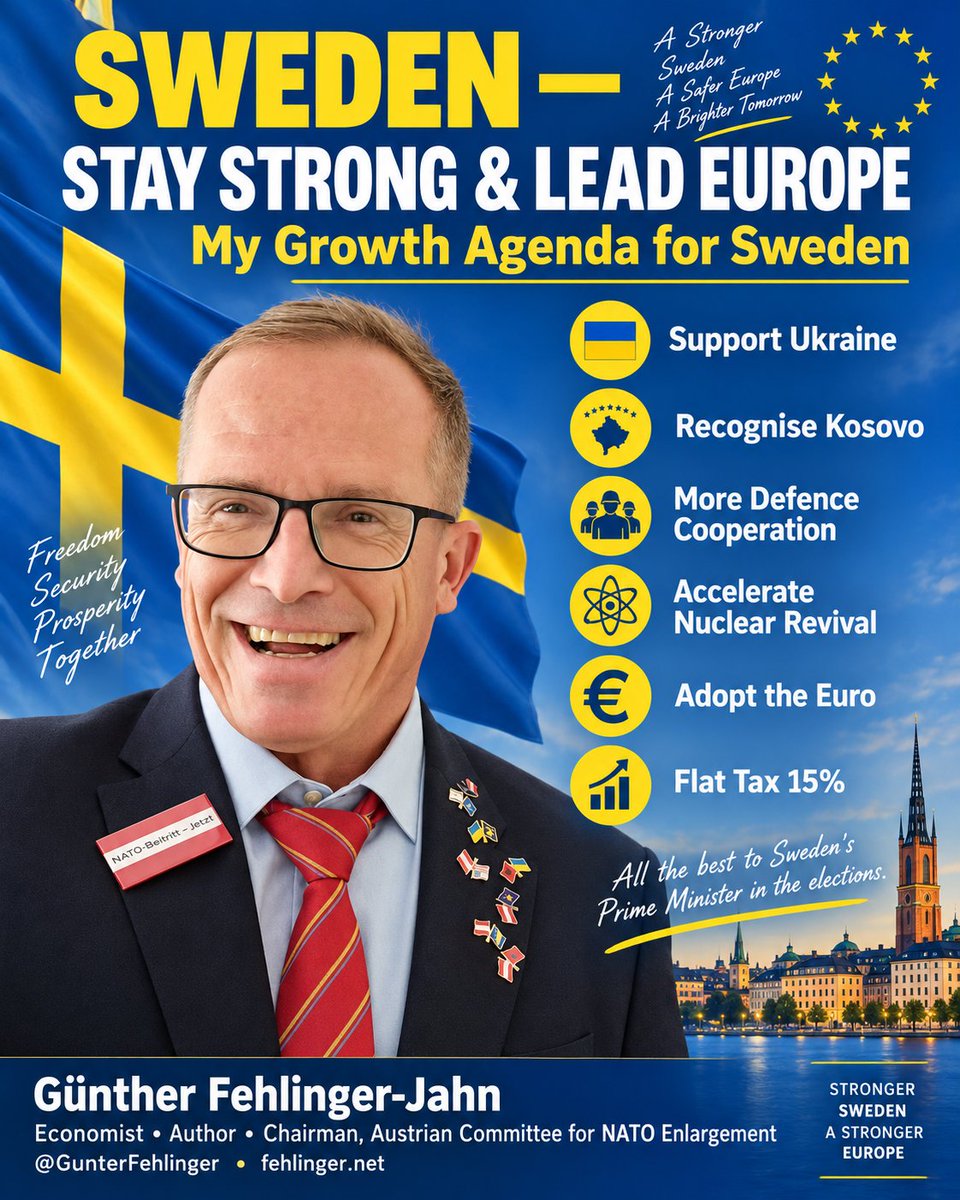
🇸🇪 SWEDEN — STAY STRONG & LEAD EUROPE! I wish Prime Minister Ulf Kristersson all the best in the Swedish elections. Sweden has become one of Europe’s strongest role models: extraordinary support for Ukraine 🇺🇦, recognition of Kosovo 🇽🇰, NATO membership, serious defence policy and https://t.co/fTv89IsOYN #Sweden #NATO #SupportUkraine #SE #UA #XK

𝟖𝐭𝐡 𝐏𝐚𝐯𝐥𝐨𝐬 𝐆𝐢𝐚𝐧𝐧𝐚𝐤𝐨𝐩𝐨𝐮𝐥𝐨𝐬 𝐓𝐨𝐮𝐫𝐧𝐚𝐦𝐞𝐧𝐭 - 𝐓𝐢𝐜𝐤𝐞𝐭𝐬 𝐀𝐯𝐚𝐢𝐥𝐚𝐛𝐥𝐞 🎫☘️ Η ΚΑΕ Παναθηναϊκός AKTOR ενημερώνει πως τέθηκαν σε κυκλοφορία τα εισιτήρια για το 8ο Τουρνουά «Παύλος Γιαννακόπουλος», το οποίο επιστρέφει στο «σπίτι» μας, το Telekom Center Athens, την Παρασκευή 18 και το Σάββατο 19 Σεπτεμβρίου στη μνήμη του κορυφαίου παράγοντα του Συλλόγου. Η διάθεση των εισιτηρίων πραγματοποιείται μέσω της πλατφόρμας https://t.co/XyzihXA6OO και ισχύουν και για τις δύο ημέρες της διοργάνωσης και για τις τέσσερις αναμετρήσεις. Ο κάθε φίλαθλος έχει τη δυνατότητα να προμηθευτεί έως τέσσερα (4) εισιτήρια, ενώ για την αγορά εισιτηρίου δεν απαιτείται η κατοχή Membership. Το σύνολο των εσόδων από τις πωλήσεις των εισιτηρίων του 8ου Τουρνουά «Παύλος Γιαννακόπουλος» θα διατεθεί στο Ίδρυμα «Παύλος Γιαννακόπουλος», για την ενίσχυση του σπουδαίου έργου και των δράσεών του. 🙌 Το Ίδρυμα «Παύλος Γιαννακόπουλος» συνεχίζει την παρακαταθήκη και το σπουδαίο κοινωνικό έργο του Παύλου Γιαννακόπουλου, με σταθερή προσφορά στους τομείς της υγείας, της παιδείας, του αθλητισμού και της κοινωνικής αλληλεγγύης. Μεταξύ των σημαντικών δράσεών του συγκαταλέγονται η οικονομική ενίσχυση 160 οικογενειών ακριτικών περιοχών για τη γέννηση του τρίτου και πλέον παιδιού, καθώς και η πλήρης ανακαίνιση του φαρμακείου του «Ιπποκράτειου» Γενικού Νοσοκομείου Αθηνών, ενώ παράλληλα στηρίζει σταθερά τη νέα γενιά επιστημόνων μέσω προγραμμάτων υποτροφιών. 💚 Κλείστε τη θέση σας ΤΩΡΑ: https://t.co/IeXTOxtucg 👈 Μάθετε περισσότερα στο https://t.co/h7RlnkTbE3 #paobcaktor #ΠαύλοςΓιαννακόπουλος #Τουρνουά #Καλαθοσφαίριση

Freeman della City di Londra: Onoreficenza Ordinaria per Tutti, Onoraria per Pochi. SOURCE: https://www.linkedin.com/pulse/freeman-della-city-di-londra-dal-1996-unonoreficenza-sardella-ph-d--qlt0f/ Abstract La Freedom della City of Londra è un'istituzione di origini medievali documentata fin dal 1237, originariamente concepita per garantire ai cittadini liberi protezione dai vincoli feudali, diritto al commercio e proprietà fondiaria entro le mura della Square Mile (la denominazione del territorio della City londinese). Progressivamente trasformatasi da privilegio economico concreto a riconoscimento civico e simbolico, essa ha mantenuto nel tempo la propria rilevanza attraverso successive riforme normative (notevolmente l'apertura a tutte le nazionalità nel 1996) e conta oggi circa 1.800-2.000 nuove ammissioni annue. Il presente articolo esamina l'evoluzione storico-giuridica del titolo, illustra le molteplici vie di accesso previste dalla normativa vigente (servitù per apprendistato, patrimonio, riscatto per nomina diretta, presentazione tramite le Livery Company (o Compagnie di Livrea) e iscrizione al registro elettorale), e analizza il profilo contemporaneo dei Freemen alla luce di ammissioni recenti a figure di spicco dei mondi della finanza, della cultura, dello sport e delle istituzioni. Contrariamente all'immagine elitaria che circonda molte onorificenze britanniche, la Freedom ordinaria si rivela accessibile a qualsiasi persona, indipendentemente da nazionalità o condizione economica, a fronte di requisiti minimi e di una quota amministrativa di £180-185. Il contributo conclude riflettendo sul significato contemporaneo dell'istituzione: non nei privilegi residuali ormai perlopiù simbolici, ma nella sua funzione identitaria, civico-partecipativa e di connessione con la lunga storia della città più antica e autorevole d'Europa. Parole chiave: Freedom of the City of London; Livery Companies; City of London Corporation; onorificenze britanniche; identità civica urbana. Contenuto dell’articolo Introduzione Nel panorama delle onorificenze storiche britanniche, poche istituzioni evocano un immaginario così ricco come la Freedom della City di Londra. Menzionata in film, romanzi e articoli di costume con toni di esclusività e mistero, essa appare frequentemente associata a figure di altissimo profilo: sovrani, capi di Stato, comandanti militari di ritorno dalle guerre. Eppure, a uno sguardo più ravvicinato e metodicamente documentato, emerge un quadro assai diverso: quello di un titolo che, nella sua dimensione ordinaria e non onorifica, è oggi accessibile a un numero considerevole di persone ogni anno, senza che siano richiesti meriti straordinari né mezzi economici elevati. Il presente contributo si propone di esaminare l'istituzione nella sua duplice valenza, storica e contemporanea, con l'obiettivo di sfatare l'equivoco più diffuso: quello che confonde la Freedom ordinaria con la Honorary Freedom (o Freeedom onoraria) quest'ultima effettivamente rara e riservata a figure di standing internazionale. L'articolo ripercorre le origini medievali e l'evoluzione normativa (§ 2), illustra le vie di accesso vigenti (§ 3), discute requisiti, costi e procedimento (§ 4), analizza la composizione contemporanea del corpo dei Freemen (§ 5), esamina diritti, privilegi e obblighi (§ 6), passa in rassegna i destinatari più illustri degli ultimi decenni (§ 7), e conclude con alcune riflessioni sul significato odierno dell'istituto (§ 8). Origini e Sviluppo Storico dell'Istituzione La Freedom della City di London è documentata fin dal 1237, durante il regno di Enrico III, come forma di status civico che designava gli individui non soggetti a un signore feudale e quindi titolari delle protezioni garantite dalle carte della City. In questa accezione originaria, il termine freeman indicava l'uomo libero in senso pieno: colui che poteva commerciare liberamente nel perimetro della Square Mile, il Miglio Quadrato, possedere beni e aderire alle corporazioni di mestiere senza interferenze esterne. I privilegi pratici erano di portata concreta e direttamente funzionali all'economia medievale: esenzione da determinati pedaggi, tra cui il celebre diritto di condurre greggi di pecore attraverso il London Bridge senza pagamento, concessione radicata nel commercio della lana che dominava l'economia inglese, protezione contro l'arresto arbitrario fuori dalla giurisdizione della City, e accesso ai mercati regolamentati dalle corporazioni. Come confermato dalle successive riemissioni della Magna Carta da parte di Enrico III nel 1225, tali libertà erano intrinsecamente legate all'autogoverno della City, che le difendeva dall'ingerenza regia e baronale. La progressiva codificazione dell'istituzione avvenne attraverso ordinanze regie a partire dal XIV secolo: nel 1319 Edoardo II emanò costituzioni che limitavano l'accesso alla Freedom ai membri delle corporazioni di mestiere, vietando l'ammissione di estranei non affiliati e formalizzando così la "servitù per apprendistato" come via principale per i nuovi entrati, mentre la via patrimoniale garantiva la continuità per le famiglie già stabilite. I monarchi successivi , da Edoardo III in poi, confermarono ripetutamente le libertà cittadine attraverso carte concesse spesso in cambio di prestiti finanziari, consolidando l'autonomia della City e il suo ruolo di creditore della Corona. Nel XIX secolo, con l'industrializzazione e l'espansione demografica di Londra, il controllo corporativo sul commercio si rivelò sempre meno applicabile: il Municipal Corporations Act del 1835 ampliò l'eligibilità a chiunque vivesse, lavorasse o avesse un legame significativo con Londra, sganciando parzialmente il titolo dall'appartenenza corporativa e trasformandolo progressivamente in una distinzione onorifica a carattere civico. Nel corso del Novecento ulteriori riforme inclusivizzarono l'accesso: le donne, già ammesse informalmente come vedove ereditiere in epoche precedenti, ma formalmente escluse dalle vie standard, videro riconosciuto il diritto all'ammissione ordinaria, con Angela Burdett-Coutts che aveva già ricevuto la Honorary Freedom (Freeedom Onoraria) nel 1872 e Florence Nightingale nel 1908, mentre la parità formale si consolidò nel XX secolo. Infine, nel 1996, fu abolito il requisito della cittadinanza britannica o del Commonwealth, aprendo il titolo a qualsiasi nazionalità. Le Vie di Accesso: Quadro Normativo Vigente La normativa vigente, gestita dalla Corte del Ciambellano della City of London Corporation, prevede cinque principali modalità di accesso alla Freedom della City londinese, che riflettono i diversi legami storici tra l'individuo e le istituzioni cittadine. Per servitù (by servitude) conferisce il titolo al completamento di un apprendistato formale secondo la Consuetudine di Londra, tradizionalmente della durata di sette anni, presso un maestro freeman di una Compagnia di Livrea (Livery Company). Questa via, la più antica e di maggior portata storica, verifica il merito attraverso la competenza pratica e la lealtà alla corporazione; gli apprendisti finali vengono ammessi senza necessità di approvazione della Court of Common Council qualora iscritti al registro elettorale della City da almeno un anno, e in tal caso non è previsto alcun contributo economico. Per patrimonio (by patrimony) conferisce l'eligibilità automatica ai figli di Freemen, purché il genitore detenesse questo titolo al momento della nascita del candidato e sia fornita adeguata documentazione. Storicamente limitato ai figli maschi, fu esteso alle figlie con il Municipal Corporations Act del 1835. Il candidato doveva aver compiuto il diciottesimo anno di età, non essere un "fallito non riabilitato" e non avere condanne penali rilevanti. Per riscatto (by redemption) costituisce la via aperta a chiunque: il candidato presenta domanda alla Corte del Ciambellano, supportato da due garanti, i Consiglieri Comunali, Aldermen o Liverymen con almeno un anno di atttvità che attestano la sua reputazione, e la pratica è esaminata dal Vicecomitato delle Ammissioni alla Freedom (Freedom Applications Sub-Committee) e approvata dalla Corte del Consiglio Comunale. La quota amministrativa (Freedom Fine) ammonta a £180 dalla revisione tariffaria del 1° aprile 2024 (£185 nella modalità per nomina diretta). Per i candidati iscritti al Ward List, il registro elettorale della City, la procedura è gratuita. La presentazione tramite Compagnia di Livrea (Livery Company) è la via più frequentemente percorsa nella prassi contemporanea: il candidato diviene dapprima membro della propria corporazione di riferimento, a sèguito di una procedura variabile per ciascuna delle 113 Compagnie di Livrea attualmente attive, e successivamente invia la domanda online alla Corte del Ciambellano per il passaggio alla Freedom della City, con approvazione nella quasi totalità dei casi di carattere routinario. Requisiti, Costi e Procedimento I requisiti per l'accesso alla Freedom ordinaria sono di una semplicità sorprendente rispetto all'aura di esclusività del titolo. Il candidato deve aver compiuto diciotto anni, non essere un "fallito non ristabilito" e non avere condanne penali non ancora estinte ai sensi del Rehabilitation of Offenders Act del 1974. Non è previsto alcun requisito di nazionalità, residenza, livello di istruzione o stato patrimoniale. La documentazione richiesta è di carattere anagrafico standard: certificato di nascita integrale, eventuale certificato di matrimonio o documento attestante il cambio di nome, e se mediante presentazione, il certificato di appartenenza della corporazione di riferimento. La domanda viene inoltrata online tramite il portale della City of London Corporation. La cerimonia di ammissione si svolge alla Guildhall di Londra, nell'Aula Tribunalizia del Ciambellano, ogni giorno feriale tra le 10:30 e le 12:00 e tra le 14:00 e le 15:30. Il neo-Freeman è invitato a leggere ad alta voce la Dichiarazione di un Freeman (Declaration of a Freeman) e a firmare il Registro delle Ammissioni, ricevendo al termine il certificato calligrafato su pergamena e una copia delle Regole di Condotta di Vita (Rules for the Conduct of Life), il documento settecentesco di orientamento morale che invita il titolare a condurre una vita retta, compassionevole e socialmente attiva. Per chi non possa recarsi fisicamente a Londra, la City Corporation ha mantenuto la possibilità di svolgere la cerimonia in modalità virtuale, introdotta durante la pandemia e successivamente conservata. Composizione Contemporanea del Corpo dei Freemen Un dato empirico significativo contribuisce a ridimensionare la dimensione elitaria del titolo: ogni anno vengono ammesse tra le 1.800 e le 2.000 nuove persone, in un corpo complessivo che conta oltre 300.000 ammissioni documentate nel corso dei secoli. Come rileva la stessa City of London Corporation, i Freemen contemporanei comprendono "un'ampia sezione trasversale della popolazione", includendo professionisti, studenti, artigiani, imprenditori, personale militare e cittadini stranieri. Il crescente apporto di studenti universitari, spesso presentati in gruppi dalle proprie istituzioni accademiche e di professionisti internazionali, ha ulteriormente ampliato la base demografica. La cerimonia di gruppo del 2024, in cui 40 individui provenienti da settori che spaziano dalla scienza alla medicina, dall'imprenditoria alle iniziative per la diversità, hanno ricevuto il titolo simultaneamente, esemplifica questa apertura. Va ribadita, tuttavia, una distinzione fondamentale: la Freedom Onoraria della City di Londra costituisce un'istituzione del tutto separata e di portata radicalmente diversa. Concessa dalla Corte of Consiglio Comunale con una risoluzione speciale, è riservata a figure di eccezionale statura internazionalte tipicamente meno di una dozzina di concessioni annue e rappresenta, nelle parole della stessa City Corporation, il massimo onore che essa possa conferire. È questa la Freedom di cui hanno goduto Winston Churchill, la regina Elisabetta II e, più di recente, la presentatrice televisiva Rachel Riley (ottobre 2025) per il suo impegno nell'educazione alla Shoah e nella lotta all'antisemitismo. La confusione tra le due forme è la principale responsabile della percezione distorta dell'istituto nel dibattito pubblico. Il Significato Contemporaneo: tra Identità e Partecipazione Se la quasi totalità dei privilegi pratici un tempo associati alla condizione di Freeman è oggi scomparsa o ridotta a forma cerimoniale solenne, ciò che persiste è il potente valore simbolico e identitario del titolo. La cerimonia conserva elementi di solennità rituale la lettura della Dichiarazione, la firma sullo storico Registro delle Ammissioni, il ricevimento del certificato calligrafato su pergamena, che inscrivono il nuovo Freeman in una catena di continuità di quasi otto secoli, collegando figure eterogenee attraverso un legame condiviso con la storia del Miglio Quadrato (o Square Mile). La nobile istituzione londinese svolge altresì una funzione di coesione nell'ecosistema della City e delle Compagnie di Livrea: le 113 corporazioni attive hanno erogato collettivamente oltre 81 milioni di sterline in attività benefiche nel 2024, con programmi di formazione professionale, borse di studio e apprendistati tecnici che preservano competenze specializzate in settori economicamente rilevanti. Essere Freeman costituisce un prerequisito formale per l'avanzamento a Liveryman, e quindi per l'esercizio dei diritti elettorali nella governance della City: un residuo di democrazia corporativa che, per quanto distante dai modelli di suffragio universale, mantiene una sua logica istituzionale nell'architettura giuridica unica del Miglio Quadrato londinese. Critici di orientamento progressista hanno rilevato che il sistema favorisce reti consolidate e accessi per via ereditaria o professionale, potenzialmente escludendo strati più ampi della popolazione londinese con un bacino di Freemen viventi ben inferiore all'1% dei nove milioni di residenti nella Grande Londra (Great London). Tuttavia, i dati sulle ammissioni recenti, con riconoscimenti che spaziano dall'imprenditoria africana allo sport comunitario, dalla radiofonia alla medicina, suggeriscono una traiettoria di apertura progressiva che, pur senza raggiungere la piena rappresentatività demografica, testimonia la volontà istituzionale di mantenere l'istituto come tradizione viva piuttosto che reliquia esclusiva. Conclusioni L'analisi condotta permette di formulare alcune considerazioni conclusive. La Freedom della City, quella ordinaria, è oggi un'onorificenza accessibile a una platea ben più ampia di quanto l'immaginario collettivo suggerisca: i requisiti di ammissione sono minimi, i costi contenuti, le procedure relativamente snelle e aperte a qualsiasi nazionalità. La persistente confusione con la Freedom Onoraria, riservata a figure di eccezionaleelevatura internazionale, è la principale responsabile di una percezione distorta che merita di essere corretta. Il valore contemporaneo del titolo non risiede nei privilegi residuali, ormai perlopiù solenni e cerimoniali, ma in tre dimensioni complementari: quella identitaria, che connette il titolare a quasi otto secoli di storia istituzionale; quella civico-partecipativa, che attraverso l'accesso alle Livery Companies e al sistema elettorale della City inserisce il Freeman in reti realmente operative; e quella comunitaria, che attraverso i meccanismi di riconoscimento onorifico celebra contributi di portata e provenienza sempre più eterogenee. In questo senso, la Freedom rappresenta un caso di studio istruttivo su come le istituzioni storiche possano reinventarsi senza perdere autenticità, mantenendo vivo il proprio significato attraverso l'inclusione piuttosto che l'esclusione. Riferimenti e Fonti: City of London Corporation. (2024). Freedom of the City of London. https://www.cityoflondon.gov.uk/about-us/law-historic-governance/freedom-of-the-city Guild of Freemen of the City of London. (2025). Freedom of the City. https://www.guild-freemen-london.co.uk/freedom-of-the-city Livery Committee. (2025). Freedom of the City. https://liverycommittee.org/about/membership-freedom-and-livery-clothing/freedom-of-the-city/ Municipal Corporations Act 1835. UK Parliament. Rehabilitation of Offenders Act 1974. UK Parliament. Grokipedia. (2025). Freedom of the City of London. https://grokipedia.com/page/Freedom_of_the_City_of_London City Solicitors' Educational Trust. (2025). Applying for the Freedom of the City of London. LondradaVivere.com. (2025). La "Freedom of the City of London": un'antica libertà ancora viva. City of London Corporation. (2023). Livery Companies: Charitable Activities Report 2024. ONS / City of London Corporation. (2023). Financial Services Contribution to UK GDP.

Freeman della City di Londra: Onoreficenza Ordinaria per Tutti, Onoraria per Pochi.

Freeman of the City of London: An Ordinary Honour for All, an Honorary One for Few SOURCE: https://www.linkedin.com/pulse/freeman-city-london-ordinary-honour-all-honorary-one-sardella-ph-d--m1alf/ Abstract The Freedom of the City of London is an institution of mediaeval origin, attested as far back as 1237, originally conceived to afford freeborn citizens protection from feudal obligations, the right to trade, and the ownership of property within the bounds of the Square Mile — the territory of the City of London proper. Having evolved progressively from a concrete economic privilege into a civic and symbolic distinction, it has preserved its relevance over the centuries through successive legislative reforms — most notably the extension of eligibility to all nationalities in 1996 — and today records approximately 1,800 to 2,000 new admissions annually. The present article examines the historical and juridical evolution of the title, sets out the several routes of access provided by current regulation (by servitude through apprenticeship, by patrimony, by redemption through direct nomination, by presentation through the Livery Companies, and by registration on the electoral roll), and analyses the contemporary profile of the Freemen in the light of recent admissions of prominent figures from the worlds of finance, culture, sport, and public life. Contrary to the elitist image surrounding many British honours, the ordinary Freedom proves accessible to any person whatsoever, regardless of nationality or financial standing, upon the satisfaction of minimal requirements and the payment of an administrative fee of £180–185. The article concludes by reflecting upon the contemporary significance of the institution: not in the residual privileges, now largely ceremonial, but in its identity-forming, civic-participatory function and its connection to the long history of the oldest and most venerable city in Europe. Keywords: Freedom of the City of London; Livery Companies; City of London Corporation; British honours; urban civic identity. Contenuto dell’articolo Introduction Amongst the historic honours of Britain, few institutions evoke an imaginative world as rich as the Freedom of the City of London. Cited in films, novels, and articles on manners and custom with tones of exclusivity and mystery, it is frequently associated with figures of the very highest standing: sovereigns, heads of state, military commanders returning from the wars. Yet, upon closer and more methodical scrutiny, a markedly different picture emerges: that of a title which, in its ordinary and non-honorary dimension, is today accessible to a considerable number of persons each year, without the requirement of extraordinary merit or elevated financial means. The present contribution aims to examine the institution in its twofold aspect, historical and contemporary, with the object of dispelling the most prevalent misconception: that which confounds the ordinary Freedom with the Honorary Freedom — the latter genuinely rare and reserved for figures of international standing. This article traces the mediaeval origins and legislative evolution (§ 2), sets out the current routes of access (§ 3), discusses requirements, costs, and procedure (§ 4), analyses the contemporary composition of the body of Freemen (§ 5), examines rights, privileges, and obligations (§ 6), reviews the most distinguished recipients of recent decades (§ 7), and concludes with some reflections upon the contemporary significance of the institution (§ 8). Origins and Historical Development of the Institution The Freedom of the City of London is attested from 1237, during the reign of Henry III, as a form of civic status designating individuals not subject to a feudal lord, and therefore entitled to the protections guaranteed by the City's charters. In this original sense, the term freeman denoted the free man in the fullest sense of the word: one who might trade freely within the perimeter of the Square Mile, hold property, and join the trade guilds without external interference. The practical privileges were of concrete scope and directly functional to the mediaeval economy: exemption from certain tolls, including the celebrated right to drive flocks of sheep across London Bridge without payment — a concession rooted in the wool trade that dominated the English economy — protection against arbitrary arrest beyond the jurisdiction of the City, and access to the markets regulated by the guilds. As confirmed by the subsequent reissues of Magna Carta by Henry III in 1225, such liberties were intrinsically bound to the self-governance of the City, which defended them against royal and baronial interference. The progressive codification of the institution took place through royal ordinances from the fourteenth century onwards. In 1319, Edward II issued constitutions restricting access to the Freedom to members of the trade guilds, prohibiting the admission of unaffiliated outsiders, and thereby formalising servitude through apprenticeship as the principal route for new entrants, whilst the patrimonial route ensured continuity for established families. Subsequent monarchs, from Edward III onwards, repeatedly confirmed the civic liberties through charters granted often in exchange for financial loans, consolidating the City's autonomy and its role as creditor to the Crown. In the nineteenth century, with industrialisation and the demographic expansion of London, corporate control over trade proved increasingly unenforceable. The Municipal Corporations Act of 1835 extended eligibility to any person living, working in, or having a significant connection with London, partially detaching the title from corporate membership and progressively transforming it into an honorary distinction of a civic character. During the twentieth century, further reforms rendered access more inclusive. Women, already admitted informally as widows by inheritance in earlier periods but formally excluded from the standard routes, saw their right to ordinary admission recognised — Angela Burdett-Coutts having already received the Honorary Freedom in 1872, and Florence Nightingale in 1908 — while formal equality was consolidated in the twentieth century. Finally, in 1996, the requirement of British or Commonwealth citizenship was abolished, opening the title to any nationality whatsoever. Routes of Access: The Current Regulatory Framework The current regulations, administered by the Court of the Lord Chamberlain of the City of London Corporation, provide for five principal modes of access to the Freedom of the City of London, each reflecting different historical ties between the individual and the City's institutions. By servitude confers the title upon the completion of a formal apprenticeship under the Custom of London, traditionally of seven years' duration, under a master freeman of a Livery Company. This route, the oldest and of the greatest historical significance, verifies merit through practical competence and loyalty to the guild. Completing apprentices are admitted without the need for approval by the Court of Common Council, provided they have been registered on the City's electoral roll for at least one year, and in such cases no financial contribution is required. By patrimony confers automatic eligibility upon the children of Freemen, provided the parent held the title at the time of the candidate's birth and appropriate documentation is furnished. Historically restricted to sons, it was extended to daughters by the Municipal Corporations Act of 1835. The candidate must have attained the age of eighteen, must not be an undischarged bankrupt, and must not have relevant unspent criminal convictions. By redemption constitutes the route open to any person whatsoever. The candidate submits an application to the Court of the Lord Chamberlain, supported by two sponsors — Common Councillors, Aldermen, or Liverymen of at least one year's standing who attest to their reputation — and the matter is examined by the Freedom Applications Sub-Committee and approved by the Court of Common Council. The administrative fee (the Freedom Fine) amounts to £180 following the tariff revision of 1 April 2024 (£185 in the case of direct nomination). For candidates registered on the Ward List, the City's electoral roll, the procedure is free of charge. By presentation through a Livery Company is the route most frequently taken in contemporary practice. The candidate first becomes a member of their relevant guild, following a procedure that varies amongst each of the 113 Livery Companies currently active, and subsequently submits an online application to the Court of the Lord Chamberlain for admission to the Freedom of the City, with approval in the vast majority of cases being a matter of routine. Requirements, Costs, and Procedure The requirements for access to the ordinary Freedom are of a simplicity that may well surprise, given the aura of exclusivity surrounding the title. The candidate must have attained the age of eighteen, must not be an undischarged bankrupt, and must not have unspent criminal convictions within the meaning of the Rehabilitation of Offenders Act of 1974. No requirement of nationality, residence, educational attainment, or financial standing is imposed. The documentation required is of a standard biographical character: a full birth certificate, a marriage certificate or name-change document where applicable, and, where admission is by presentation, the certificate of membership issued by the relevant Livery Company. The application is submitted online through the City of London Corporation's portal. The admission ceremony is held at the Guildhall in London, in the Court Room of the Lord Chamberlain, on every working day between 10.30 and 12.00, and between 14.00 and 15.30. The newly admitted Freeman is invited to read aloud the Declaration of a Freeman and to sign the Admissions' Book, receiving upon its conclusion a calligraphed certificate on vellum and a copy of the Rules for the Conduct of Life — the eighteenth-century document of moral guidance that enjoins the holder to lead a life of rectitude, compassion, and social engagement. For those unable to attend in person, the City Corporation has retained the option of conducting the ceremony virtually, a facility introduced during the pandemic and subsequently preserved. The Contemporary Composition of the Body of Freemen One significant empirical datum serves to diminish the elitist dimension of the title: between 1,800 and 2,000 new persons are admitted each year, within a body that counts over 300,000 documented admissions across the centuries. As the City of London Corporation itself observes, contemporary Freemen comprise 'a broad cross-section of the population', encompassing professionals, students, craftspeople, entrepreneurs, military personnel, and foreign nationals. The growing contribution of university students, frequently presented in groups by their academic institutions, and of international professionals, has further broadened the demographic base. The group ceremony of 2024, in which 40 individuals drawn from fields ranging from science and medicine to entrepreneurship and diversity initiatives received the title simultaneously, is illustrative of this openness. A fundamental distinction must, however, be emphasised. The Honorary Freedom of the City of London constitutes an entirely separate institution of radically different scope. Granted by the Court of Common Council by special resolution, it is reserved for figures of exceptional international stature — typically fewer than a dozen conferred annually — and represents, in the words of the City Corporation itself, the highest honour it is able to bestow. It is this Freedom that has been enjoyed by Winston Churchill, Her Majesty Queen Elizabeth II, and, more recently, the television presenter Rachel Riley (October 2025), in recognition of her commitment to Holocaust education and the combating of antisemitism. The confusion between the two forms is the principal source of the distorted public perception of the institution. The Contemporary Significance: Between Identity and Participation While the great majority of the practical privileges once associated with the condition of Freeman have today disappeared or been reduced to solemn ceremonial form, what persists is the powerful symbolic and identity-forming value of the title. The ceremony retains elements of ritual solemnity — the reading of the Declaration, the signing of the historic Admission Register, the receipt of the calligraphed certificate on vellum — which inscribe the new Freeman within a chain of continuity of nearly eight centuries, linking diverse figures through a shared bond with the history of the Square Mile. This venerable London institution also performs a cohesive function within the ecosystem of the City and the Livery Companies. The 113 active guilds collectively disbursed over £81 million in charitable activities in 2024, through programmes of vocational training, scholarships, and technical apprenticeships that preserve specialist skills in economically significant sectors. Being a Freeman constitutes a formal prerequisite for advancement to Liveryman, and therefore for the exercise of voting rights in the governance of the City: a vestige of corporate democracy which, however distant from the models of universal suffrage, retains its own institutional logic within the unique legal architecture of the London Square Mile. Critics of a progressive persuasion have observed that the system favours established networks and access by hereditary or professional routes, potentially excluding broader strata of the London population, with the pool of living Freemen well below one per cent of the nine million residents of Greater London. Nevertheless, the data on recent admissions — encompassing recognition spanning African entrepreneurship, community sport, broadcasting, and medicine — suggest a trajectory of progressive opening which, whilst falling short of full demographic representativeness, attests to the institutional will to maintain the institution as a living tradition rather than an exclusive relic. Conclusions The foregoing analysis permits the formulation of several concluding observations. The Freedom of the City — the ordinary Freedom — is today an honour accessible to a far wider audience than the collective imagination suggests. The admission requirements are minimal, the costs modest, the procedures relatively streamlined and open to any nationality. The persistent confusion with the Honorary Freedom, reserved for figures of exceptional international eminence, is the principal source of a distorted perception that merits correction. The contemporary value of the title resides not in the residual privileges, now largely solemn and ceremonial, but in three complementary dimensions: the identity-forming, which connects the holder to nearly eight centuries of institutional history; the civic-participatory, which through access to the Livery Companies and the City's electoral system inserts the Freeman into genuinely operative networks; and the communitarian, which through the mechanisms of honorary recognition celebrates contributions of an ever more varied scope and provenance. In this respect, the Freedom represents an instructive case study in how historic institutions may reinvent themselves without losing authenticity, preserving their significance through inclusion rather than exclusion. References and Sources: City of London Corporation. (2024). Freedom of the City of London. https://www.cityoflondon.gov.uk/about-us/law-historic-governance/freedom-of-the-city Guild of Freemen of the City of London. (2025). Freedom of the City. https://www.guild-freemen-london.co.uk/freedom-of-the-city Livery Committee. (2025). Freedom of the City. https://liverycommittee.org/about/membership-freedom-and-livery-clothing/freedom-of-the-city/ Municipal Corporations Act 1835. UK Parliament. Rehabilitation of Offenders Act 1974. UK Parliament. Grokipedia. (2025). Freedom of the City of London. https://grokipedia.com/page/Freedom_of_the_City_of_London City Solicitors' Educational Trust. (2025). Applying for the Freedom of the City of London. LondradaVivere.com. (2025). La 'Freedom of the City of London': un'antica libertà ancora viva. City of London Corporation. (2023). Livery Companies: Charitable Activities Report 2024. ONS / City of London Corporation. (2023). Financial Services Contribution to UK GDP.

Freeman of the City of London: An Ordinary Honour for All, an Honorary One for Few

The Psychologist – The British Psychological Society – When Walls Become Wellness SOURCE: https://www.linkedin.com/pulse/psychologist-british-psychological-society-when-walls-sardella-ph-d--pu8sf/ Dr Luciano Magaldi Sardella and Professor Matteo Mantuano on how ‘Stramurales Participatory Street Art’ transforms urban mental health. Link: https://www.bps.org.uk/psychologist/when-walls-become-wellness The Psychologist, The British Psychological Society by esteemed Dr. Joe Sutton, Head of Science Communication at BPS Contenuto dell’articolo On a sweltering afternoon in June 2018, we stood in the central square of Stornara, a small agricultural town in Puglia, Southern Italy, watching something extraordinary unfold. Local artist Lino Lombardi was facilitating a heated discussion among residents about which mural designs should adorn their town's crumbling walls. What struck us wasn't the art itself, but the transformation we witnessed in the eyes of people who, just months before, had described their hometown as a place to escape. These were individuals reclaiming their narrative, voting on their future, literally painting over decades of decline. We are environmental and community psychologists who have spent over a decade studying how built environments shape mental health outcomes. Dr Luciano Magaldi Sardella's research focuses on participatory arts interventions in declining rural communities, while Professor Matteo Mantuano specialises in the psychological mechanisms of community empowerment and collective agency. When we first learned about the Stramurales festival in early 2018, we recognised it as a rare opportunity to observe participatory urban art as a potential tool for addressing the mental health crisis plaguing Southern Italy's depopulating towns. Over the past seven years, we have conducted extensive fieldwork in Stornara – interviewing residents, documenting the festival's evolution, and analysing its psychological and social impacts. What we found in Stornara was something far more significant than an innovative community-led arts initiative. It was environmental psychology in action – reshaping how we understand the relationship between built environments, participatory arts, and mental health. The Crisis Hiding in Plain Sight Recent research reveals an alarming convergence of environmental and mental health crises that remains curiously underexamined in psychological discourse. Mental health research receives a mere 2.3 per cent of overall National Institute of Health funding. We cannot know how much of that concerns our environments – both natural and built – which fundamentally shape our psychological wellbeing. The newly proposed field of 'EnvironMental Health' emphasises that deteriorating built environments correlate significantly with elevated stress, social isolation, and worsening mental health outcomes. Southern Italy's rural communities embody this crisis. Between 2002 and 2017, South Italy region lost approximately two million residents to migration, predominantly young adults aged 15-34. This exodus created what Johan Galtung described as 'structural violence' – systematic arrangements preventing communities from realising their potential. The mental health toll manifests not just in individual diagnoses, but in collective despair, eroded social capital, and communities watching their futures literally emigrate. Stornara exemplified this trajectory. By 2017, this municipality of 6,000 residents faced the familiar spiral: economic contraction precipitating youth emigration, accelerating infrastructure deterioration, driving further decline. Walls crumbled. Businesses shuttered. Hope evaporated. Then something changed. The Stramurales Revolution: Democracy through Design What emerged in Stornara transcends conventional cultural tourism. The Stramurales International Street Art Festivalworks through three foundational democratic mechanisms that distinguish it from superficial beautification projects. Organised through Stornara Life APS – an open-membership association founded by Maestro Lino Lombardi – the festival prevents elite capture through voluntary property owner participation ensuring no coercion; democratic content selection through annual community voting on festival themes and mural proposals; and transparent, inclusive governance that gives all residents a voice in the festival's direction. This participatory architecture facilitates what the World Health Organization describes as 'community empowerment' – processes enabling communities to increase control over determinants affecting their health. Recent field studies in Vienna demonstrate that urban art interventions reduce stress and anxiety while improving mood states, but Stramuralesgoes further by embedding art creation within democratic decision-making structures. When residents voluntarily offer walls and vote on content, they perform acts of material and psychological investment. This restoration of collective agency – the belief that residents can shape their hometown's future rather than merely witnessing decline – directly addresses the structural violence that erodes mental health. Between 2020 and 2025, Stornara experienced a huge increase in tourism revenue despite pandemic disruption. New businesses opened. A Stornara-born emigrant who returned reluctantly in 2017 to provide parental care, now works as a tour guide and describes Stornara as 'the coolest town in Italy'. These aren't just economic indicators. They're mental health outcomes. The Science behind the Transformation Contemporary research across multiple disciplines validates what Stornara residents experience viscerally. A 2024 systematic review examining 79 peer-reviewed articles identified how arts places – from permanent museums to temporary public installations – stimulate community engagement, enhance cultural identity, and foster social cohesion. Community-driven mural projects specifically strengthen local identity and pride, creating new routines for individuals to interact and build relationships. Recent experimental research in Berlin found that sidewalk-level art exhibitions significantly altered visitors' connection to and satisfaction with their neighbourhoods, improving overall wellbeing. This aligns with emerging theories on art viewing's impact on mental health, which identifies five key mechanisms: affective processes regulating emotions and stress; cognitive processes providing sensory stimulation and learning; social processes creating shared experiences; self-transformation through reflection; and resilience building for coping with challenges. Environmental psychology research demonstrates that built environments operate as therapeutic interventions. Studies on mental health inpatient facilities reveal that design elements affecting privacy, control, daylight access, and particularly the inclusion of artwork significantly impact patient outcomes. If hospital walls matter therapeutically, how much more do the walls we encounter daily in our communities? The Stramurales model harnesses these mechanisms through the recent concept of 'visual health activism'. Several murals explicitly engage health and human rights themes: Alaniz Niz's 'Refuge for All Migrants' represents exploited African agricultural workers; Sabotaje al Montaje's 'Turning Our Backs on Migration' challenges exclusionary policies; Devil Art Design's 'African Child at Sunset' portrays migrant youth seeking dignified futures. These works address social determinants of health through human rights advocacy. Migration policies denying basic rights create health vulnerabilities – including restricted healthcare access, hazardous working conditions, and psychological trauma from discrimination. The murals perform dual public health functions, in addressing residents' mental health while advocating for populations whose health rights face systematic violation. Place Attachment and Community Resilience The relationship between environmental perception, cultural identity, and community resilience has received substantial scholarly attention in 2024-2025. Research in rural China demonstrates that environmental perception of public spaces influences community resilience through chain mediating effects of cultural identity and place attachment. When communities transform their physical environments through participatory processes, they simultaneously strengthen the psychological bonds that underpin resilience. This explains why Stramurales succeeds where traditional economic development approaches falter. The festival doesn't just create economic value – though over 150 murals by international artists now attract thousands of visitors annually. It fundamentally reshapes residents' relationship with their environment, transforming narratives of decline into evidence of vitality. Each democratically selected mural becomes what resilience researchers call an 'anchor of hope' – tangible proof contradicting despair. Contemporary resilience theory emphasises that strength resides not merely in physical infrastructure but in social cohesion. A recent analysis of resilient urban design in marginalised American neighbourhoods found that residents' message – 'We like our neighbours, we like the character of where we live' – revealed that resilience is fundamentally about people and community. Design interventions succeed when they preserve and strengthen these social bonds, rather than imposing external visions. Stramurales embodies this principle. The democratic voting mechanisms ensure art reflects genuine community values rather than artist or curator preferences. This prevents the cultural displacement often accompanying urban regeneration, where improvements benefit newcomers while alienating existing residents. By centering resident agency, Stramuralesbuilds what researchers describe as 'critical resilience' – capacity addressing underlying inequalities rather than merely adapting to them. The Participation Gap and Universal Access These findings resonate profoundly with longstanding concerns about arts accessibility. The 2015 Warwick Commission documented that the wealthiest, most educated 8 per cent of the UK population accounted for 44 per cent of live music attendance and 28 per cent of visual art visits. This participation gap particularly affects communities that would benefit most from arts engagement for health and wellbeing. But Stramurales challenges this narrative. Street art as public health infrastructure requires no admission fees, no advance booking, no cultural capital to appreciate. It exists where people live, transforming daily commutes into encounters with beauty and meaning. The democratic selection process ensures accessibility extends beyond consumption to co-creation – residents don't just view art, they determine what appears on their walls. Recent research on participatory arts and social cohesion emphasises that successful interventions share common features: delivery in local communities, non-stigmatising approaches, flexibility, promoting social engagement, involvement of exhibitions, and delivery within specific timeframes. Stramurales incorporates all these elements while adding genuine democratic governance. This matters urgently. Mental health conditions among young people globally are rising, and traditional mental health services remain chronically underfunded. If we cannot scale clinical interventions to meet demand, we must invest in preventive public health approaches targeting social determinants. From Stornara to the World: Implications for Practice The Stramurales model offers a replicable template requiring modest financial investment but substantial community participation. Essential elements include voluntary engagement, democratic decision-making, strategic social media use for marketing, and integration of local narratives with global artistic practices. Several cities have implemented variations with promising results. Research on artistic interventions in urban spaces across Europe and Asia demonstrates that participatory art projects can serve as 'social prescribing', improving psychological resilience and enhancing public engagement. Tactical urbanism approaches – small-scale, low-cost interventions improving public spaces – increasingly incorporate art as core rather than supplementary elements. The implications extend beyond individual communities. International frameworks including the International Covenant on Economic, Social and Cultural Rights enshrine rights to health and cultural participation. State obligations to conserve, develop and diffuse culture should support community-driven cultural initiatives demonstrably impacting health outcomes. As pandemic governance analyses emphasise, future health policy reforms must address not only biomedical preparedness but underlying vulnerabilities in community resilience and social cohesion. Street art operating through participatory structures directly strengthens these dimensions. What Psychologists Can Do We have roles to play at multiple levels. First, we must conduct research documenting the mental health impacts of participatory arts interventions. While promising evidence exists, methodologically rigorous studies with adequate sample sizes and long-term follow-up remain scarce. We need experimental designs, not just observational studies, examining mechanisms through which environmental transformations affect psychological outcomes. Second, we should advocate for policy recognising arts engagement as health intervention. This means supporting public health funding for community arts initiatives, particularly in economically deprived areas where traditional development approaches have failed. We should work with urban planners, architects, and artists to integrate participatory arts into neighbourhood regeneration from inception, not as afterthoughts. Third, we must ensure interventions embody genuine participation rather than tokenistic consultation. The Stramuralesmodel succeeds because residents hold real power. Without this, arts interventions risk replicating existing power structures and potentially accelerating gentrification that displaces the communities they ostensibly serve. Fourth, we should employ arts-based research methods that centre community voices. Collaborative approaches like participatory theatre, photovoice, and collaborative poetics enable communities to articulate their experiences and aspirations in ways traditional psychological assessments cannot capture. These methods acknowledge that communities possess expertise about their own needs and potential solutions. Finally, we must situate arts interventions within broader frameworks addressing social justice. Art should not function as a 'sticking plaster' masking underlying inequalities. Instead, we should harness arts' disruptive potential to promote what researchers term 'critical resilience' – capacity challenging systemic injustices rather than merely helping people adapt to them. This means addressing not just symptoms (mental distress) but causes (structural violence, economic abandonment, policy failures). Reimagining Health Infrastructure The Stramurales case compels fundamental reconsideration of what constitutes health infrastructure. We typically envision clinics, hospitals, pharmacies – biomedical institutions delivering treatments for diagnosed conditions. But what if the most effective mental health intervention for a declining community isn't a new psychiatric facility, but democratic processes enabling residents to transform their visual environment? Walls covered with democratically selected art, created through genuine community participation, demonstrably improve community mental health while operationalising cultural rights described in international law. The modest financial investment required pales beside costs of clinical services treating preventable distress. For communities experiencing decline where traditional economic development has failed, participatory street art may offer the most cost-effective, accessible, and sustainable mental health intervention available. This isn't about romanticising art or dismissing serious mental illness requiring clinical care. It's about acknowledging that population mental health requires addressing social determinants – and that participatory arts targeting built environments, social capital, and collective agency directly address these determinants. The question facing psychology isn't whether art can function as health intervention – Stramurales and growing evidence demonstrate it can. Rather, the question is whether we possess imagination to rethink health infrastructure, recognising that effective mental health promotion may require democratic decision-making and community participation as much as clinical expertise. As we watched Stornara residents voting on murals that June afternoon, we witnessed people exercising a fundamental human capacity too often denied in our field: the power to shape their own environments and, through that shaping, to heal. Perhaps that's the most vital lesson Stramurales offers psychology – that sometimes the most therapeutic intervention isn't administered by professionals, but created by communities reclaiming their agency… one democratically selected wall at a time. Dr Luciano Magaldi Sardella holds a PhD in Cognitive Leadership at Aspire Institute, Harvard Business School. Professor Matteo Mantuano is Professor of Social Sciences and Psychoeducational Health, Unitré University of Milan, Italy. Photo: 'Kid trapped in a box' mural by Leticia Mandragora References: All-Party Parliamentary Group on Arts, Health and Wellbeing (2017). Creative Health: The Arts for Health and Wellbeing (2nd ed.). Belfiore, E. & Bennett, O. (2024). The social impact of the arts: An intellectual history. London: Palgrave Macmillan. Bone, J.K., Bu, F., Fluharty, M.E., Paul, E., Sonke, J.K. & Fancourt, D. (2024). Who engages in the arts in the United States? A comparison of several types of engagement using data from The General Social Survey. PLOS ONE, 19(1), e0296743. doi:10.1371/journal.pone.0296743 Chatterjee, H.J. & Noble, G. (2024). Museums, health and well-being: A preliminary report for Phase I. UCL Museums & Public Health Research Group. Cohen, G.D., Perlstein, S., Chapline, J., Kelly, J., Firth, K.M. & Simmens, S. (2006). The impact of professionally conducted cultural programs on the physical health, mental health, and social functioning of older adults. The Gerontologist, 46(6), 726–734. Daykin, N., Mansfield, L., Meads, C., Julier, G., Tomlinson, A., Payne, A., Grigsby Duffy, L., Lane, J., D'Innocenzo, G., Burnett, A., Kay, T., Dolan, P., Testoni, S. & Victor, C. (2024). What works for wellbeing? A systematic review of wellbeing outcomes for music and singing in adults. Perspectives in Public Health, 138(1), 39–46. doi:10.1177/1757913917740391 Fancourt, D. & Finn, S. (2019). What is the evidence on the role of the arts in improving health and well-being? A scoping review. World Health Organization, Health Evidence Network Synthesis Report 67. Flores González, L.M. & Rodríguez Sánchez, I. (2024). The transformative power of art in marginalized communities: Case studies from Latin America. International Journal of Community Well-Being, 7(2), 145–167. Galtung, J. (1969). Violence, peace, and peace research. Journal of Peace Research, 6(3), 167–191. Hart, A., Gagnon, E., Eryigit-Madzwamuse, S., Cameron, J., Aranda, K., Rathbone, A. & Heaver, B. (2016). Uniting resilience research and practice with an inequalities approach. Sage Open, 6(4), 1–13. Johnson, H., Carson-Apstein, E., Banderob, S. & Macualay-Rettino, X. (2017). 'You kind of have to listen to me': Researching discrimination through poetry. Forum Qualitative Sozialforschung/Forum Qualitative Social Research, 18(2). doi:10.17169/fqs-18.3.2864 Kaplan, S. (1995). The restorative benefits of nature: Toward an integrative framework. Journal of Environmental Psychology, 15(3), 169–182. Kim, J. (2017). Effects of community-based group music therapy for children exposed to ongoing child maltreatment and poverty in South Korea: A block randomized controlled trial. Arts Psychotherapy, 54, 69–77. doi:10.1016/j.aip.2017.01.001 Li, Y., Zhang, H. & Chen, T. (2024). Environmental perception, cultural identity and community resilience: Chain mediating effects of place attachment in rural China. Journal of Rural Studies, 98, 103– 115. Marmot, M., Atkinson, T., Bell, J., Black, C., Broadfoot, P., Cumberlege, J., Diamond, I., Gilmore, I., Ham, C., Meacher, M. & Mulgan, G. (2010). Fair society, healthy lives: The Marmot Review. Strategic Review of Health Inequalities in England Post-2010. Mulligan, M., Scanlon, C. & Welch, N. (2008). Renegotiating community life: Arts, agency, inclusion and wellbeing. Gateways: International Journal of Community Research and Engagement, 1, 99–115. doi:10.5130/ijcre.v1i0.591 Neelands, J., Belfiore, E., Firth, C., Hart, N., Perrin, L., Brock, S., Holdaway, D. & Woddis, J. (2015). Enriching Britain: Culture, creativity and growth. The 2015 Report by the Warwick Commission for the Future of Cultural Value. Packer, J. & Ballantyne, R. (2024). The role of museums and art galleries in promoting wellbeing: Insights from the United Kingdom and Australia. International Journal of Heritage Studies, 30(3), 234–251. Papies, E.K., Best, M., Gelibter, E. & Stroebe, W. (2024). The role of mental simulation in desire and motivation: A systematic review. Motivation Science, 10(1), 1–18. Pykett, A.A., Osborne, T., Resch, B., Nielek, R., Krukar, J. & Malleson, N. (2024). From smart to sustainable cities: The role of environmental psychology in urban transformation. Cities, 144, 104644. Roe, J. & Aspinall, P. (2024). The restorative benefits of walking in urban and rural settings in adults with good and poor mental health. Health & Place, 71, 102654. Stuckey, H.L. & Nobel, J. (2010). The connection between art, healing, and public health: A review of current literature. American Journal of Public Health, 100(2), 254–263. Theorell, T. (2024). Psychological health effects of musical experiences: Theories, studies and reflections in music health science. Stockholm: Springer Nature. Ulrich, R.S., Simons, R.F., Losito, B.D., Fiorito, E., Miles, M.A. & Zelson, M. (1991). Stress recovery during exposure to natural and urban environments. Journal of Environmental Psychology, 11(3), 201–230. Van den Berg, A.E., Wesselius, J.E., Maas, J. & Tanja-Dijkstra, K. (2024). Green space as a buffer between stressful life events and health: A longitudinal analysis. Social Science & Medicine, 310, 115270. WHO (2019). WHO housing and health guidelines. Geneva: World Health Organization. Zarobe, L. & Bungay, H. (2024). The role of arts activities in developing resilience and mental wellbeing in children and young people: A rapid review of the literature. Perspectives in Public Health, 137(6), 337–347. doi:10.1177/1757913917712283.

The Psychologist – The British Psychological Society – When Walls Become Wellness

The funeral of Mladic has basically become a de facto referendum on the Serbian people officially telling the EU that they’re no longer interested in membership of the collapsing War Union. Ironic in a way that Mladic turned out to be the pivot point. 🇪🇺🇷🇸 #Mladic #Serbia #EUmembership #EU #RS

FREEZE SERBIA’S EU ACCESSION NOW. If the Vučić regime is using invasive surveillance spyware against Serbian citizens, then Brussels cannot pretend that Serbia is making normal progress toward EU membership. U.S. Congressman Joe Wilson has publicly condemned the use of such https://t.co/TdWdupLD7C #FreezeSerbiaEU #HumanRights #SurveillanceSpyware #RS #US

Iceland voted this weekend against reopening EU membership talks. That is their decision and their full right, and I respect it without reservation. A nation weighed what membership would add to what it already has, and answered: not enough. This is a sobering moment, #Iceland #EUMembership #Sovereignty #IS

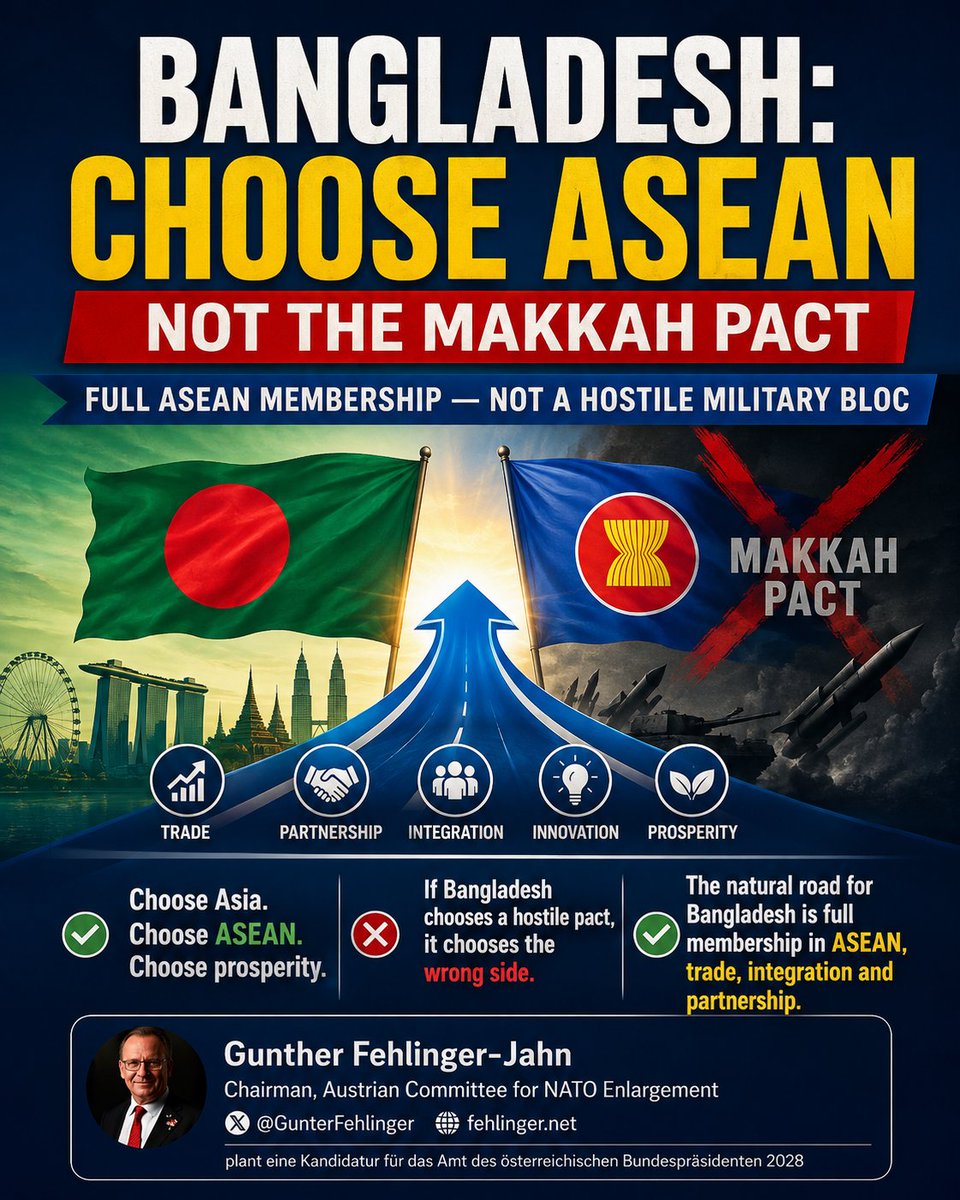
🇧🇩 BANGLADESH: CHOOSE ASEAN — NOT THE MAKKAH PACT @bbcbangla Bangladesh faces a clear strategic choice. @banglanews24com Choose ASEAN. Not a military pact. @BDnews The future of Bangladesh lies in full ASEAN membership, regional economic integration, trade, investment, https://t.co/Fw0PDmzpNH #Bangladesh #ASEAN #RegionalIntegration #BD

Thank you Mr Ambassador I pledge to fight for NATO Membership of Ukraine & Austria and for full liberation of Crimea Happy Independence Day @VKhymynets We will win! https://t.co/fZP4MkSPYy #NATO #Ukraine #IndependenceDay #UA #AT #RU

The German party landscape is experiencing an unexpected membership comeback in 2025 with an increase in party members by 8.2 percent, with the Left registering a record growth of 119 percent and the average age of members decreasing, while traditional popular parties like SPD, CDU, and CSU continue to lose members and age. (translated)

Parteimitglieder: Den Parteien laufen die Mitglieder davon? Zahlen sagen etwas anderes
Adham Hasanin Aug 11

A Crown Instead of the Barracks: An Idea From Outside the Box Could Egypt’s exiled opposition use constitutional monarchy to dismantle the legitimacy of the 1952 coup? By Adham Hasanin Egyptian journalist and political writer, based in the Netherlands To understand what follows, a reader unfamiliar with Egypt needs one basic fact: since 1952, Egypt has never been governed by anyone who did not first wear a military uniform. Gamal Abdel Nasser, Anwar Sadat, Hosni Mubarak, and today Abdel Fattah el-Sisi four men, four eras, one common origin. All rose through the armed forces. All inherited a state built by a coup that year, when a group of officers calling themselves the "Free Officers" overthrew King Farouk I and, within a year, abolished the monarchy altogether and declared a republic. For seventy-three years, the underlying equation has not changed: the army rules, power passes from one officer to the next, and legitimacy is drawn from the barrel of a gun rather than the ballot box. Every conceivable form of opposition has been tried legal parties and banned ones, Islamist movements, liberal and leftist coalitions, the 2011 popular uprising, and the 2013 elections whose result was overturned by force within a year. All of them hit the same wall: a military institution that reproduces itself under different names, while the core of the system remains untouched. So what if the problem, all along, has not simply been who rules, but the constitutional framework that makes military rule possible in the first place? And what if the answer lies not in swapping one president for another, but in dismantling the underlying equation itself, through a framework Egyptian opposition movements have never seriously tried: a purely ceremonial constitutional monarchy, on the model of Belgium, the Netherlands, or Spain where the head of state becomes a symbol above the political fray, while the army is permanently expelled from politics and returned to its barracks. This is not a call to revive a particular family, nor nostalgia for a golden age that never quite existed. It is a proposal for a political and strategic tool that has not yet been used in the intellectual arsenal of Egypt’s opposition in exile a tool that deserves serious discussion, regardless of whether it is ever literally realised or simply serves to expand the boundaries of what is politically thinkable. I. Why 1952, Not 2013 or 2011, Is the Root The strategic error made by most Egyptian opposition movements from the Muslim Brotherhood to the April 6 Youth Movement to the various civil opposition parties has been treating each political crisis as an isolated case: Mubarak was corrupt and had to be toppled; Sisi staged a coup that must be condemned; the interim military council was a transitional phase to be endured. This piecemeal approach treats the symptoms while leaving the original illness untouched. That original illness is the very structure of legitimacy established by the coup of 23 July 1952. The Egyptian republican system, from Nasser to today, has never built its legitimacy on a genuine democratic social contract. Instead, it has rested on a fixed trinity: the rhetoric of "revolution against feudalism and colonialism," charismatic individual leadership, and military protection of the regime framed as the guarantor of stability. This trinity has repeated itself from Nasser to Sadat to Mubarak to Sisi, with only cosmetic variations. Each new president was never a break from the system he was its continuation. When the opposition says "let us return to the constitutional framework that preceded the coup," it is not criticising a particular policy. It is declaring that the legal foundation of everything that came after 1952 was illegitimate from the start. Here lies the rhetorical power of "returning to the pre-1952 order": it does not merely demand swapping one ruler for another. It withdraws historical legitimacy from the entire republican military system including today’s regime, which draws its own declared legitimacy from that same "1952 legacy." II. Why a "Ceremonial Crown," Not "the Return of a Ruling Family" Here is the most important distinction anyone advocating this idea seriously must grasp: the project does not rest on restoring any particular individual from the Muhammad Ali dynasty, nor on nostalgia for King Farouk or his ancestors. The real power of the idea lies in the constitutional form, not in the person who happens to sit on the throne. Three successful European democracies illustrate the model clearly. Belgium, where King Philippe is a purely constitutional symbol with no real executive power, while the state is run through an elected parliament and a complex coalition government reflecting the country’s linguistic and political diversity. The Netherlands, where King Willem-Alexander formally opens the parliamentary year and signs laws, but where actual decision-making rests with the prime minister and the elected parliament. And Spain, where the king represents symbolic continuity of the state above party politics, while the military and security services answer entirely to civilian authority a transition achieved after the death of the dictator Francisco Franco in 1975, when King Juan Carlos I voluntarily relinquished the extensive executive powers he had inherited and backed free elections, most dramatically in February 1981, when he personally ordered the armed forces to remain loyal to the constitution during an attempted military coup, causing it to collapse within hours. The common thread across these three models is not "the presence of an ancient royal family." It is the principle of separating symbol from power. The monarch in these countries does not rule; he represents. He issues no political decisions; he provides the continuity and symbolic stability that allows party political competition to revolve beneath him, without every transfer of power becoming an existential crisis of legitimacy. This is precisely what Egypt’s military republican system lacks: a neutral mechanism for guaranteeing state continuity that does not depend on the person of the ruler or his security apparatus. When Egypt’s military-republican president is absent, it is always the army that fills the vacuum, because it is the only institution built to be the "guarantor of stability." Under a ceremonial monarchical model, by contrast, it is the king not the army who represents that symbolic guarantee, genuinely opening the door to removing the military institution from the political equation altogether. III. Egypt’s Standing Under the Monarchy: An Honest Reckoning, Not Blind Nostalgia For a Western reader with little prior knowledge of Egypt’s monarchical period (1922–1952), it helps to know this: Egypt was nominally independent under its own king from 1922, but Britain retained enormous informal control over the country’s foreign policy, military bases, and the Suez Canal throughout the period a reality that shaped everything that follows. Any honest invocation of "Egypt’s standing under the monarchy" must avoid the trap of mythologised nostalgia that many advocates of this idea fall into. Egypt in that era was no lost paradise, and any honest article must say so plainly. The Egyptian pound, for instance, often invoked as a symbol of "national currency strength" in that period, was not strong because of independent Egyptian monetary policy. It was pegged to the British pound sterling as part of Egypt’s complete colonial financial dependency until 1947, with Egypt exercising no independent oversight of its own currency whatsoever. The pound’s strength, in other words, was not a sovereign Egyptian achievement it was a reflection of British imperial power ruling Egypt from behind the throne. But this does not mean Egypt lacked a genuine regional standing worth studying. Cairo, in the 1930s and 1940s, was the undisputed cultural capital of the entire Arab world: the Egyptian film industry produced more than half of all Arabic-language cinema; its theatre scene, led by figures like Youssef Wahbi and Naguib al-Rihani, and its music, with Umm Kulthum and Mohammed Abdel Wahab, set the standard across the region; Cairo University was the first modern university in the Arab world; and the Egyptian press was the reference point for Arab public opinion from the Atlantic to the Gulf. Cairo was, quite simply, to the Arab world what Paris was to Francophone Europe: an unrivalled centre of cultural and intellectual gravity. This standing was not necessarily a product of monarchy itself, so much as a product of a relative space of political and press pluralism that allowed Egyptian civil society to flourish, despite all the flaws of the political system and the interference of both palace and occupier. The lesson here is not "bring back the king and the standing will return." It is: when even a limited margin of civic freedom exists, Egypt flourishes culturally and intellectually almost by its own nature. And that margin is precisely what has been entirely absent across the past seven decades of unchallenged military rule. IV. What Reform Would Actually Require Not Repeating the Old Mistakes Any serious advocacy of this model must include, even briefly, a clear vision for avoiding the flaws of the old monarchical system itself otherwise the proposal collapses into simply replacing one form of authoritarianism with another wearing a different crown. First, the armed forces would need to be placed fully under a civilian ministry of defence, with its budget subject to transparent parliamentary oversight the exact opposite of its current status as a state-within-a-state, and equally opposed to its role under the monarchy, when it often served as an instrument of British influence. Second, a judiciary fully independent of both palace and government alike, unlike the old model, which saw direct royal interference in political life as when King Fuad I dismissed the elected government of Prime Minister Saad Zaghloul’s successor, Mustafa al-Nahhas, in 1928, in one of the clearest "constitutional coups" in modern Egyptian history. Third, a parliament that genuinely represents the people rather than landowners and the aristocracy, as was the case before 1952, when membership in the Senate was effectively conditional on the ability to pay land taxes meaning political representation was, by law, restricted to the wealthy. Fourth, genuine economic sovereignty, with a truly independent national currency rather than one pegged to a foreign power’s currency, unlike the historical dependency of the Egyptian pound on sterling. These four principles are enough to clarify that the project on offer is not a literal "return to the past," but a borrowing of the constitutional form (symbolic monarchy) combined with an explicit rejection of its old substance (colonial dependency, palace interference, parliamentary feudalism). V. The Role of Egyptian Movements in Exile: Between Goal and Instrument This raises the most practical question of all: how might Egypt’s opposition abroad actually adopt this idea, and in what capacity? The honest answer is that the power of this proposal does not necessarily lie in its literal fulfilment, but in its dual strategic function. On one hand, it can be advanced as a genuine political goal adopted by broad coalitions of Egyptian movements coalitions that might include Islamists, liberals, leftists, and traditional monarchists, united around a single shared premise: rejecting the legitimacy of the 1952 order and everything that followed from it, even if they later disagree over the precise final shape of the state. On the other hand and this matters more in practice the idea can be deployed as a rhetorical instrument of pressure to widen a Egyptian political debate currently trapped between two false choices: "continued military rule" or "no alternative, chaos awaits." When the opposition puts forward a clearly defined third model a European-style constitutional monarchy it breaks this false binary and opens new intellectual space in Egyptian public discourse, even if the project is never realised in its literal form. This kind of "leverage idea" is common in the history of political movements worldwide: it is not necessarily proposed to be fulfilled immediately in full, but to redraw the boundaries of the politically possible, and to force the existing regime to defend its legitimacy rather than simply assume it. Conclusion: An Invitation to Debate, Not a Ready-Made Prescription This article does not claim that restoring a monarchical form would magically resolve Egypt’s chronic crisis of legitimacy, nor does it ignore the immense difficulties facing any transformative project under a military institution as economically and securitywise entrenched as Egypt’s is today. But it raises a question that deserves serious debate among Egypt’s opposition in exile, rather than automatic dismissal simply for being unfamiliar: Has the Egyptian opposition exhausted every available tool for dismantling the legitimacy of 1952, or has it remained trapped in the same old binary swapping one ruler for another while the framework that makes military rule possible remains untouched? The idea is on the table now, not as a finished solution, but as an overdue invitation to think outside the box.

🇷🇸🇪🇺 LOVEFEST IS OVER. GET A GRIP, SERBIA. Serbia wants EU membership, EU investment, EU funds and access to the European market. Then Serbia must finally act like a European candidate country. It is unacceptable to demand the benefits of European integration while refusing full https://t.co/6MV02m7ZWz #Serbia #EUmembership #EuropeanIntegration #RS #EU

🇷🇸🇺🇦 MR PRESIDENT ZELENSKYY — DID SERBIA NOW JOIN ALL EU SANCTIONS AGAINST RUSSIA? @ZelenskyyUa After your visit to Belgrade, this is the central question. @vonderleyen Serbia says it supports Ukraine’s territorial integrity. Serbia wants EU membership. Serbia wants European #Serbia #Ukraine #EUSanctions #RS #UA #RU

Petteri Orpo Aug 7

Excellent discussions with my new Ukrainian colleague @KoretskyiUA. We discussed Finland’s support for Ukraine and Ukraine’s path to EU membership. Finland stands with Ukraine 🇫🇮🤝🇺🇦 #Finland #Ukraine #EUmembership #UA #FI

"So Huda Ammori in the #PalestineAction case has been granted leave to appeal to a court [the #UKSupremeCourt] which specifically and openly disbars from membership any judge who might find in her favour" interesting analysis by @CraigMurrayOrg : https://t.co/Q3xsvkslS9 #PalestineAction #UKSupremeCourt #HudaAmmori #PS #UK

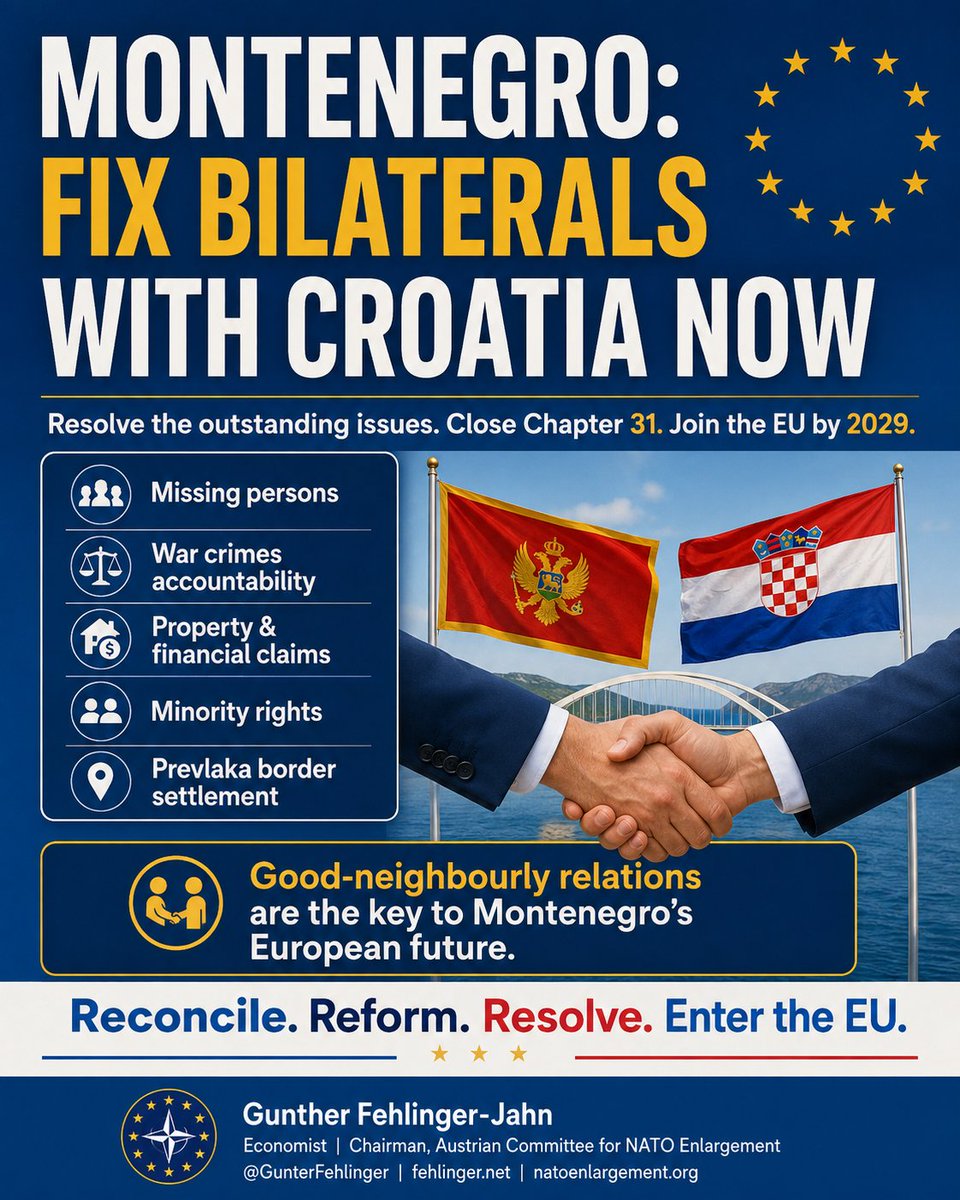
🇲🇪 MONTENEGRO: COMPLETE THE EU TO-DO LIST NOW Montenegro remains the frontrunner for EU membership—but accession requires more than technical reforms. It requires responsibility, reconciliation and a clear European foreign policy. I call on the Government of Montenegro to act https://t.co/x5TbP4TYVf #Montenegro #EUmembership #Reforms #ME