BETA nonprofit public democratic european moderated

Search

#Mită

How can anyone be so naive? After all the ugly figures and headlines? The Greens claim that almost all of the tightening measures we've implemented regarding immigration would be reversed. So, stricter requirements that an immigrant must be employed, be self-sufficient, and live respectably in Finland will be thrown in the trash. Who do they think will arrive in Finland if we cannot even require these basic things from the newcomers? Moreover, the Greens propose increasing net immigration to 40,000–45,000 newcomers every year. That would be more and faster immigration than ever in Finnish history. Every year. The Greens even propose granting more rights, services, and special treatment to those residing illegally in Finland. The most absurd is the proposal to legalize asylum seekers who arrived between 2015-2018, who, despite numerous negative decisions, still reside illegally in Finland. So, whether you received asylum or not, the Greens guarantee the right to stay here. A party that presents such ideas is likely to rise to power if the leftist parties win the elections. Finland cannot afford this. Neither in euros nor in the citizens' tolerance. The less is required from immigration, the more problems it brings along. Therefore, a strict stance on immigration is in the interest of Finland and Finns. (translated)


No concessions should be made to those illegally residing in the country. Those illegally in the country must leave, either on their own or with necessary assistance. (translated)

You mentioned that @SuomenPoliisi prohibited you from discussing matters related to the investigation. Did the police explain what this prohibition is based on? According to Section 5 of Chapter 11 of the Preliminary Investigation Act, a prohibition must be given in writing and formally communicated. It must specify the subject of the prohibition, the duration of the prohibition, and the potential penalties. The prohibition can only relate to matters that have come to light in the investigation, which do not concern the prohibited person themselves and which they did not previously know. Moreover, their disclosure must additionally be able to complicate the investigation or cause harm or disadvantage to someone. What was such a matter in this case? The investigation concerns a message that has already been published. The suspect's own suspicion of a crime, their own message, and what the police have reported regarding their status concern the suspect themselves. The prohibition does not extend to them, nor does Paragraph 2 of Section 23 of the Publicity Act, which only pertains to confidential information regarding other individuals obtained as parties involved. The police must also clarify the content of the confidentiality obligation (ETL 11:6). Was that done? If the police prohibited the recording of the interrogation or the publication of its content, what is the legal basis for the restriction, and what information does it pertain to? If the suspect cannot record, will the police record it themselves? The interrogation must be recorded when the method of its conduct should be able to be verified later (ETL 9:3). In this matter, the basis is evident. The suspect has the right to remain silent. You can refuse to answer until the binding nature, basis, and scope of the prohibition have been clarified (and, of course, otherwise as well). You do not have to guess the limits of an ambiguous prohibition. The police do not need to allow the publication of all material in advance. But if an authority claims that revealing information is punishable, the basis and subject of the prohibition must be specified. If it was a request, it should not be presented as an obligation, and such a request can always be met with a mocking belly laugh. (translated)

The 'Maricarmen decree' has already allowed the suspension of evictions in Catalonia, while the Government plans to finance half the price of housing for people over 40 in an attempt to address the housing crisis in the region. (translated)

El 'decreto Maricarmen' ya frena desahucios en Cataluña, mientras el Govern pagará la mitad de la vivienda a los mayores de 40

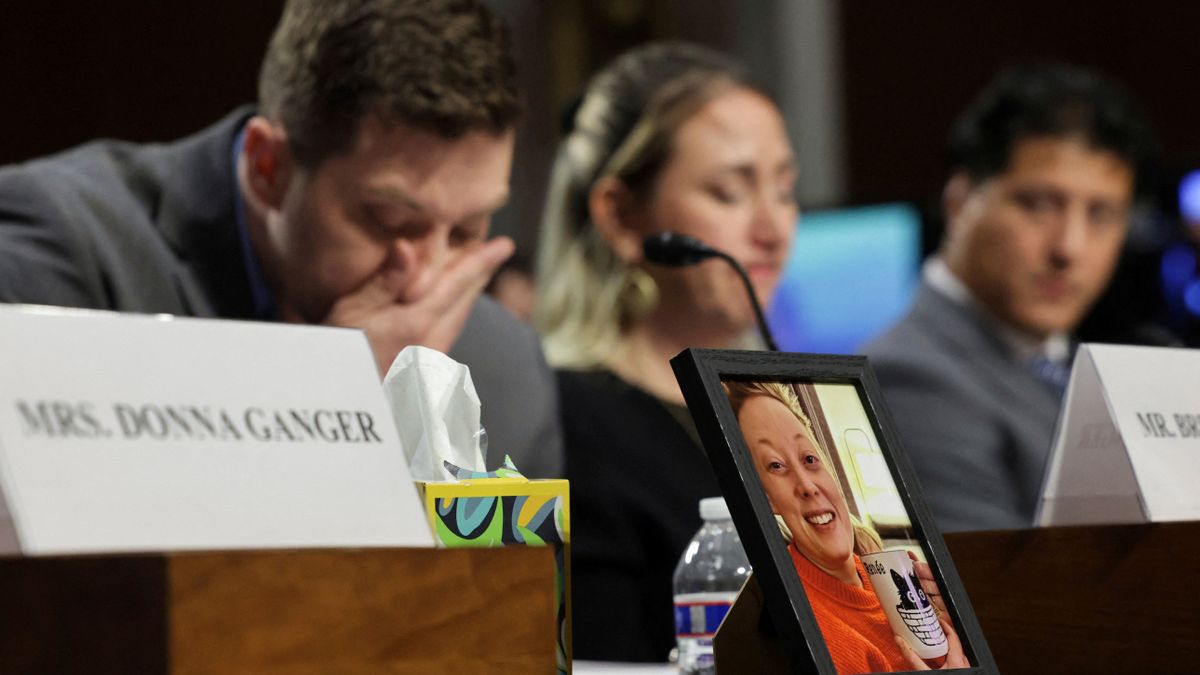
The family of Renée Good, who was shot during a US Immigration and Customs Enforcement (ICE) operation in Minneapolis, has filed a lawsuit against the US government and senior officials in immigration policy, claiming wrongful death as well as emotional distress. (translated)

Renée Good: Hinterbliebene klagen gegen die US-Regierung

When an impartial research institution finds such facts, it should be the top news for every media outlet. Or what do you think @yleuutiset @MTVUutiset @hsfi @iltalehti_fi @iltasanomat and others? Oh no? Why? (translated)

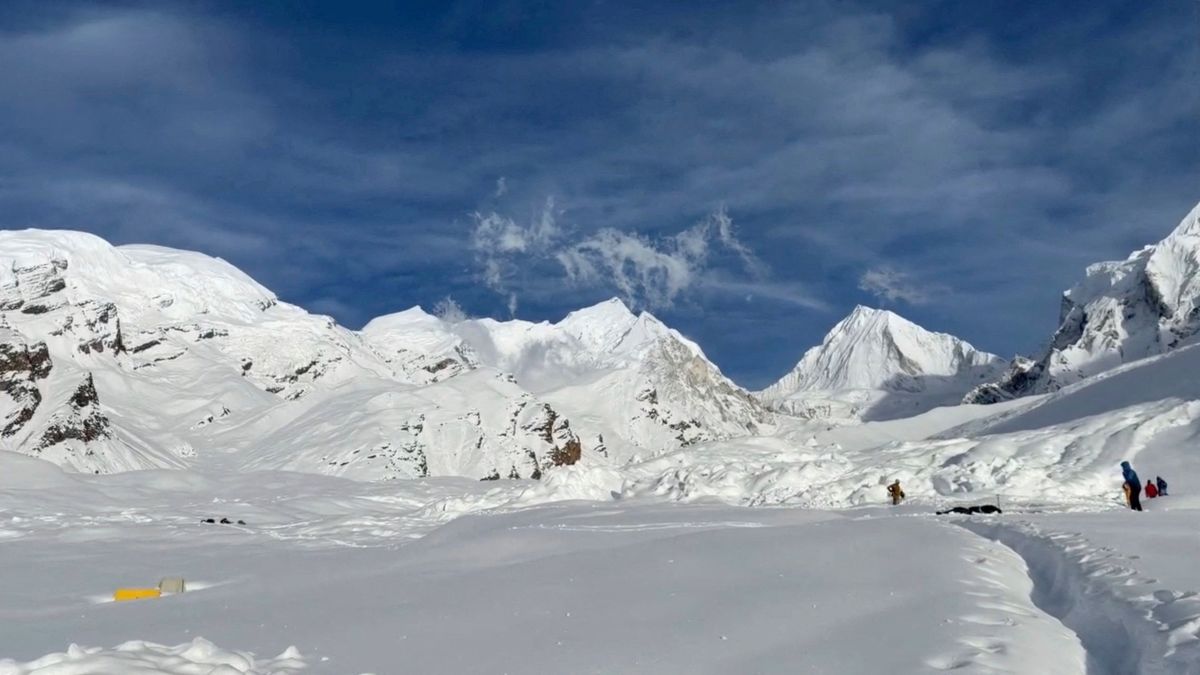
An avalanche at the base camp of the over 7000-meter-high Himlung Himal in Nepal claimed at least 15 lives on Sunday, mainly Nepali staff from expedition companies, while the search for another missing person continues. (translated)

Himalaja: Lawine trifft Basislager – mindestens 15 Tote

Government: Cuts parental allowance for working families by 500 million euros per year in savings Also government: Plans new government terminal at BER airport for 2.5 billion euros Among other things, 1,170 positions are to be accommodated on the site. For comparison: This is roughly as many employees as are employed at the entire Stuttgart airport. There, more than 8 million passengers are handled annually. (translated)

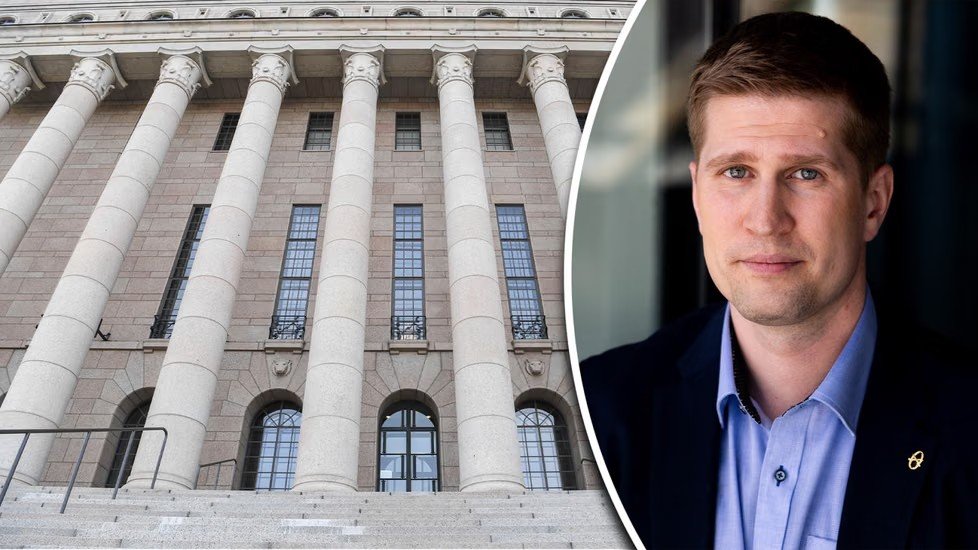
The press conference today clarified the suspicions related to parliamentarians' homes. According to Speaker Halla-aho, there is a significant number of cases. It is suspected that residences have been entered in the absence of the representatives. No signs of forced entry have been found, and nothing has been stolen, but traces have been left in the homes. The suspicions involve members of different parties, and the first case may go back as far as a year. There is currently no confirmed information about the perpetrator or motive. The background may involve criminal activity, harassment or stalking targeted at individual politicians, domestic extremist groups, or the actions of a foreign state. Not all reported cases may necessarily be related to each other. Now, it is the police's task to distinguish real intrusions from other observations and investigate possible connections between them. The possibility of a state actor must still be taken seriously. An especially interesting detail is the marks left in the homes. If the intention were solely to obtain information secretly, a successful intrusion would fundamentally be attempted to be concealed. If, instead, traces are deliberately left behind, being noticed may itself be part of the operation. In that case, intelligence is combined with psychological influence. Such methods are known in the history of Russian security services. There have been intrusions into the homes of diplomats, officials, and other individuals deemed interesting, with deliberate traces left behind. This does not prove anything about the perpetrators of these cases. It indicates why the possibility of a foreign state’s action must be thoroughly investigated. If it ultimately turns out to be state influence, the selection of targets would in itself be significant. Parliamentarians decide on Finland's defense policy, NATO cooperation, support for Ukraine, relations with Russia, and numerous other decisions in which foreign states may have strong interests. Coercion does not have to mean an attempt to change one vote in a single ballot. The aim could also be to gather information, map networks and vulnerabilities, or generate uncertainty about whether the consequences of political decisions extend to an individual's own home and loved ones. That is why Finland now needs a more open discussion about the kind of foreign intelligence, influence, and pressure directed at it. Confidential information should not be disclosed, but Finns should have a realistic understanding of the security environment in which we live and whether its change requires anything from decision-makers, companies, or ordinary people. And above all, keep a cool head. If the purpose of such acts turns out to be to generate fear and uncertainty in Finland, that is precisely the effect that should not be allowed. Serious suspicions will be investigated, efforts will be made to identify the perpetrators, and appropriate action will be taken if necessary. Finland's decisions will continue to be made in Finland, without fear and pressure. (translated)

Due to suspected break-ins into the homes of Members of Parliament, Speaker Jussi Halla-aho warned that a certain MP was raised to suspicion because of a non-flushing toilet, even though no signs of break-in or theft were found in the apartments. (translated)

IS: Vetämätön pönttö sai kansanedustajan hälytyskellot soimaan

IS reports today that some members of parliament's homes have already been breached. This new information makes the situation significantly more serious. It is no longer just a potential threat. As I mentioned earlier, this method of operation inevitably raises the issue of Russia. The Russian security services have a long history of similar actions. Breaching homes can gather information, but it can also demonstrate to the target that even their most private space can be accessed. If the incidents now revealed involve the actions of a foreign state, we are talking about very serious interference in Finnish democracy. At the same time, Finland now needs a much more open discussion about how foreign states operate here. What is really happening in Finland, what kinds of methods of influence and pressure are being directed at us, and what does the changed situation require from authorities, society, and possibly also ordinary Finns? Of course, not all information from authorities can be made public. However, that does not mean that we should remain silent about the phenomenon itself. People find it difficult to recognize foreign influence or prepare for it if we cannot talk about it openly. In this situation, whispering does not increase security. An open society defends itself best by understanding what is being done against it, keeping a cool head, and making it clear that Finnish democracy is not being pressured by fear. (translated)

Jouko S. 14h

Thank you so much @AnttiLindtman @VirtaSofia and @minjakoskela What the hell do you think you'll gain from this? Not interested in Finland's security at all. (translated)

As a result of the opposition's vote of no confidence regarding Israeli policy, Minister of Defense Häkkänen has to miss the meeting of defense ministers of JEF countries. The topic of the meeting is strengthening the defense of Northern Europe. What was ultimately achieved with all this remained somewhat unclear to me. (translated)

This is no longer just a political blunder, but probably the most humiliating national failure in the history of Finland's industry. This analysis reveals black on white how totally and blindly the Finnish state leadership has sold the interests of its own citizens in front of the marketing department of Silicon Valley. Let's break down this "sleight of hand" into three devastating facts that make the government's actions completely inexcusable. First of all, despite all the prime minister-level hype, promises, and the liturgy of the green transition, the outcome is harsh. As a result of Google's massive investments, no new electricity production is being built in Finland—zero megawatts. The company's marketing department worded it so cleverly that the government, desperately thirsty for economic growth, swallowed the bait completely baffled. The leadership was smilingly taken in front of cameras as a guarantor for a project that will not bring a single new watt to the Finnish grid. The second issue is the hijacking of national base power. This is the real, chilling bomb of the news. Since no new electricity will come, where will these massive data centers draw their power? The answer: from our nuclear power. The analysis reveals that as much as 500 megawatts of Finland's nuclear power capacity is dedicated exclusively to Google until 2050. This nuclear power is not just any electricity. It is precisely that stable, weather-independent base power that is vital for Finland's price stability and security of supply. The government is thus surrendering half a gigawatt of infrastructure intended to safeguard Finnish citizens during cold days to a multinational monopoly for the next quarter century. Thirdly, the master has definitively become a servant. When 500 megawatts of stable nuclear power is tied to Google's inflexible use, and no new capacity is brought in, the mathematical equation is devastating for the Finnish consumer. When a calm cold spell strikes in January, our electricity grid will lack that 500-megawatt lifesaver. It is dedicated to AI computation, and the ordinary Finnish citizen will pay for it with horrendous spikes in market electricity prices and increased transmission fees from Fingrid. The Finnish government allowed a multinational company to blind itself with platitudes and let a foreign entity walk straight into the national switchboard. This is not an investment in Finland. This is a hostile resource grab, which the country's own leadership blessed with a smile, sacrificing the energy security and purchasing power of Finns at the altar of the company's marketing trick. In democracy, there is one simple and ruthless rule: if the highest leadership of the state cannot defend the interests of its own people, it must step aside. Looking at this chain of events and the facts revealed by Talouselämä, the demand for Prime Minister Orpo's resignation is no longer just political shouting. It is the only logical conclusion in a situation where the head of government has shown a total lack of judgment in securing national infrastructure and the economy. The prime minister's job is to be the master in his own country. His task is to sit at the negotiating table, look the world's richest companies in the eye, and say: "This is our grid, our nuclear power, and our nature. You will pay for the infrastructure, you will build the new electricity, and you will pay the royalties here. Otherwise, you can take your servers elsewhere." If the prime minister is not capable of this—if he is so desperate that he can be led by a marketing department's word games like a measuring cup—he does not have the backbone that leading Finland requires in this global squeeze. Then there is only one right action: hand the keys back to the people and resign. (translated)

Conservative Christian young women are falling off one after another from the National Coalition Party. It's a good thing, as there doesn’t seem to be any opportunities for people like us to influence the party anymore. I have also had to witness discrimination against Anastasia up close in the Youth of the National Coalition Party. 😥 (translated)

Now is not the right time to vote for the destroyers of Finland. It has never been, but if you want to save Finland, really think about what you are voting for. (translated)

It is now 40% more expensive than in 2015, and during the same period, salaries have increased by half. (translated)

More than 800 billion euros for Germany. A strong signal from the initiative Made for Germany. Here we are investing in our future. We will support the companies and their employees on their path – with all our strength for our economy. (translated)

In the introduction of RJ 259, we talk about how the housing crisis affects women MORE. For example: 80% of single-parent households are single-mother households: half of them are at risk of social exclusion, and they dedicate a CRAZY amount to rent. (translated)

Shock at VW: The company terminates collective agreements for 100,000 employees in Germany. Now it's getting tough. (translated)