BETA nonprofit public democratic european moderated

Search

#Modération

Eine legendäre Stadionstimme verabschiedet sich: Der #S04 verändert die Moderation seiner Heimspiele. Grund dafür ist, dass Dirk Oberschulte-Beckmann, aka der Quatscher, aus gesundheitlichen Gründen leider nicht mehr zur Verfügung stehen wird. DANKE für alles, Quatscher! 💙 https://t.co/tJPSPOaiBx #S04 #Fußball #DankeQuatscher

A

Die Moderatorin konfrontierte Chrupalla damit, dass Ronzheimer bei seinem Parteikollegen die russische Armee-Tasse entdeckt hat. Darauf kontert er: "Wäre eine Tasse von der amerikanischen Armee oder vom IDF besser?" Moderation sprachlos! 😎🔥 #AfD #Politik #Welt https://t.co/xmBlcVW0Ie #Politik #AfD #Gespräch

Das Moderationsteam der ARD bei den Olympischen Sommerspielen in Sydney im Jahr 2000. Sehr unterschiedliche Wege, die Anne Will,Gerd Delling und ich seitdem im Leben gegangen sind. Für mich gilt: Bin sehr zufrieden. https://t.co/RK8YLNLUDi #OlympischeSpiele #ARD #AnneWill

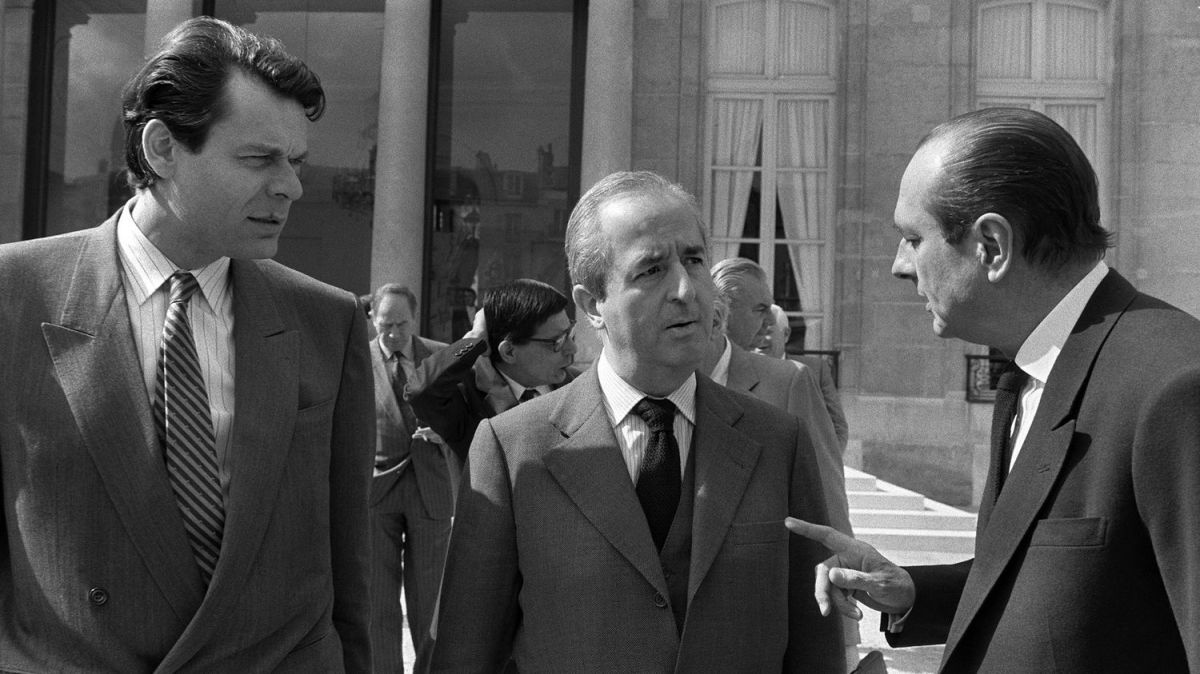
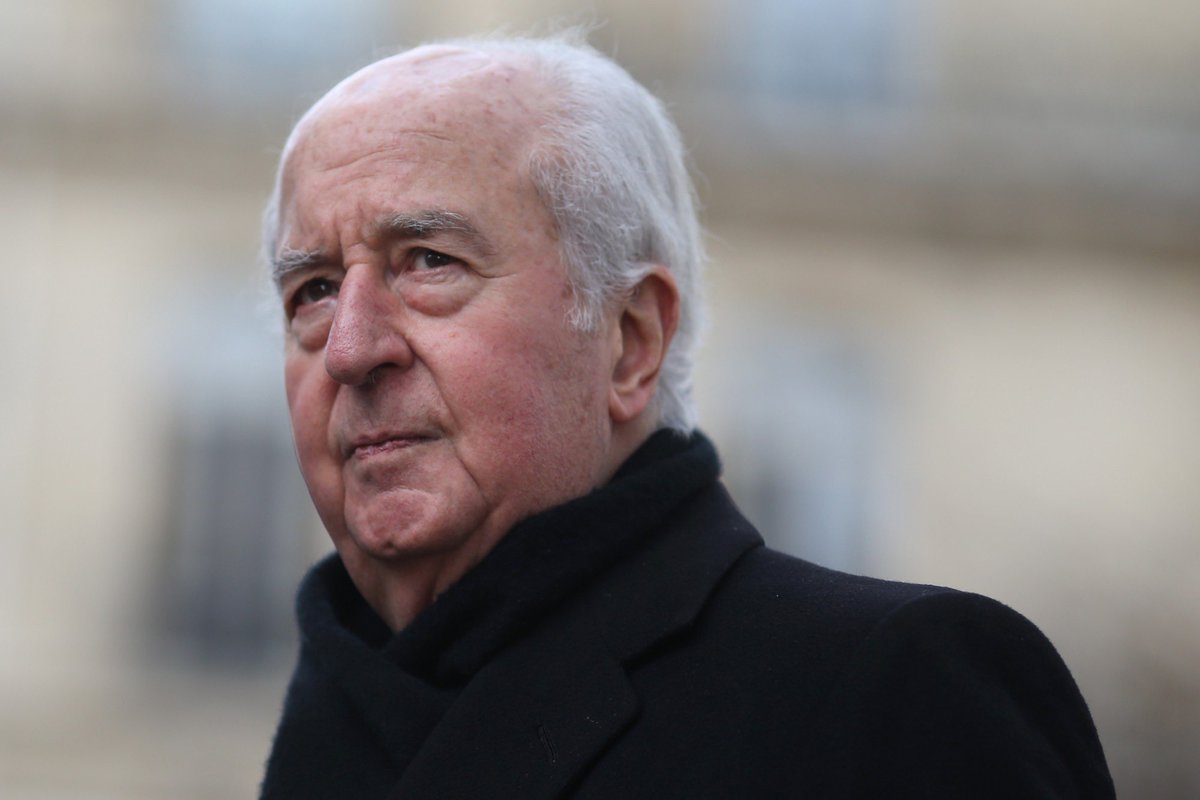
Edouard Balladur, former French Prime Minister and emblematic figure of the Fifth Republic, has passed away at the age of 97, eliciting numerous tributes from political figures honoring his commitment to public service and his moderation in a current political climate deemed degraded. (translated)

"Figure du gaullisme", "mentor", "grand serviteur de l'Etat"... Les réactions politiques après la mort de l'ancien Premier ministre Edouard Balladur

It is with great sadness that I learned of the passing of Edouard Balladur, a figure of Gaullism and former Prime Minister of France. Attached to his right-wing and liberal convictions as much as to a form of moderation in their expression, he was alien to excesses. (translated)

"Nous ne permettrons pas l’importation à Bois-d’Arcy d’une violence politique dont nous connaissons trop bien d’où elle provient. Notre commune a une tradition de modération et de bienveillance, tout en étant fortement attachée à l’ordre et à la tranquillité. Mais force est de constater que, pour certains militants extrémistes, la campagne présidentielle a commencé"

"Une violence politique" : des slogans nationalistes et une croix gammée tagués sur les murs de la police municipale de Bois-d'Arcy dans les Yvelines, la mairie porte plainte
www.franceinfo.fr

📢 Information - Mise en place d'un Botflashan 🚫 @AenotFR Un bot de modération nommé BotFlashBan est désormais actif sur l’ensemble des chaînes des streamers de @flashbackfr WL, soit plus de 560 streamers recensés. **Son objectif : renforcer la lutte contre les comportements toxiques et protéger au mieux les communautés.** BotFlashBan permet notamment de lutter contre : * le harcèlement et le cyberharcèlement ; * la misogynie et le sexisme ; * l’homophobie et autres discriminations ; * le racisme ; * les insultes, propos haineux et comportements volontairement toxiques ; plus globalement, tout contenu ou comportement allant à l’encontre d’un espace de discussion sain et respectueux. 💜 **560+ streamers, des centaines de communautés, une modération renforcée : ensemble, faisons de Flashback un espace plus sûr et plus agréable pour tous.** L'équipe staff flashback ⭐️⭐️ #Modération #Communauté #LutteContreLaToxique

BFMTV 4w

Researchers from the Tech Transparency Project revealed that Meta validated and disseminated over 50 advertisements containing AI-generated child pornography images on its platforms Facebook, Instagram, and Threads, drawing attention to the lack of adequate moderation despite policies against such content. (translated)

Des chercheurs montrent que Meta a validé des dizaines de publicités contenant des images pédocriminelles générées par IA sur ses réseaux sociaux Facebook, Instagram et Threads
D

Snapchat's moderation AI misinterprets a private joke by a student as a death threat, triggering a police operation, which ultimately leads to the arrest of the teacher and the loss of her job position. (translated)

Snapchat-KI "verpetzt" private Beschwerde: Polizei verhaftet Lehrerin
BFMTV 4w

France benefits from a relatively low inflation rate of 2.4% over a year, thanks to strong competition in the retail sector and moderation of wage increases, unlike other countries in the eurozone where inflation rates are significantly higher. (translated)

De faibles hausses de salaires et une forte concurrence dans la distribution qui tire les prix vers le bas: voici pourquoi la France a une inflation bien moins élevée que ses voisins de la zone euro
D
der Standard Jul 29

The Russian domestic intelligence service FSB has issued an arrest warrant against Telegram founder Pavel Durov, accusing him of aiding terrorist activities due to insufficient moderation on the platform. (translated)

Terrorvorwürfe: Russischer Geheimdienst erlässt Haftbefehl gegen Telegram-Gründer Durow

Comme @moniquedemarco (qui m’a bloqué), nous prend pour des cons, je ne résiste pas à la tentation de vous retweeter son magnifique tweet de victoire de 2022. Cynisme et démagogie sans foi ni loi, À faire tourner sans modération…. https://t.co/M5ubtVnKli #Cynisme #Démagogie #Victoire

Nostra Jul 21

🪎Récapitulatif : ✅ Félicitations aux 10 premier sur MPP je vais vous régaler 1500€ ✅ Félicitations aux 10 premier de la ligue des masters 2500€ pour vous et le premier IRA À NEW-YORK 🗽🇺🇸 🔎 Le temps que la modération récupère les pseudos de chacun, vous serez tous payés en même temps que les gagnants de la Ligue de Gotham, lors de la distribution des 10 000 € en live stream 🔥 #TeamParieur #Jeux #Compétition #Gains

Adham Hasanin Jul 21

| JULY 2026 | The Guard State How the largest Arab nation became a security contractor at the gates of its own people By Adham Hasanin Egyptian journalist and political writer, based in the Netherlands In June 2025, hundreds of activists from forty countries landed at Cairo airport. Doctors from France, lawyers from Australia, students from the United States, pensioners from the Netherlands. They carried no weapons and no banned slogans; they carried backpacks, walking shoes, and a single intention: to march from Arish to the Rafah crossing — entirely on Egyptian soil — to demand that food be allowed through to a people starving behind the gate. Not one of them reached Rafah. More than two hundred were detained before the march could begin. Around five hundred foreign nationals were deported from airports, hotels, and checkpoints. Passports were confiscated, activists were pulled out of downtown Cairo cafés, and the Global March to Gaza was cancelled on 16 June without taking its first step. And the world watched. This was no secret operation in a dark basement; it happened in the open, documented by the deportees’ own phone cameras, carried by every international news agency. The world watched an Arab state arrest Europeans, Americans, and Africans for wanting to walk towards Palestine. A state guarding the gate of a siege — from the side that was supposed to be the side of rescue. Hold that image, because it is the key to everything that follows. This was not an aberration in Egyptian policy, nor an isolated security decision. It is the function — the complete function around which the Egyptian state has been redefined over the past decade, and which it is time to call by its proper name: the Guard State. I. The Name — What Do We Mean by the Guard State? Political economy has long described states that live off the rent of their location rather than the production of their people. But what has crystallised in Egypt over the past decade goes beyond traditional geographic rent — the Suez Canal, say — into something far graver: the conversion of sovereignty itself into a commodity for hire. The Guard State does not sell its location; it sells its function. It collects its wages not for what it produces, but for what it prevents: it prevents the refugee from reaching Europe, the activist from reaching Gaza, its own people from reaching politics, and the resistance’s weapons from reaching their destination. Four gates, guarded by a single machine, whose wages are paid in loans, deposits, and perpetually renewed rescue packages. This is not a rhetorical metaphor; it is an economic structure with numbers attached. When the Egyptian economy collapsed in 2024, it was rescued not by productive reform but by a single deal whose subject was location: Ras el-Hekma — thirty-five billion dollars for a stretch of coastline. And whenever negotiations with the IMF stall, the tranches are unlocked by explicit European pressure whose subject is migration: nine billion euros from the European Union in the 2024 “Strategic Partnership,” whose own documents place “migration management” at its core. Europe does not pay Egypt to prosper. It pays Egypt to guard. Thus the model is complete: income in exchange for prevention, external legitimacy in exchange for guarding, and international silence about domestic tyranny in exchange for keeping the gates controlled. To see how the model works on the ground, consider the bloodiest gate of all: the gate of Gaza. II. The Gaza Gate — The Guard Who Is Himself Searched The first paradox must be nailed down with facts: Egypt is not a sovereign guard of its own crossing; it is a searched guard. Egyptian relief trucks — ninety-two thousand food parcels in a single convoy this month — are subject to Israeli inspection before entering the Strip: from Egyptian soil, through a crossing that bears an Egyptian name. The state that guards the gate does not hold its key. It owns the threshold, but not the door. Then the October 2025 truce added a new layer to the function. Under the fifteen-point roadmap sponsored by the international envoy together with the “guarantor states” — Egypt foremost among them — Cairo is to train the civilian police force that will replace Hamas in administering the Strip, under the slogan of “one authority, one law, one weapon.” Let us call things by their names: the state that could not — or would not — deliver a loaf of bread without Israeli permission is now qualifying to graduate the security apparatus that will oversee the disarming of the resistance. From guarding the siege to administering what comes after the siege — a promotion within the same project. And meanwhile, what is happening behind the guarded gate? Since the truce, more than one thousand one hundred Palestinians have been killed by Israeli fire — the latest, just two days ago, a ten-year-old boy named Motaz Abu Shaar, carried to his grave in Khan Younis by his mother, Warda. A United Nations commission of inquiry has concluded that Israel is “deliberately targeting children in an ongoing genocide.” This is what the guarantors’ official language calls a “ceasefire.” What meaning is left in the word “guarantor”? A guarantor that the gate stays firmly shut — however high the dead pile up behind it. III. The Mediterranean Gate — The Guard Europe Pays For The second gate faces north. Since 2016, Cairo has boasted — through its officials at every European forum — that “not a single irregular migration boat has departed from Egyptian shores.” This is very nearly true. But the forbidden question is: at what political price has this “efficiency” become an instrument of mutual blackmail? Europe — which condemns Egypt’s human rights record in its parliamentary resolutions — is the same Europe that signed the nine-billion-euro partnership, and the same Europe that stays silent about sixty thousand political prisoners because the alternative, in its calculations, is boats that never stop. And Cairo understands the game and has mastered it: whenever human rights pressure intensifies, the official discourse turns up the volume on “Egypt hosts millions of refugees” and “the last line of defence.” The result is a perfect structure of mutual blackmail: Europe buys its conscience’s silence, the regime sells its location, and the people — Egyptian and refugee alike — are the commodity in the transaction. The democracies that lecture on values are financing the guard who keeps the victims from knocking on their doors. This is not passing hypocrisy; it is a structural partnership in the Guard State model — one that makes Brussels and Berlin shareholders in everything this state produces, from domestic repression to external siege. IV. The Interior Gate — Guarding the People Against Politics But the most dangerous gate is not on any border; it is inside. The Guard State cannot perform its external function unless it first guards an internal gate: the people’s gate to politics. The function requires a people that does not ask: why are we guarding the siege of our brothers? Why are our trucks searched on our own soil? Why are guests deported for coming to walk in peace? To guarantee the question is never asked, the largest silencing machine in the country’s history was built: sixty thousand prisoners of opinion, a press ranked 166th out of 180 worldwide, and a state security case number waiting for anyone who writes. I write these lines from experience, not from reading reports. When I continued writing from my Dutch exile, the machine reached me across continents: accounts shut down by coordinated mass-reporting campaigns, documented threats, a family harassed inside Egypt as leverage — and my name entered into Case 1282 of 2024, not for any act I committed, but for opinions written from free European soil. This is not a personal complaint; it is a job description: the Guard State guards even beyond its borders, because the free word — wherever it is written — threatens the entire contract of guardianship. The logic is perfectly self-consistent: a regime that sells “stability” abroad cannot tolerate a voice revealing that the stability on offer is the stillness of graveyards. This is why the arrest of the foreign activists in June 2025 was inevitable, not incidental: a peaceful march reaching Rafah would have revealed, before the world’s cameras, that the gate opens when it is wanted open — and that the one keeping it shut is a partner, not a mediator. V. What Has Egypt Lost? — The Guard’s Bill An apologist might argue: what is the harm? A state monetising its location as Norway monetises its oil. The answer lies in the essential difference: Norway sells a resource; Egypt leases its will. And the difference between the two is the difference between trade and bondage. Let us tally what Egypt has paid for this model, in bare facts. It lost its water sovereignty: the Renaissance Dam was completed and filled without the state — owner of “the largest defence headquarters in the world” — daring anything beyond statements of concern; for the guard does not make trouble for the international order that employs him. It lost its regional standing: in the Iran–America war halted just weeks ago, Cairo was neither party nor mediator nor even consultant — Pakistan brokered the deal, while Egypt absorbed the economic shrapnel of Hormuz’s closure like a bystander caught in a battle whose parties it does not know. It lost its place in the conscience of its nation: the state that liberated its land in 1973 and led the Arab world for a century has become, in the eyes of the Arab street from the Atlantic to the Gulf, the gatekeeper of the siege. This loss, specifically, no loan or deposit can repay — because it is the only capital that cannot be printed. And it lost — here is the crux — the very national security in whose name the guarding is justified. The model proved its fragility at the moment of testing: when Israel feared an Iranian response last year, it cut off Egypt’s gas by unilateral decision within hours. The guard who believed himself a partner discovered he was merely a hireling whose wages stop the moment danger arrives. VI. The Alternative Is Not a Slogan — It Is the Recovery of the Original Function I will not close with an essay on “the solution lies in Arab unity”; worn-out words kill more surely than silence. The alternative is specific, and it begins with redefining the function. The state is not a guard; the state is the agent of its people’s will. Every foreign policy not derived from that will is — by definition — functional servitude, however it is wrapped in the language of wisdom and moderation. And the Egyptian will is known and needs no referendum: no people in this region accepts that its country serve as warden of the siege of Gaza, or as Europe’s border post. Practically, the recovery begins with three measurable steps. Open the Rafah crossing fully and sovereignly, by purely Egyptian decision — that alone would overturn the equation of the siege. Break the negotiating bondage by linking any cooperation on migration to concrete European positions on Palestine, not statements of concern. And open the interior gate — release the prisoners and lift the hand from the written word — because a state that fears an article will never dare face an occupier. I know the current regime will do none of this; guarding is its founding contract and its financial artery. But this article is not written for the regime. It is written for memory, and for the generation that will inherit the gates — so that it knows that what is presented to it today as “the fate of geography” is no fate at all. It is an employment contract, signed by a regime without a mandate from its people. And contracts, however long they run, end when one of their parties does. And the world — I return to where I began — is a witness that requires no further proof. It watched the deportees at Cairo airport; it watched the searched trucks; it watched Warda Abu Shaar carry her son to his grave behind a firmly guarded gate. The question is no longer: what is happening? The only question left is: who dares to name it? This article is a naming. Adham Hasanin is an Egyptian journalist and political writer based in the Netherlands, covering Arab and European political affairs.

Vous vous souvenez de l’époque où Twitter censurait tout et n’importe quoi ? Des comptes de campagnes présidentielles suspendus "par erreur", des militants LGBT bannis pour avoir repris des insultes afin de les dénoncer, une campagne officielle incitant à voter bloquée par la loi anti-fake news, et même La Liberté guidant le peuple considérée comme du "contenu pour adultes". Une partie de la modération était sous-traitée à des prestataires situés notamment au Maghreb, où des modérateurs ne maîtrisaient pas les références culturelles françaises, l’ironie ou le second degré. C’est cette époque bénie, faite de censure opaque, d’erreurs absurdes et d’arbitraire généralisé, que regrette aujourd’hui l’extrême centre. #Censure #LibertéDexpression #Modération

2018 : Jack Dorsey, cofondateur de Twitter et alors directeur général de la plateforme, participe au sommet « Tech for Good » organisé par Emmanuel Macron à l’Élysée. 7 juin 2019 : Macron reçoit personnellement Jack Dorsey et évoque avec lui une « régulation intelligente » des réseaux sociaux. 2019 : il lui adresse publiquement ce message : « Je compte sur toi, Jack. » Juin 2020 : Macron téléphone au patron de Twitter pour soutenir la plateforme dans son affrontement avec Donald Trump autour de la modération de ses publications. 2020 : l’Élysée reconnaît que Macron et Dorsey échangent directement. #Twitter #JackDorsey #EmmanuelMacron

À l’heure du débat sur "l’ingérence intérieure", Bluesky apparaît comme l’idéal numérique de ceux qui rêvent d’un espace public filtré : un réseau peuplé de journalistes, de militants, d’universitaires et de responsables politiques partageant les mêmes codes, où la modération remplace progressivement la contradiction. Or son échec prouve qu’un espace public ne peut pas être administré comme un salon privé. Sans le tout-venant, sans la confrontation, sans les voix dissidentes et parfois dérangeantes, il ne reste qu’un entre-soi stérile. Et entre le réseau aseptisé des prescripteurs officiels et la place publique libre, chaotique et ouverte à tous, c’est la seconde qui a démontré son utilité et son caractère indispensable. (vidéo : @SurmulotsNews ) #DébatPublic #LibertéDexpression #RéseauxSociaux

Je salue l'initiative de Wrld.org, qui ambitionne de proposer un réseau social au service des citoyens, fondé sur des valeurs telles que l'intérêt public, la démocratie et une gouvernance à but non lucratif. Pour renforcer la confiance des utilisateurs, il serait toutefois appréciable d'apporter davantage de transparence sur plusieurs points : le nombre d'utilisateurs, les fondateurs et responsables, la gouvernance, les principales sources de financement, les rapports financiers ainsi que les critères de sélection et de modération des contenus. Ces informations permettraient à chacun de mieux comprendre le fonctionnement de la plateforme et de renforcer la crédibilité du projet. J'espère que l'équipe de Wrld.org pourra apporter des précisions sur ces différents aspects. La transparence est un atout essentiel pour instaurer un dialogue de confiance.

Franceinfo Jul 6

Emmanuel Macron est arrivé en Syrie le 6 juillet 2026 pour une visite historique afin de promouvoir une Syrie libre, plurielle, respectueuse de chacune de ses composantes et jouer un rôle de modération au Moyen-Orient. #EmmanuelMacron #Syrie #UnionEuropéenne

Emmanuel Macron est arrivé en Syrie, une première pour un chef d'Etat de l'Union européenne depuis la chute de Bachar al-Assad
BFMTV Jul 3

À l'approche du 250e anniversaire de l'indépendance des États-Unis, le pape Léon XIV a appelé les Américains à faire preuve de modération et de respect dans le débat public, soulignant l'importance de l'unité et du droit à la vie tout en critiquant les tensions politiques actuelles, notamment envers les positions de Donald Trump. #LéonXIV #indépendanceaméricaine #modération

250 ans de l’indépendance américaine: le pape Léon XIV appelle les États-Unis à la "modération" dans le débat public