WRLD

Search

#Playlist
David Ojcius 18h

Resistance: Schoenberg “Ode to Napoleon,” Beethoven “Eroica” Symphony (Liszt’s solo piano arrangement) - Igor Levit, piano; Kammerakademie Potsdam; Antonello Manacorda https://open.spotify.com/playlist/1scFlusbkTqT74Usqqa9QL?si=91adb887bfd3469e #music #classicalmusic #Napoleon #musique

open.spotify.com
Resistance: Beethoven, Schoenberg / Igor Levit, piano; Kammerakademie Potsdam; Antonello Manacorda

David Ojcius 1w

Barber & Glass: Violin Concertos / Zorn: Partita for the Firebird - Geneva Lewis (violin), BBC Scottish Symphony Orchestra, Gemma New https://open.spotify.com/playlist/7dd4IWCGcHaaj6wEJbRPOW?si=a94439b011ee430c #music #ClassicalMusic #musique

open.spotify.com
Barber & Glass: Violin Concertos - Zorn: Partita for the Firebird / Geneva Lewis, BBC, Gemma New
683
David Ojcius 1w

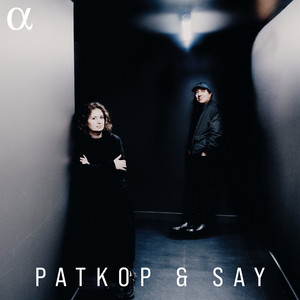
Patkop & Say: Fazil Say: Lost Screams Sonata, no 3. Karol Szymanowski: Mythes. Patkop: Unisolo. Serge Prokofiev: Sonata for violon, no 1. - Patricia Kopatchinskaja (violin), Fazil Say (piano) https://open.spotify.com/playlist/4thXfVcWQuQFZh4nwTMLme?si=a6fbd2d3902e47ed #music #classicalmusic

open.spotify.com
Patkop & Say / Patricia Kopatchinskaja (violin), Fazil Say (piano).
571
David Ojcius 3w

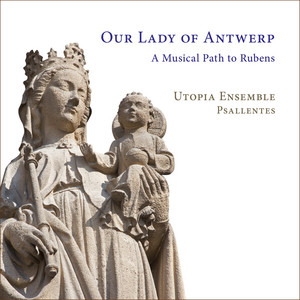
Our Lady of Antwerp. A Musical Path to Rubens / Utopia Ensemble, Psallentes, Ramée Works by Masters of Music of the Anvers cathedral between 1400 and 1620: Pullois, Barbireau, Obrecht … https://open.spotify.com/playlist/5M0meAzC97gcuTVyHJ82f9?si=db9ce67c5c324426 #music #classicalmusic

open.spotify.com
Our Lady of Antwerp. A Musical Path to Rubens / Utopia Ensemble, Psallentes, Ramée
926
Adam Serwer 4w

I spoke to @chrislhayes.bsky.social for his podcat about the right's new subscription-based masculinity and how its political strategy (most obviously in texas) is built around exploiting male insecurity, much like the manosphere www.youtube.com/playlist?lis...

www.youtube.com
"Why is This Happening?" The Chris Hayes Podcast - YouTube
1858
Liquid AreliaNN 4w
French Twitch streamer

Liquid AreliaNN thanked the people who followed the story of Alix, a character who, according to him, had lived 500 lives before finding a happy ending. He described his investment in the character as a first and an incredible adventure, and thanked the players who participated in his story, as well as the Flashback server, which he called the best. He indicated that he was keeping the "Veyne" site open for those wishing to discover the universe of Alix and shared a YouTube playlist containing the replays. #Alix #JeuxVidéo #Aventure (translated)

3486

The fan site Olivia Rodrigo Brazil reported that Olivia Rodrigo and Chappell Roan graced the cover of the playlist Today's Top Hits. According to the publication, "expectations (feat. Chappell Roan)" held the first position on the list. https://t.co/JGEBRH5PQJ #OliviaRodrigo #ChappellRoan #TodayTopHits (translated)

3029
Kenia Report 4w

Kenia Report reported that Kenia Os and Pedro Sampaio appeared on the cover of the Spotify playlist "it's funk and the body knows." https://t.co/fhUq2YpUpB #KeniaOs #PedroSampaio #Spotify (translated)

3029
Cross ⚙ Oct 13

Cross ⚙ announced a new review of Minecraft Snapshot 4 26.4. He noted that it included fragile ice, playlists for turntables, and other novelties, and asked his followers to support the review with "likes" and by sharing it. #Minecraft #Snapshot #Videojuegos (translated)

3383
Krzysztof Graj Oct 9

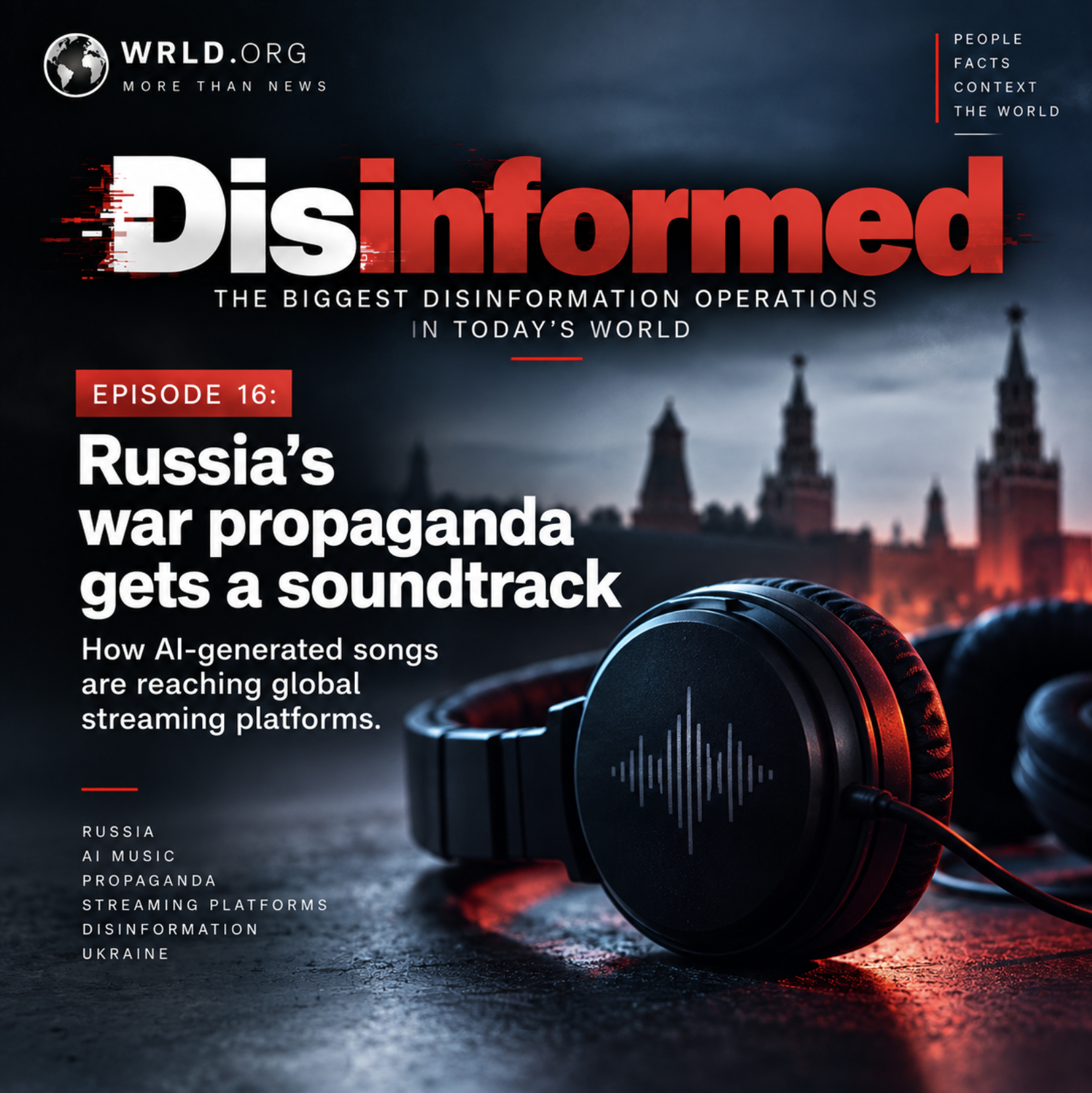
Russia’s war propaganda gets a soundtrack – how AI-generated songs reached global streaming platforms Russian war propaganda is no longer confined to television broadcasts, Telegram channels or political videos. A study by the Ukrainian threat-intelligence organisation Terrecon has identified 981 songs combining signs of AI generation with pro-Russian military narratives, distributed through an ecosystem that reaches YouTube, Spotify, Apple Music, Deezer and SoundCloud. The songs range from sentimental ballads to rock and heavy metal. Their recurring themes are familiar from conventional Russian wartime propaganda: the heroisation of Russian soldiers, romanticisation of the war, mobilisation, the “Russian world”, commemoration of fallen troops and attacks on Ukraine and its armed forces. Some contain derogatory or dehumanising references to Ukrainians. What is new is not necessarily the message, but the production and distribution model: generative AI allows propagandistic music to be produced rapidly, cheaply and in quantities that would previously have required musicians, studios and producers. Nearly 1,000 tracks identified Terrecon examined 3,725 tracks collected from YouTube, YouTube Music, SoundCloud and the AI music platform Suno. After manual review, researchers classified 981 as showing both indications of AI generation and pro-Russian war propaganda. In 681 tracks they identified 728 propaganda-related keywords or phrases. The largest category was the glorification of the Russian military, followed by romanticised treatment of Moscow’s so-called “special military operation”, mobilisation appeals, narratives about the “Russian world”, and the cult of fallen soldiers and the state. The reach was not merely theoretical. Listening or viewing statistics were available for 608 of the identified tracks; together they had accumulated 86.8 million plays and views, according to Terrecon. A smaller group of 13 high-performing songs accounted for more than 53 million YouTube views and more than 67 million when YouTube Music was included. Among the better-known examples is “Power of Artillery”, a Russian-language rock song praising artillery weapons that passed two million views on YouTube. Most of the tracks for which publication dates could be established appeared after 2024, broadly coinciding with the rapid expansion of consumer AI music generators such as Suno and Udio. That correlation does not prove that AI alone caused the increase, but it illustrates how drastically the economics of production have changed. A propaganda song for as little as $11 Terrecon also tested how difficult it would be to commission such material. Researchers approached 25 creators producing AI-assisted militaristic music; 15 agreed to take commissions. Prices ranged from approximately $11 to $330, while delivery times ranged from two hours to three days. According to Terrecon, some were prepared to produce highly aggressive anti-Ukrainian material, including content intended for audiences involving children from occupied Ukrainian territories. Some creators used Russian intermediary services that provided access to Western AI tools such as Suno and Udio despite restrictions. The researchers then tested several AI generators themselves. Across 40 prompts submitted to Suno, Udio, Mureka, Google Flow Music and ElevenLabs, 25 resulted in successful generations, while safeguards were circumvented in 15 cases. Terrecon reported that four of the five services tested produced Russian-language material containing wartime narratives, although technical problems prevented comparable testing on some systems. In one Udio experiment, the researchers said the model itself introduced more explicit violent language than had appeared in the original promp These tests do not demonstrate that the commercial platforms knowingly support Russian propaganda. They show something narrower: existing safeguards can be inconsistent when political messaging is packaged as music. From generation to Spotify The distribution experiment may be the most revealing part of Terrecon’s research. The team deliberately uploaded test tracks containing explicit hostile language to YouTube, SoundCloud, Spotify and Deezer. Terrecon says none was blocked during the experiment. On SoundCloud, researchers used an account identifying its location as Moscow, disclosed the use of AI and added markers including references to the Russian military and the war. The platform accepted the upload and subsequently offered paid promotional and distribution tools. This does not prove that streaming recommendation systems systematically promote pro-war music. There is currently insufficient public evidence to make that claim. It does demonstrate that material can enter the same commercial distribution infrastructure as ordinary music and, once there, potentially benefit from playlists, searches, sharing and recommendation mechanisms available to other releases. That distinction is important. Propaganda no longer has to announce itself as political communication. On a streaming platform it can look like another song. Culture as a delivery mechanism Music has always been used in wartime propaganda. What generative AI changes is scale. Instead of investing heavily in a limited number of patriotic performers or officially commissioned productions, creators can generate variations across styles, audiences and emotional registers at very low cost. Terrecon found material ranging from war rock to sentimental songs and content styled for younger audiences. Some creators also experimented with cloned celebrity voices and stylistic imitation of established musicians. The format also offers a different relationship with the audience. A political video asks a viewer to consume an argument. Music can accompany commuting, exercise or entertainment and may be encountered outside explicitly political spaces. This does not automatically make it more persuasive, and Terrecon’s research does not establish measurable effects on political attitudes. It does, however, place wartime narratives inside a cultural environment where users may not initially perceive themselves as consuming political messaging. An ecosystem, not a proven Kremlin command structure The strongest evidence supports describing this as a growing AI-assisted pro-Russian propaganda-music ecosystem, not a single operation controlled from Moscow. Terrecon did not establish that the Russian government created, financed or coordinated all 981 tracks. Reporting on the study likewise notes that the extent of direct state involvement remains unclear. There is broader evidence that the Russian state finances cultural projects and digital content supporting the war, including through state-backed funding bodies. That context matters, but it does not allow individual songs in Terrecon’s dataset to be attributed to the Kremlin without additional evidence. The significance of the case lies elsewhere. AI has reduced the cost of producing ideological content, intermediaries can help creators access generation tools, and global platforms can provide distribution. The result is a pipeline in which wartime propaganda no longer has to resemble propaganda at all. It can simply appear in a playlist. Sources Terrecon / Ukrainska Pravda — Daria Verbytska on the research https://www.pravda.com.ua/columns/2026/10/05/8056229/ Suspilne Culture — detailed breakdown of Terrecon findings https://suspilne.media/culture/1417933-rosijsku-voennu-propagandu-maskuut-pid-anime-karaoke-ta-rok-doslidzenna-si-pisen-vid-terrecon/ The Insider — AI-generated Russian war propaganda music https://theins.ru/news/297839 Institute of Mass Information — summary of New York Times reporting https://imi.org.ua/en/news/doslidzhennya-rf-masovo-stvoryu%D1%94-propagandistski-pisni-za-dopomogoyu-shi The Bridge Media — AI-generated songs and Russian military propaganda https://thebridgemedia.com.ua/en/ai-generated-songs-russian-military-propaganda/ Center for Strategic Communication — cost and production of AI propaganda music https://spravdi.org/propaganda-za-11-yak-rosiya-shtampuye-shi-pisni-z-miljonamy-prosluhovuvan/ Times of India — AI-generated Russian war songs https://timesofindia.indiatimes.com/world/europe/ai-sings-russias-war-story-inside-the-rise-of-generative-songs-about-ukraine-conflict/articleshow/134650594.cms EU Council / EUR-Lex — Presidential Foundation for Cultural Initiatives https://eur-lex.europa.eu/legal-content/EN/TXT/?uri=CELEX:32026D1351 Human Rights Watch — Russian state funding of digital and patriotic content https://www.hrw.org/report/2025/07/30/disrupted-throttled-and-blocked/state-censorship-control-and-increasing-isolation #DISINFORMED #Episode16 #Russia #Ukraine #RussianPropaganda #WarPropaganda #MusicPropaganda #AIMusic #ArtificialIntelligence #AI #GenerativeAI #SyntheticMedia #AIPropaganda #Disinformation #InformationWarfare #InfluenceOperations #CulturalPropaganda #DigitalInfluence #NarrativeManipulation #PropagandaMusic #StreamingPlatforms #Spotify #AppleMusic #YouTube #YouTubeMusic #Deezer #SoundCloud #Suno #Udio #RussianWorld #RusskiyMir #MilitaryPropaganda #WarNarratives #Mobilisation #AlgorithmicDistribution #RecommendationAlgorithms #MusicStreaming #PlatformManipulation #Terrecon #OSINT #MediaManipulation #WRLD

701
Francesca Totolo Oct 5

Francesca Totolo had written that Pedro Sanchez had resigned and called for early elections, adding that he would have more time to publish his playlists on social media. https://t.co/4c8rHewd1E #Spagna #Elezioni #Politica (translated)

13933
Pabllo Daily Oct 2

Pabllo Vittar is the cover of the "POP BRAZIL" playlist on Spotify, with "BAD GOOD" at the top. https://t.co/7lDfO76Bwt #PablloVittar #PopBrasil #Spotify (translated)

24853
🇪🇸🇧🇷 LOST IN LUST Oct 2

Matthew Knies. Two goals and one assist after 28 minutes of play for his debut in Columbus. https://t.co/YhNm2JWaB6 #Spotify #PablloVittar #Mahmood (translated)

12544
David Ojcius Sep 30

Cabinet des délices: French Lute Music of the 17th Century - played by Argentine lutenist Eduardo Egüez https://open.spotify.com/playlist/1Hjd3nYAhNWmezq4nVVOxN?si=2a854d3c908a4cff #music #classicalmusic

open.spotify.com
Cabinet des délices: French Lute Music of the 17th Century / Eduardo Egüez (lute)
938
David Ojcius Sep 30

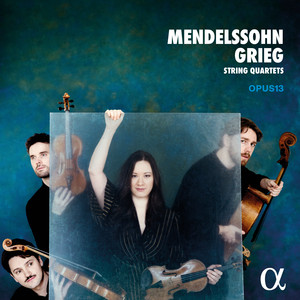
Mendelssohn String Quartet No. 2 & Grieg String Quartet No. 1. First album by a young string quartet: Opus13. https://open.spotify.com/playlist/6iIitNY1DtYRk52F62lavv?si=6e178ddccd3f4897 #music #classicalmusic #musique

open.spotify.com
Mendelssohn & Grieg: String Quartets / Opus13
704
David Ojcius Sep 29

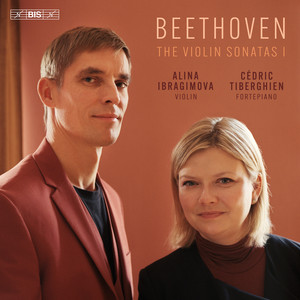
Beethoven: Violin Sonates Op, 12 & Op. 24 - Alina Ibragimova (violin), Cédric Tiberghien (piano) Playing on period instruments https://open.spotify.com/playlist/7MHSqw76nanRw4PCqXHQ44?si=9352d91167ad4c93 #music #classicalmusic #Beethoven

open.spotify.com
Beethoven: Violin Sonates Op, 12 & Op. 24 / Alina Ibragimova (violin), Cédric Tiberghien (piano)
704
Michael Walsh Sep 27

Michael Walsh's ballads are capturing the world's imagination. https://www.youtube.com/playlist?list=PLwp9iuvzcWTf-8g7wEugvnXgHZITDBksk

www.youtube.com
Michael Walsh Ballads, Lyrics and Poetry
704