WRLD

Search

#RussianPropaganda
Stanisław Żaryn 2w
Polish official, journalist

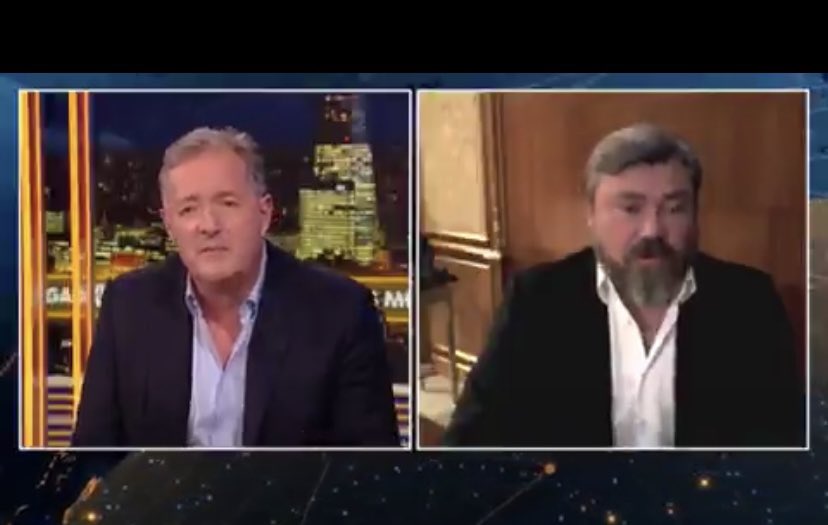
The author questioned why Western media gave Malofeev a platform, arguing that it allowed Russian propagandists to spread propaganda. They called for Malofeev and other figures they described as Putin’s proxies to be barred from Western media, and said Malofeev was one of the authors of Russia’s information warfare. https://t.co/upTSvtidIB #RussianPropaganda #MediaIntegrity #Infowarfare #RU #US
2767
Krzysztof Graj 4w

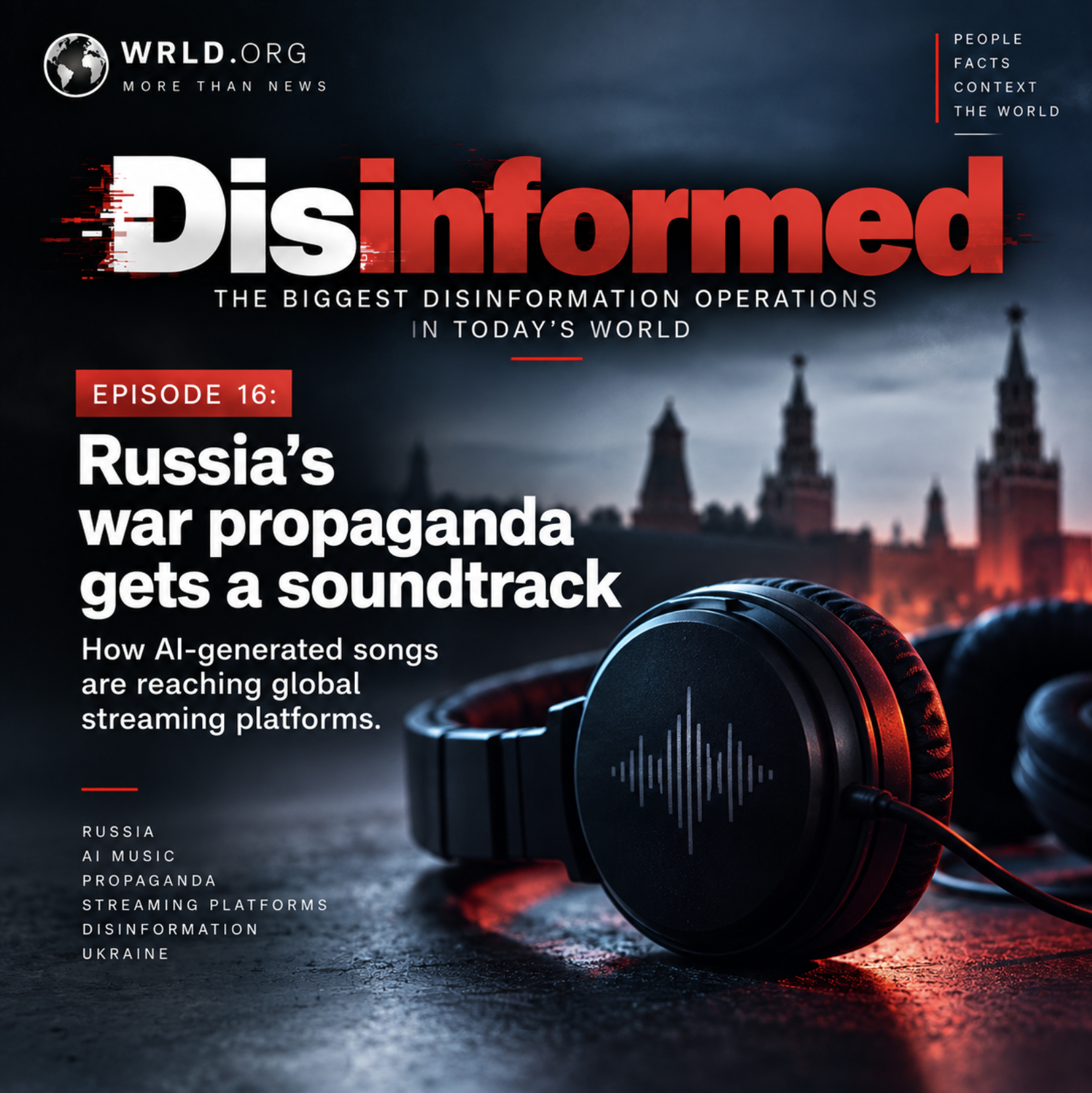
Russia’s war propaganda gets a soundtrack – how AI-generated songs reached global streaming platforms Russian war propaganda is no longer confined to television broadcasts, Telegram channels or political videos. A study by the Ukrainian threat-intelligence organisation Terrecon has identified 981 songs combining signs of AI generation with pro-Russian military narratives, distributed through an ecosystem that reaches YouTube, Spotify, Apple Music, Deezer and SoundCloud. The songs range from sentimental ballads to rock and heavy metal. Their recurring themes are familiar from conventional Russian wartime propaganda: the heroisation of Russian soldiers, romanticisation of the war, mobilisation, the “Russian world”, commemoration of fallen troops and attacks on Ukraine and its armed forces. Some contain derogatory or dehumanising references to Ukrainians. What is new is not necessarily the message, but the production and distribution model: generative AI allows propagandistic music to be produced rapidly, cheaply and in quantities that would previously have required musicians, studios and producers. Nearly 1,000 tracks identified Terrecon examined 3,725 tracks collected from YouTube, YouTube Music, SoundCloud and the AI music platform Suno. After manual review, researchers classified 981 as showing both indications of AI generation and pro-Russian war propaganda. In 681 tracks they identified 728 propaganda-related keywords or phrases. The largest category was the glorification of the Russian military, followed by romanticised treatment of Moscow’s so-called “special military operation”, mobilisation appeals, narratives about the “Russian world”, and the cult of fallen soldiers and the state. The reach was not merely theoretical. Listening or viewing statistics were available for 608 of the identified tracks; together they had accumulated 86.8 million plays and views, according to Terrecon. A smaller group of 13 high-performing songs accounted for more than 53 million YouTube views and more than 67 million when YouTube Music was included. Among the better-known examples is “Power of Artillery”, a Russian-language rock song praising artillery weapons that passed two million views on YouTube. Most of the tracks for which publication dates could be established appeared after 2024, broadly coinciding with the rapid expansion of consumer AI music generators such as Suno and Udio. That correlation does not prove that AI alone caused the increase, but it illustrates how drastically the economics of production have changed. A propaganda song for as little as $11 Terrecon also tested how difficult it would be to commission such material. Researchers approached 25 creators producing AI-assisted militaristic music; 15 agreed to take commissions. Prices ranged from approximately $11 to $330, while delivery times ranged from two hours to three days. According to Terrecon, some were prepared to produce highly aggressive anti-Ukrainian material, including content intended for audiences involving children from occupied Ukrainian territories. Some creators used Russian intermediary services that provided access to Western AI tools such as Suno and Udio despite restrictions. The researchers then tested several AI generators themselves. Across 40 prompts submitted to Suno, Udio, Mureka, Google Flow Music and ElevenLabs, 25 resulted in successful generations, while safeguards were circumvented in 15 cases. Terrecon reported that four of the five services tested produced Russian-language material containing wartime narratives, although technical problems prevented comparable testing on some systems. In one Udio experiment, the researchers said the model itself introduced more explicit violent language than had appeared in the original promp These tests do not demonstrate that the commercial platforms knowingly support Russian propaganda. They show something narrower: existing safeguards can be inconsistent when political messaging is packaged as music. From generation to Spotify The distribution experiment may be the most revealing part of Terrecon’s research. The team deliberately uploaded test tracks containing explicit hostile language to YouTube, SoundCloud, Spotify and Deezer. Terrecon says none was blocked during the experiment. On SoundCloud, researchers used an account identifying its location as Moscow, disclosed the use of AI and added markers including references to the Russian military and the war. The platform accepted the upload and subsequently offered paid promotional and distribution tools. This does not prove that streaming recommendation systems systematically promote pro-war music. There is currently insufficient public evidence to make that claim. It does demonstrate that material can enter the same commercial distribution infrastructure as ordinary music and, once there, potentially benefit from playlists, searches, sharing and recommendation mechanisms available to other releases. That distinction is important. Propaganda no longer has to announce itself as political communication. On a streaming platform it can look like another song. Culture as a delivery mechanism Music has always been used in wartime propaganda. What generative AI changes is scale. Instead of investing heavily in a limited number of patriotic performers or officially commissioned productions, creators can generate variations across styles, audiences and emotional registers at very low cost. Terrecon found material ranging from war rock to sentimental songs and content styled for younger audiences. Some creators also experimented with cloned celebrity voices and stylistic imitation of established musicians. The format also offers a different relationship with the audience. A political video asks a viewer to consume an argument. Music can accompany commuting, exercise or entertainment and may be encountered outside explicitly political spaces. This does not automatically make it more persuasive, and Terrecon’s research does not establish measurable effects on political attitudes. It does, however, place wartime narratives inside a cultural environment where users may not initially perceive themselves as consuming political messaging. An ecosystem, not a proven Kremlin command structure The strongest evidence supports describing this as a growing AI-assisted pro-Russian propaganda-music ecosystem, not a single operation controlled from Moscow. Terrecon did not establish that the Russian government created, financed or coordinated all 981 tracks. Reporting on the study likewise notes that the extent of direct state involvement remains unclear. There is broader evidence that the Russian state finances cultural projects and digital content supporting the war, including through state-backed funding bodies. That context matters, but it does not allow individual songs in Terrecon’s dataset to be attributed to the Kremlin without additional evidence. The significance of the case lies elsewhere. AI has reduced the cost of producing ideological content, intermediaries can help creators access generation tools, and global platforms can provide distribution. The result is a pipeline in which wartime propaganda no longer has to resemble propaganda at all. It can simply appear in a playlist. Sources Terrecon / Ukrainska Pravda — Daria Verbytska on the research https://www.pravda.com.ua/columns/2026/10/05/8056229/ Suspilne Culture — detailed breakdown of Terrecon findings https://suspilne.media/culture/1417933-rosijsku-voennu-propagandu-maskuut-pid-anime-karaoke-ta-rok-doslidzenna-si-pisen-vid-terrecon/ The Insider — AI-generated Russian war propaganda music https://theins.ru/news/297839 Institute of Mass Information — summary of New York Times reporting https://imi.org.ua/en/news/doslidzhennya-rf-masovo-stvoryu%D1%94-propagandistski-pisni-za-dopomogoyu-shi The Bridge Media — AI-generated songs and Russian military propaganda https://thebridgemedia.com.ua/en/ai-generated-songs-russian-military-propaganda/ Center for Strategic Communication — cost and production of AI propaganda music https://spravdi.org/propaganda-za-11-yak-rosiya-shtampuye-shi-pisni-z-miljonamy-prosluhovuvan/ Times of India — AI-generated Russian war songs https://timesofindia.indiatimes.com/world/europe/ai-sings-russias-war-story-inside-the-rise-of-generative-songs-about-ukraine-conflict/articleshow/134650594.cms EU Council / EUR-Lex — Presidential Foundation for Cultural Initiatives https://eur-lex.europa.eu/legal-content/EN/TXT/?uri=CELEX:32026D1351 Human Rights Watch — Russian state funding of digital and patriotic content https://www.hrw.org/report/2025/07/30/disrupted-throttled-and-blocked/state-censorship-control-and-increasing-isolation #DISINFORMED #Episode16 #Russia #Ukraine #RussianPropaganda #WarPropaganda #MusicPropaganda #AIMusic #ArtificialIntelligence #AI #GenerativeAI #SyntheticMedia #AIPropaganda #Disinformation #InformationWarfare #InfluenceOperations #CulturalPropaganda #DigitalInfluence #NarrativeManipulation #PropagandaMusic #StreamingPlatforms #Spotify #AppleMusic #YouTube #YouTubeMusic #Deezer #SoundCloud #Suno #Udio #RussianWorld #RusskiyMir #MilitaryPropaganda #WarNarratives #Mobilisation #AlgorithmicDistribution #RecommendationAlgorithms #MusicStreaming #PlatformManipulation #Terrecon #OSINT #MediaManipulation #WRLD

698
Katarina Mathernova 🇪🇺 Sep 15
Ambassador of the EU to Ukraine

I am getting tired of russian propaganda. And the bots and trolls under my posts. Come on, russia. Is this really the best your propaganda machine can do? You keep saying Putin wants peace. You say Ukraine is prolonging the war. So let’s talk facts. russia invaded Ukraine. https://t.co/Z4jWihoPel #RussianPropaganda #StandWithUkraine #StopTheWar #RU #UA

118
Gunther Fehlinger-Jahn Sep 5
Austrian economist

Lies about our Polish friends, while the Russian ambassador is given a platform to smear Poles as the “Nazis of today” completely unchallenged in this podcast. #Poland #RussianPropaganda #PodcastTruth #PL #RU

Gunther Fehlinger-Jahn Aug 29
Austrian economist

Mario should be sanctioned and entry banned for the Schengen states. He is constantly spreading Russian propaganda and attended in a Russian intel conference in Moscow. Now he celebrates a war criminal who killed thousands of Europeans. @bundeskanzler @BMeinl #SanctionMario #RussianPropaganda #WarCriminal #DE #RU #EU

Stanisław Żaryn Jul 9
Polish official, journalist

#InfoAlert❗️Russian propaganda continues its information and psychological pressure campaign against the Baltic states and Poland. Intelligence operations employing manipulation and disinformation are designed to reinforce hostility among Russians toward NATO’s eastern flank, https://t.co/IfBfpJTk2U #RussianPropaganda #Disinformation #BalticStates #RU #EE #LV #LT #PL

Vatnik Soup Jun 28
Finnish social media researcher and influencer

In today’s Vatnik Soup and our “Degenerate Russia” series, we’ll discuss what kind of lowlifes sink low enough to support Russia’s invasion of Ukraine, lie on Russia’s behalf, promote Russian BS, and even gather in Moscow or St. Petersburg to help the Kremlin wage its war. 1/21 https://t.co/KuvFX33UKB #DegenerateRussia #UkraineInvasion #RussianPropaganda #RU #UA

1791
Vatnik Soup Jun 25
Finnish social media researcher and influencer

This is exactly what we predicted earlier - Laura Loomer's engagement has dropped by 28% after she started challenging pro-Kremlin propaganda. Social media is not real, and most Russia-supporting influencers are being amplified by Russian, Iranian and Chinese networks. #LauraLoomer #RussianPropaganda #SocialMediaInfluence #RU #IR #CN

1553
Vatnik Soup Jun 14
Finnish social media researcher and influencer

Tulsi is literally spreading Russian propaganda from sanctioned Rybar as "proof": https://t.co/SjbXsfUwJX #TulsiGabbard #RussianPropaganda #Rybar #RU

1076
Pekka Toveri Jun 9
Finnish politician and major general (born 1961)

Bulgarian uusi puolustusministeri levittää Venäjän valeita. Bulgarian johdolle pitää tehdä kuten Orbanille tehtiin. #BulgarianPolitics #RussianPropaganda #OrbanEffect #BG #RU #HU

957
Stanisław Żaryn May 28
Polish official, journalist

⚠️❗️The most important figure in Russian propaganda, a puppet directly tasked by Putin, is becoming increasingly emotional. Threats, muscle-flexing, and visions of destroying everyone have become the daily routine of the Russian message. Russia fuels hatred toward the West among https://t.co/tQWzhX2pgo #RussianPropaganda #Putin #West #RU #US

Vatnik Soup May 25
Finnish social media researcher and influencer

In today’s Vatnik Soup, we’ll introduce Russian propaganda operations around military targets like Starobilsk. For over a decade, the Kremlin has used similar strategies, combining crisis actors, “independent journalists” and fabricated evidence. 1/13 https://t.co/J0NaPgefbX #RussianPropaganda #MilitaryOperations #Starobilsk #RU

5153
Yves Pozzo di Borgo May 17
French politician

RT @YuriPodolyaka: ☝️Another "Russian propaganda" turned out to be true Tulsi Gabbard, the head of the US National Intelligence Agency, an… #RussianPropaganda #TulsiGabbard #USIntelligence #US

Edwy Plenel May 13
French journalist and writer

RT @slpng_giants_fr: La #propagande russe diffusée par Cnews & Cie se fait remarquer à l'étranger également. Voici ce que dit le chercheur… #RussianPropaganda #MediaWatch #Disinformation #RU #FR

Petr Kutílek 🌻 May 13
Czech politician

RT @pussyrrriot: It’s surprising that Europe is still opening the door to Russian propaganda and allowing itself to become a laughingstock… #RussianPropaganda #Europe #MediaFreedom #EU #RU

www.elespanol.com
El fatal accidente del bodeguero Iván Sanz y su familia tras un viaje a Santander: sueño o distracción, posibles causas
Helmut Brandstätter MdEP May 13
Austrian journalist and politician

RT @OTregub: Why are Russian state propagandists brainwashing their population about the need to attack other Western counties if it’s only… #RussianPropaganda #MediaManipulation #WesternSecurity #RU

Iva Pazderková May 12
Czech actress, presenter and comedian

RT @Vasyl_Zvarych: Buďte si vědomi toho, jak funguje ruská propaganda, a nenechte se jí ovlivnit. Děkuji @EUvsDisinfo https://t.co/Dt9Ou7Wr… #RussianPropaganda #Disinformation #MediaLiteracy #RU #EU

The New York Times May 5

Dimitri Simes, a former adviser to Donald Trump and commentator for Russian television, has filed a legal motion to dismiss charges brought by the Biden administration, claiming they violate his First Amendment rights and arguing that prosecuting an American journalist for working with a sanctioned Russian broadcaster is an act of censorship rather than a legitimate national security measure. #FreeSpeech #FirstAmendment #RussianPropaganda #US #RU

www.nytimes.com
American Commentator Who Worked for Russian TV Challenges Biden-era Charges
9006
Il Post Apr 28

Russian journalist Vladimir Solovyev insulted Italian Prime Minister Giorgia Meloni in his show "Polnyj Kontakt," referring to her with derogatory terms, which prompted formal protests from Italy's Foreign Minister Antonio Tajani, and strong condemnation from various politicians, including President Sergio Mattarella, while Meloni asserted her commitment to Italy's interests amid the controversy. #RussianPropaganda #MediaCriticism #PoliticalConflict #IT #RU

www.ilpost.it
I pesanti insulti di un conduttore televisivo russo contro Giorgia Meloni, in italiano
9011