BETA nonprofit public democratic european moderated

Search

#Suno

Record labels face a dilemma on how to deal with music generated by artificial intelligence, debating between cooperation and legal confrontation with emerging labs like Suno, which have generated controversy following alleged copyright violations. #InteligenciaArtificial #IndustriaMusical #DerechosDeAutor (translated)

Las discográficas están en vilo ante la música generada por IA

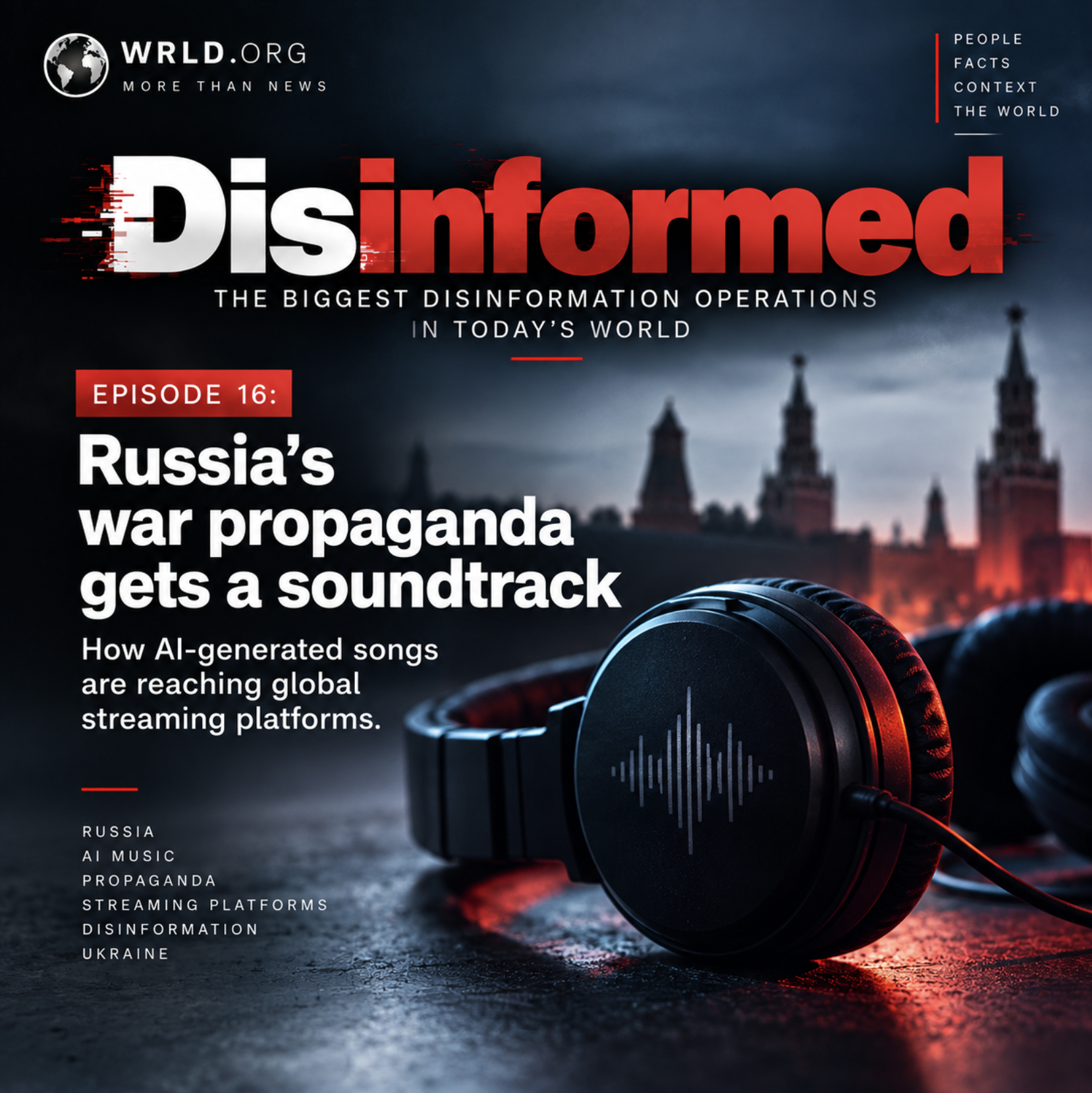
Russia’s war propaganda gets a soundtrack – how AI-generated songs reached global streaming platforms Russian war propaganda is no longer confined to television broadcasts, Telegram channels or political videos. A study by the Ukrainian threat-intelligence organisation Terrecon has identified 981 songs combining signs of AI generation with pro-Russian military narratives, distributed through an ecosystem that reaches YouTube, Spotify, Apple Music, Deezer and SoundCloud. The songs range from sentimental ballads to rock and heavy metal. Their recurring themes are familiar from conventional Russian wartime propaganda: the heroisation of Russian soldiers, romanticisation of the war, mobilisation, the “Russian world”, commemoration of fallen troops and attacks on Ukraine and its armed forces. Some contain derogatory or dehumanising references to Ukrainians. What is new is not necessarily the message, but the production and distribution model: generative AI allows propagandistic music to be produced rapidly, cheaply and in quantities that would previously have required musicians, studios and producers. Nearly 1,000 tracks identified Terrecon examined 3,725 tracks collected from YouTube, YouTube Music, SoundCloud and the AI music platform Suno. After manual review, researchers classified 981 as showing both indications of AI generation and pro-Russian war propaganda. In 681 tracks they identified 728 propaganda-related keywords or phrases. The largest category was the glorification of the Russian military, followed by romanticised treatment of Moscow’s so-called “special military operation”, mobilisation appeals, narratives about the “Russian world”, and the cult of fallen soldiers and the state. The reach was not merely theoretical. Listening or viewing statistics were available for 608 of the identified tracks; together they had accumulated 86.8 million plays and views, according to Terrecon. A smaller group of 13 high-performing songs accounted for more than 53 million YouTube views and more than 67 million when YouTube Music was included. Among the better-known examples is “Power of Artillery”, a Russian-language rock song praising artillery weapons that passed two million views on YouTube. Most of the tracks for which publication dates could be established appeared after 2024, broadly coinciding with the rapid expansion of consumer AI music generators such as Suno and Udio. That correlation does not prove that AI alone caused the increase, but it illustrates how drastically the economics of production have changed. A propaganda song for as little as $11 Terrecon also tested how difficult it would be to commission such material. Researchers approached 25 creators producing AI-assisted militaristic music; 15 agreed to take commissions. Prices ranged from approximately $11 to $330, while delivery times ranged from two hours to three days. According to Terrecon, some were prepared to produce highly aggressive anti-Ukrainian material, including content intended for audiences involving children from occupied Ukrainian territories. Some creators used Russian intermediary services that provided access to Western AI tools such as Suno and Udio despite restrictions. The researchers then tested several AI generators themselves. Across 40 prompts submitted to Suno, Udio, Mureka, Google Flow Music and ElevenLabs, 25 resulted in successful generations, while safeguards were circumvented in 15 cases. Terrecon reported that four of the five services tested produced Russian-language material containing wartime narratives, although technical problems prevented comparable testing on some systems. In one Udio experiment, the researchers said the model itself introduced more explicit violent language than had appeared in the original promp These tests do not demonstrate that the commercial platforms knowingly support Russian propaganda. They show something narrower: existing safeguards can be inconsistent when political messaging is packaged as music. From generation to Spotify The distribution experiment may be the most revealing part of Terrecon’s research. The team deliberately uploaded test tracks containing explicit hostile language to YouTube, SoundCloud, Spotify and Deezer. Terrecon says none was blocked during the experiment. On SoundCloud, researchers used an account identifying its location as Moscow, disclosed the use of AI and added markers including references to the Russian military and the war. The platform accepted the upload and subsequently offered paid promotional and distribution tools. This does not prove that streaming recommendation systems systematically promote pro-war music. There is currently insufficient public evidence to make that claim. It does demonstrate that material can enter the same commercial distribution infrastructure as ordinary music and, once there, potentially benefit from playlists, searches, sharing and recommendation mechanisms available to other releases. That distinction is important. Propaganda no longer has to announce itself as political communication. On a streaming platform it can look like another song. Culture as a delivery mechanism Music has always been used in wartime propaganda. What generative AI changes is scale. Instead of investing heavily in a limited number of patriotic performers or officially commissioned productions, creators can generate variations across styles, audiences and emotional registers at very low cost. Terrecon found material ranging from war rock to sentimental songs and content styled for younger audiences. Some creators also experimented with cloned celebrity voices and stylistic imitation of established musicians. The format also offers a different relationship with the audience. A political video asks a viewer to consume an argument. Music can accompany commuting, exercise or entertainment and may be encountered outside explicitly political spaces. This does not automatically make it more persuasive, and Terrecon’s research does not establish measurable effects on political attitudes. It does, however, place wartime narratives inside a cultural environment where users may not initially perceive themselves as consuming political messaging. An ecosystem, not a proven Kremlin command structure The strongest evidence supports describing this as a growing AI-assisted pro-Russian propaganda-music ecosystem, not a single operation controlled from Moscow. Terrecon did not establish that the Russian government created, financed or coordinated all 981 tracks. Reporting on the study likewise notes that the extent of direct state involvement remains unclear. There is broader evidence that the Russian state finances cultural projects and digital content supporting the war, including through state-backed funding bodies. That context matters, but it does not allow individual songs in Terrecon’s dataset to be attributed to the Kremlin without additional evidence. The significance of the case lies elsewhere. AI has reduced the cost of producing ideological content, intermediaries can help creators access generation tools, and global platforms can provide distribution. The result is a pipeline in which wartime propaganda no longer has to resemble propaganda at all. It can simply appear in a playlist. Sources Terrecon / Ukrainska Pravda — Daria Verbytska on the research https://www.pravda.com.ua/columns/2026/10/05/8056229/ Suspilne Culture — detailed breakdown of Terrecon findings https://suspilne.media/culture/1417933-rosijsku-voennu-propagandu-maskuut-pid-anime-karaoke-ta-rok-doslidzenna-si-pisen-vid-terrecon/ The Insider — AI-generated Russian war propaganda music https://theins.ru/news/297839 Institute of Mass Information — summary of New York Times reporting https://imi.org.ua/en/news/doslidzhennya-rf-masovo-stvoryu%D1%94-propagandistski-pisni-za-dopomogoyu-shi The Bridge Media — AI-generated songs and Russian military propaganda https://thebridgemedia.com.ua/en/ai-generated-songs-russian-military-propaganda/ Center for Strategic Communication — cost and production of AI propaganda music https://spravdi.org/propaganda-za-11-yak-rosiya-shtampuye-shi-pisni-z-miljonamy-prosluhovuvan/ Times of India — AI-generated Russian war songs https://timesofindia.indiatimes.com/world/europe/ai-sings-russias-war-story-inside-the-rise-of-generative-songs-about-ukraine-conflict/articleshow/134650594.cms EU Council / EUR-Lex — Presidential Foundation for Cultural Initiatives https://eur-lex.europa.eu/legal-content/EN/TXT/?uri=CELEX:32026D1351 Human Rights Watch — Russian state funding of digital and patriotic content https://www.hrw.org/report/2025/07/30/disrupted-throttled-and-blocked/state-censorship-control-and-increasing-isolation #DISINFORMED #Episode16 #Russia #Ukraine #RussianPropaganda #WarPropaganda #MusicPropaganda #AIMusic #ArtificialIntelligence #AI #GenerativeAI #SyntheticMedia #AIPropaganda #Disinformation #InformationWarfare #InfluenceOperations #CulturalPropaganda #DigitalInfluence #NarrativeManipulation #PropagandaMusic #StreamingPlatforms #Spotify #AppleMusic #YouTube #YouTubeMusic #Deezer #SoundCloud #Suno #Udio #RussianWorld #RusskiyMir #MilitaryPropaganda #WarNarratives #Mobilisation #AlgorithmicDistribution #RecommendationAlgorithms #MusicStreaming #PlatformManipulation #Terrecon #OSINT #MediaManipulation #WRLD

ERR 4w

Tehismuusikarobot Suno on tutvustanud oma uut mudelit v6, mis omab litsentse ja võimaldab genereerida muusikat, jagades tulu ka artistide ja plaadifirmadega, samas kui ettevõte toimetab end endiselt negatiivse kriitika ja kohtuasjade keskel. #tehismuusika #autoriõigused #muusikatööstus

Tehismuusikarobot Suno sai plaadifirmad enda seljataha

ENHYPEN possui 3 faixas no TOP 10 do iTunes Brasil! 🇧🇷 #3 — Bloody Paradise #7 — Bloody Paradise (SUNGHOON ver.) #9 — Bloody Paradise (SUNOO ver.) Parabéns, ENGENEs! Continuem apoiando 💚 #THE_SIN_BLISS #BloodyParadise #엔하이픈 @ENHYPEN @ENHYPEN_members https://t.co/KTnNm7aXc1 #ENHYPEN #BloodyParadise #iTunesTop10

L
Le Soir Aug 2

Un tribunal de Munich a jugé que l'entreprise d'intelligence artificielle musicale Suno avait violé des droits d'auteur en utilisant des œuvres protégées, ouvrant ainsi la voie à une potentielle jurisprudence dans ce domaine. #droitsd'auteur #musiqueIA #Suno

La musique générée par IA viole le droit d’auteur
Bild Jul 31

Das Münchner Landgericht hat entschieden, dass das US-Startup Suno für die unrechtmäßige Nutzung von urheberrechtlich geschützten Werken deutscher Komponisten, darunter Hit-Songs von Helene Fischer, haftbar ist, und hat der Verwertungsgesellschaft GEMA Schadensersatz zugesprochen. #Urheberrecht #KünstlicheIntelligenz #GEMA

Prozess um Urheberrecht in München - Urteil gegen KI, die bei Helene Fischer klaute
tagesschau.de Jul 31

V právním sporu mezi německou organizací GEMA a americkou firmou Suno rozhodl mnichovský soud, že Suno nesmí bez povolení používat chráněné melodie pro trénink svého AI modelu, čímž se potvrdila ochrana autorských práv v oblasti generativní hudby. #GEMA #Urheberrecht #KünstlicheIntelligenz

GEMA vs. Suno: KI-Firma darf Melodien nicht ungefragt nutzen
NOS Jul 31

Een Duitse rechtbank heeft geoordeeld dat het AI-bedrijf Suno auteursrechten moet betalen voor het gebruik van bestaande muziek bij het creëren van nieuwe nummers, wat een belangrijke overwinning is voor de Duitse auteursrechtenorganisatie GEMA. #auteursrechten #AI #muziek

Overwinning in de rechtbank voor artiesten op AI-muziek

Soud v Mnichově rozhodl, že americká společnost Suno nesmí používat hudební melodie chráněné autorskými právy, což posílilo práva německých hudebníků a vyplývá z žaloby podané organizací Gema, která usilovala o licenční smlouvu, jež Suno odmítlo. #Urheberrecht #KI #Musikindustrie

Suno: KI-Musikanbieter darf urheberrechtlich geschützte Melodien nicht nutzen
D
der Standard Jul 31

Das Landgericht München hat entschieden, dass das US-Unternehmen Suno künftig ohne Einwilligung der Musikverwertungsgesellschaft GEMA keine Lieder mit Künstlicher Intelligenz erzeugen oder reproduzieren darf, da die generierten Songs Originalen wie Daddy Cool oder Mambo No. 5 zu stark ähneln. #Urheberrechte #KünstlicheIntelligenz #Musikindustrie

Deutsches Gericht stärkt Urheberrechte gegen KI-Musikfirma Suno
ZEIT ONLINE Jul 31

Das Landgericht München I wird am Freitag entscheiden, ob die von der US-Firma Suno mit Künstlicher Intelligenz generierten Songs die Urheberrechte deutscher Künstler verletzen, nachdem die Musikverwertungsgesellschaft Gema Klage erhoben hat, weil die KI-generierten Lieder den Originalen zu ähnlich sind. #KünstlicheIntelligenz #Urheberrecht #Musikrechte

Künstliche Intelligenz: KI-Songs Originalen zu ähnlich? Gericht entscheidet

Wang Jibing, kurýr a básník, získal prestižní Lu Sünovu literární cenu za svou knihu Nízký let, která zachycuje každodenní realitu a výzvy kurýrů v Číně, přičemž svou literární činností oslovil široké publikum na sociálních sítích a ukázal náročné podmínky nízkopříjmových profesí. #NízkýLet #kurýři #literárníCena

Mezi rozvážkami jídla píše básně. Prestižní literární cenu získal kurýr

🗞 — #SUNOO NO ESTARÁ EN EL CONCIERTO DE HOY EN MÉXICO 🇲🇽 (D-3) "debido a una disminución repentina de su estado de salúd, Sunoo no podrá participar en el concierto de hoy, haremos todo lo posible para apoyar su tratamiento y recuperación" RECUPÉRATE PRONTO, MI NIÑO 😭😭😭 https://t.co/64rAAE2Nl7 #Sunoo #Concierto #Recuperación

Ezért a videóért hurcolták el ma hajnalban Szakács Istvánt. Egyetértek a videó minden egyes szavával! Gyertek, sünök, vigyetek el engem is! #NemzetiEllenállás #StopÖnkény #AzÁruló https://t.co/U5jWMvDNQL #NemzetiEllenállás #StopÖnkény #Szabadság

Český Ochranný svaz autorský plánuje žalobu na platformu Suno, která využívá umělou inteligenci k vytváření hudby na základě existujících skladeb bez souhlasu autorů, což by mohlo ohrozit práva hudebníků a autorský zákon. #uměláinteligence #autorskápráva #hudba

Čeští hudebníci jdou proti umělé inteligenci
IndexHR Jul 4

Pjesma o Portoriku postala je viralni hit na internetu, a iza nje stoji američki komičar Bill Stiteler koji ju je stvorio koristeći aplikaciju za glazbenu produkciju Suno temeljenoj na umjetnoj inteligenciji, što je pokrenulo raspravu o pitanjima autorstva i pravnih izazova vezanih uz glazbu generiranu AI-jem. #glazba #umjetnaInteligencija #viralniHit

"Pjesma o Portoriku" viralni je hit. Iza nje stoji američki komičar, ali postoji caka

SUNOO with KAUÊ of Santos Bravos ✅ Kauê left a comment on Sunoo's song cover of Arrependidaço ✅ Kauê teaching Sunoo Portuguese ✅ Kauê dancing with Sunoo https://t.co/Z6xArlDBm0 #Sunoo #Kauê #Collaboration

[DM] Novo DM do #SUNOO: 🦊: Terminei o trabalho~~~ 🦊: Vi que o artista original da música que eu gravei me deu um shout-out. 🦊: Isso honestamente me deixou tão, tão feliz. 🦊: Muito obrigado~~ hehe 🦊: Obrigado 🦊: Tivemos ensaio, e o local era enorme~~ 🦊: Estou realmente ansioso pelo amanhã~~ 🦊: 👍 🦊: Assim que eu voltar, vou tomar banho e ir direto para a cama. 🦊: Até mais~~ #김선우 #ENHYPEN #엔하이픈 @ENHYPEN_members @ENHYPEN #SUNOO #ENHYPEN #Kpop

Após lançar seu cover e acabar com o fandom brasileiro antes do show, SUNOO e FERRUGEM se encontram em 1º e 2º lugar nos assuntos mais comentando do BRASIL! Aqui no X! https://t.co/HzsoIiUnno #SUNOO #FERRUGEM #Brasil

A @jungwonieberry foi convidada a ir ao SBT, para o The Noite com Danilo Gentili. Ela informou que eles performaram Knife e Lost Island. O tema foi FESTA JUNINA. Também tiveram uma dinâmica em que o Sunoo pulou num pogobol. Teve pescaria. E ELES MOSTRARAM UMA PRÉVIA EXCLUSIVA DE THE SIN : BLISS!!! #FestaJunina #TheNoite #Kpop