BETA nonprofit public democratic european moderated

Search

#Pompeii

IlSipontino.net: Herdonia, the “Pompeii of Apulia”, featured on Popular Archaeology (USA) SOURCE: https://www.ilsipontino.net/herdonia-la-pompei-di-puglia-in-un-articolo-pubblicato-oggi-su-popular-archaeology-usa/ In the golden heart of the Tavoliere delle Puglie, where the wheat still ripples beneath the very sky that once witnessed the passage of Hannibal’s armies and Trajan’s legions, Herdonia at last emerges onto the international stage: the ancient city that scholars, with equal admiration and regret, have long described as “the Pompeii of Puglia". Published in Popular Archaeology, the article by Dr Luciano Magaldi Sardella retraces, with both passion and scholarly rigour, the entire epic of this extraordinary site: from its Daunian origins in the Iron Age, marked by its celebrated anthropomorphic stelae and the earliest textile embroideries known in Italy, through the tragedy of the Punic Wars – two battles of Herdonia in the aftermath of Cannae – the Roman refoundation along the Via Traiana, and finally the hunting retreat of Frederick II of Swabia of the Hohenstaufen dynasty. Only 20 per cent of its 20–24 hectares has been brought to light over sixty years of Belgian (Joseph Mertens, 1962–1992) and Italo‑Belgian excavations (University of Bari, Giuliano Volpe, 1993–2000). The remaining 80 per cent, preserved intact beneath the thin Puglian mantle, constitutes a living archive of history that could occupy archaeologists for the next century. After twenty‑two years of enforced silence due to a protracted legal dispute, the year 2022 marked a decisive turning point: the State acquired the entire area, allocating more than €2.7 million for restoration, enhancement, and the creation of the Archaeological Park of Herdonia. The HerMA Museum, inaugurated in 2017 just a short distance from the site, already welcomes thousands of visitors with its Daunian and Roman masterpieces, while the Polytechnic University of Bari has produced the first complete 3D model of the ruins. “Herdonia is not merely a site of the past; it is a place capable of narrating the whole of Italy, from prehistory to the Middle Ages, without being overlaid by a modern city,” writes Magaldi Sardella. “It now finally possesses the conditions to become one of the great archaeological parks of our country.” The field lies open. Puglia has rediscovered its Pompeii. It is now for the world to uncover it.

Herdonia, la Pompei di Puglia, in un articolo pubblicato oggi su Popular Archaeology Usa

SanGiovanniRotondoFree.it — Herdonia, the “Pompeii of Apulia”, Captivates America: Popular Archaeology Shines a Spotlight on the Tavoliere’s Hidden Treasure SOURCE: https://sangiovannirotondofree.it/2026/02/28/herdonia-la-pompei-di-puglia-conquista-lamerica-riflettori-di-popular-archaeology-sul-tesoro-nascosto-del-tavoliere/ In the golden heart of the Tavoliere delle Puglie, where the wheat still ripples beneath the very sky that once witnessed the passage of Hannibal’s armies and Trajan’s legions, Herdonia at last emerges onto the international stage: the ancient city that scholars, with equal admiration and regret, have long described as “the Pompeii of Puglia”. Published in Popular Archaeology, the article by Dr Luciano Magaldi Sardella retraces, with both passion and scholarly rigour, the entire epic of this extraordinary site: from its Daunian origins in the Iron Age, marked by its celebrated anthropomorphic stelae and the earliest textile embroideries known in Italy, through the tragedy of the Punic Wars – two battles of Herdonia in the aftermath of Cannae – the Roman refoundation along the Via Traiana, and finally the hunting retreat of Frederick II of Swabia of the Hohenstaufen dynasty. Only 20 per cent of its 20–24 hectares has been brought to light over sixty years of Belgian (Joseph Mertens, 1962–1992) and Italo‑Belgian excavations (University of Bari, Giuliano Volpe, 1993–2000). The remaining 80 per cent, preserved intact beneath the thin Puglian mantle, constitutes a living archive of history that could occupy archaeologists for the next century. After twenty‑two years of enforced silence due to a protracted legal dispute, the year 2022 marked a decisive turning point: the State acquired the entire area, allocating more than €2.7 million for restoration, enhancement, and the creation of the Archaeological Park of Herdonia. The HerMA Museum, inaugurated in 2017 just a short distance from the site, already welcomes thousands of visitors with its Daunian and Roman masterpieces, while the Polytechnic University of Bari has produced the first complete 3D model of the ruins. “Herdonia is not merely a site of the past; it is a place capable of narrating the whole of Italy, from prehistory to the Middle Ages, without being overlaid by a modern city,” writes Magaldi Sardella. “It now finally possesses the conditions to become one of the great archaeological parks of our country.” The field lies open. Puglia has rediscovered its Pompeii. It is now for the world to uncover it.

Herdonia, la Pompei di Puglia conquista l’America: riflettori di Popular Archaeology sul tesoro nascosto del Tavoliere - San Giovanni Rotondo Free

StatoQuotidiano.it — Herdonia, the “Pompeii of Apulia”, Captivates America SOURCE: https://www.statoquotidiano.it/28/02/2026/herdonia-la-pompei-di-puglia-conquista-lamerica/1289894/ The site, renowned for its millennia‑old history and its extraordinary archaeological heritage, takes centre stage in an in‑depth feature published today in Popular Archaeology by Dr Luciano Magaldi Sardella. In the golden heart of the Tavoliere delle Puglie, where the wheat still ripples beneath the very sky that once witnessed the passage of Hannibal’s armies and Trajan’s legions, Herdonia at last emerges onto the international stage: the ancient city that scholars, with equal admiration and regret, have long described as “the Pompeii of Puglia”. Published in Popular Archaeology, the article by Dr Luciano Magaldi Sardella retraces, with both passion and scholarly rigour, the entire epic of this extraordinary site: from its Daunian origins in the Iron Age, marked by its celebrated anthropomorphic stelae and the earliest textile embroideries known in Italy, through the tragedy of the Punic Wars – two battles of Herdonia in the aftermath of Cannae – the Roman refoundation along the Via Traiana, and finally the hunting retreat of Frederick II of Swabia of the Hohenstaufen dynasty. Only 20 per cent of its 20–24 hectares has been brought to light over sixty years of Belgian (Joseph Mertens, 1962–1992) and Italo‑Belgian excavations (University of Bari, Giuliano Volpe, 1993–2000). The remaining 80 per cent, preserved intact beneath the thin Puglian mantle, constitutes a living archive of history that could occupy archaeologists for the next century. After twenty‑two years of enforced silence due to a protracted legal dispute, the year 2022 marked a decisive turning point: the State acquired the entire area, allocating more than €2.7 million for restoration, enhancement, and the creation of the Archaeological Park of Herdonia. The HerMA Museum, inaugurated in 2017 just a short distance from the site, already welcomes thousands of visitors with its Daunian and Roman masterpieces, while the Polytechnic University of Bari has produced the first complete 3D model of the ruins. “Herdonia is not merely a site of the past; it is a place capable of narrating the whole of Italy, from prehistory to the Middle Ages, without being overlaid by a modern city,” writes Magaldi Sardella. “It now finally possesses the conditions to become one of the great archaeological parks of our country.” The field lies open. Puglia has rediscovered its Pompeii. It is now for the world to uncover it.
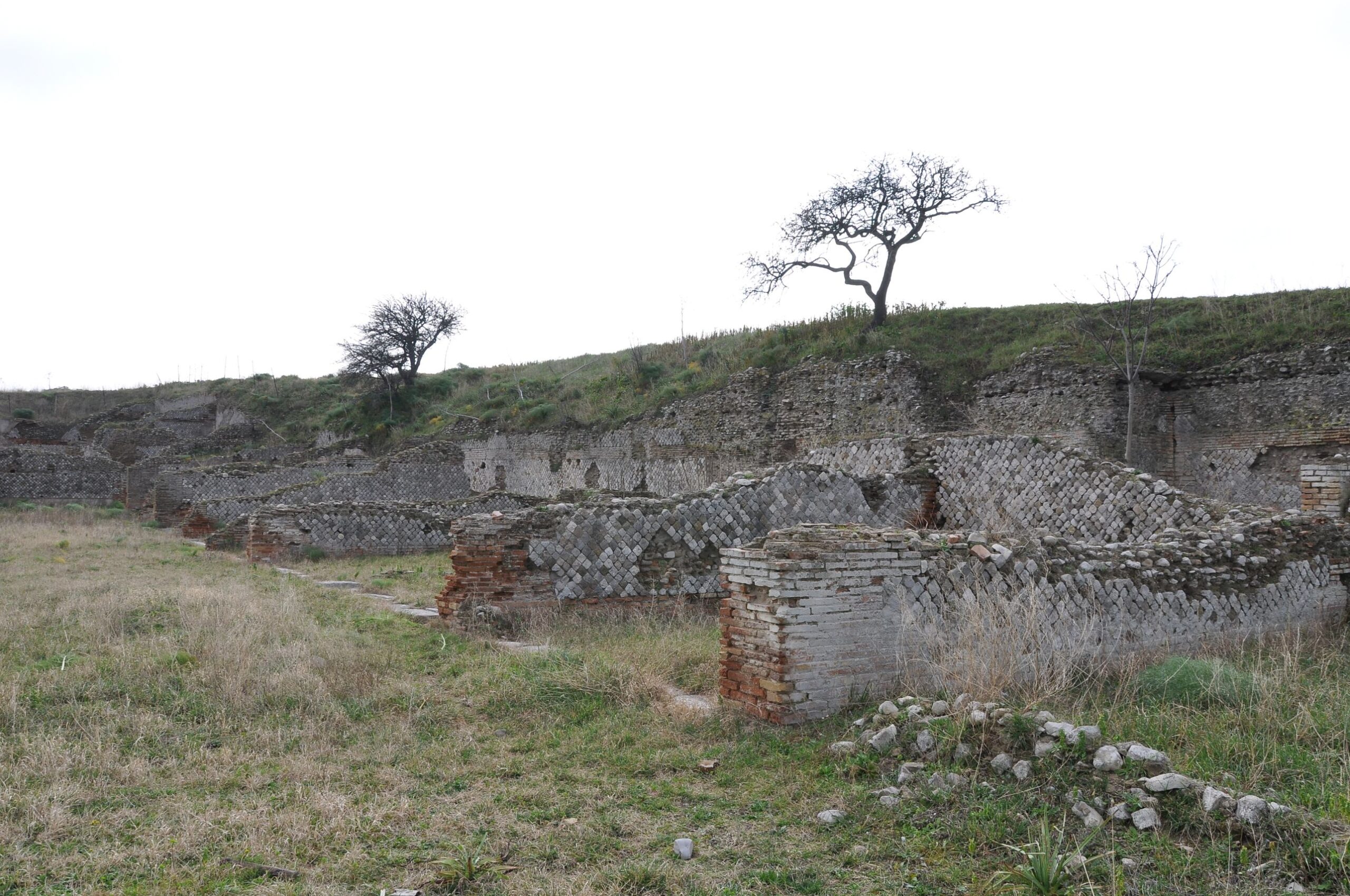
Herdonia, la 'Pompei di Puglia' conquista l’America

FoggiaReporter.it: Ordona, the “Pompeii of Apulia”: Dr Luciano Magaldi Sardella’s contribution on Popular Archaeology USA SOURCE: https://www.foggiareporter.it/ordona-la-pompei-di-puglia-su-popular-archaeology-lintervento-del-dr-luciano-magaldi-sardella.html Destined to become one of the largest archaeological parks in Italy. In the golden heart of the Tavoliere delle Puglie, where the wheat still ripples beneath the very sky that once witnessed the passage of Hannibal’s armies and Trajan’s legions, Herdonia at last emerges onto the international stage: the ancient city that scholars, with equal admiration and regret, have long described as “the Pompeii of Puglia”. Published in Popular Archaeology, the article by Dr Luciano Magaldi Sardella retraces, with both passion and scholarly rigour, the entire epic of this extraordinary site: from its Daunian origins in the Iron Age, marked by its celebrated anthropomorphic stelae and the earliest textile embroideries known in Italy, through the tragedy of the Punic Wars — two battles of Herdonia in the aftermath of Cannae — the Roman refoundation along the Via Traiana, and finally the hunting retreat of Frederick II of Swabia of the Hohenstaufen dynasty. Only 20 per cent of its 20–24 hectares has been brought to light over sixty years of Belgian (Joseph Mertens, 1962–1992) and Italo‑Belgian excavations (University of Bari, Giuliano Volpe, 1993–2000). The remaining 80 per cent, preserved intact beneath the thin Puglian mantle, constitutes a living archive of history that could occupy archaeologists for the next century. After twenty‑two years of enforced silence due to a protracted legal dispute, the year 2022 marked a decisive turning point: the State acquired the entire area, allocating more than €2.7 million for restoration, enhancement, and the creation of the Archaeological Park of Herdonia. The HerMA Museum, inaugurated in 2017 just a short distance from the site, already welcomes thousands of visitors with its Daunian and Roman masterpieces, while the Polytechnic University of Bari has produced the first complete 3D model of the ruins. “Herdonia is not merely a site of the past; it is a place capable of narrating the whole of Italy, from prehistory to the Middle Ages, without being overlaid by a modern city,” writes Magaldi Sardella. “It now finally possesses the conditions to become one of the great archaeological parks of our country.” The field lies open. Puglia has rediscovered its Pompeii. It is now for the world to uncover it.

Ordona, la Pompei di Puglia: su “Popular Archaeology” l’intervento del Dr. Luciano Magaldi Sardella - Foggia Reporter

FOGGIASERA.it, HERDONIA SU POPULAR ARCHAEOLOGY USA SOURCE: https://foggiasera.it/2026/02/27/the-archaeological-site-of-herdonia-the-pompeii-of-puglia-su-popular-archaeology-usa/ In the golden heart of the Tavoliere delle Puglie, where the wheat still sways beneath the very sky that once witnessed the passage of Hannibal’s armies and Trajan’s legions, Herdonia at last steps onto the international stage: the ancient city that scholars, with equal admiration and regret, have long described as “the Pompeii of Puglia". Published in Popular Archaeology, the article by Dr Luciano Magaldi Sardella retraces with both passion and scholarly rigour the full epic of this extraordinary site: from its Daunian origins in the Iron Age, with its celebrated anthropomorphic stelae and the earliest textile embroideries known in Italy, through the tragedy of the Punic Wars (two battles of Herdonia following Cannae), the Roman refoundation along the Via Traiana, and finally the hunting retreat of Frederick II of Swabia. Only 15-20 per cent of its twenty-twenty-five hectares has been brought to light across sixty years of Belgian (Joseph Mertens, 1962–1992) and Italo‑Belgian excavations (University of Bari, Giuliano Volpe, 1993–2000). The remaining 80 per cent, preserved intact beneath the thin Apulian mantle, constitutes an archive of living history that could occupy archaeologists for the next century. After twenty‑two years of enforced silence due to a protracted legal dispute, the year 2022 marked a decisive turning point: the State acquired the entire area, allocating more than €2.7 million for restoration, enhancement, and the creation of the Archaeological Park of Herdonia. The HerMA Museum, inaugurated in 2017 a short distance from the site, already welcomes thousands of visitors with its Daunian and Roman masterpieces, while the Polytechnic University of Bari has produced the first complete 3D model of the ruins. “Herdonia is not merely a site of the past: it is a place capable of narrating the whole of Italy, from prehistory to the Middle Ages, without being overlaid by a modern city,” writes Magaldi Sardella. “It now finally possesses the conditions to become one of the great archaeological parks of our country.” The field lies open. Puglia has rediscovered its Pompeii. It is now for the world to uncover it.

FOGGIASERA.it, HERDONIA ON POPULAR ARCHAEOLOGY USA SOURCE: https://foggiasera.it/2026/02/27/the-archaeological-site-of-herdonia-the-pompeii-of-puglia-su-popular-archaeology-usa/ “The Archaeological Site of Herdonia: The Pompeii of Puglia” su “Popular Archaeology USA” Nel cuore dorato del Tavoliere di Puglia, dove il grano ondeggia sotto lo stesso cielo che vide passare gli eserciti di Annibale e le legioni di Traiano, emerge finalmente alla ribalta internazionale Herdonia, la città antica che gli studiosi chiamano con ammirazione e rimpianto “la Pompei di Puglia”. Pubblicato oggi su Popular Archaeology, l’articolo del Dr. Luciano Magaldi Sardella ripercorre con passione e rigore scientifico l’intera epopea di questo sito straordinario: dalle origini daunie dell’Età del Ferro, con le sue celebri stele antropomorfe e i più antichi ricami tessili d’Italia, attraverso la tragedia delle Guerre Puniche (due battaglie di Herdonia dopo Canne), la rifondazione romana sulla Via Traiana, fino al rifugio di caccia di Federico II di Svevia. Solo il 20% dei suoi 20 ettari è stato portato alla luce in sessant’anni di campagne belghe (Joseph Mertens, 1962-1992) e italo-belghe (Università di Bari, Giuliano Volpe, 1993-2000). Il restante 80%, intatto sotto il sottile manto pugliese, rappresenta un archivio di storia viva che potrebbe occupare gli archeologi per il prossimo secolo. Dopo ventidue anni di silenzio forzato a causa di una lunga disputa legale, il 2022 ha segnato la svolta decisiva: lo Stato ha acquisito l’intera area, stanziando oltre 2,7 milioni di euro per il restauro, la valorizzazione e la creazione del Parco Archeologico di Herdonia. Il museo HerMA, inaugurato nel 2017 a pochi passi dal sito, accoglie già migliaia di visitatori con i suoi capolavori dauni e romani, mentre il Politecnico di Bari ha realizzato il primo modello 3D completo delle rovine. «Herdonia non è solo un sito del passato: è un luogo che può raccontare l’Italia intera, dalla preistoria al Medioevo, senza essere coperta da una città moderna», scrive Magaldi Sardella. «Oggi ha finalmente le condizioni per diventare uno dei grandi parchi archeologici del nostro Paese». Il campo è aperto. La Puglia ha ritrovato la sua Pompei. Ora tocca al mondo scoprirla.

L'articolo del Dr. Luciano Magaldi Sardella:"The Archaeological Site of Herdonia: The Pompeii of Puglia" pubblicato su "Popular Archaeology" SOURCE: https://www.linkedin.com/pulse/larticolo-del-dr-luciano-magaldi-sardellathe-site-su-sardella-ph-d--hs0af/ Sono felice di condividere il mio ultimo contributo, supervisionato da Dan McLerran, dedicato a uno dei siti più affascinanti e sottovalutati del Sud Italia: Herdonia, spesso definita la “Pompei di Puglia”, pubblicato sul prestigioso "Popular Archaeology". Nel mio articolo intitolato:“The Archaeological Site of Herdonia: The Pompeii of Puglia” esploro la storia, le potenzialità e le criticità di questo straordinario sito archeologico di Ordona, ancora poco valorizzato nonostante il suo enorme patrimonio culturale e il recente Museo Archaelogico di Herdonia/Ordona Herma. 📅 Data di pubblicazione: 25 febbraio 2026 📝 Editore: Popular Archaeology 🔗 Leggi l’articolo: https://popular-archaeology.com/article/herdonia-puglias-lost-city-and-italys-most-neglected-archaeological-marvel/ Un passo in più per riportare Herdonia al centro del dibattito culturale e scientifico.

L'articolo del Dr. Luciano Magaldi Sardella:"The Archaeological Site of Herdonia: The Pompeii of Puglia" pubblicato su "Popular Archaeology"

The article by Dr Luciano Magaldi Sardella, ‘The Archaeological Site of Herdonia: The Pompeii of Puglia’, published in Popular Archaeology SOURCE: https://www.linkedin.com/pulse/article-dr-luciano-magaldi-sardella-archaeological-sardella-ph-d--kqr8f/ I am pleased to share my latest contribution, supervised by Dan McLerran, devoted to one of the most fascinating and regrettably undervalued archaeological sites of Southern Italy: Herdonia—often described as the “Pompeii of Puglia”—and published in the prestigious Popular Archaeology. In my article, entitled “The Archaeological Site of Herdonia: The Pompeii of Puglia”, I explore the history, the considerable potential, and the enduring challenges of this remarkable archaeological site in Ordona, still insufficiently appreciated despite its immense cultural heritage and the recent establishment of the Herdonia/Ordona Herma Archaeological Museum. 📅 Publication date: 25 February 2026 📝 Publisher: Popular Archaeology 🔗 Read the article: https://popular-archaeology.com/article/herdonia-puglias-lost-city-and-italys-most-neglected-archaeological-marvel/ A further step towards restoring Herdonia to its rightful place at the heart of cultural and scholarly discourse.

The article by Dr Luciano Magaldi Sardella, ‘The Archaeological Site of Herdonia: The Pompeii of Puglia’, published in Popular Archaeology
adevarul.ro Jul 26

Arheologul Darius Arya subliniază în interviul său că Pompeii, adesea perceput ca un oraș înghețat în timp, este mai degrabă o poveste despre supraviețuirea locuitorilor săi și continuitatea vieții în zona afectată de erupția Vezuviului, evidențiind importanța studiilor recente care oferă o nouă perspectivă asupra acestui tragic eveniment istoric. #Pompeii #Vezuviu #arheologie

„Pompeii nu a fost îngropat sub lavă“. Arheologul Darius Arya explică adevărata poveste a orașului distrus de Vezuviu
Repubblica Jun 24

Un violento acquazzone si è abbattuto su Pompei, l'acqua ha invaso le strade negli scavi come mostra il video pubblicato da Gabriel Zuchtriegel sui social. “Dopo una violenta tempesta a Pompei, per ora nessun danno a persone o cose segnalato - spiega il direttore degli scavi - si vede cosa succede quando piove a Pompei, e cosa succedeva 2000 anni fa e a che cosa servivano le ‘strisce pedonali’ dei Romani”. Nelle immagini, gruppi di turisti attraversano la strada saltellando sui basoli sopraelevati rispetto al resto della strada. (Mariella Parmendola) Video Pompeii Archaeological Park #Pompei #Tempesta #Archeologia

as May 9

Archeologové objevili dvě kostry mužů blízko zdí Pompejí, které potvrzují svědectví Plinia Mladšího o tragickém úprku obyvatel města během erupce Vesuvu v roce 79 n. l., a poskytují cenný pohled na katastrofální události té doby. #Pompeii #Vesuvius #Archaeology

Archaeologists agree in Pompeii: evidence emerges of a desperate double escape during the eruption of Mount Vesuvius
O
Ouest France May 8

Le pape Léon XIV a célébré le 8 mai 2026 son premier anniversaire à la tête de l'Église catholique par une visite à Pompéi, où il a réaffirmé son appel à la paix dans le monde lors d'une messe en plein air, tout en soulignant son sentiment de bénédiction et en naviguant les tensions avec Washington après des critiques du président Trump. #PopeLeonXIV #Peace #Pompeii

Le pape Léon XIV célèbre son premier anniversaire à la tête de l'Église catholique dans le sud de l'Italie

Papa Leone XIV ha visitato Pompei nel primo anniversario del suo pontificato e nel giorno della Madonna di Pompei, accolto con grande entusiasmo dai fedeli e presiedendo la Supplica alla Madonna del Rosario, mentre ha ribadito l'importanza della preghiera per la pace nel mondo. #PapalVisit #Pompeii #PeacePrayer

Papa Leone XIV in visita a Pompei, i fedeli: "Una grazia averlo qui, preghiamo con lui per la pace"

A team of researchers has proposed that the unique square cavities found in the northern walls of Pompeii, alongside larger circular damage from Roman artillery, may be evidence of the use of a primitive rapid-fire weapon known as a polybolos during the siege of 89 BC, suggesting that these ancient scars could illuminate the use of advanced war machinery in antiquity. #Pompeii #AncientHistory #RomanMilitary

Hallan en Pompeya huellas de una "ametralladora" romana