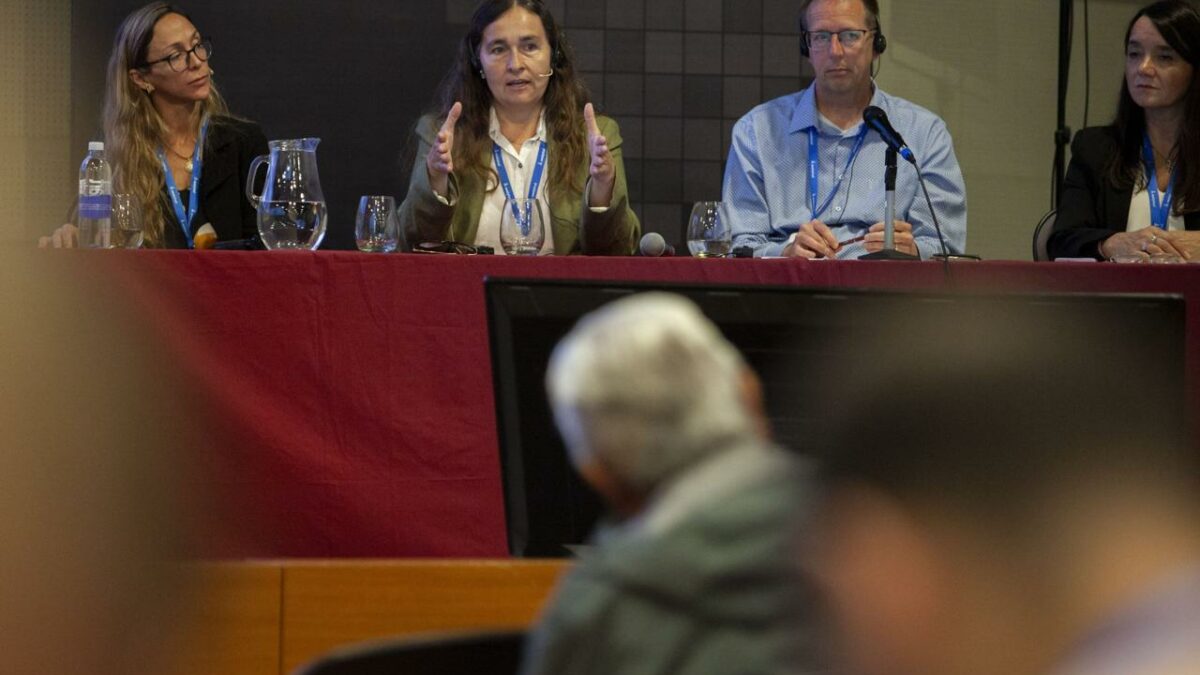
The European Research Council (Erc) has awarded approximately 75 million euros to 50 young Italian researchers through 'starting grants', placing Italy in second position after Germany. (translated)

The European Research Council (Erc) has awarded approximately 75 million euros to 50 young Italian researchers through 'starting grants', placing Italy in second position after Germany. (translated)

An experiment in the United States recorded a particle interaction that is difficult to explain, which could provide clues about dark matter, but the event, while interesting, does not reach the level of certainty necessary for a recognized discovery. (translated)

Parkinson's disease, the fastest growing neurodegenerative disease, affects about 300,000 Italians, and research is making significant progress towards early diagnosis and new therapies, including a promising blood test to detect damage to nerve cells. (translated)

A Japanese study has discovered a mechanism known as fat memory, which involves macrophages in adipose tissue and a protein called CWC22, contributing to persistent inflammation after weight loss and suggesting new pathways to address difficulties in maintaining weight loss. (translated)

Researchers at Southern Illinois University have developed a method, supported by NASA, to convert plastic and agricultural waste into protein-rich food using yeasts, with the goal of providing nutrition in resource-limited environments, such as future space missions. (translated)

Italian scientists are exploring the use of small octopuses as potential natural predators to combat the invasion of the blue crab, an alien species that has caused significant economic damage in Emilia-Romagna, exceeding 17 million euros since 2022. (translated)

A research team led by Paola Arlotta at Harvard University has achieved a five-year survival record for brain organoids in the laboratory, enabling in-depth studies on the development and maturation of the human brain. (translated)

A new classification of neurons proposed by researchers at the University of Colorado Boulder, based on the neurotransmitters they use to communicate, could improve the understanding of altered circuits in addiction and psychiatric disorders, as highlighted by the study published in Science. (translated)

An artificial intelligence developed at Shenzhen University is able to predict the risk of depression up to four years before the onset of the disease by analyzing the brain reactions of adolescents to faces with different emotional expressions, as revealed by a study published in the journal Science Advances. (translated)

South Korean researchers have developed transparent glasses with organic LEDs capable of stimulating the brain with gamma light, showing significant improvements in tolerability and brain activation, offering a promising non-invasive alternative to counter cognitive decline and Alzheimer's. (translated)

A study from the Whitehead Institute and MIT has identified the protein TgPRO, which allows the parasite Toxoplasma gondii to survive for years in the cysts of the brain and muscles, paving the way for potential new treatments for chronic toxoplasmosis. (translated)

A study from the University of Birmingham reveals that compromised SIM cards can serve as an entry point for cyberattacks, allowing data theft, sending malicious commands to connected devices, and forcing them to use less secure networks, with significant implications for smartphones, cars, and industrial systems. (translated)

Childhood stress experiences leave permanent marks on the brain, as nerve cells retain a molecular memory of traumas through labels on DNA, making individuals more vulnerable to mood disorders in adulthood, but a study from Princeton University offers new insights for the development of future targeted therapies. (translated)

Per la prima volta un gruppo di scienziati ha utilizzato un modello di intelligenza artificiale per progettare batteriofagi sintetici, virus che infettano esclusivamente i batteri. La ricerca alimenta speranze di progressi in campo medico, soprattutto nella lotta ai batteri resistenti agli antibiotici #IntelligenzaArtificiale #RicercaScientifica #SaluteMedica
Per la prima volta un gruppo di scienziati ha utilizzato un modello di intelligenza artificiale per progettare batteriofagi sintetici, virus che infettano esclusivamente i batteri. La ricerca alimenta speranze di progressi in campo medico, soprattutto nella lotta ai batteri resistenti agli antibiotici, ma solleva anche preoccupazioni sul fatto che tale tecnologia potrebbe un giorno essere impiegata in modo improprio per creare agenti patogeni pericolosi #IntelligenzaArtificiale #Batteri #RicercaScientifica
A recent study reveals that professional exposure to pesticides may increase the risk of developing amyotrophic lateral sclerosis (ALS) by up to 71%, but the authors caution that such results should not be interpreted as evidence of a cause-and-effect relationship due to structural limitations in the meta-analysis. (translated)

Researchers at Enea and the University of Calabria have developed an innovative method to extract high-quality chitin from the scraps of the fearsome blue crab, turning an environmental problem into an economic opportunity and reducing the use of chemicals and processing times. (translated)

Two researchers from Ingv, involved in the international scientific project Einstein Telescope, had their cars set on fire in an attack deemed of a terrorist nature, with the prosecutor's office in Nuoro investigating the incident that occurred in Lula, while efforts are being made to identify the culprits in a context of hostile episodes related to the research project. (translated)

Una nuova classe di inibitori, sviluppata dai ricercatori di Wayne State University e Indiana University, mira a rendere i tumori più vulnerabili a radio e chemioterapia bloccando il meccanismo di riparazione del DNA, consentendo così di ridurre le dosi necessarie e migliorare l'efficacia delle terapie anticancro. #Tumore #RicercaScientifica #Dna

Per rispondere a queste esigenze, la medicina di genere e la ricerca scientifica offrono oggi soluzioni evolute e validate per coloro che non possono o non desiderano ricorrere alla Terapia Ormonale Sostitutiva (TOS). In questa intervista esclusiva per VediamociChiara - La Salute dalla parte di Noi Donne, la Dott.ssa Elena Casolati, ginecologa, fa chiarezza sull'efficacia e sulla sicurezza degli approcci naturali e dell'integrazione mirata, analizzando i componenti promossi dalla letteratura scientifica e approvati dalle autorità regolatorie (EFSA). https://t.co/vN68tAy9ke #MedicinaDiGenere #SaluteDonne #RicercaScientifica