BETA nonprofit public democratic european moderated

Search

#Schools

I wish President Trump would urge Putin to stop bombing Ukrainian homes, shops, churches, hospitals and schools. But instead, he talks about Russian oil refineries. There is something deeply backwards about worrying more about Russia’s refineries than about the Ukrainian https://t.co/V8kREDjkeO #StopTheWar #StandWithUkraine #PeaceForUkraine #UA #RU

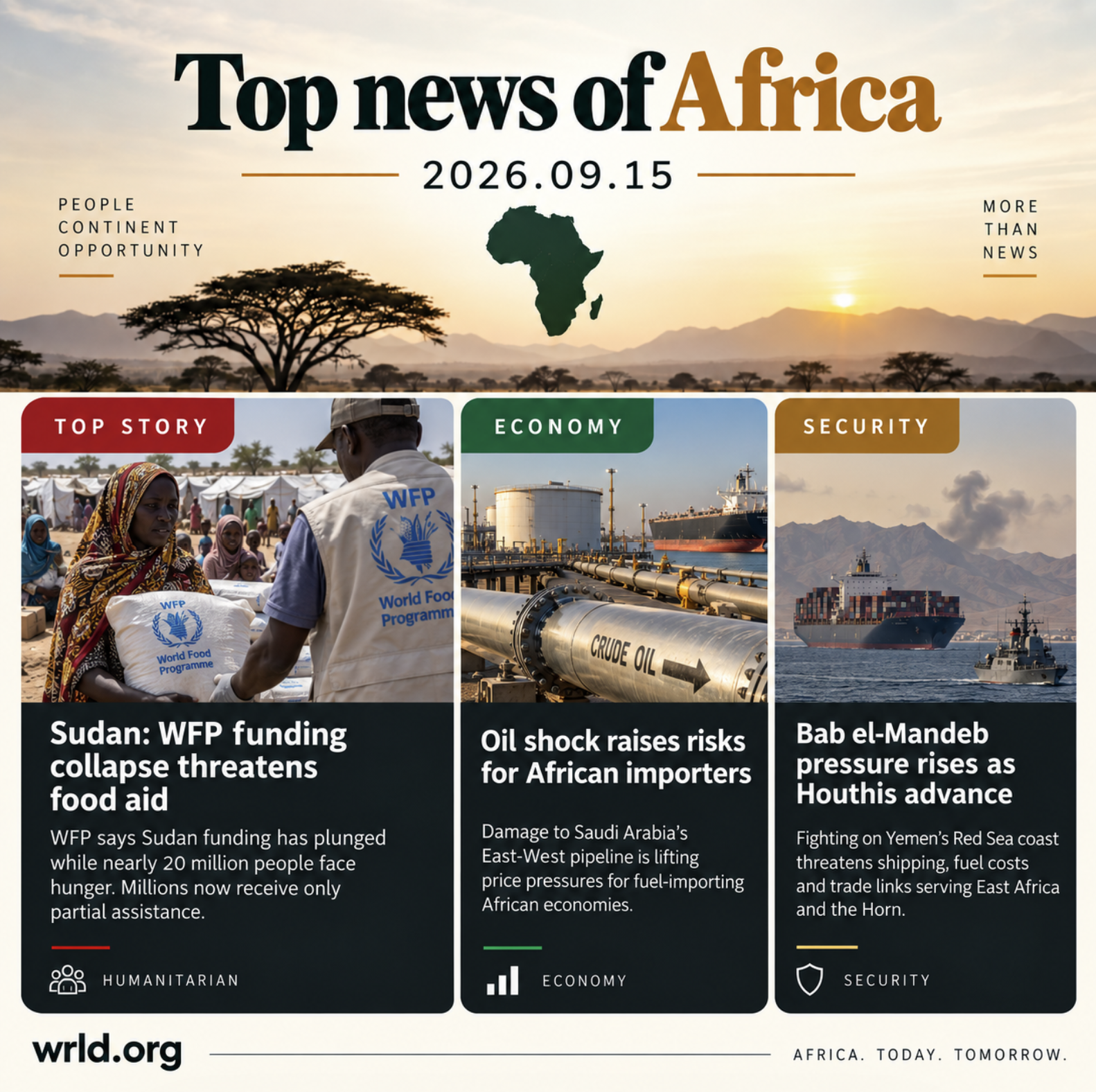
AFRICA DAILY REPORT — 15 SEPTEMBER 2026 Coverage: key developments identified in the latest 24-hour news cycle 1. SUDAN — WFP funding collapse threatens food aid Importance: 10/10 — CRITICAL The World Food Programme says its Sudan budget has fallen to roughly $206 million this year from $645 million last year, while nearly 20 million people face hunger. WFP says it needs almost $300 million more to sustain current operations. Funding constraints have forced the agency to concentrate assistance on about five million of the most vulnerable people, with roughly four million currently receiving partial rations. The funding shock risks deepening what is already one of the world's largest humanitarian emergencies. Source: Reuters, 14 Sep 2026 https://www.reuters.com/world/africa/world-food-programme-funding-sudan-plummets-more-go-hungry-head-says-2026-09-14/ 2. RED SEA / HORN OF AFRICA — Houthi advances increase pressure around Bab el-Mandeb Importance: 9.5/10 — CRITICAL Fighting in Yemen is intensifying along the Red Sea coast, with Houthi territorial gains creating additional risk around the Bab el-Mandeb shipping corridor. More than 82,000 people have reportedly been displaced since early September, and over 2,000 have crossed to Djibouti. For Africa, the significance extends beyond the humanitarian impact: disruption around Bab el-Mandeb threatens trade, fuel costs and shipping links serving East Africa, the Horn and the Suez route. Sources: Reuters/AP, 14 Sep 2026 https://www.reuters.com/world/middle-east/yemens-displaced-long-loved-ones-stability-houthis-advance-2026-09-14/ https://apnews.com/article/90dc86201ef51410ebcdd913837d741d 3. GLOBAL ENERGY / AFRICA — Saudi pipeline damage raises oil-price risk for African importers Importance: 9/10 — VERY HIGH Saudi Arabia's strategically important East-West oil pipeline is expected to remain largely out of service for three to five weeks after a drone attack. Oil prices rose as markets assessed the disruption alongside instability around Gulf and Red Sea routes. The consequences are especially important for oil-importing African economies, where higher crude prices can quickly feed into fuel costs, inflation, currencies and transport prices. Source: AP, 14 Sep 2026 https://apnews.com/article/8c18d82c109a8ea91347ce53c0096c53 4. SOUTH AFRICA — Rand falls sharply as oil prices surge Importance: 8.5/10 — VERY HIGH The South African rand fell around 1.1% against the dollar during Monday trading as rising oil prices increased pressure on Africa's most industrialised economy. South Africa is a major net oil importer and therefore particularly exposed to the current energy shock. The JSE Top-40 also weakened, while government bond yields moved higher. The development illustrates how the Middle East/Red Sea crisis is transmitting directly into African financial markets. Source: Reuters, 14 Sep 2026 5. DR CONGO — Ebola outbreak remains a continental-level health emergency Importance: 10/10 — CRITICAL The Ebola epidemic remains one of Africa's most serious current risks. The outbreak has spread to seven Congolese provinces, including Sud-Ubangi in western DRC, raising concern about further cross-border transmission toward the Republic of Congo and Central African Republic. Latest reported figures exceed 7,000 cases and 3,300 deaths. Conflict, displacement, health-worker strikes and population movement continue to obstruct containment. Sources: AP / public-health reporting, latest updates through 14 Sep 2026 https://apnews.com/article/58a2b25c752eaa8344ff16564a8e3547 6. EASTERN DR CONGO — Bukavu mourns 27 students killed in school fires Importance: 8/10 — HIGH Hundreds gathered in Bukavu for a mass funeral after fires at two neighbouring schools killed 27 students. The tragedy is particularly significant because it occurred in an already severely stressed city: Bukavu is controlled by the M23/AFC movement and local medical capacity is simultaneously under pressure from conflict and the Ebola epidemic. The disaster highlights the fragility of civilian infrastructure in eastern Congo. Source: AP, 14 Sep 2026 https://apnews.com/article/fd1aea4738a9a686fc6f0d45997a2be3 7. SOUTH AFRICA — Major road disaster kills at least 21 people in Western Cape Importance: 7.5/10 — HIGH At least 21 people were killed in a multi-vehicle collision on the N1 between Prince Albert and Leeu-Gamka in Western Cape. Two minibus taxis collided head-on before an SUV struck the wreckage. Together with another fatal accident near Ermelo, at least 29 people died on South African roads over the weekend, renewing scrutiny of road and minibus-taxi safety. Source: AP, 14 Sep 2026 https://apnews.com/article/9ae8e6beeb75cc307be24e15e9ec1fad 8. SUDAN — International leverage constrained as humanitarian needs rise Importance: 8.5/10 — VERY HIGH The widening humanitarian funding gap comes as diplomatic pressure on Sudan's belligerents remains limited. The UN Security Council recently extended the Darfur arms embargo only temporarily while members continue debating a U.S. proposal for a nationwide ban. Russia and China have raised objections to expanding the restrictions. The combination of weak humanitarian financing and diplomatic deadlock increases the risk of further deterioration. Sources: Reuters/AP https://apnews.com/article/fde2c6880c80343bebffb83c243fd3f4 9. UGANDA / SOUTH SUDAN — Climate stress is fuelling violence against traditional rainmakers Importance: 6.5/10 — SIGNIFICANT AP reports growing violence against traditional rainmakers in parts of Uganda and South Sudan as increasingly erratic rainfall damages subsistence agriculture. Farmers facing droughts, floods and crop losses have sometimes blamed spiritual practitioners for failed rains. The story is locally focused but illustrates a broader African security issue: climate disruption increasingly interacts with poverty, social tension and traditional belief systems. Source: AP, 15 Sep 2026 https://apnews.com/article/6080fa9dbc838ba75b9bab29cfd48fc9 10. AFRICA'S ECONOMIC OUTLOOK — Oil shock becomes the key near-term macro risk Importance: 8/10 — HIGH The combination of damaged Saudi export infrastructure, instability around Bab el-Mandeb and elevated crude prices is becoming an important macroeconomic risk for African oil-importing states. South Africa's currency reaction is an early indicator. If elevated prices persist, Kenya, Ethiopia, Morocco, Senegal and other net importers could face renewed inflation and balance-of-payments pressure, while African oil exporters could receive a revenue boost. This is a cross-cutting issue to watch closely over the coming days. Sources: Reuters/AP, 14 Sep 2026 TODAY'S ASSESSMENT The three developments with the greatest strategic significance are: (1) the sharp deterioration in humanitarian financing for Sudan; (2) the continuing Ebola emergency in DR Congo; and (3) the expanding Red Sea/Middle East energy shock, which is increasingly transmitting into African currencies, inflation and trade risks. #Africa #AfricaNews #TopNewsOfAfrica #Sudan #SudanCrisis #HumanitarianCrisis #WFP #WorldFoodProgramme #FoodSecurity #HungerCrisis #HumanitarianAid #RedSea #HornOfAfrica #BabElMandeb #Houthis #MaritimeSecurity #Shipping #GlobalTrade #EnergySecurity #OilPrices #OilMarket #AfricanEconomies #AfricanMarkets #EconomicRisk #Geopolitics #MiddleEast #EastAfrica #GlobalSouth #AfricaToday #wrldorg

Putin calls the battle for children’s minds a “new front”. A Soviet-style indoctrination programme has been introduced in Russian schools—with a corrosive effect on pupils https://t.co/ci8eqehuIO #Putin #Indoctrination #Education #RU

As President, I want Austrian schools to become powerful integration machines. Every child educated in Austria—whatever the family background, religion or country of origin—should leave school as a free Austrian and a confident European. Yes, our schools must deliberately teach https://t.co/vVQOGByffO #Integration #Education #EuropeanIdentity #AT #EU

📍RUSSIA’S WAR ON EDUCATION #Ukraine#WarCrimes Since 2022, Russia has damaged 4,927 Ukrainian educational institutions and completely destroyed 493. More than 1 million Ukrainian children have been forced into remote learning. Destroying schools means destroying Ukraine’s future🇺🇦

Education is a fundamental human right. But exercising that right is becoming increasingly dangerous. In the past two years, more than 8,500 attacks targeted schools, students & teachers. All countries must ensure the right to education for every child & protect schools & https://t.co/reTh7n2UWg #RightToEducation #ProtectOurSchools #EducationForAll #Therearenospecificcountrycodesmentionedinthetweet.

When schools, hospitals, and other public institutions buy food, price should not be the only measure of value. Now we consider how food is produced, how the food chain is organized, whether farmers are paid fairly, and the impact on animals and the environment. Every euro of public money is a choice. (translated)

.@PeruginiNic explains @fattoquotidiano why the #IHRADefinitionOfAntisemitism which the #Meloni govt and centrists Dems aim to approve is so dangerous: it seeks to eradicate at its very root the possibility of criticism of #Israel's policies in #schools,#uni and the #internet" #IHRADefinitionOfAntisemitism #Israel #Meloni #IT #IL

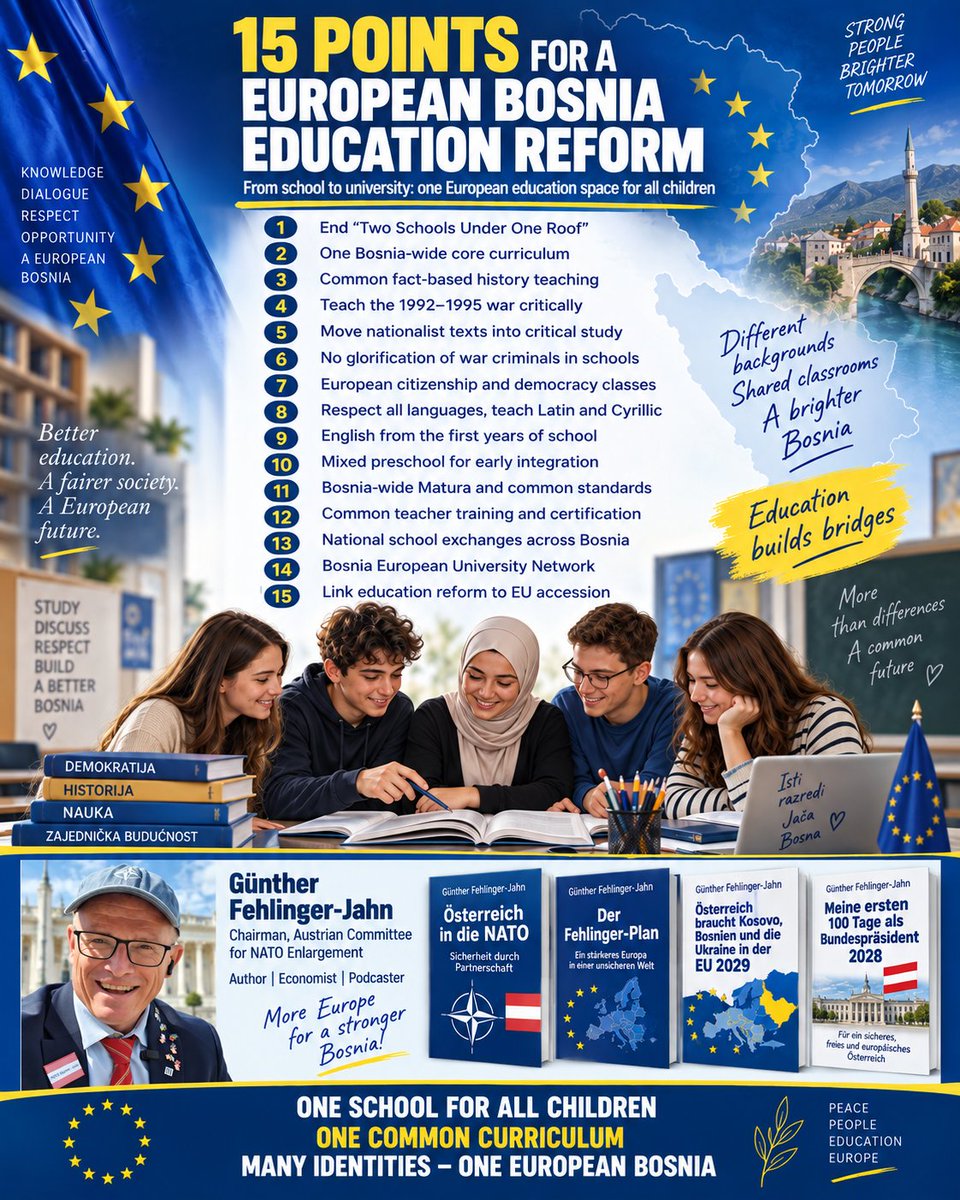
🇧🇦🇪🇺 EUROPEAN BOSNIA STARTS IN THE CLASSROOM. Bosnia and Herzegovina cannot build a common European future while children continue to grow up in parallel ethnic education systems. A modern European Bosnia needs schools that bring children together instead of separating them. My https://t.co/3bF8TH75QM #BosniaEducation #EuropeanFuture #UnityInDiversity #BA #EU

V

Mark Rutte predicts that in a next pandemic, the policy will inevitably come down to the same strict measures, such as school closures and curfews, as preventing 'code black' in hospitals is central. (translated)

Bij volgende pandemie zal beleid ‘onvermijdelijk’ op hetzelfde neerkomen, voorspelt Mark Rutte

,,Als je stuurt op code zwart (voorkomen), dan kom je uiteindelijk weer op een schoolsluiting uit, of een avondklok. Dat gaat volgende keer weer gebeuren, dat is dan onvermijdelijk."

Rutte verdedigt veel van zijn coronakeuzes en zegt sorry voor één besluit
www.ad.nl

We will draft a policy requiring periodic structural audits and safety certificates for buildings used by the public, including student accommodations, nursing homes and schools. No public activity will be permitted in buildings that fail to comply.

Rescuers search rubble for survivors after New Delhi hostel collapse kills seven
www.euronews.com

Don't be afraid. A few Russian missiles into schools and hospitals will create all the "political demand" for defence and resistance. Of course Europe can fight and win, and it will. https://t.co/FyV8X8sFCt #Defence #Resistance #EuropeFights #RU #EU

"RadioText-RadioSoftware (1983–1989)": The First (Forgotten) Radio Programme of Computer Science Dissemination in Italy SOURCE: https://www.linkedin.com/pulse/radiotext-radiosoftware-19831989-first-forgotten-sardella-ph-d--eqief/ Radiosoftware represents Italy's absolute pioneer in broadcasting digital literacy education over the airwaves in the Belpaese. Abstract This paper reconstructs the history of Radiosoftware, the first Italian radio programme which anticipated by over a decade the dissemination of microtelematics, computing, and digital technology, as well as modern methods of digital software distribution. Established in 1983 at Radio Popolare and subsequently developed as a national initiative on Rai Radio 3 from 1984 to 1989, Radiosoftware represents the first Italian radio programme to broadcast educational content and transmit executable software for home computers over the airwaves. Through analysis of its technical evolution, educational content, and cultural impact, this article demonstrates how the initiative constituted a significant precedent in national computer literacy, the democratisation of access to software, and the development of amateur programming communities, establishing itself as the progenitor of a media ecosystem dedicated to technological dissemination that has extended into the contemporary era. Keywords: history of Italian computing, technological dissemination, digital broadcasting, computer literacy, Radio Popolare Introduction: The Dawn of Computing Dissemination in Italy In the landscape of Italian digital media history, a fundamental chapter remains little explored in academic literature: that of computing dissemination through radio broadcasting in the 1980s. In an era characterised by the absence of network connectivity and economic and geographical barriers to accessing computer technologies, radio configured itself as a democratic instrument for the diffusion of nascent digital culture. Radiosoftware emerges in this context as an absolutely pioneering initiative in Italy, anticipating not only analogous Italian experiences but also positioning itself amongst the first European experiments in software transmission over the airwaves. Its genesis at Radio Popolare in 1983 and subsequent evolution as a national programme on Rai Radio 3 bear witness to a trajectory of technical and pedagogical innovation that merits in-depth analysis. Contenuto dell’articolo The Original Phase: Radio Popolare (1983) The birth of Radiosoftware at Radio Popolare in 1983 constitutes the foundational moment of radio-based computing dissemination in Italy. In a period when personal computers still represented niche objects, the programme set out to systematically explore programming languages, hardware architectures, and practical applications of home computing, addressing a heterogeneous audience composed of students, teachers, hobbyists, and professionals. This first incarnation established the conceptual paradigms that would characterise the entire subsequent tradition: linguistic accessibility, pedagogical vocation, attention to the social and cultural dimensions of technology, and promotion of active listener participation. Contenuto dell’articolo The National Evolution: From Radiotext to Radiosoftware (1984–1989) The experience gained at Radio Popolare found systematic development in the national initiative coordinated by Rai Radio 3. The pilot phase, denominated Radiotext, commenced on 11 May 1984 as an experimental segment within the current affairs programme Un certo discorso, presented by Pasquale Santoli. Eight 30-minute episodes, broadcast on Fridays at 16:00 with Sunday repeats, tested the technical feasibility and public interest in the transmission of executable software through audio signals. Curated by Luigi Grimaldi and Giovanni Sighele of the Lega Informatica of Florence, in collaboration with Arci Media, the pilot phase demonstrated the viability of the concept. In autumn 1984, the format consolidated with the definitive denomination Radiosoftware, expanding to one-hour episodes and maintaining its placement within Un certo discorso. Contenuto dell’articolo The third season, inaugurated on 7 February 1986, introduced a thematic structuring articulated in three distinctive segments: "Hard & soft news" (updates and reviews), "Studiare con il computer" (educational applications), and "Radio + informatica" (experimental intersections between broadcasting and computing). This phase evidenced a growing pedagogical sophistication and greater attention to formal educational applications. In late 1986, the programme acquired editorial autonomy, transforming into an independent transmission with nocturnal weekend scheduling. 1987 marked a significant technical innovation with the introduction of the 4800 bit/s hardware interface developed by the RAI Research Centre in Turin, which enabled direct connection to the RS-232 serial port, overcoming the limitations of the audio-cassette method. The concluding phase, from February to June 1989, adopted a brief daily format (10 minutes, Monday to Friday at 19:45), concentrating on MS-DOS-compatible software. Despite the announcement of a cycle for 1990, no national transmission is documented beyond June 1989. Contenuto dell’articolo The Audio-Cassette Method (1984–1987) The initial methodology replicated the cassette loading mechanisms typical of 1980s home computers. Programmes were encoded as sequences of audio impulses—electronic noises incomprehensible to the human ear—which listeners recorded onto blank audiocassettes by connecting a tape recorder to the radio's audio output. The recorded cassette was subsequently played through the computer's cassette interface, which decoded the signals, loading the software into memory. This approach, based on modulation techniques similar to frequency-shift keying (FSK), guaranteed compatibility with heterogeneous platforms such as the ZX Spectrum 48K, Commodore 64, Olivetti M10, subsequently extended to the Apple II, MSX, BBC Micro, Olivetti M24 and M28. Each episode transmitted sequentially platform-specific versions for each system. Whilst accessible and revolutionary for mass distribution in pre-Internet Italy, this method presented significant limitations: low transmission speed, susceptibility to errors induced by radio interference or ambient noise, and the necessity for precise volume and timing adjustments. Contenuto dell’articolo The RAI-Radiosoftware Hardware Interface (1987) In 1987, the RAI Research Centre in Turin developed an advanced interface documented in CCIR reports as the RAI-Radiosoftware system. The principal innovation consisted of direct transmission at 4800 bits/s utilising biphase modulation organised in packets, enabling connection to the computer's RS-232 serial port without cassette intermediation. The interface was designed for operating system independence, with management software adaptable for MS-DOS, CP/M, and potential future extensions to Macintosh. For Olivetti M24 and M28 computers, a version with an internal card was available. The Research Centre additionally developed management software, test cassettes, and manuals, considering initial commercialisation at approximately 90,000 lire. This technical evolution represented a significant advancement in terms of speed, reliability, and usability, whilst maintaining the audio-cassette method in parallel to guarantee universal access. Contenuto dell’articolo Types of Software Transmitted The catalogue of software distributed through Radiosoftware reflected a broad range of applications: practical utilities (thematic databases on fashion, music, itineraries, and personalised diets), educational tools (didactic programmes for secondary schools, upper secondary schools, and conservatoires), recreational software (games such as the Olympic pentathlon for the Commodore 64), graphic demonstrations, and creative tools (bases for musical composition and digital comics). Particularly significant was the introduction, from the third season onwards, of educational software developed in collaboration with the Ministry of Public Education, designed specifically for scholastic use across various disciplines, not limited to computing. Contenuto dell’articolo Community Participation: The ORSA Section The Osservatorio Radiofonico del Software Autoprodotto (ORSA) [Radio Observatory of Self-Produced Software], reintroduced in the third season from February 1986, constituted a space dedicated to the transmission of programmes created by listeners. This feature transformed Radiosoftware into a bidirectional platform, anticipating collaborative logics that would characterise, decades later, open-source communities and participatory digital cultures. The "listeners' post" section within "Hard & soft news" additionally facilitated continuous dialogue with the public, integrating feedback, questions, and suggestions into the programming. Questionnaires distributed at the end of cycles and surveys conducted by specialist magazines such as Sperimentare con l'elettronica e il computer provided further mechanisms for evaluation and editorial orientation. Contenuto dell’articolo Institutional Collaborations and School Experiments In 1987, Radiosoftware collaborated with the ITIS Enrico Fermi in Rome to produce a series of transmissions dedicated to the development and application of educational software in scholastic contexts. The initiative involved experimental reception centres in 60 Italian schools, where students and teachers utilised the specialised interfaces developed by the RAI Research Centre to capture and load directly the transmitted software. These experiments positioned Radiosoftware as an operational instrument of pedagogical innovation, extending its impact beyond the hobbyist user base towards formal integration within the national education system. Contenuto dell’articolo Comparison with European Experiences Although Radiosoftware represents the first Italian national initiative, it was not the first European experiment in radio transmission of software. In the Netherlands, the programme Hobbyscoop on the public broadcaster NOS began transmitting computer programmes via radio around 1979–1980, subsequently developing the Basicode standard (from 1982). This standardised format utilised a restricted subset of BASIC commands and platform-specific translation routines, guaranteeing portability across heterogeneous architectures through FSK modulation at 1200 bps. Contenuto dell’articolo In the United Kingdom, The Chip Shop on BBC Radio 4, presented by Barry Norman and launched in 1984, included a "takeaway" service that transmitted Basicode programmes during nocturnal hours on VHF. Contenuto dell’articolo Technical and Cultural Differentiation Unlike approaches based on Basicode, which privileged portability at the interpreted language level, Radiosoftware transmitted platform-specific executable files, often in machine code, encoded as audio tones analogous to cassette loading signals. This choice reflected different priorities: maximising performance and the specific capabilities of each architecture rather than guaranteeing universal compatibility through a standardised language. The subsequent introduction of the 4800 bit/s interface with RS-232 connection represented a further differentiation, bypassing cassette recording entirely. These technical specificities bear witness to an autonomous development pathway, oriented towards the characteristics of the Italian computing market and ecosystem. Contenuto dell’articolo Transition towards Telesoftware Between 1988 and 1989, Radiosoftware was progressively accompanied and superseded by telesoftware transmitted through Televideo, RAI's teletext system. Technically defined by the RAI Research Centre in collaboration with Olivetti, the system became operational in 1989 following scholastic experiments coordinated with the Ministry of Public Education and Seleco in 1988. Telesoftware represented a natural evolution that shifted distribution from radio to television, offering advantages in terms of bandwidth capacity and already widespread reception infrastructure. This transition reflected broader trends in media convergence and the evolution of digital broadcasting technologies. Contenuto dell’articolo Obsolescence and the Rise of the Internet The emergence of the Internet in the 1990s rendered obsolete both radio-based and teletext-based methods of software distribution. Bidirectional digital networks offered incomparable speed, scalability, and interactivity, radically transforming the paradigms of software access and distribution. However, the conceptual legacy of Radiosoftware persists: the idea of mass distribution of executable digital content through broadcasting channels anticipated logics that re-emerge in modern over-the-air distributions of firmware and software updates for mobile devices and IoT. Contenuto dell’articolo The Ecosystem of Italian Radio-Based Computing Dissemination COMPLETE TIMELINE From the birth of computing dissemination on radio to the contemporary digital ecosystem 🟦 1983 — THE ORIGIN Radiosoftware – Radio Popolare (1983) The first Italian programme entirely dedicated to computing, programming languages, and personal computers. The absolute progenitor of the Italian tradition of radio-based technological dissemination. 🟦 THE 1980s — THE FIRST HEIRS 1984–1989 — Bit, Byte & Musica – Radio Popolare Technology, electronics, early networks, hacker culture. Continues the pioneering spirit of Radiosoftware, exploring the countercultural and communal dimensions of nascent computing. 1987–1990 — Decoder / Cyberpunk – Radio Popolare First systematic discussions of BBS, cryptography, alternative telematics, anticipating themes that would become central in the Internet era. 🟩 THE 1990s — THE INTERNET ERA 1993 — Golem – Radio3 Critical reflection on media and digital technologies, situating technological transformation within a broader cultural and philosophical framework. 1994 — Eta Beta – Radio1 Innovation, information society, digital transformation. Technological dissemination for a general audience in the phase of initial digital literacy. 1995 — Internetworkcity – Radio Deejay Presented by Claudio Cecchetto and Marco Camisani Calzolari, represents the first pop-commercial programme dedicated to the Internet, introducing email, websites, chat, and cyber culture to the mass public with accessible language and a massified educational approach. 1996–1999 — Mediamente (radio version) – RAI Dissemination on the Internet, networks, digital culture, with particular attention to the social and cognitive implications of emerging technologies. 1997–2000 — Cybernet / Tecnologie e Libertà – Radio Sherwood Free software, digital rights, civic networks. Continuation of the critical and communal tradition inaugurated by Radio Popolare, with focus on the political and libertarian dimensions of technology. This timeline evidences how Radiosoftware does not represent an isolated phenomenon, but rather the point of origin of a continuous tradition that has traversed over four decades. From the programming languages and over-the-air software transmission of the 1980s, through explorations of BBS and alternative telematics, to mass literacy on the Internet in the 1990s and critical reflections on free software and digital rights, a connecting thread emerges that testifies to the role of radio as a privileged space for the cultural mediation of emerging technologies. Contenuto dell’articolo Contemporary Recognition and Archival Preservation In recent years, Radiosoftware has acquired renewed attention as a pioneering initiative in the history of Italian computing. In 2024, contributions by scholars such as Andrea Fortuna have described the programme as a fascinating chapter in the diffusion of personal computing in Italy, underscoring its innovative approach to the distribution of executable software in the pre-Internet era. RAI has preserved selections from the initial phase of the programme through digital platforms such as RaiPlay Sound, where a dedicated playlist in the "Via Asiago 10" series includes several pilot episodes from 1984, originally broadcast on Rai Radio 3. Preservation efforts by enthusiasts have further contributed to maintaining accessible portions of the programme's legacy, with partial audio recordings and listener interviews available on dedicated websites. Radiosoftware constitutes a significant case study from multiple disciplinary perspectives. From the standpoint of media history, it represents an innovation in the utilisation of radio broadcasting, extending its functionalities beyond the transmission of audio content towards the distribution of executable code. In computing history, it testifies to strategies of democratisation of software access in contexts characterised by scarcity of resources and infrastructure. From a pedagogical standpoint, it anticipates models of distributed and community learning that re-emerge in modern online educational platforms. The participatory dimension embodied by the ORSA section prefigures collaborative dynamics that would characterise open-source cultures. Its position as progenitor of a continuous media ecosystem dedicated to technological dissemination—from Radio Popolare through national public broadcasters to the experiences of the 1990s—underscores the role of radio broadcasting as essential cultural infrastructure in the processes of national digital literacy. In an era when over-the-air distribution of software updates has become ordinary practice for billions of connected devices, Radiosoftware emerges not as an antiquarian curiosity, but as a conceptual antecedent that illuminates often-neglected technological genealogies. Its rediscovery and archival preservation constitute essential operations for a complete understanding of the roots of Italian digital culture.

"RadioText-RadioSoftware (1983–1989)": The First (Forgotten) Radio Programme of Computer Science Dissemination in Italy

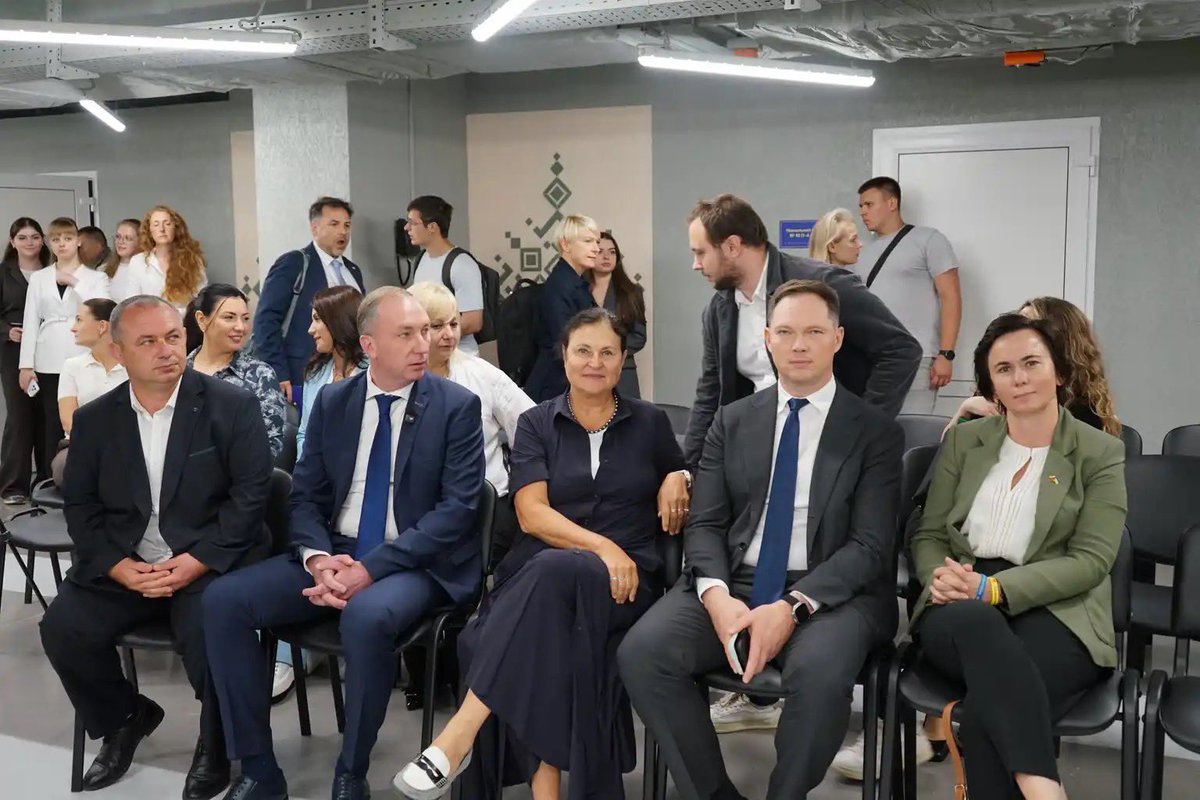
The first underground school under the program already operates in Molodizhne, Odesa. #Sumy is the 2nd we have opened: 2000 m², with 12 classrooms & space for 500 children. After 5+ years of remote learning, many can finally enter a classroom - most for the first time ever. 3/4 https://t.co/PGYr1sqZDr #Education #Ukraine #Schools #UA

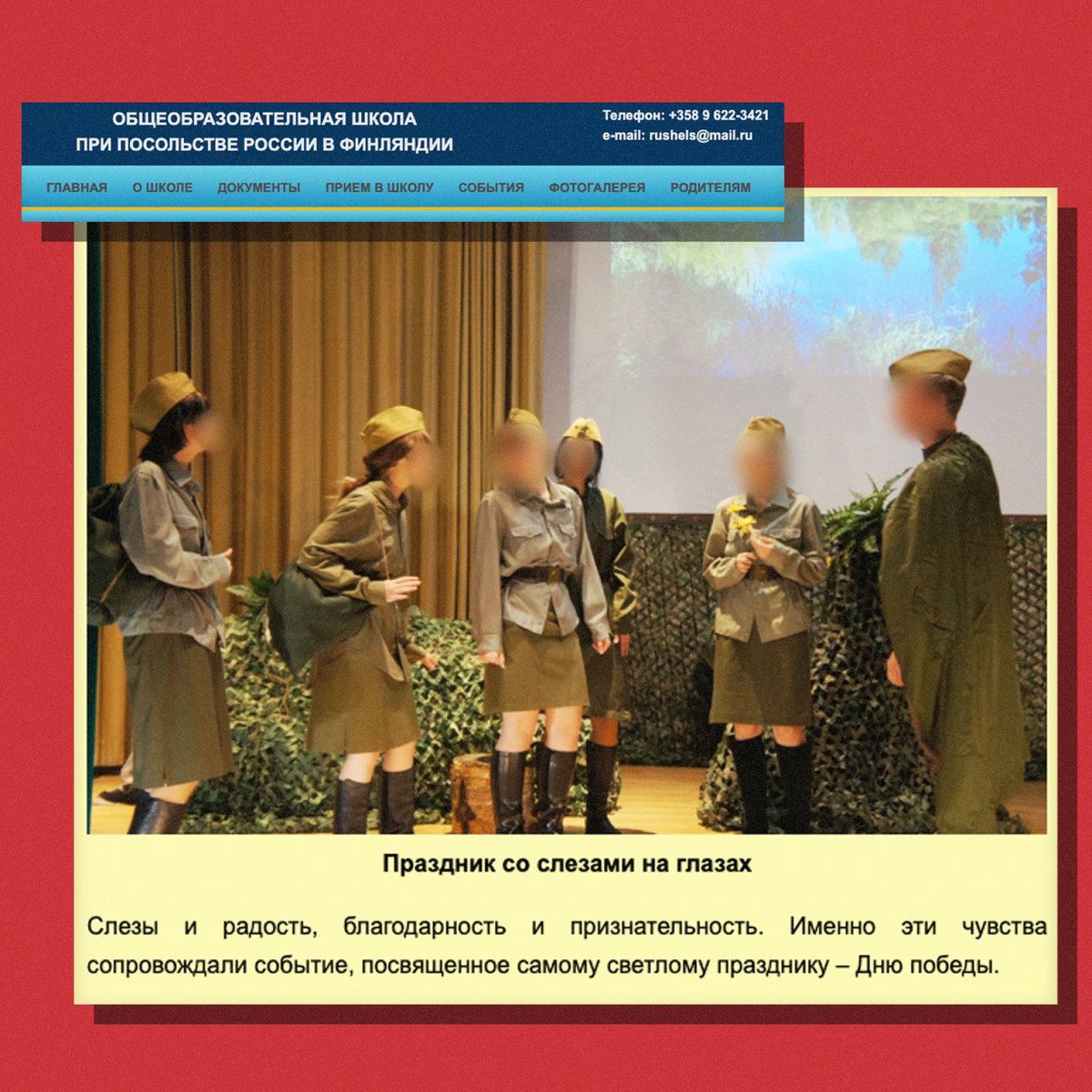
Russian embassy schools are bringing the Kremlin’s militarization of children into Europe. The Danish newspaper Politiken reports that children at the Russian Embassy School in Copenhagen are taught how weapons work and how to follow military commands. Military themes and war https://t.co/2YhseVpEaK #Militarization #RussianEmbassy #Copenhagen #RU #DK

Putin and Russia have bombed schools, children's hospitals, theaters full of women and children, train stations, civilian energy infrastructure, dams, civilian airplanes, shopping malls and other civilian infrastructure since 2014. And then he cries like a little bitch when his https://t.co/CX5j20xKEi #Putin #Ukraine #WarCrimes #RU

@CharlieWalsham_ What has caused the widespread medicalisation of children? What is the root? What is trans dignity actually? Please lay out the “middle ground.”Schools, after-school clubs, media, publishing, the arts, public services, private companies, NGOs and government: this is very serious #Medicalisation #TransDignity #ChildWellbeing #Thetweetdoesnotmentionanyspecificcountries.