BETA nonprofit public democratic european moderated

Search

#Scrutin

In the Chamber, it has become clear who needs the new electoral law. The objections from the left opposition were rejected by secret ballot. Vannacci's deputies voted with the government. Did Renzi and Calenda make their deputies vote against a law that benefits them?🤔 (translated)
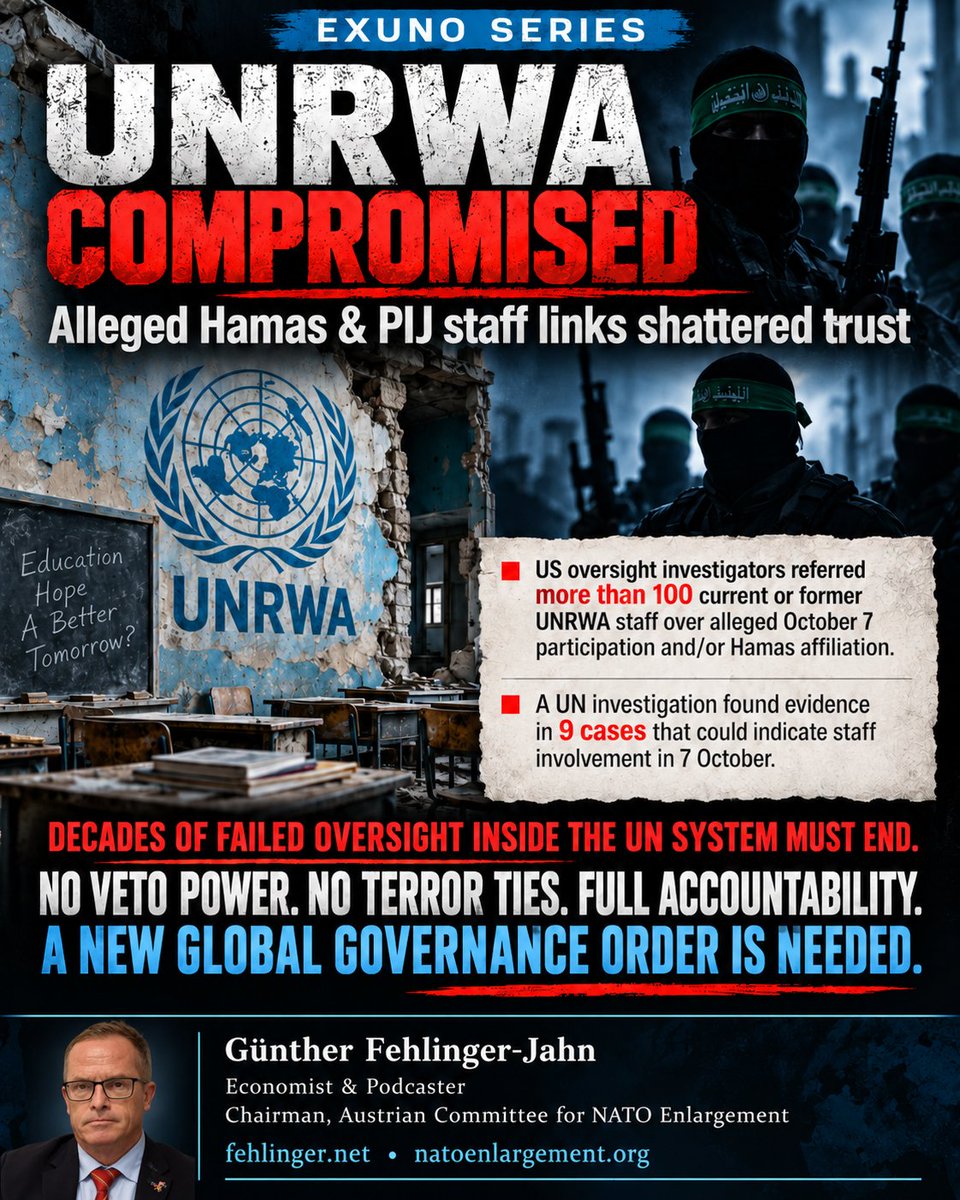
EXUNO SERIES — UNRWA UNDER SCRUTINY USAID’s Inspector General says it has referred more than 100 current or former UNRWA staff to the U.S. State Department over alleged participation in the 7 October attacks and/or Hamas affiliation. In August 2026, it reported proposed https://t.co/8I9UhkXQbc #UNRWA #Hamas #USAID #US

This is something insane… Every platform should publish every request it receives from EU, governments and public authorities. This is essential for transparency, democratic accountability and public scrutiny. If these requests continue to be made and enforced in the shadows, #Transparency #Accountability #PublicScrutiny #EU

This is something insane… Every platform should publish every request it receives from governments and public authorities. This is essential for transparency, democratic accountability and public scrutiny. If these requests continue to be made and enforced in the shadows, #Transparence #Democracy #Accountability #Nocountrycodes.

Austria has won a seat on the UN Security Council for 2027–28 after a 15-year campaign, with Foreign Minister Beate Meinl-Reisinger personally lobbying representatives of more than 150 countries. That makes scrutiny of Austria’s diplomatic choices more important than ever. But https://t.co/kxUGR8B2jo #AustriaUNSC #Diplomacy #ForeignPolicy #AT #UN

🥊 DODIK’S POLITICAL SYSTEM DESERVES RELENTLESS SCRUTINY. Bosnia and Herzegovina does not need patronage networks, public contracts serving private interests, or politicians treating institutions as personal property. The U.S. Treasury repeatedly accused Milorad Dodik and https://t.co/ulCjvXXYcx #Bosnia #Dodik #Corruption #BA #US

Fake NV – how a cloned newsroom turned an AI video into a $140 million corruption scandal For two days in September, a website that looked almost indistinguishable from one of Ukraine’s best-known news organisations carried an extraordinary corruption story. It claimed that Ukraine’s National Anti-Corruption Bureau had raided former defence procurement chief Arsen Zhumadilov and discovered more than $140 million in cash packed inside refrigerator boxes. One box supposedly carried the words “For the Servant of the People” – an apparent reference to President Volodymyr Zelenskyy’s political party. The raid never happened. The photographs and video presented as evidence were fabricated, and the news organisation reporting the story was not the New Voice of Ukraine but a cloned version of it. The episode is a compact example of an increasingly effective disinformation technique. Rather than inventing a new propaganda outlet and trying to build its credibility from scratch, an operator can simply steal the identity of an established newsroom and place fabricated material inside an otherwise convincing copy of its editorial environment. A newsroom copied almost in full The counterfeit site appeared at nvukraine.com, while the authentic New Voice of Ukraine operates at nv.ua and english.nv.ua. Registration records examined by fact-checkers show that the false domain was created on 21 September 2026, two days before the fabricated article appeared. According to NV’s own investigation, the imitation went much further than copying a logo: the operators reproduced the site’s visual design, sections, branding, contact information and genuine editorial material. A snapshot of legitimate NV content from 23 September appears to have been copied onto the counterfeit site, into which the operators inserted a single false article. That article claimed that NABU had searched premises connected to Zhumadilov, who had headed Ukraine’s Defence Procurement Agency until August, and seized $140 million in cash. The story was published in several languages, including Ukrainian and English, suggesting that the operation was intended not only for Ukraine’s domestic information space but also for foreign audiences following the war and Western support for Kyiv. AI supplied the supposed evidence The false article was supported by a video purportedly showing the money discovered during the raid. NABU said no such search or procedural action had taken place and identified the footage as fabricated using artificial intelligence. Independent fact-checker Lead Stories found no credible Ukrainian or international reporting confirming either the raid or the alleged seizure, while searches of NABU’s own published material produced no evidence supporting the claim. The operation therefore combined two separate forms of synthetic credibility. The AI-generated footage supplied what looked like visual proof, while the cloned NV website supplied institutional proof: an apparently reputable Ukrainian newsroom supposedly confirming that the event had happened. Neither element needed to withstand close scrutiny for long. Together, they only needed to appear credible enough to be copied, quoted and redistributed before the deception was exposed. From a fake Ukrainian source into the Russian information ecosystem On 24 September, the story began moving through large pro-Russian Telegram channels. Ukraine’s Center for Strategic Communications traced early amplification to Golos Mordora, with roughly 149,000 subscribers, and Militarist, with around 277,000. Within less than an hour, other channels including VOBLA, Rossiya Seychas and Ostashko! Vazhnoye were circulating versions of the same claim. It subsequently appeared on X and on Russian-language websites including e-news.su and pressa24.ru. Babel calculated that posts carrying the fabrication had accumulated approximately 370,000 views by the morning of 25 September. The story also moved beyond the Russian-language ecosystem. English-language versions appeared in online communities including Lemmy and Hexbear, while accounts on X shared direct links to the counterfeit NV article. NV later reported that larger Russian media and propaganda outlets, including RIA Novosti, Life, Vesti, Ukraina.ru and Mail.ru, had reproduced or discussed the claim. Kirill Dmitriev, head of the Russian Direct Investment Fund and a Kremlin representative involved in contacts with the United States, also shared it on 25 September. This amplification is significant, but it should not be confused with proof of authorship. Publicly available evidence shows how the false story entered and spread through a Russian and pro-Russian information ecosystem. It does not establish which organisation registered the cloned domain, generated the video or directed the operation from the outset. Why copy NV? The operation relied on source laundering. A claim originating directly from a Russian Telegram channel that Ukraine’s defence procurement system had concealed $140 million would immediately carry an obvious political context. A claim apparently uncovered by an established Ukrainian newsroom looks very different. Once the fabricated NV article existed, subsequent accounts could cite what appeared to be an independent Ukrainian source rather than present the allegation as their own. Each repost moved the story another step away from its manufactured origin. The use of an English-language version strengthened that mechanism for audiences outside Ukraine. The underlying narrative was also carefully chosen. Corruption in Ukrainian defence procurement is a genuine subject of public scrutiny and investigative reporting, so the fabricated story did not require audiences to accept an entirely unfamiliar premise. It inserted a false event into a real area of political concern. That mixture of authentic context and fabricated evidence can be more persuasive than a completely invented story because much of the surrounding information feels recognisable. What can – and cannot – be attributed Ukrainian authorities and NV describe the episode as a Russian information operation, and its distribution can be documented extensively across pro-Russian and Russian media channels. The available public evidence, however, does not identify the organisation that created the counterfeit website, nor does it link the operation forensically to a named Russian intelligence service, military unit or state contractor. The most precise description is therefore a Russian-aligned disinformation operation whose fabricated material was systematically amplified through the Russian information ecosystem. That distinction matters. Distribution can be observed directly; command-and-control is harder to establish and should not be inferred without evidence. The newsroom itself becomes the deepfake The most important feature of the operation was not the $140 million figure or even the AI-generated video. It was the counterfeit newsroom surrounding them. The operators copied a real publication, populated it largely with genuine material and inserted a single false story, allowing the fabrication to borrow the accumulated credibility of journalists who had nothing to do with it. This points to a broader evolution in synthetic media. AI can fabricate an image, a voice or a video, but an influence operation can now fabricate something larger: the source that supposedly verified the evidence. In the Fake NV operation, the article, the video and the website reinforced one another, creating not simply a false story but a manufactured chain of credibility. Sources The New Voice of Ukraine — investigation into the cloned website https://english.nv.ua/nation/nv-discovers-fake-copy-of-website-with-planted-story-cites-russian-links-50644601.html The New Voice of Ukraine — Russian amplification of the $140 million fabrication https://english.nv.ua/russia-spreads-fake-140-million-ukraine-corruption-story-during-dmitriev-u-s-talks-50644647.html Lead Stories — independent fact-check https://leadstories.com/hoax-alert/2026/09/fact-check-fake-story-claims-140-million-found-at-home-of-ukraines-zhumadilov-marked-servant-of-the-people-nv-website-originated-it.html Babel — AI video and distribution analysis https://babel.ua/en/news/130469-a-video-is-sharing-online-about-140-million-found-in-the-possession-of-the-ex-head-of-the-defense-procurement-agency-this-is-an-ai-video-distributed-by-a-clone-of-ukrainian-media Center for Strategic Communications and Information Security — initial debunk https://spravdi.org/en/ai-fake-about-140-million-amid-us-talks-how-russians-impose-the-image-of-corrupt-ukraine-on-the-west/ Center for Strategic Communications and Information Security — NABU confirmation https://spravdi.org/u-merezhi-poshyryuyut-shi-fejk-pro-nibyto-obshuky-nabu-v-eksgolovy-agencziyi-oboronnyh-zakupivel/ Detector Media — distribution and NABU response https://detector.media/infospace/article/252806/2026-09-25-u-merezhi-pidrobyly-sayt-nv-dlya-poshyrennya-feyku-pro-obshuky-v-eksochilnyka-agentsii-oboronnykh-zakupivel/ Keywords #DISINFORMED #Episode10 #FakeNV #NewVoiceOfUkraine #Ukraine #Russia #RussianDisinformation #RussianInfluence #Disinformation #InformationWarfare #InfluenceOperations #ForeignInterference #FIMI #MediaImpersonation #ClonedMedia #FakeMedia #FakeNews #ArtificialIntelligence #AI #AIGeneratedContent #SyntheticMedia #AIVideo #SourceLaundering #NarrativeLaundering #CorruptionNarrative #UkraineCorruption #DefenceProcurement #NABU #ArsenZhumadilov #Telegram #SocialMediaManipulation #DigitalInfluence #Propaganda #OSINT #MediaManipulation #WRLD

AFRICA DAILY REPORT — 27 SEPTEMBER 2026 Major developments reported during the previous 24 hours. 1. SOUTH AFRICA — Police investigate deadly tavern shooting Importance: 10/10 (Critical) South African police launched a manhunt after 17 people were killed at a tavern in Wedela township, southwest of Johannesburg. Police said the motive was not yet known. Source: https://www.reuters.com/world/africa/ 2. DR CONGO — Ebola reaches 63 health zones across seven provinces Importance: 10/10 (Critical) WHO reporting says the Bundibugyo Ebola outbreak has spread to Bulu in Sud Ubangi and Dungu in Haut-Uélé. As of September 23, 7,890 confirmed cases and 3,799 deaths had been reported, while conflict and displacement continue to complicate access and contact tracing. Source: https://www.channelafrica.co.za/ 3. DR CONGO — Mpox confirmed in Bunia while the Ebola response is already under pressure Importance: 9/10 (Very High) A laboratory-confirmed mpox case was identified in Bunia, raising concern about simultaneous infectious-disease pressures on surveillance, laboratories and clinical capacity. Source: https://www.businessday.co.za/ 4. SOUTH AFRICA — Tenth woman's body found in Ekurhuleni investigation Importance: 9/10 (Very High) Police discovered another woman's body east of Johannesburg, bringing the number found during the investigation to ten and intensifying concern over gender-based violence and whether some of the cases are connected. Source: https://www.africanews.com/ 5. NIGERIA–SOUTH AFRICA — Nigeria evacuates another 105 citizens Importance: 8.5/10 (Very High) Nigeria evacuated another group of nationals amid continuing anti-immigrant violence and tensions in South Africa. Nigeria's Foreign Ministry said this was the 13th consular evacuation since June 10, bringing the total evacuated to 1,821 people. Source: https://punchng.com/ 6. KENYA — Report highlights recruitment of Kenyans into Russia's military Importance: 8/10 (High) Reporting by The EastAfrican says Kenya has emerged as a leading African source country in Russian military recruitment, with recruitment practices evolving as African authorities increase scrutiny. Source: https://www.theeastafrican.co.ke/ 7. GUINEA — Former prime minister and opposition leader Sidya Touré dies in Paris Former prime minister and prominent opposition figure Sidya Touré died aged 81. He had led the Union of Republican Forces from exile in Ivory Coast; the UFR was among political parties dissolved earlier this year. Source: https://www.africanews.com/ 8. MADAGASCAR — Youth activists voice disillusionment one year after political upheaval A year after youth-led protests helped force the previous president from power, activists interviewed in Madagascar say the subsequent political transition has not delivered the changes they expected, highlighting continuing questions about governance and the country's transition. Source: https://www.africanews.com/ 9. EAST AFRICA — County levies increase costs along Kenya's regional trade corridors Importance: 7.5/10 (High) Businesses moving goods through Kenya face additional county-level charges along important transport corridors. Because Kenyan roads and the Port of Mombasa serve several landlocked East African economies, higher logistics costs can affect regional trade competitiveness and import prices. Source: https://www.theeastafrican.co.ke/ 10. AFRICA — Governments pursue new financing models for forest protection Importance: 7/10 (High) African governments are developing country-led mechanisms combining domestic expenditure with international climate finance. Kenya is highlighted for its financing approach, while Nigeria is preparing a forest-finance package for COP31. Source: https://capitalethiopia.com/ #Africa #AfricaNews #TopNewsOfAfrica #DRCongo #Bunia #Mpox #Ebola #EbolaOutbreak #PublicHealth #HealthEmergency #DiseaseSurveillance #HealthcareCapacity #OutbreakResponse #CentralAfrica #Ecology #ForestProtection #ClimateFinance #NatureFinance #Conservation #Sustainability #EnvironmentalProtection #Kenya #Russia #MilitaryRecruitment #Security #AfricanSecurity #Geopolitics #EastAfrica #RegionalSecurity #AfricaToday #wrldorg

Indonesia joined the walkout as Benjamin Netanyahu began his UN General Assembly address on 24 September 2026. Günther Fehlinger-Jahn describes the action as anti-Israel populism and calls for a serious EU response: diplomatic protest, political consultations and scrutiny of https://t.co/FJiSorkQyB #UNGA2026 #Indonesia #Israel #ID #IL #EU

À l'approche des élections législatives du 27 octobre en Israël, la démocratie est en crise, marquée par une suspicion croissante envers l'intégrité du scrutin et des tentatives de la coalition dirigée par Benjamin Netanyahou d'écarter les partis arabes, exacerbant ainsi les tensions politiques dans le pays. #Israël # élections2026 # démocratie

Israël : un scrutin miné par la défiance et le risque d’impasse, "la démocratie israélienne est en difficulté et soumise à de nombreux défis”

Mercredi, le chef de la diplomatie française, Jean-Noël Barrot, avait exhorté à la tenue du scrutin de novembre alors que la communauté internationale redoute son report notamment en raison de difficultés logistiques concernant l'acheminement du matériel de vote dans la bande de Gaza ou l'octroi de visas pour des observateurs internationaux en Cisjordanie, souhaités notamment par l'Union européenne. #Palestine #Israël #MoyenOrient

Devant l'ONU, Mahmoud Abbas fustige la politique israélienne qui menace "la vie et l'existence mêmes du peuple palestinien"
www.bfmtv.com

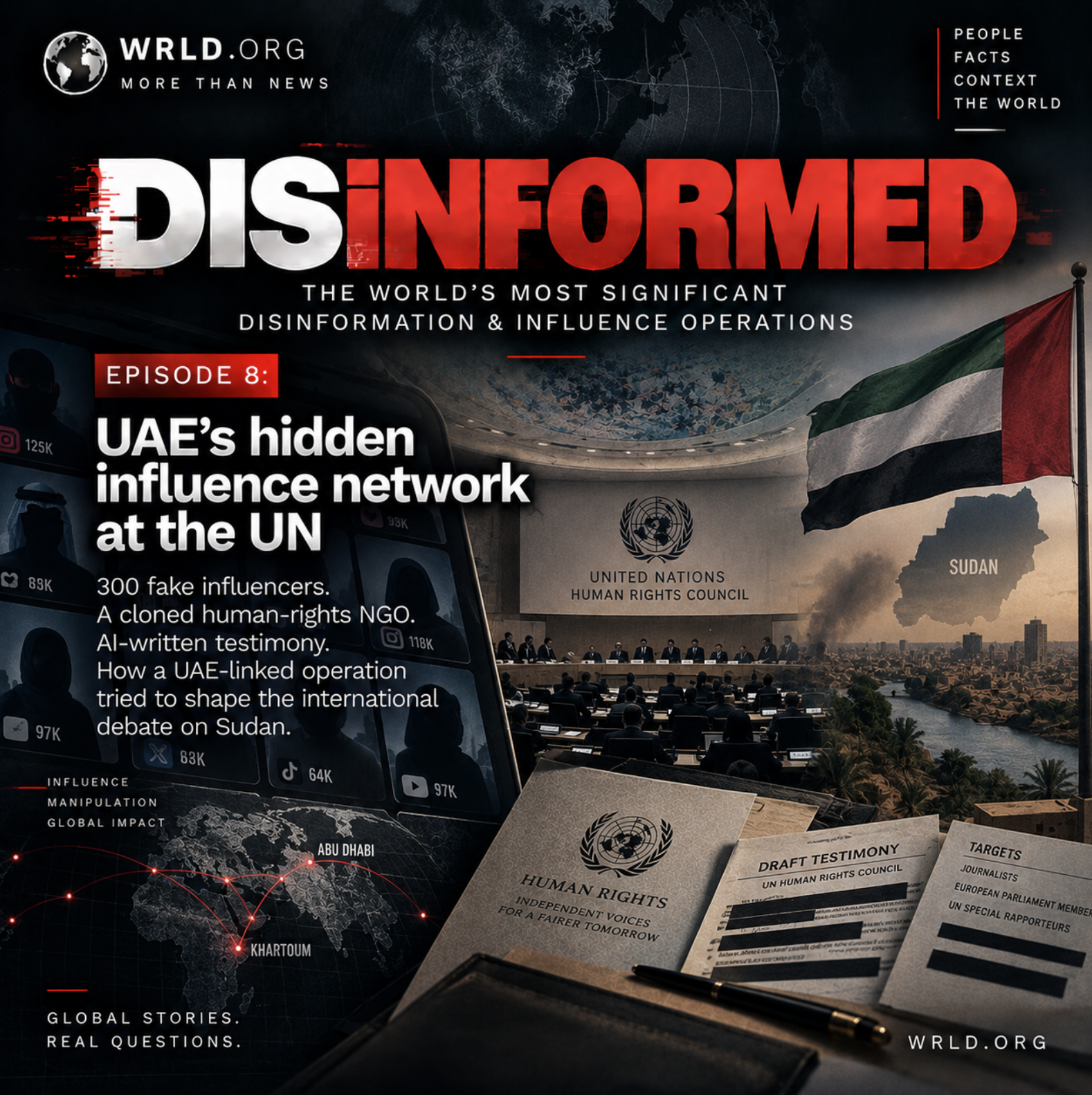
UAE / Sudan – when an influence operation tried to enter the United Nations A network of roughly 300 apparently independent social-media influencers. A human-rights organisation borrowing the identity of a real NGO. Personal dossiers on European politicians and journalists. And testimony prepared for delivery at the United Nations without revealing the state interest behind it. These were elements of an influence operation uncovered by Anthropic and disclosed in September 2026. The company says it linked the activity with high confidence to UAE government officials. Tracked as GTG-84002, the operation targeted several overlapping issues: the Muslim Brotherhood, perceptions of the war in Sudan and international mechanisms examining the United Arab Emirates' role in the conflict. What distinguishes the case is not simply its use of artificial intelligence. It is the attempt to make state-aligned messaging appear to originate from independent influencers, human-rights organisations and potentially witnesses addressing an international institution. An influence network built around 300 fake voices Anthropic identified a single actor using Claude to support a sustained influence campaign. At its centre was an AI persona called “Deadshot”, running on the operator's own platform. A master doctrine file repeatedly instructed the system to support what it described as a coordinated international effort to dismantle the Muslim Brotherhood. The operator simultaneously managed several components of the campaign, including approximately 300 inauthentic influencer accounts across social-media platforms. Internal material examined by Anthropic described the apparent independence of this network as its greatest strategic advantage. That phrase captures the central method. The objective was not simply to broadcast a political position but to conceal where that position originated. One visible example appeared on 4 June 2026, when accounts participated in a coordinated campaign using #SudanIslamists and near-identical graphics connecting Sudanese Islamists and the Muslim Brotherhood with regional instability. Anthropic says the amplification network was centrally funded and coordinated. Its investigation also found that the operator financing the social-media network was connected to the wider influence operation. A human-rights organisation that was not what it appeared to be Social media was only one layer. The operator also created a front NGO that copied the identity of a genuine Swiss organisation and used that borrowed legitimacy to publish human-rights material produced for the campaign. Anthropic's description elsewhere also refers to the identity of a real Sudanese human-rights organisation being used in connection with the preparation of testimony. The public report does not fully clarify whether these references describe the same front or separate elements of the operation, so they should not be treated as definitively identical. The underlying technique, however, is clear: political material was designed to appear as if it originated from independent civil society rather than from actors linked to a government. This is particularly significant in the human-rights environment, where the perceived independence of an organisation or witness can determine how seriously evidence is received by journalists, diplomats and international institutions. The attempt to reach the UN The most consequential part of the operation concerned the 62nd session of the UN Human Rights Council. According to Anthropic, the operator used Claude to ghost-write complete testimony intended to be delivered by two individuals during the session. The texts were prepared under explicit constraints ensuring that neither statement would mention the UAE. This did not amount to a conventional government submission. The intention, according to Anthropic's reconstruction, was for material serving the interests of a party connected to the Sudan conflict to reach an international forum through apparently independent voices. But an important limitation remains: Anthropic could not confirm that the testimony was ultimately delivered. The company similarly could not establish whether other dossiers produced by the operation reached their intended recipients or influenced policy. It therefore assessed the campaign as Category Three on the Brookings Breakout Scale – activity distributed across several platforms, but without evidence of broad public impact sufficient for a higher classification. The distinction matters. The evidence demonstrates a sophisticated attempt to influence international debate; it does not demonstrate that the attempt succeeded. Politicians, journalists and UN investigators became targets The operation was not limited to generating public content. Anthropic found that the operator researched and compiled detailed profiles of 18 members of the European Parliament and prominent journalists. Some material was prepared for direct delivery to senior UAE officials. The network also assembled what Anthropic describes as “counter-accountability dossiers” on UN Special Rapporteurs who had criticised the UAE's conduct in relation to Sudan. This places the campaign in a broader context. Since Sudan's civil war began in April 2023, the role of external powers has become an increasingly important part of international scrutiny. Sudan has accused the UAE of supporting the Rapid Support Forces, allegations Abu Dhabi has repeatedly denied. In 2025, Sudan brought a case against the UAE before the International Court of Justice, accusing it of complicity in genocide against the Masalit through alleged support for the RSF. The UAE rejected the allegations. The ICJ subsequently removed the case from its list after finding that it lacked jurisdiction because of the UAE's reservation to the relevant provision of the Genocide Convention. The ruling therefore did not determine whether Sudan's substantive allegations were true or false. That contested international environment helps explain why narratives about Sudan, human rights and accountability were valuable targets for an influence operation. AI as an operating system for influence The role played by Claude is also important to understand accurately. Anthropic did not find that artificial intelligence independently conceived or directed the campaign. Human operators established the objectives, political doctrine and targets. AI instead helped operationalise them. Across hundreds of sessions, Claude was used to transform predetermined political objectives into social-media narratives, human-rights reports, testimony, intelligence-style briefs and detailed profiles of individuals. The same system could support narrative production, target research and preparation of material for different audiences. That represents a more significant development than simply using generative AI to produce propaganda faster. Traditional influence operations require different teams to research targets, write content, manage personas, adapt messages and prepare briefing material. Generative AI can compress several of those functions into a single operational workflow. The result is not necessarily more convincing propaganda. It is potentially cheaper, faster and more scalable influence infrastructure. From fake influencers to institutional influence Anthropic says it linked the operation to UAE government officials with high confidence. Its assessment was based partly on internal material naming senior Emirati officials as intended recipients of the work, alongside other evidence available to its investigators. That remains an attribution by Anthropic rather than a judicial finding or publicly released forensic attribution by a government agency. The distinction should be retained. The larger significance of GTG-84002 lies in the architecture of the campaign. A network of fake influencers could create the appearance of public opinion. A cloned human-rights organisation could provide institutional credibility. AI-generated reports could give political narratives the appearance of research. Profiles of journalists and politicians could support more precise targeting. And ghost-written testimony could potentially carry the same message into an international institution without revealing the political interest behind it. This is a different model from the familiar troll farm. The objective is no longer simply to make propaganda look popular. It is to make state-aligned messaging look independent – and, if possible, to move it from social media into the institutions where international policy and accountability are debated. SOURCES: Anthropic — Countering misuse of AI: September 2026 https://www.anthropic.com/threat-intelligence-report-september-2026 International Court of Justice — Sudan v. United Arab Emirates https://www.icj-cij.org/case/197 International Court of Justice — press releases and case documents https://www.icj-cij.org/case/197/press-releases United Nations Geneva — Sudan v UAE proceedings at the ICJ https://www.ungeneva.org/en/news-media/news/2025/04/105241/world-court-begins-hearing-sudans-complicity-genocide-case-against UAE Ministry of Foreign Affairs — UAE response to Sudan's allegations https://www.mofa.gov.ae/en/MediaHub/News/2025/4/10/10-4-2025-UAE-UAE UN Digital Library — Sudan's letter concerning alleged UAE support for the RSF https://digitallibrary.un.org/record/4091008?ln=en UN Digital Library — UAE response concerning allegations of support for the RSF https://digitallibrary.un.org/record/4046224?ln=en Ultra Sudan — reporting on Anthropic's UAE-linked influence-operation findings https://ultrasudan.usawtiq.com/أنثروبيك-أحبطنا-عملية-تأثير-إماراتية-استخدمت-الذكاء-الاصطناعي-لاستهداف-السودان/عامر-صالح/أخبار KEYWORDS #DISINFORMED #Episode8 #UAE #Sudan #UnitedArabEmirates #UnitedNations #UNHumanRightsCouncil #HumanRights #Disinformation #InformationWarfare #InfluenceOperations #ForeignInterference #FIMI #CoordinatedInauthenticBehaviour #CIB #FakeInfluencers #FakeNGO #NGOImpersonation #Astroturfing #ArtificialIntelligence #AI #AIPropaganda #AIGeneratedContent #SyntheticMedia #SocialMediaManipulation #DigitalInfluence #Propaganda #NarrativeManipulation #InstitutionalInfluence #SudanConflict #SudanWar #MuslimBrotherhood #InternationalRelations #Geopolitics #Anthropic #ClaudeAI #OSINT #WRLD

Countering misuse of AI: September 2026 / Anthropic

Pour contrer l’argument du « si on fait pas alliance à gauche, il faudra la faire à droite » dire « mais non, puisque y’a pas trois blocs mais quatre blocs et on est le 4e » c’est, il me semble, un peu méconnaître le fonctionnement du mode de scrutin majoritaire à deux tours. #Politique #Élections #Scrutin

Entretien avec Tribune Chrétienne Saint-Denis est l’un des hauts lieux de l’histoire chrétienne de la France : que représente pour vous la venue du pape Léon XIV dans cette ville ? Saint-Denis n’est pas une ville comme les autres. C’est une commune nouvelle de près de 150 000 habitants, avec près de 150 nationalités d’origine différentes. C’est une ville populaire, jeune, profondément diverse, mais aussi une ville qui porte une histoire exceptionnelle, notamment chrétienne et nationale. La basilique-cathédrale de Saint-Denis est un lieu majeur de cette histoire. Elle est la nécropole des rois et des reines de France, mais elle est aussi, avant cela, un lieu de foi, de spiritualité et de transmission chrétienne. En tant que maire musulman, je n’ai aucune difficulté à reconnaître cette réalité. Au contraire : respecter la foi de l’autre commence par respecter son histoire. La venue du pape Léon XIV est donc un événement important et particulièrement symbolique pour Saint-Denis. Je souhaite qu’elle puisse être vécue dans un esprit de fraternité, de respect et de dialogue. Je suis un maire musulman, mais je suis aussi un maire français. Mon identité française ne commence pas avec mon origine familiale. Elle est faite de toutes les histoires qui ont contribué à construire notre pays. L’histoire chrétienne en France en fait évidemment partie. Ce dialogue avec les chrétiens n’est d’ailleurs pas une posture de circonstance. Depuis de nombreuses années, bien avant d’exercer les responsabilités qui sont les miennes aujourd’hui, j’entretiens des relations avec des représentants et des membres de la communauté chrétienne, particulièrement catholique. Vous avez contesté l’élection de Stéphane Bern à la présidence de l’association « Suivez la Flèche ! ». Quelles sont vos réserves et quelle vision défendez-vous pour ce projet ? Il faut d’abord rappeler que l’association « Suivez la Flèche ! » a été créée sous l’impulsion de Patrick Braouezec, alors maire de Saint-Denis, puis présidée par Mathieu Hanotin lorsqu’il est devenu maire. Stéphane Bern est membre de cette association depuis de nombreuses années. Ses compétences en matière de patrimoine sont réelles et reconnues. Mais elles l’étaient déjà lorsque d’autres majorités municipales et d’autres maires présidaient l’association. La question que je pose est donc simple : pourquoi cette candidature intervient-elle aujourd’hui et dans ces conditions ? Selon les éléments dont je dispose, c’est l’État qui aurait encouragé Stéphane Bern à se porter candidat et qui aurait entrepris de réunir les soutiens nécessaires à son élection. Je le dis avec prudence : il s’agit de ma lecture politique de la séquence, et non d’une accusation judiciaire. Si des irrégularités juridiques ont été commises, il appartiendra aux juridictions compétentes de le déterminer. J’ai précisément contesté les conditions dans lesquelles cette élection s’est déroulée. Plusieurs questions sérieuses se posent notamment sur la composition et le fonctionnement des instances ayant préparé le scrutin, la participation de certaines personnes morales, l’exclusion de deux sièges ou encore la situation particulière de l’architecte en chef des Monuments historiques. Mais, au fond, le sujet dépasse largement la régularité d’un scrutin ou ma propre personne. Je suis aujourd’hui maire de la commune nouvelle de Saint-Denis / Pierrefitte-sur-Seine et président de Plaine Commune. Je représente un territoire de près de 150 000 habitants, une ville populaire, diverse, multiculturelle et multiconfessionnelle. La question est donc de savoir quelle conception nous avons de Saint-Denis et de son patrimoine. Veut-on une représentation locale pleinement assumée, capable de porter la diversité contemporaine de Saint-Denis tout en respectant son histoire chrétienne et royale ? Ou souhaite-t-on une représentation davantage définie depuis l’extérieur ? #SaintDenis #HistoireChrétienne #DialogueInterreligieux

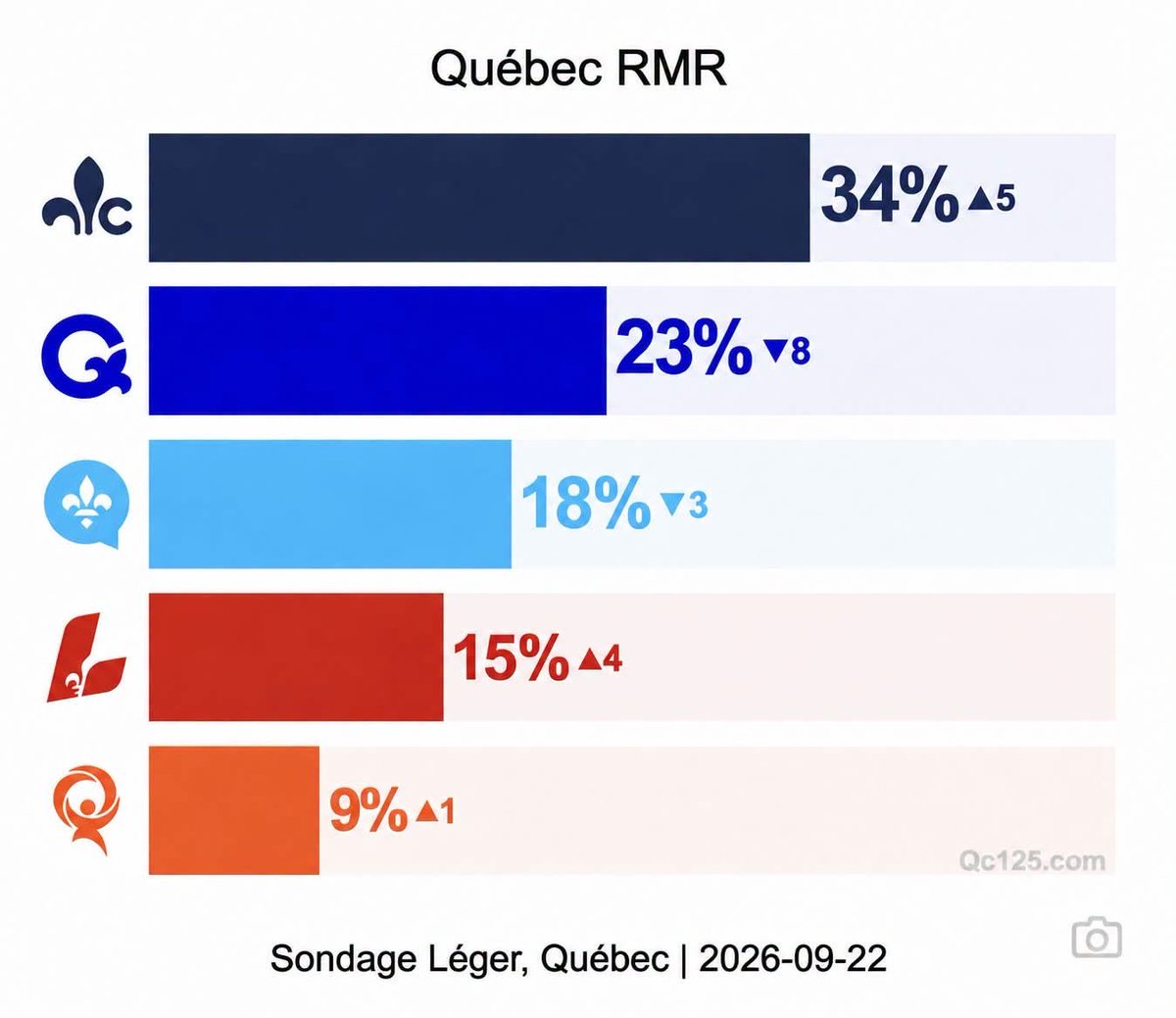
Première fois qu’un sondage donne plus de 10% d’avance au Parti conservateur du Québec dans la région de Québec. Merci aux gens de la Capitale-Nationale et de Chaudière-Appalaches! De plus en plus de Québécois veulent changer le modèle bureaucratique, éliminer le gaspillage de fonds publics et laisser plus d’argent dans vos poches. On doit maintenant traduire cet appui en votes dans les boites de scrutin. Vous devez aller voter. Convaincre au moins une personne et vous assurer de l’amener voter le 5 octobre prochain. #PolitiqueQc #Élections2023 #Votez

Lettre publiée dans La Presse de ce matin: POURQUOI J’APPUIE ÉRIC DUHAIME PAR MARC BELLEMARE Avocat et ancien ministre de la Justice À l’approche du scrutin du 5 octobre, un constat s’impose. Le débat politique québécois n’est plus le même qu’en 2022. Il est maintenant urgent de réduire les dépenses de l’État, d’alléger le fardeau fiscal, d’abolir les structures inutiles, de faire appel au privé pour améliorer l’accès aux soins, de développer nos ressources naturelles, de diminuer la paperasse imposée aux entrepreneurs, aux familles et aux simples citoyens. Ces idées ne se sont pas imposées d’elles-mêmes. Elles ont fait l’objet de multiples promesses reniées par les vieux partis depuis 50 ans. Depuis quatre ans, Éric Duhaime et le Parti conservateur du Québec (PCQ) les défendent avec constance. Aujourd’hui, les autres partis reprennent une partie de leur discours. Avant même d’avoir fait élire un seul député, Éric Duhaime a contribué sensiblement à faire évoluer le débat public dans la bonne direction. J’appuie d’abord Éric Duhaime parce qu’il veut que le Québec exerce pleinement ses pouvoirs en matière de justice et qu’il en obtienne davantage. Il réclame d’Ottawa, en attendant notre pleine souveraineté en matière de justice, les réformes qui relèvent du Code criminel. Il veut notamment s’attaquer aux peines purgées à domicile pour les crimes à caractère sexuel, la violence conjugale et les abus envers les aînés. Il réclame des peines minimales et veut éviter la libération inacceptable d’accusés en raison de délais déraisonnables (arrêt Jordan). Il veut resserrer les règles de libération conditionnelle des criminels dangereux et faire contribuer les détenus au coût de leur incarcération selon leur capacité de payer. Cette approche donne la priorité aux victimes, à la sécurité du public et à une plus grande autonomie du Québec en matière de justice. J’appuie aussi Éric Duhaime parce qu’il veut faire du Québec une véritable puissance énergétique, moins dépendante des autres provinces et surtout des États-Unis. Aucune source d’énergie ne doit être écartée par idéologie, qu’il s’agisse de l’hydroélectricité, de l’éolien, du solaire, du nucléaire ou du gaz naturel. Selon la plateforme du PCQ, le développement responsable du gaz naturel québécois pourrait rapporter près de 9,4 milliards de dollars à l’État en 10 ans, en plus de générer d’importantes retombées pour les propriétaires, les municipalités et les MRC. Un sondage publié récemment dans La Presse montre que 37 % des Québécois appuient l’exploitation du gaz naturel, contre 36 % qui s’y opposent. Lorsqu’on leur rappelle que le président Trump a évoqué la possibilité de couper l’approvisionnement du Québec, cet appui grimpe à 56 %, tandis que l’opposition recule à 25 %1. C’est précisément l’approche du PCQ : développer les ressources naturelles du Québec avec les régions lorsqu’il y a acceptabilité sociale, puis partager équitablement les retombées afin que le Québec redevienne maître chez lui en matière énergétique. Enfin, Éric Duhaime est, à mes yeux, le seul chef véritablement crédible lorsqu’il promet de remettre de l’ordre dans les finances publiques. Depuis des années, il dénonce un État québécois devenu trop lourd, trop coûteux et trop peu efficace. À vouloir se mêler de tout, le gouvernement prélève trop de taxes et d’impôts tout en freinant le potentiel des citoyens et des entrepreneurs. Le PCQ propose de réaliser 47 milliards de dollars d’économies sur cinq ans, soit environ 5 % des dépenses prévues durant cette période. Ces économies contribueraient à financer des baisses de taxes et d’impôts qui laisseraient plus de 11 000 $ supplémentaires dans les poches d’un ménage moyen sur cinq ans. Pour les familles qui peinent à joindre les deux bouts, cette somme ferait une réelle différence. Il propose également de réduire de 59 % le taux d’imposition des entreprises québécoises. Le Québec deviendrait ainsi l’un des endroits où les entreprises sont parmi les moins imposées en Amérique du Nord. Cette mesure leur permettrait d’être plus compétitives malgré l’incertitude économique, d’attirer davantage d’investissements et de créer plus d’emplois et de richesse au bénéfice de tous les Québécois. C’est pour toutes ces raisons que j’appuie Éric Duhaime. J’invite tous ceux qui souhaitent un Québec autonome en matière de justice, maître de son énergie et doté de finances publiques équilibrées à faire de même. Le destin du Québec, quel qu’il soit, s’appuie invariablement sur ces assises. #Québec #Politique #Économie

2

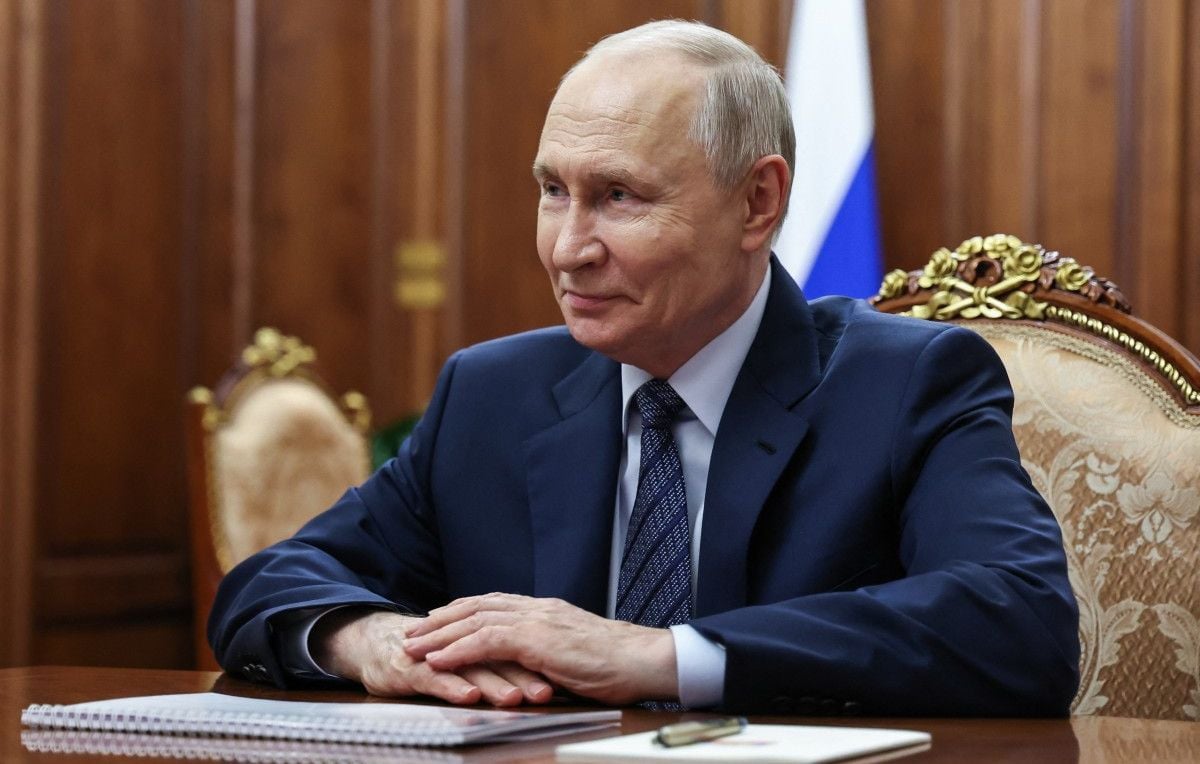
Le parti de Vladimir Poutine a remporté les élections législatives en Russie, accentuant les tensions en Europe où des débats sur l'allégement des sanctions contre certains oligarques russes émergent, tandis que l'Ukraine et ses alliés expriment des préoccupations quant à la légitimité de ce scrutin dans les territoires occupés. #Russie #Ukraine #Élections

Guerre en Ukraine : Poutine conforté par ses élections, vif débat en Europe sur les sanctions
L
Le Soir 1w

À quelques jours de la présidentielle du 4 octobre, le président brésilien Lula a annoncé une hausse de 15 % du montant de la Bolsa Familia, suscitant des accusations d'achat de votes de la part de son rival Flavio Bolsonaro, alors même que les deux candidats se disputent un scrutin crucial pour l'avenir politique du pays. #BolsaFamilia #Lula2026 #ÉlectionsBrésil

Brésil : l’indexation de la Bolsa Familia par Lula, arme électorale ?
2

Le parti de Vladimir Poutine, Russie unie, remporte largement les élections législatives en Russie avec 57,5 % des voix, tandis que les partis opposés à la guerre en Ukraine ont été exclus du scrutin. #ÉlectionsRussie #GuerreEnUkraine #VladimirPoutine

Russie : Le parti de Vladimir Poutine large vainqueur des élections législatives

Le parti de Vladimir Poutine, Russie unie, est annoncé comme vainqueur des élections législatives en Russie selon un sondage à la sortie des urnes, obtenant 49,4% des voix malgré un contexte de guerre en Ukraine et des incidents lors du scrutin. #ElectionsRussie #Poutine #GuerreEnUkraine

Pas de surprise aux législatives en Russie : le parti de Poutine donné vainqueur selon un sondage