WRLD

Search

#Seara
Andrei Burdusa 4d

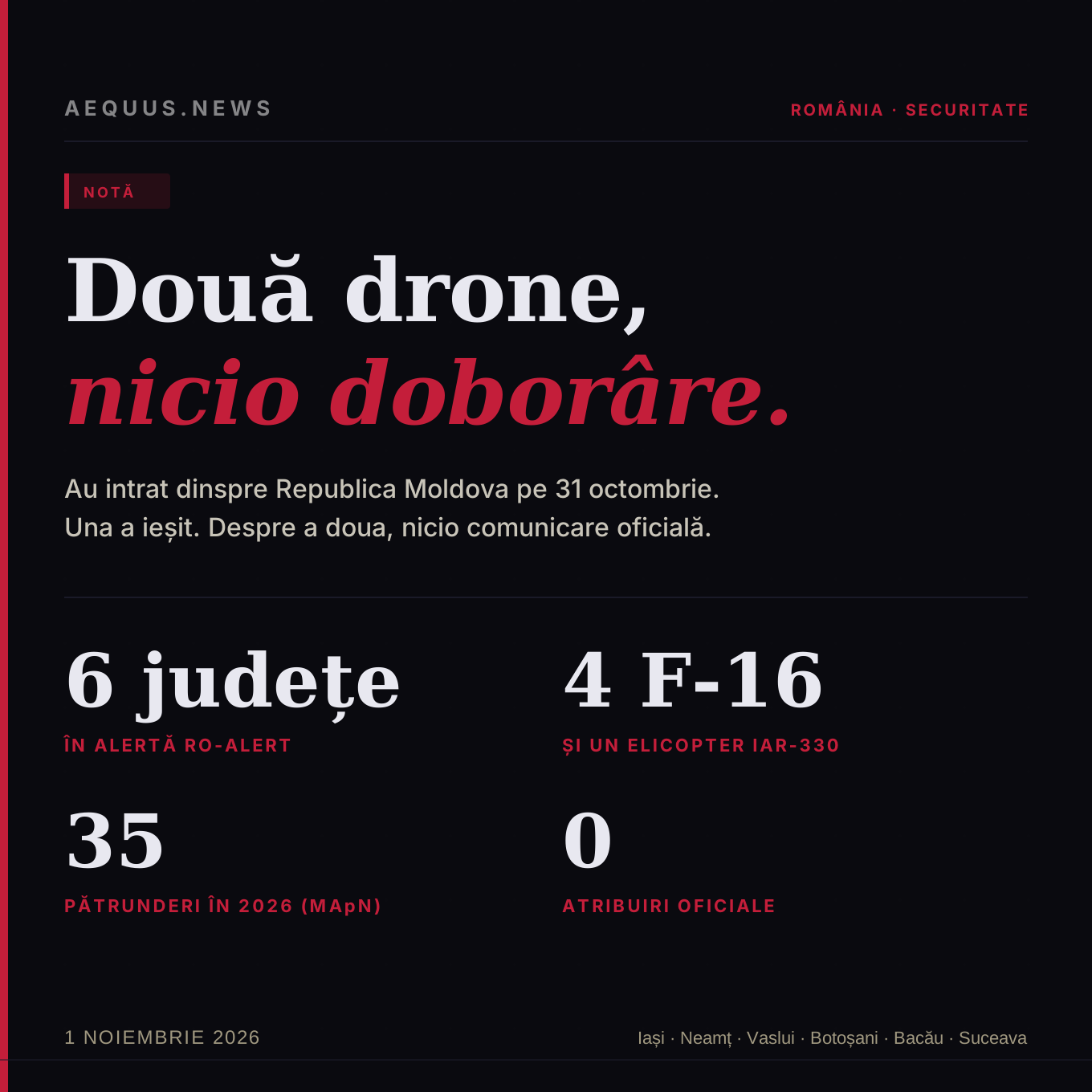
On Saturday evening, two drones entered Romania's airspace unauthorized from the Republic of Moldova. Six counties received the RO-Alert, four F-16s took off, and the airport in Iași was temporarily closed. https://aequus.news/articles/drone-iasi-31-octombrie.html (translated)
aequus.news
Două drone dinspre Republica Moldova: șase județe în alertă, patru F-16 în aer, nicio dronă doborâtă

562
Andrei Burdusa 5d

On Friday evening, seven judges elected by the Sejm took over the Constitutional Tribunal of Poland and suspended its president and vice president. Nawrocki turned his plane around and entered the building at night. https://aequus.news/articles/polonia-tribunal-doua-conduceri.html (translated)

aequus.news
Două conduceri pentru un singur tribunal: ce s-a întâmplat la Varșovia și ce nu
678
mihai baciu 6d

This war scares some of the tourists who visit the delta. But, curiously, sometimes danger attracts, and it's strange that we have had requests from tourists who wanted to see Ismail, the place where, the night before, the Russians had used drones. Nevertheless, we would benefit from some peace, obviously with victory on the side of good, Ukraine. (translated)

565
G
Gelu 2w

Don't change the time! Change the schedule, not the time! The biological rhythm is regulated by the Sun, not the clock. Time is not a work schedule that we can shift at will. Time is the measure by which we organize our lives, and nature has its own rhythm. The Earth does not change its rotation twice a year. The sun does not rise earlier because we decided to move the clock forward. Animals, birds, insects, and plants follow their biological rhythms related to light, darkness, and the natural succession of seasons. Humans are part of this nature. Our bodies have their own biological clock, fundamentally influenced by light. And when we officially move the clocks by one hour, we are not changing the course of nature, but rather asking humans to abruptly adapt to an administrative convention. Why do this every spring and reverse it every autumn? Is it natural to change the time or to adapt our schedules? Let's consider the majority of people: workers, farmers, students, teachers, parents, retirees, people who must adhere to a schedule set by others. They cannot always modify their schedules at will. They need to wake up at a certain hour, get to work, take a child to school, or comply with the public transport timetable. In contrast, there are people and organizations that have the opportunity to adapt their schedules based on the season, natural light, or the needs of their activities. If, for some people, changing their schedule is feasible, why impose the time change on everyone? Let's take a hypothetical example: if 10% of people have the freedom to adapt their schedule, is it fair to change the time for all those who do not have this freedom? Would it not be more logical to change the schedule where needed, rather than change the time by which the entire society organizes itself? Stores can modify their opening hours. Factories can adapt their shifts. Institutions can adjust their schedules, and schools and public transport can analyze timetables according to local conditions and people's needs. We do not all have to operate on the same schedule to live by the same time. Nature does not need our approval to follow its rhythm. In spring, the days lengthen. In autumn, the days shorten. This is the natural rhythm of the Earth, which we can observe without moving even a single clock hand. If we want to start activities earlier in summer, we can start sooner. If winter requires a different schedule, we can adapt it. But why change the official time, get used to a new convention, and then revert to the old one? Would it not be simpler to keep the same time all year round and organize our activities according to the season? I do not claim that all living beings measure time in hours and minutes. I assert something more important: their biological rhythms are linked to the natural cycle of light and darkness, not to the numbers we display on the clock. And humans should take this truth into account when organizing their lives. The economy must serve people, not people be permanently forced to adapt to the economy. One argument presented in favor of changing the time is the more efficient use of natural light or the reduction of energy consumption. But the actual effects depend on the country, season, population habits, and how energy is used. If we want to save energy, let's examine actual consumption. If we want more light during activities, let's adapt the schedules. If we want to improve work organization, let's change the timetables where possible. There is no need to change the time for the whole society to achieve flexibility in certain areas. The schedule is a tool we can adapt. The time should be a stable reference. We cannot stop the seasons. We cannot modify the Earth's rotation. We cannot ask nature to adapt to our clock. But we can organize our lives more wisely. Instead of moving the clock hands twice a year, we can learn to adapt our schedules to the reality around us. Instead of changing the time for everyone, we can allow each field to find the appropriate schedule, within the bounds of the law and with respect for people's rights. Let's keep the time stable and make the schedules flexible! Let's leave time in peace. Twice a year, millions of people are forced to change their clocks, schedules, and biological rhythms to adapt to an administrative decision. It is said that changing the time brings economic or energy benefits. However, in modern society, these advantages are increasingly contested, while the disadvantages are felt by nearly the entire population. People, animals, and plants do not live by the clock on the wall, but by the natural rhythms of the Earth. The human body is regulated by the alternation of light and darkness. When we artificially move the time forward or back, we disturb this balance. Many people sleep worse, feel more tired, and need days or weeks to readjust. Living beings do not change their schedules twice a year. Birds do not migrate by the clock, cows do not produce milk according to the official hour, and dogs do not understand why their owner takes them for a walk an hour earlier. Nature follows the sun, not administrative decisions. There is also a principle issue. For a relatively small percentage of people and activities that would benefit from more light in the evening, the schedule of the entire society is modified. About 90% of people are forced to adapt, even though they did not ask for this and do not gain direct advantages. It would be more logical for the sectors that need a different schedule to adapt it themselves. Stores can open earlier or later. Factories can modify their work shifts. Schools, institutions, and companies can adjust their schedules as needed. It is much easier for certain organizations to change the schedule in a targeted manner than to change the official time for the entire population. Moreover, modern technology has greatly diminished the argument for saving energy. Lighting now represents a smaller proportion of total consumption, while air conditioning, computers, and other equipment operate regardless of time changes. The time should serve people, not people be obliged to serve the time. A modern society can function efficiently without moving the clock hands twice a year. Stability, health, and respect for natural rhythms are stronger arguments than the tradition of a measure introduced in another era. Therefore, the most rational solution is to keep the same time throughout the year and adapt schedules where necessary, rather than changing the lifestyle rhythm of an entire population. Why should we keep the same time all year? Changing the time twice a year represents an artificial intervention in the natural rhythm of society. Although it was introduced with the intention of saving energy, numerous modern studies show that the benefits are minimal, while the social, medical, and economic costs are significant. 1. The biological rhythm is regulated by the Sun, not the clock. The human body operates according to an internal biological clock, synchronized with the natural alternation of day and night. Research in chronobiology shows that artificial changes in time disrupt sleep, concentration, and metabolism. In the days following the switch to summer time: - sleep disorders increase; - more traffic accidents occur; - productivity at work decreases; - there is an increase in the risk of heart attacks and other cardiovascular problems. In practice, millions of people are forced to suffer a slight "jet lag" without having traveled anywhere. 2. Nature does not change the time. Animals and plants regulate their activity according to light. Birds, insects, domesticated and wild animals do not change their schedules just because the government decides to move the clock forward by one hour. Farmers often observe that cows continue to adhere to their biological schedule regardless of the change in official time. The same happens with many other living beings. In reality, we are changing the clock display, not the position of the Sun in the sky. 3. Economic benefits are diminishing. Changing the time was introduced in an era when lighting consumed a significant proportion of the energy used by the population. Today: - lighting is much more energy-efficient; - the main consumption comes from air conditioning, heating, servers, computers, and appliances; - estimated savings are very low or even nonexistent in many states. In contrast, the economic costs are real: - employee productivity decreases after the time change; - absenteeism increases; - additional costs associated with accidents and medical problems arise; - computer and logistics systems need to be periodically adjusted. 4. It is unfair to change the schedule of all for the needs of a minority. If certain economic sectors find it useful to start activities earlier in summer, they can adapt their schedules. For example: - stores can operate from 07:00 to 21:00 instead of 08:00 to 22:00; - factories can alter shifts; - public institutions can temporarily adjust working hours; - schools and companies can decide locally what schedule is optimal. It is much simpler for 10% of organizations to change their schedule than for 100% of the population to change their biological clock. 5. Stability means efficiency. Transport, information systems, international economic activities, and public services function more smoothly when the official time remains constant. One hour throughout the year: - reduces scheduling errors; - simplifies transport and communications; - eliminates confusion regarding timetables; - provides predictability for citizens and companies. Conclusion The sun does not change its time. The Earth does not change its time. Nature does not change its time. Only humans move the clock hands and then endure the consequences of this decision. Instead of modifying the schedule of an entire society twice a year, it is more logical to keep the same time constantly and allow those fields that need a different schedule to adapt their programs individually. This way, natural biological rhythms are respected, economic costs are reduced, and the comfort of the majority of the population is increased. A modern society needs flexibility in scheduling, not the constant change of the clock. (translated)

916
Andrei Burdusa 2w

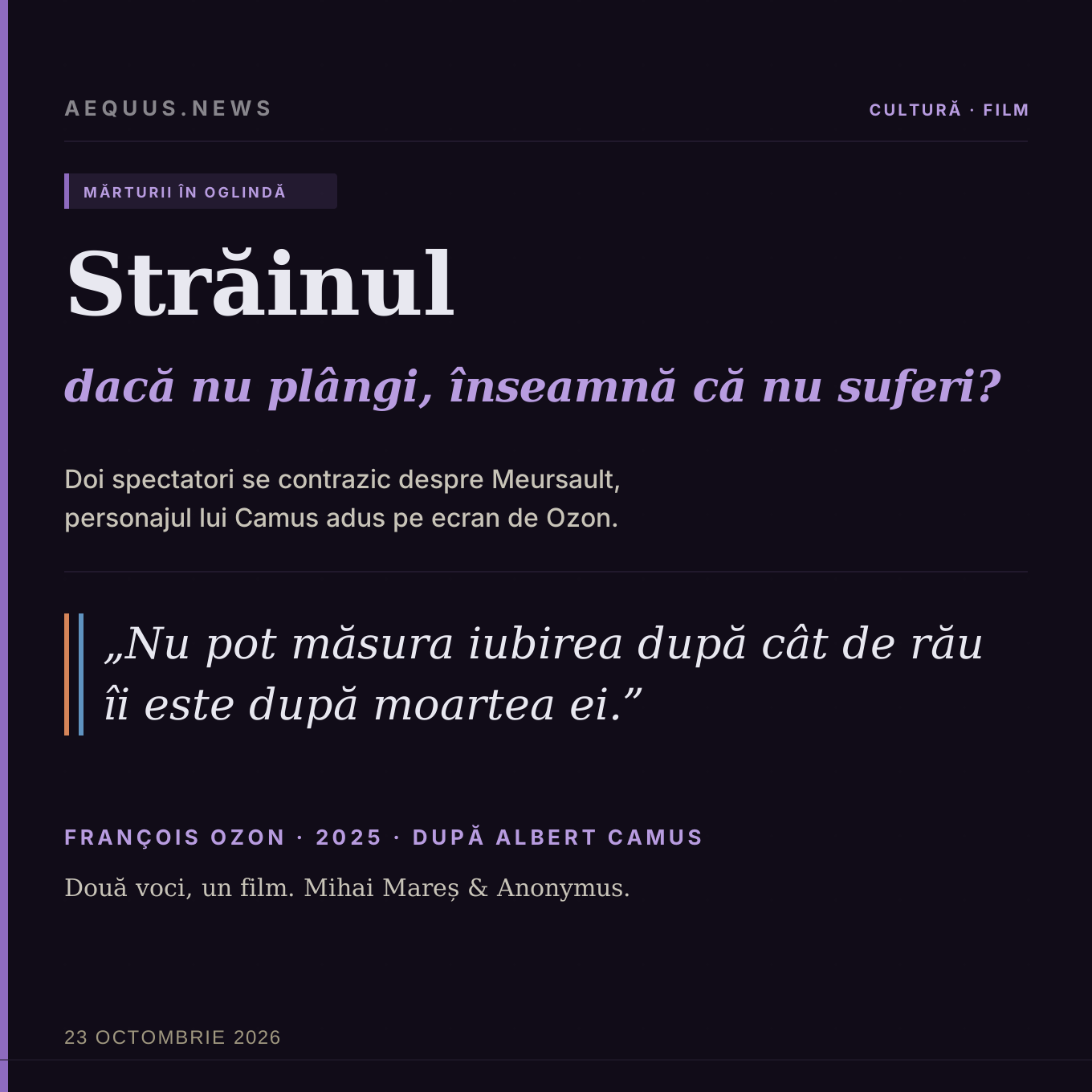
New column on aequus: Culture. Starting this evening, every Friday, a film review. The first: Ozon's Stranger, based on Camus, which is currently in theaters. Two spectators argue about Meursault: if you don’t cry at your mother’s funeral, does that mean you don’t grieve? And how much is sincerity worth when it hurts? https://aequus.news/articles/strainul-daca-nu-plangi.html (translated)

aequus.news
Străinul: dacă nu plângi, înseamnă că nu suferi?
918
Digi24 2w

The new Minister of Education, Sorin Costreie, will discuss this evening on Digi24 about security measures for students and managing online radicalization, following the recent attack at the school in Bistrița. #Educație #Securitate #Radicalizare (translated)

www.digi24.ro
Noul ministru al Educației, Sorin Costreie, vine la Jurnalul de Seară
2761
Nae Moromete® 2w

Nae Moromete published Kristela Georgescu's explanations after he described the situation at Gândul as a scandal, where, according to him, the interview had been censored and could only be accessed for a fee. Georgescu stated that she had accepted the invitation to "Marius Tucă Show" in good faith and that she had not been informed about any financial or audience-related conditions. She specified that no financial agreement had been made for her participation, and that the team that invited her had not communicated to her, before, during, or after the show, any financial conditions regarding the broadcast of the dialogue. She claimed that she learned about the suspension of broadcasting and the limitation of access to subscribers only when she was leaving the editorial office, from the team accompanying her. Georgescu also mentioned that the difficult situation her family was going through should not be exploited for gaining benefits. In a message dated October 20, 2026, she thanked her supporters for the trust and affection shown over the last two years and urged them to be good, dignified, decent, and faithful. She added that she did not know where history was heading, but believed that people who remained united with each other and with God would be on her good side. #libertateapresei #transparență #scandal (translated)

2991
𝙈𝘼𝙍𝘾𝙊 2w

Marco wrote that, on the 22nd night, Romanians were waiting for an interview with Călin Georgescu's wife, but viewers needed a subscription to watch the continuation. According to him, Gândul had interrupted the live broadcast and had left only part of the show free, although the interview was awaited by thousands of people. He criticized those he accused of making money from patriotism and from supporting people. Marco also said that, for the 22nd consecutive night, Romanians had gathered in front of the Central Detention Facility to demand Călin Georgescu's release and that people had stayed there despite the rain, wind, and cold. #Romania #Solidaritate #Protest (translated)

3684
HotNews.ro 2w

Luca Niculescu, the new Prime Minister of Romania, emphasized, after obtaining the vote of confidence in Parliament, the importance of forming a responsible government that will immediately address the costs of the crisis felt by Romanians, announcing the first government meeting that same evening. #GuvernNiculescu #România #Politică (translated)

hotnews.ro
Mesajul lui Luca Niculescu înaintea primei ședințe de guvern. Ce spune despre costurile resimțite din plin de români
3454
Digi24 2w

Prime Minister Luca Niculescu stated that Romania is coming out of a six-month political crisis and that the new Executive will immediately start its activities, with the first government meeting scheduled for that same evening. #LucaNiculescu #crizăpolitică #guvernare (translated)

www.digi24.ro
Prima declarație a premierului Luca Niculescu după votul de învestitură: „Ieșim din șase luni de criză. România nu mai poate aștepta”
3454
HotNews.ro 2w

Prime Minister Luca Niculescu stated that Romania enters a new stage after the vote of confidence received in Parliament, thanking various parties for their support and announcing the organization of the first government meeting that same evening. #LucaNiculescu #GuvernulRomaniei #VotParlamentar (translated)

hotnews.ro
Primul mesaj al premierului Luca Niculescu, după votul din Parlament
3454
adevarul.ro 2w

The government led by Luca Niculescu will take its oath on Tuesday evening, and the first meeting is scheduled after the investiture vote in Parliament. #LucaNiculescu #Guvernul #InvestireGuvern (translated)

adevarul.ro
Guvernul Luca Niculescu și-a programat deja prima ședință înainte de votul din Parlament. Când ar depune miniștrii jurământul
3225
Stirile ProTV 2w

The swearing-in ceremony for the ministers and the first meeting of the Niculescu Government have been scheduled for Tuesday evening, ahead of the vote of investiture in Parliament, planned after 2:00 PM. #Guvern #LucaNiculescu #Jurământ (translated)

stirileprotv.ro
Programul a fost stabilit înaintea votului pentru Guvern. Jurământul miniștrilor și prima ședință, marți seară | SURSE
3110
𝙈𝘼𝙍𝘾𝙊 2w

Marco wrote that Romanians had gathered for the 21st consecutive night in front of the Central Detention Center in support of Călin Georgescu. He said that the rain, cold, and unfavorable weather had not discouraged them and that the participants had chanted messages of support for Georgescu and calls for unity against the thieves. https://t.co/orVi0KsMRg #Romania #Presedinte #Proteste (translated)

3572
Digi24 2w

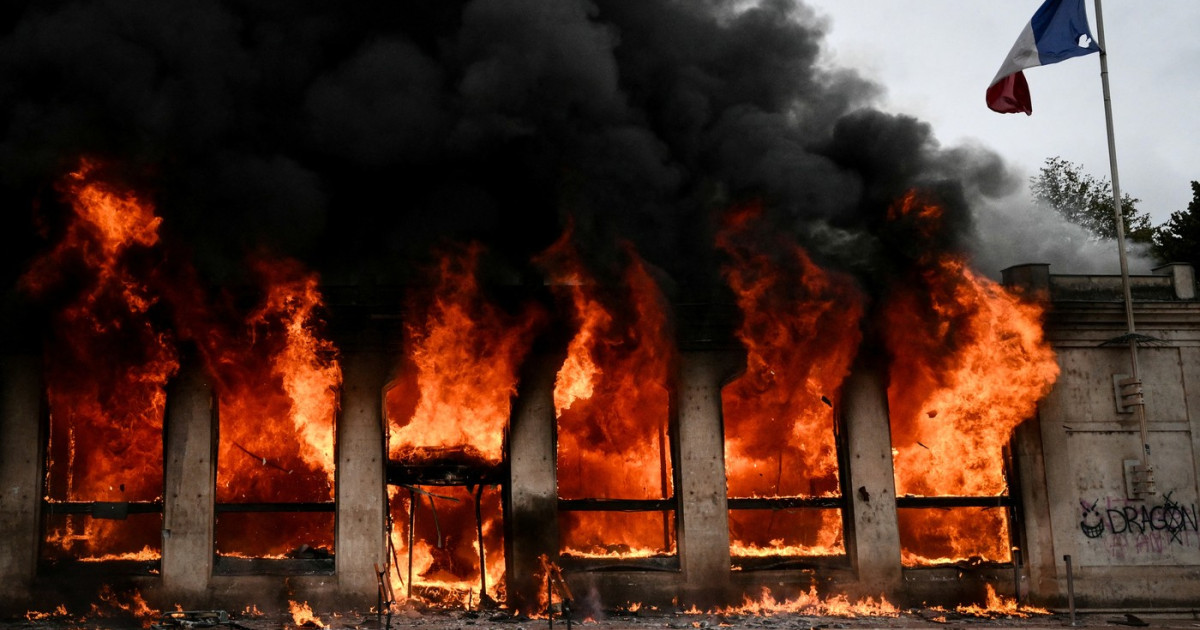
The first traffic restrictions in France, imposed following the violent protests over the weekend, will come into effect on Monday evening and will apply in four localities in the Nord department. #ProtesteFranta #RestrictiiCirculatie #SecuritatePublica (translated)

www.digi24.ro
Primele restricții de circulație după protestele violente din weekend din Franța intră în vigoare luni seara
2766
Laurent Nuñez 2w
French official and politician

"We will further strengthen the numbers of police and gendarmerie on the ground, especially this weekend." The Minister of the Interior, Laurent Nunez, also stated at the same press conference that there are no plans to cancel the football match on Tuesday evening between Paris Saint-Germain and Barcelona. #ProtesteFranceze #ViolentaStradala #RestrictiiDeCirculatie (translated)

„Restricții de circulație” în orașele Franței anunțate de șeful guvernului după revoltele de sâmbătă. Cum răspund protestatarii
hotnews.ro
2766
Sébastien Lecornu 2w
Prime Minister of France since 2025

There is a whole network that could be mobilized even to contest the schedule of the presidential elections and their conduct itself. French Prime Minister Sebastien Lecornu announced that he asked the prefects to "trigger" on Monday evening a "series of traffic restrictions," which will be "partial" and "localized," mainly to protect stores, following a weekend marked by scenes of chaos in several cities in France, AFP reports. #Franta #proteste #sebatienlecornu (translated)

Franța impune restricții de circulație după protestele violente din weekend. Anunțul premierului Sebastien Lecornu
www.digi24.ro
2651
Laurent Nuñez 2w
French official and politician

The Minister of the Interior, Laurent Nunez, also stated during the same press conference that there are no plans to cancel the football match on Tuesday evening between Paris Saint-Germain and Barcelona. #Franța #proteste #restricțiidecirculație (translated)

Franța ar putea impune restricții de circulație după protestele violente. Prim-ministrul nu exclude starea de urgență
stirileprotv.ro
2651
Sébastien Lecornu 2w
Prime Minister of France since 2025

These restrictions must be local and partial. It is out of the question for all of Paris to be subject to traffic restrictions. French Prime Minister Sebastien Lecornu stated on Monday that he has requested local authorities to impose partial traffic restrictions this evening, following the violent protests that occurred across the country over the weekend. #Franța #proteste #restricțiidecirculație (translated)

Franța ar putea impune restricții de circulație după protestele violente. Prim-ministrul nu exclude starea de urgență
stirileprotv.ro
2651
President of Ukraine since 2019

"Once again, Russia launched a multiple wave ballistic missile attack overnight, and once again, there was no warning from our partners. Ukraine did not receive any warning from the U.S. regarding an imminent Russian missile attack on Sunday evening, said Volodymyr Zelensky, reigniting concerns that Washington is withholding information to intimidate Kyiv and force it to capitulate to Moscow." #Ucraina #Zelenski #Rusia (translated)

Zelenski afirmă că SUA nu a avertizat Ucraina cu privire la atacurile rusești asupra centralelor electrice de la Kiev
adevarul.ro
2767