BETA nonprofit public democratic european moderated

Search

#Serviços

Let's talk about Marcelo Freixo and coincidences that are not really coincidences? Freixo's wife is Antonia Soares Pellegrino. OK. Since 2005, she was a partner-manager of Doce Fúria Produções Artísticas Ltda. On March 6, 2023, the company was dissolved. Eight days later, on March 14, Jeferson Monteiro — the creator of Dilma Bolada — took a commissioned position at EBC (known as TV Lula), in the Content and Programming Directorate. The state-owned company itself stated that he would work with the future director: Antonia Pellegrino. Jeferson is a partner-manager of another company, opened in 2018. Trade name: Doce Fúria Comunicação Ltda. Almost the same sign. Different CNPJs and no apparent relation between them. Both Doce Fúria companies provided services for Lindbergh Farias's campaign for the Senate in 2018. Pellegrino's: R$ 141 thousand. Jeferson's: R$ 53 thousand. Together, R$ 194 thousand. Pellegrino's also provided for Boulos, Luciana Genro, and Fernanda Melchionna. Today, Pellegrino is the president of EBC, and Jeferson Monteiro acts as a special advisor and digital strategist for Eduardo Paes, the mayor of Rio de Janeiro (after being kicked from EBC for a trip to Europe). Eduardo Paes is an ally of Lula. Jeferson Monteiro is the key figure in the campaign against Flávio Bolsonaro regarding Our Lady. Did they connect the dots? (translated)
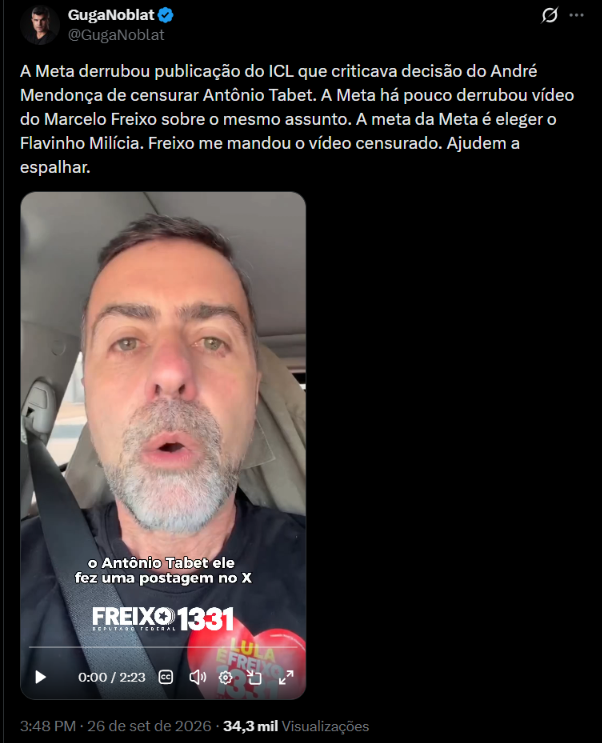

🚨🇧🇷 A SUMMARY OF BRAZIL: 1. Lula creates the blouse tax; 30 days before the election, he backtracks. 2. Lula goes four years without adjusting the Bolsa Família; 17 days before the election, he backtracks. 3. Lula regulates the Tigrinho; 9 days before the election, he backtracks. The three measures, announced just before the election, represent changes in policies adopted by the government itself. Meanwhile, other economic indicators continue to afflict Brazilian families: - Food prices continue to burden family budgets, despite the supposed official inflation rates released by IBGE. - Common gasoline recorded an average price of R$ 6.54 per liter, and S-10 diesel, R$ 7.13, in the week of September 13 to 19. - Gross debt reached 82.5% of GDP in July 2026, amounting to approximately R$ 10.9 trillion. - Brazil recorded the highest real interest rate among the 40 economies analyzed in September 2026. In nominal terms, it ranked fourth in the survey. - The CNI Industrial Survey indicated a drop in the investment intention index of Brazilian industry to 51.3 points in September 2026, the lowest level since August 2020. - The indebtedness of Brazilian families hit a new record in July: 82% of consumers reported having some type of debt due, the highest level since the beginning of the historical series by the National Confederation of Commerce of Goods, Services, and Tourism (CNC). - The Lula government adopted between 27 and 37 measures involving the creation, return, or increase of taxes. SHARE THE FACTS! (translated)

The bets have fallen. And Jones Manoel has been in this fight since the beginning! President Lula signed on Friday the Provisional Measure that prohibits bets and online casinos in Brazil. Jones has been pushing this point since before he was a candidate. Bets have been destroying Brazilian families in the name of billionaires' profits. In the first half of 2026 alone, betting houses earned R$ 20 billion. It's our money that could be circulating in trade, services, and the real economy. And those who gamble go into debt 40% more than those who don't, according to a survey by Sicredi. Studies indicate that betting may have reduced Brazilian economic activity by up to R$ 141 billion in 2025. An impact 5 times greater than Trump's tariff increase. Now comes the second part of the fight. The owners of this million-dollar business will pressure to overturn or weaken this measure. To defend this achievement, we need people in Congress who are not committed to bankers, betting houses, or any sector that profits from the indebtedness of the working class. For federal deputy from Pernambuco, vote Jones Manoel, 5050! (translated)

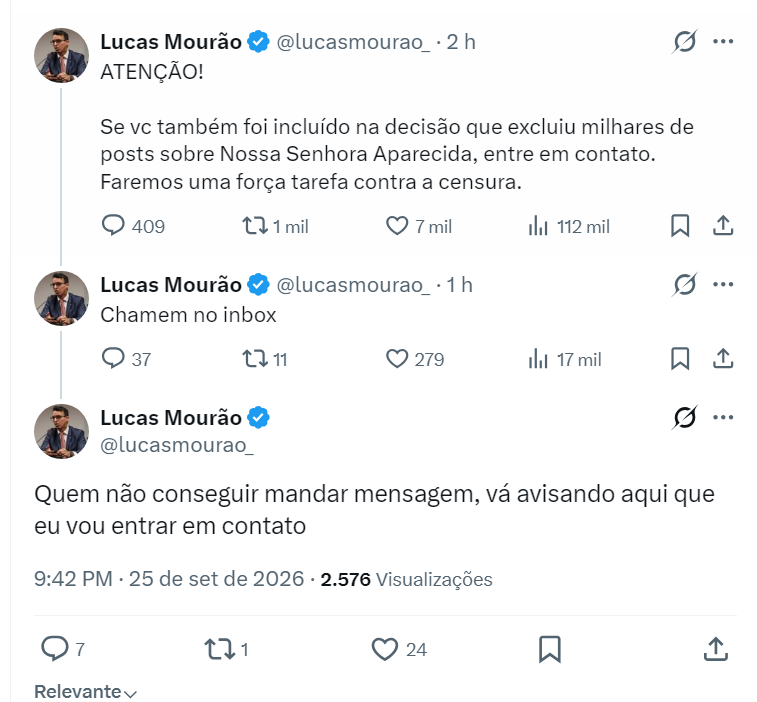
The lawyer posts a fake, induces countless people to post the same fake that he did, and then offers legal services to those who were sued because of the fake he helped spread. (translated)

The head of the Egyptian intelligence services warned Israel about a possible Hamas attack on October 7, emphasizing that if there were no concessions, Gaza would explode in their faces. (translated)

Chefe das secretas egipcías avisou Israel sobre 7 de outubro

Vladimir Putin stated that Russia is not preparing to go to war with Europe and sees no real reasons for an escalation of the situation between the two, despite concerns expressed by European and U.S. intelligence services. (translated)

Vladimir Putin promete não entrar em guerra com a Europa

Brazil spent years discussing how to regulate sports betting. Congress approved it, the government regulated it, companies paid to operate legally in the country, made investments, and began to comply with rules for supervision, taxation, and consumer protection. One cannot create a rule, get companies and institutions to commit based on it, and then overnight change the entire regulatory framework. No regulation is untouchable. If there are problems, the rules need to be improved. If they need to be stricter, let them be. Those who violate the law should be punished. But there is a fundamental difference between improving regulation and simply dismantling it. This is a matter of legal certainty. And legal certainty is not only of interest to betting companies. It matters to anyone, company, or institution that invests, contracts, and makes long-term plans in Brazil trusting in the rules established by the state itself. The change heavily impacts Brazilian sports. A decision of this magnitude affects professional football, youth categories, women's football, Olympic sports, and championships. Brazilian sports cannot be analyzed solely from the financial reality of the highest-earning clubs. And it is not just the clubs that are affected; it is a chain that receives an immediate impact: direct and indirect jobs, communication, marketing, and technology companies, suppliers, arenas, service providers, and an entire economic chain. It also affects public revenue. The regulated market generates resources through taxes and allocations provided by law, which reach the public coffers and are directed to areas of societal interest. Weaken the legal market can produce a particularly bad combination: less resources for sports and less revenue for the country. And will the Brazilian be better protected? This may be one of the central questions of this discussion. Prohibiting companies that operate legally does not mean ending betting. The game does not disappear, and the underground market, which represents a significant portion of the activity, will grow and occupy this space. A survey by the Locomotiva Institute, conducted in May 2026 across the country with 2,291 bettors, indicates the relevant presence of practices associated with the illegal market. A study by LCA Consultores, based on this research, estimates that between 38% and 44% of the value bet online in Brazil currently occurs on clandestine platforms. There is one particularly important piece of data: the estimated share of the illegal market decreased after regulation, moving from the range of 41% to 51% in 2025 to 38% to 44% in the first half of 2026. The game will not end with a stroke of a pen. What ends is the part that Brazil can regulate, supervise, tax, and hold accountable. And the result may be less security for investors, fewer resources for sports and the country, and less capacity for oversight of the activity. Brazil needs to combat illegal gambling. It needs to protect its population. But it also needs to preserve legal certainty, investment capacity, and the sustainability of its sports institutions. Brazilian sports cannot be weakened by a decision that does not eliminate gambling, does not eliminate the illegal market, and still puts at risk the investments, jobs, and commitments built within the rules that the country itself established. (translated)

🚨 NOW! Official statement from Flamengo: "Brazil spent years discussing how to regulate sports betting. Congress approved it, the government regulated it, companies paid to operate legally in the country, made investments, and began to comply with oversight, taxation, and consumer protection rules. One cannot create a rule, lead companies and institutions to make commitments based on it, and then, overnight, change the entire regulatory framework. No regulation is untouchable. If there are problems, the rules need to be improved. If they need to be stricter, then let them be. Those who violate the law must be punished. But there is a fundamental difference between improving regulation and simply dismantling it. This is a matter of legal certainty. And legal certainty is not only of interest to betting companies. It matters to anyone, company, or institution that invests, contracts, and makes long-term plans in Brazil relying on the rules established by the State itself. The change hits Brazilian sports hard. A decision of this magnitude affects professional football, the youth categories, women's football, Olympic sports, and championships. Brazilian sport cannot be analyzed solely based on the financial reality of the highest-revenue clubs. It is not just the clubs that are affected; it is a chain that receives an immediate impact: direct and indirect jobs, communication, marketing and technology companies, suppliers, arenas, service providers, and an entire economic chain. It also affects public revenue. The regulated market generates resources through taxes and legal allocations, which reach public coffers and are directed to areas of interest to society. Weakening the legal market can produce an especially bad combination: fewer resources for sports and less revenue for the country. And will the Brazilian be more protected? This may be one of the central questions of this discussion. Prohibiting legally operating companies does not mean ending betting. The game does not disappear, and the clandestine market, which represents a significant portion of the activity, will grow and occupy that space. Research from Instituto Locomotiva, conducted in May 2026 nationwide with 2,291 bettors, points to the relevant presence of practices associated with the illegal market. A study by LCA Consultores, based on this research, estimates that between 38% and 44% of the online betting value in Brazil currently takes place on clandestine platforms. There is a particularly important data point: the estimated participation of the illegal market decreased after regulation, dropping from that range of 41% to 51% in 2025 to 38% to 44% in the first half of 2026. The game will not end with a stroke of a pen. What ends is the part that Brazil can regulate, oversee, tax, and hold accountable. And the result may be less security for investors, fewer resources for sports and the country, and less oversight capacity over the activity. Brazil needs to combat illegal gambling. It needs to protect its population. But it also needs to preserve legal certainty, investment capacity, and the sustainability of its sports institutions. Brazilian sports cannot be weakened by a decision that does not eliminate gambling, does not eliminate the illegal market, and still puts at risk the investments, jobs, and commitments built within the rules that the country itself established." 🗞️ @simpraisa (translated)

Official note from Flamengo: Brazil spent years discussing how to regulate sports betting. Congress approved it, the government regulated it, companies paid to operate legally in the country, made investments, and began to comply with oversight, taxation, and consumer protection rules. One cannot create a rule, lead companies and institutions to commit based on it, and then, overnight, change the entire regulatory framework. No regulation is untouchable. If there are problems, the rules need to be improved. If they need to be stricter, then let them be. Those who violate the law should be punished. But there is a fundamental difference between improving regulation and simply dismantling it. This is a matter of legal security. And legal security is not only of interest to betting companies. It is of interest to anyone, company, or institution that invests, contracts, and makes long-term plans in Brazil, trusting the rules established by the State itself. The change strikes at the heart of Brazilian sports. A decision of this magnitude affects professional football, youth categories, women's football, Olympic sports, and championships. Brazilian sports cannot be analyzed solely from the financial reality of the clubs with the highest revenue. And it is not only the clubs that are affected; it is a chain that receives an immediate impact: direct and indirect jobs, communication, marketing and technology companies, suppliers, arenas, service providers, and an entire economic chain. It also impacts public revenue. The regulated market generates resources through taxes and allocations provided by law, which go to public coffers and are allocated to areas of societal interest. Weakening the legal market could produce a particularly bad combination: less funding for sports and less revenue for the country. And will Brazilians be better protected? This may be one of the central questions of this discussion. Prohibiting companies that operate legally does not mean ending betting. The game does not disappear, and the underground market, which represents a significant portion of the activity, will grow and fill that space. A survey by the Locomotiva Institute, conducted in May 2026 across the country with 2,291 bettors, points to a significant presence of practices associated with the illegal market. A study by LCA Consultores, based on this research, estimates that between 38% and 44% of the value bet online in Brazil currently occurs on clandestine platforms. There is one particularly important piece of data: the estimated share of the illegal market fell after regulation, moving from the range of 41% to 51% in 2025 to 38% to 44% in the first half of 2026. The game will not end with a stroke of a pen. What will end is the part of the activity that Brazil can regulate, oversee, tax, and hold accountable. The result may be less security for investors, fewer resources for sports and for the country, and less oversight capacity over the activity. Brazil needs to combat illegal gambling. It needs to protect its population. But it also needs to preserve legal security, investment capacity, and the sustainability of its sports institutions. Brazilian sports cannot be weakened by a decision that does not eliminate gambling, does not eliminate the illegal market, and still jeopardizes investments, jobs, and commitments built within the rules established by the country itself. (translated)

The U.S. intelligence services warn of the risk of Russian drone attacks in Europe, including Portugal, and Lieutenant General Marcos Ronha discusses the credibility of this threat and possible defense strategies for the country. (translated)

E se a Rússia atacar Portugal?
E

In a joint interview with the television channels TF1 and France 2, Emmanuel Macron said that the French secret services did not receive any warning from the American agency. (translated)

3h. Macron nega alerta da CIA sobre ataque russo com drones
observador.pt
E

In a joint interview with the television channels TF1 and France 2, Emmanuel Macron said that the French secret services had received no warning from the American agency. (translated)

As notícias das 4h
observador.pt

Before the Polish Parliament, Donald Tusk stated that he was aware of reports from intelligence services indicating a Russian plan to launch drones and missiles against countries that support Ukraine. (translated)

6 respostas sobre o plano russo para atacar no Mediterrâneo
observador.pt
E

We can deny this information. The CIA did not inform the French services about such an attack, and the Italian Minister of Defense did not either. Therefore, in a joint interview with the television channels TF1 and France 2, Emmanuel Macron stated that the French intelligence services did not receive any warning from the American agency. (translated)

1h. Dominado incêndio em Ourique. Fogo em Odemira preocupa
observador.pt

It would be appropriate for @reinaldoazevedo to explain in advance whether or not there are conversations on Daniel Vorcaro's cell phone, where Walfrido Wardi offers the services of the "journalist" from Métropoles to spread narratives favorable to the corrupt banker. If there are, what should we call ladies who exchange favors for money? (translated)
Question for a little cheese: why do social benefits and public investment in services and housing count as a deficit, but purchases of weapons and war expenses do not? (translated)

Senator Flávio Bolsonaro flew on an aircraft owned by Daniel Vorcaro in January 2025 while returning from Florida to Brasília after a family trip. It is the same high-end executive jet, registration PP-NLR, that transported STF Minister Alexandre de Moraes in August of the same year, as revealed by the newspaper O Globo. [Comment from Noblat: Only in December 2025 Flávio was nominated by his father as a candidate for president of the Republic.] Piauí found out that the company Prime You, which then had Vorcaro as one of its partners, already owned one-third of the shares of the aircraft at the time of the flight. The acquisition was made at the end of 2024. Flávio's trip, a candidate for the Presidency by PL, was made with family: with his wife, dentist Fernanda Antunes Figueira Bolsonaro, and the couple's two daughters. Among the passengers was also friend Willer Tomaz, a lawyer and businessman who has been arrested in the JBS scandal (from which he was ultimately acquitted) and is under investigation in the scheme of billion-dollar misappropriations from INSS. Tomaz confirmed to Piauí that he owned one of the three shares of the plane. In addition to holding another of these shares, Prime You was also the operator of the jet, through Prime Aviation Táxi Aéreo e Serviços, which is part of its portfolio. According to information from the company itself, Prime You had Vorcaro as a partner from 2021 until September 2025. A report from the Federal Police shows that each of the shares of 33.33% was worth 5.5 million dollars in May 2025. At that time, the company was negotiating the transfer of the stake to the office of lawyer Viviane Barci de Moraes, wife of Alexandre de Moraes, which ultimately did not materialize. The newspaper O Globo was the outlet that revealed last week that the Federal Police found, during investigations into the frauds at INSS, records that Flávio and Tomaz traveled together from Fort Lauderdale to Brasília on January 19, 2025, the day before Donald Trump's inauguration. A report by Patrik Camporez informed that the group traveled on an aircraft operated by Prime You. Piauí identified that this plane is the Legacy 650 with registration PP-NLR, by cross-referencing historical air traffic records, an airport movement spreadsheet, and information from the Brazilian Aeronautical Registry - part of this data was available in the Organized Crime CPI. Historical air traffic records on the ADBS-Exchange site show that, on January 19, 2025, PP-NLR took off from Fort Lauderdale-Hollywood International Airport, crossed the Caribbean, and northern South America, and landed in Brasília. An airport movement spreadsheet confirms that PP-NLR arrived in Brasília from Fort Lauderdale that day. The date, origin, and destination match the flight of Flávio and Tomaz identified by the Federal Police and revealed by Globo. During their stop in Florida, Flávio and Willer stayed at the Hard Rock Hotel & Casino, where, according to the column by Lauro Jardim from Globo, they spent the night of January 18 to 19 before returning to Brazil. "There, Willer withdrew 236 thousand dollars in cash," wrote the columnist. Commenting on the news, Willer Tomaz stated that he stayed at the hotel for eight days, but denied gambling. This was one of several trips that Flávio Bolsonaro and Willer Tomaz took together, which also included a safari in South Africa two months later, in March 2025. In addition, the closeness between Flávio and Willer extends to the lawyer's properties. In August, as revealed by Piauí, Flávio Bolsonaro used an apartment that Tomaz's company had purchased in February from Fabiano Zettel, Vorcaro's brother-in-law and financial operator, at a discount of 2 million reais. (translated)

Did Vorcaro say that "the assets are his" in relation to Flávio? In other words, did Flávio receive 50 million from Vorcaro in acquisition shares of the private jet in exchange for a contract for legal services? Did Flávio receive the jet as payment for a bribe? No? Then you're going to have to work harder to try to make that equivalence, activist. (translated)

ATTENTION, VOTERS: the first round is on October 4th. The e-Título allows you to check your voting location and section, electoral situation, and other services. Those who have biometric registration and a photo in the app can use it as an identification document to vote. Download it now and keep it ready. (translated)

Pri 4d

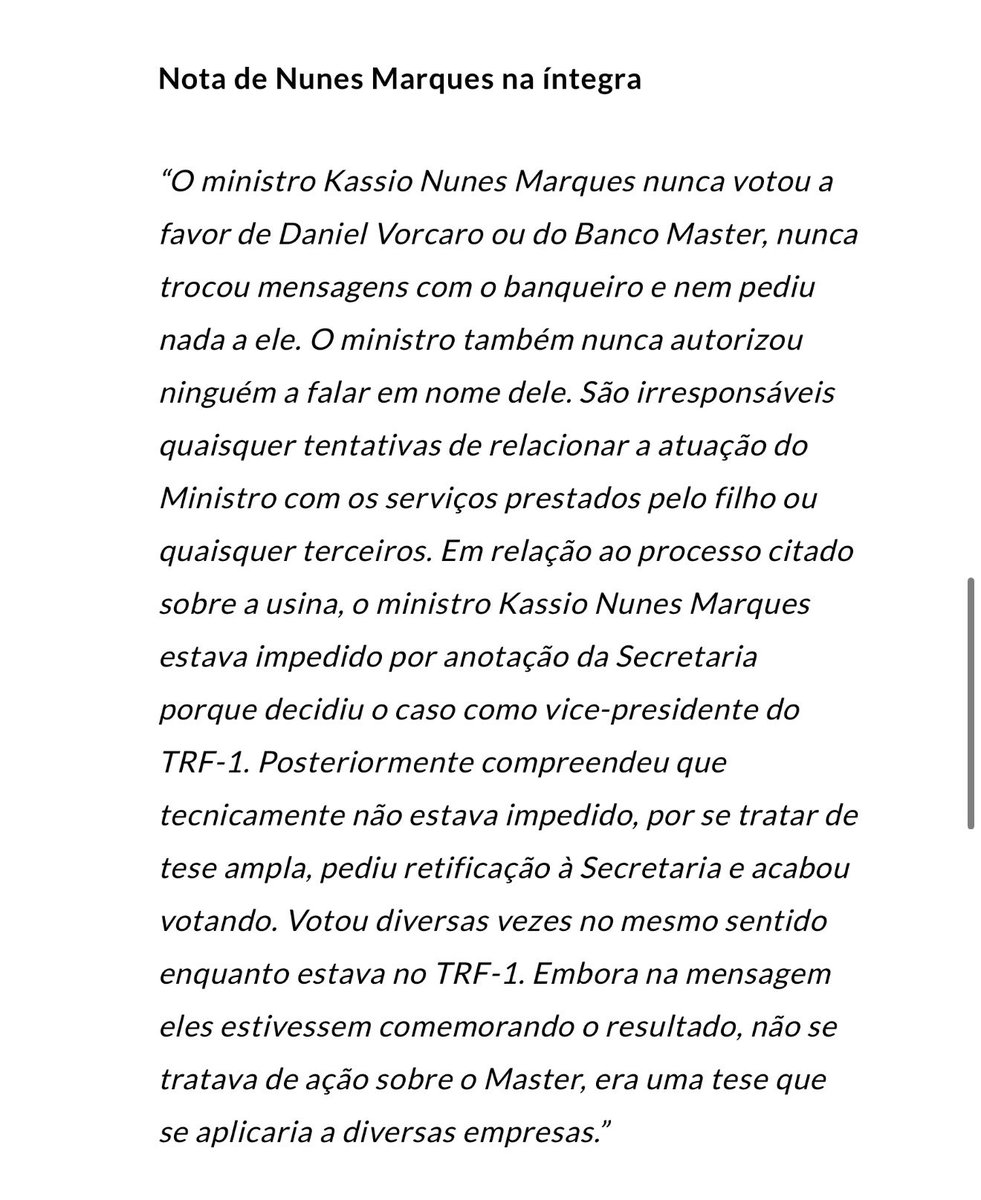
Nunes Marques decided to explain himself about Banco Master: he said that he never voted in favor of Vorcaro or the bank, never exchanged messages with him, and never asked for anything. He also denied any relationship with services provided by his son or by third parties. (translated)