BETA nonprofit public democratic european moderated

Search

#Singularity

V nakladatelství Prostor právě vychází zásadní dílo teoretika AI a futurologa Ray Kurzweila Na prahu Singularity. Je to povinná četba pro všechny, kdo se snaží zorientovat v současné diskusi o AI. O knize píšu v Deníku Referendum. https://t.co/pbOx82R0DH #RayKurzweil #ArtificialIntelligence #Singularity #CZ #US
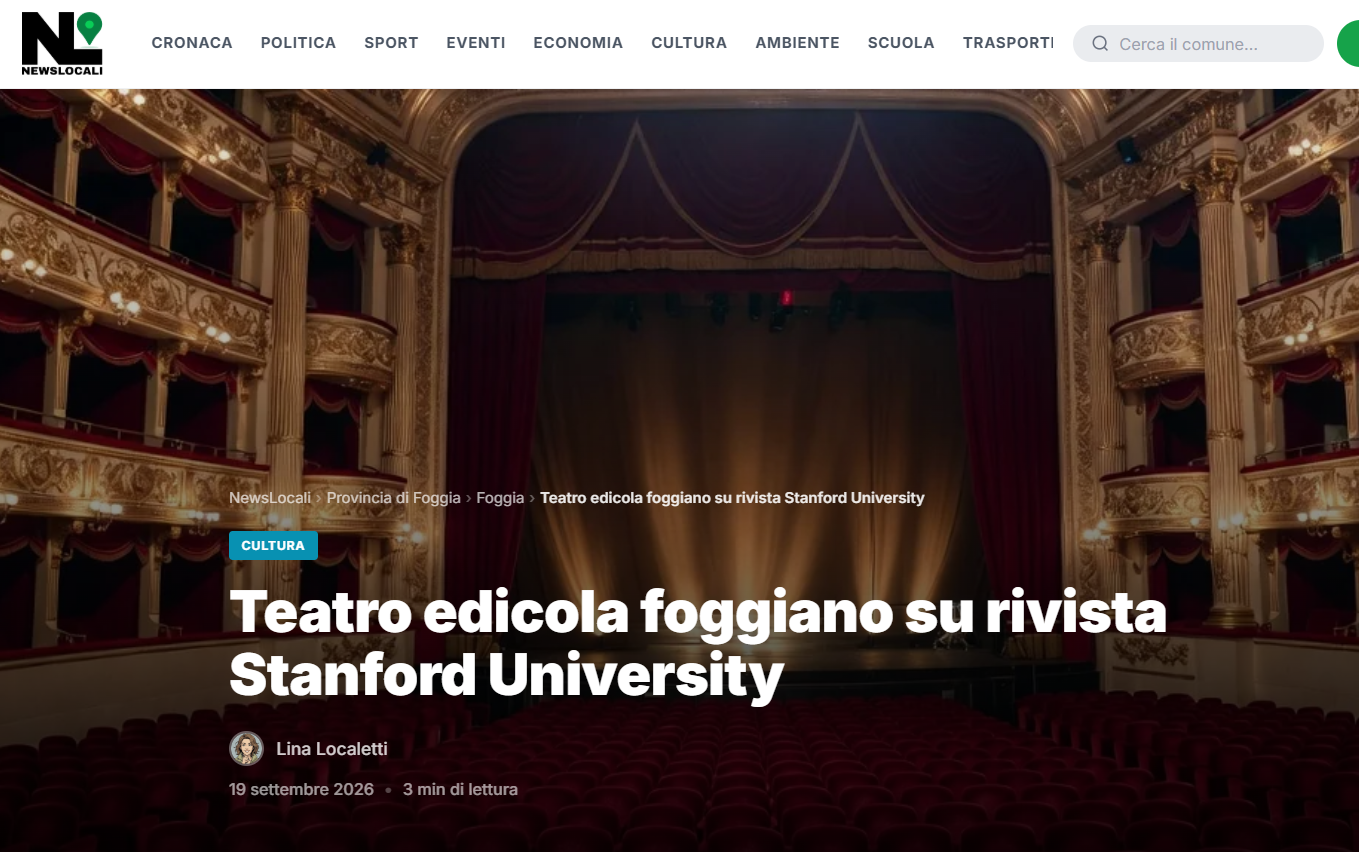
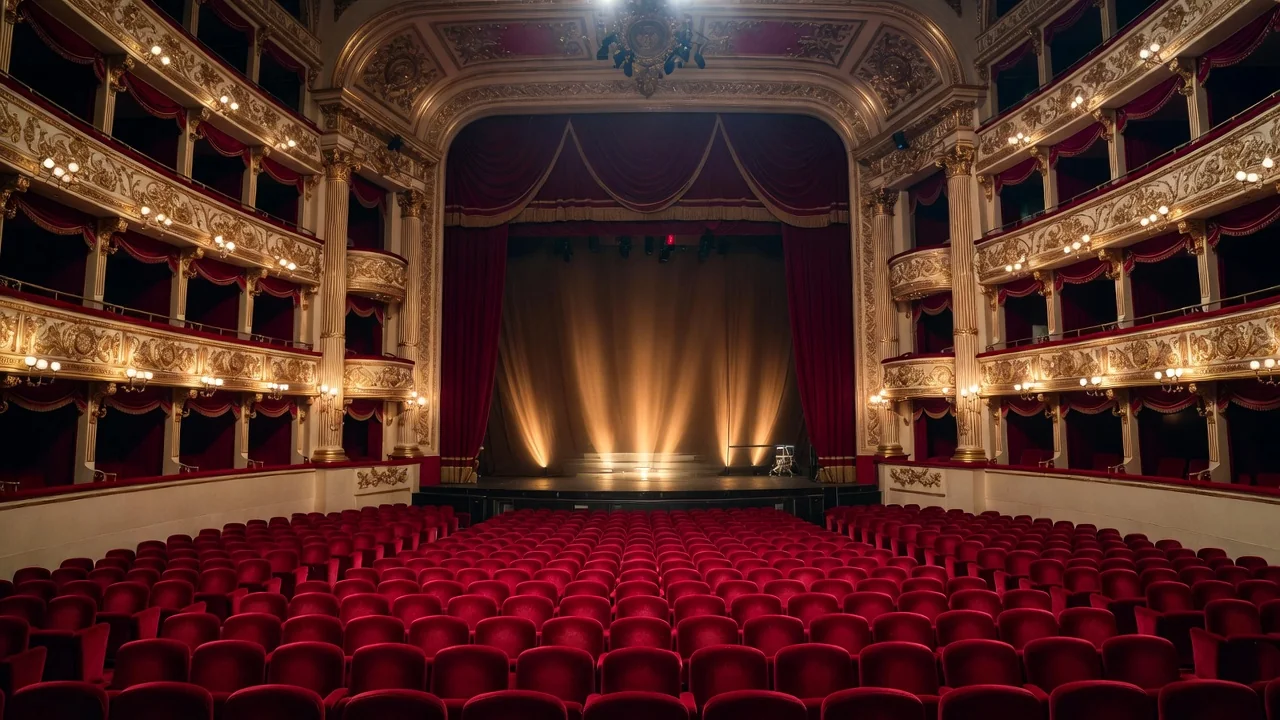
"LOCAL NEWS": FOGGIA-PROVINCE-BASED NEWSSTAND THEATRE IN A STANFORD UNIVERSITY REVIEW SOURCE: https://www.newslocali.it/foggia/teatro-edicola-foggiano-su-rivista-stanford-university SAN SEVERO (FG) - The 'smallest theatre in the world' in San Severo becomes an international case study. Its singularity has been chronicled in the prestigious journal of Stanford University, thereby commanding global attention. A diminutive theatre conquers Stanford University The innovative teatro edicola of San Severo, in the Province of Foggia, has attained an extraordinary milestone. This space, styled the 'smallest theatre in the world', is now the subject of academic study. Its history and operational model have been expounded in a publication of considerable international repute. The journal Stanford Social Innovation Review (SSIR), renowned for its much-lauded analyses of global solutions, has devoted attention to the initiative. The article, entitled "Six-Seat Revolution", was authored by the Foggian researcher Luciano Magaldi Sardella. Editorial supervision was entrusted to David V. Johnson. The piece appears in the 'Dispatches' section of the review. This publication constitutes a point of reference for social innovations and impact strategies. The success of the model and future prospects Francesco Gravino, artistic director of the theatrical company Foyer 97, has expressed profound satisfaction. "It is an achievement that rewards our labour," Gravino declared. The notion of transfiguring a disused site into a cultural centre has met with resounding success. The newsstand theatre model has generated requests for replication from sundry Italian cities. Amongst these, Lucca and Rome have evinced interest. The objective was to create a cultural enterprise within a derelict space. Gravino advocates for regional legislation that would facilitate the reconversion of disused areas. These might become veritable 'cultural outposts' for communities. The Foyer 97 company is already labouring upon its forthcoming programme. The coming year shall mark a significant anniversary for the company. It shall indeed celebrate 30 years of activity. This milestone shall be commemorated with sundry novelties. A success with public and critics alike The newsstand theatre is distinguished by its diminutive dimensions. It comprises but six chairs and occupies less than two square metres. Notwithstanding its limited space, performances are reprised every 15 minutes. This frequency ensures a substantial influx of spectators, with consistently sold-out houses. The experiment has captured the interest of young and old alike. It has also aroused curiosity within the world of entertainment. A significant episode occurred between late July and early August. During a stop of his tour in Lucera, the singer Biagio Antonacci paid a surprise visit. Antonacci paused at the newsstand theatre and performed his song 'Iris'. "It was truly a most beautiful encounter," Gravino remarked. The event captivated the attention of passers-by, demonstrating the capacity of the diminutive theatre to engender memorable moments. Questions and Answers What is the newsstand theatre of San Severo? The newsstand theatre of San Severo is a cultural space of exceedingly reduced dimensions, defined as 'the smallest theatre in the world'. It affords a mere six seats and offers continuous reprises of performances. Why was the newsstand theatre published in the Stanford University journal? The newsstand theatre was the subject of a study published in the Stanford Social Innovation Review by virtue of its innovative model for reconverting disused spaces into successful cultural centres. The article The Six-Seat Revolution analyses its uniqueness and its impact.

Teatro edicola foggiano su rivista Stanford University

Day by day, the storyline of Submachine Comic Book becomes more relevant to what's happening with AI nowadays... I just hope I'll make it in time before the Singularity, or before the AI bubble pops. :D https://t.co/M2P27evEcx #Submachine #AI #Singularity #Nospecificcountrycodescanbeidentifiedinthetweetprovided.

Por si no entendéis qué significa esto, quiere decir que probablemente ya no hay que preguntarse cuándo se alcanzará la Singularidad, sino qué hacer ahora que ya se ha alcanzado. La IA es capaz ya de hacer cosas que no están al alcance de ningún matemático humano. #Singularity #InteligenciaArtificial #FuturoTecnológico #Nocountrycodescanbeidentifiedinthetweet.

Dangiuz 4w

My issue with the AI singularity, that will unavoidably happen, is that soon everything will be fakeable. The danger is not being fooled, but that nothing can be proven beyond reasonable doubt. If proof of something dies, everything is deniable and up for debate. Liar's dividend. https://t.co/dDoe4NuMkd #AISingularity #FakeNews #LiarsDividend #Therearenospecificcountriesmentionedinthetweet.

Denník N Aug 25

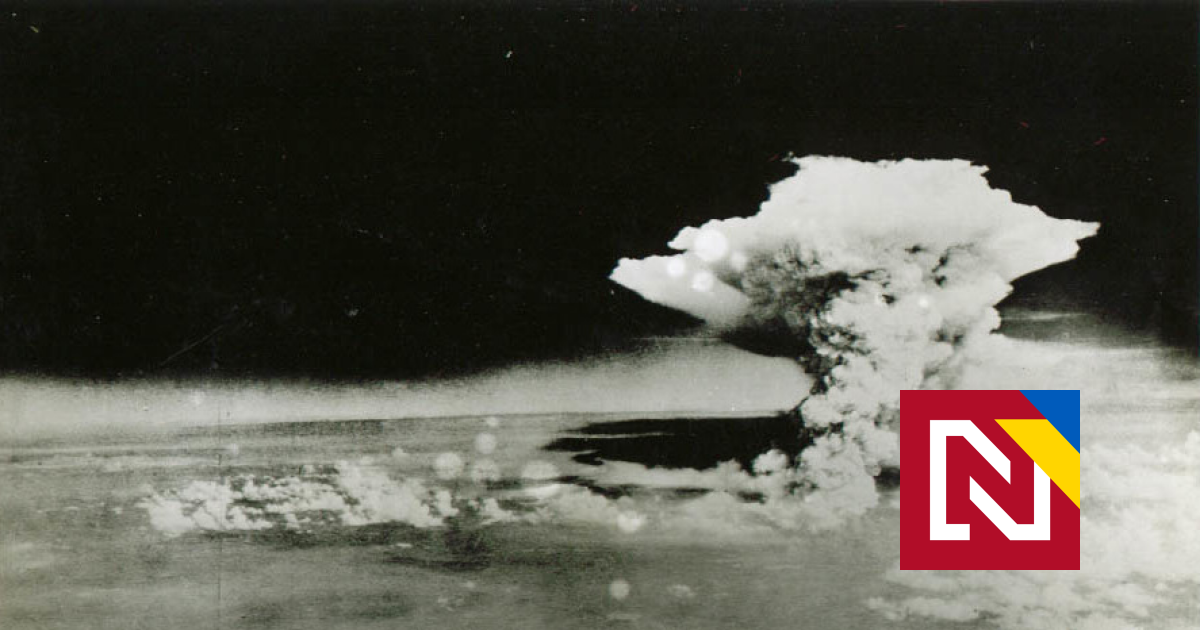
Článok diskutuje o blížiacom sa vývoji superinteligencie v oblasti umelej inteligencie, vyjadruje obavy z možných katastrofických scénarov a zvažuje, či jedna takáto udalosť by mohla prinútiť ľudstvo k väčšej opatrnosti a rozumu. #umeláinteligencia #singularity #technológie

Postačí jedna katastrofa spôsobená AI, aby sme prišli k rozumu?
Tom Nesky Aug 6

Metaphysics of the Solitary Absolute: Philosophical and Legal Analysis of the Thesis of Solitary Amorality ​The Thesis of Solitary Amorality, formulated by Tom Nesky under the banner of the Axiom of Relationality of Law and Being, constitutes a radical challenge to classical and contemporary normative theories. Its central premise—stating that law, morality, and the category of crime are not inherent properties of reality, but artificial products of social relations—requires a rigorous deconstruction at the intersection of legal positivism, phenomenological existentialism, ontological anarchism, and monistic metaphysics. This paper attempts a systematic analysis of the intellectual pillars of this thesis, examining its internal coherence, genealogical roots, and consequences for the understanding of freedom and human subjectivity. ​The Systemic Construction of Crime vs. Pure Theory of Law ​The first pillar of the Thesis of Solitary Amorality, designated as Nullum Crimen Sine Systema, posits that law does not discover pre-legal categories of evil, but brings them into existence through the very act of establishing a boundary of permissibility. This assertion exhibits a profound convergence with 20th-century legal positivism, particularly with Hans Kelsen's Pure Theory of Law (Reine Rechtslehre). Kelsen advocated for a methodological purification of legal science from ethical, sociological, and political elements, defining law as a normative system founded upon a hypothetical basic norm (Grundnorm). ​In the Kelsenian view, the legal system functions as a coercive apparatus devoid of inherent moral value. A crucial point of intersection with Nesky's thesis is the elimination of the traditional dualism between acts that are inherently evil (mala in se) and acts prohibited merely by law (mala prohibita). Kelsen argued that an act becomes unlawful solely when a legal norm attaches state-enforced coercion to it. Unlawfulness is not an ontological property of the act, but the result of a relationship of normative imputation. This implies that the law does not penalize an act because it is intrinsically evil; rather, an act is considered evil solely because it has been subjected to systemic penalization. ​This clash became prominent during the debates surrounding the Nuremberg trials, where positions based on natural law and legal positivism collided. While prosecutors such as Robert Jackson invoked universal moral norms (mala in se) as the basis for punishing criminals despite the previously binding positive law of the Third Reich, Kelsen pointed out the theoretical inconsistency of such an approach. He argued that judging on the basis of retroactive law (ex post facto) constitutes a breach in the systemic coherence of positivism, even if it might be justified by political and historical necessity. ​Nesky's project imparts an existential dimension of oppression to this structure, bringing it close to the critique of the state formulated by Friedrich Nietzsche. Nietzsche famously described the state as "the coldest of all cold monsters," which devours the individual's singularity and imposes herd morality upon them. The gaze of the state, mediated through the Other, paralyzes the sovereignty of the individual and forces them to navigate within arbitrarily designated normative boundaries. Every stroke drawn across the chaos of reality establishes a boundary, and every boundary instantly creates the concept of its transgression. ​The Paradox of the Systemic Cage and the Limits of Ontological Anarchism ​The second pillar of the thesis—The Paradox of the Systemic Cage—points to the impossibility of escaping the system through rules alone. Every attempt to negate the existing order, from establishing anarchist structures to escaping into geographical isolation, immediately transforms into a new system whose primary imperative becomes the defense and maintenance of that very absence of rules. This process of structural looping finds its reflection in the current of ontological anarchism formulated by Hakim Bey (pseudonym of Peter Lamborn Wilson). ​Bey, drawing on a synthesis of Nietzscheanism, Situationist theory of the spectacle, and chaos esotericism, recognized that classical revolutions striving to overthrow the state inevitably reproduce structures of domination, becoming new forms of confinement. As an alternative, he proposed the concept of the Temporary Autonomous Zone (TAZ). TAZ is a tactic for creating temporary, non-hierarchical spaces that deliberately evade formal structures of state control. The key element of TAZ is its ephemerality: before the system can map, define, and absorb the autonomous zone, it must dissolve itself and relocate to another point in space-time. ​Attempts to transform TAZ into Permanent Autonomous Zones (PAZ) immediately encounter the paradox noted by Nesky. The need to defend and codify freedom within a lasting community gives rise to internal rules, mechanisms of exclusion, and hierarchy. For this reason, Murray Bookchin criticized ontological anarchism (calling it "lifestyle anarchism" or "bourgeois anarchism") for its lack of political realism and its flight from systemic struggle against capital and state in favor of aesthetic rebellion. The convergence of these perspectives demonstrates that freedom defined as reactive resistance to a system remains structurally determined by it. ​The Dissolution of the Relational Mirror: The Existential Gaze and the Collapse of Morality ​The third pillar of the thesis, designated as The Dissolution of the Mirror (L'Autre), posits that good and evil require the presence of an external witness and judge. This assertion represents a direct application of Jean-Paul Sartre's existential phenomenology, particularly his analysis of the Gaze (le look / le regard) and the relation to the Other (l'Autre) presented in Being and Nothingness. ​Sartre illustrates the constitutive role of the Other through an analysis of the voyeur's situation. At the moment of complete absorption in the act of peeping through a keyhole, the subject's consciousness is pre-reflective—the voyeur does not reflect on himself; his consciousness completely merges with the act being performed. Only the sudden sound of footsteps in the hallway shatters this unity. The voyeur realizes that he himself is seen, and is instantly paralyzed by shame. ​For Sartre, shame is not a purely internal emotion; it is shame of oneself before the Other. The Gaze of the Other objectifies the free subject (being-for-itself—pour-soi), freezing them into a specific role and moral evaluation (being-for-others—pour-autrui). As Ellie Anderson points out, Descartes' formula "I think, therefore I am" is replaced in Sartre by "I feel shame, therefore Others exist." The Gaze of the Other marks the birth of social morality, wherein the individual learns to view themselves from a third-person perspective. ​This existential dynamic corresponds to the Nietzschean genealogy of "bad conscience." Nietzsche demonstrates that morality and guilt are products of the forced internalization of human instincts that could no longer be discharged outwardly due to social barriers. Forced into the constraints of society, man turns against himself, creating an internal judge (conscience) modeled on the external tyrant. ​This vision also resonates with the classical theory of Thomas Hobbes. In Leviathan, Hobbes explicitly declares that in the state of nature, where there is no common power, there is no law, and where there is no law, no notion of injustice exists. Concepts of good, evil, justice, and property are attributes of man living in society, not in solitude. Removing the social fabric reverts the individual to a state in which theft and injury lose their raison d'être due to the absence of relational reference to the Other. #philosophy # metaphysics # thesis # morality

Demis Hassabis: Obecná umělá inteligence je teď na obzoru. Stane se tou nejvýznamnější technologií, jakou kdy člověk vynalezl. Pokud ji postavíme dobře, mohla by posunout pokrok a rozkvět lidstva za hranice naší představivosti. Ten pokrok je úžasně rychlý, i pro nás, kteří jsme vývoji AI zasvětili celý život, je to neuvěřitelné. Až se za touto dobou ohlédneme, myslím, že si uvědomíme, že jsme stáli na prahu singularity. Bude to hluboký okamžik pro lidstvo.

VTM.cz Apr 14

Nový fyzikální model kvadratické kvantové gravitace (QQG) navrhuje alternativní pohled na vznik vesmíru bez počáteční singularity, čímž nabízí ověřitelné hypotézy k detekci primordiálních gravitačních vln, což by mohlo revolučně změnit naše chápání raného kosmu. #gravitace #vesmir #kvantovafyzika

Nový fyzikální model vyvrací počáteční singularitu při Velkém třesku. Konečně dává smysl a půjde ověřit