European Union member states are increasingly discussing the possible appointment of a representative to negotiate with Russia on a peace agreement for Ukraine on behalf of Brussels, with an emphasis on Alexander Stubb, the President of Finland, as a potential candidate. #Ukrajina #Putin #EU (translated)
Finnish President Alexander Stubb emerges as a potential negotiator for Europe in proposing a peace agreement with Russia, as European governments seek a common representative who could speak with Vladimir Putin about security issues related to Ukraine. #AlexanderStubbs #Pregovori #Rusija (translated)

Europe is facing the challenge of selecting representatives for direct negotiations with Putin regarding a peace agreement for Ukraine, and the focus is on two possible candidates, among whom Finnish President Alexander Stubb stands out. #EU #Putin #miprovodništvo (translated)

European governments are considering the selection of a representative to negotiate with Russian President Putin, with Finnish President Alexander Stubb being one of the possible candidates. #Ukrajina #Putin #Evropa (translated)

Henri Vanhanen wrote that the discussions held in St. Petersburg once again demonstrated, in his opinion, the difficulty of negotiating with Russia. He reported that the Kremlin considered the proposals prepared in Oslo to be almost useless but simultaneously stated its willingness to continue negotiations and spoke about the approaching end of the war. Vanhanen described this as contradictory and believed Russia was holding its demands steady without revealing what it would be willing to compromise on. According to Vanhanen, Moscow sought to shift the discussion to the post-war European security order and the security guarantees that would be given to Russia. He regarded the guarantees as absurd because, according to him, Russia had started the largest offensive war in Europe in decades. Referring to previous Russian demands, he assessed that the guarantees could practically grant Moscow influence over which countries would join NATO and what kind of defense arrangements neighboring countries could make. He added that the U.S. President could not promise such things on behalf of other NATO countries or independent European states. Vanhanen argued that European security should not be built by giving an aggressor the right to dictate the defense of other countries. In his view, mutual arms control and the reduction of military risks could be negotiated, but Russia's demands for a sphere of influence should not be presented as security guarantees. He reported that Zelensky had announced Ukraine was ready to freeze the war at the current front lines. Vanhanen considered this a significant practical compromise and clarified that it did not, in his opinion, involve a legal cession of territories to Russia. He compared this to Russia's stance and wrote that Ukraine had indicated what it would accept, while Russia had stated what it would not accept. Vanhanen described the situation as revealing regarding Trump's negotiation tactics. He wrote that the United States had already loosened the pressure of sanctions on Russia and had agreed to diesel cooperation, but he assessed that there were no signs of similar political concessions from Moscow. According to him, the continuation of negotiations could benefit Russia by keeping Washington interested in economic cooperation, giving time to advance military objectives, and providing an opportunity to wait and see if Trump's impatience would again be directed toward Ukraine. Vanhanen asked how many times Trump would be willing to reward Putin for his willingness to negotiate without substantial changes in his actions. He considered the diplomatic work of Stub and Støre the previous day to be important because, in his opinion, they had restored the Americans, Ukrainians, and Europeans to a common preparation. However, he warned that a single successful negotiation day should not obscure the fact that Moscow's public demands remained unchanged. Vanhanen concluded by stating that in peace negotiations, what mattered was not the number of meetings with Putin but what he was willing to do to end the war. #Venäjä #neuvottelut #rauha (translated)
The author pointed out that the Oslo summit, attended by Zelensky, Stubb, Støre, and Witkoff, along with Witkoff's conversations with Putin, had generated some expectation that negotiations would resume to end the war in Ukraine. The message remained unfinished. #Ucrania #Guerra #Diplomacia #UA #NO #RU (translated)
The Ukrainian peace talks are progressing, and President Alexander Stubb will speak about their progress on MTV News' live broadcast at 2 PM. #UkrainanSota #AlexanderStubb #Uutiset (translated)
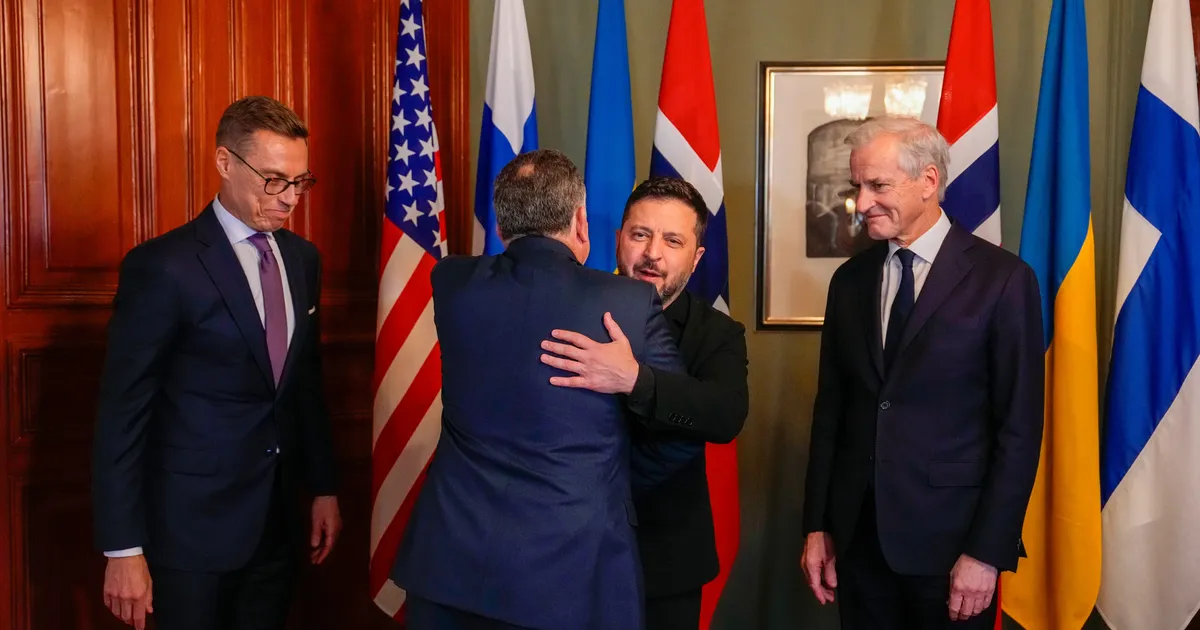
Ukrainian President Volodymyr Zelensky, Norwegian Prime Minister Jonas Gahr Støre, and Finnish President Alexander Stubbs announced that their meeting in Oslo with U.S. President's envoy Steve Uitkof was constructive. #Зеленский #Украина #Осло (translated)

In Oslo, Ukrainian President Volodymyr Zelensky, Finnish President Alexander Stubb, and Norwegian Prime Minister Jonas Gahr Støre met to discuss possibilities for achieving peace in Ukraine, with proposals to be presented to Putin. #Ukraina #Rahuleping #Oslos (translated)

During talks in Oslo, Finnish President Alexander Stubb announced that U.S. representative Steve Witkoff would present a peace agreement proposal in St. Petersburg, giving hope for an end to the Russian-Ukrainian war. #wojnarosyjskoukraińska #porozumieniepokojowe #pokój (translated)
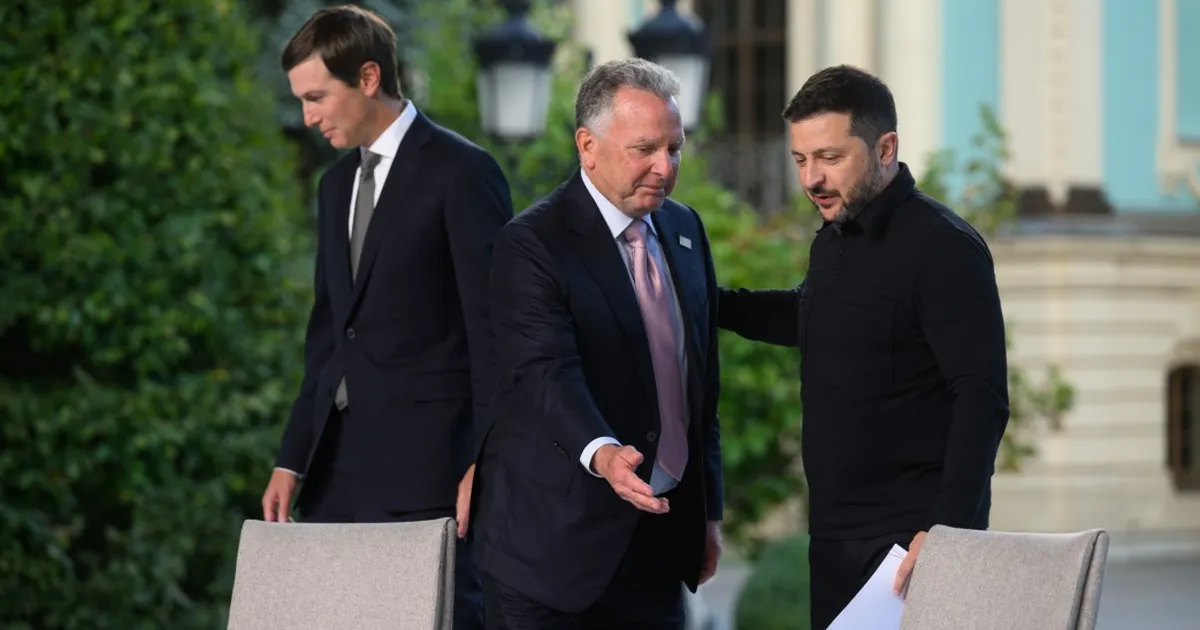
Henri Vanhanen wrote that in the negotiations held in Oslo, two main issues had been prepared according to him: the future of Ukraine, security guarantees, EU integration and reconstruction, as well as the conditions for ending the war and Europe’s future security order. He said the negotiations also concerned what would be required from Russia and how a possible ceasefire would be secured. Vanhanen assessed that Europe should bring its own goals and means to the discussions. According to him, Europe financed Ukraine's defense, made decisions regarding Russia sanctions, and would have to bear a large part of the peace security responsibilities. He wrote that Europe’s security should not be constructed according to the United States' election calendar, even though a quick agreement and a drop in energy prices would be valuable achievements for Trump before the midterms. Vanhanen highlighted the actions of President Alexander Stubb and Norwegian Prime Minister Jonas Gahr Støre. According to him, Ukraine specifically requested Finland and Norway to facilitate the discussions, and the leaders had established functional connections both to Ukraine and Trump’s administration. Vanhanen also mentioned that Witkoff and Kushner were involved and continuing discussions with Russia. Vanhanen considered Stubb's actions particularly commendable and said that Finland's participation and the opportunity to convey Europe’s security concerns to Trump’s inner circle were significant. He wrote that the negotiations were also about what kind of Russia Finland would have to live with in the coming decades. https://t.co/j2zyg51EJb #Ukraina #EuroopanTurvallisuus #Diplomatia (translated)
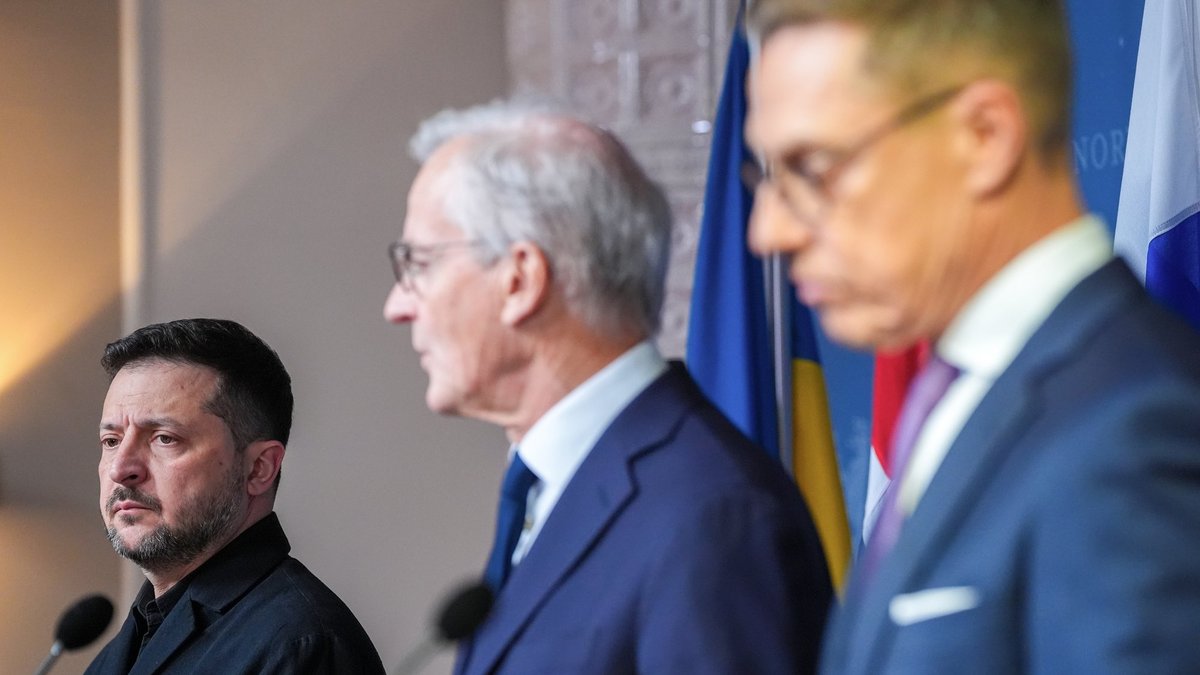
MTV News is following the negotiations in Oslo regarding Ukraine's fate, where Presidents Zelensky and Stubb, along with Norway's Prime Minister Støre, will hold a press conference today at 20:15 Finnish time. #Ukraina #Oslo #Zelenskyi (translated)
🇳🇴 🇺🇦President Zelenskyy: Arrived in Norway with my team. Important meetings are scheduled: a trilateral with Jonas Gahr Støre and Alex Stubb, a bilateral with Steve Witkoff, and a meeting of all four of us. I will also have an audience with King Haakon VIII of Norway and a meeting with the Storting.
The end of the Ukraine war is being discussed in Oslo, where President Volodymyr Zelensky, Finnish President Alexander Stubb, and Norwegian Prime Minister Jonas Gahr Støre focus on promoting the possibilities for diplomatic negotiations, but Estonia is not represented at the meeting. #Украина #дипломатия #Осло (translated)

Zelensky meets in Oslo with the US special envoy Witkoff and Finnish President Alexander Stubb while criticizing the insufficient warnings about large-scale Russian attacks. #Russland #Ukraine #Selenskyj (translated)

President of the Republic Alexander Stubb meets in Oslo with the President of Ukraine Volodymyr Zelensky and the Prime Minister of Norway Jonas Gahr Støre to discuss Russia's war of aggression in Ukraine and the security situation in Europe. #Ukraina #Zelenskyi #Oslo (translated)
President Alexander Stubb made it clear last September when Finland joined France's nuclear weapons initiative. #ydinaseet #Suomi #turvallisuuspolitiikka (translated)
Of course, we do not agree with the purchase of diesel from Russia by the United States, as diesel and oil are what drive and fuel the Russian war machinery. In the same vein, Finnish President Alexander Stubb expressed his disagreement with the decision of the U.S. president. "Of course, we do not agree with the purchase of diesel from Russia by the United States, as diesel and oil are what drive and fuel the Russian war machinery," Stubb pointed out. #Ucrania #Trump #UniónEuropea (translated)
"We really need to start changing the narrative around this war," President Alexander Stubb said in the spring, noting that Ukraine was performing better than Russia, in his view. #Ukraina #Venäjä #sota (translated)