BETA nonprofit public democratic european moderated

Search

#battery

VTT test lab confirms Donut solid state battery at 409.3 Wh/kg energy density. Energy density was one of the pin-point claims some loud skeptical voices were dead certain cannot be true. And a point the Chinese competitors tried to vigorously attack. Well. Measured and proven #SolidStateBattery #EnergyDensity #Innovation #CN

The US has reportedly struck to a missile battery in Arak Island with two dead and two injured. Here we go again. #USStrike #ArakIsland #BreakingNews #US #IR

H

BREAKING/EXCLUSIVE: DHS tells @FoxNews that ICE has quietly carried out one of its most successful operations in agency history, resulting in the arrests of 1,328 illegal aliens in just a 14-day span in the states of Virginia & Maryland. Nearly 400 of the aliens had criminal convictions or pending criminal charges, including a Salvadoran illegal alien wanted by police in Richmond, VA on a murder warrant. (Eygner Wilfredo Huezo-Moran’s mugshot below). Other targets included aliens with rap sheets for attempted murder and rape, as well as convictions for sexual battery, kidnapping, robbery and DWI. The operation primarily targeted the sanctuary jurisdiction suburbs in VA & MD around Washington DC, and ICE arrested anyone in the U.S. illegally, regardless of any criminal history. https://x.com/BillMelugin_/status/2091952958611263787

Bill Melugin (@BillMelugin_) on X

Cold Beer and Hot Showers - Not Kilowatt-Hours All That Consumers Want The energy sector spends an extraordinary amount of time talking about generation, transmission, storage, flexibility, markets, tariffs, balancing, ancillary services, carbon emissions, batteries, hydrogen, demand response, electrification pathways, system costs, capacity mechanisms, investment signals, market design and regulation. All of these things matter. Some of them matter enormously. But there is a simple question that often disappears somewhere between the conference room, the policy paper and the technical model: What does the customer actually want? The answer is surprisingly simple. Most people do not wake up in the morning thinking about kilowatt-hours. They do not dream about capacity markets. They do not worry about frequency stability. They do not spend their evenings comparing balancing mechanisms. They want cold beer and hot showers. They want a warm home in winter and a cool home in summer. They want the lights to turn on when they press the switch. They want their phone charged, their food refrigerated and their car ready when they need it. In other words, they do not want energy. They want what energy allows them to do. That distinction may sound trivial, but it changes almost everything. For more than a century, the energy industry has been organized around the production, transportation and sale of energy itself. Electricity became measured in kilowatt-hours. Gas became measured in cubic meters. Fuel became measured in litres or tonnes. Markets, regulations and business models were built around those units. The customer, however, never experienced life in kilowatt-hours. The customer experienced comfort. Convenience. Mobility. Reliability. Security. The units used by the industry and the outcomes desired by the customer were never the same thing. For a long time, this mismatch was not particularly important. Energy was relatively scarce, flexibility was limited, and the dominant challenge was supplying enough fuel to satisfy demand. The system could afford to focus on production because production was the central problem. Today the situation is changing. Electrification is transforming energy systems around the world. Renewable generation is increasing rapidly. Batteries are appearing in homes, businesses and vehicles. Buildings are becoming smarter. Heat pumps are replacing boilers. Electric vehicles are becoming mobile storage assets. Customers are increasingly able not only to consume energy but also to store it, shift it, manage it and sometimes even sell it. As this happens, the most valuable question is no longer simply how much energy is produced. The more important question becomes: How well is energy aligned with what people actually need? A family does not care whether its water heater operates at noon or at two in the afternoon if hot water is available when someone steps into the shower. A homeowner does not care whether a battery charges at 1 p.m. or 3 p.m. if electricity costs less and reliability improves. An electric vehicle owner does not care when charging occurs as long as the vehicle is ready when needed. The objective is not the kilowatt-hour. The objective is the service. This is why many of the most important developments in modern energy systems are not really about producing more energy. They are about matching energy to the service required, at the right time, in the right place and in the right form. The technical term for this is often hidden behind complicated language. Experts discuss flexibility, demand management, dynamic pricing, distributed energy resources and system optimization. Consumers experience something much simpler. They experience agency. They experience the ability to save money without sacrificing comfort. They experience the ability to make choices. They experience the ability to benefit from technologies that work for them rather than asking them to work for the technology. This is where many debates become confused. Consumers do not want to be coordinated. They want agency. Good energy systems do not force people to behave differently. They make beneficial behaviour easier, more natural and more rewarding. The best systems do not rely on control. They rely on alignment. When the customer’s interest aligns with the system’s interest, remarkable things become possible. Demand shifts naturally. Storage becomes useful. Flexibility appears. Costs decline. Reliability improves. The customer does not need to understand the complexity underneath. Just as nobody needs to understand how the internet routes packets around the globe in order to send a message, nobody should need to understand wholesale electricity markets in order to enjoy affordable energy services. Success is not measured by how much complexity consumers are asked to absorb. Success is measured by how much complexity the system absorbs on their behalf. The future energy system will undoubtedly involve more digital technology, more electrification, more storage, more automation and more coordination. But none of those are the destination. They are merely tools. The destination remains exactly what it has always been. Cold beer. Hot showers. Comfortable homes. Reliable mobility. Affordable bills. Everything else is infrastructure. And perhaps that is the simplest way to understand the energy transition. People do not want kilowatt-hours. They want the life that kilowatt-hours make possible.

Russia’s Yandex Maps is hiding a missile battery near Kronstadt by literally copying forest over it in satellite imagery. Yandex has previously blurred Russian military sites. The latest photoshopping attempt is likely meant to protect the battery from Ukrainian drone strikes. https://t.co/gnHqsQGJmF #YandexMaps #Russia #dronestrikes #RU #UA

Vienna has a growing number of battery fires in trash collection. Just recently an entire waste processing facility burned down. Anyone guesses why? People no longer caring to separate or people missing that some devices have batteries inside? #BatterySafety #RecyclingAwareness #WasteManagement #AT

Nikos Dendias Jul 25

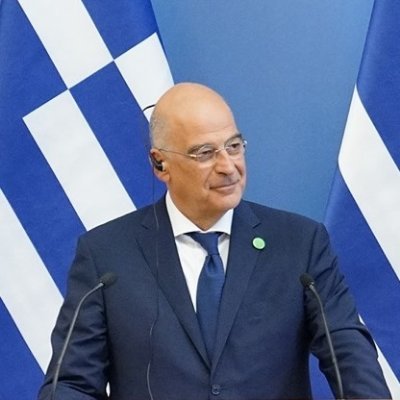
Today I had a telephone conversation with the Minister of Defence of Saudi Arabia, Prince Khalid bin Salman @kbsalsaud. The Minister expressed his gratitude for the presence of the Hellenic Force in Saudi Arabia with the Greek #Patriot battery and its contribution to the #SaudiArabia #Greece #DefenseCooperation #SA #GR

nova.bg Jul 23

Ч article discusses the growing shift towards electric vehicles in Europe, driven by factors such as rising fuel prices, decreasing costs of electric cars, improvements in battery technology, and government incentives, emphasizing the need for Bulgaria to adopt policies that support the renewal of its car fleet. #електромобили #автомобиленпазар #иновации

Краят на бензина или началото на промяната: Защо Европа избира електромобилите

🔋 The #battery race is not a future event; it's happening now. Hear from Christina Lampe-Önnerud of Cadenza Innovation about #China’s lead, Northvolt’s lessons, & why the next phase of the transition is about manufacturing, not technology. 🎧 Listen now https://t.co/8dLdlJvgK1 https://t.co/d2MQS84qg3 #BatteryRace #China #Manufacturing #CN #SE

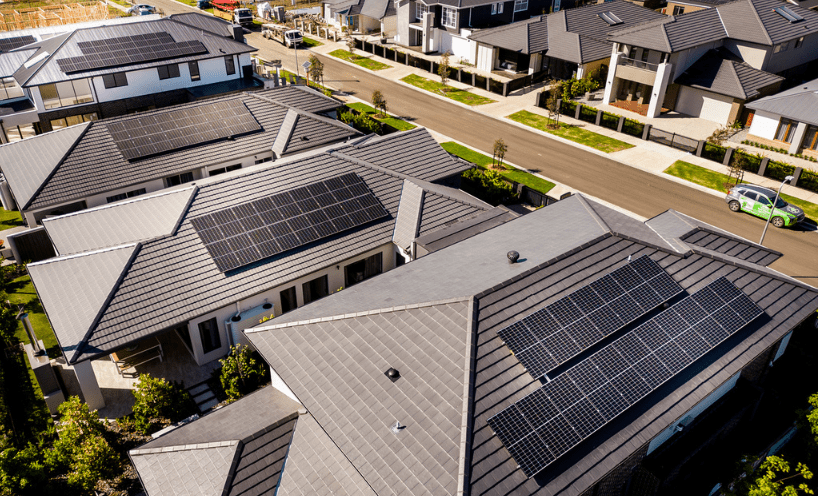
"Everybody's just been taken aback by how quickly consumers have jumped on board." 🔋 ⁣ ⁣ Since Australia introduced a 30% home battery subsidy, households and small businesses have been installing 430,000 systems in under a year. We spoke with @FreeAnna1, Head of https://t.co/eSKMq2euUM #HomeBattery #RenewableEnergy #Australia #AU

Poland is the largest producer in the EU 🇪🇺 and 2nd in the world 🌏of lithium-ion batteries for electric vehicles 🚘🚍 Poland – Europe's battery gigafactory! Poland is home to 7 plants producing lithium-ion batteries for electric vehicles, creating 23,000 jobs. Market value: https://t.co/dWhIEVXDmc #Poland #LithiumIonBatteries #ElectricVehicles #PL

"When we are fully running, it's definitely a number in the area of 2,000 people." 👷‍♀️ Markus Dangelmaier, CEO of Lyten, outlines a two-step ramp: restart current battery production this year, then transition to lithium-sulfur by 2029.⁣ ⁣ Watch more of Society Expo 2026 on https://t.co/5waPGKzmtC #BatteryProduction #LithiumSulfur #SocietyExpo2026 #Nospecificcountriesarementionedinthetweet.Therefore #thecountrycodesare:

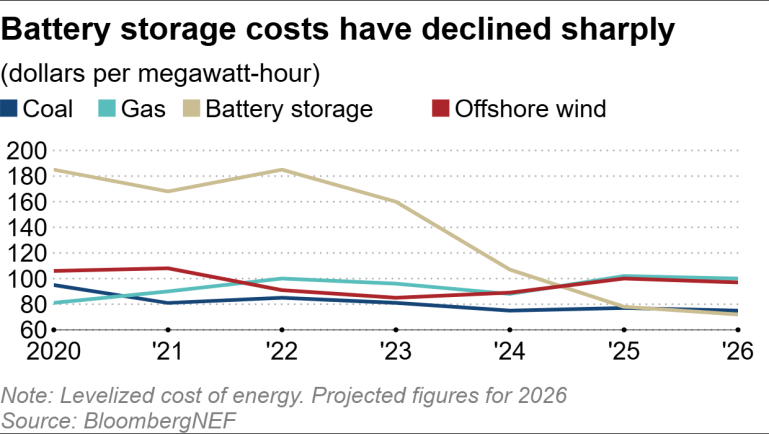
🌎 Battery storage costs fall below gas-fired power plants for first time - Nikkei Asia https://t.co/b95ZUD9GGT https://t.co/8Uybh65o9M #BatteryStorage #RenewableEnergy #CleanPower #JP

telex Jun 13

Az SK Battery komáromi gyára idén már három alkalommal kapott munkavédelmi bírságot, összesen körülbelül 20 millió forint értékben, miután súlyos munkahelyi balesetek és a dolgozók egészségvédelmi kötelezettségeinek megszegése miatt szankcionálták, függetlenül attól, hogy a cég most próbálja javítani munkahelyi biztonsági rendszereit és környezeti gyakorlatát. #munkavédelem #bírság #akkugyár

Csak idén már háromszor kapott munkavédelmi bírságot a komáromi gyár miatt az SK Battery
hvg.hu Jun 12

Az SK Battery Manufacturing Kft. komáromi gyárában súlyos munkavédelmi és környezetvédelmi mulasztások történtek, amelyek miatt több milliós bírságokat kaptak, miközben a dolgozók egészségét kockáztatták, például rákkeltő anyagokkal dolgozva megfelelő védőfelszerelés nélkül. #akkugyár #munkavédelem #környezetvédelem

Fillérekkel megúszta a komáromi akkugyár az amputációval járó balesetet és a kiszabadult rákkeltő port
BarcaInfo May 28

📲 Joan Garcia również ładuje baterię przed MŚ. [IG] 🌊 🏖️🔋 https://t.co/W63fvrNkLL #Mobile #Battery #MŚ

What makes the Australian solar boom so successful?☀️ In #Australia, streamlined permits and battery subsidies are driving costs down and solar adoption up. A powerful lesson in scaling clean energy for the rest of the world! Read more on @WeDontHaveTime https://t.co/MwBXPguMFc https://t.co/HCRMUoDaDQ #SolarEnergy #CleanEnergy #Australia #AU

What makes the Australian #solar boom so successful?☀️ In #Australia, streamlined permits and battery subsidies are driving costs down and solar adoption up. A powerful lesson in scaling clean energy for the rest of the world! Read more on @WeDontHaveTime https://t.co/MwBXPguMFc https://t.co/CscVTAFFMr #SolarEnergy #Australia #CleanEnergy #AU

RT @EthanLevins2: ⚡️IRON DOME DESTROYED! For the second time, Hezbollah destroys a $100M Iron Dome battery in northern Israel. https://t.… #IronDome #Hezbollah #Israel #IL