The author wrote that Spain was due to hold its most significant election in generations on November 29, and alleged that the “Sanchista regime” was tampering with the election through illegal naturalisations. The author described the regime as anti-constitutional and illiberal, and said they hoped Spanish citizens would turn out in large numbers. https://t.co/c3gaNMfxE0 #EleccionesEspaña #Democracia #ParticipaciónCiudadana #ES (translated)
THE “BATTLE OF CERIGNOLA (1503)” ON “POPULAR ARCHAEOLOGY USA” (by LUCIANO MAGALDI SARDELLA) SOURCE 1: https://popular-archaeology.com/author/sardella/ SOURCE 2: https://popular-archaeology.com/article/the-2026-battlefield-archaeology-of-the-battle-of-cerignola-1503/ __________________________________________________________________ CERIGNOLA (FG) — On 28 April 1503, at sunset, a shallow trench cut through the vineyards outside Cerignola rendered heavy cavalry obsolete. For five centuries its exact position has been merely conjectured, its archaeology ignored, its most important sources never translated into English. We are on the Puglian Tablelanda, a corridor of battles for two thousand years: from Cannae in 216 BC to Frederick II’s falconry from Torre Alemanna. Cerignola, at that time, was not a town but a rural hamlet of 350 families at 120 metres above sea level, guardian of the Mena of the Dogana delle Pecore, the great customs system of transhumance that financed the Kingdom of Naples. It was for its possession that the battle was fought. Opposed, two worlds. Louis d’Armagnac, Duke of Nemours, Viceroy of Naples for Louis XII, thirty years old, splendidly armed, certain of victory. On the other side, Gonzalo Fernández de Córdoba, the Great Captain, who on 27–28 April marches from Barletta with some 9,000 exhausted men and decides to entrench himself upon a low ridge. In front of it he has deepened what was already there: not an invention, but an agrarian ditch. The French gendarmes, the last heirs of the mediaeval knight, lower their lances and never reach the line. From behind an embankment reinforced with vine stakes, more than 1,000 Spanish arquebusiers open fire. Nemours falls, almost certainly the first European army commander to die by a portable firearm. With him dies the cavalry charge as a dominant tactic. And here lies the scandal denounced by the article: no cartographer of the seventeenth or eighteenth century ever mapped the field. No memorial stone recalls it. It is not protected as a cultural landscape under the Code of Cultural Heritage. Every deep ploughing of the Tavoliere, standard practice since the Bourbon reforms, destroys an archaeology never recorded. Yet the perimeter is reconstructable. By cross-referencing sixteenth-century descriptions of “slopes covered with vineyards fifteen miles north of the Ofanto” with the Via Traiana, the engagement zone is a rectangle of 3–4 sq km to the north-east of the present settlement. With ISPRA’s 1m DTM LiDAR, anomalous linear depressions could be revealed, and the lower fill of a 2–3 metre ditch, beneath the ploughed layer, is still legible by magnetometry and ground-penetrating radar. Why have we arrived so late? Not for lack of sources, but for lack of translation. The Comune di Cerignola and the Centro Studi e Ricerche Torre Alemanna of Prof. Matteo Stuppiello, who in 1978 obtained the first monumental protection for Torre Alemanna, have digitised a corpus that has never entered Anglophone historiography. Here are the 3 pillars: 1. The letter that still smells of powder. The “Letter of Consalvo da Cordova to the Sovereigns of Spain of 29 April 1503,” edited by Stuppiello in 2003 and updated in 2025 on comune.cerignola.fg.it/biblioteche-digitali. A manuscript page written at Cerignola the day after the battle, “rich in flashes, twilight gleams, and gunfire.” Not a polished chronicle à la Giovio, but a field dispatch: the exhaustion of the night march, the decision to entrench upon arrival, the recovery and honourable burial of Nemours, the intact capture of the French artillery. 2. The graffito, a monument within the monument. In the fourteenth-century church of Santa Maria delle Grazie, known as the Incoronatella, on the Via Trinitapoli Vecchia, where tradition holds the body of Nemours was taken. On the triumphal arch, a graffito of 1503 gives in quasi-notarial form the date, sixth indiction, Friday at the twenty-third to twenty-fourth hour. It truly was a Friday, as confirmed by Cappelli’s perpetual calendar. Deciphered in 1995 by Prof. Francesco Magistrale, Latin palaeographer at the University of Bari, in La Battaglia di Cerignola (1993) and in the municipal monograph S.M. delle Grazie (1999). It is now fading through damp and neglect. 3. The cadastre that explains the ditch. The Apprezzo of 1672 preserved in the Archivio di Stato di Napoli, fondo Pignatelli Aragona Cortes, Scanzia 63, fasc.1: “At the time of the battle, dense vineyards covered the hill reaching down to the plain, and were clearly separated from the rest of the countryside by a not very deep ditch”. Córdoba did not improvise; he adapted. This is confirmed by the Giustiniani cadastres: 277 hearths in 1532, 699 in 1595. The landscape of 1503 was one of intensive horticulture, not the deep-ploughed cereal monoculture of today. To these are added the first monograph by Vincenzo Buonassisi, La Battaglia di Cerignola (1908, died at Via Fanfulla 10 on 27 June 1928), and the first modern military analysis by Piero Pieri, “Consalvo di Cordova e la battaglia di Cerignola”, Archivio Storico Pugliese 1952, which 30 years before the Anglophone rediscovery of “pike-and-shot” defined Cerignola as an engineered killing ground. While Cerignola forgot, others remembered. The “Regimiento de Infantería Cerinola n.42”, later “Fuerteventura n.56”, bore the name of Cerignola until the twentieth century. Its coat of arms, described in Heráldica e Historiales del Ejército, Tomo V (Madrid, 1981): argent field, a dying white swan entangled in a hedge, a gold mural crown, with scroll “Cerignola”. Dossier officially transmitted on 30 April 1986, prot. 4565/509, by the Servicio Histórico Militar in Madrid to the Centro Torre Alemanna through Col. Alessio Antonutti and Gen. José Cifuentes. And in Amsterdam, in the Rijksmuseum, the anonymous commemorative bronze medal: Hercules with lion-skin and club and Janus with keys beside an eagled coat of arms, legend “Consalvus Agidarius… Janum clausit”, on the reverse a battle scene “Consalvi Agidari Victoria de Gallis ad Cannas” — an error by the artist who confuses Cerignola with Cannae. It belonged to Mrs J.M. van Gelder-Nijhoff, donated in 1885. The author’s conclusion is unequivocal: Gonzalo’s ditch is the most consequential earthwork in European military history. It inaugurates the infantryman armed with a firearm and conditions the Mediterranean for 160 years. It may still be there, infilled, ploughed over, invisible to the naked eye but accessible to a magnetometer. It is not a question of mediaeval archaeology but of the will to protect.
The author wrote that Europe was facing a winter of discontent, with economic and social crises affecting the continent ahead of major elections in Spain, France, Greece and Italy. They said the consequences for society were already becoming apparent. https://t.co/gXyL3e8qhL #Europe #Elections #Economy #ES #FR #GR #IT
The post’s author warned that Spain could face a turbulent election followed by extensive legal disputes. They accused Pedro Sánchez and his socialist government of taking every measure to retain power, including disregarding norms and eroding trust. #España #Elecciones2023 #Política #ES
The arrival of tens of thousands of migrants in Spain's North African enclave of Ceuta has fuelled political tensions ahead of next month's election. #Migration #Ceuta #SpainPolitics
The author argued that voters in upcoming elections in Spain, France and Poland were poised to punish moderate parties. They also wrote that Italy’s far right was outflanking Giorgia Meloni and that more figures from the extremes, including Marine Le Pen in France and Alice Weidel in Germany, were waiting in the wings. https://t.co/ATtv6U3bUK #Elections #Europe #FarRight #ES #FR #PL #IT #DE
Myron Netrebka from Dnipro,Ukraine, is the new World Chess Champion among boys under 9 Myron scored 9.5 points out of 11 at the World Youth Chess Championship in Spain,taking gold He’s the only medalist from Ukraine at the event.Last year he also claimed the world blitz title in the under-8 category
433 said Harry Kane could contribute as a striker, defensive midfielder or playmaker, and praised another assist. The account listed his recent returns as an assist against Arsenal; a goal and two assists against Leipzig; two goals against Viking; two assists against Augsburg; two goals against Czechia; two goals and an assist against Croatia; a goal against Czechia and Spain; two goals against Union Berlin; and a goal and an assist each against Elversberg and Bodø/Glimt. 433 asked whether Kane’s performances were worthy of the Ballon d’Or. #HarryKane #Football #Assist (translated)
The post claimed that Spain was the only EU country requiring self-employed workers to pay VAT from the first euro. #España #IVA #Autónomos #ES
The author argued that political careers often, though not always, involved progressive corruption, and claimed Spain’s socialist president embodied it to an unusual degree. They wrote that in 2018 he had promised to be different from previous leaders and not to lie. #Corrupción #Política #España #ES
Eurostat data show 876,600 Russian nationals held valid EU residence permits at the end of 2025, with Germany, Spain and Estonia hosting the largest communities. #RussianMigration #EUIntegration #UkraineConflict

The author argued that Spain had to choose between criminality and decency, and claimed that voting for the left in the election would support delinquency, corruption and further erosion of the Constitution. #España #elecciones2023 #corrupción #ES (translated)
Just an introduction - I'm new to WRLD. I'm retired in Spain from a lifetime in the world of (mainly UK) tech and small business. I keep up to date by regularly blogging about Home Automation and use AI to help. I'm here - https://tech.scargill.net if anyone's interested.

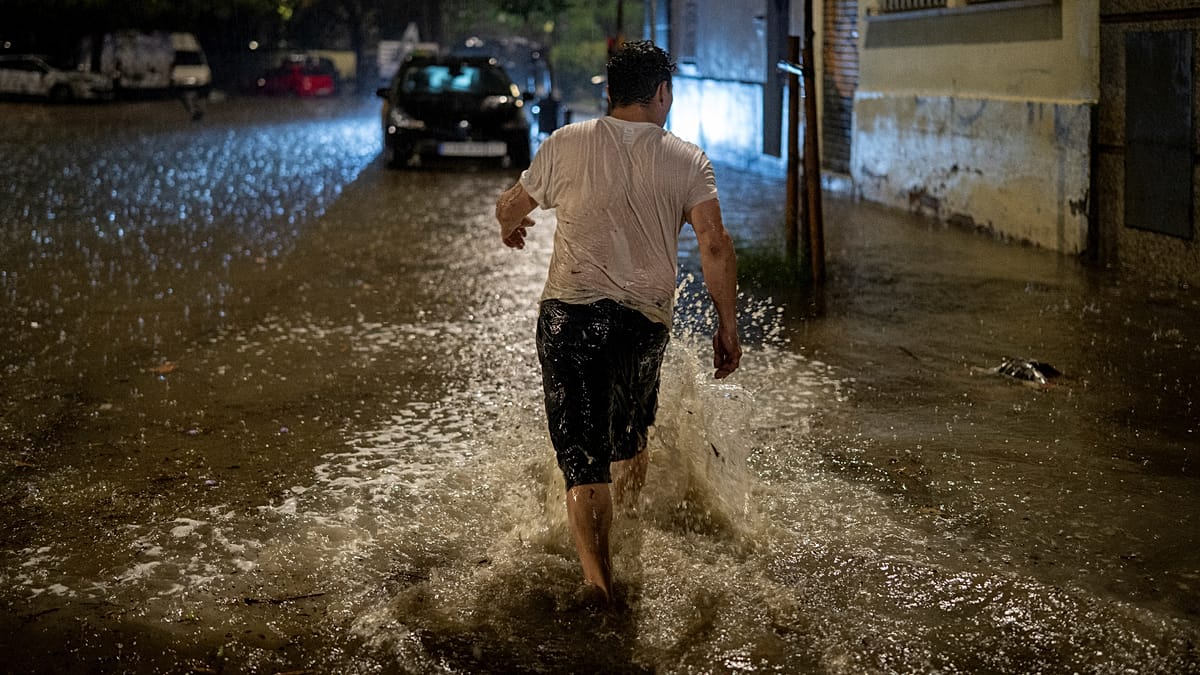
Torrential rain flooded eastern Spain, leaving at least four dead. Crews carried out more than 400 rescues in the Valencia region, officials said Monday. #SpainFloods #ClimateChange #EmergencyResponse

The author claimed that Spain’s naturalization laws had been abused to tamper with voting, said the allegation was not a conspiracy, and wrote that a judicial intervention had suspended the voting rights of newly naturalized foreign citizens who lacked evidence of political exile. #España #DerechosCiviles #Justicia #ES
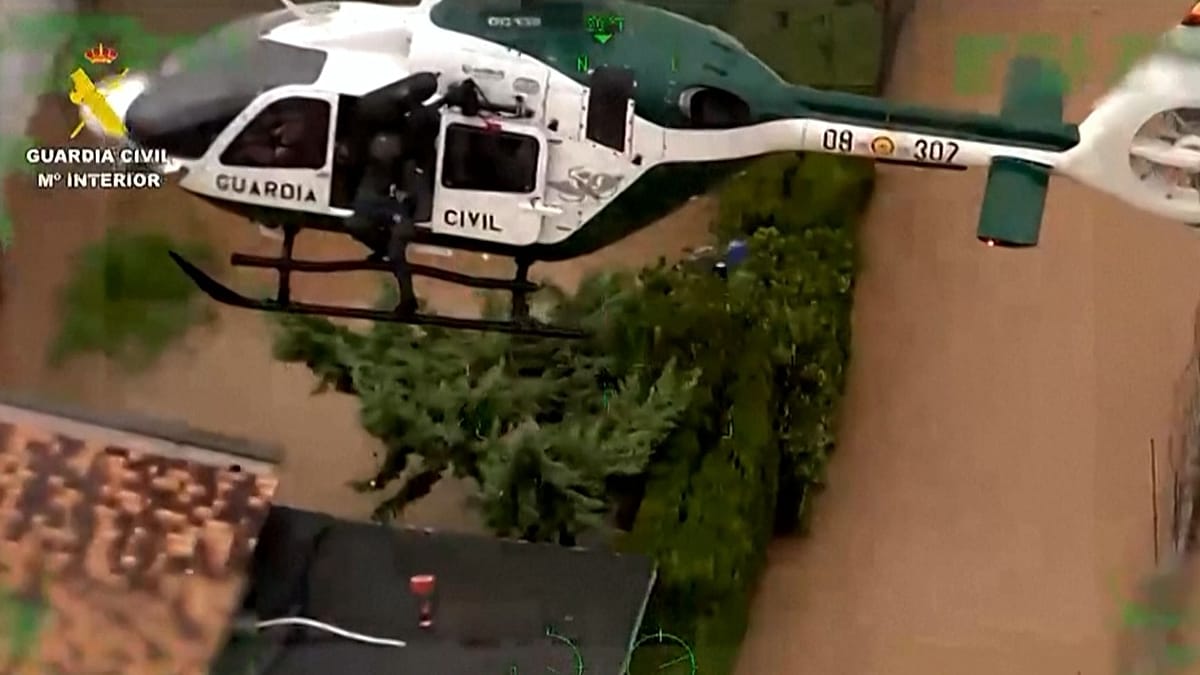
Spanish Guardia Civil officers have rescued a family and their dogs from a flooded home in Oliva, in eastern Spain. Dramatic footage shows officers carrying residents to safety as floodwaters engulf the town, while aerial images reveal the extent of the flooding across the Valencia region. #FloodRescue #GuardiaCivil #ExtremeWeather