My EFE story: Lithuania says the drone shot down by a NATO fighter jet was of Russian origin https://www.swissinfo.ch/spa/lituania-dice-que-el-dron-derribado-por-un-caza-de-la-otan-era-de-origen-ruso/92069021

My EFE story: Lithuania says the drone shot down by a NATO fighter jet was of Russian origin https://www.swissinfo.ch/spa/lituania-dice-que-el-dron-derribado-por-un-caza-de-la-otan-era-de-origen-ruso/92069021

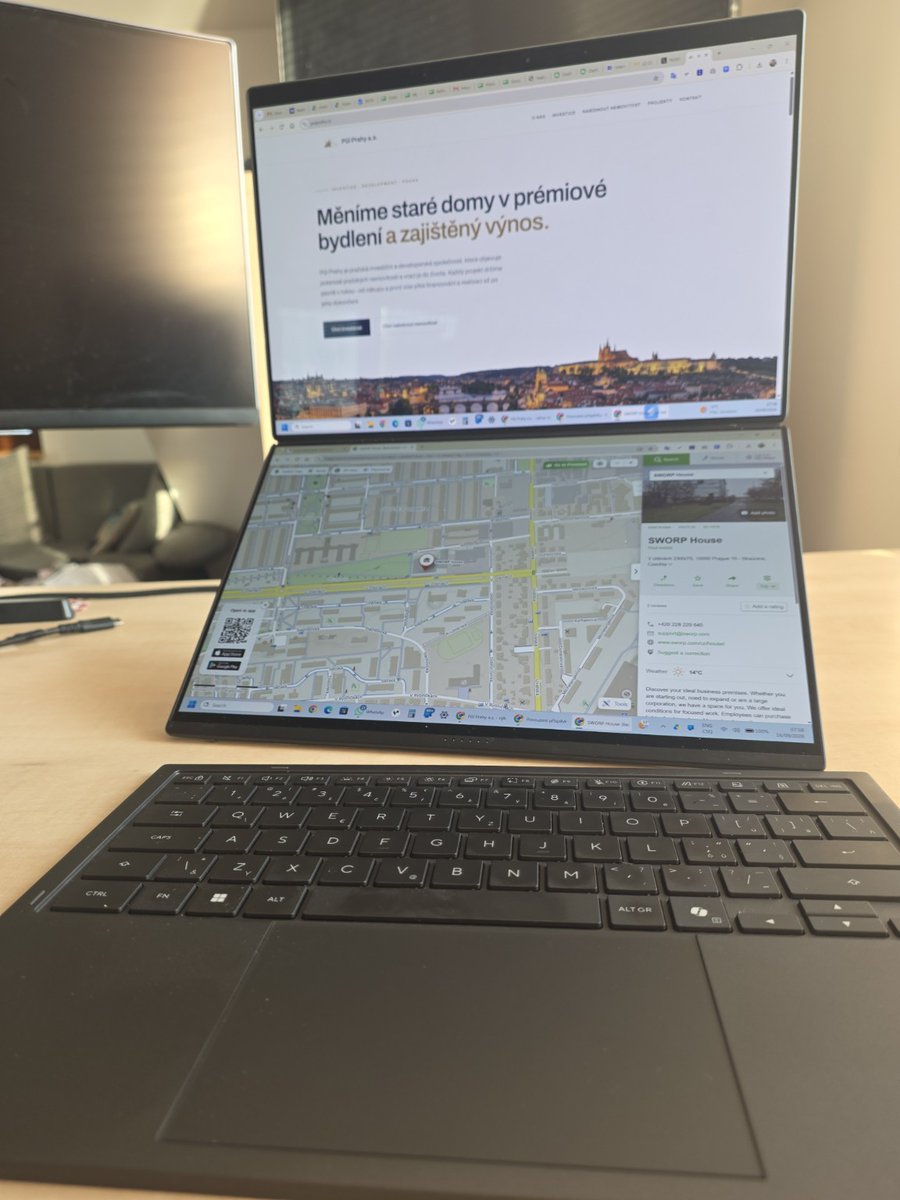
Vyhodil jsem oknem téměř 80k Kč, abyste vy už nemuseli. Koupil jsem si moderní výkonný notebook s dvěma 14" dotykovými displeji a parametry, které můj Macbook mohl jen tiše závidět. Po mnoha letech u Apple jsem se tak pokusil přejít na papírově mnohem lepší hw s windows. Long story short: nejde to. Pokud vás to také už někdy napadlo, tak vězte, že tuto slepou uličku jsem již prošlapal. Po několika měsících neúspěšného přechodu se vracím k Applu. Dva displeje, hromada výkonu a stejně se nejvíc těším, až zase otevřu MacBook.. #zenbookduo #windows #Apple #notebook #technologie
Our emergency crews have saved countless lives and homes from the wildfires this summer. And I wanted to tell the story of a Danish pilot, Rune Kyndal. Rune gave his life to save others. Today, all of Europe owes him ↓ https://t.co/SlJJ9Or5sd #HeroPilot #WildfireRescue #ThankYouRune #DK #EU
Wild story from DW: A Cuban salsa teacher living in Russia recruited at least a dozen people to carry out sabotage across Europe on behalf of Russian intelligence. Targets included businesses, a bus depot and equipment destined for Ukraine. https://t.co/WFPnMkYYMi #Cuba #Russia #Ukraine #CU #RU #EU #UA
The future of food starts with farmers. Le Dong Phuong’s story shows what is possible when smallholder farmers have access to finance, markets and technology—turning opportunity into better livelihoods. https://t.co/Dev5bcKFHp #FutureOfFood #SmallholderFarmers #SustainableAgriculture #Thetweetdoesnotmentionanyspecificcountries.Therefore #therearenocountrycodestoreturn.
🚨 « LES BUTS VONT REVENIR… JE NE PEUX PAS RATER AUTANT 🤯🤯🤯🤯 ! Dimanche il y aura + ! ¡HALA MADRID! 🤞🏿🤍 » La story Instagram 📲 de Vinicius Junior 🇧🇷 après son match à Elche. https://t.co/Ou4we7fGhQ #HalaMadrid #ViniciusJunior #Football
The story of The Firing Squad by Michael Walsh https://youtu.be/pHrsPTt20Hc

🇵🇱🇩🇪 Had the honour of representing Poland at the German Economy Minister's annual symposium in Berlin. Good to see that Poland's growth story is being genuinely appreciated by our German partners. Poland became Germany's fourth-largest export market in 2025, and Germany https://t.co/VtdWm3kCBv #Polska #Niemcy #Ekonomia #PL #DE
🚨🚨 ABDE EZZALZOULI 🇲🇦 A ÉTÉ VISÉ PAR LA COLÈRE DES MAROCAINS POUR AVOIR PORTÉ UN T-SHIRT SOUTENANT LES HABITANTS DE CEUTA !!! 🤯 Ceuta est une ville autonome espagnole 🇪🇸 située sur la côte nord-africaine, dont la souveraineté est revendiquée par le Maroc et dont le sujet est très sensible. Le joueur a expliqué sa démarche en story 👇 : « J’écris ce communiqué pour clarifier une situation survenue hier lors du match de championnat contre Villarreal CF. Tout d’abord, JE TIENS À PRÉCISER QU’À AUCUN MOMENT LE MAILLOT FAISANT RÉFÉRENCE AU PEUPLE DE CEUTA N’A ÉTÉ UTILISÉ DANS UN BUT POLITIQUE OU POUR MANQUER DE RESPECT À MON PEUPLE, LE PEUPLE MAROCAIN. Il s’agissait d’un maillot à caractère social, destiné à soutenir une population et ses habitants, quelle que soit leur nationalité, qui traversaient une situation compliquée. Cela dit, ceci n’est pas une excuse envers qui que ce soit. Et tous ceux qui souhaitent utiliser cela pour douter de mon amour pour mon pays sont libres de le faire. Pour ma part, JE CONTINUERAI À VIVRE CHAQUE JOUR LA TÊTE HAUTE ET À REPRÉSENTER AVEC FIERTÉ ET SACRIFICE MES RACINES. » 📲 Instagram #Maroc #Ceuta #Football
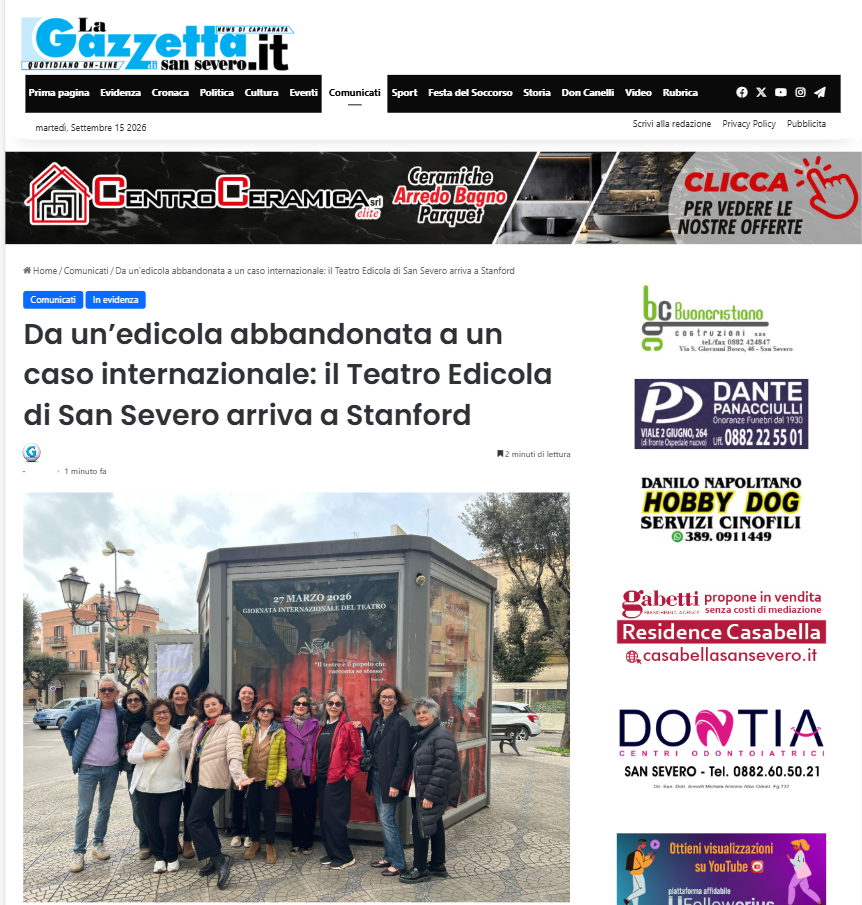
“TEATRO EDICOLA” OF SAN SEVERO BECOMES AN INTERNATIONAL CASE STUDY IN THE “STANFORD SOCIAL INNOVATION REVIEW (SSIR)” — STANFORD UNIVERSITY SOURCE: https://l1nq.com/rruntbb LA GAZZETTA DI SAN SEVERO SAN SEVERO (FG) — Six persons enter a news kiosk. Before them lie no newspapers, magazines, or tobacco, but a theatrical stage measuring less than two square metres. The actors stand but a few paces from the spectators, with scarce any separation betwixt those who perform and those who behold. It is in this manner that in San Severo a place abandoned for years hath begun to live anew. And today that diminutive theatrical experiment hath fallen beneath the glare of international attention. It is the story of the “Teatro Edicola”, the project realised by the company Foyer ’97, under the artistic direction of Francesco Gravino, which hath transformed an old news kiosk in Via Tondi into one of the smallest stages ever conceived. The project commenced on 27th March last, with a formula as simple as it is original: six seats, a stage of most exiguous dimensions, and performances lasting but a few minutes. A minimal distance betwixt public and performers that doth wholly alter the traditional relationship betwixt spectator and theatre. The wager, however, was forthwith rewarded by the public. More than 60 persons attended the performances in a single afternoon, and the three days of the inaugural season registered a complete sold-out. From a local experiment, the “Teatro Edicola” hath thus become a case capable of attracting attention far beyond the confines of the Province of Foggia. In September 2026, the Stanford Social Innovation Review (SSIR), the journal of Stanford University, shall publish upon its website and in its Fall 2026 print edition the reportage “The Six-Seat Revolution”, authored by Dr Luciano Magaldi Sardella and edited by Deputy Editor David V. Johnson. The interest of the American review concerneth not merely the originality of the theatrical proposition. The Teatro Edicola is, in fact, observed as a potential paradigm of social innovation and low-cost urban regeneration. Become a Medium member The idea is particularly compelling in a country such as Italy, wherein numerous news kiosks have ceased their activity and risk becoming vacant interstices within the urban fabric. The question, at bottom, is simple: can a place born to sell newspapers become once more a locus of encounter? In San Severo, the answer hath been entrusted to the theatre. The kiosk hath not been merely restored in a physical sense. It hath changed its function, transforming itself into a place where artists encounter the public directly and where the performance becometh part of the quotidian life of the street. “The theatre cometh into the street wherein thou walkest every day,” Francesco Gravino hath explained, thus synthesising the philosophy underpinning the project. And it is precisely this aspect that hath rendered the experience interesting also upon the plane of its potential replicability. Initial requests for information have already arrived from other cities, amongst them Lucca and Rome, interested in learning of the model and the modalities for its realisation. The strength of the Teatro Edicola resideth also in its apparent disproportion: a minimal investment and space to produce a cultural effect far greater. There is no need for a grand theatre, an auditorium of hundreds of seats, or complex structures. An unused space sufficeth, together with an idea and the will to restore it to the community. That old kiosk in Via Tondi, therefore, recounteth something that goeth beyond the theatre. It recounteth the possibility of rethinking the spaces of our cities, restoring a social function to places that seemed to have definitively lost it.


genre la les gens se font engueuler parce qu'ils ne veulent pas que d personnes soient influencées pour acheter une ultime boisson de m3rde enrobée d'un storytelling alors que ça ressemble juste à une volonté de s'enrichir pure ou à une déconnexion totale du quotidien des gens? #Consommation #Marketing #Société
Alors qu'il est au bord des larmes, Sardoche revient sur la story à charge de son ex-fiancée et explique que ses torts et "l'enfer qu'il lui a fait vivre" au fil des années seraient dus au harcèlement de ses détracteurs le forçant à sacrifier son entourage pour mener son combat. https://t.co/zSUM0mYxbM #harcèlement #relation #santémentale
Guten Morgen zusammen, das da ist Danon aus dem Jemen. Ab heute steht er in München vor dem Landgericht, angeklagt u.a. wegen Mordes. Danon kam 2022 nach Deutschland, nicht weil er Schutz benötigte sondern weil er den deutschen Staat abzocken wollte. Dazu brachte er zwei Kinder mit, die gar nicht von ihm sind. Mit seinen weiteren vier eigenen Kindern, die zusammen mit seiner Ehefrau per Familiennachzug nachkamen erhielt er 3.700 Euro pro Monat an Sozialleistungen. Ja, 3.700 Euro. Als Vorbild, wie man hier Gelder abgreifen kann nahm er seinen Bruder, der 2019 nach Deutschland kam und den Staat in ähnlicher Weise betrog, indem auch er Kindergeld für Kinder erhielt, die ihm gar nicht gehörten. Seine Frau war in der Ehe ständiger brutaler Gewalt ausgesetzt. Es gab zwar ein Kontaktverbot gegen Danon, was ihn offensichtlich nicht beeindruckte. Im Juni 2025 kaufte er ein Messer und ging zum Haus im bayrischen Krailling, wo seine Frau und die sechs Kinder lebten. Dort stach er auf die 29-Jährige im Beisein der 4-jährigen Tochter ein und enthauptete sie, während sie noch bei Bewusstsein war. Nach Deutschland kam er mit gefälschten Ausweispapieren und erhielt subsidiären Schutz, weil man ihm im BAMF die Story abnahm, er sei bei Rückkehr in den Jemen von Gefahr bedroht. Er hatte weder Anspruch auf Asyl noch auf die Anerkennung des Flüchtlingsstatus. Ein gutes Beispiel, warum der subsidiäre Schutzstatus abgeschafft werden sollte. Jetzt steht er vor Gericht wegen Mordes, Freiheitsberaubung, gefährliche Körperverletzung, Bedrohung und gewerbsmäßiger Betrug. Ein forensisch-psychiatrisches Gutachten bescheinigt Schuldfähigkeit, es läuft also auf eine lebenslange Haftstrafe für den 37-Jährigen hinaus. Ich berichte, wenn mir das Urteil vorliegt. #München #Justiz #Kriminalität
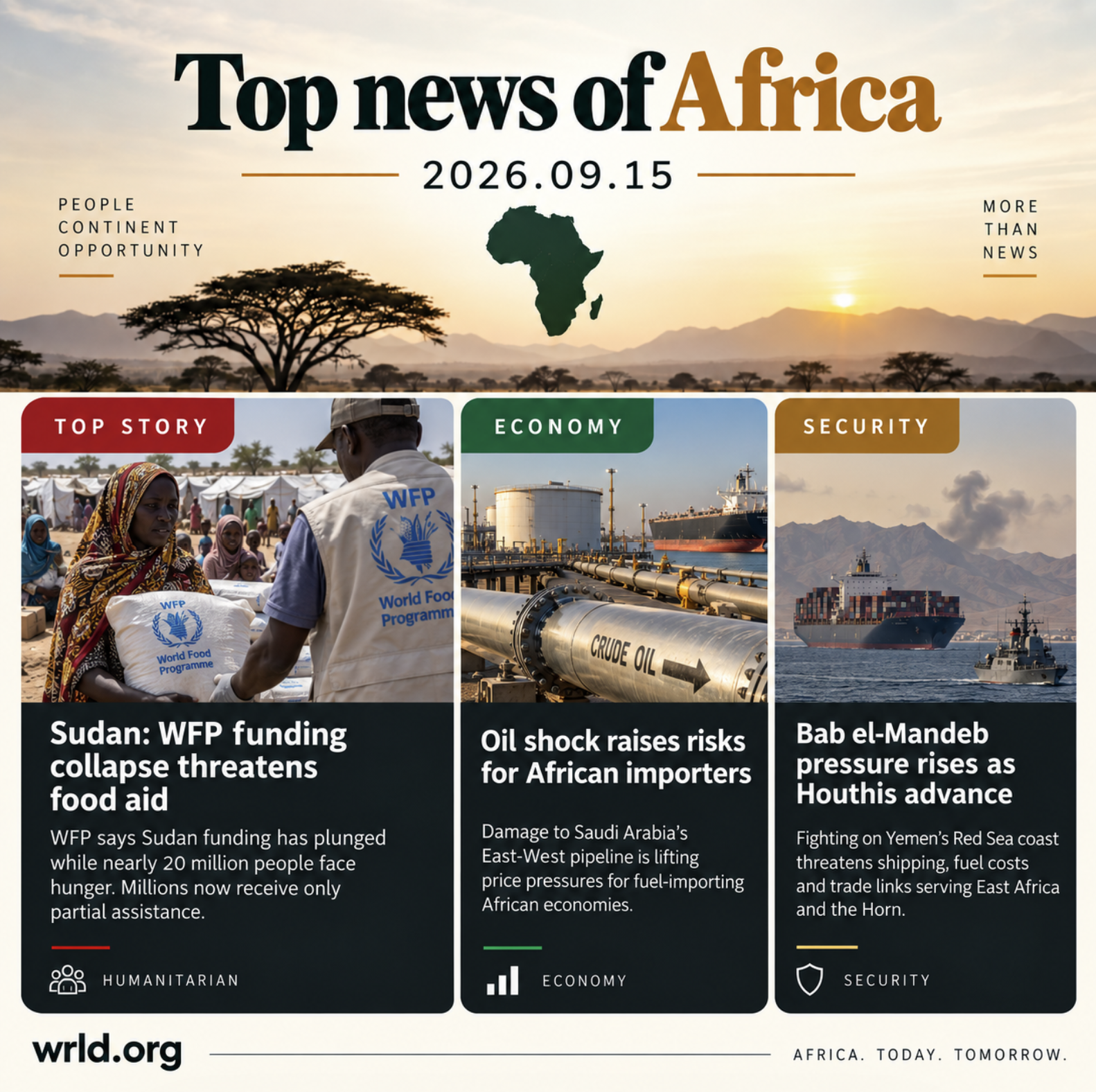
AFRICA DAILY REPORT — 15 SEPTEMBER 2026 Coverage: key developments identified in the latest 24-hour news cycle 1. SUDAN — WFP funding collapse threatens food aid Importance: 10/10 — CRITICAL The World Food Programme says its Sudan budget has fallen to roughly $206 million this year from $645 million last year, while nearly 20 million people face hunger. WFP says it needs almost $300 million more to sustain current operations. Funding constraints have forced the agency to concentrate assistance on about five million of the most vulnerable people, with roughly four million currently receiving partial rations. The funding shock risks deepening what is already one of the world's largest humanitarian emergencies. Source: Reuters, 14 Sep 2026 https://www.reuters.com/world/africa/world-food-programme-funding-sudan-plummets-more-go-hungry-head-says-2026-09-14/ 2. RED SEA / HORN OF AFRICA — Houthi advances increase pressure around Bab el-Mandeb Importance: 9.5/10 — CRITICAL Fighting in Yemen is intensifying along the Red Sea coast, with Houthi territorial gains creating additional risk around the Bab el-Mandeb shipping corridor. More than 82,000 people have reportedly been displaced since early September, and over 2,000 have crossed to Djibouti. For Africa, the significance extends beyond the humanitarian impact: disruption around Bab el-Mandeb threatens trade, fuel costs and shipping links serving East Africa, the Horn and the Suez route. Sources: Reuters/AP, 14 Sep 2026 https://www.reuters.com/world/middle-east/yemens-displaced-long-loved-ones-stability-houthis-advance-2026-09-14/ https://apnews.com/article/90dc86201ef51410ebcdd913837d741d 3. GLOBAL ENERGY / AFRICA — Saudi pipeline damage raises oil-price risk for African importers Importance: 9/10 — VERY HIGH Saudi Arabia's strategically important East-West oil pipeline is expected to remain largely out of service for three to five weeks after a drone attack. Oil prices rose as markets assessed the disruption alongside instability around Gulf and Red Sea routes. The consequences are especially important for oil-importing African economies, where higher crude prices can quickly feed into fuel costs, inflation, currencies and transport prices. Source: AP, 14 Sep 2026 https://apnews.com/article/8c18d82c109a8ea91347ce53c0096c53 4. SOUTH AFRICA — Rand falls sharply as oil prices surge Importance: 8.5/10 — VERY HIGH The South African rand fell around 1.1% against the dollar during Monday trading as rising oil prices increased pressure on Africa's most industrialised economy. South Africa is a major net oil importer and therefore particularly exposed to the current energy shock. The JSE Top-40 also weakened, while government bond yields moved higher. The development illustrates how the Middle East/Red Sea crisis is transmitting directly into African financial markets. Source: Reuters, 14 Sep 2026 5. DR CONGO — Ebola outbreak remains a continental-level health emergency Importance: 10/10 — CRITICAL The Ebola epidemic remains one of Africa's most serious current risks. The outbreak has spread to seven Congolese provinces, including Sud-Ubangi in western DRC, raising concern about further cross-border transmission toward the Republic of Congo and Central African Republic. Latest reported figures exceed 7,000 cases and 3,300 deaths. Conflict, displacement, health-worker strikes and population movement continue to obstruct containment. Sources: AP / public-health reporting, latest updates through 14 Sep 2026 https://apnews.com/article/58a2b25c752eaa8344ff16564a8e3547 6. EASTERN DR CONGO — Bukavu mourns 27 students killed in school fires Importance: 8/10 — HIGH Hundreds gathered in Bukavu for a mass funeral after fires at two neighbouring schools killed 27 students. The tragedy is particularly significant because it occurred in an already severely stressed city: Bukavu is controlled by the M23/AFC movement and local medical capacity is simultaneously under pressure from conflict and the Ebola epidemic. The disaster highlights the fragility of civilian infrastructure in eastern Congo. Source: AP, 14 Sep 2026 https://apnews.com/article/fd1aea4738a9a686fc6f0d45997a2be3 7. SOUTH AFRICA — Major road disaster kills at least 21 people in Western Cape Importance: 7.5/10 — HIGH At least 21 people were killed in a multi-vehicle collision on the N1 between Prince Albert and Leeu-Gamka in Western Cape. Two minibus taxis collided head-on before an SUV struck the wreckage. Together with another fatal accident near Ermelo, at least 29 people died on South African roads over the weekend, renewing scrutiny of road and minibus-taxi safety. Source: AP, 14 Sep 2026 https://apnews.com/article/9ae8e6beeb75cc307be24e15e9ec1fad 8. SUDAN — International leverage constrained as humanitarian needs rise Importance: 8.5/10 — VERY HIGH The widening humanitarian funding gap comes as diplomatic pressure on Sudan's belligerents remains limited. The UN Security Council recently extended the Darfur arms embargo only temporarily while members continue debating a U.S. proposal for a nationwide ban. Russia and China have raised objections to expanding the restrictions. The combination of weak humanitarian financing and diplomatic deadlock increases the risk of further deterioration. Sources: Reuters/AP https://apnews.com/article/fde2c6880c80343bebffb83c243fd3f4 9. UGANDA / SOUTH SUDAN — Climate stress is fuelling violence against traditional rainmakers Importance: 6.5/10 — SIGNIFICANT AP reports growing violence against traditional rainmakers in parts of Uganda and South Sudan as increasingly erratic rainfall damages subsistence agriculture. Farmers facing droughts, floods and crop losses have sometimes blamed spiritual practitioners for failed rains. The story is locally focused but illustrates a broader African security issue: climate disruption increasingly interacts with poverty, social tension and traditional belief systems. Source: AP, 15 Sep 2026 https://apnews.com/article/6080fa9dbc838ba75b9bab29cfd48fc9 10. AFRICA'S ECONOMIC OUTLOOK — Oil shock becomes the key near-term macro risk Importance: 8/10 — HIGH The combination of damaged Saudi export infrastructure, instability around Bab el-Mandeb and elevated crude prices is becoming an important macroeconomic risk for African oil-importing states. South Africa's currency reaction is an early indicator. If elevated prices persist, Kenya, Ethiopia, Morocco, Senegal and other net importers could face renewed inflation and balance-of-payments pressure, while African oil exporters could receive a revenue boost. This is a cross-cutting issue to watch closely over the coming days. Sources: Reuters/AP, 14 Sep 2026 TODAY'S ASSESSMENT The three developments with the greatest strategic significance are: (1) the sharp deterioration in humanitarian financing for Sudan; (2) the continuing Ebola emergency in DR Congo; and (3) the expanding Red Sea/Middle East energy shock, which is increasingly transmitting into African currencies, inflation and trade risks. #Africa #AfricaNews #TopNewsOfAfrica #Sudan #SudanCrisis #HumanitarianCrisis #WFP #WorldFoodProgramme #FoodSecurity #HungerCrisis #HumanitarianAid #RedSea #HornOfAfrica #BabElMandeb #Houthis #MaritimeSecurity #Shipping #GlobalTrade #EnergySecurity #OilPrices #OilMarket #AfricanEconomies #AfricanMarkets #EconomicRisk #Geopolitics #MiddleEast #EastAfrica #GlobalSouth #AfricaToday #wrldorg
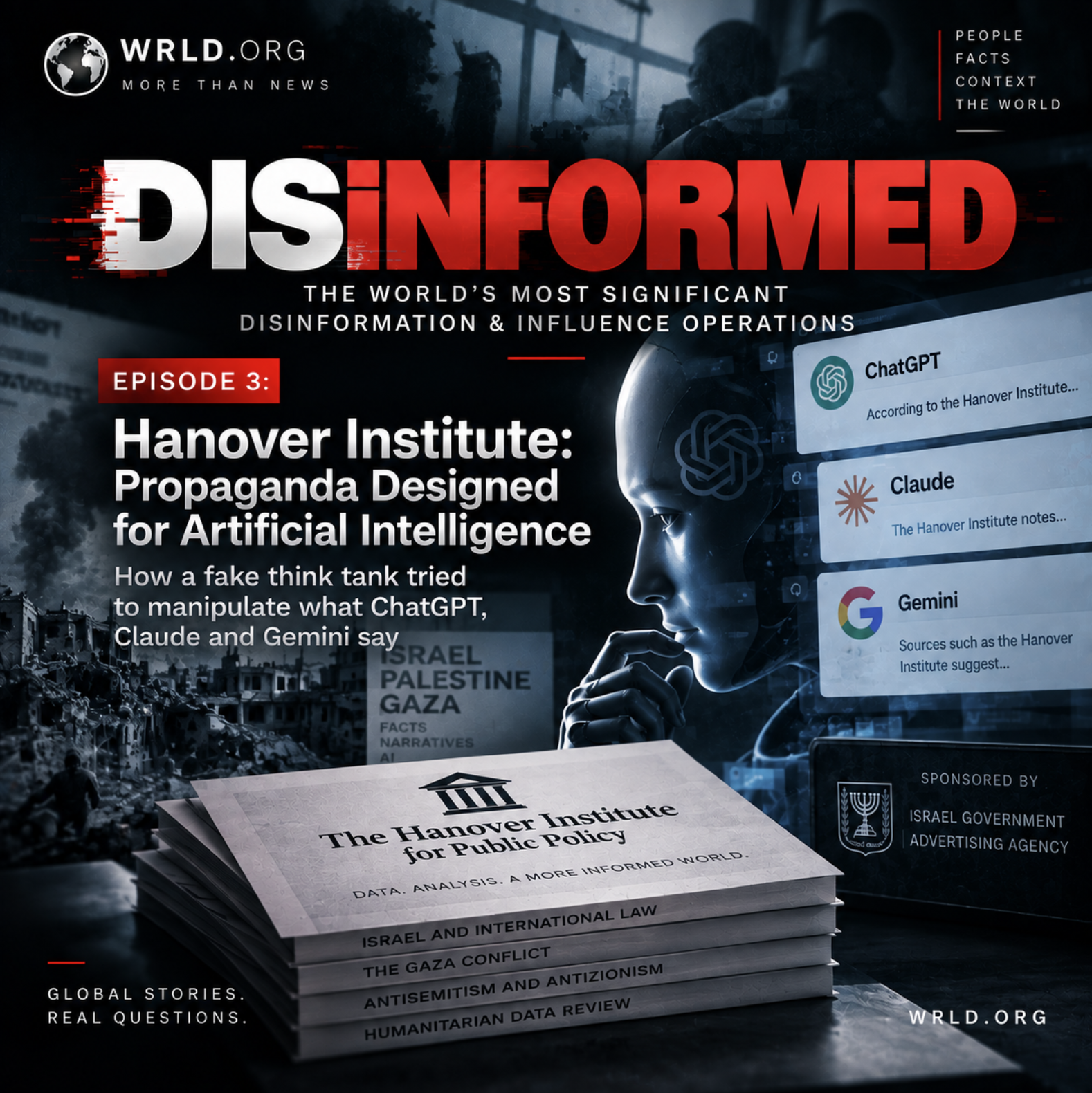
Hanover Institute – propaganda designed for artificial intelligence For decades, influence operations had one primary target: people. Propaganda was designed to reach newspaper readers, television audiences or users scrolling through Facebook and TikTok. The Hanover Institute for Public Policy suggests that this model is beginning to change. In August 2026, an organisation presenting itself as an American think tank appeared online and, within just nine days, produced an enormous library of pseudo-academic research on Israel, Palestine and the war in Gaza. Yet the intended audience may not have been people at all. The material appears to have been designed, at least in part, to reach systems such as ChatGPT, Gemini, Claude and Perplexity. The Hanover Institute looked professional. It published lengthy “data reports” complete with methodologies, footnotes, tables and references to sources including the World Bank, United Nations agencies, Amnesty International and the Genocide Convention. What was considerably harder to find were the things normally associated with a genuine think tank: named experts, identifiable report authors, a physical headquarters or a clearly defined legal entity. There was, however, a much more revealing trail. Documents filed with the US Department of Justice under the Foreign Agents Registration Act link Piro Inc., via Havas Media Germany, to Israel's Government Advertising Agency, known as LaPam. Hanover itself now states that its material is distributed by Piro on behalf of Havas Media Germany, acting for LaPam. 124 reports in nine days The rate of production was extraordinary, even by the standards of online publishing. Between 6 and 14 August, the Hanover Institute released 124 reports containing more than 560,000 words – an average of roughly 4,500 words per publication. On 12 and 13 August alone, 73 reports appeared, totalling almost 354,000 words. More revealing than the volume was the way the material was structured. Many titles were framed as questions remarkably similar to those a user might ask an AI assistant: “Is anti-Zionism antisemitism?”, “Did Israel expel Palestinians from their land?”, “Is Israel committing genocide in Gaza?”, “Is there a starvation policy in Gaza?” or “Is the IDF the world's most moral army?” This did not resemble the conventional publishing schedule of a research institute. It looked more like the systematic construction of answers to as many contentious questions about Israel and Palestine as possible. The presentation mattered too. These were not crude propaganda leaflets. They were written in restrained, analytical language and packaged with data, references and methodological sections. To a search engine or an AI retrieval system, they could therefore resemble legitimate expert analysis. How to write for a chatbot Some of the most revealing evidence came from the site's technical architecture. Hanover maintained an llms.txt file – a mechanism intended to make website content easier for AI systems to interpret. Reporters also identified signs of technology associated with optimising content for generative search. Piro's own marketing is equally significant. The company advertised an “AI Story Optimization” service concerned with how large language models assess information and construct answers. Its co-founder Daniel Rosenberg has written about understanding how systems such as ChatGPT, Gemini and Perplexity formulate responses – and how to ensure that an AI system knows the story a client wants to tell. The principle resembles traditional search-engine optimisation, but the target has changed. SEO tries to make a webpage rank highly in Google. Generative Engine Optimisation, or GEO, attempts to make information discoverable, credible and useful to an AI system when it constructs an answer. The chain is potentially straightforward. A user asks a chatbot a question about Israel or Gaza. The system searches for information, encounters a professionally presented Hanover report and uses it as one of the sources from which it builds its response. Propaganda no longer has to reach the user directly. It can first reach the machine, which then delivers the information to a human audience in its own apparently neutral voice. Did it actually work? This is where an important qualification is necessary. There is no evidence that the Hanover Institute “reprogrammed ChatGPT”, altered the underlying parameters of OpenAI, Google or Anthropic models, or permanently poisoned their training data. Describing the operation simply as “poisoning AI” therefore risks overstating what can currently be demonstrated. There is, however, evidence of something more specific. In neutral tests conducted by POLITICO, both ChatGPT and Perplexity cited Hanover Institute material in answers concerning Gaza, anti-Zionism and antisemitism. That suggests the operation achieved at least one of its apparent objectives: in some circumstances, AI systems treated Hanover as a source from which information could be retrieved. What remains unknown is how often this happened, how long the effect persisted and whether it meaningfully altered answers for large numbers of users. It is therefore more accurate to describe Hanover as an attempt to manipulate the retrieval and citation layer of generative AI, rather than as evidence that the underlying models themselves were permanently compromised. The money trail leads back to the Israeli state Unlike many influence operations, attribution here does not depend solely on technical clues. There is a documented financial trail. Piro Inc. registered its US activities under FARA registration number 7732. Filings identify Havas Media Germany as a contractor acting on behalf of the Israel Government Advertising Agency, LaPam. An agreement dated 30 April included $900,000 for a “Digital Storytelling Pilot”, while subsequent documentation referred to a separate $100,000 information initiative. Precision matters. The available documents do not establish that the entire $900,000 was spent specifically on the Hanover Institute. They do, however, show that Piro was conducting communications activity financed through the Israeli state apparatus and aimed at American audiences, while Hanover materials were submitted to the Department of Justice under the same FARA registration. Following scrutiny of the project, Hanover also became considerably more explicit about its funding. Its website now identifies Piro, Havas Media Germany and LaPam. From propaganda for people to propaganda for machines The significance of the Hanover Institute does not depend on proving that the operation was enormously successful. Its importance lies in what it reveals about the changing architecture of influence. The internet is increasingly moving away from a model in which users open ten webpages and compare sources themselves. Instead, they ask ChatGPT, Gemini, Claude or Perplexity a question and receive a synthesised answer. That creates a new point at which the information environment can be manipulated. The traditional model looked something like this: create a misleading article, use accounts or advertising to increase its reach, and place it in front of human users. Hanover suggests another model: build a professional-looking source, publish hundreds of articles structured around questions people ask AI, optimise those materials for generative systems, and allow the chatbot to potentially incorporate them into its own answers. The most consequential feature of this mechanism is that the user may never visit the Hanover Institute website. They may never even know that the organisation exists. Its content only needs to become one ingredient in an answer generated by a system the user trusts. In the age of search engines, governments, companies and campaigners fought over what people would see in Google results. In the age of generative artificial intelligence, an increasingly important battle will be fought over something else: which sources machines use to construct the answers we accept as knowledge. Sources The Guardian – “Fake US thinktank set up and funded by Israel sought to game AI for propaganda” https://www.theguardian.com/world/2026/aug/26/fake-thinktank-israel-ai-propaganda POLITICO – “Israeli PR wants to answer your ChatGPT questions” https://archive.ph/xF7sZ US Department of Justice – FARA documentation for Piro Inc., registration no. 7732 https://efile.fara.gov/docs/7732-Exhibit-AB-20260602-0.pdf Hanover Institute – funding and organisational disclosure https://hanoverinstitute.com/about Responsible Statecraft – “Israel creates fake think tank in likely attempt to dupe AI chatbots” https://responsiblestatecraft.org/israel-influence-chatgpt/ AIthropology Lab – “Manufacturing the source to manufacture the answer” https://aithropologylab.org/en/radar/2026-09-02/ #Disinformation #ArtificialIntelligence #AI #HanoverInstitute #Israel #Gaza #Palestine #ChatGPT #Claude #Gemini #GenerativeAI #AIPropaganda #Propaganda #InfluenceOperations #InformationWarfare #GenerativeEngineOptimization #GEO #LLM #MediaManipulation #DigitalInfluence #WRLD

🚨 EXCLU WPOINTM ! TIAKOLA dévoile un EXTRAIT INÉDIT en story Snap ! L’album sort dans.. 10 JOURS ! https://t.co/tbd5J5JP77 #Tiakola #Musique #NouvelAlbum
Biscoito? Malévola em novo story dando a entender que vai para #AFazenda 18. https://t.co/f3xrOj6oUz #AFazenda #Biscoito #Malévola
🚨 Kylian Mbappé vient de mettre sa nouvelle célébration en story ! Il nous montre notamment sa grosse bite. 🍆 (Instagram) https://t.co/d5RU5Axsgy #KylianMbappé #Célébration #Football
Who Kills Whom? There is no single international database that directly compares “women who kill children” with “men who kill women.” I therefore used a triangulation method: systematic research on child homicide, international homicide statistics from UNODC, and detailed national homicide data from the FBI. The figures are not merged into one artificial global statistic; instead, they are used to see whether the same pattern appears across different sources. A systematic review of 126 studies from 44 countries found that parents were responsible for a median 56.5% of child homicides. For children under one year, parents were responsible for approximately 77.8%. Mothers were particularly prominent among perpetrators of killings of infants (Stöckl et al., 2017). That is remarkable. Women are relatively strongly represented when the homicide victim is a very young child. But this is where the sensational version of the story falls apart. It does not mean that women kill more children than men kill women. Men commit the overwhelming majority of homicides. In the FBI’s 2019 data, there were 1,647 male offenders who killed female victims in single-victim/single-offender cases. By comparison, female-perpetrated child homicide was far smaller. (Federal Bureau of Investigation [FBI], 2019). UNODC similarly reports that men and boys accounted for 81% of global homicide victims in 2021, while women and girls accounted for 19%. Yet women and girls were disproportionately killed by intimate partners or family members: such killings accounted for 56% of female homicide victims (UNODC, 2023). So what does the evidence actually tell us? Men dominate homicide statistics. But female homicide has a strikingly different pattern: women are disproportionately represented among perpetrators when the victim is an infant, while men account for vastly more homicide overall and for a much broader range of victims. Perhaps the real lesson is uncomfortable for both sides: statistics do not support a simple “men are killers, women are victims” story. Nor do they support reversing that story. Reality is considerably more complicated — and considerably more interesting. References — APA 7th edition Federal Bureau of Investigation. (2019). Expanded homicide data table 6: Murder—race, sex, and ethnicity of victim by race, sex, and ethnicity of offender. U.S. Department of Justice. Stöckl, H., Dekel, B., Morris-Gehring, A., Watts, C., & Abrahams, N. (2017). Child homicide perpetrators worldwide: A systematic review. BMJ Paediatrics Open, 1(1), e000112. https://doi.org/10.1136/bmjpo-2017-000112 United Nations Office on Drugs and Crime. (2023). Global study on homicide 2023. United Nations.
🚨🇫🇷 ALERTE INFO | Dans une story Instagram, Roxane, l’ex-fiancée de Sardoche, affirme n’avoir jamais partagé ses opinions politiques et qualifie leur relation de "pire erreur de sa vie", évoquant une profonde souffrance psychologique. Elle demande à ne plus être associée à lui. https://t.co/8GNxMDxTgc #Roxane #Sardoche #Relations