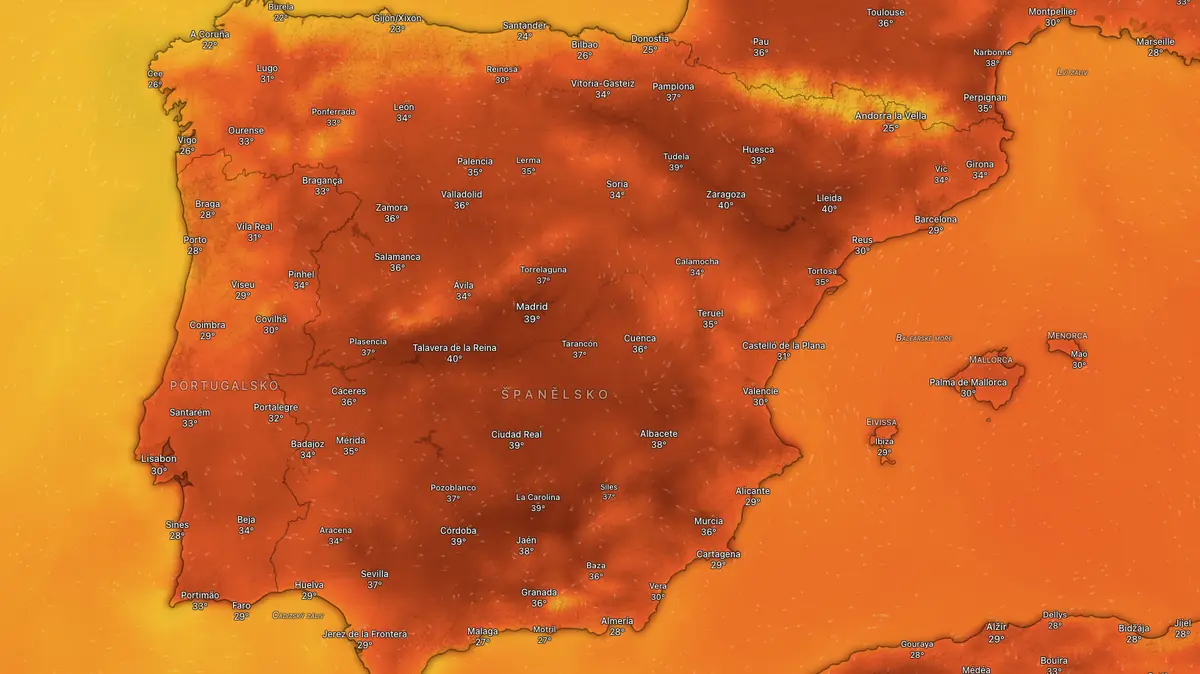
In France, the heatwave has lasted for 23 days and has matched the historical record from 1983, leading to more than 7000 additional deaths and increasing the risk of wildfires and landslides in the Alps. (translated)

In France, the heatwave has lasted for 23 days and has matched the historical record from 1983, leading to more than 7000 additional deaths and increasing the risk of wildfires and landslides in the Alps. (translated)

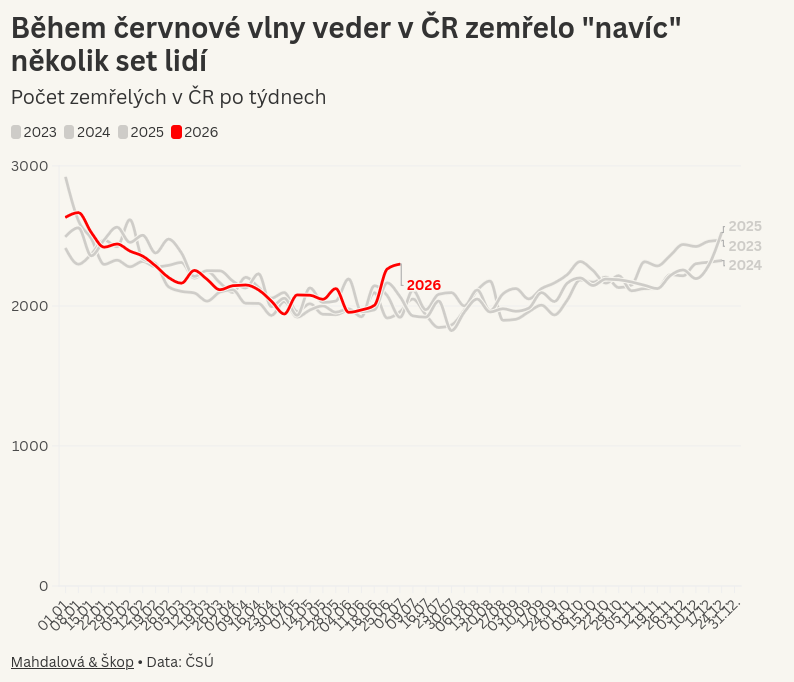
During the June heatwave, several hundred people died in the Czech Republic "additionally." Newly published data from @czstatistika shows a clear impact on higher mortality. We are preparing a detailed analysis for the Czech Republic with @data_zurnalist, following our article covering Europe (in the comments) 👇 (translated)
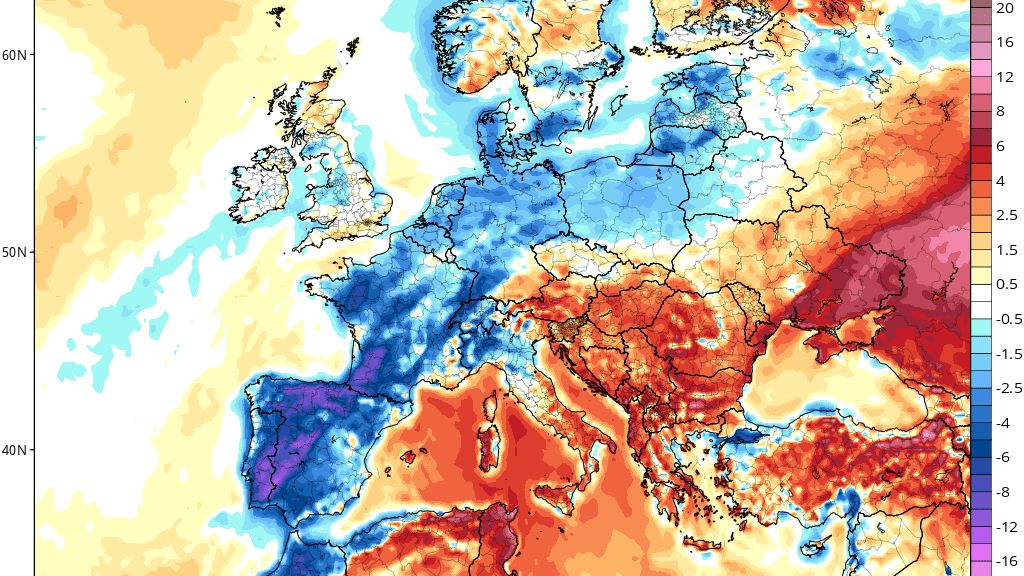
In France, after more than two months of heat waves, a cooling is expected that should bring relief from extreme temperatures and also alleviate the extensive drought that has affected the country and led to a record number of heat-related deaths. (translated)

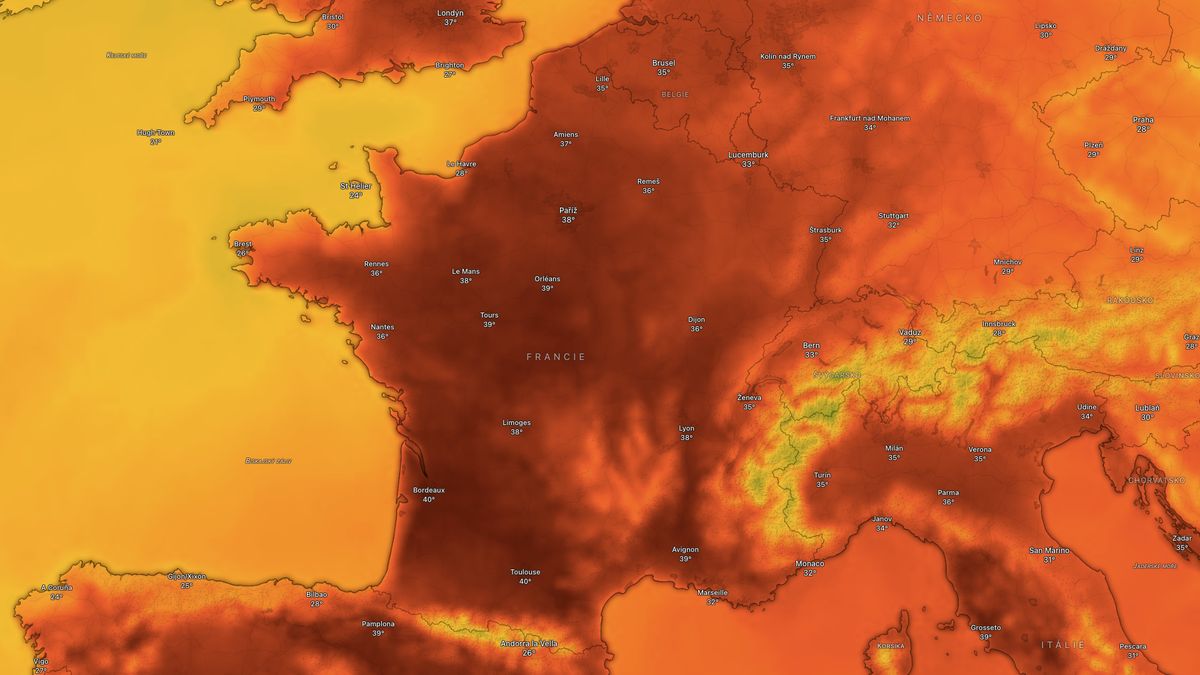
France is experiencing a wave of extreme heat with temperatures exceeding 40 °C, which creates conditions for the formation of a heat dome and has issued warnings across 67 departments, while a cooling is expected next week. (translated)

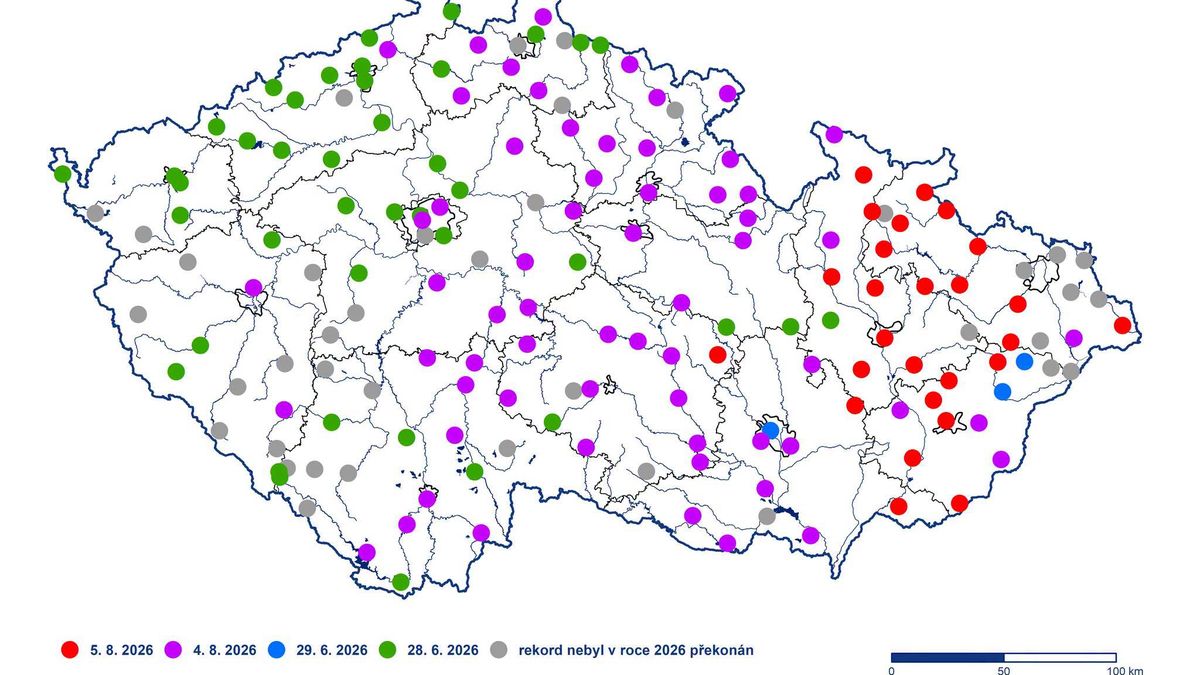
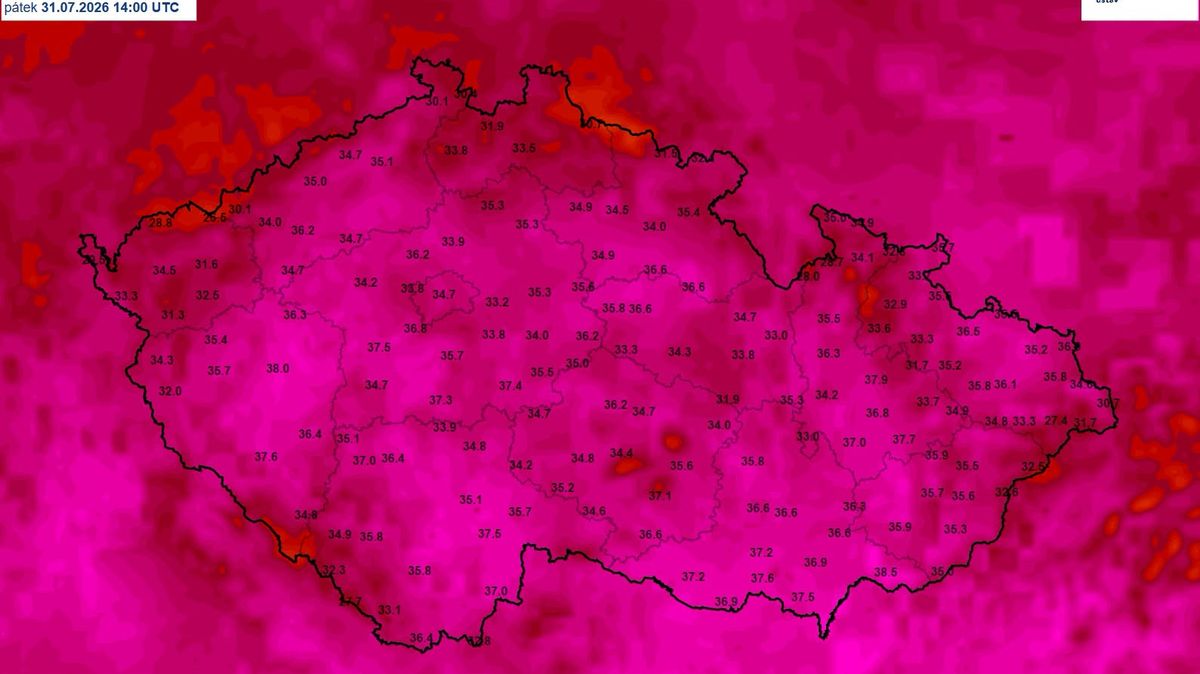
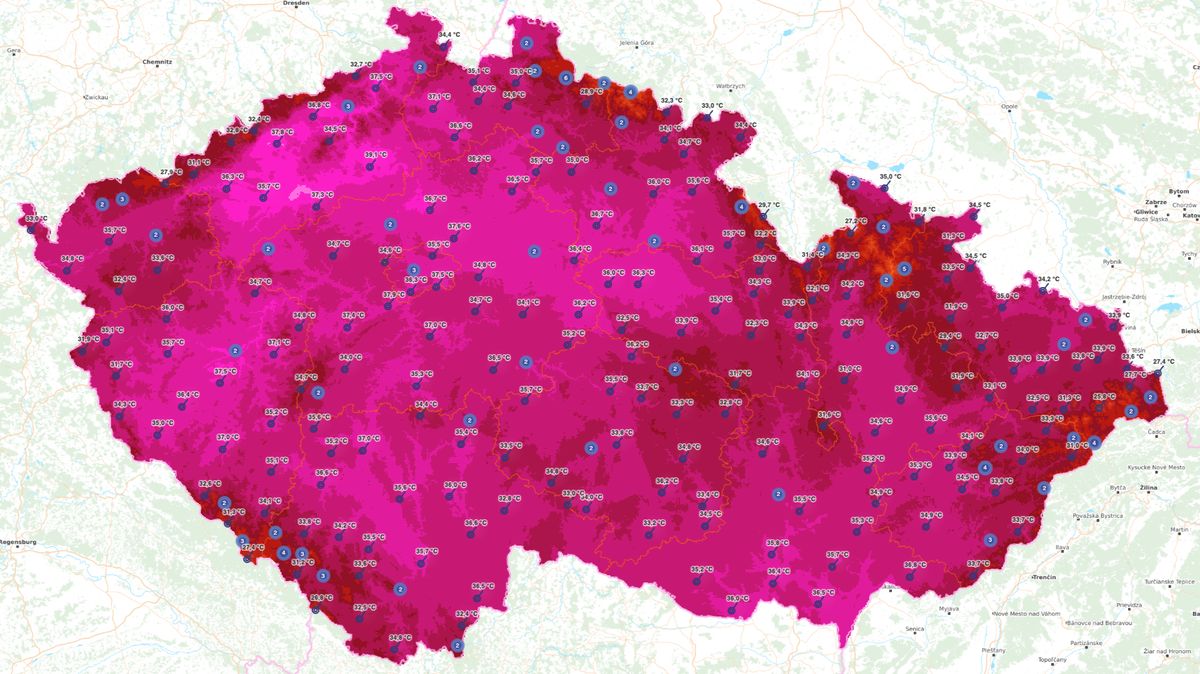
This year, 77 percent of measuring stations in the Czech Republic recorded new absolute temperature records, with the highest measured value reaching 41.9 degrees Celsius in Doksany, which surpassed the previous nationwide record. (translated)

This year's heat has caused record-breaking temperatures at 132 meteorological stations in the Czech Republic, which represents 77% of those with at least thirty years of history, with the highest temperature recorded on June 28 in Doksany at 41.9 °C, and temperatures above 40 °C have already been recorded five times this year, making this year unprecedented in the history of measurements. (translated)

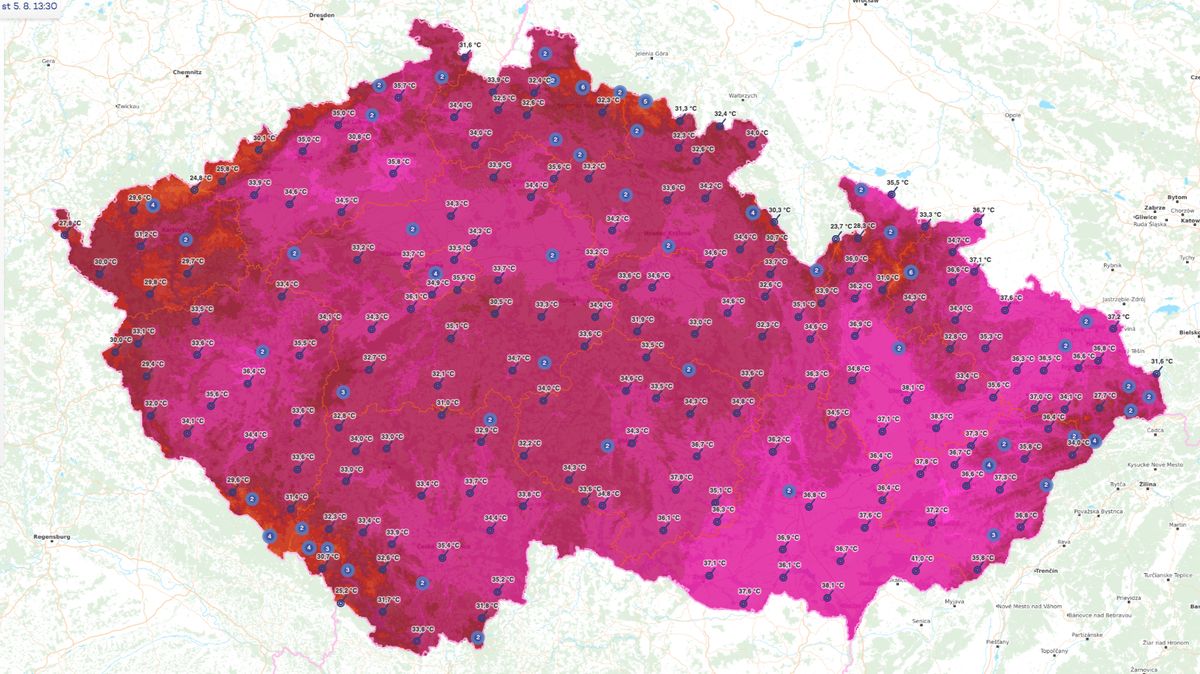
Due to the wave of heat peaking in the Czech Republic, the highest temperature in the history of Moravia and Silesia was recorded in Strážnice, reaching 41 °C on Wednesday, thus breaking the temperature record set in the previous days. (translated)

Climatologist Aleš Farda confirms that this year's extreme heat waves are a result of climate change, which accelerates the occurrence of high temperatures and alters the nature of synoptic events, contributing to more frequent and intense fires in Europe. (translated)

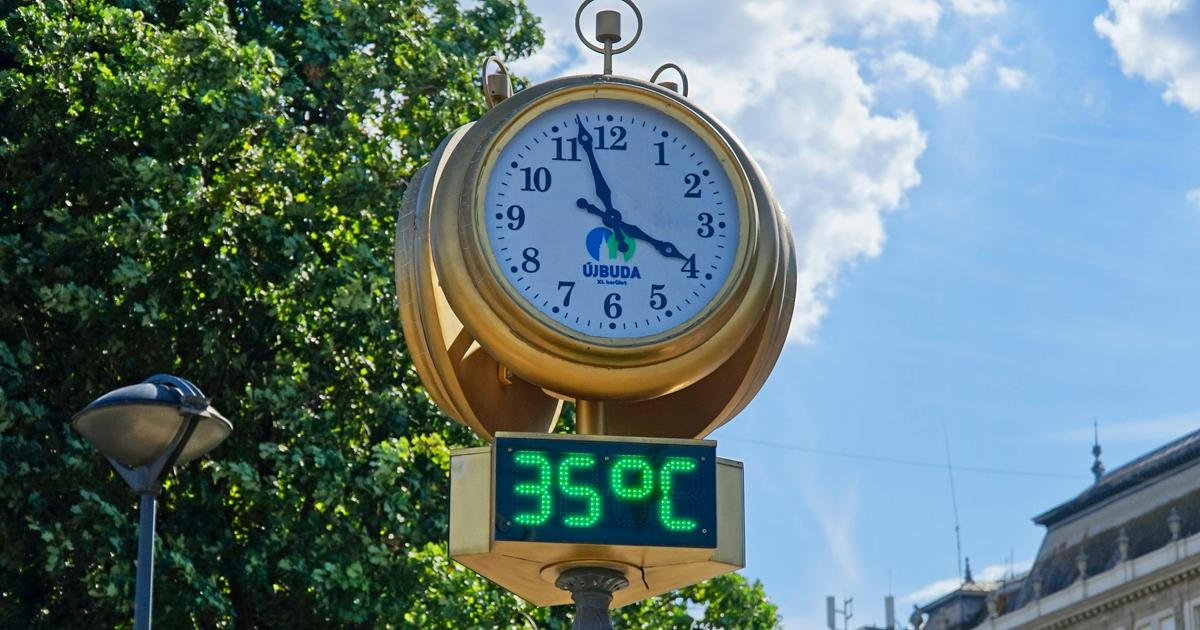
The heatwave in the Czech Republic is peaking, with a record temperature of 39.4 °C measured in the Plzeň region, and historical temperature records have been broken at most meteorological stations, while strong storms and an early return of hot weather with temperatures around 35 °C are expected. (translated)

In the Czech Republic, the current heat wave is maintained by a heat dome caused by a strong high-pressure system and warm air flowing in from the south, with the high temperatures compared to the past being a result of climate change. (translated)

In the Czech Republic, a temperature of 40.1 °C was measured in Doksany, which is a new daily and monthly record, and meteorologists warn of ongoing heatwaves due to climate change. (translated)

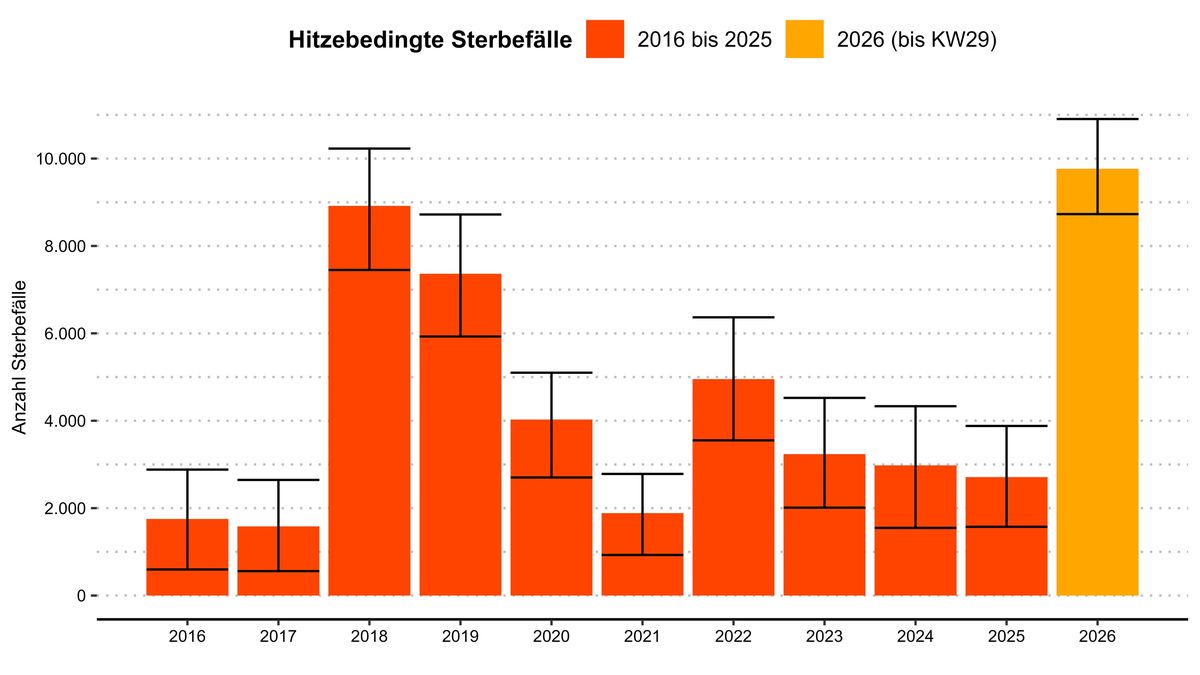
In Germany this year, an estimated nearly 10,000 people died due to heat waves, with the highest number of deaths occurring in the second half of June, when historical temperature records were broken. (translated)

Another heatwave is approaching the Czech Republic, with temperatures from Thursday potentially reaching up to 39 degrees Celsius, while meteorologists warn of the risk of organism collapse and increased fire danger in some regions. (translated)

Meteorolog Michal Žák varuje, že Českou republiku čeká další vlna extrémních veder, která nejenže poškodí zdraví obyvatel, ale také zvýší riziko požárů, a to v kontextu současné klimatické krize, která přináší častější a intenzivnější teplotní anomálie. #vlnavedra #požáry #klima

Francii čeká už čtvrtá vlna veder během dvou měsíců, která začne v úterý, a bude mít potenciál přinést velmi vysoké teploty až kolem 40 °C, což by mohlo vést k dalším zdravotním problémům, jak už tomu bylo během dubnové a červnové vlny, které přispěly k rekordnímu počtu nadúmrtí. #vlnavedra #Francie #klimatickáanomalie

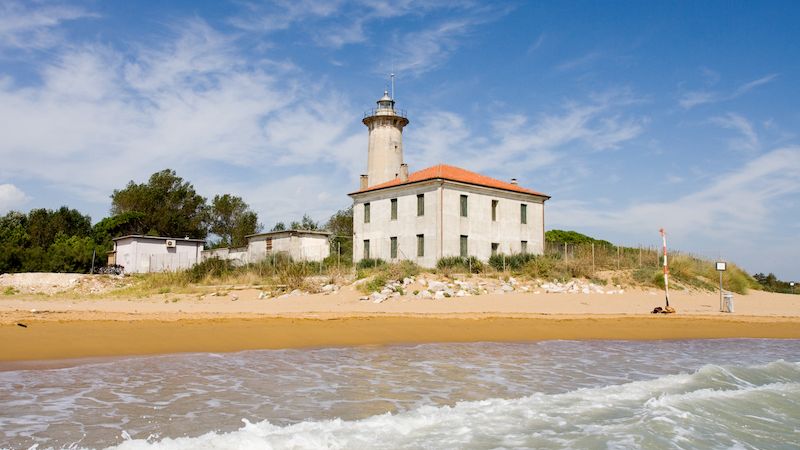
Na pláži v Bibione došlo k tragédii, když slovenský turist zemřel po kolapsu ve vodě, což vedlo k dalšímu kolapsu jeho manželky kvůli šoku a následně i k záchvatu infarktu jejího známého, přičemž všechny tři případy byly vyvolány extrémními vedry a rychlými změnami teploty. #kolaps #vlnavedra #zdraví

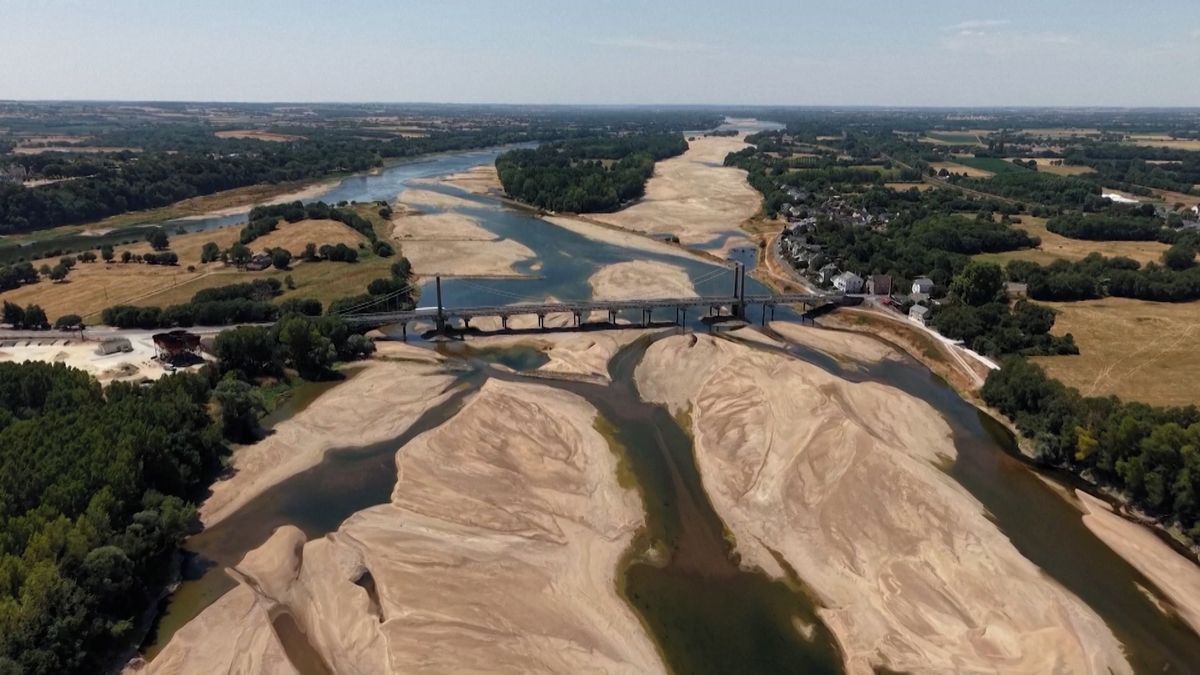
Řeka Loira v západní Francii kvůli vlně veder a nedostatku srážek vysychá, což vedlo k vyhlášení červeného stupně výstrahy na vedro a zavedení omezení spotřeby vody v postižených regionech. #Francie #vlnavedra #Loira

Západní Evropa zažila v červnu 2023 nejteplejší červen v historii měření s průměrnou teplotou 20,74 °C, což je o 3,05 °C více než průměr za toto období v letech 1991 až 2020, přičemž tento měsíc byl také druhým nejteplejším globálně. #klima #vlnavedra #teplotnírekordy

Barcelona zavedla pro venkovní pracovníky chytré náramky, které měří tělesnou teplotu, a v případě kritické hodnoty vydávají varovné signály, jako reakci na častější vlny veder a snahu přizpůsobit město rychlým klimatickým změnám. #klima #pracovnipodminky #vlnavedra

Teplota moří kolem Evropy dosáhla rekordních hladin, s extrémními odchylkami až 7 °C nad běžné hodnoty, což je spojeno s historickou vlnou veder a nástupem jevu El Niño, a očekává se, že tato situace bude mít vážné důsledky pro klima a mořské ekosystémy. #vlnavedra #klimatickázměna #teplotnírekordy