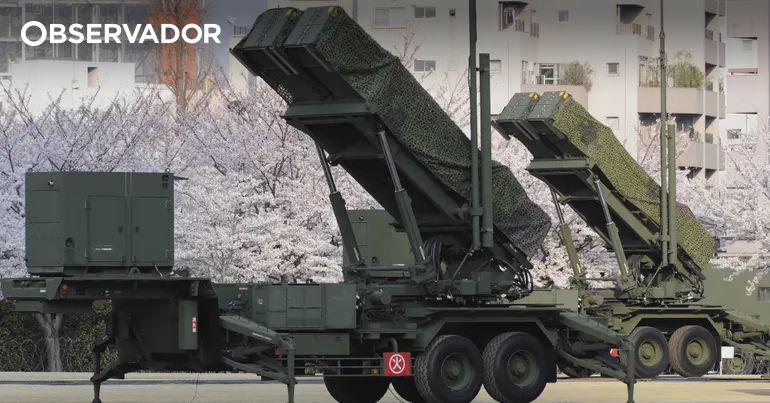
The criticism is justified: delaying already financed Patriot interceptors by European allies and allowing restrictions on Starshield during a Russian campaign of aerial attacks places political or commercial interests above an urgent humanitarian and defense need. But the responsibility is neither simple nor identical in both cases: the formal control of the Patriots lies with the U.S. Government, while Starshield involves a decision-making chain shared between SpaceX, the Pentagon, and the White House. ## What's at stake Patriots are not "offensive weapons": they are interceptors designed to defend cities, infrastructure, and populations against Russian ballistic missiles and drones. Recent reports indicate that about 60 missiles — PAC-3 and PAC-2 — have been held back, including units already purchased by European countries to transfer to Ukraine, pending American authorization. Starshield, the military version of Starlink, is used by Ukraine for combat communications, attack drones, and drone interception systems. When its speed or availability is limited, the effect is not only logistical: it can hinder the detection and neutralization of Russian attacks, posing direct risk to civilians. ## Trump: a political responsibility The strongest criticism of Trump is that the U.S. administration has an effective veto power over Patriot transfers by allies, even when they have already paid for the missiles. If delivery is blocked, the President is ultimately politically responsible for that decision — or, at the very least, for not resolving it quickly. Trump has denied ordering restrictions on Starshield and claimed not to know its origin, but this does not eliminate his responsibility: a President can and should demand immediate clarity, restore service, and ensure that critical equipment is not used as a tool of pressure on an ally at war. There is also a problem of strategic coherence. Delaying air defense while Russia escalates attacks against Ukrainian infrastructure weakens Kyiv precisely at the moment when Moscow seeks military and negotiating advantage. This can be interpreted by European allies as a sign that American security commitments are conditional and revocable. ## Musk: private power without transparency The criticism of Elon Musk is different, but serious. SpaceX controls a communications infrastructure on which Ukraine operationally relies; even if the restrictions were decided or authorized by the U.S. Government, the company has a responsibility to clarify who ordered them, on what contractual basis, and for what reason. Musk has stated that speed limits or usage are determined by the U.S. military and ultimately by the President. This assertion may be true, but it does not address the issue: a company providing a critical military service should not be able to leave ambiguously open the question of who may cut or degrade that service in the midst of war. Musk's claim that Ukraine would violate the terms of service by using Starlink for offensive drones also requires distinction. Ukraine has the right to defend itself and to use communications for military operations; this does not give Musk a unilateral mandate to decide, in real time, which Ukrainian defensive capabilities may function. ## Where criticism becomes excessive It is important not to turn criticism into certainties that the sources do not support. Available reports show delays and restrictions, but also contradictory accounts of who ordered the throttling of Starshield: the White House denied involvement, Musk denied unilateral action, and American officials have given inconsistent messages. It has also not been conclusively proven, based on public evidence, that Trump personally ordered the blocking of the Patriots or that Musk decided alone to restrict Starshield. Solid criticism is not "we proved a direct order"; it is: **who has the power failed to clarify a decision that puts civilians and defensive capability at risk**. ## A more precise formulation > Trump and his administration must answer for delays in Patriot interceptors already paid for by European allies and for not ensuring, with clarity and urgency, that Ukraine has air defense against Russian attacks. Elon Musk and SpaceX must answer for the opacity surrounding restrictions on Starshield, a critical military service for communications, drones, and Ukrainian air defense. Regardless of who gave the final order, both have the power to restore these capabilities immediately — and their failure to do so quickly and transparently is morally and strategically unacceptable. The central question is not just who pressed the button. It is that, in a war where civilians are hit by missiles and drones, opaque decisions about defensive missiles and military communications can cost lives — and neither a democratic leader nor a businessman should treat this as leverage for political, commercial, or negotiating gain. (translated)