
The author argued that socialism was no more inherently evil than Christianity, writing that neither ideology necessarily prescribed the actions associated with Joseph Stalin and his secret police or the Spanish Inquisition.
The author argued that socialism was no more inherently evil than Christianity, writing that neither ideology necessarily prescribed the actions associated with Joseph Stalin and his secret police or the Spanish Inquisition.

The author argued that anti-immigration policies were effective at mobilising voters because they offered a sense of identity, whether based on race, language, Christianity or other factors. They said this appeal was stronger than that of other culturally conservative causes.
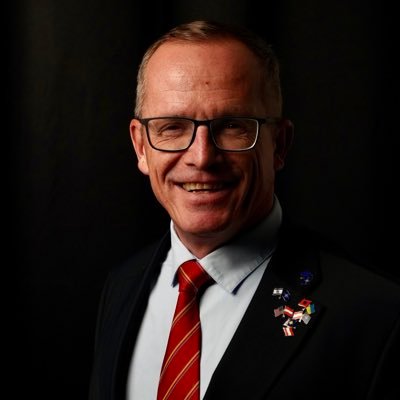
The author congratulated Kosovo’s first Christian president, whom they described as Catholic, and said they hoped the Pope would visit Kosovo soon. #Kosovo #Christianity #PopeFrancis #XK

Cardinal Robert McElroy: We must “recognize the evil that is being carried out in our name and fight it… We must recognize in abandoning the words of Deuteronomy and the Statue of Liberty, we are losing our soul as a nation.” https://www.thelettersfromleo.com/p/on-pope-leos-world-day-of-migrants #religion #christianity
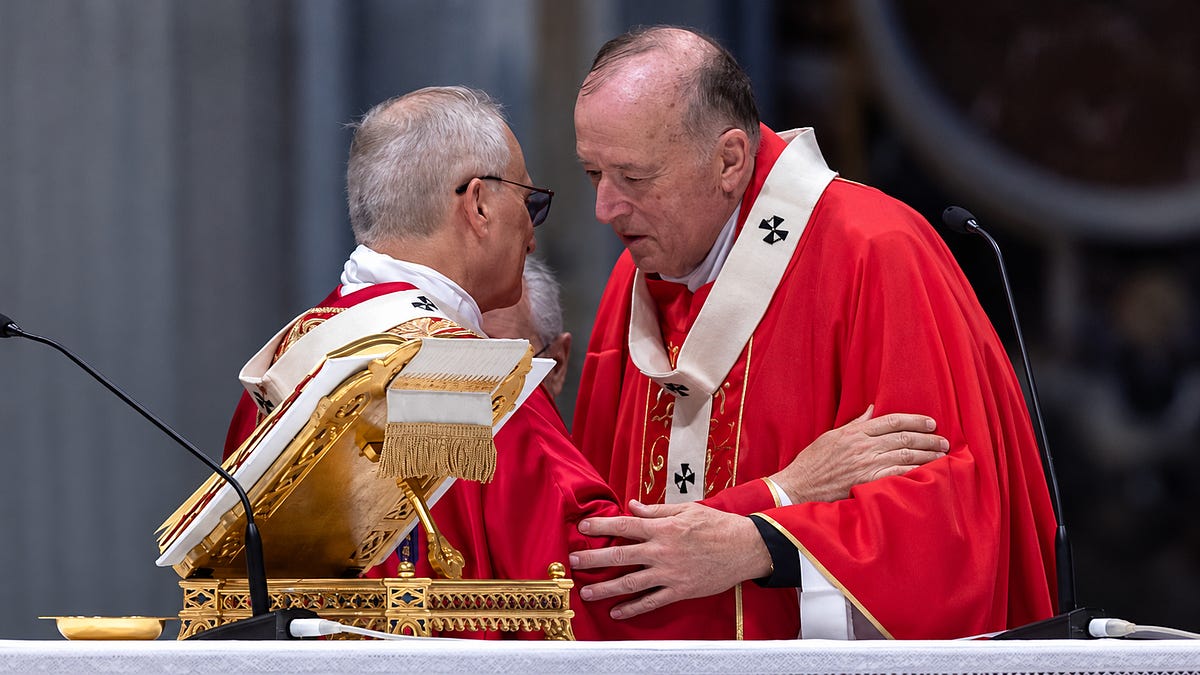
Pope Leo XIV in Metz: “To invoke God’s name in order to justify violence or oppression is to profane His name. Nothing that disfigures human dignity can claim to be inspired by God.” https://www.vaticannews.va/en/pope/news/2026-09/pope-leo-xiv-metz-france-interreligious-encounter.html #christianity #religion #PopeLeoXIV


Ohranitev izvornih krščanskih skupnosti v Siriji je preizkus naše odločnosti in zavezanosti evropskim vrednotam. Na današnji konferenci v #EP so kristjani iz Sirije povedali, da ne zahtevajo nikakršnih privilegijev, ampak zgolj enake pravice, varnost in svobodo veroizpovedi. https://t.co/Dra95tMsMz #Syria #Christianity #HumanRights #SY


Creepy because not how they look or wear etc- creepy because of how the women are treated- any extremist end of just about any religion treats women like property. Not acceptable… whether it’s Christianity or Judaism or Islam. Just IMO #WomenRights #Extremism #ReligiousTolerance #Nospecificcountrycodescanbeidentifiedfromthistweet.
MAGA – RUSSIA LINKS: THE KREMLIN IS SAYING THE QUIET PART OUT LOUD. Kirill Dmitriev openly tries to sell Putinism to MAGA as an alliance of “Christianity,” “traditional values,” “strong borders” and “truth.” So I ask him directly: MR KIRILL DMITRIEV — HOW CHRISTIAN IS YOUR https://t.co/BxC6Dr3Lm2 #MAGA #Putinism #Christianity #RU


"Their Christianity is not simply a religious belief imposed upon politics. Increasingly, it is a way of making political grievances feel sacred." An excellent insight into the new British Christian far right. 👇 https://t.co/UYUlfrj5dw #ChristianFarRight #PoliticalBeliefs #SacredGrievances #GB
The Fracture That Kills the Family The West’s deepest divide may not be left versus right, but whether young men and women still share a vision of the good life. The nuclear family is society’s foundation, yet households struggle to form when the sexes view each other as opponents. Many women see marriage as patriarchal; many men see women as manipulative or exploitative. Relationships shift from mutual union to zero-sum power struggles. Christianity framed marriage as union—two people becoming one. Nietzsche warned the death of God would remove a shared moral foundation, leaving society vulnerable to nihilism and fragmentation. We are living that fragmentation. Young men often retreat into pornography, gaming, and prolonged adolescence. Young women increasingly frame sexual liberation as empowerment. Both chase proximate pleasures while losing ultimate purposes: family, responsibility, continuity, and creating life. Dating data reflects the fracture: among unmarried Americans aged 22–35, only 26% of women and 36% of men are actively dating. Ideology filters matches too—Gen Z and young millennials cite political compatibility far more than Boomers. Research also finds a mismatch: only 0.6 single liberal men per single liberal woman, and only 0.5 single conservative women per conservative man. Cross-ideological pairing has risen from 6% in the 1970s to 22% today. The consequences extend beyond dating: fertility has fallen below replacement across much of the West, and 42% of American adults were unpartnered in 2023. Policy responses—tax incentives, parental leave, baby bonuses—miss the deeper cultural and spiritual problem: you can debate taxes, but it’s hard to build a family when you disagree on masculinity, whether marriage is oppressive, or whether family is worth sacrificing for. The values gap is the disease. The political divide is the symptom. The household is the casualty—and when it cracks, everything built above it loses stability. The question is whether a civilization can survive when the two people it most needs to unite can no longer agree why they should.
The Left Didn’t Replace Religion… It Became One Many leaders in the West may reject God, but they often believe with near-religious fervor in something else. The progressive worldview mirrors religion: people still crave meaning, so it gets redirected. Science is treated like scripture interpreted by an expert priesthood; capitalism becomes the fallen world; revolution is purification; climate change is apocalypse with repentance; gender identity is the soul, the “true self” trapped in a betraying body. Without metaphysics, evil must be placed in the material world. For many on the left, Hitler functions as a secular Satan, so anything tied to him can be treated as morally contaminated—nationalism, borders, ethnic identity, masculinity, Europeans, industry, and Western traditions. Jung’s “shadow” is projected onto an enemy, letting adherents feel morally pure while avoiding the harder work of facing their own capacity for evil. Where Christianity locates sin inside every heart (“original sin”), the secular version relocates the flaw into the world—into whiteness, the West, nationalism, borders, or any chosen symbol. This framework makes moral judgment easy and singular: if Hitler is evil, then opponents become “fascists,” “Nazis,” or “Hitler.” Disagreement turns from political to moral and existential. This isn’t a claim that progressives can’t see evil elsewhere—it’s that this framework has become an instinctive moral compass. The ruling class isn’t truly secular: it has its own faith, and increasingly expects you to live by it.
Why Weak Societies Choose Tyranny The pinnacle of tyranny would be a system that allows politicians, elites, and bureaucrats to control a population without force or coercion because the people love their servitude. Aldous Huxley wrote Brave New World, an eerily relatable dystopian novel, with this idea at the forefront. Unlike Orwell’s 1984, there is no overt oppression. The state does not have to stamp on human faces with its jackboots or erect an inescapable surveillance state. Rather, the people of Brave New World happily chain themselves with meaningless pleasure and distractions. The authorities do not rule through terror and rage, the central elements of 1984, but instead give the people everything they ever wanted. A pharmaceutical called Soma becomes the opiate of the masses. Mustapha Mond, the World Controller, likens it to Christianity without tears. While religion requires years of moral training, Soma allows citizens to achieve peace simply by swallowing tablets. It is the perfect escape from reality, a holiday from the facts. Lenina, the female counterpart to the protagonist Bernard, cannot comprehend why he refuses Soma, preferring discomfort to something that can remove it. When Bernard states, “I’d rather be myself, myself and nasty, not somebody else, however jolly,” Lenina sees this as a sort of pathology and repeatedly encourages him to take the wonder drug. Bernard explains, “I want to know what passion is.” He understands that there is more to life than merely being content, craving genuine experience, including suffering and intensity, rather than being emotionally regulated by the World State. Lenina’s bewilderment stems from her conditioning to regard unhappiness as a technical problem, encapsulated in the society’s common saying that “a gram is better than a damn.” The people of Brave New World are not captives but satisfied customers. Children are produced by the scientific state, relieving people of the responsibility of parenthood. This grants them the ability to engage in promiscuity, where everyone belongs to everyone else, while filling their free time with cheap entertainment and endless sporting events—what would be referred to as slop today. As Neil Postman observed, Orwell saw totalitarianism through the lens of fear, while Huxley saw it through pleasure. There was no need to ban a book in Brave New Worldbecause there was no one who wanted to read one. An abundance of low-quality information rendered censorship unnecessary because no one could hear the truth through all the noise. Huxley threw shade at civil libertarians who passionately opposed tyranny because they failed to take into account man’s almost infinite appetite for distractions. Humanity in its rawest form is portrayed by John the Savage, an outsider free from the World State’s conditioning. Upon coming face-to-face with this spiritually neutered society, he completely rejects it: “I don’t want comfort, I want God, I want poetry, I want real danger, I want freedom, I want goodness, I want sin.” Huxley’s dystopia is not imposed on an unwilling population but instead requested by a hollow one. Which leads us to the question: How do people become so weak that they get on their knees and beg for totalitarianism? Good times make bad times possible. Once a certain level of luxury and safety is achieved, people start to resemble the hobbits from the Shire. They are so far removed from evil that they forget it even exists and become defenseless in the face of it. Andrew Lobaczewski, who studied the psychology of totalitarianism from inside Poland’s communist takeover, wrote: “During good times, people progressively lose sight of the need for profound reflection. They lose the capacity to differentiate human nature, and emotion begins to dominate intellect. Once a critical mass starts operating on the pleasure principle, any excess mental effort seems like pointless labor.” Lobaczewski warned that it is not as simple as some people losing the ability to think rationally. It is worse, because those people then shame anyone capable of doing so. A clever, liberal, and merry individual is a good sport. A more far-sighted person predicting dire results becomes a wet blanket, a killjoy. The ability to have uncomfortable conversations without emotion taking over is, in Lobaczewski’s view, an indicator of whether a society’s future will be good or bad. It is easier to think about pleasant things. This leads people to eliminate any data or facts that cause them discomfort. That becomes a habit and eventually a custom accepted by society at large. Once the general populace accepts that inconvenient truths should be left unsaid, it becomes incapable of reaching correct conclusions. After all, how could you ever describe a picture that you refuse to look at? “Catastrophe waits in the wings of the communities that lose the capacity for psychological reason and moral criticism,” Lobaczewski wrote. “It is on the other side of this weakening of thought that the processes of the generation of evil are intensified at every social scale until they give rise to bad times.” It is precisely man’s dreams of happiness that can lead to chaos and suffering. This hedonistic view of happiness contains the seeds of misery, feeding the eternal cycle whereby good times give birth to bad times. Friedrich Nietzsche viewed socialism as demanding comfort for the greatest number of people possible. To question whether it is good for the masses to live in comfort has become a form of heresy. This reveals the spiritual atrophy that so many suffer from. Considering only the weak believe comfort to be a virtue, it is what Carl Jung would describe as the infantile dream state of mass dependency: the desire to gently slip back into the kingdom of childhood, into the paradise of parental care. Except this lack of friction has consequences. The perfect state destroys the soil in which great intellect grows. Genius, struggle, passion, strength, and wisdom are required to build a safe and abundant society. Yet once a certain level of comfort is achieved, it can destroy the very virtues required to obtain it. Nietzsche observed that it is the warmest heart that aims to alleviate suffering and hardship but fails to realize that it thereby wills the destruction of its own foundation. Comfort breeds mediocrity, which is then called good. Small people want one thing above all: that no one hurt them. We have taken this pathology to such a degree that we now obsess over hurt feelings and call this virtue. Pleasure, in its proper place, is a byproduct of meaningful goals, not a goal in itself. Aristotle saw that pleasure and comfort distort perception and proper judgment. While they do not cause us to misjudge something like geometry or mathematics, they can destroy our ability to decide what is worth pursuing and, therefore, what to do. Consider The Odyssey. Homer depicts Odysseus’ men on the island of the Lotus-Eaters, where they taste the fruit and lose all desire to go home. Much like Huxley’s Brave New World, they are not imprisoned. Rather, they simply stop wanting anything more. Odysseus has to drag his men back to the ships while they weep to stay. This is what comfort can do to men. It empties them of purpose. We intuitively understand this but fail to apply it to our own lives. We must make the same choice as Odysseus when he refuses Calypso’s offer of endless comfort and immortality. He knows she is more beautiful than his wife Penelope waiting at home. He knows that he and Penelope will grow old and die, a fate he could avoid by staying with Calypso. No one who reads these stories wishes he had stayed. We want him to choose the hard way home because if he took the offer, he would stop being admirable. Yet staying is exactly what our modern society asks of us. We are told that the island is the good life. But what happens to the man who caves to this temptation? In Thus Spoke Zarathustra, Nietzsche imagines a risk-averse society taken to its logical endpoint. The elimination of all struggle produces a man so diminished that he fails to possess even self-contempt or higher aspiration. Safety and sameness become the highest goals, creating “no shepherd in one herd.” Anyone who seeks to be anything more than normal becomes an aberration to be dealt with. Or, as Nietzsche puts it, they have “made the wolf a dog in man himself, man’s best domestic animal.”
The Pinnacle of Tyranny The pinnacle of tyranny would allow politicians, elites, and bureaucrats to control a population without force or coercion—because the people love their servitude. Aldous Huxley’s *Brave New World* explores this idea through an eerily relatable dystopian society. Unlike Orwell’s *1984*, Huxley’s world contains no obvious oppression. The state does not need to “stamp on a human face—forever.” Instead, citizens willingly chain themselves to pleasure and distraction. Authorities do not rule through terror, but by giving people everything they think they want. Soma, a government-approved drug, becomes the opiate of the masses. Mustafa Mond, the World Controller, compares it to Christianity without the suffering. By swallowing a few tablets, citizens can escape reality—a temporary holiday from the facts. Lenina cannot understand why Bernard refuses Soma, preferring discomfort to something that can remove it. When Bernard says, “I’d rather be myself, myself and nasty, not somebody else, however jolly,” Lenina views his desire for authenticity as a kind of illness. Bernard wants to experience passion and recognizes that life involves more than contentment. He craves genuine experience, including suffering and intensity, rather than emotional regulation by the World State. Lenina’s confusion results from her conditioning, which teaches her to view unhappiness as a technical problem. This belief is captured by the saying, “A gram is better than a dam.” The citizens of *Brave New World* are not captives but satisfied customers. Children are produced by the state, relieving people of the responsibilities of parenthood. Their free time is filled with promiscuity, cheap entertainment, and endless sporting events—what might be called “slop” today. As Neil Postman observed, Orwell saw totalitarianism through fear, while Huxley imagined a society where oppression would be unnecessary because people would willingly surrender themselves to pleasure. There would be no need to ban books, because no one would want to read them. An abundance of low-quality information would make censorship unnecessary; the truth would be drowned out by noise. Huxley warned that people’s “almost infinite appetite for distractions” could make tyranny not only possible, but welcome.
Marxism as a Secular Religion A traditionally religious person accepts that they inhabit a world of scarcity and suffering, finding peace through belief in salvation from God. The affluent atheist, encountering hardship and personal responsibility for the first time, may instead become overwhelmed by anxiety. Marxism, disguised as economic theory, promises to relieve individuals of responsibility by transferring it to the system. It offers the religious concepts of a fallen world, a chosen people, certainty, and moral status, while removing Christianity’s most difficult demands: repentance and forgiveness. Rather than locating sin within each individual, Marxism assigns it to a class: the bourgeoisie. Salvation is no longer a process of personal transformation but something achieved by acting against others. The individual is not asked to examine himself, because guilt is always assigned to another class. This helps explain why Marxist revolutions so often end in mass graves. If evil is viewed as a property of a class, then eliminating that class becomes an act of purification. Mass murder is not treated as a betrayal of the doctrine but as its ultimate fulfillment. Marxism elevates resentment to a virtue. It portrays inequality as a cosmic injustice and suggests that hatred of those who possess more is morally justified. Ironically, although it rejects God, it borrows religious language. In a purely material world of atoms colliding randomly, no arrangement of matter can be inherently unjust. Class origin becomes a crime inherited from one’s ancestors, and forgiveness has no meaningful place. When salvation is promised through the violent removal of an entire class, the result is tragically predictable. Marxism is not merely an economic theory; it is a secular religion of resentment and destruction.

ὅστις δὲ ἀρνήσηταί με ἔμπροσθεν τῶν ἀνθρώπων, ἀρνήσομαι κἀγὼ αὐτὸν ἔμπροσθεν τοῦ πατρός μου τοῦ ἐν τοῖς οὐρανοῖς https://t.co/QHRd1BZub8 #Bible #Faith #Christianity

#ICYMI: California Imam Amir Abdel Malik-Ali: Islam Is Going to Save America; Muslims Were Here before Christianity – Columbus Said So in His Diary https://x.com/MEMRIReports/status/2088684142846423169


Yeah. I think we can conclude it now. Millions of Christians worldwide have been tricked to support a state that is nothing short from demonic. #Christianity #DemonicInfluence #StateDeception #Nospecificcountrycodesarepresentinthetweet.
Freedom Con: Thousands of men gather in Washington DC for Christianity and feats of strength—The amalgam of political activation, Christian worship and male bonding provided a glimpse of an emerging far-right movement with masculinity as its unifying force https://t.co/KkllWMfSvX #FreedomCon #Christianity #Masculinity #US
Older narratives from Christianity around the inheritance of evil or sin continue to shape debates about science. Genetics is a very young science, we are interpreting much of it through the lens of these much older, more Christian stories By @kph3k https://t.co/aaXrdzrD37 #Genetics #Christianity #Inheritance #Nospecificcountriesarementionedinthetweet.






