Five Lessons on Aggression and Dominance “There is a point in the history of society when it becomes so pathologically soft and tender that… it sides even with those who harm it.” Friedrich Nietzsche wrote this nearly 140 years ago, yet it still sounds contemporary. In *Chimpanzee Politics*, Frans de Waal shows that dominance, aggression, hierarchy and confrontation—often dismissed in humans as “toxic masculinity”—also appear in our closest relatives. These behaviors may reflect deep-rooted drives, not merely social constructs. **1. The threat of violence can keep the peace** Most chimp confrontations are displays, not fights. Only about 0.4% of male confrontations become physical. Rank depends on strength, alliances, displays and recognition. Violence matters partly because it is rare: conflict must be allowed to resolve before it escalates. **2. When respect disappears, violence rises** Chimpanzees maintain hierarchy through formal greetings, including bowing. At Arnhem, 22 of 37 serious male fights occurred when males had stopped greeting one another—even though such periods made up less than a quarter of observation time. Violence was nearly five times more likely when recognition rituals broke down. **3. Power requires alliances** Before challenging the dominant male, a chimp often grooms females and plays with their young. Like Machiavelli’s political challengers, he builds support before attempting to seize power. **4. Influence can replace force** Female chimps sometimes recruit males to attack rivals, signaling distress and flattering the enforcer while avoiding the fight. Power can operate through alliances and influence, not just strength. **5. Concentrated resources create conflict** Chimpanzees normally forage for scattered food, limiting competition. When humans provide concentrated food, aggression rises. Larger groups are also harder to govern because familiarity declines and hierarchies become unstable. Stable societies may require hierarchy, respect, controlled confrontation and distributed power. Suppressing every expression of dominance may not eliminate conflict; it may remove mechanisms that keep conflict contained.
The Great Feminization, Measured Seventy-two percent of men under thirty hold a positive view of women; among women under thirty, 50% (a 22-point gap). Among women under twenty-five, the share is 35% (a 37-point gap). Where the manosphere and “toxic masculinity” dominate headlines, the data points elsewhere: young women increasingly sort men into the enemy column. The class divide is sharp. Among working-class young women, 61% view men positively; among professional-class women, 36%—a 25-point gap tied to exposure to universities, HR departments, media organizations, and NGOs. The pattern runs through institutional conditioning. Helen Andrews argued this in 2020: between 2015 and 2020 many Western institutions became majority-female, including the New York Times newsroom (2018), law schools (2016), medical schools and the college-educated workforce (2019). Affirmative-action mandates, discrimination settlements, and diversity requirements helped drive the shift. As institutions changed, so did missions: justice increasingly focused on protecting “oppressed” minorities; newsrooms shifted from reporting toward narrative enforcement; universities moved from arguing to “safe spaces.” The result is a “daycare governance model”: infants to be protected (the oppressed), caregivers to provide protection (the allies), and predators to be removed (the dissenters). Research shows the same frame in speech: FIRE’s 2026 college speech rankings found women less tolerant than men across ideologies, including less tolerance for their allies. A woman entering kindergarten in 2005 has spent twenty years inside this system—she didn’t invent it, she inherited it. The 35% figure suggests sorting into victim, ally, and predator, with no grey zones. Working-class women, less conditioned by these pipelines, still view men positively (61–36). None of this is entirely new; Gustave Le Bon described the mechanism in 1895.
The Fracture That Kills the Family The West’s deepest divide may not be left versus right, but whether young men and women still share a vision of the good life. The nuclear family is society’s foundation, yet households struggle to form when the sexes view each other as opponents. Many women see marriage as patriarchal; many men see women as manipulative or exploitative. Relationships shift from mutual union to zero-sum power struggles. Christianity framed marriage as union—two people becoming one. Nietzsche warned the death of God would remove a shared moral foundation, leaving society vulnerable to nihilism and fragmentation. We are living that fragmentation. Young men often retreat into pornography, gaming, and prolonged adolescence. Young women increasingly frame sexual liberation as empowerment. Both chase proximate pleasures while losing ultimate purposes: family, responsibility, continuity, and creating life. Dating data reflects the fracture: among unmarried Americans aged 22–35, only 26% of women and 36% of men are actively dating. Ideology filters matches too—Gen Z and young millennials cite political compatibility far more than Boomers. Research also finds a mismatch: only 0.6 single liberal men per single liberal woman, and only 0.5 single conservative women per conservative man. Cross-ideological pairing has risen from 6% in the 1970s to 22% today. The consequences extend beyond dating: fertility has fallen below replacement across much of the West, and 42% of American adults were unpartnered in 2023. Policy responses—tax incentives, parental leave, baby bonuses—miss the deeper cultural and spiritual problem: you can debate taxes, but it’s hard to build a family when you disagree on masculinity, whether marriage is oppressive, or whether family is worth sacrificing for. The values gap is the disease. The political divide is the symptom. The household is the casualty—and when it cracks, everything built above it loses stability. The question is whether a civilization can survive when the two people it most needs to unite can no longer agree why they should.
The Pathology of Masculinity and Femininity Without Cultural Restraint Both sexes have evolutionary roles: men developed strength for protection, provision, and competition; women developed beauty and selectiveness for pair-bonding and survival. Culture channels these drives—family structure, dating norms, fatherhood, shame, religion—guiding strength toward building and beauty toward commitment. Remove the norms and the drives seek new avenues. For men, the open channel becomes force: aggression and risk can detach from responsibility, yielding robbery, assault, gang violence, and predation. The shadow side of masculinity is strength used to take rather than protect. For women, the channel shifts to extraction through simulated intimacy: monetized desire via platforms and influencer economies can turn closeness into leverage, often without the pair-bonding or family life it was built to support. The masculine ideal is protector and disciplined provider; its pathology is thug or criminal. The feminine ideal is nurturer and guardian of commitment; its pathology is the seller of simulated intimacy and extractor of attention. Both are corruptions of genuine virtues. Three accelerants intensified these patterns: stigma’s collapse, technology’s scalability of desire, and weakened communities and absent fathers. The root cause is the breakdown of family norms. Men are less destructive when bonded and mentored; women are less exploitative when raised to value enduring commitment. Consequences mirror each other: unchecked male pathology produces violence; unchecked female pathology produces mistrust, loneliness, and demographic decline. Both arise when culture denies that masculine and feminine virtues must be shaped and channeled rather than suppressed.
The Left Didn’t Replace Religion… It Became One Many leaders in the West may reject God, but they often believe with near-religious fervor in something else. The progressive worldview mirrors religion: people still crave meaning, so it gets redirected. Science is treated like scripture interpreted by an expert priesthood; capitalism becomes the fallen world; revolution is purification; climate change is apocalypse with repentance; gender identity is the soul, the “true self” trapped in a betraying body. Without metaphysics, evil must be placed in the material world. For many on the left, Hitler functions as a secular Satan, so anything tied to him can be treated as morally contaminated—nationalism, borders, ethnic identity, masculinity, Europeans, industry, and Western traditions. Jung’s “shadow” is projected onto an enemy, letting adherents feel morally pure while avoiding the harder work of facing their own capacity for evil. Where Christianity locates sin inside every heart (“original sin”), the secular version relocates the flaw into the world—into whiteness, the West, nationalism, borders, or any chosen symbol. This framework makes moral judgment easy and singular: if Hitler is evil, then opponents become “fascists,” “Nazis,” or “Hitler.” Disagreement turns from political to moral and existential. This isn’t a claim that progressives can’t see evil elsewhere—it’s that this framework has become an instinctive moral compass. The ruling class isn’t truly secular: it has its own faith, and increasingly expects you to live by it.

We have to turn off the toxic algorithms on social media that are spreading toxic masculinity and hatred of women for profit. The 'manosphere' is normalising misogyny on a global scale. It must be stopped. #ToxicMasculinity #StopMisogyny #SocialMediaReform #Therearenospecificcountriesmentionedinthetweet.

🚨 TUTORIAL | Como denunciar as publicações discriminatórias contra o BTS à HYBE A HYBE disponibiliza um canal oficial para que fãs denunciem conteúdos que ataquem seus artistas. Se você deseja ajudar, siga o passo a passo abaixo. 1️⃣ Acesse o site 🔗 https://t.co/Fg3VmnVZx5 2️⃣ Selecione as opções - Category BIG HIT MUSIC BTS - Type Report a malicious post Slander/Profanity 3️⃣ Preencha os campos - Title Discriminatory and Xenophobic Statements Contents (texto abaixo, em inglês) Dear HYBE Artist Protection Team, I would like to formally report a recent case of public discrimination and hateful speech directed at BTS by Brazilian influencer Pietra Bertolazzi. Following BTS' performance at the 2026 FIFA World Cup Closing Ceremony, she publicly referred to the members as "effeminate men," "vain," and said they caused her "second-hand embarrassment." She also stated that she did not know who they were and did not want to know, while claiming that their influence on today's generation was "serious" and harmful. After receiving criticism, instead of retracting her comments, she continued posting additional content reinforcing her statements. She compared BTS and K-pop to the decline of masculinity, portrayed them as symbols of cultural decay, and dismissed the positive impact their music has had on millions of people worldwide. She also publicly responded to fans by claiming that BTS promotes a distorted view of men and encouraged people to stop "idolizing men," framing the group as a negative influence. These statements go beyond personal opinion about music. They rely on harmful stereotypes regarding gender expression, reinforce prejudice against Asian male artists, and contribute to xenophobic and discriminatory narratives that have historically targeted Korean and East Asian entertainers. The controversy has received significant media attention in Brazil, with national news outlets covering both her statements and the widespread backlash from fans. Fan communities have also issued public statements condemning the discriminatory nature of her comments. As BTS has repeatedly faced prejudice based on their appearance, culture, and ethnicity throughout their career, we believe this situation deserves attention from HYBE's Artist Protection team. We respectfully ask that this incident be documented and reviewed, and that appropriate measures be considered to protect BTS from discriminatory attacks and harmful stereotypes. 4️⃣ Escolha a rede social Em Posting Channel, selecione: Instagram 5️⃣ Adicione o link Cole o link da publicação denunciada. https://t.co/qHjuiZgVZ7 6️⃣ Data da publicação Preencha: 2026.07.20 7️⃣ Autor da publicação Pietra Bertolazzi 8️⃣ URL do perfil https://t.co/iRU8A2tPtL 9️⃣ Anexe as provas Adicione capturas de tela das publicações e stories. 🔟 Confirme Marque a caixa: ☑️ I confirm that this report is truthful and contains no false or fabricated information Depois clique em Submit. Quanto mais denúncias fundamentadas forem enviadas, maiores são as chances de o caso ser registrado pela equipe de proteção aos artistas da HYBE. #BTS #HYBE #Discrimination


Dvě osoby byly zatčeny kvůli sexuálnímu násilí během prvního dne oslav San Fermín v Pamploně, kde došlo k pěti incidentům s obviněním z dotyků a jednomu z urážek, což vyvolalo výzvy ministryně pro rovnost k oslavám bez toxické masculinity. #SanFermín #ViolenciaMachista #Pamplona


Freedom Con: Thousands of men gather in Washington DC for Christianity and feats of strength—The amalgam of political activation, Christian worship and male bonding provided a glimpse of an emerging far-right movement with masculinity as its unifying force https://t.co/KkllWMfSvX #FreedomCon #Christianity #Masculinity #US

Yes, Andrew Tate is a vile misogynist. But the broader discourse around the “manosphere” and “toxic masculinity” on the Left is starting to resemble a moral panic. A reality check: “In response to every question we asked about changing gender norms, younger men were more #Misogyny #ToxicMasculinity #Manosphere #Nospecificcountrycodesarementionedinthetweet.

Článek se zabývá rozhodnutím EU nepodpořit občanskou iniciativu požadující zákaz praktik konverzní terapie zaměřených na změnu sexuální orientace, což vyvolává debaty o krizi masculinity a privilegium mužů v současné společnosti. #Moškosfera #KrizaMoškosti #KrizaPrivilegija
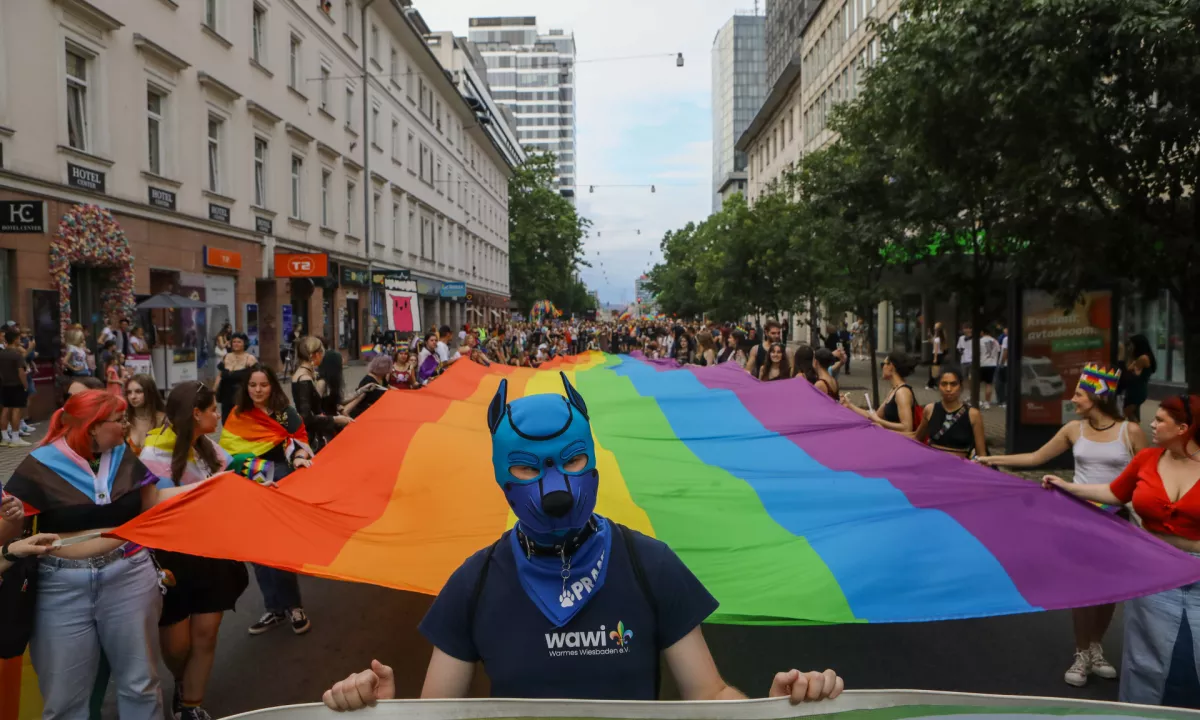

A recent paper published in the Norma: International Journal for Masculinity Studies highlights how masculine behaviors contribute to environmental damage, revealing that men generally have a larger carbon footprint, show less concern for climate change, and are less active in environmental politics, thereby exacerbating the climate crisis. #ClimateChange #Masculinity #EnvironmentalImpact #CA #CN #FN #AF #LA #GB #FR
A recent paper published in the journal Norma highlights that men generally exhibit less concern for climate change, have a larger carbon footprint, and are less active in environmental politics due to traditional masculine behaviors, while acknowledging that some men are actively working to change these detrimental patterns. #ClimateChange #Masculinity #EnvironmentalImpact #CA #CN #FI #AF #LA #GB #FR
A recent paper published in the journal Norma highlights that men generally exhibit less concern for climate change, have a larger carbon footprint, and are less active in environmental politics due to traditional masculine behaviors, while acknowledging that some men are actively working to change these detrimental patterns. #ClimateChange #Masculinity #EnvironmentalImpact #CA #CN #FI #AF #LA #GB #FR
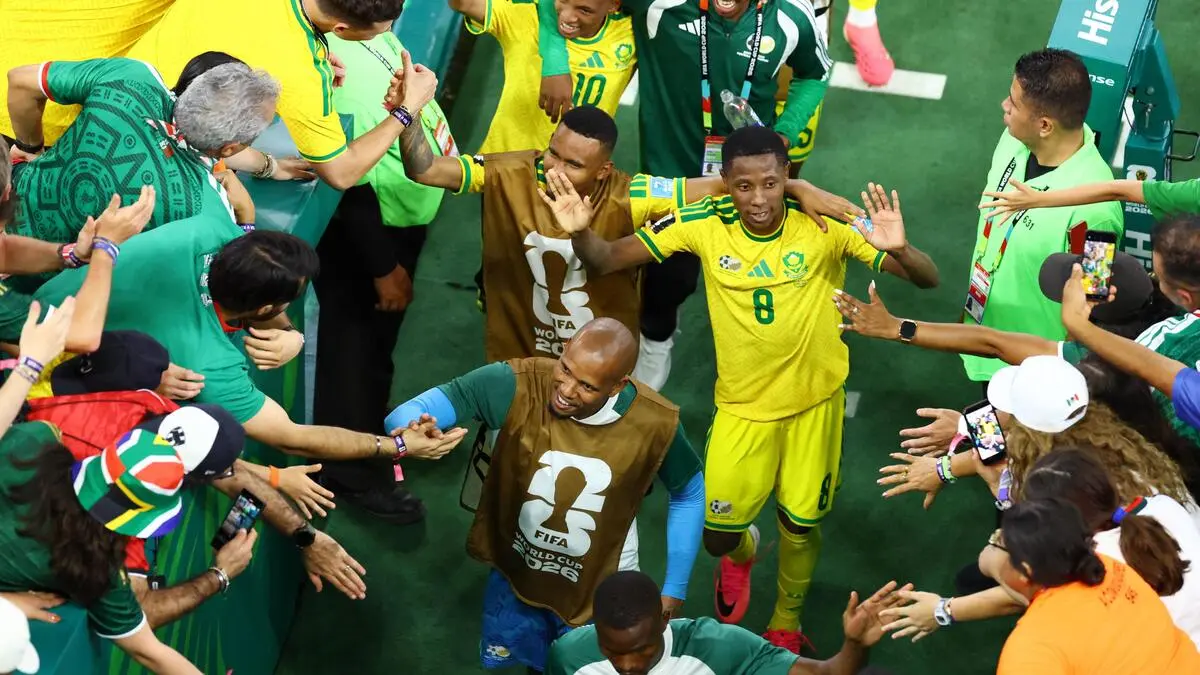
A new paper published in *Norma: International Journal for Masculinity Studies* reveals that men generally exhibit greater environmental impact and lesser concern for climate change, contributing to negative effects on the planet, while also highlighting some men who actively work towards positive environmental action. #ClimateChange #Masculinity #Sustainability #CA #CN #FI #AF #LA #GB #FR
A new paper published in the *Norma: International Journal for Masculinity Studies* reveals that men's behaviors, characterized by greater carbon footprints and lower environmental concern and activism, contribute significantly to the climate crisis, emphasizing the need to acknowledge the negative impacts of masculinity on environmental issues. #ClimateChange #Masculinity #EnvironmentalImpact #CA #CN #FI #AF #LA #GB #FR
A recent study published in the journal Norma highlights how masculine behaviors are linked to greater environmental impacts and a lesser concern for climate change among men, suggesting that these patterns, particularly among elite white men, contribute negatively to sustainability efforts despite some men actively working to counteract these trends. #ClimateChange #Masculinity #EnvironmentalImpact #CA #CN #FI #AF #LA #GB #FR



🚨BREAKING: Incredible new report finds GEN Z MEN are LEADING the charge back into Christianity and religion among young people Charlie would love it 🙏🏻 "Many young men report feeling culturally dislocated or villainized by progressive secular discourse regarding masculinity." https://t.co/Y4VGgZ6HvM -






