BETA nonprofit public democratic european moderated

Search

#Cowardice

Dear Ireland football team. The cowardice of @FIFAcom, @UEFA & the @FAIreland have put you in this shitty position. All proper Ireland fans really feel for you. But your position is still one of privilege when compared with the 1,000 Palestinian athletes murdered by the entity #Ireland #Football #Palestine #IE #PS

They're laughing at us. They're laughing at the ludicrous cowardice of our institutions. They're laughing because even whilst committing genocide they're still allowed play fucking international football. #Genocide #InternationalFootball #Cowardice #Nospecificcountrycodesarementionedinthetweet.

This is pure gold. What to make of Russia pretending to protect conservative values—and how to counter its aggression. The brilliant Avi Sahar at the European Parliament on why words like “hybrid,” “resilience,” and “below threshold” just hide our cowardice. https://t.co/FPcqsg2ZVp #Russia #ConservativeValues #HybridWarfare #RU #EU

H

The Erosion of Western Civilization’s Social Fabric It is hard to fathom how much of Western civilization’s social fabric has eroded in just a single decade. No healthy society debates whether “the system” is to blame for a child murderer’s crimes and then expresses support for the monster. Such a society certainly does not celebrate the assassinations of moderate and respectable political figures, nor does it allow repeat violent offenders back onto the streets to terrorize the general public. The best explanation I have heard for this phenomenon of macrosocial insanity is *Political Ponerology* by Andrew Lobaczewski—the study of how pathological personalities infiltrate and transform social institutions. This process does not require an entire population of psychopaths. In fact, it is often only a small minority that forms the core of the pathological movement. A relatively small party or group is led by psychopaths, who are natural experts at manipulation, deception, intimidation, and ruthlessness. The ideologues are the ones who design the system. They create abstract ideologies, often criticizing reality for falling short of their arbitrary expectations. Human beings become nothing more than nodes in a network, to be organized and managed by supposedly more intelligent minds. Then there are the spellbinders, who serve as the movement’s salespeople. They package tyranny as safety, envy as justice, and coercion as compassion. Their primary tool of persuasion is emotional alignment rather than truth or logic. These three types rely on three other groups to normalize their totalitarian system: the spellbound, adapted conformists, and bystanders. The spellbound are true believers who experience participation in the movement as a kind of moral crusade. Adapted conformists support the system because of the security, status, or comfort it provides—or because they fear ostracism. Bystanders are generally aloof and avoid conflict at all costs, believing that ignorance and cowardice will spare them.

H

The Individual as an Antidote to Tyranny The average person today is incapable of governing himself, which is why so many yearn for a new system. They desire external control to order their lives in ways they feel unable to manage themselves. Riddled with fear, they trade liberty for protection. Ideology recasts resentment as righteousness, while loneliness drives them to join a herd. The answer to collective madness is not collective action in the opposite direction. Chaos does not defeat chaos. As Friedrich Nietzsche observed, “Madness is something rare in individuals—but in groups, parties, peoples, and ages, it is the rule.” Think of every hero story you admire. The hero does not retreat from danger or surrender to evil. He confronts it directly and places himself in the line of fire. A well-ordered individual is not harmless or ineffectual. One competent, strong, and courageous person can carry more weight and provide more value than a mob. As Carl Jung said, “A million zeros do not add up to one.” Being well-ordered does not mean being harmless or indiscriminately nice. It means possessing judgment, competitive instinct, the capacity for force, and a desire for achievement. The question is what those qualities serve: money, power, and lust—or love, family, and God? This kind of person is an antidote to tyranny. If no strong internal ordering principle exists, a movement, leader, ideology, or state will fill the vacuum from the outside. The well-ordered individual is not incapable of rage, vanity, resentment, cowardice, or cruelty. Awareness of these shadow aspects helps prevent ideological capture and frees him from the seductive belief that “they are evil and we are good.” Anyone seeking a solution to increasing social insanity must recognize that a disordered individual cannot bring order to his environment. By becoming a person of virtue, he can carry that order into every role he occupies—as a parent, teacher, pastor, judge, journalist, leader, neighbor, police officer, or citizen.

H

The Erosion of Western Civilization’s Social Fabric It is hard to fathom how much of Western civilization’s social fabric has eroded in just a single decade. No healthy society debates whether “the system” is to blame for a child murderer’s crimes and then expresses support for the monster. Such a society certainly does not celebrate the assassinations of moderate and respectable political figures, nor does it allow repeat violent offenders back onto the streets to terrorize the general public. The best explanation I have heard for this phenomenon of macrosocial insanity is *Political Ponerology* by Andrew Lobaczewski—the study of how pathological personalities infiltrate and transform social institutions. This process does not require an entire population of psychopaths. In fact, it is often only a small minority that forms the core of the pathological movement. A relatively small party or group is led by psychopaths, who are natural experts at manipulation, deception, intimidation, and ruthlessness. The ideologues are the ones who design the system. They create abstract ideologies, often criticizing reality for falling short of their arbitrary expectations. Human beings become nothing more than nodes in a network, to be organized and managed by supposedly more intelligent minds. Then there are the spellbinders, who serve as the movement’s salespeople. They package tyranny as safety, envy as justice, and coercion as compassion. Their primary tool of persuasion is emotional alignment rather than truth or logic. These three types rely on three other groups to normalize their totalitarian system: the spellbound, adapted conformists, and bystanders. The spellbound are true believers who experience participation in the movement as a kind of moral crusade. Adapted conformists support the system because of the security, status, or comfort it provides—or because they fear ostracism. Bystanders are generally aloof and avoid conflict at all costs, believing that ignorance and cowardice will spare them.

H
Sandfeen Aug 29

The Age of Experts Is Over If the past two decades—COVID-19, the 2008 financial crisis, and the net-zero charade—have taught us anything, it is this: the age of unquestioned experts is over. Authority issued by corrupt, bloated institutions no longer commands automatic respect. We are entering an era in which trust must be earned, not assumed. Credentials matter less than results. Expertise can become conformity wrapped in a credential; status is no substitute for trustworthiness. The future belongs to those with proven track records, not merely letters after their names. Friedrich Nietzsche warned of this more than a century ago. He distrusted experts who served the spirit of their age—those who mistook consensus for courage and conformity for principle. To Nietzsche, many authorities were functionaries of the status quo: too timid to challenge the sacred assumptions of their time. University professors, state philosophers, and moral enforcers wore obedience as a badge of honor. They did not think; they repeated. They did not challenge; they conformed. They made the ordinary seem profound through jargon, complexity, and ambiguity. Nietzsche saw these not as signs of insight, but as camouflage—cowardice in disguise. He also distinguished knowledge from wisdom. Knowledge can be taught, measured, and tested. Wisdom must be earned through suffering, struggle, and brutal self-examination. Nietzsche admired those who forged their own paths rather than simply climbing institutional ladders. Even in science, he saw a danger. He respected its methods but feared their sanctification. Science, he argued, still required justification; materialists confused method with meaning and data with truth. Experts who presented science as the only path to knowledge were, in Nietzsche’s eyes, dogmatists in lab coats. So the question is no longer, “What are your qualifications?” It is: What have you done? What have you risked? What have you proved? We must recover the courage to think for ourselves—and place our confidence only in those who have earned it through action, not appointment.

H
Sandfeen Aug 28

The End of Blind Authority If the past two decades—through COVID-19, the 2008 financial crisis, and the net-zero charade—have taught us anything, it is this: the age of unquestioned experts is over. Authority granted by corrupt, bloated institutions no longer commands automatic respect. We are entering an era in which trust must be earned, not assumed. Credentials alone are not enough. Results matter more. Expertise can become conformity wrapped in a credential. The age of trusting people solely because of their status is fading. What matters now is trustworthiness, not titles. The future belongs to those with proven track records, not simply to those with letters after their names. Friedrich Nietzsche warned about this more than a century ago. He distrusted experts who blindly served the spirit of their age—those who mistook consensus for courage and conformity for principle. To Nietzsche, many authorities were not pioneers of truth but functionaries of the status quo: people too timid to challenge the assumptions of their time. He mocked the bureaucrats of knowledge: professors, state philosophers, and moral enforcers. They wore intellectual obedience like a badge of honor. They did not think; they repeated. They did not challenge; they conformed. To Nietzsche, jargon, complexity, and ambiguity were not always signs of insight. They could also be camouflage—cowardice in disguise. He distinguished between knowledge, which can be measured, taught, and tested, and wisdom, which must be earned. Wisdom comes through suffering, struggle, and honest self-examination. Nietzsche admired those willing to rise above institutional thinking. Even in science, he saw a danger. He respected its methods but feared their sanctification. He believed materialists could confuse method with meaning and data with truth. Experts who presented science as the only path to knowledge were dogmatists in lab coats. The question is no longer, “What are your qualifications?” It is: What have you done? What have you risked? What have you proved? We must rediscover the courage to think for ourselves and trust those who have earned authority through action—not appointment.

What is “hybrid” about a direct military attack on a NATO & EU member? Enough with the euphemisms the EU and NATO leaderships hide behind to avoid having to address the issue head-on and to take decisions you fear having to take. This is not leadership. This is cowardice. #NATO #EU #Leadership #NATO #EU

While the Coalition of the Willing holds meetings and counters Russian attacks with press releases, Russia’s Coalition of the Killing sends soldiers, drones, and now ballistic missiles. Our paralysis and cowardice continue to embolden and enable our enemies to escalate this war. #CoalitionOfTheWilling #Russia #Escalation #RU

All my old colleagues from Father Ted, including Arthur Matthews, Neil Hannon and Ardal O'Hanlon, watched as my career and reputation were destroyed, rather than say this very simple thing. I can't imagine that level of cowardice, especially from the fathers of girls. #FatherTed #Cowardice #CareerDestruction #Therearenospecificcountriesmentionedinthetweet.Therefore #theresponseis:

Tehran Tadhg Jun 18

How deplorably cynical and shameless. The @FAIreland mischaracterised the Palestinian FA's position in order to provide cover for its own cowardice. Of course they want you to boycott the game with Israel! As does every decent human being on the planet. #stopthegame #BoycottIsrael #Palestine #FAIreland #IE #PS #IL

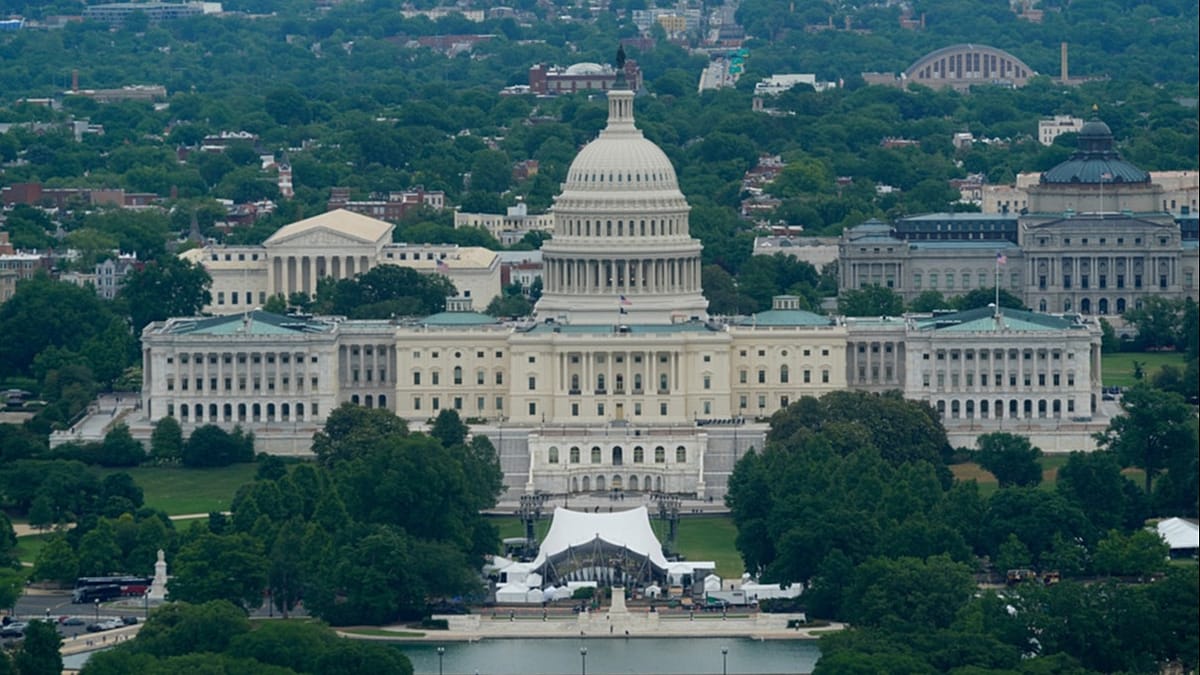
Republicans have postponed a vote on a War Powers Resolution aimed at compelling President Trump to withdraw from the ongoing conflict with Iran, with Democratic leaders criticizing the delay as political cowardice and asserting that they have the necessary support to pass the resolution next month. #WarPowers #Trump #Congress

Republican call off vote on Trump's War Powers Resolution that was on the verge of passing

Agnes Callamard: Not suspending Israel's participation is an act of cowardice and a clear double standard.

1939-1945 are dark years for the homeland: they are those of the terrible humiliation of 1940, those of the long martyrdom of the German Occupation, but also those, in parallel, of all the cowardice of an undignified regime, and without any legitimacy. (Original: 1939-1945 sont des années noires pour la patrie : elles sont celles de l’épouvantable humiliation de 1940, celles du long martyr de l’Occupation allemande, mais aussi celles, en parallèle, de toutes les lâchetés d’un régime indigne, et sans légitimité aucune. https://t.co/MyrNZ85lmZ) #DarkYears #GermanOccupation #HistoricalReflection #DE

M
Mehdi Hasan Feb 25

RT @brianbeutler: Took a crack at explaining the cowardice that’s kept a lid on this crazy break in the Epstein scandal here: https://t.co…