BETA nonprofit public democratic european moderated

Search

#Hatred

Hate speech can incite violence, drive conflict & contribute to the perpetration of atrocity crimes. We have seen it happen before. We see it happening now. We cannot let it continue. Let’s raise our collective voice & end the tragic cycles of fear, hatred, & violence. #EndHateSpeech #StopViolence #RaiseYourVoice #Nospecificcountriesarementionedinthetweet.


H

Most Black women murdered in America are not killed by a distant “political villain.” They are killed by men in their own communities — often men police already knew. Newsrooms chase the rare case that fits the script. Everyday street crime does not. Cameras stay on the exception. Families bury the rule. Honesty is not hatred. It is the only way the funerals stop. Fewer revolving-door releases. More prosecutions. Fewer lectures about the wrong enemy. https://x.com/GOP_is_Gutless/status/2099531835940172174

GRANDPA’s FREE ADVICE (@GOP_is_Gutless) on X

25 years ago, terror sought to turn fear into power. It failed. Today, we remember the lives stolen on 9/11 and honour those who ran towards danger to save others. Europe stands with the American people and against those who believe violence and hatred can defeat our freedom. https://t.co/Bycsibz9W7 #NeverForget #911Memorial #Unity #US #EU

Terzi (FdI): 'Shameful rally outside Montecitorio featuring Hamas and Hezbollah flags' / "Fratelli d'Italia Senator: 'This is not a protest; it incites hatred against the Jewish people' (ANSA) - ROME, SEP 09 - "The best representation of a certain Italian left is unfolding right https://t.co/QjRozp8efK #Hamas #Hezbollah #Antisemitism #IT

telex 2w

Ratko Mladić, a convicted war criminal responsible for the Srebrenica massacre, was buried with military honors in Belgrade, sparking outrage and condemnation from neighboring countries and international leaders who highlighted the ongoing tensions and hatred in the region. #RatkoMladić #Srebrenica #háborúsbűnök

Mladić tömegsírokba szállíttatta gyerekeinket, őt pedig állami tiszteletadással temetik el. Hol az erkölcs?

Vantaan imaami Sharmarke Said Aw-Mussen kommentti Heikki Vestmannin islamia koskevaan julkaisuun on jälleen laadukasta, Aw-Musselle tuttua kaavaa - islamissa sallittua joustavuutta petoksen suhteen edistääkseen islamin asiaa. Islamilainen pelikirja on aina sama, se noudattaa DARVO:n taktiikoita. DARVO tulee sanoista Deny, Attack and Reverse Victim Order. Ensin kiistetään syytökset, jonka jälkeen syytös peilataan takaisin alkuperäiseen syyttäjään. Syytöksen kohde maalataan uhriksi ja syytösten esittäjä alistajaksi. Niin myös imaami Sharmarke Said Aw-Mussen tuoreimmassa, jossa hän luonehtii Vestmanin kirjoitksen "vastuuttomaksi" ja hänen "motiivinsa" kyseenalaiseksi; pohtii mikä oli motiivi "julkaistu tällainen kirjoitus juuri nyt". Turun ilmapiiri on kuulemma "jo valmiiksi jännittynyt". "Juuri tällaisina aikona" ja vielä Vestamin asemassa Aw-Musse kertoo odottavansa "harkintaa eikä vastakkainasettelua lisääviä yleistyksiä". "Samalla ihmettelen sitä itsevarmuutta, jolla Pj. ryhtyy määrittelemään islamia, shariaa ja islamilaista oikeusoppia, vaikka hänellä ei tietääkseni ole minkäänlaista asiantuntemusta islamilaisesta teologiasta tai oikeustieteestä." Islamin kritisointi tavan kansalaisena kun ei sovi imaamin näkemykseen. Eihän tavantallaaja voi tietää mitä Koraanissa ja haditheissa "oikeasti" sanotaan eikä mitä niillä "oikeasti" tarkoitetaan. Sharmarken mukaan islamilainen oikeusperinne "ei yksiselitteisesti opeta" etteikö muslimi "voisi elää" maallisen lainsäädännön alaisuudessa. Ei opetakaan. Muslimi kyllä "voi elää" mallisen lainsäädännön alaisuudessa. Ne historialliset sopimukset, joihin Sharmarke viittaa, ovat juurikin väliaikaisia maallisia sopimuksia (hudna). Kuten Sharmarke itse sanoo, "islamin historiassa tunnetaan vahvasti sopimusten ja yhteiskunnan järjestyksen kunnioittaminen"... niin pitkään kuin on tarpeen. "Eikä tietääkseni kukaan ole vaatimassa Suomeen erillistä oikeusjärjestelmää." "Tietääkseni" on mielenkiintoinen ilmaisu. Kuten myös "erillistä oikeusjärjestelmää". Islamin opinkappaleet ja sotalordin käskyt ovat selvät: koko maailman on alistuttava Allahin käskyjen alle. Siten ei voida puhua "erillisestä" oikeusjärjestelmästä, vaan "korvaavasta". Shariasta. Tietääkseni imaami Aw-Mussen kyllä ymmärtää tämän. "Juuri siksi olen huolissani keskustelusta, joissa näitä oikeuksia pyritään kaventamaan tai niiden oikeutusta kyseenalaistamaan islamia koskevien uhkakuvien kautta." Aivan kuten hijab-, niqab- ja burkhakeskustelussa, Aw-Musse kääntää uskonnonvapauden inversioksi niin, että kuvaa naisten ja tyttöjen kuolonkankaisiin käärimisen estämisen olevan uskonvapauden vastaista. Samoin kun koulussa paastoamaan pakotettuja lapsia on "vain vähän" ja heidän uskonnonvapauttaan on kunnioitettava niin, ettei heidän paastoamistaan saa estää. "Perustuslakivaliokunnan Pj. jos kenen pitäisi ymmärtää, ettei perustuslakia puolusteta tekemällä kokonaisesta uskonnollisesta perinteestä tai ihmisryhmästä uhkakuvaa." Edelleen, islamin opinkappaleiden ja sen käytännön sovellusten arviointi ei ole yksittäisten muslimien demonisointia. Esimerkiksi ainoastaan islamista inspiroituneiden terroristien, jihadistien, toimien arviointi voidaan leimata "kielteiseksi stereotypioinniksi ja islamofobiaksi". Siten estää keskustelu ainoastaan islamista ja islamisaatiosta puhkeavista ongelmista. "Toivon erityisesti päättäjiltä vastuuullisuutta sanoissaan. Vähemmistöjä demonisoiva, epäluuloa ruokkiva ja vastakkainasettelua syventävä puhe ei vahvista Suomea eikä niitä arvoja, joille yhteiskuntamme rakentuu." Perusoikeuksien näkökulmasta toinen mielenkiintoinen kysymys on islamin järjestelmällinen naisten ja tyttöjen alisteinen asema, joka on lähtökohtaisesti täydellisen ristiriidassa sen suhteen mitä Suomessa ja suomalaisessa yhteiskunnassa on pidetty arvoina. Ylipäätään burkhiin ja niqabeihin pukeutuvia tyttöjä näkyy "vain vähän", kuulemma ketään ei "pakoteta" pukeutumaan kangaskahleeseen ja on osa tytön uskonvapautta kääriytyä kankaaseen. Vaikka kaupungeilla tulee vastaan naisia ja pieniä tyttöjä kaavuissa, kuulemme usein puheita miten "pieniä tyttöjä ei oikeasti käytä islamilaisia kaapuja". Tosin hiljalleen tässäkin on edetty jo kohtaan "pieniä tyttöjä, jotka käyttävät islamilaisia kaapuja, on todellisuudessa niin vähän, ettei asiaan kannata puuttua". Tästä huolestuttavan konkreettisena esimerkkinä toimii Iltalehden Ida Erämaan artikkeli heinäkuulta 2025: "Tervetuloa kouluun, burkha?" joka noudattaa täsmälleen tätä ennaltamäärättyä kaavaa. Ilmiöön puuttuminen kuvataan uskonvapauden rikkomisena ja kaapuihin peitettyjen tyttöjen uskonvapauden viemisenä. Kun islamilaisten hautajaisten kohdalla keväällä 2026 nousi esiin keskustelu miksei miehet ja naiset saata olla edes samalla nurmella, keskustelu kehystettiin "rasistiseksi", "islamofobiseksi" ja "ennakkoluuloiseksi". Kun ramadanin aikaan nousee esiin kuinka lapset pakotetaan paastoamaan, tämän sanotaan "rajoittavan lasten vapautta harjottaa uskontoaan". Ylen studiossa kun keskustelija toi esiin miten islamissa on sallittua vääräuskoiselle valehtelu islamin asian edistämiseksi, toimittaja lopetti keskustelun seinään. "Täällä ei ole islaminuskoista kantaansa puolustamassa". Termillä "islamofobia" ei ole muuta funktiota kuin lakkauttaa keskustelu islamin todellisista ongelmista ja ennaltaehkäistä kaikki kritiikki islamia kohtaan. Vaikka miten perusteltu ja aiheellinen. EU:n valmistelussa oleva "Anti-Muslim hatred" pyrkii laajentamaan tätä määritelmää vielä entisestään. Joten kun imaami Aw-Musse lopussa viittaa Suomen pohjalla virtaaviin arvoihin... ehkä niitä todella on syytä pohtia. Jos uskonnonvapauden nimissä ajetaan poliittisen ja uskonnollisen siiven sisältävää ideologiaa, jonka keskeisenä tarkoituksena on vallitsevan yhteiskuntajärjestelmän korvaaminen toisella, on enemmän kuin perusteltua pohtia kuuluuko sen ajaminen uskonnonvapauteen. Eikä tämä rajoitu vain islamiin, vaan esimerkiksi marxismiin aivan yhtä lailla. Molempien ideologioiden mukaan kun moraali määrittyy sen mukaan mikä edistää vallankaappausta. Siksi niiden epäpyhä liitto toimiikin niin hyvin yhteen. Sillä kun sitä ei ymmärretä, ei osata argumentoida eikä perustella minkä takia islamilainen maailmankuva tai vaikkapa marxistien ja sosialistien ajama maailmankuva ei ole yhteensopiva länsimaisen eetoksen kanssa. #Islam #Uskonnonvapaus #Suomi

The days of forcing Orange parades down the Garvaghy Road are over. Local residents deserve to live in peace, free from sectarianism, hatred & triumphalism. https://t.co/r00v6hi1u9 #GarvaghyRoad #Peace #Sectarianism #GB #IE

H

Multiculturalism or Liberalism… You Can’t Have Both Canada’s Combating Hate Act received royal assent on June 18 and became law in July, defining hatred as an intense and extreme emotion and extending emotion’s reach into government and criminal law. Supporters cite a 169% rise in reported hate crimes from 2018 to 2024, but the increase reflects predictable outcomes when groups with deep historical, cultural, and religious conflicts are placed together in large numbers while assuming differences will fade. “Diversity is our strength” can’t replace shared culture: cooperation at scale requires shared values and norms. Import enough difference quickly while demanding universal tolerance, and social order begins to fracture, leaving strangers who share a passport but little else—so the state steps in to do what culture once did. Multiculturalism can drift toward authoritarianism: the state expands to manage conflicts, neutrality becomes impossible without common standards, and unequal treatment follows. Britain illustrates the danger, with thousands of arrests in 2023 under communications laws for alleged offensive messages and long sentences for single posts. Meanwhile, authorities have shown hesitation toward major crimes involving protected communities, often citing fears of racism and community harm—creating a double standard. Canada also has examples, such as the Gladue principles, which require sentencing judges to consider the circumstances of Indigenous offenders, letting group identity influence state treatment. The multicultural liberal state was sold as open, tolerant, and equal—but if groups won’t “melt,” or fundamentally oppose one another, the result is increasingly unequal laws, more surveillance, and less liberty. Multiculturalism and liberalism are incompatible: without shared cultural standards, a society will be governed from above through laws, courts, and coercion.

H

When Culture Collapses, the State Takes Over On June 18, the Combatting Hate Act received royal assent in Ottawa; in July it becomes law. Among its provisions, Canada’s Criminal Code will define hatred as an intense and extreme emotion tied to vilification and detestation. Feeling is moving into criminal law. The state has taken on the job of policing it. Supporters cite a reported 169% rise in hate crimes from 2018 to 2024. But such spikes are not random: they follow predictable outcomes of placing groups with long histories of cultural and political conflict together in large numbers while assuming grievances will vanish. “Diversity is our strength” can’t replace shared culture. Shared culture enables voluntary social interaction; without it, cohesion is not automatic—it must be built, and conflict is often the norm. When rapid, large-scale difference is combined with demands for perpetual tolerance, social order weakens. The law then steps in to do what culture once did. This is how multiculturalism can drift toward authoritarianism: institutions empowered to manage social conflict gain authority by promising to solve problems their policies help create. Enforcement is rarely neutral. The same legal mechanisms that target “offensive” speech can also punish individuals harshly, while authorities can remain slow to confront serious harms—raising the question: who decides whose equality matters?

H

The Noble Enemy: Why You Must Respect the Man You Fight Respect your enemies—and even be thankful. It isn’t weakness; it’s discipline and a mental edge that makes victory possible. Hatred costs you home-field advantage: it hijacks your attention, clarity, and preparation. Anger also misfires. It directs you, exhausting yourself to entertain others. It exposes you, making destruction your only goal so you forget what to preserve—and what the enemy is doing. Lastly, contempt blinds you: if you think you’re superior, you stop training, studying, and preparing, deciding the fight is won before it starts. In Heat, the cop and thief recognize they’re two sides of the same danger. They don’t become less dangerous; they see each other clearly—making the final confrontation tragic. In The Dark Knight, the Joker’s “You complete me” reflects a deeper truth: each gives the other purpose. The hero is defined partly by the villain he must face; the villain by the hero who provides something worthy to oppose. As Nietzsche suggests, be proud of your foes—not to concede, but to commit to discipline. Disrespect makes you stop training; contempt makes you stop scouting; hatred makes you stop listening. The worthier the foe, the worthier the man required to meet him. What you don’t understand, you can’t defeat.

H

Where the Money Goes When the Problem Grows The worst evil is identifying a problem—addiction, illness, hatred—then building an industry to “solve” it. Organizations grow, the problem worsens. Many call this wasted money. Some argue for more funding or stricter oversight. After decades of the same results, a reasonable person should ask whether it’s failure—or the system working as designed. Call it the Caretaker’s Incentive. Three conditions keep problems managed forever: status (praise for “tending” the afflicted), money (budgets rise with the problem and shrink when it improves), and conscience (moral framing shields caretakers from questioning their role). Economist Bruce Yandle described a parallel in “Bootleggers and Baptists.” In Prohibition, moral reformers and profitable bootleggers backed the same policy for different reasons, with virtue providing cover. Today, reformers and funded interests may be the same institution, making corruption harder to spot. When the mission is caring for the elderly, it’s easy to hide fraud behind compassion. Costs spread across millions, benefits concentrate among insiders. No one loses enough to unite against it; insiders gain enough to defend it. The people being paid are awake. The people paying are asleep. C.S. Lewis warned in 1948 that torment for “our own good” can continue endlessly because conscience approves. Corruption is dressed as virtue—and those who object are shamed.

H

The Psychology of the Modern Leftist Once you understand the psychology of the modern leftist, the last decade of the woke revolution makes more sense. The endless outrage, hypersensitivity, and rejection of rational debate may reflect something deeper than ideology: a crisis of self-worth expressed as a moral crusade. “Leftist” is a broad term, but here it refers to socialists, collectivists, LGBTQ activists, and similar movements. What unites them may be more than politics; it may also be a psychological orientation. Modern leftism can be associated with feelings of inferiority, low self-esteem, powerlessness, guilt, self-hatred, and resentment. These feelings may be repressed while still influencing behavior. The hypersensitivity to language illustrates this. Words once used without negative intent can become symbols of oppression through activist campaigns. Ironically, those most offended are sometimes privileged academics rather than the minorities they claim to defend. Many leftists identify with groups perceived as weak or disadvantaged. This may reflect genuine compassion, but it can also involve projecting personal feelings of weakness onto others. Strength, success, competition, and rationality can consequently become objects of suspicion. Western civilization, America, and other symbols of power may be treated similarly. The criticism can also be inconsistent. Flaws condemned in Western societies may be excused when found in socialist regimes or traditional cultures. This suggests that resentment may sometimes play a role alongside genuine moral concerns. Self-reliance, personal responsibility, and merit are often viewed skeptically, while collectivism is favored. Objective truth can also become threatening because it creates distinctions: some arguments are better than others, and some people succeed while others fail. When equality of outcome becomes the moral standard, truth, merit, and individualism may be attacked—not necessarily to uplift the oppressed, but to reduce psychological discomfort. When victimhood becomes central to identity, problems may no longer simply be discovered; they can become necessary to sustain that identity.

H

A Manifesto Written Like Scripture** Marxism is not merely an economic theory; it resembles a religion for those filled with resentment. The Communist Manifesto opens with spiritual language, declaring that “a spectre is haunting Europe—the spectre of communism,” indicating a spiritual war rather than an economic agenda. While supporters claim it seeks to redistribute wealth for equity, the text itself lacks words like “neighbor” or “love” in a positive context. Instead, it frequently uses terms like “violence,” “overthrow,” and “abolish,” emphasizing destruction rather than construction. Marx's concrete proposals focus on seizure and confiscation, with little mention of a classless utopia. He advocated for the “ruthless criticism of all that exists,” suggesting a totalizing worldview that dismisses the possibility of reform. Marxists often argue that true communism has never been realized, yet historical figures like Stalin and Mao embodied the totalitarian ambitions outlined in the Manifesto. Bertrand Russell noted that Bolsheviks resembled religious fanatics, quoting Marx like scripture. He drew parallels between Marxism and religion, with Marx as a Messiah and the Communist Party as a Church. The Manifesto states that its goals can only be achieved through the “forcible overthrow of all existing social conditions,” indicating a desire to destroy the current world. Interestingly, many Marxist leaders, including Marx himself, came from privileged backgrounds, contradicting the narrative that Marxism serves the oppressed. This pattern continues today, with Marxism appealing primarily to educated individuals from affluent families who face financial stress for the first time. Marxism shifts the concept of sin from individuals to the bourgeoisie, absolving its followers from personal accountability. This doctrine promotes pride, envy, and resentment, elevating hatred of the wealthy as a virtue. It lacks a pathway to forgiveness, viewing class origin as a crime inherited from ancestors. Ultimately, Marxism is not an economic theory but a destructive religion that justifies violence against entire classes in the pursuit of a misguided salvation.

H

Marxism as a Secular Religion A traditionally religious person accepts that they inhabit a world of scarcity and suffering, finding peace through belief in salvation from God. The affluent atheist, encountering hardship and personal responsibility for the first time, may instead become overwhelmed by anxiety. Marxism, disguised as economic theory, promises to relieve individuals of responsibility by transferring it to the system. It offers the religious concepts of a fallen world, a chosen people, certainty, and moral status, while removing Christianity’s most difficult demands: repentance and forgiveness. Rather than locating sin within each individual, Marxism assigns it to a class: the bourgeoisie. Salvation is no longer a process of personal transformation but something achieved by acting against others. The individual is not asked to examine himself, because guilt is always assigned to another class. This helps explain why Marxist revolutions so often end in mass graves. If evil is viewed as a property of a class, then eliminating that class becomes an act of purification. Mass murder is not treated as a betrayal of the doctrine but as its ultimate fulfillment. Marxism elevates resentment to a virtue. It portrays inequality as a cosmic injustice and suggests that hatred of those who possess more is morally justified. Ironically, although it rejects God, it borrows religious language. In a purely material world of atoms colliding randomly, no arrangement of matter can be inherently unjust. Class origin becomes a crime inherited from one’s ancestors, and forgiveness has no meaningful place. When salvation is promised through the violent removal of an entire class, the result is tragically predictable. Marxism is not merely an economic theory; it is a secular religion of resentment and destruction.

Public debt, global finance, economic concentration, climate change, artificial intelligence, strategic tensions, identity-based hatred: seven immediate dangers, all well-documented, are converging. Facing them head-on is the only way to avoid them. My new column for @lesechos https://t.co/LUIOXNKC9V #PublicDebt #ClimateChange #GlobalFinance #Nocountrycodesfound.

Hey @BBCNews, this what an actual "witch hunt" looks like: a mob in the town square whipping up hatred against a single individual. By contrast, documenting the fraud of a famous professor at a prestigious university is usually called "journalism." https://t.co/hoCNvAyX3H #WitchHunt #Journalism #MobMentality #Nospecificcountrycodescanbeidentifiedfromthetweetprovided.

How many tens of thousands need to die until European official give up their irrational hatred of A/C, one of the miracles of modernity? Can you imagine the Belgian government pooh-poohing life-saving vaccines in the middle of a pandemic? Or recommending sweaters instead of #ClimateCrisis #ModernSolutions #PublicHealth #BE

Soudy nám daly za pravdu. Náš analytický tým upozornil na odpornou agresi pod postem Jindřicha Rajchla a dnes známe rozsudek: autor komentáře je vinný z podněcování k vraždě novinářky a dostal 6 měsíců s podmínkou. Bojujeme dál za to, aby politiku a novinařinu nediktovala nenávist. #justice #freedomofspeech #hatred

"Los haters seguirán odiando, y nosotros los jugadores, seguiremos jugando. No decimos ‘hello’; decimos ‘annyeonghaseyo’". NAMJOON 🥵🥵🥵🥵 https://t.co/YD2qtnIYtS #Hatred #Gaming #KPop

Giulio Terzi Aug 5

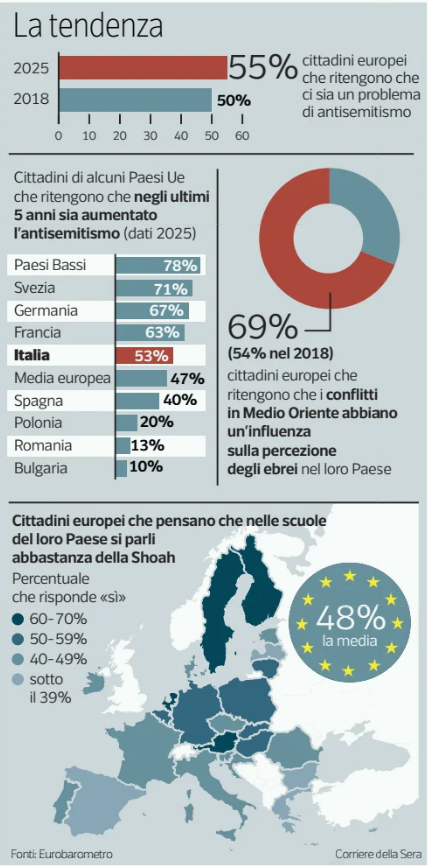
statement by Senator Giulio Terzi (FdI): “The data on the growing episodes of antisemitism and hatred in our country are deeply concerning, as they have skyrocketed 306% compared to ten years ago. Violent and insulting language is spreading across social media, which has now https://t.co/YPePGPdZof #Antisemitism #HateSpeech #SocialMedia #IT