BETA nonprofit public democratic european moderated

Search

#Hitzewellen
D

The article by Michael Ortner addresses the high costs and challenges of renaturalization in Austria, which is urgently needed due to the consequential damage caused by heat waves, while Environment Minister Totschnig has sent a renaturalization plan to Brussels that relies on the voluntary cooperation of property owners. (translated)

Wie viel ist uns Renaturierung wert? Der Sommer gibt uns die Antwort

The summer of 2026 was the hottest since measurements began 260 years ago, with persistent heatwaves over 40 degrees, extremely low water levels, and an unprecedented drought that resulted in massive crop failures and a record number of heat-related deaths. (translated)

Heißester Sommer seit Messbeginn
Kurier 1w

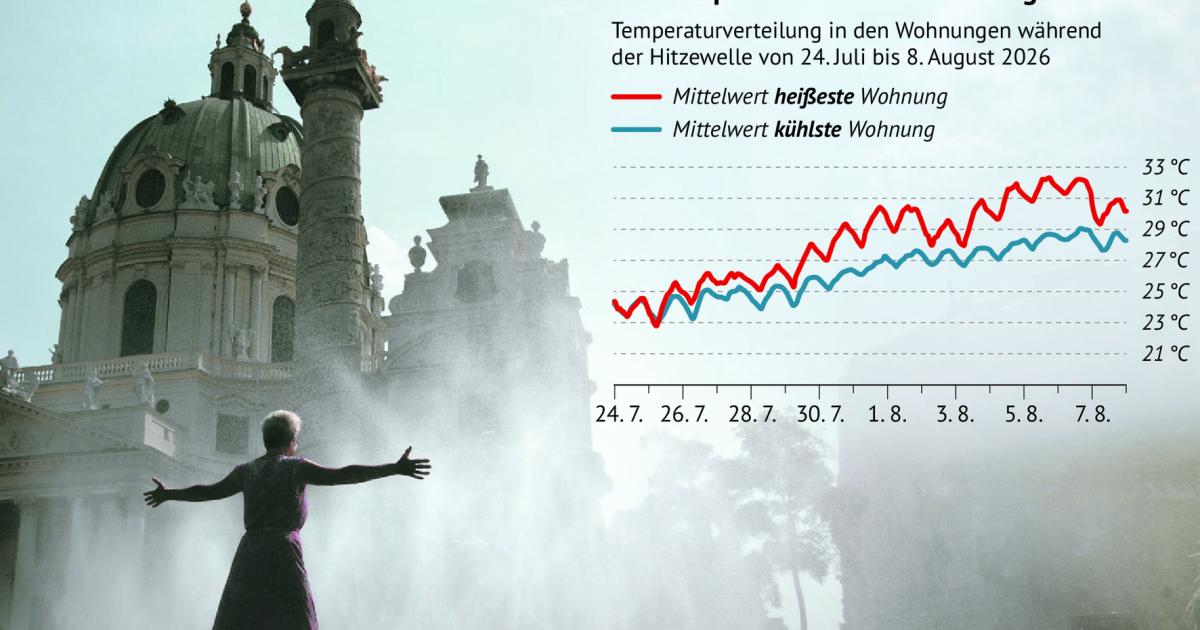
A measurement series in twelve apartments in Vienna shows that intense heat stress, especially in post-war buildings, poses a serious danger to older people, as temperatures over 30 degrees are recorded on many days, and the climate crisis is expected to lead to more frequent heat waves in the future. (translated)

Gefahr lauert daheim: Hitzewellen machen Wohnung zu Backofen

The article analyzes why Switzerland, despite its historical experiences with natural disasters, inadequately responds to the challenges posed by heat waves and drought, and notes that the lack of heat protection plans and delayed political measures, combined with improvised solutions from municipalities and citizens, creates a threatening situation that could once again pose an existential challenge to the state. (translated)

Hitzewelle und Dürre in der Schweiz: Müssen wir uns selbst helfen?
Kurier 2w

The Greenpeace study shows that in Austrian cities, less than 20 percent of the surveyed municipalities have an optimal green space percentage, which makes urgent measures to improve the microclimate necessary given the rising temperatures and hot days. (translated)

Genug Grün im Zentrum? Österreichs Städte im Hitze-Check

The human-caused climate change has increased water temperatures in Europe's seas, especially in the Mediterranean and the Bay of Biscay, by up to six degrees, leading to an alarming increase in heatwaves, which poses serious risks to marine ecosystems and the environment. (translated)

Hitzesommer: Klimawandel verursacht Rekordtemperaturen in Europas Meeren

If the AMOC collapses, we will have cold periods that are much worse than the heat waves now. At the same time, the drought would continue relentlessly. Agriculture and the economy would suffer massively. Unfortunately, Europe will pay for climate change more than any other continent. (translated)

Bild 2w

The article explains that water does not disappear in the global cycle, but is distributed by evaporation in one place and precipitation in another, with recent heatwaves in Germany diverting rain from the normally affected areas, leading to some regions receiving little or no precipitation, while others were inundated. (translated)

Wenn Wasser nicht verschwindet - Wo ist dann unser Regen hin?

Environmental organizations support the SPD's heat protection plans and call for a constitutional amendment to better prepare Germany for the heatwaves caused by the climate crisis. (translated)

Umweltverbände unterstützen Hitzeschutz-Pläne der SPD

Clinics and nursing homes in Schleswig-Holstein are facing significant challenges in light of increasing heatwaves due to climate change, as many facilities are not adequately air-conditioned, which particularly raises the risk of overheating in older people and necessitates various heat protection concepts. (translated)

Klimafolgen: Kliniken rüsten nach – Hitzeschutz bleibt teures Problem
D

Health researcher Julia Reiter points out that rigid gender norms and the pressure to be a man during heatwaves lead to health burdens and more mistakes at work, and therefore calls for extreme temperatures to be officially classified as a health emergency. (translated)

Gesundheitsforscherin: "Das klassische 'sei ein Mann' führt eher dazu, Leistungsgrenzen nicht zu respektieren"
Kurier 3w

Extreme heat and low water levels in the Danube are forcing Romania to shut down its Cernavoda nuclear power plant and are also affecting the operation of the Hungarian Paks nuclear power plant, while France has to take several reactors offline due to heatwaves and jellyfish swarms, leading to an energy crisis in the region. (translated)

Wie die extreme Hitze Europas Atomkraft zusetzt
Kurier 3w

High temperatures and disrupted sleep during heat waves can exacerbate neurological disorders and significantly increase the risk of stroke, especially in older adults, as the body tries to release heat through blood vessel dilation, which leads to reduced oxygen supply to the brain. (translated)

Hitze: Warum jetzt das Schlaganfallrisiko steigt
Kurier 3w

Heatwaves can exacerbate symptoms in people with neurological conditions such as migraines, Parkinson's, and multiple sclerosis, while also increasing the risk of strokes, as high temperatures raise the brain's oxygen needs and lead to dehydration and impaired blood flow. (translated)

Hitze: Warum das Hirn besonders leidet und welche Risiken das birgt

The German Association of Cities and Municipalities is calling for a massive expansion of heat protection in hospitals and nursing homes due to the current heatwaves, including the installation of air conditioning, and estimates the investment needs at least 20 billion euros. (translated)

Hitze: Kommunen plädieren für besseren Hitzeschutz in Kliniken

We built hospitals without air conditioning. Why? Because there weren't these frequent extreme heatwaves back then. Today we have to retrofit for that reason. That is climate adaptation. At the same time, we need to combat the causes – through climate protection. The FAZ does not take that seriously. (translated)

The German Farmers' Association urgently calls for more support from the federal government due to frequent heatwaves and drought periods to better prepare agriculture for the challenges of climate change and to prevent crop failures. (translated)

Hitzewellen und Dürre: Bauernverband fordert mehr Hilfen angesichts des Klimawandels

In June and July 2023, Western Europe experienced the hottest summer months since records began, with an average temperature of 21.62 degrees, while extreme drought and persistent heatwaves further burdened the region and caused sea surface temperatures to rise to historic highs. (translated)

Juni und Juli waren so warm wie noch nie
Kurier 4w

Western Europe has recently experienced its highest temperatures since the beginning of the Copernicus records, with four heatwaves since May, while the average temperature in June and July was 2.79 degrees above the long-term average, accompanied by extreme drought and record water temperatures in the world's oceans, attributed to the onset of climate change and the El Niño phenomenon. (translated)

Vier Hitzewellen seit Mai: Westeuropa so heiß wie nie

In June and July 2026, Western Europe experienced the hottest months since records began, with an average temperature of 21.62 degrees, leading to heat waves, droughts, and wildfires, while the world's oceans also reached record temperatures. (translated)

Klimakrise: In Westeuropa war es im Juni und Juli so heiß wie noch nie, meldet Copernicus