Cartoons On The Moon pointed out that Sir Ian McKellen, known for playing Magneto, had published a farewell to Patrick Stewart, whom he described as his best friend. In it, McKellen recalled that they met half a century ago as young actors at the Royal Shakespeare Company and that, years later, they ran into each other in central London, where Stewart told him he had been offered a leading role in Star Trek. McKellen said he had warned him about the risk of sidelining his theatrical career in the UK, but Stewart decided to accept it. According to the message, Stewart took advantage of his international fame to act in films like X-Men and in plays by Shakespeare, Ibsen, Arthur Miller, Peter Shaffer, Pinter, and Beckett, in Stratford-upon-Avon, London’s West End, and Broadway. McKellen also wrote that the United States had become Stewart's adopted home, where he met Sunny, and that he had never forgotten his roots. He added that Stewart’s appointment as chancellor of the University of Huddersfield in Yorkshire had been a particular source of pride for the actor. Regarding his last performance in Avengers: Doomsday, he said it was yet to be seen. #IanMcKellen #PatrickStewart #Teatro (translated)
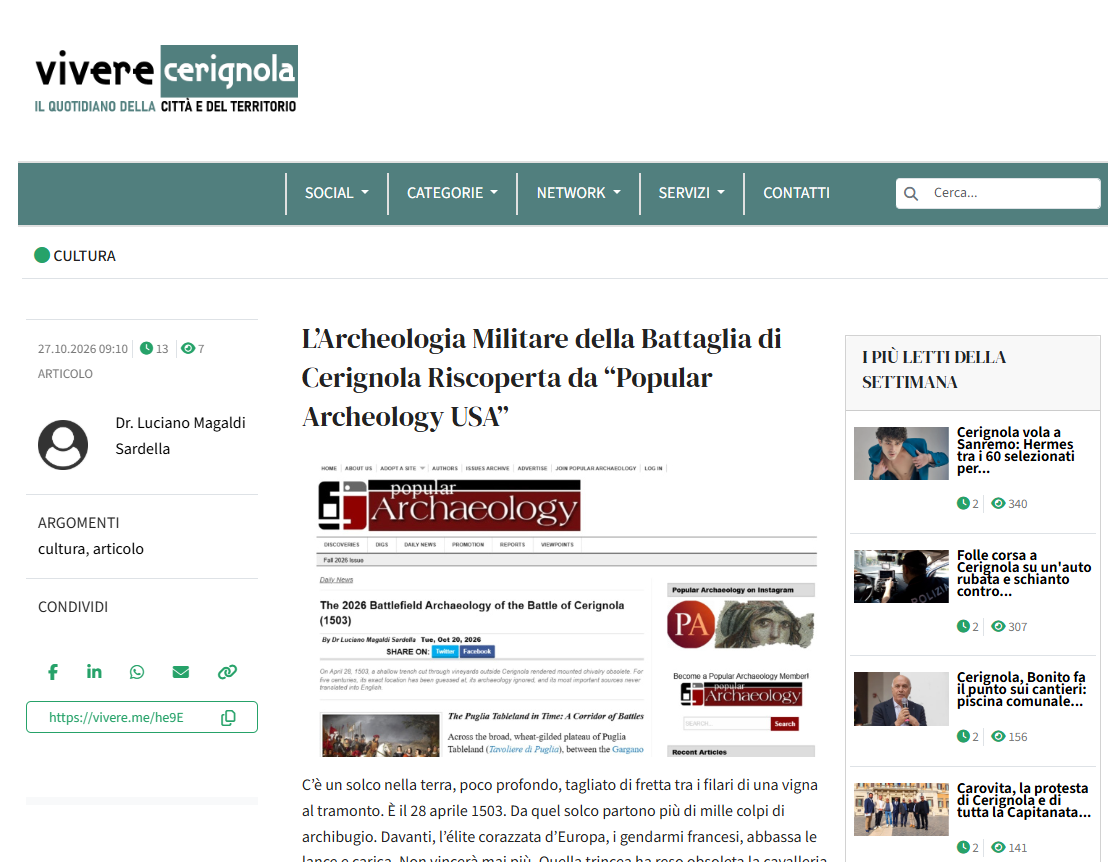
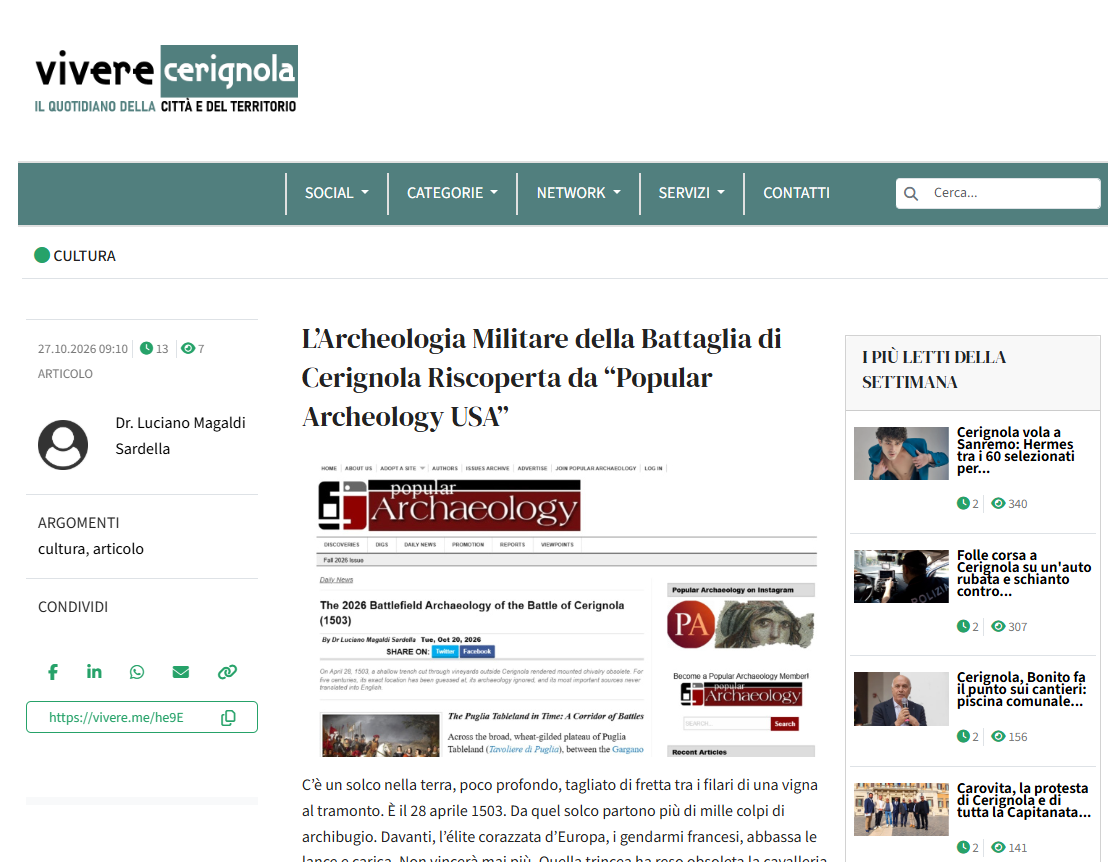
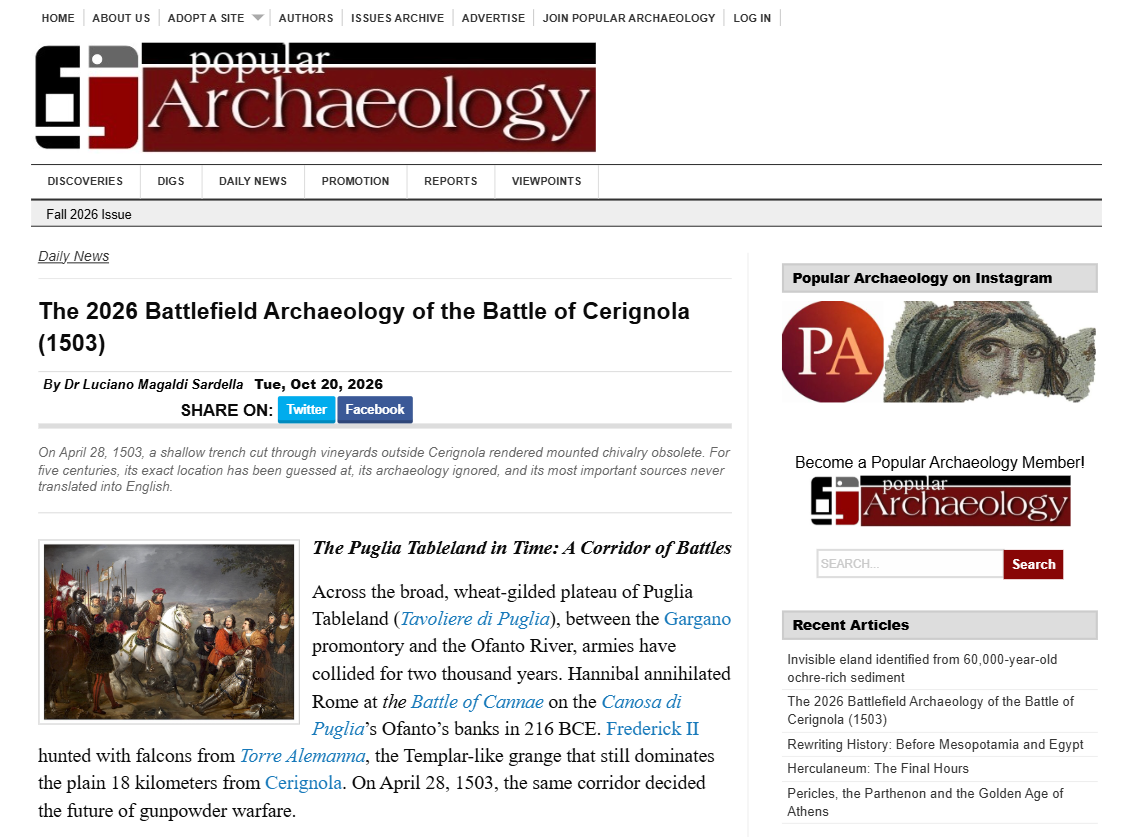
LIVING CERIGNOLA: THE MILITARY ARCHAEOLOGY OF THE BATTLE OF CERIGNOLA ARRIVES ON "POPULAR ARCHAEOLOGY USA" CERIGNOLA (FG) - The Battle of Cerignola on April 28, 1503, returns to the center of international debate. The prestigious American magazine Popular Archaeology has dedicated an extensive in-depth article to the battle that changed European military history: the first in which over 1,000 Spanish arquebusiers under Gonzalo Fernández de Córdoba, sheltered behind a trench reinforced with vineyard posts, stopped the charge of the elite heavy cavalry of the Duke of Nemours. A trench that, in fact, rendered cavalry obsolete and inaugurated the era of infantry armed with fire, determining control of the Mediterranean for the next 160 years. The article highlights the decades-long microhistorical research work of the Torre Alemanna Study and Research Center in Cerignola led by Dr. Matteo Stuppiello: from the letter of Consalvo de Cordoba to the Kings of Spain (April 29, 1503), to the graffiti of 1503 in the Church of Santa Maria delle Grazie, to the land registries of the State Archive of Naples that explain the agrarian origin of that trench. A battlefield still lacking a map and protection, but scientifically rediscoverable thanks to technologies such as LiDAR ISPRA, magnetometry, and ground-penetrating radar. An important recognition for Cerignola, for the Tavoliere, and for all historical research in Puglia, which today deserves a systematic project for the archaeology of battlefields. (translated)
VIVERE CERIGNOLA: THE MILITARY ARCHAEOLOGY OF THE BATTLE OF CERIGNOLA FEATURED IN “POPULAR ARCHAEOLOGY USA” SOURCE: https://www.viverecerignola.it/2026/10/27/larcheologia-militare-della-battaglia-di-cerignola-riscoperta-da-popular-archeology-usa/194456/?utm_medium=Link&utm_campaign=Facebook&utm_source=Social __________________________________________________________________ CERIGNOLA (FG) - The Battle of Cerignola of 28 April 1503 has returned to the centre of the international debate. The prestigious American journal Popular Archeology has devoted an extensive in-depth analysis to the battle that changed the course of European military history: the first in which more than 1,000 Spanish arquebusiers under Gonzalo Fernández de Córdoba, entrenched behind a ditch reinforced with vine stakes, halted the charge of the élite of the French heavy cavalry led by the Duke of Nemours. A ditch that, in effect, rendered cavalry obsolete and inaugurated the era of infantry armed with firearms, determining control of the Mediterranean for the subsequent 160 years. The article highlights the decades-long micro-historical research undertaken by the Centro Studi e Ricerche Torre Alemanna of Cerignola, led by Dr Matteo Stuppiello: from Consalvo da Cordova’s letter to the Catholic Monarchs of Spain (29 April 1503), to the 1503 graffito in the Church of S. Maria delle Grazie, to the land registers of the State Archive of Naples which explain the agrarian origin of that trench. A battlefield still without a map and without legal protection, yet scientifically recoverable through technologies such as ISPRA LiDAR, magnetometry and ground-penetrating radar. An important recognition for Cerignola, for the Tavoliere and for all Apulian historical research, which today deserves a systematic battlefield archaeology project.
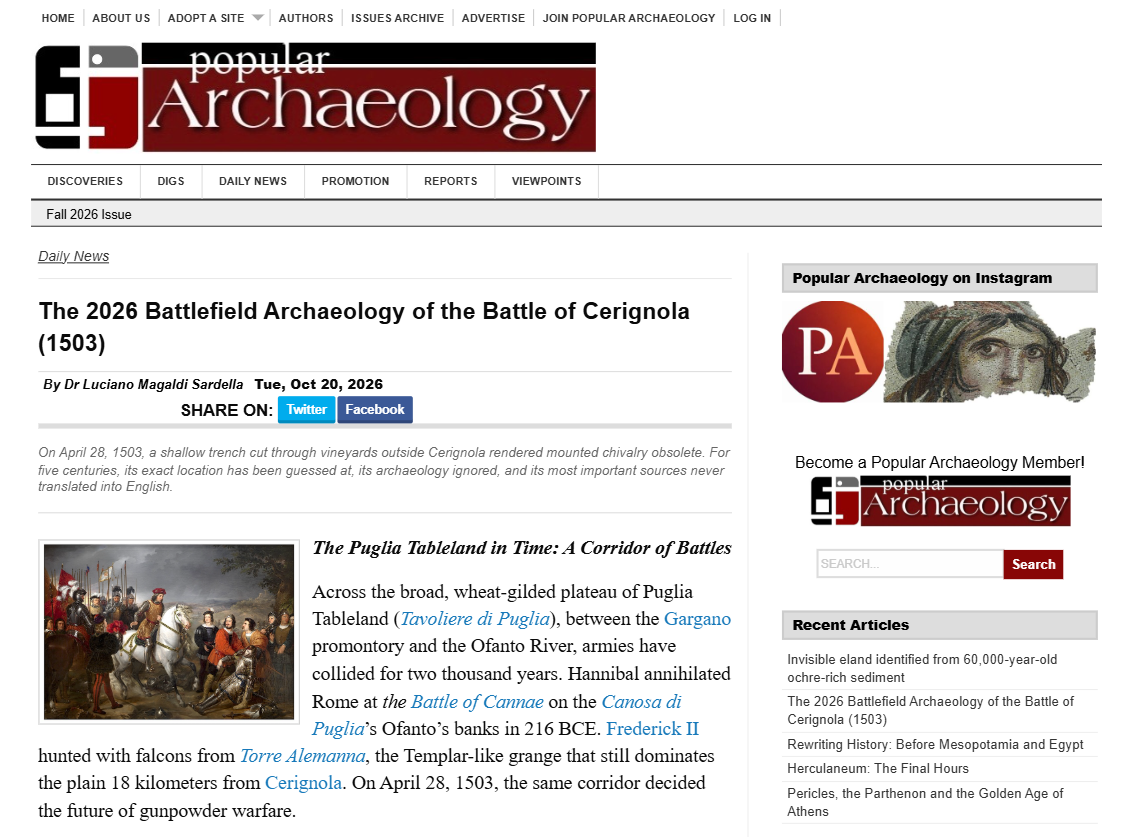
THE "BATTLE OF CERIGNOLA (1503)" ON "POPULAR ARCHAEOLOGY USA" (by LUCIANO MAGALDI SARDELLA) SOURCE 1: https://popular-archaeology.com/author/sardella/ SOURCE 2: https://popular-archaeology.com/article/the-2026-battlefield-archaeology-of-the-battle-of-cerignola-1503/ -------------------------------------------------------------------- CERIGNOLA (FG) — On April 28, 1503, at sunset, a shallow trench cut between the vineyards outside Cerignola rendered heavy cavalry obsolete. For five centuries, its exact location has only been conjectured, its archaeology ignored, its most important sources never translated into English. We are on the Tavoliere of Puglia, a corridor of battles for two thousand years: from Cannae in 216 BC to the falcon hunt of Frederick II from Torre Alemanna. Cerignola, at that time, was not a city but a rural village of 350 families at 120 meters above sea level, custodian of the Mena della Dogana delle Pecore, the great pastoral system of transhumance that financed the Kingdom of Naples. Its possession was fiercely contested. Facing each other were two worlds. Louis d’Armagnac, Duke of Nemours, Viceroy of Naples for Louis XII, in his thirties, splendidly armored, confident of victory. On the other side was Gonzalo Fernández de Córdoba, the Gran Capitán, who on April 27-28 marched from Barletta with about 9,000 exhausted men and decided to settle on a low ridge. He deepened what was already there: not an invention, but an agricultural ditch. The French gendarmes, the last heirs of the medieval knight, lowered their lances and never reached the line. From behind a parapet reinforced with vine stakes, over 1,000 Spanish arquebusiers opened fire. Nemours fell, almost certainly the first European army commander to die from a portable firearm. With him, the charge of cavalry as a dominant tactic died. And here is the scandal denounced by the article: no cartographer of the 17th-18th centuries ever mapped the battlefield. No monument commemorates it. It is not protected as a cultural landscape under the Code of Cultural Heritage. Every deep plowing of the Tavoliere, standard practice since the Bourbon reforms, destroys an archaeology never recorded. Yet the perimeter can be reconstructed. By cross-referencing the 16th-century descriptions of "vine-covered slopes fifteen miles north of the Ofanto" with the Via Traiana, the engagement area is a rectangle of 3-4 square kilometers northeast of the current settlement. With the 1m LiDAR DTM from ISPRA, it could reveal anomalous linear depressions, and the lower filling of a ditch 2-3 meters deep, under the plowed layer, is still readable with magnetometry and ground radar. Why did we arrive late? Not for lack of sources, but for lack of translation. The Municipality of Cerignola and the Torre Alemanna Research and Study Center of Prof. Matteo Stuppiello, who in 1978 obtained the first monumental protection for Torre Alemanna, have digitized a corpus that has never entered Anglophone historiography. Here are the 3 pillars: 1. The letter that still smells of gunpowder. The “Letter from Consalvo de Córdoba to the Spanish royals dated April 29, 1503,” edited by Stuppiello in 2003 and updated to 2025 on comune.cerignola.fg.it/biblioteche-digitali. A handwritten page written in Cerignola the day after the battle, “rich in flashes, twilight lights, and gunfire.” Not a polished chronicle like that of Giovio, but a field dispatch: the fatigue of the night march, the decision to entrench upon arrival, the recovery and honorable burial of Nemours, the intact capture of the French artillery. 2. The graffiti, a monument inside the monument. In the 14th-century church of Santa Maria delle Grazie, known as the Incoronatella, on the Via Trinitapoli Vecchia, where tradition holds that the body of Nemours was brought. On the triumphal arch, a 1503 graffiti gives, in almost notarized form, the date, sixth indiction, Friday at the hour XXIII-XXIIII. It was indeed Friday, as confirmed by the perpetual calendar of Cappelli. Decoded in 1995 by Prof. Francesco Magistrale, Latin paleographer at the University of Bari, in *The Battle of Cerignola (1993)* and in the municipal monograph *S.M. delle Grazie (1999)*. Today it is fading due to humidity and neglect. 3. The land registry that explains the ditch. The Survey of 1672 preserved at the State Archive of Naples, Pignatelli Aragona Cortes fund, Scanzia 63, fasc.1: “At the time of the battle, thick vineyards covered the hill reaching to the plain, and were distinctly separated from the rest of the countryside by a not very deep ditch.” Córdoba did not improvise; he adapted. This is confirmed by the catasti of the Giustiniani: 277 households in 1532, 699 in 1595. The landscape of 1503 was intensely horticultural, not the deeply plowed monoculture of today. In addition to these, there is the first monograph by Vincenzo Buonassisi, *The Battle of Cerignola* (1908, died in Via Fanfulla 10 on June 27, 1928), and the first modern military analysis by Piero Pieri, “Consalvo de Córdoba and the Battle of Cerignola,” Archivio Storico Pugliese 1952, which 30 years before the Anglophone rediscovery of the “pike-and-shot” defined Cerignola as an engineered killing ground. While Cerignola forgot, others remembered. The “Regimiento de Infantería Cerinola n.42”, later “Fuerteventura n.56”, carried the name of Cerignola until the 20th century. The coat of arms, described in *Heraldica e Historiales del Ejercito, Tomo V” (Madrid, 1981): silver field, dying white swan entangled in a hedge, golden wall crown, with the scroll “Cerignola.” Dossier officially transmitted on April 30, 1986, prot. 4565/509, from the Servicio Histórico Militar of Madrid to the Torre Alemanna Center thanks to Col. Alessio Antonutti and Gen. José Cifuentes. And in Amsterdam, at the Rijksmuseum, the anonymous bronze commemorative medal: Hercules with lion skin and club and Janus with the keys next to an eagle-armed coat of arms, legend “Consalvus Agidarius… Janum clausit,” on the reverse a battle scene “Consalvi Agidari Victoria de Gallis ad Cannas,” an artist's mistake that confuses Cerignola with Cannae. It belonged to Mrs. J.M. van Gelder-Nijhoff, donated in 1885. The author's conclusion is clear: Gonzalo's ditch is the most consequential earthwork in European military history. It inaugurates the infantry armed with firearm and conditions the Mediterranean for 160 years. It may still be there, filled, plowed, invisible to the naked eye but accessible to a magnetometer. It is not a matter of medieval archaeology but of the will to protect. (translated)
THE “BATTLE OF CERIGNOLA (1503)” ON “POPULAR ARCHAEOLOGY USA” (by LUCIANO MAGALDI SARDELLA) SOURCE 1: https://popular-archaeology.com/author/sardella/ SOURCE 2: https://popular-archaeology.com/article/the-2026-battlefield-archaeology-of-the-battle-of-cerignola-1503/ __________________________________________________________________ CERIGNOLA (FG) — On 28 April 1503, at sunset, a shallow trench cut through the vineyards outside Cerignola rendered heavy cavalry obsolete. For five centuries its exact position has been merely conjectured, its archaeology ignored, its most important sources never translated into English. We are on the Puglian Tablelanda, a corridor of battles for two thousand years: from Cannae in 216 BC to Frederick II’s falconry from Torre Alemanna. Cerignola, at that time, was not a town but a rural hamlet of 350 families at 120 metres above sea level, guardian of the Mena of the Dogana delle Pecore, the great customs system of transhumance that financed the Kingdom of Naples. It was for its possession that the battle was fought. Opposed, two worlds. Louis d’Armagnac, Duke of Nemours, Viceroy of Naples for Louis XII, thirty years old, splendidly armed, certain of victory. On the other side, Gonzalo Fernández de Córdoba, the Great Captain, who on 27–28 April marches from Barletta with some 9,000 exhausted men and decides to entrench himself upon a low ridge. In front of it he has deepened what was already there: not an invention, but an agrarian ditch. The French gendarmes, the last heirs of the mediaeval knight, lower their lances and never reach the line. From behind an embankment reinforced with vine stakes, more than 1,000 Spanish arquebusiers open fire. Nemours falls, almost certainly the first European army commander to die by a portable firearm. With him dies the cavalry charge as a dominant tactic. And here lies the scandal denounced by the article: no cartographer of the seventeenth or eighteenth century ever mapped the field. No memorial stone recalls it. It is not protected as a cultural landscape under the Code of Cultural Heritage. Every deep ploughing of the Tavoliere, standard practice since the Bourbon reforms, destroys an archaeology never recorded. Yet the perimeter is reconstructable. By cross-referencing sixteenth-century descriptions of “slopes covered with vineyards fifteen miles north of the Ofanto” with the Via Traiana, the engagement zone is a rectangle of 3–4 sq km to the north-east of the present settlement. With ISPRA’s 1m DTM LiDAR, anomalous linear depressions could be revealed, and the lower fill of a 2–3 metre ditch, beneath the ploughed layer, is still legible by magnetometry and ground-penetrating radar. Why have we arrived so late? Not for lack of sources, but for lack of translation. The Comune di Cerignola and the Centro Studi e Ricerche Torre Alemanna of Prof. Matteo Stuppiello, who in 1978 obtained the first monumental protection for Torre Alemanna, have digitised a corpus that has never entered Anglophone historiography. Here are the 3 pillars: 1. The letter that still smells of powder. The “Letter of Consalvo da Cordova to the Sovereigns of Spain of 29 April 1503,” edited by Stuppiello in 2003 and updated in 2025 on comune.cerignola.fg.it/biblioteche-digitali. A manuscript page written at Cerignola the day after the battle, “rich in flashes, twilight gleams, and gunfire.” Not a polished chronicle à la Giovio, but a field dispatch: the exhaustion of the night march, the decision to entrench upon arrival, the recovery and honourable burial of Nemours, the intact capture of the French artillery. 2. The graffito, a monument within the monument. In the fourteenth-century church of Santa Maria delle Grazie, known as the Incoronatella, on the Via Trinitapoli Vecchia, where tradition holds the body of Nemours was taken. On the triumphal arch, a graffito of 1503 gives in quasi-notarial form the date, sixth indiction, Friday at the twenty-third to twenty-fourth hour. It truly was a Friday, as confirmed by Cappelli’s perpetual calendar. Deciphered in 1995 by Prof. Francesco Magistrale, Latin palaeographer at the University of Bari, in La Battaglia di Cerignola (1993) and in the municipal monograph S.M. delle Grazie (1999). It is now fading through damp and neglect. 3. The cadastre that explains the ditch. The Apprezzo of 1672 preserved in the Archivio di Stato di Napoli, fondo Pignatelli Aragona Cortes, Scanzia 63, fasc.1: “At the time of the battle, dense vineyards covered the hill reaching down to the plain, and were clearly separated from the rest of the countryside by a not very deep ditch”. Córdoba did not improvise; he adapted. This is confirmed by the Giustiniani cadastres: 277 hearths in 1532, 699 in 1595. The landscape of 1503 was one of intensive horticulture, not the deep-ploughed cereal monoculture of today. To these are added the first monograph by Vincenzo Buonassisi, La Battaglia di Cerignola (1908, died at Via Fanfulla 10 on 27 June 1928), and the first modern military analysis by Piero Pieri, “Consalvo di Cordova e la battaglia di Cerignola”, Archivio Storico Pugliese 1952, which 30 years before the Anglophone rediscovery of “pike-and-shot” defined Cerignola as an engineered killing ground. While Cerignola forgot, others remembered. The “Regimiento de Infantería Cerinola n.42”, later “Fuerteventura n.56”, bore the name of Cerignola until the twentieth century. Its coat of arms, described in Heráldica e Historiales del Ejército, Tomo V (Madrid, 1981): argent field, a dying white swan entangled in a hedge, a gold mural crown, with scroll “Cerignola”. Dossier officially transmitted on 30 April 1986, prot. 4565/509, by the Servicio Histórico Militar in Madrid to the Centro Torre Alemanna through Col. Alessio Antonutti and Gen. José Cifuentes. And in Amsterdam, in the Rijksmuseum, the anonymous commemorative bronze medal: Hercules with lion-skin and club and Janus with keys beside an eagled coat of arms, legend “Consalvus Agidarius… Janum clausit”, on the reverse a battle scene “Consalvi Agidari Victoria de Gallis ad Cannas” — an error by the artist who confuses Cerignola with Cannae. It belonged to Mrs J.M. van Gelder-Nijhoff, donated in 1885. The author’s conclusion is unequivocal: Gonzalo’s ditch is the most consequential earthwork in European military history. It inaugurates the infantryman armed with a firearm and conditions the Mediterranean for 160 years. It may still be there, infilled, ploughed over, invisible to the naked eye but accessible to a magnetometer. It is not a question of mediaeval archaeology but of the will to protect.
Lemingopedia accused Donald Tusk's government of publicizing an alleged attack on himself and Władysław Kosiniak-Kamysz to divert attention from budgetary problems. The author claimed that the information was released in the media before the suspect was detained, and experts commenting on Polsat were unable to identify the procedure used. He characterized this as an action intended to create "alternative realities." The author also referred to Rutkowski's involvement in helping a farmer, to whom he attributed substance use, and ironically suggested that he might have feared the delegalization of Minecraft. He also mentioned the Rubtsov case and the search for four-year-old Eileen at the border, claiming that the girl did not exist. Lemingopedia further reported that on Friday Domański reached an agreement on transferring the supervision of exchanges, clearing houses, and securities depositories to the EU level. According to the author, ESMA was supposed to gain powers, except for full control over the Frankfurt stock exchange, which had been negotiated by Germany and accepted by ministers from other countries. The author accused the government of sending two individuals to divert attention from this matter and used insulting language towards them. https://t.co/8NPL5yAO8g #Polska #polityka #aktualności (translated)
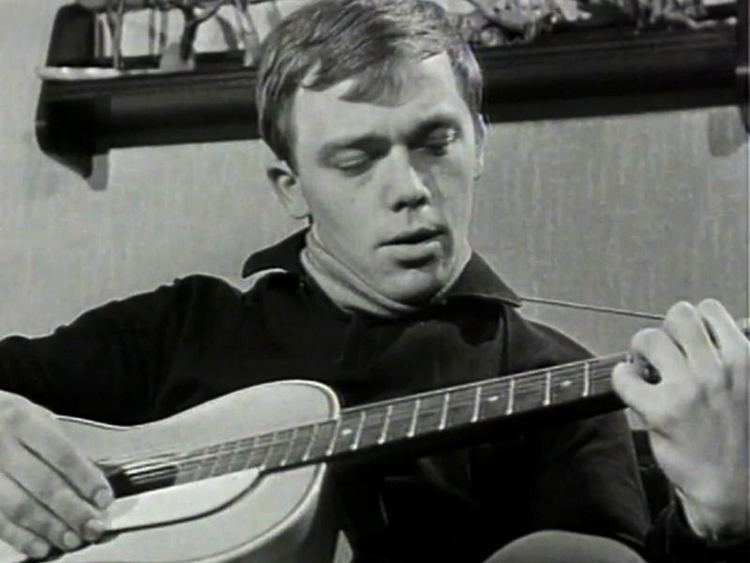
Pětadvacetiletý Karel Kryl si 9. září 1969 sbalil jízdenku od Čedoku, dvě gramodesky a zásnubní prsten. Mířil na písničkářský festival na zřícenině hradu Waldeck v západoněmeckém Hunsrücku. Měl se vrátit za čtrnáct dní. Nevrátil se dvacet let. Rozhodnutí padlo až tam. Podle dochovaných papírů z Národního archivu se k azylu odhodlal teprve v cizině. Doma nechal skoro všechno: rodinu, věci i přítelkyni Helenu Landovskou, sestru herce Pavla Landovského. Rodičům napsal větu, která zní skoro jako ukolébavka a zároveň jako výmluvu před sebou samým: „Žádnej strach, ve světě se neztratím. A hlavně klid, nic se neděje. Chleba je tu stejnej jako doma.“ Nebylo. Německy neuměl. Práci neměl. Posluchače taky ne. Měřil sto padesát osm centimetrů. Kytara mu sahala skoro k ramenům. Přesto z něj už před odjezdem byl „národní tragéd“, jak si později sám říkal. Rodina knihtiskařů z Nového Jičína přišla v roce 1950 o tiskárnu. Stroje komunisté rozbili před očima šestiletého chlapce a odvezli do šrotu. Z keramické školy v Bechyni a vojny v Dobřanech se vynořil básník, který psal tak ostře, že režimu nezbylo než ho umlčet. Píseň *Bratříčku, zavírej vrátka* spadla podle jeho vlastních slov „z nebe“ v noci po 21. srpnu 1968. Viděl v Jičíně dva kluky s hlavami v dlaních. Deska stejného jména vyšla začátkem roku 1969 u Pantonu, protože Supraphon ji odmítl. Na obálce byly fotografie Josefa Koudelky. Režim zbývající náklad nechal rozřezat cirkulárkou. V hitparádě *Čtrnáct na houpačce* Českého rozhlasu (@CRozhlas) *Bratříček* nejdřív skončil druhý, pak vyhrál. Pak zakázali píseň i pořad. Po prvním výročí okupace v srpnu 1969 zasáhly na Václavském náměstí Lidové milice. Krylovy koncerty se rušily jeden za druhým. Festival na Waldecku, poslední ze série *Chanson Folklore International*, byl tehdy jednou z mála cest ven. Po dvou týdnech požádal ve Spolkové republice Německo o politický azyl. Usadil se v Mnichově, kterému říkal Mníšek pod Alpou. Žil skromně, studoval dějiny umění a žurnalistiku, koncertoval pro krajany. Pro Rádio Svobodná Evropa (@RFERLPress) nejdřív pracoval jako externista, od roku 1983 jako řádný redaktor. Vedl i sportovní relace a vlastní okénko *Krylologie*. Německé občanství si nikdy nevzal, protože by se musel vzdát československého. Alba *Rakovina*, *Maškary* a *Karavana mraků* se do republiky pašovala v obalech od operet. Lidé je kopírovali na magnetofonech. Za šíření jeho písní padly u nás i dva nepodmíněné tresty vězení. Režim na něj přes hranici nedosáhl. Písně ano. Domů se podíval až 30. listopadu 1989, na pohřeb matky. Týden v rozjetém převratu označil za nejhezčí týden života. Pak přišlo zklamání z porevoluční politiky, z rozdělení Československa, z toho, že se nikdy nesešel s Václavem Havlem. Napsal *Demokracii*. Zůstal nepohodlný i ve svobodě. V roce 1991 stál v pražské Lucerně. Koncert k desce *Maškary*, hostem Ivan Hoffman. Pro mě jediný koncert, na kterém jsem kdy byl. Stál jsem hned u pódia s minikazeťákem a nahrával. Znal jsem nazpaměť všechny jeho písně. On na jevišti pořád vypadal jako člověk, kterému kytara přerostla přes hlavu, a přitom zaplnil sál tak, že z něj nebylo úniku. 3. března 1994 ho v Mnichově zabil infarkt. Bylo mu devětačtyřicet. Dva dny předtím ještě stihl Prahu. Zádušní mši sloužil přítel, břevnovský arciopat Anastáz Opasek. Před klášterem se tísnily čtyři tisíce lidí. Leží na Břevnovském hřbitově. Od toho zářijového rána s jízdenkou od Čedoku uplynulo přesně sedmapadesát let. Pásy se rozřezaly, hranice zmizely, magnetofony zestárly. Kazetu z koncertu u pódia v Lucerně mi ukradli vykradači bytů, které předtím pustili po Havlově amnestii. Písně nezestárly. Stále platí to, co Kryl věděl už v pětadvaceti: slovo, které se nedá zakázat cirkulárkou, přežije i toho, kdo ho napsal. P.S.: Byl Kryl i vaším idolem, nebo jste k němu přišli až později? Napište, která jeho píseň vám zůstala v hlavě. Každý den sem dávám aspoň jeden příběh, který stojí za to si znát. Like, komentář, sdílení, bookmark a follow, ať vám ten další neuteče. #KarelKryl #Hudba #ČeskáHistorie
PROTAGONISTA! O diretor do novo filme dos X-Men, Jake Schreier, revelou que a proposta é levar para os cinemas histórias inéditas dos mutantes, e citou nominalmente a fase de Jonathan Hickman, a amada Era Krakoana. E eu achei isso incrível, porque em Krakoa a Emma Frost se consolidou como uma das grandes líderes da espécie mutante, surgindo como uma alternativa real ao Professor X e ao Magneto. Ela não é tão idealista quanto Charles, nem tão radical quanto Erik. Emma é pragmática, mas ao mesmo tempo carrega o espírito de professora, como Xavier, e o orgulho de ser mutante, como Magneto. Estou extremamente ansioso para ver a interpretação da Samara Weaving nesse papel, tem tudo para se tornar uma das favoritas dos fãs. #XMen #EmmaFrost #Krakoa
Adam Driver não pôde estar no evento, mas enviou um vídeo confirmando sua participação em X-Men, e até brincando com os rumores de ser Magneto https://t.co/sqUZ03Xev6 #AdamDriver #XMen #Magneto
Foram divulgadas as figuras da Iron Studios para Vingadores: Dr. Destino. E podemos ver em detalhes o visual do Magneto no filme. Gostaram? https://t.co/KZIUjM2fw8 #IronStudios #Vingadores #Magneto
🚨 De acordo com o jornalista @ApocHorseman, os seguintes personagens estão confirmados no novo filme dos X-MEN: - Ciclope - Jean Grey - Tempestade - Vampira - Emma Frost - Magneto - Charles Xavier O insider também afirma ter ouvido falar da possível presença de Fera e Anjo, mas não pôde confirmar. Ele reforça ainda que o elenco de personagens deve ser maior, mas essa lista traz apenas os nomes que ele conseguiu confirmar até o momento. #XMen #Cinema #Superheróis
El presidente electo Abelardo De La Espriella hizo importantes anuncios. El Banco de talentos, una gran oportunidad para los grandes profesionales que no han tenido una oportunidad. A través de Magneto empleos se pueden inscribir y participar. Llega la meritocracia con el nuevo Gobierno. @ABDELAESPRIELLA #Oportunidades #Meritocracia #Empleo
Rumor: Adam Driver ha sido casteado como Magneto para la próxima cinta de X-Men. Fuente (Insider): @ApocHorseman https://t.co/XS8lAXvj9C #XMen #AdamDriver #Magneto
L’Aston University ha ricevuto un finanziamento di 1,2 milioni di euro per sviluppare i magnetobots, batteri biologici progettati per navigare nel corpo umano e identificare i tumori, sfruttando le loro proprietà magnetiche per guidare la somministrazione di farmaci chemioterapici direttamente alle masse tumorali. #Cancro #RobotBiologici #Magnetobots

Mokslininkai siūlo naują būdą, kaip dirbtinai sustiprinti Žemės magnetosferą ir apsaugoti ją nuo pražūtingų Saulės audrų, naudodami specialią sistemą, sudarytą iš erdvėlaivių, kurie išskirstytų medžiagą, kad sukurtų plazmą, galinčią nukreipti kosminių orų poveikį nuo planetos. #geomagnetinėAudra #SaulėsAudra #StormWall
Singapuri teadlased on välja töötanud 4,4 millimeetri pikkuse kirurgilise roboti, mis kasutab magnetosi ja suudab inimkeha-sarnastes tingimustes täita mitmeid meditsiinilisi ülesandeid, potentsiaalselt muutes kirurgia tulevikus täpsemaks ja vähem invasiivseks. #robotitehnoloogia #meditsiin #kirurgia

Solar wind Magnetosphere Ionosphere Link Explorer (SMILE), wspólna misja Chińskiej Akademii Nauk (CAS) i Europejskiej Agencji Kosmicznej (ESA), została pomyślnie wystrzelona we wtorek na pokładzie rakiety Vega-C z europejskiego kosmodromu w Gujanie Francuskiej. #solarwind #magnetosphere #spaceexploration #CN #FR #EU
Die europäische Raumfahrtagentur ESA hat die Smile-Mission gestartet, um mit einem neuen Satelliten das Verhalten des Erdmagnetfelds gegenüber Sonnenwinden und energetischen Sonnenausbrüchen zu untersuchen und dabei die Magnetosphäre sowie das Phänomen der Polarlichter besser zu verstehen. #ESA #Smile #Sonnenwind

Die europäische Raumfahrtagentur Esa hat die »Smile«-Mission gestartet, um den magnetischen Schutzschild der Erde zu erforschen und dessen Reaktion auf Sonnenwinde sowie energiereiche Sonnenausbrüche zu untersuchen, mit Beteiligung von Deutschland, Österreich, der Schweiz und China. #SmileMission #Weltraumwetter #Magnetosphäre