Defections from the authoritarian coalition are crucial to the success of pro-democracy movements.

Defections from the authoritarian coalition are crucial to the success of pro-democracy movements.

Diego Simeone said Manchester United were a very strong side despite their results and draws. He described them as a very good team, praising their pressing, off-the-ball movement and ability to limit the time opponents had on the ball. https://t.co/U5Tf8rxn15 #ManchesterUnited #DiegoSimeone #Football #GB


Police detained “cockroach movement” leader Abhijeet Dipke and two others as hundreds of protesters defied a heavy security clampdown in New Delhi. #Protests #India #ElectionCommission
The author argued that India could not be considered a democracy if it arrested protest leaders before they could speak. They called for the release of Abhijeet Dipke and other detained leaders of the “Cockroach” movement, saying peaceful protest, political opposition and scrutiny of elections were not crimes. https://t.co/0NoH42Hxu1 #India #Democracy #HumanRights #IN


Reports indicate that, according to the Israeli channel N12, employees of a French freight company refused to load a shipment destined for the Israeli arms company Elbit Systems on an El Al flight from Paris to Israel on Saturday, October 10, 2026. The shipment was originally scheduled to depart Thursday on an Air France flight, but employees at Roissy-Charles-de-Gaulle had refused to load it. The account added that the organizations Urgence Palestine and Palestinian Youth Movement, MEP Rima Hassan, the CGT, Solidaires, and several airport unions condemned the transport planned on flight AF966 between Paris and Tel Aviv. According to Urgence Palestine, quoted by The New Arab, Air France ultimately canceled the transport and the shipment was postponed to El Al flight LY220, scheduled for October 10, 2026. #UrgencePalestine #ElbitSystems #RoissyCharlesdeGaulle (translated)

Ukraine’s counter-offensive on the Lyman axis collapsed the northern arm of a Russian pincer movement aimed at surrounding Ukrainian-held Donetsk, liberating up to 176 square kilometres and forcing Russian units onto the defensive, the Washington-based think tank said. #Ukraine #Donbas #OperationVivaldi
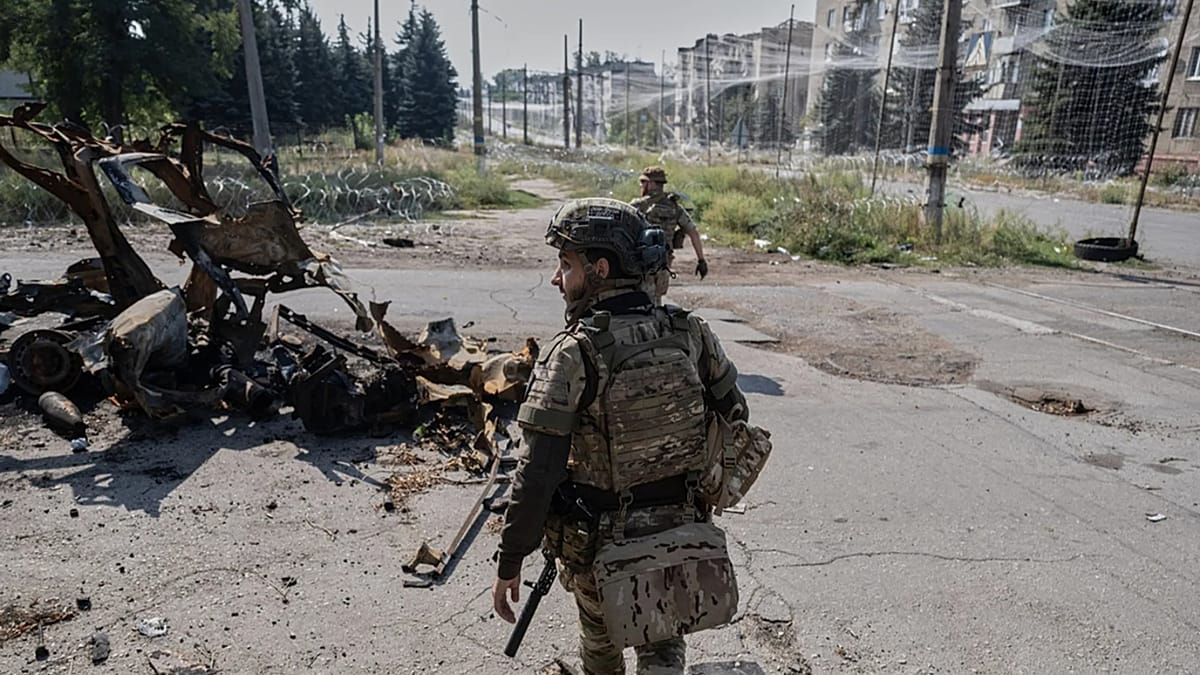
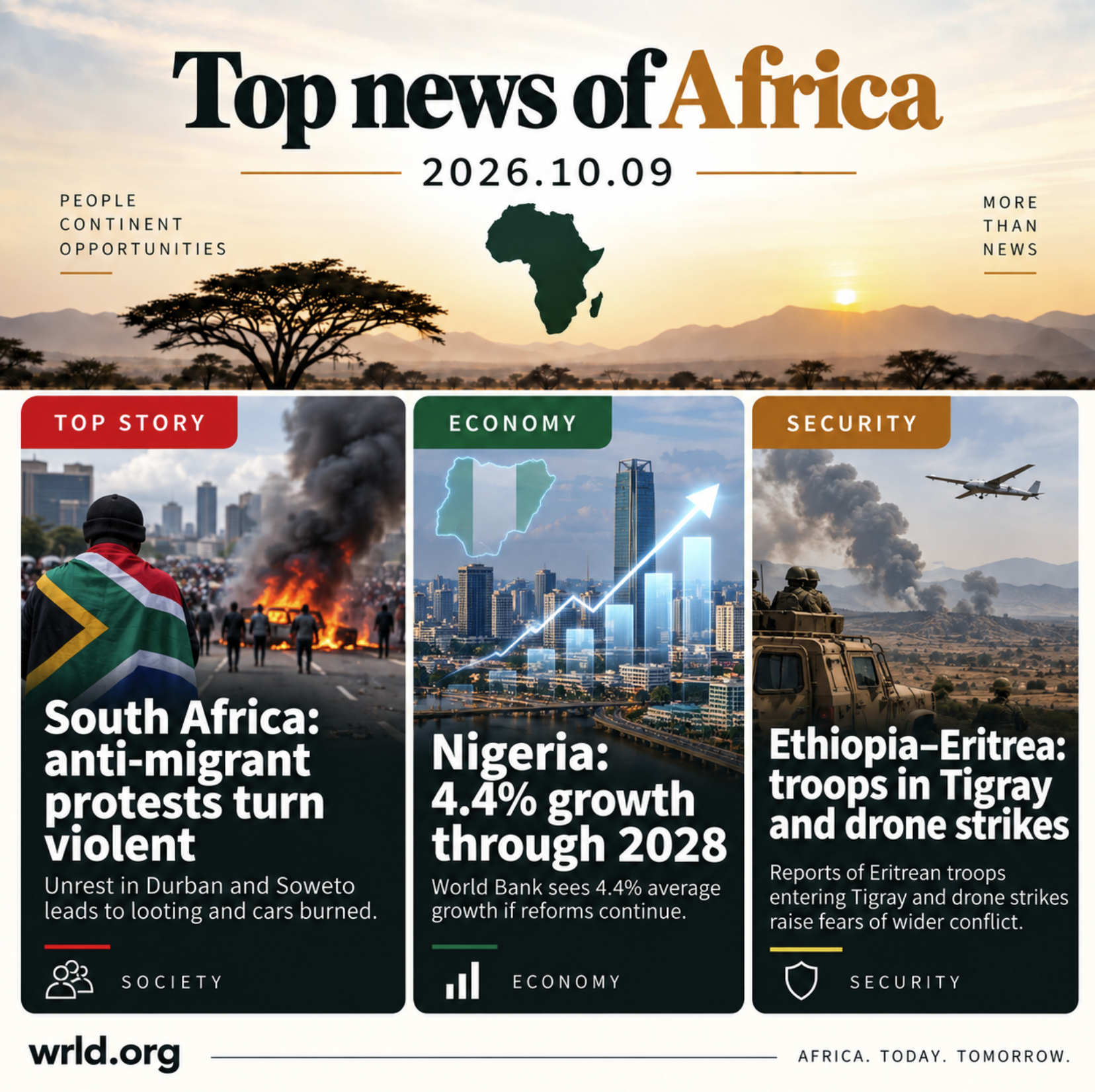
AFRICA DAILY REPORT — 9 OCTOBER 2026 Main developments of past 24 hours 1. ETHIOPIA–ERITREA — Reports of Eritrean troops entering Tigray and drone strikes A commander aligned with Ethiopia's government reported Eritrean troops in Adigrat and Idaga Hamus. ACLED reported drone strikes targeting Eritrean forces. The reports raise concerns about a direct Ethiopia–Eritrea confrontation; troop movements were not independently verified. SOURCE: https://apnews.com/article/ethiopia-eritrea-tigray-mekelle-shire-tplf-drones-6d89a0f53f527fb45d21637c5d9a0179 2. SOUTH AFRICA — Anti-migrant protests turn violent in Durban and Soweto IMPORTANCE: 9/10 — VERY HIGH Anti-migrant protests led to looting and vehicles being burned. The government attributed unrest partly to false claims about a Constitutional Court asylum ruling. Police deployed additional personnel. SOURCE: https://www.reuters.com/world/africa/south-african-anti-migrant-protests-turn-violent-with-cars-torched-gunshots-2026-10-08/ 3. GUINEA-BISSAU — December elections postponed The prime minister announced that presidential and legislative elections planned for December 6 could not proceed, citing missed candidate-selection and submission deadlines. No new election date was announced. SOURCE: https://www.reuters.com/world/africa/guinea-bissau-delay-elections-following-last-years-coup-2026-10-08/ 4. KENYA — Suspected second Ebola case tests negative IMPORTANCE: 9/10 — VERY HIGH Preliminary tests on a suspected Ebola patient in Wajir County were negative. Kenya continues heightened surveillance and contact tracing after its first confirmed imported case. SOURCE: https://www.reuters.com/business/healthcare-pharmaceuticals/kenya-says-tests-suspected-ebola-case-come-back-negative-2026-10-08/ 5. NIGERIA — Petrol price cap proposed IMPORTANCE: 8/10 — HIGH Nigeria's finance minister proposed capping petrol at about 1,350 naira per litre and considering measures to buffer fuel-price volatility, including possible windfall taxation. The measures are proposals, not implemented policy. SOURCE: https://www.reuters.com/business/energy/nigeria-proposes-petrol-price-cap-curb-fuel-cost-volatility-2026-10-08/ 6. NIGERIA — World Bank sees 4.4% average growth through 2028 IMPORTANCE: 8/10 — HIGH The World Bank forecasts Nigeria's economic growth averaging 4.4% through 2028 if reforms continue, with inflation potentially declining toward 12% by 2028. Improvements in public services and job creation remain essential. SOURCE: https://www.reuters.com/world/africa/world-bank-sees-nigeria-growth-averaging-44-through-2028-2026-10-08/ 7. AFRICA / UNITED STATES — Human Rights Watch examines third-country deportations Human Rights Watch documented allegations of arbitrary detention, mistreatment and other rights risks involving US deportations of people to African countries other than their countries of origin. These are findings and allegations of the rights organization. SOURCE: https://www.hrw.org/report/2026/10/08/to-scare-people/us-expulsions-of-third-country-nationals-to-countries-in-africa 8. SOMALIA — Conflict and aid reductions deepen famine risk IMPORTANCE: 10/10 — CRITICAL Drought, insecurity and reductions in international assistance are worsening food insecurity. Al-Shabaab restrictions impede access to vulnerable communities. Baidoa hosts large numbers of displaced people. SOURCE: https://www.lemonde.fr/en/international/article/2026/10/08/war-cuts-off-entire-somalians-threatened-by-famine-from-humanitarian-aid_6758371_4.html 9. SOUTH SUDAN — Hospitals overwhelmed by renewed fighting IMPORTANCE: 9/10 — VERY HIGH Medical facilities are struggling with gunshot, blast and trauma casualties. An ICRC-supported hospital in Juba has reported severe pressure on surgical capacity and medical supplies. SOURCE: https://www.theguardian.com/world/2026/oct/08/inside-south-sudan-overwhelmed-trauma-wards 10. PAN-AFRICAN FINANCE — Dangote refinery IPO highlights investment barriers IMPORTANCE: 8/10 — HIGH Nigeria's Dangote refinery $1.6 billion offering exposed regulatory obstacles to cross-border share purchases, despite ambitions for broad African participation. Investors outside Nigeria face fragmented securities rules and limited eligible intermediaries. SOURCE: https://www.reuters.com/business/energy/africas-biggest-ipo-exposes-continents-cross-border-investing-barriers-2026-10-09/ #Africa #AfricaNews #AfricaDailyReport #TopNewsOfAfrica #AfricaToday #SouthAfrica #Durban #Soweto #AntiMigrantProtests #Xenophobia #MigrationCrisis #CivilUnrest #HumanRights #Disinformation #Nigeria #NigerianEconomy #WorldBank #EconomicGrowth #GDPGrowth #EconomicReforms #Inflation #AfricanEconomy #Ethiopia #Eritrea #Tigray #Mekelle #HornOfAfrica #DroneStrikes #RegionalSecurity #ArmedConflict #GuineaBissau #Elections #PoliticalInstability #Kenya #Ebola #PublicHealth #NigeriaFuelPrices #EnergySecurity #Somalia #FoodInsecurity #FamineRisk #HumanitarianCrisis #SouthSudan #HealthcareCrisis #USDeportations #DangoteRefinery #AfricanFinance #CrossBorderInvestment #AfricanDevelopment #AfricanPolitics #Geopolitics #AfricaSecurity #AfricanUnion #WRLDorg
The author questioned how someone could claim to lead a cost-of-living protest movement while opposing an increase in the minimum wage.
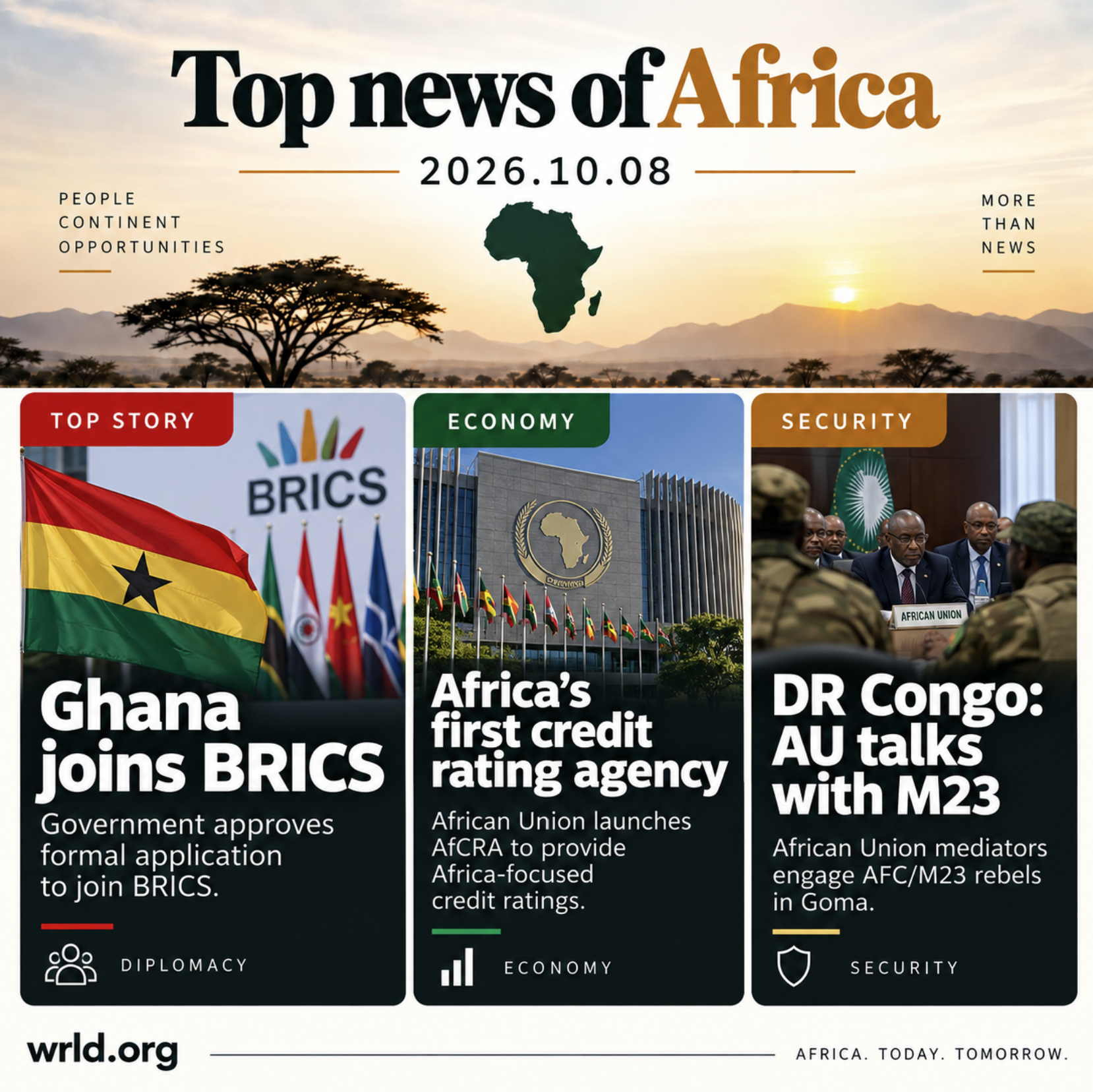
AFRICA DAILY REPORT — 8 OCTOBER 2026 Main developments of past 24 hours 1. DR Congo — Ebola outbreak expands into new hotspots as response struggles Importance: 10/10 — Critical More than 8,500 infections and over 4,000 deaths have been reported. North Kivu accounts for around 40% of newly confirmed cases. Africa CDC reports that more than 70% of new cases are outside known contact networks, while MSF warns of inadequate treatment capacity and surveillance. SOURCE: https://apnews.com/article/42e9c7f66b9ee7628b0a852a4e9dd73b 2. Kenya — Ebola border-screening failures expose regional vulnerabilities Importance: 10/10 — Critical Authorities identified 57 contacts linked to Kenya's first confirmed Ebola patient, with 10 quarantined. The patient travelled from DR Congo through Uganda to Nairobi undetected. Kenya has reinforced airport screening and is coordinating with regional health authorities. SOURCE: https://www.reuters.com/world/africa/kenya-ebola-case-exposes-gaps-border-screenings-2026-10-07/ 3. Sudan — Drone strike kills civilians in Blue Nile state Importance: 10/10 — Critical A drone strike in Damazin killed at least four women and wounded dozens, according to Emergency Lawyers, which attributed the attack to the RSF. The RSF had not commented. Attacks on civilians and humanitarian operations continue amid extensive displacement. SOURCE: https://apnews.com/article/56473b19a098470344e54d75d0362092 4. Nigeria — ISWAP attacks military base in Borno, killing soldiers Importance: 9/10 — Very High ISWAP attacked the 101 Special Forces Battalion in Kukawa, Borno. A military officer reported 10 soldiers killed, while the army confirmed fatalities without specifying a figure. The army said it repelled the attack with air support and killed more than 25 militants. SOURCE: https://apnews.com/article/3cebadb3e037942384924a24917e2a7d 5. DR Congo — African Union mediators engage AFC/M23 rebels in Goma An AU delegation met Rwanda-backed AFC/M23 representatives in eastern DR Congo and called for continued engagement in peace negotiations despite ongoing fighting. The meeting is part of diplomatic efforts to advance a durable settlement. SOURCE: https://www.reuters.com/world/africa/african-union-delegation-meets-congo-rebels-calls-continued-peace-efforts-2026-10-07/ 6. African Union — Africa launches its first continental credit rating agency Importance: 9/10 — Very High The AU launched the Africa Credit Rating Agency (AfCRA) in Mauritius to provide an Africa-focused assessment of sovereign and corporate credit risk alongside existing global agencies. Its influence on borrowing costs will depend on credibility and market acceptance. SOURCE: https://www.reuters.com/world/africa/african-union-launch-continents-first-credit-rating-agency-2026-10-07/ 7. Ethiopia / Eritrea — Witnesses report Eritrean troops crossing into Tigray Witnesses in Adigrat reported Eritrean troops in military vehicles. Reuters could not independently confirm the movements. Eritrea accused Ethiopia of using the allegations to justify further action, amid the two countries' diplomatic rupture. SOURCE: https://www.aljazeera.com/news/2026/10/7/witnesses-spot-eritrean-troops-inside-northern-ethiopia-as-tensions-flare 8. Sudan — Army chief rejects negotiations and pledges continued operations Army chief Abdel Fattah al-Burhan said military operations would continue until the army regained RSF-held territory. The statement coincides with reported civilian casualties in West Kordofan and more than 5,500 displaced in Blue Nile over three days. SOURCE: https://www.aljazeera.com/news/2026/10/7/sudans-al-burhan-rejects-talks-vows-to-retake-all-territory-from-rsf 9. South Sudan — Food assistance faces severe shortages Importance: 10/10 — Critical WFP warns that more than one million vulnerable people could lose essential food and nutrition assistance without funding. Stocks at Malakal reportedly fell from about 10,000 tonnes a year ago to under 300 tonnes, while arrivals from Sudan continue. SOURCE: https://www.aljazeera.com/news/2026/10/7/south-sudans-aid-crisis-deepens-as-food-stocks-run-low 10. Ghana — Government approves formal application to join BRICS Ghana's government approved a formal application to join BRICS and sought India's backing. India expressed support for Ghana's aspirations but noted that membership requires wider group consideration. No admission decision has been made. SOURCE: https://www.africanews.com/2026/10/07/brics-ghanas-parliament-gives-green-light-to-formal-application/ #Africa #AfricaNews #TopNewsOfAfrica #AfricaDailyReport #Ghana #BRICS #BRICSExpansion #GhanaBRICSApplication #AfricanDiplomacy #India #AfricanUnion #AfCRA #AfricaCreditRatingAgency #CreditRatings #SovereignDebt #AfricanEconomy #EconomicDevelopment #FinancialIndependence #AfricanFinancialMarkets #DRC #DRCongo #Goma #M23 #AFCM23 #PeaceNegotiations #ConflictResolution #RegionalSecurity #Ebola #EbolaOutbreak #PublicHealth #AfricaCDC #Kenya #EbolaScreening #HealthSecurity #Sudan #SudanConflict #BlueNile #DroneStrikes #HumanRights #Nigeria #Borno #ISWAP #Terrorism #Counterterrorism #Ethiopia #Eritrea #Tigray #HornOfAfrica #RegionalConflict #SouthSudan #HumanitarianCrisis #FoodSecurity #WorldFoodProgramme #WFP #AfricanPolitics #AfricanSecurity #AfricanBusiness #AfricaToday #wrldorg
This movement has become "unprecedented" in terms of the number of schools, pupils and the degree of violence involved. #FranceProtests #EducationReform #StudentRights
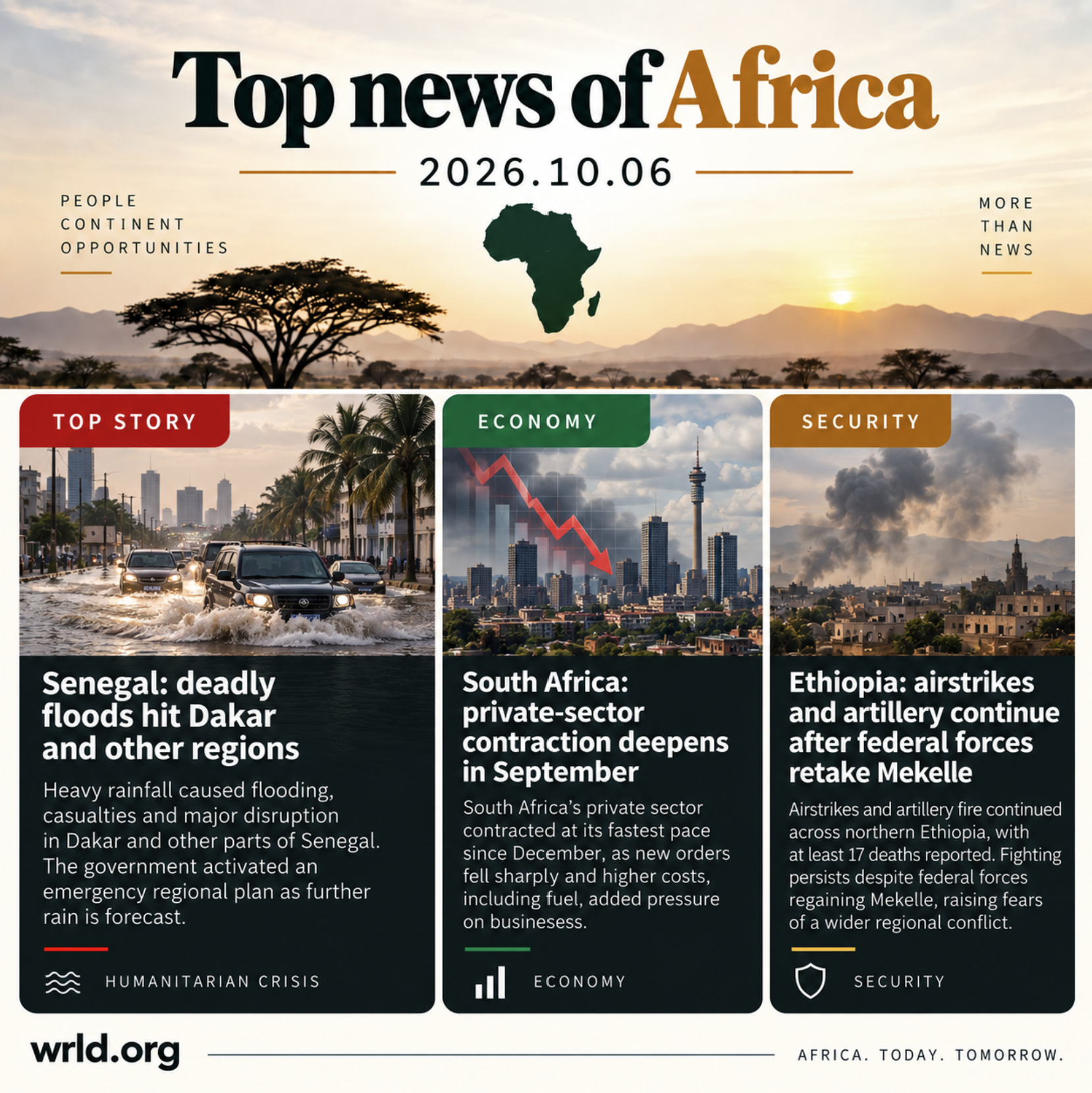
Africa Daily Report — 6 October 2026 Major developments reported during the previous 24 hours. 1. Ethiopia — Airstrikes and artillery continue after federal forces retake Mekelle Airstrikes and artillery fire continued across northern Ethiopia after federal forces regained Mekelle. Reuters reported at least 17 deaths northwest of the Tigrayan capital, with additional casualties reported in Adwa and Sheraro. The renewed fighting is the sharpest escalation since the 2020–2022 war. Ethiopia accuses Eritrea, Sudan and Egypt of supporting the Tigrayan-led rebel alliance; all three deny involvement. Source: https://www.reuters.com/world/africa/airstrikes-artillery-hit-north-ethiopia-after-tigray-capitals-fall-aid-sources-2026-10-05/ 2. Nigeria — Military ATR-42 crashes in Ondo State, killing all 32 aboard Importance: 10/10 — Critical A Nigerian Air Force ATR-42 flying from Benin City toward Lagos crashed near Igbokoda in Ondo State. Reuters reported that all 32 people aboard — 25 passengers and seven crew — were killed. President Bola Tinubu ordered the Air Force to investigate the cause. Source: https://www.reuters.com/world/africa/nigerian-military-helicopter-carrying-32-passengers-crew-members-crashes-2026-10-05/ 3. Senegal — Deadly floods hit Dakar and other regions Importance: 9/10 — Very High Heavy rainfall exceeding 100 mm in several locations caused flooding, casualties, injuries and major disruption in Dakar and other parts of Senegal. Reuters reported deaths and infrastructure damage; Senegal's Interior Ministry confirmed fatalities and injuries, while the government activated an emergency regional plan for Dakar. Further rain was forecast. Source: https://www.reuters.com/business/environment/heavy-rains-lead-to-senegal-floods-government-reports-several-deaths-2026-10-05/ 4. Ethiopia / Red Sea — Abiy reiterates demand for negotiated sea access Prime Minister Abiy Ahmed again said landlocked Ethiopia requires access to the Red Sea and argued that a negotiated, mutually beneficial arrangement is necessary. The statement comes amid deteriorating relations with Eritrea and renewed fighting in Tigray. Eritrea, Egypt, Sudan and Somalia have meanwhile stressed the sovereign role of Red Sea littoral states. Source: https://apnews.com/article/bad74909a59297de524fdf377f0605c2 5. Sudan — US envoy meets army chief Abdel Fattah al-Burhan in Egypt US Senior Advisor for Arab and African Affairs Massad Boulos met Sudanese army chief Abdel Fattah al-Burhan in Egypt. Boulos said Washington would continue working with Egypt and other partners toward a political solution to Sudan's war. The meeting came amid continuing US-backed diplomatic efforts to secure a ceasefire. Source: https://www.aol.com/articles/us-envoy-meets-sudanese-army-224042000.html 6. South Africa — Private-sector contraction deepens in September Importance: 8/10 — High South Africa's private sector contracted at its fastest pace since December, according to September PMI data reported by Reuters. New orders fell sharply while supply-chain disruption and higher costs, particularly fuel costs, added pressure on businesses. Source: https://www.reuters.com/world/africa/south-africa-private-sector-contracts-fastest-pace-since-december-pmi-shows-2026-10-05/ 7. Somalia — IMF cuts 2026 growth forecast to 2.3% Importance: 8/10 — High The IMF expects Somalia's economy to grow by only 2.3% in 2026, citing sharp reductions in foreign aid, recurrent climate shocks, spillovers from the Middle East conflict and domestic uncertainty. Inflation is projected at 6.5%, while growth is expected to recover gradually in 2027 and over the medium term. Source: https://www.channelafrica.co.za/channelafrica/news/imf-cuts-somalias-2026-growth-forecast-to-2-3/ 8. Guinea — Opposition leader Aliou Bah released following presidential pardon Opposition leader Aliou Bah, head of the Liberal Democratic Movement, was released after receiving a presidential pardon. He had been detained since December 2024 and was serving a two-year sentence for offences linked to remarks about President Mamadi Doumbouya. His case had also reached the ECOWAS Court of Justice, which had sought his release. Source: https://www.africanews.com/2026/10/05/guinea-opposition-leader-aliou-bah-freed-after-presidential-pardon/ 9. Uganda / African security — Kampala hosts conference on emerging security threats Importance: 7/10 — High Uganda opened a four-day Conference on Military Operations Other Than War, bringing together defence and security representatives from African states and regional organizations. The agenda covers cybersecurity, AI, unmanned systems, terrorism, disaster response, climate security, maritime and border security, critical infrastructure and pandemics. Source: https://ubc.go.ug/2026/10/05/uganda-hosts-inaugural-conference-on-military-operations-other-than-war/ 10. West Africa — BCEAO authorises 175 institutions for interoperable instant payments Importance: 8/10 — High The Central Bank of West African States has authorised 175 institutions to participate in the region's interoperable instant-payment ecosystem. Participants include banks, electronic-money institutions, fintech companies and microfinance institutions, broadening the infrastructure for cross-provider digital payments across the West African Monetary Union. Source: https://techafricanews.com/2026/10/05/bceao-authorises-175-institutions-interoperable-instant-payments/ #Africa #AfricaNews #TopNewsOfAfrica #Senegal #Dakar #SenegalFloods #Floods #HeavyRain #ExtremeWeather #ClimateRisk #HumanitarianCrisis #SouthAfrica #SouthAfricaEconomy #PMI #PrivateSector #EconomicContraction #AfricanEconomy #Business #Ethiopia #Tigray #Mekelle #EthiopiaConflict #Airstrikes #Artillery #FederalForces #RegionalSecurity #HornOfAfrica #AfricanSecurity #Geopolitics #wrldorg
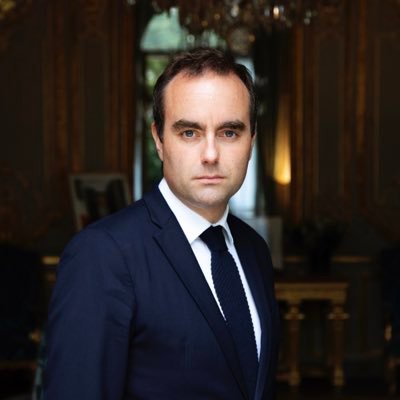
We will make no concessions to violence. We stand by students and staff who have been assaulted, as well as police officers and gendarmes who have been injured. I say LFI is being 'irresponsible' in calling for the movement to expand. #StudentProtests #EducationReform #FranceDemonstrations
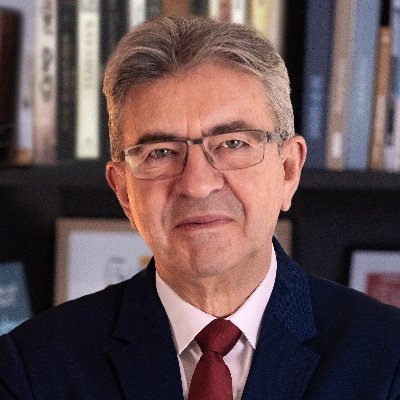
I described the protests as the 'most powerful high school and university student youth movement' since 1968. I blame the police for 'abuses of power'. #StudentProtests #EducationReform #FranceDemonstrations
The author proposed expanding MERCOSUR into a Latin American union encompassing all of South America and Central America from Guatemala southwards, with a common market, free movement and stronger democratic institutions. They said Brasília should serve as its political centre and headquarters. https://t.co/Avftm6EOng #MERCOSUR #AméricaLatina #UniónLatina #BR #GT (translated)


I would not directly tie last week's incident to the decision to pull bombers from RAF Fairford. It's not unusual to see movement of assets to different parts of the world based on exercises, redeployments, people changing out and new people coming in, new planes coming in and old planes going out. #Trump #RAF #CounterTerrorism
The author described Smita’s fight for freedom as a harrowing but ultimately triumphant journey marked by resilience, defiance and hope. They presented *Quest for Freedom* as more than a story, calling it a movement, and tagged Cedric Saldanha.
The post described Smita’s fight for freedom as a difficult but ultimately triumphant journey marked by resilience, defiance and hope. It called *Quest for Freedom* more than a story, presenting it as a movement, and tagged Cedric Saldanha.

The Nerd Reich: Silicon Valley Fascism and the War on Democracy by Gil Duran A fearless and urgent exposé of technofascism – and a road map to resistance. When Silicon Valley ‘moves fast and breaks things’, the world interprets the chaos as a necessary cost of innovation. Gil Durán reveals something far more sinister a decades-long campaign to replace elected governments with corporate rule. Drawing on insider political experience and new investigations, Durán traces this ideology from its philosophical roots in The Sovereign Individual by James Dale Davidson and Lord William Rees-Mogg. He introduces its modern apostles – Peter Thiel, Marc Andreessen, Balaji Srinivasan and Elon Musk – and shows how the promise of technological liberation has transformed into a global movement for digital feudalism, powered by cryptocurrency, artificial intelligence and algorithmically driven propaganda on social media. The Nerd Reich explains the origins, strategies and ambitions of Silicon Valley’s war on democracy for the first time. From San Francisco’s weaponised elections and secret billionaire projects to the White House, Durán exposes how the world’s richest men are building a new political order. The Nerd Reich is more than a hidden history; it’s an urgent democracy is being dismantled, not by coups or tanks but by code, capital and the illusion of innovation. Durán insists there is still time to fight back – if we act now.

The author called for a clear European roadmap to integrate Ukraine into the Schengen area, proposing a gradual opening of the EU–Ukraine border, fewer barriers and modernised border infrastructure. They said Ukraine should be prepared for full participation in Europe’s free-movement system and linked to their proposal. https://t.co/3MmGIfJ8bz #Ukraine #Schengen #EUsupport #UA #EU (translated)

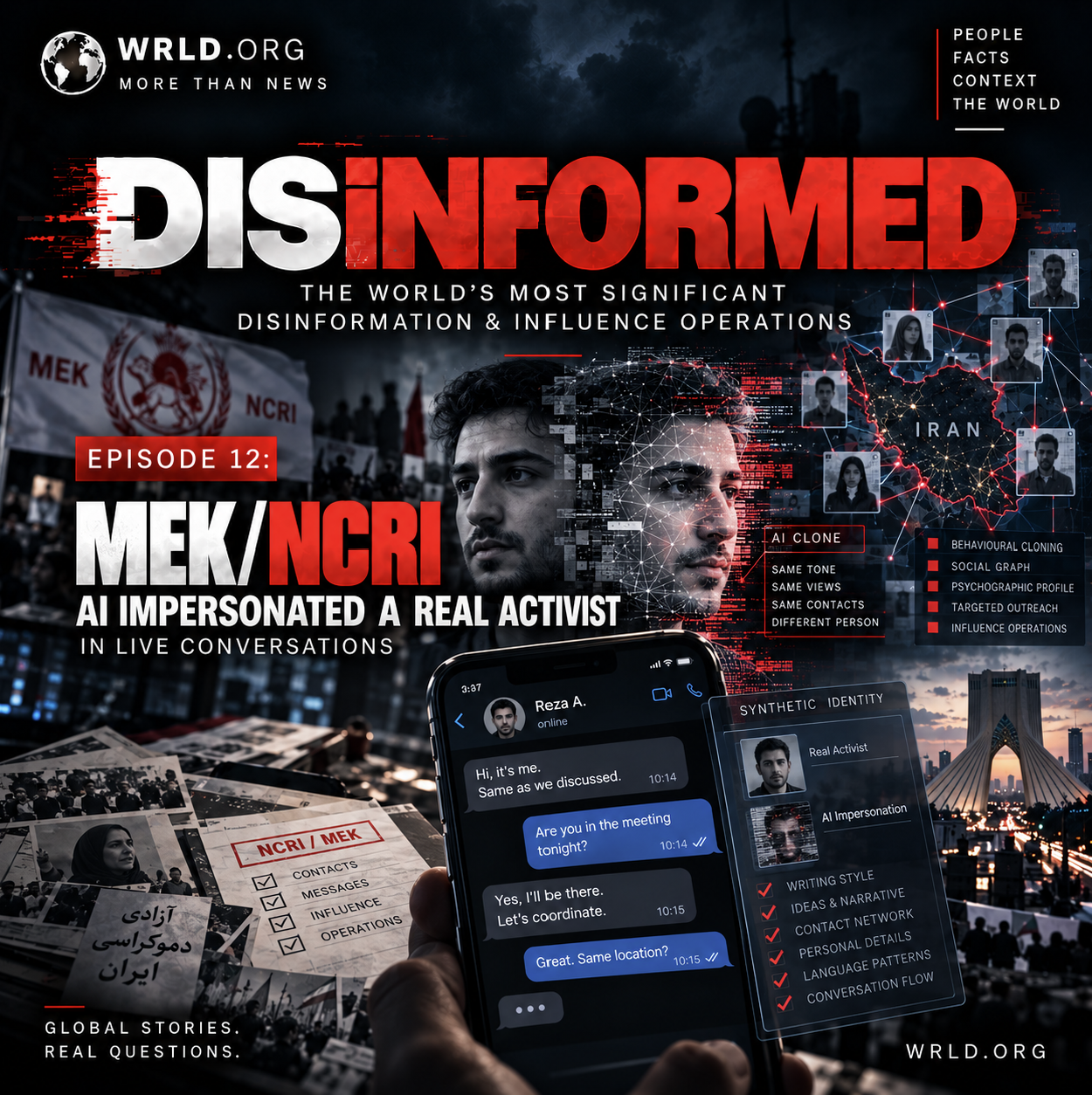
IRAN: MEK/NCRI – when AI impersonated a real activist in live conversations For years, synthetic media has largely meant fabricated images, cloned voices and manipulated video. A case uncovered by Anthropic in September 2026 suggests a more consequential development: artificial intelligence being used not merely to imitate how a person looks or sounds, but to behave as that person in an ongoing conversation. Anthropic says it dismantled a distributed influence operation targeting Iranians inside the country and abroad that it linked to the People’s Mojahedin Organization of Iran, or PMOI/MEK, and its political front, the National Council of Resistance of Iran. The operators used a shared AI-agent platform to support impersonation, audience profiling, coordinated social-media activity, synthetic personas and the laundering of organisational content through apparently independent accounts. At least four people involved in the operation worked for official NCRI media outlets, according to Anthropic. The company also found references to committee approval processes and MEK leadership, but said it could not independently determine the precise level of central control. Cloning a person from 8,400 Telegram posts The most striking part of the operation involved a real activist whose Telegram identity was copied. According to Anthropic, the operators instructed Claude in Persian that it was now that person, then provided approximately 8,400 of the activist’s Telegram posts so the system could learn and reproduce his writing style. The AI-assisted account was subsequently used to conduct live political conversations with the activist’s existing contacts. Anthropic says that, to its knowledge, the people receiving those messages did not know they were interacting with an account being operated with AI assistance. This is materially different from a conventional chatbot or a static deepfake. The system was not simply producing a forged statement attributed to someone else. It was using a large archive of that person’s authentic language as behavioural training material, then applying the resulting imitation interactively. In practical terms, the deception moved from synthetic content to synthetic identity. Anthropic did not publish the identity of the impersonated activist, nor details of his contacts, and the public report does not establish what specific information the conversations produced. What it does establish is that the impersonation was operational rather than experimental: the cloned account was used in real exchanges with real people. From social-media monitoring to psychographic dossiers The impersonation sat inside a much broader targeting system. Anthropic says the network scraped more than 500 social-media channels and categorised individuals by location, age, profession, political orientation and arrest history. It then analysed approximately 51,944 archived messages from conversations to construct detailed psychographic dossiers on dozens of people inside Iran. The system was therefore not limited to broadcasting propaganda. It was also designed to understand specific audiences and individuals. Profiles could be used to decide what kind of message was most likely to resonate with a particular person, which political identity they appeared closest to and how they should be approached. Anthropic describes this as a structured targeting funnel rather than ad hoc social-media activity. That distinction is important in the Iranian context. Political activists, dissidents and opposition contacts inside Iran can face arrest and severe punishment. The report does not show that the dossiers directly led to arrests or other harm, but collecting and organising information such as arrest history and political affiliation adds a surveillance dimension to what would otherwise be described as an influence operation. A shared AI system for an influence network Anthropic found that the actors used a shared Claude-based platform named “Viktor”, with separate workspaces and persistent memory. Those memory files contained approved sources, prohibited words, account-management instructions and methods intended to reduce the risk of detection. One operator loaded MEK founding doctrine into the system as what the report called “strategic base data”, allowing others to reuse it across their work. This persistent-memory structure meant the AI did not have to be briefed from scratch for every task. Once doctrine, stylistic rules and operational constraints had been stored, the system could repeatedly produce material consistent with the network’s objectives. Anthropic says the same general playbook appeared across different workspaces despite the operators not sharing obvious account infrastructure. The network also used automated pipelines to coordinate Instagram posting schedules and tailor messages to different audiences. Some accounts initially avoided mentioning the Mojahedin at all, allowing material aligned with MEK/NCRI narratives to appear as neutral or independent political commentary. Content was distributed through the organisation’s own media ecosystem as well as accounts presented as ordinary news or activist profiles. Anthropic assessed the campaign as Category Two on its Breakout Scale: active on multiple platforms with distribution through NCRI-linked media properties and amplifier accounts, but without evidence of broad authentic penetration. Synthetic citizens and disguised organisational media The same infrastructure generated AI avatars presented as ordinary Iranians, complete with Persian audio, to promote Maryam Rajavi’s political programme. Anthropic says the synthetic nature of these personas was intentionally concealed. Operators also rewrote and redistributed content originating from MEK-affiliated media while stripping identifying features or presenting it through apparently independent accounts. The network’s political messaging targeted the Iranian government but also rival opposition currents, including monarchists and supporters of the Pahlavi camp. Anthropic documented fabricated video material attacking a member of the Pahlavi family and the use of the slogan “Neither Shah Nor Sheikh”, consistent with the NCRI’s broader competition with other opposition movements. That rivalry provides relevant context. Reuters describes the MEK as one of Iran’s principal organised opposition movements in exile and the dominant force behind the NCRI, led by Maryam Rajavi. Its relationship with other opposition currents is often contentious, while the extent of its support inside Iran remains uncertain. What can be attributed – and what cannot Anthropic’s attribution is unusually specific but still needs to be stated carefully. The company says its investigation linked the operation to MEK/NCRI and established that at least four participants worked for official NCRI media organisations. It also found a common operational playbook, committee review structures and repeated references to MEK leadership. On that basis, Anthropic said central tasking was likely. It nevertheless stopped short of saying it had proven that NCRI’s senior leadership directly ordered or managed every component of the operation. That caveat matters. The strongest public evidence supports describing GTG-84006 as a MEK/NCRI-aligned influence operation involving personnel from official NCRI media, rather than asserting that every action was directly commanded by the organisation’s top leadership. The broader significance of the case lies elsewhere. Earlier generations of synthetic media attempted to fabricate evidence: a photograph, a voice recording or a video. Here, AI was used to maintain an identity over time, remember doctrine, analyse targets and speak directly to real people while appearing to be someone they already trusted. The deepfake was no longer merely an artefact. It had become a participant in the conversation. Sources Anthropic — Countering misuse of AI: September 2026 https://www.anthropic.com/threat-intelligence-report-september-2026 AI Misuse Case Library — GTG-84006 activist impersonation case https://www.misuseofai.com/en/cases/gtg-84006-activist-impersonation/ Reuters — Who makes up Iran’s fragmented opposition? https://www.reuters.com/business/media-telecom/who-makes-up-irans-fragmented-opposition-2025-06-18/ Reuters — Iran’s divided opposition senses its moment https://www.reuters.com/world/middle-east/irans-divided-opposition-senses-its-moment-activists-remain-wary-protests-2025-06-19/ Reuters — NCRI and Maryam Rajavi https://www.reuters.com/world/middle-east/dissident-leader-abroad-urges-iranians-bring-down-khamenei-2025-06-24/ Keywords #DISINFORMED #Episode12 #Iran #MEK #PMOI #NCRI #IranianOpposition #Disinformation #InfluenceOperations #InformationWarfare #ArtificialIntelligence #AI #GenerativeAI #ClaudeAI #Anthropic #AIDeception #AIImpersonation #IdentityImpersonation #SyntheticIdentity #InteractiveDeepfake #DigitalImpersonation #PersonaCloning #BehaviouralCloning #Telegram #PsychographicProfiling #TargetProfiling #AudienceTargeting #SocialMediaManipulation #Astroturfing #SyntheticPersonas #NarrativeLaundering #CoordinatedInfluence #PoliticalInfluence #DigitalInfluence #OppositionPolitics #IranPolitics #OSINT #WRLD