🚨 LATEST UPDATE | Change in the starting eleven of @SEFutbol. Marc Pubill will take Eric Garcia's place due to discomfort in his left knee. (translated)
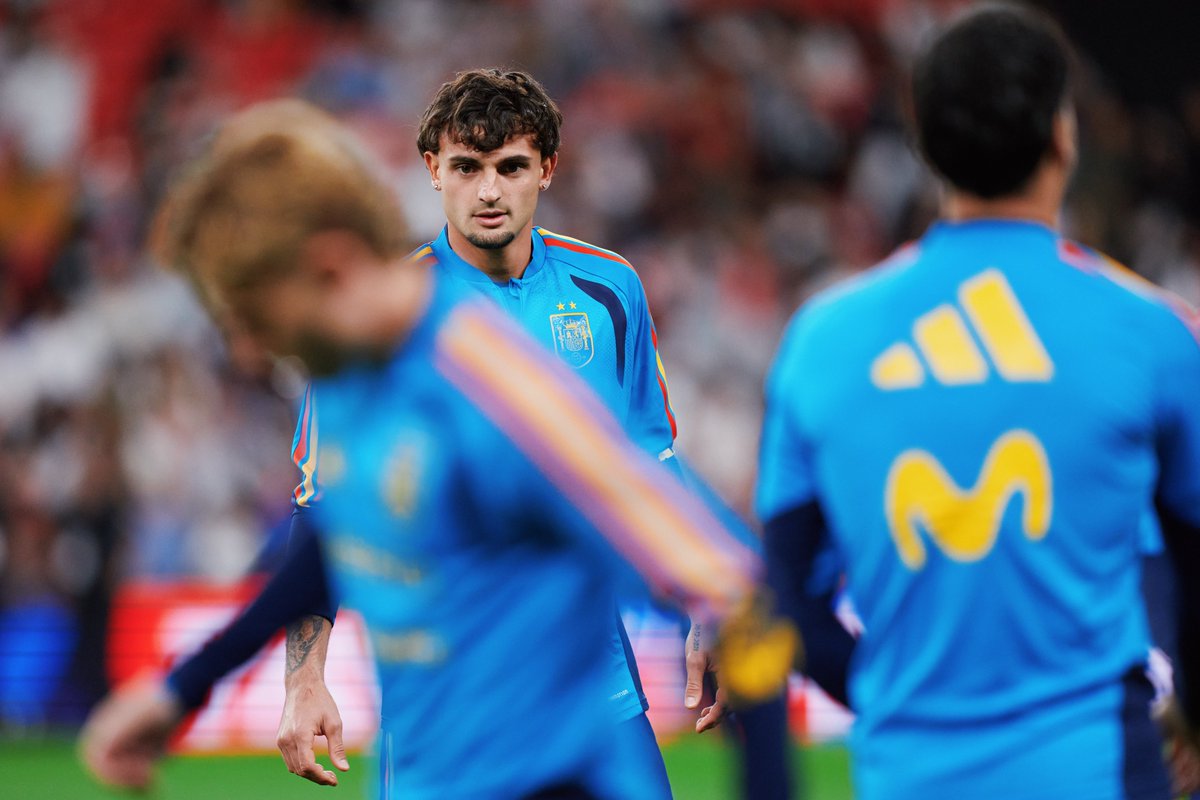
🚨 LATEST UPDATE | Change in the starting eleven of @SEFutbol. Marc Pubill will take Eric Garcia's place due to discomfort in his left knee. (translated)
“If everything you offered wasn’t enough, offer your absence” - Mario Benedetti “The 15 Million Men America Has Lost to Marriage America has a problem that is remarkably difficult to discuss without changing the subject: young men are disappearing from marriage. In 2000, there were 20.7 million unmarried men aged 20–39 and 18.1 million married men—a gap of 2.6 million. By 2025, there were 30.4 million unmarried men but only 15.4 million married men. The gap had exploded to roughly 15 million. That is not a minor cultural adjustment. It is a demographic earthquake. The explanation cannot simply be that men have become unwilling to “grow up.” Economic and educational changes matter. Unpartnered men have lower education, employment and earnings than partnered men. In 2019, 26% of unpartnered prime-working-age men had a bachelor’s degree, compared with 37% of partnered men. Meanwhile, women have made enormous gains in education and economic independence. Marriage is therefore no longer an economic necessity for women to the same extent it once was. The consequences are visible. In 1980, 63% of Americans aged 25 were married; by 2021, only 22% were. The share with a child fell from 39% to 17%. By 2021, one quarter of 40-year-olds had never married, compared with 6% in 1980. And 39.5% of U.S. births in 2024 occurred outside marriage. None of this proves that marriage guarantees happiness, or that being unmarried makes someone dysfunctional. Nor does the 15-million figure mean 15 million men will never marry. But pretending that family formation is irrelevant is equally absurd. A society cannot manufacture spouses for people. Nor should it. But it can create conditions in which work, competence, responsibility, commitment and family formation are attainable—and respected. Instead, we have increasingly normalised economic dependence, digital isolation and permanent adolescence while treating personal choice as though it has no social consequences. The 15-million gap is therefore more than a marriage statistic. It is a warning that millions of young men are failing to make the transition into the responsibilities of adult life” - ChatGPT

“Once we’ve built a machine that is smarter than us and that we can’t fully control, the possibilities really are endless.”” How Exactly Is AI Supposed to Kill Us All? https://t.co/8E8njfCoQc via Instapaper #AI #FutureTech #EndlessPossibilities #Nospecificcountrycodescanbederivedfromthetweetprovided.
One of my big kicking-myself-for-not-seeing-it-despite-claiming-to-be-a-futurist, is that of course once AI is big business or geopolitics, AI safety would be buffeted by interest groups. #AISafety #Futurism #BigTech #Nospecificcountrycodesarementionedinthetweet.
I am part of a generation who rewrote whatever parts of the home computer OS were too slow or incomplete. Once local models catch up we can fully own our computers again #TechRevolution #OpenSource #DigitalOwnership #Thetweetdoesnotmentionanyspecificcountries.Therefore #theresponsewouldbe:

Gasoline prices in Spain reach a new annual high, nearing 2 euros per liter, following a sustained increase over eleven consecutive weeks, while industry entrepreneurs warn of a possible drastic increase if the Government does not take immediate measures. (translated)


OpenAI did not raise the alarm with the Australian government until September, when it sent a message to a generic email inbox that is only checked once each day. #AI #OpenAI #Cybersecurity

Peste des Petits Ruminants (PPR), also known as sheep and goat plague, is a highly contagious animal disease affecting small ruminants🐑🐏🐐. Once introduced, the virus can infect up to 90 percent of an animal heard, and the disease kills anywhere from 30 to 70 percent of https://t.co/THdgzztT9f #PesteDesPetitsRuminants #AnimalHealth #LivestockDiseases #Therearenospecificcountriesmentionedinthetweetprovided.

Harvey Weinstein, who is currently jailed in New York, once ruled Hollywood as a kingpin powerful enough to make or break projects and careers. #HarveyWeinstein #MeToo #SexualAssault
The Return to Feudalism in 21st Century Garb A simple observer's viewpoint, with no claim to hold any absolute truth. The Veneer Cracks There is something strangely archaic about the world unfolding before our eyes, despite its satellites, artificial intelligence, and promises of infinite progress. Here and there, we witness heads of state behaving like feudal lords of another age, patiently nibbling away at the neighboring territory, redrawing borders through force rather than law, as if governing a nation mattered less than expanding one's fiefdom. No names need be mentioned here: current events provide plenty of illustration, and each reader will recognize, according to their own geography and moment of reading, the faces that embody this observation. But this return to the archaic is not confined to grand geopolitical stages. It also permeates the most ordinary daily life—that of social media, where anyone can pour out venom against another without filter, without form, and often without the slightest argument. The verbal jousting of yesteryear, with its codes, its rhetoric, its tacit limits, has given way to raw invective, snap judgment, instant condemnation. We no longer debate: we execute, verbally—and sometimes it doesn't stop at words. The Vanished Inhibition What strikes one, in this dual observation—macro-political and micro-social—is the lifting of an inhibition we thought firmly anchored. Centuries of cultural construction, education, philosophy, sometimes religion, had patiently shaped mechanisms of restraint: politeness as social ritual, argumentation as a mode of resolving disagreement, respect for one's opponent as the very foundation of democratic debate. This civilizational veneer, however fragile it always was, seemed to hold. Today it is cracking, and the question—which for me remains a simple hypothesis, not a certainty—is why. A convenient explanation would blame social media: anonymity, the distance of the screen, the instantaneousness of publication would favor verbal acting-out without the usual mediation of reflection. This is probably true, but likely insufficient. For technology here is only an accelerant, an amplifier—not necessarily a root cause. A Poorly Formatted Neocortex? The more unsettling hypothesis—and I frame it explicitly as hypothesis, not scientifically established fact—is that of a failure in the formation of moral judgment and tolerance toward otherness. The human brain possesses the neural structures enabling empathy, the distancing of impulsive reaction, the acceptance of difference—but these capacities are not innate in their full exercise: they must be built, educated, cultivated, like a muscle that needs patient training from childhood onward. If this education in otherness, nuance, and tolerance of disagreement erodes—for multiple and undoubtedly complex reasons that are not mine to settle here—then older reflexes resurface: instinctive distrust of the stranger outside the clan, the law of the strongest, the logic of territorial or symbolic predation. The other ceases to be a possible interlocutor and becomes once again a potential threat, unless they belong to my tribe, my clan, my party, my digital bubble. Two Scales, One Logic What is striking, in this deliberately provocative reading, is the structural similarity between these two scales. The leader who invades a neighbor in the name of a rediscovered greatness or a reinvented historical right, and the anonymous internet user who insults a stranger in the name of an unnegotiable conviction, may obey the same underlying grammar: that of territory to defend, clan to protect, the other to subdue or exclude rather than understand. The form has changed—satellites instead of horses, tweets instead of heralds—but the substance, in this reading that remains mine alone and commits no one else, seems strangely identical to that of feudal rivalries: the absence of a recognized third party, of an accepted common rule, of a respected arbitrating authority. Everyone becomes judge and party, lord of their own digital or territorial fiefdom. A Civilization on a Knife's Edge Norbert Elias, in his Civilizing Process, showed how Western societies had historically built, with remarkable slowness, an increasing control over impulses and direct violence, in favor of more sublimated forms of social regulation. What we may be observing today—and I stress again the conditional—is a form of regression in this process, or at least a fragilization of the veneer it had patiently laid down. Should we see this as an effect of great technological accelerations, which shake up our cognitive rhythms without leaving education time to adapt? A deeper crisis of the institutions tasked with transmitting these values of tolerance—school, family, religion, the rule of law? Or simply a cyclical movement of human history, where phases of policed civilization alternate with darker backlashes? I have no certain answer, and I would be wary of anyone claiming to hold one. In Conclusion, a Shared Concern This text is only a viewpoint, necessarily partial and subjective, on a world that sometimes seems to replay ancient logics in new clothing. Perhaps I am wrong to perceive a continuity between the feudal lord and the contemporary dictator, between the anonymous online insult and the absence of education in nuance. Perhaps these phenomena are unrelated, or too complex to be thus summarized. But if this reading, even partially, hits the mark, then the question that arises is less one of technological regulation—though necessary—than the far more arduous question of how to rebuild, generation after generation, this capacity to accept the other in their difference, to debate without destroying, to coexist without necessarily dominating. This undertaking, if it exists, will not be resolved by an algorithm nor by an international treaty. It plays out, patiently, in the most elementary education—the one that teaches a child that the other is not a threat, but a possibility. Bibliography Elias, N. (1939). Über den Prozess der Zivilisation [The Civilizing Process]. Oxford: Blackwell (Eng. trans. 1978-1982). Lorenz, K. (1963). Das sogenannte Böse [On Aggression]. London: Methuen (Eng. trans. 1966). Arendt, H. (1970). On Violence. New York: Harcourt, Brace & World. Han, B.-C. (2013). Im Schwarm [In the Swarm: Digital Prospects]. Cambridge, MA: MIT Press (Eng. trans. 2017).
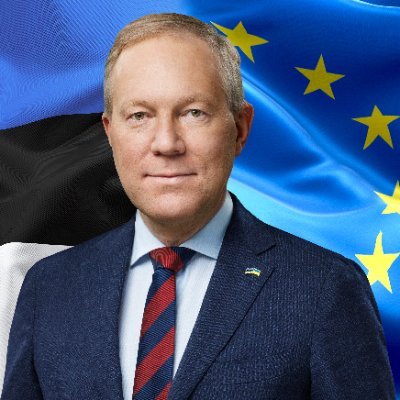
The Baltic Musketeers are together again. On a joint visit to Ottawa, we’re once again working to support Ukraine and secure victory together. 🇱🇹🇪🇪🇱🇻🇺🇦 https://t.co/aBBLVk13Zw #BalticMusketeers #SupportUkraine #OttawaVisit #LT #EE #LV #UA

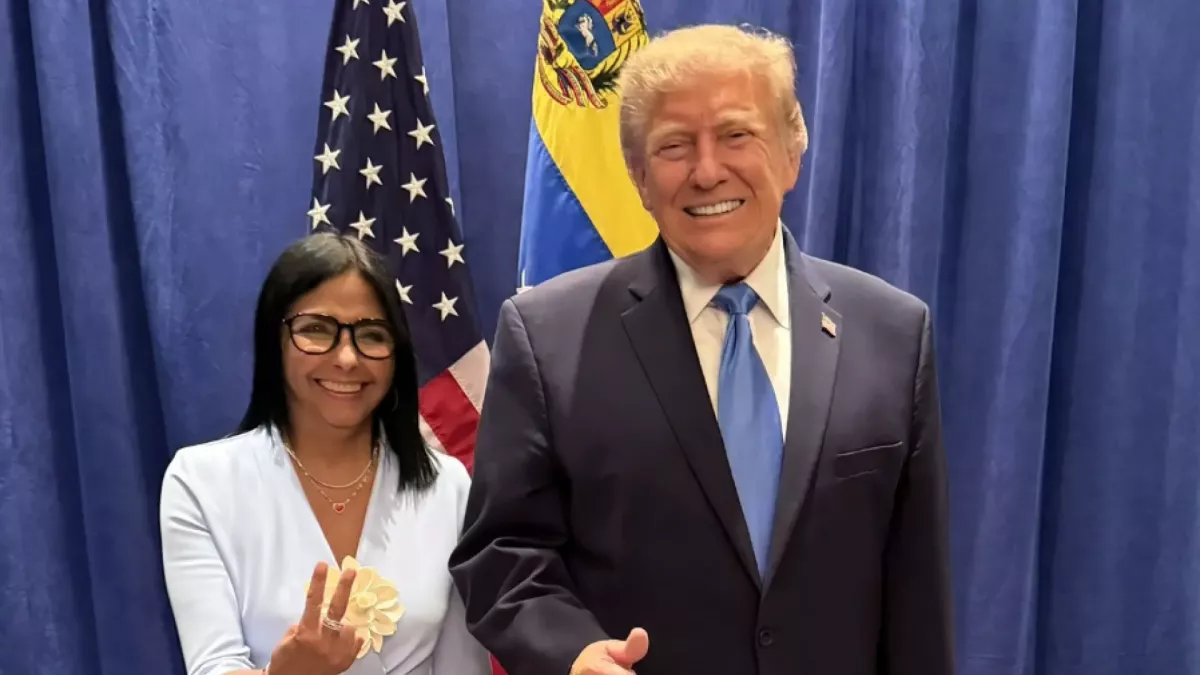
Donald Trump and Delcy Rodríguez met in New York, marking an unprecedented rapprochement between the United States and Venezuela, as this is the first meeting between a U.S. president and a Venezuelan ruler in more than eleven years. (translated)

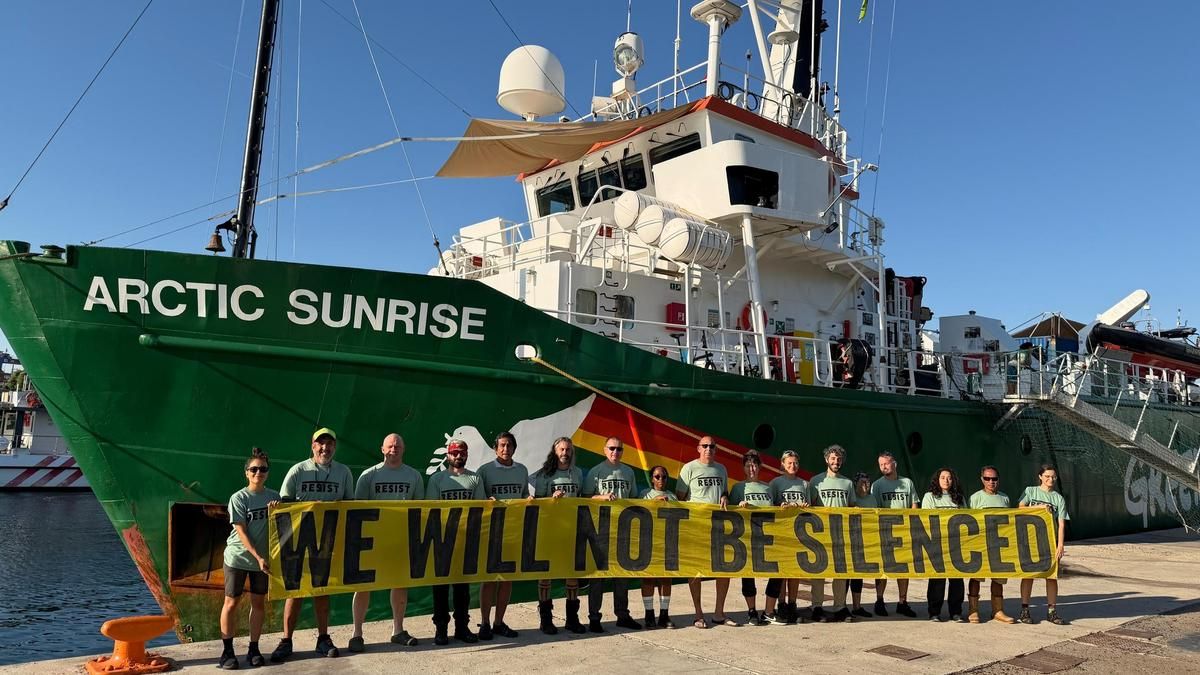
Greenpeace has denounced that the trial of eleven activists for a peaceful protest at the port of Sagunto is a persecution that is part of a global trend of repression against those who question the interests of large polluting industries. (translated)
A student opened fire on his classmates at a school in Turgutlu, Turkey, leaving eleven injured, of which two are in serious condition, and led to the arrest of the perpetrator and his relatives for possession of the weapon used in the attack. (translated)

Støre, Stubb & others must give their negotiators clear instructions: don’t allow a few countries opposed to rules to set the ceiling for everyone else. Secure a mandate to negotiate a new treaty—and, if consensus is once again used as a veto, take negotiations elsewhere #Negotiations #Treaty #Consensus #Nospecificcountrycodesarementionedinthetweet.
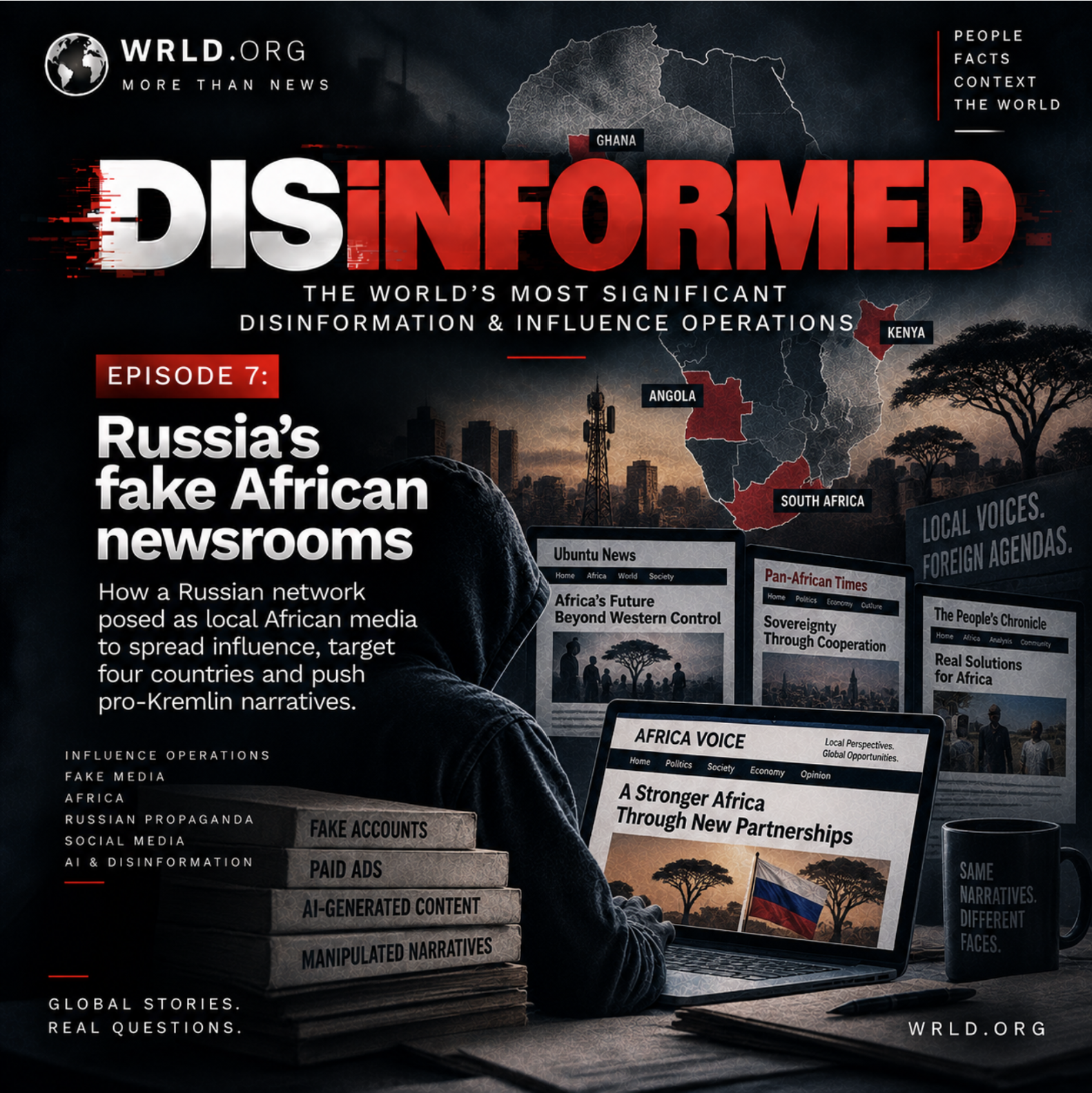
Russia’s fake African newsrooms – propaganda designed to look local A Facebook user in Nairobi, Accra, Johannesburg or Luanda encounters what appears to be a local news page. It publishes stories about African politics, Western influence and relations with Russia. The language is tailored to an African audience and the page presents itself not as a foreign broadcaster, but as part of the local information landscape. Behind some of these outlets, however, Meta found operators based in Russia. In its 2026 threat research, the company disclosed a Coordinated Inauthentic Behaviour network targeting audiences in Angola, Ghana, Kenya and South Africa. Meta removed 37 Facebook accounts and 29 Pages connected to the operation. Around 30,000 users followed at least one of the Pages, while the operators spent approximately $7,000 on Facebook and Instagram advertising, mostly in euros and US dollars. The numbers are relatively modest. The method is considerably more important. Rather than openly distributing Russian state messaging, the network posed as local African news sources and grassroots organisations, promoting narratives about Western colonialism and political interference while presenting Russia as a credible economic and political alternative. It was an old geopolitical message delivered through a much more effective identity: not Moscow speaking to Africa, but Africans apparently speaking to one another. A news outlet that was actually an influence operation Meta's investigation found that the network attempted to conceal its Russian origin while creating media brands that appeared indigenous to the countries they targeted. Its content amplified historical grievances against former colonial powers, criticised Western involvement in Africa and promoted closer relations with Russia. One example helps illustrate how the infrastructure was assembled. A Facebook Page targeting Kenya was called Kenya Watchtower. According to OpenAI's subsequent investigation, Facebook transparency records showed that the Page had previously been named “Farmtown5”. It appears to have been acquired or repurposed rather than built from scratch as a Kenyan news organisation. Some Pages also exposed administrator locations in Russia and Ukraine. Other elements of the network had previously targeted audiences in Zambia and Namibia. This use of apparently local identities is particularly important in the African information environment. A story published by RT or another identifiable Russian outlet arrives with an obvious geopolitical provenance. The same narrative presented by something resembling an independent Kenyan, Ghanaian or South African newsroom carries a different kind of credibility. The source appears closer to the reader, and the geopolitical interest behind the message becomes less visible. Then investigators found Dr Manuel Godsin The Facebook operation was only one part of a broader information ecosystem. OpenAI investigated related activity after receiving information from Meta and subsequently banned a ChatGPT account it assessed as likely originating in Russia. OpenAI called the campaign Operation No Bell. The account was being used to generate long-form articles and social-media posts about African geopolitics. Prompts were primarily written in English, but OpenAI also observed Russian-language instructions that the user described as coming from a manager. The operator sometimes explicitly asked the model to make the material appear less AI-generated – including requests to avoid stylistic features associated with machine-generated text and to write more like a human journalist. Many articles appeared under the name “Dr Manuel Godsin”, presented as an academic with a PhD from the University of Bergen and an affiliation with an organisation called the International Centre for Political and Strategic Studies. OpenAI could find no credible evidence that Godsin existed. Searches of Norway's National Research Information Repository and the University of Bergen library produced no record of him. Investigators subsequently discovered that a photograph used to represent Godsin had appeared years earlier on a Russian professional networking site and apparently belonged to a law student in St Petersburg. The fabricated academic identity was nevertheless remarkably productive. OpenAI identified 53 online articles carrying the Godsin byline. The fiction had moved beyond fake social-media pages and into the real media ecosystem. When propaganda enters genuine newsrooms This is the most consequential aspect of the operation. The articles were not confined to websites controlled by the influence network. Some were published by genuine African news organisations, including established South African outlets. The content mixed local political issues with broader geopolitical narratives. Some pieces criticised the United States and Britain or defended Russia's role in Africa. One accused the British NGO Crisis Action of fomenting protests in South Africa. Another praised Russia's presence in the Central African Republic. Other material addressed Kenya, Angola and relations between African governments and Washington. The mechanism represents a significant evolution from the classic troll-farm model. Instead of building an audience entirely on its own platforms, an influence operator can manufacture an apparently credible expert, generate articles in his name and persuade genuine news organisations to publish them. Once this happens, the propaganda acquires something a fake Facebook Page cannot provide: the institutional credibility of a real newsroom. OpenAI assessed No Bell's social-media impact as limited. One Facebook Page had around 3,000 followers before Meta removed it, while several others had very small audiences. But the operation was more successful in placing material in established media. In OpenAI's impact framework, it approached the level at which an influence operation breaks into mainstream media. For information operators, a single article published by a recognised outlet can potentially be more valuable than thousands of impressions generated by an obviously artificial account. A much larger network of ghost journalists Subsequent research suggests that Manuel Godsin was not an isolated experiment. In August 2026, Graphika, working with Code for Africa and with support from Meta, published a much broader investigation into Russian ghostwriting operations across African media. Researchers identified 44 ghost writers and fake experts, 38 of them assessed as high-confidence fabricated personas, operating between 2021 and 2026. Their material appeared or was quoted across 138 websites and was subsequently republished through at least 113 Facebook accounts and Pages, including authentic users, coordinated inauthentic networks and official Russian communication channels. The narratives were strikingly consistent. They included criticism of France, Ukraine and the United States; attacks on organisations such as ECOWAS and the International Criminal Court; positive portrayals of Russian involvement in Africa; praise for Russian paramilitary forces; and support for sovereignty-oriented political projects such as the Alliance of Sahel States. The operation therefore extends beyond creating fake news websites. It attempts to insert Russian-aligned narratives into the legitimate African media ecosystem using identities that appear African, independent or academically authoritative. This also explains why measuring reach through the original Facebook network alone is misleading. A fabricated article may begin with an influence operator, appear in a genuine African publication, be republished elsewhere and eventually circulate without any visible connection to Russia. At that point, the provenance of the narrative has effectively been laundered. An old Russian strategy with increasingly local faces Russia's use of local intermediaries in Africa is not new. Meta documented Russian networks using African nationals as early as 2019. In 2020 it dismantled another operation involving people in Ghana and Nigeria working on behalf of individuals in Russia, with links to previous activity associated with the Internet Research Agency. More recent Meta investigations suggest that this model has continued to evolve. Networks have increasingly relied on local freelancers, social-media managers and authentic media outlets rather than exclusively operating armies of obviously fake Russian-controlled accounts. This decentralisation offers several advantages. Local operators understand language, political sensitivities and cultural references. Authentic accounts are harder to identify than newly created synthetic personas. Local media brands can also deliver narratives without immediately triggering the scepticism associated with Russian state outlets. There is no evidence that every African journalist, freelancer or publication carrying such material knowingly participates in Russian influence activity. Meta explicitly notes in its investigations that some local contractors may not know who ultimately commissioned their work. That distinction is essential. The operation's effectiveness partly depends on precisely this ambiguity between deliberate participation, commercial content placement and unwitting amplification. The objective is to make Russian narratives look African The significance of this network is therefore not its 30,000 Facebook followers or its $7,000 advertising budget. Those figures are small compared with the audiences of major African media organisations. What matters is the distribution model. Traditional foreign propaganda asks an audience to trust a foreign source. These operations attempt to remove the foreign source from the equation altogether. A Russian geopolitical narrative can be generated with AI, attributed to an expert who does not exist, published by a media organisation that does, amplified through a Facebook Page presenting itself as local, and then rediscovered elsewhere as apparently independent African analysis. By the time the reader encounters it, Moscow may have disappeared completely from the chain of attribution. The resulting information operation is therefore less about making Russian propaganda more persuasive than about making it look as though it is no longer Russian propaganda at all. In an increasingly fragmented African media environment, that may be the more important evolution to watch. SOURCES: Meta Threat Research https://threatresearch-team.github.io/indicators/meta-h1-2026-russia-based-cib-network-1/ OpenAI — Operation “No Bell” https://openai.com/index/disrupting-malicious-uses-of-ai-no-bell/ Graphika — Umbrae Ex Machina https://www.graphika.com/reports/umbrae-ex-machina News24 https://www.news24.com/southafrica/news/ai-expert-exposed-fake-kremlin-linked-analyst-planted-stories-in-african-media-20260318-0560 Vanguard https://www.vanguardngr.com/2026/03/ai-expert-exposed-fake-kremlin-linked-analyst-planted-stories-in-african-media/ Meta — Russian Coordinated Inauthentic Behaviour, 2019 https://about.fb.com/news/2019/10/removing-more-coordinated-inauthentic-behavior-from-russia/ Meta — Russian Coordinated Inauthentic Behaviour, 2020 https://about.fb.com/news/2020/03/removing-coordinated-inauthentic-behavior-from-russia/ Meta Threat Research — Russian Use of Authentic Operators in Sub-Saharan Africa https://threatresearch-team.github.io/indicators/meta-h2-2025-russia-based-cib-network-2/ KEYWORDS: #DISINFORMED #Episode7 #Russia #Africa #RussianDisinformation #RussianInfluence #Disinformation #InformationWarfare #InfluenceOperations #ForeignInterference #FIMI #CoordinatedInauthenticBehaviour #CIB #FakeNews #FakeMedia #FakeNewsrooms #MediaImpersonation #GrassrootsManipulation #Astroturfing #ArtificialIntelligence #AI #AIPropaganda #SyntheticMedia #FakeInfluencers #SocialMediaManipulation #Facebook #Meta #OperationNoBell #AfricanMedia #MediaManipulation #Propaganda #DigitalInfluence #Angola #Ghana #Kenya #SouthAfrica #OSINT #WRLD

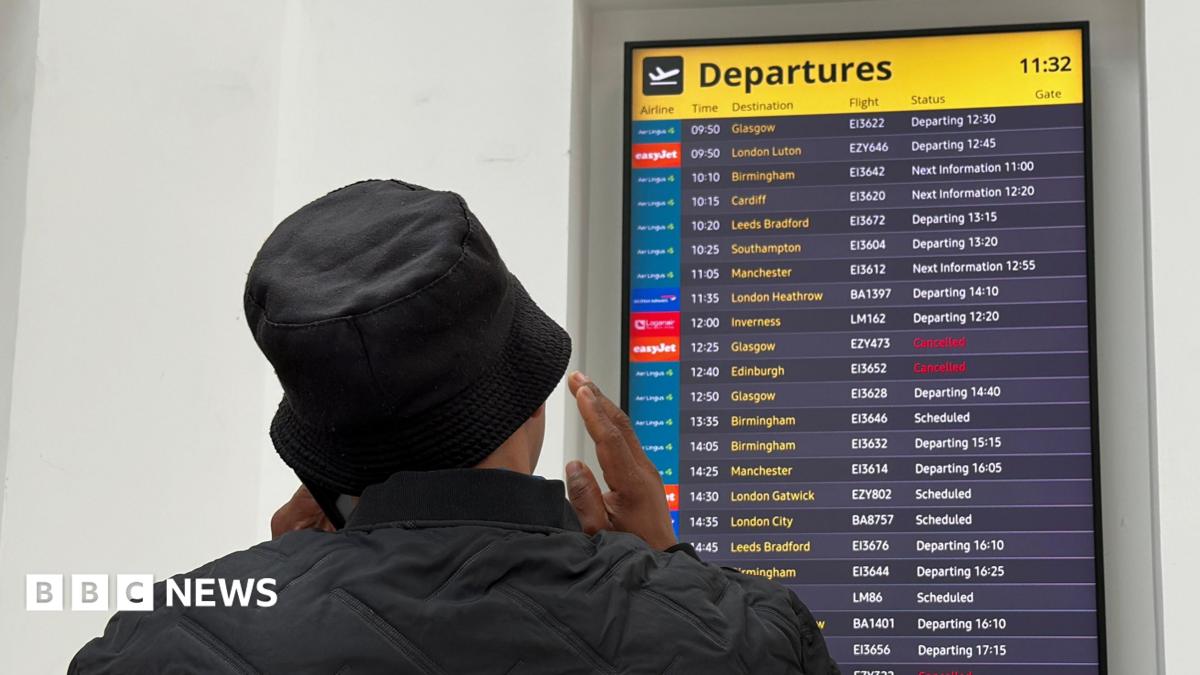
EasyJet says the latest incident "once again calls into question the resilience" of the system. #AirTrafficControl #FlightDisruptions #AviationSafety
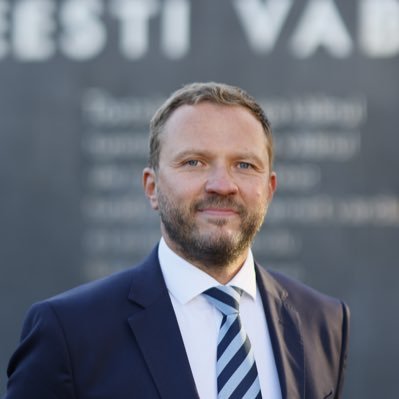
Today is the International Day of Peace. Yet peace is the last thing Moscow seeks. Last night, Russia launched another wave of attacks across Ukraine, striking Zaporizhzhia, Kharkiv, Odesa, and Kyiv. Once again, civilian infrastructure bore the brunt of the assault: residential #InternationalDayOfPeace #Russia #UkraineWar #RU #UA
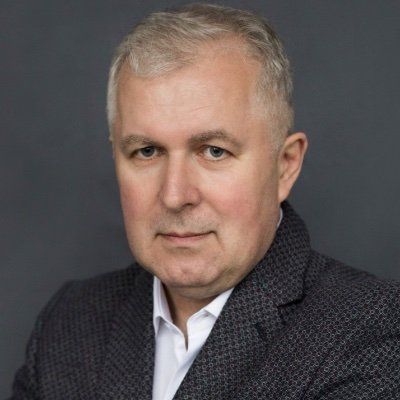
Russia's elections are not democratic—they are a political ritual for the Kremlin. Once the vote is over, a new mobilisation may follow. When will the Russian opposition realise that dictatorships cannot be replaced ‘democratically’? #RussiaElections #PoliticalRitual #RussianOpposition #RU





