BETA nonprofit public democratic european moderated

Search

#Paradox

'Aanslag Berlijn en Gays for Palestine, een paradox'. Nu duidelijk is dat de aanslag in Berlijn op de Pride van zaterdag is gepleegd door een islamitische terrorist, blijft het stil vanuit de activisten van Gays for Gaza of de georganiseerde LHBTIQ+-community. https://t.co/3d3nUEsv3S #Berlijn #LHBTIQ #Paradox

D

Historiker Timothy Snyder argumentiert, dass Wladimir Putin den Krieg gegen die Ukraine nicht aus eigenem Antrieb beenden kann, da seine Obsession mit dem Land ihn in eine politische und ideologische Sackgasse geführt hat, während die Zugeständnisse von Donald Trump ihn paradox in Bedrängnis bringen. #Russland #Ukraine #Snyder

Historiker Timothy Snyder: "Putin führt den Krieg nur mehr wegen Trump"

The suspect in the attack in Berlin is an Islamist. The CSD, an event of the political left, is no longer safe. Paradoxically, precisely because of the non-existent security policy of the political left. Will some draw the right conclusions from this? (translated)

Der Artikel beleuchtet die paradoxen Umstände, unter denen gut integrierte Asylbewerber mit Jobs und Sprachkenntnissen an der französischen Nordküste festsitzen, während sie trotz Deutschlands Bedarf an Fachkräften aufgrund bürokratischer Hürden und mangelhafter Integrationsmöglichkeiten nach Großbritannien streben. #Migration #Asylbewerber #Integration

Asylbewerber: Sie sprechen Deutsch, haben Jobs und wollen hier weg
telex 2d

A tudomány és a tudományosan cáfolt összeesküvés-elméletek iránti bizalom paradoxona abból fakad, hogy sokan a magányos géniusz sztereotípiájára alapozva hiszik magukról, hogy tudománybarátok, miközben valójában a tudományos konszenzus ellen irányuló, tudománytalan nézeteket vallanak. #tudomány #összeesküvéselméletek #oktatás

Hogy lehet, hogy emberek egyszerre bíznak a tudományban, és hisznek el tudományosan cáfolt összeesküvés-elméleteket?

România se confruntă cu un paradox în domeniul sănătății, pregătind anual mii de medici, dar reușind să păstreze în sistemul public mai puțin de 50% dintre aceștia, în timp ce spitalele se confruntă cu o criză acută de personal, în special în orașele mici. #medici #sanatate #Romania

România pregătește medici pentru alte state, în timp ce spitalele au criză de personal. Sub 50% din rezidenți rămân în sistem
NRC 2d

Het artikel bespreekt de paradoxale en tegenstrijdige opvattingen van Elon Musk over kunstmatige intelligentie, waar hij enerzijds gelooft dat AI binnen vijf jaar de menselijke capaciteiten zal overtreffen en ons machteloos zal maken, maar anderzijds zich voorbereidt op een wereld van oneindige overvloed waarin geld niet meer telt, terwijl zijn politieke uitspraken en invloed als pionier op het gebied van AI zorgen baren over de ethische implicaties en de toekomst van de mensheid. #ElonMusk #ArtificialIntelligence #Technologie

Should you be afraid of Elon Musk?

❗️ [ 🇫🇷 FRANCE ] 🔸Les fumées de l’incendie de Lège-Cap-Ferret atteignent Bordeaux, où le ciel se charge de fumée et une odeur de brûlé est perceptible dans le centre-ville. 📷 @Antonin_FR_ @HorrebHS @ohRito @paradoxalily https://t.co/p1sRmgbeZk #France #Incendie #Bordeaux

Marine Le Penová má nyní legální cestu kandidovat na prezidentku v roce 2027, přestože byla odsouzena za zneužití unijních fondů, a její strana Národní sdružení se nachází blízko převzetí Elysejského paláce, což vyvolává paradoxní situaci, kdy může být sama Le Penová slabým článkem svého vlastního úsilí o vítězství. #MarineLePenová #národnísdružení #prezidentskévolby

Evropu čeká šok. Odsouzená bojovnice proti migraci má prezidentský palác na dosah

Filip Turek se chlubí dotací 9,6 miliardy na dekarbonizaci ocelářství v Nové Huti — elektrifikaci pecí. Peníze jsou z Modernizačního fondu, tedy z výnosů emisních povolenek. Tedy z Green Dealu, který slíbil zrušit. A jeho anti-Green Deal fanoušci ho za to milují. Paradoxy. https://t.co/qcfisxiLKV #dekarbonizace #GreenDeal #Modernizace

Pasi 3d

Hökmark pekar på en obekväm paradox: I MP:s jakt på ett fossilfritt samhälle blev motståndet mot kärnkraft viktigare än tillgången till fossilfri el. Ideologi kan stänga reaktorer. Den kan inte ersätta dem. https://t.co/DKRChyrEDY #Kärnkraft #FossilfriEnergi #Politik

Ich kenne nur das Fratzscher-Paradoxon. Egal was er sagt, daß Gegenteil ist richtig. https://t.co/j1fXifcWLG #Paradoxon #Wirtschaft #Meinung

The #AfD paradox: Where the AfD is particularly strong, people would lose the most due to their policies. Saxony-Anhalt shows: A vote for the AfD would be a vote against one's own interests. (translated)

Dans les Pyrénées-Orientales, des restrictions d'eau dues à une sécheresse persistante suscitent suspicion et incompréhension parmi les habitants, notamment face à la construction d'un golf proche, perçue comme un paradoxe alors que des pénalités sont imposées aux particuliers pour l'arrosage. #Sécheresse #Environnement #PyrénéesOrientales

"Des gens ont été dénoncés parce qu'ils arrosaient" : dans les Pyrénées-Orientales, des arrêtés sécheresse suscitent suspicion et incompréhension

Článek Doctrina Aldama od Manela Fontdevily se zabývá satirickým zobrazením politických a sociálních témat prostřednictvím komiksového formátu, přičemž upozorňuje na absurdity a paradoxy současné doby. #DoctrinaAldama #ManelFontdevila #LaViñeta

Doctrina Aldama
Anna 5d

🔴🇺🇦🇷🇺 laut Magyar gibt es in der Krim kein Treibstoff mehr – und wird es auch nicht mehr geben. Innerhalb von drei Tagen habe die Ukraine 21 Tanker auf den Zufahrtswegen zur Krim zerstört. 121 weitere sollen folgen – „und so viele es noch geben wird, werden wir auch zerstören." Ziel ist die schrittweise Isolierung der besetzten Halbinsel, ganz ohne Bodenoperation. Die Krim-Brücke bleibt so paradoxerweise Fluchtweg und Belagerungsgrenze zugleich – während die Zufahrten zu Wasser systematisch trockengelegt werden. Quelle: https://t.co/lmaVMBWmZN #Krim #Ukraina #Konflikt

I stora delar balanserat @SVT-reportage om franska presidentkandidaten Marine Le Pen – men Nationell Samling kallas återigen ”ytterhöger” – medan Jean-Luc Mélenchon och hans radikala vänsterparti – som också nämns i inslaget – inte kallas ”yttervänster” En annan sak – är att det framstår som smått paradoxalt med benämningen ”ytterhöger” – när mer än en tredjedel av väljarna stödjer Le Pen och hennes parti. @SVTNyheter #journalistik SVT Morgonstudion 2026-07-21 #politics #journalism #France

Der Einsatz bei der KI Wette wird immer größer. Es ist paradox: obwohl KI immer stärker wird und die Vorhersagen eher übertrifft, steigen die Kosten so stark, dass niemand Gewinne macht. #KI #Wette #Kostensteigerung

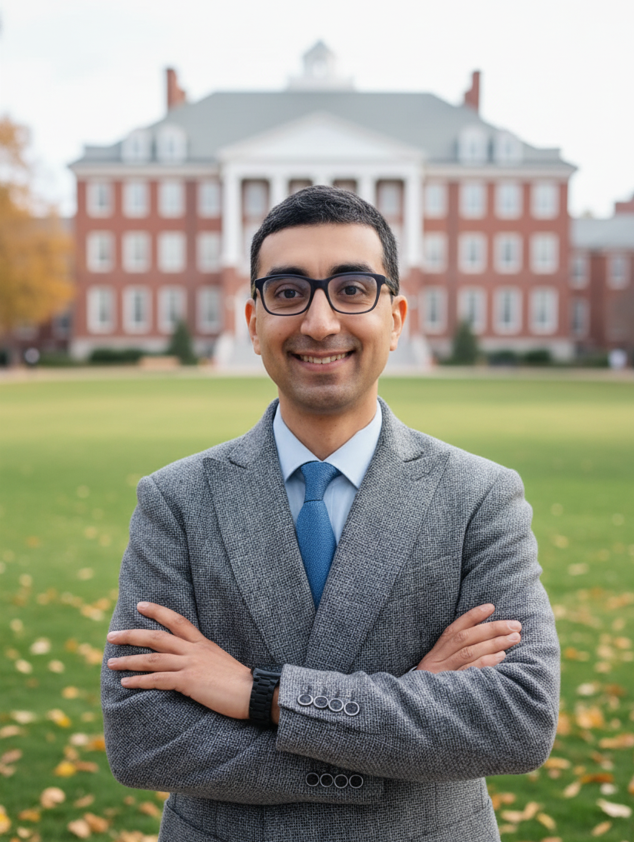
| JULY 2026 | The Guard State How the largest Arab nation became a security contractor at the gates of its own people By Adham Hasanin Egyptian journalist and political writer, based in the Netherlands In June 2025, hundreds of activists from forty countries landed at Cairo airport. Doctors from France, lawyers from Australia, students from the United States, pensioners from the Netherlands. They carried no weapons and no banned slogans; they carried backpacks, walking shoes, and a single intention: to march from Arish to the Rafah crossing — entirely on Egyptian soil — to demand that food be allowed through to a people starving behind the gate. Not one of them reached Rafah. More than two hundred were detained before the march could begin. Around five hundred foreign nationals were deported from airports, hotels, and checkpoints. Passports were confiscated, activists were pulled out of downtown Cairo cafés, and the Global March to Gaza was cancelled on 16 June without taking its first step. And the world watched. This was no secret operation in a dark basement; it happened in the open, documented by the deportees’ own phone cameras, carried by every international news agency. The world watched an Arab state arrest Europeans, Americans, and Africans for wanting to walk towards Palestine. A state guarding the gate of a siege — from the side that was supposed to be the side of rescue. Hold that image, because it is the key to everything that follows. This was not an aberration in Egyptian policy, nor an isolated security decision. It is the function — the complete function around which the Egyptian state has been redefined over the past decade, and which it is time to call by its proper name: the Guard State. I. The Name — What Do We Mean by the Guard State? Political economy has long described states that live off the rent of their location rather than the production of their people. But what has crystallised in Egypt over the past decade goes beyond traditional geographic rent — the Suez Canal, say — into something far graver: the conversion of sovereignty itself into a commodity for hire. The Guard State does not sell its location; it sells its function. It collects its wages not for what it produces, but for what it prevents: it prevents the refugee from reaching Europe, the activist from reaching Gaza, its own people from reaching politics, and the resistance’s weapons from reaching their destination. Four gates, guarded by a single machine, whose wages are paid in loans, deposits, and perpetually renewed rescue packages. This is not a rhetorical metaphor; it is an economic structure with numbers attached. When the Egyptian economy collapsed in 2024, it was rescued not by productive reform but by a single deal whose subject was location: Ras el-Hekma — thirty-five billion dollars for a stretch of coastline. And whenever negotiations with the IMF stall, the tranches are unlocked by explicit European pressure whose subject is migration: nine billion euros from the European Union in the 2024 “Strategic Partnership,” whose own documents place “migration management” at its core. Europe does not pay Egypt to prosper. It pays Egypt to guard. Thus the model is complete: income in exchange for prevention, external legitimacy in exchange for guarding, and international silence about domestic tyranny in exchange for keeping the gates controlled. To see how the model works on the ground, consider the bloodiest gate of all: the gate of Gaza. II. The Gaza Gate — The Guard Who Is Himself Searched The first paradox must be nailed down with facts: Egypt is not a sovereign guard of its own crossing; it is a searched guard. Egyptian relief trucks — ninety-two thousand food parcels in a single convoy this month — are subject to Israeli inspection before entering the Strip: from Egyptian soil, through a crossing that bears an Egyptian name. The state that guards the gate does not hold its key. It owns the threshold, but not the door. Then the October 2025 truce added a new layer to the function. Under the fifteen-point roadmap sponsored by the international envoy together with the “guarantor states” — Egypt foremost among them — Cairo is to train the civilian police force that will replace Hamas in administering the Strip, under the slogan of “one authority, one law, one weapon.” Let us call things by their names: the state that could not — or would not — deliver a loaf of bread without Israeli permission is now qualifying to graduate the security apparatus that will oversee the disarming of the resistance. From guarding the siege to administering what comes after the siege — a promotion within the same project. And meanwhile, what is happening behind the guarded gate? Since the truce, more than one thousand one hundred Palestinians have been killed by Israeli fire — the latest, just two days ago, a ten-year-old boy named Motaz Abu Shaar, carried to his grave in Khan Younis by his mother, Warda. A United Nations commission of inquiry has concluded that Israel is “deliberately targeting children in an ongoing genocide.” This is what the guarantors’ official language calls a “ceasefire.” What meaning is left in the word “guarantor”? A guarantor that the gate stays firmly shut — however high the dead pile up behind it. III. The Mediterranean Gate — The Guard Europe Pays For The second gate faces north. Since 2016, Cairo has boasted — through its officials at every European forum — that “not a single irregular migration boat has departed from Egyptian shores.” This is very nearly true. But the forbidden question is: at what political price has this “efficiency” become an instrument of mutual blackmail? Europe — which condemns Egypt’s human rights record in its parliamentary resolutions — is the same Europe that signed the nine-billion-euro partnership, and the same Europe that stays silent about sixty thousand political prisoners because the alternative, in its calculations, is boats that never stop. And Cairo understands the game and has mastered it: whenever human rights pressure intensifies, the official discourse turns up the volume on “Egypt hosts millions of refugees” and “the last line of defence.” The result is a perfect structure of mutual blackmail: Europe buys its conscience’s silence, the regime sells its location, and the people — Egyptian and refugee alike — are the commodity in the transaction. The democracies that lecture on values are financing the guard who keeps the victims from knocking on their doors. This is not passing hypocrisy; it is a structural partnership in the Guard State model — one that makes Brussels and Berlin shareholders in everything this state produces, from domestic repression to external siege. IV. The Interior Gate — Guarding the People Against Politics But the most dangerous gate is not on any border; it is inside. The Guard State cannot perform its external function unless it first guards an internal gate: the people’s gate to politics. The function requires a people that does not ask: why are we guarding the siege of our brothers? Why are our trucks searched on our own soil? Why are guests deported for coming to walk in peace? To guarantee the question is never asked, the largest silencing machine in the country’s history was built: sixty thousand prisoners of opinion, a press ranked 166th out of 180 worldwide, and a state security case number waiting for anyone who writes. I write these lines from experience, not from reading reports. When I continued writing from my Dutch exile, the machine reached me across continents: accounts shut down by coordinated mass-reporting campaigns, documented threats, a family harassed inside Egypt as leverage — and my name entered into Case 1282 of 2024, not for any act I committed, but for opinions written from free European soil. This is not a personal complaint; it is a job description: the Guard State guards even beyond its borders, because the free word — wherever it is written — threatens the entire contract of guardianship. The logic is perfectly self-consistent: a regime that sells “stability” abroad cannot tolerate a voice revealing that the stability on offer is the stillness of graveyards. This is why the arrest of the foreign activists in June 2025 was inevitable, not incidental: a peaceful march reaching Rafah would have revealed, before the world’s cameras, that the gate opens when it is wanted open — and that the one keeping it shut is a partner, not a mediator. V. What Has Egypt Lost? — The Guard’s Bill An apologist might argue: what is the harm? A state monetising its location as Norway monetises its oil. The answer lies in the essential difference: Norway sells a resource; Egypt leases its will. And the difference between the two is the difference between trade and bondage. Let us tally what Egypt has paid for this model, in bare facts. It lost its water sovereignty: the Renaissance Dam was completed and filled without the state — owner of “the largest defence headquarters in the world” — daring anything beyond statements of concern; for the guard does not make trouble for the international order that employs him. It lost its regional standing: in the Iran–America war halted just weeks ago, Cairo was neither party nor mediator nor even consultant — Pakistan brokered the deal, while Egypt absorbed the economic shrapnel of Hormuz’s closure like a bystander caught in a battle whose parties it does not know. It lost its place in the conscience of its nation: the state that liberated its land in 1973 and led the Arab world for a century has become, in the eyes of the Arab street from the Atlantic to the Gulf, the gatekeeper of the siege. This loss, specifically, no loan or deposit can repay — because it is the only capital that cannot be printed. And it lost — here is the crux — the very national security in whose name the guarding is justified. The model proved its fragility at the moment of testing: when Israel feared an Iranian response last year, it cut off Egypt’s gas by unilateral decision within hours. The guard who believed himself a partner discovered he was merely a hireling whose wages stop the moment danger arrives. VI. The Alternative Is Not a Slogan — It Is the Recovery of the Original Function I will not close with an essay on “the solution lies in Arab unity”; worn-out words kill more surely than silence. The alternative is specific, and it begins with redefining the function. The state is not a guard; the state is the agent of its people’s will. Every foreign policy not derived from that will is — by definition — functional servitude, however it is wrapped in the language of wisdom and moderation. And the Egyptian will is known and needs no referendum: no people in this region accepts that its country serve as warden of the siege of Gaza, or as Europe’s border post. Practically, the recovery begins with three measurable steps. Open the Rafah crossing fully and sovereignly, by purely Egyptian decision — that alone would overturn the equation of the siege. Break the negotiating bondage by linking any cooperation on migration to concrete European positions on Palestine, not statements of concern. And open the interior gate — release the prisoners and lift the hand from the written word — because a state that fears an article will never dare face an occupier. I know the current regime will do none of this; guarding is its founding contract and its financial artery. But this article is not written for the regime. It is written for memory, and for the generation that will inherit the gates — so that it knows that what is presented to it today as “the fate of geography” is no fate at all. It is an employment contract, signed by a regime without a mandate from its people. And contracts, however long they run, end when one of their parties does. And the world — I return to where I began — is a witness that requires no further proof. It watched the deportees at Cairo airport; it watched the searched trucks; it watched Warda Abu Shaar carry her son to his grave behind a firmly guarded gate. The question is no longer: what is happening? The only question left is: who dares to name it? This article is a naming. Adham Hasanin is an Egyptian journalist and political writer based in the Netherlands, covering Arab and European political affairs.

Die WM 2026 in den USA zeigte ein faszinierendes Paradox, in dem trotz großer kommerzieller Herausforderungen wie Visa-Problemen und politischer Einflüsse der Fußball die Menschen über kulturelle Grenzen hinweg vereinte und damit die Aussage von FIFA-Präsident Infantino, dass Fußball verbindend wirkt, für einen Moment fast glaubwürdig machte. #WM2026 #FIFA #Fußball

WM 2026: Nicht mal die Fifa kriegt die WM kaputt