WRLD

Search

#Periferia
Luciano Magaldi Sardella (PhD) 11h

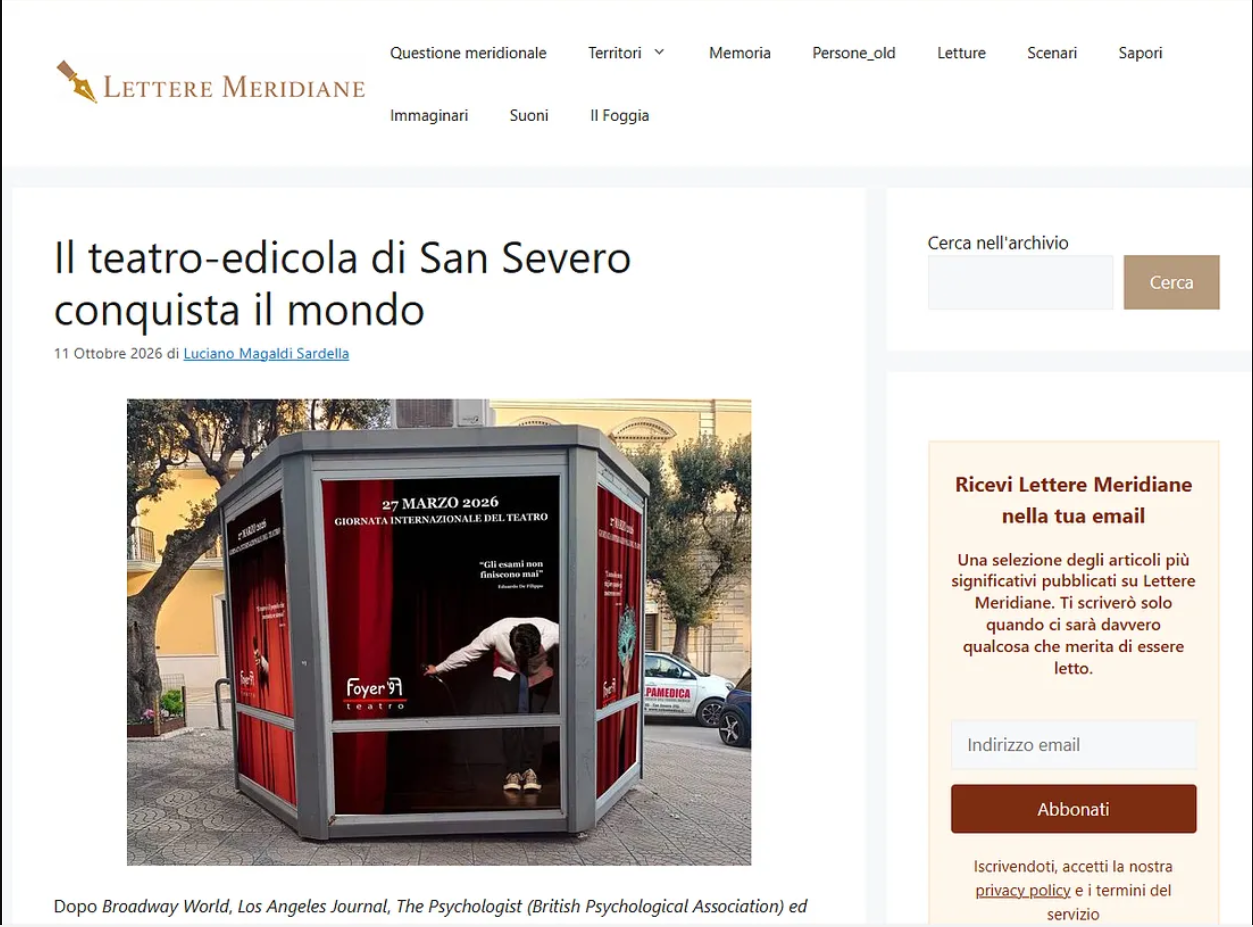
LETTERE MERIDIANE — IL TEATRO-EDICOLA DI SAN SEVERO CONQUISTA IL MONDO SOURCE: SOURCE: https://www.letteremeridiane.org/2026/10/il-teatro-edicola-di-san-severo-conquista-il-mondo/?fbclid=IwY2xjawU4oqFleHRuA2FlbQIxMQBwZG9mAXNydGMGYXBwX2lkEDIyMjAzOTE3ODgyMDA4OTIAAR5rVEwYs6UUXg7v-P0SyIQ_DRb_F6ZiY58OcseYoV4J7atcTiERnhWaqKM2pw_aem_Njle1jq1XLzHr93KLBUcVA Dopo Broadway World, Los Angeles Journal, The Psychologist (British Psychological Association) ed Hollywood Beat Magazine, ora è arrivata la sua “consacrazione accademica” a cura della Stanford University. Come ho già sottolineato nel mio articolo sulla rivincita del GIO Festival a Foggia, celebrata dal BroadwayWorld per la prima mondiale scenica della giordaniana Marina (1888), la provincia di Foggia ha smesso ormai di essere periferia. Accade quando trova un’idea che sposta le coordinate: ebbene, a San Severo, a 40 chilometri da Foggia, è successo di nuovo. Solo che questa volta non serviva un’orchestra, ma sono bastate sei sedie. Il celebre Teatro-Edicola del sanseverese direttore artistico Francesco Gravino della Compagnia Teatrale Foyer’97 è finito sulla rivista accademica Stanford Social Innovation Review (SSIR) in qualità di caso di studio accademico. La notizia, rilanciata il 19 settembre 2026 da ANSA Nazionale, sembrava un refuso. Poi si è capito che non lo era. La SSIR, pubblicazione pluripremiata che copre soluzioni multisettoriali ai problemi globali, ha inserito il progetto nella sezione Dispatches con il reportage The Six-Seat Revolution. È il percorso inverso rispetto a quello del GIO Festival: non un’opera dimenticata che torna in un grande teatro storico italiano a ferro di cavallo, ma un teatro intero che rinasce dentro un luogo dismesso, dimenticato dall’uomo. Ci sono momenti in cui il passato e il futuro si intrecciano per creare qualcosa di visionario, innovativo, artisticamente “rivoluzionario”: San Severo ha vissuto uno di questi momenti la mattina del 27 marzo 2026, durante la Giornata Mondiale del Teatro, quando la saracinesca di un’edicola chiusa da sei anni in Via Matteo Tondi è stata riaperta “non per vendere giornali, ma per offrire emozionanti storie”, citando il motto graviniano. L’idea del visionario Francesco Gravino (nella foto sopra), direttore artistico, regista e attore della compagnia sanseverese Foyer ’97, attiva da almeno 30 anni in Capitanata si è basata sull’edicola, esagonale in metallo e vetro, concessa a titolo gratuito dal proprietario Pino Frau, ormai un relitto urbano creato dalla crisi dell’editoria degli inizi anni 2000: oggi in Italia le edicole attive sono scese da circa 35.000 nel 2005 a circa 20.000 nel 2024, con un calo del 42,8%. Gravino e altri undici attori l’hanno ristrutturata in due settimane di lavoro, senza fondi istituzionali, e l’hanno trasformata in quello che oggi è sotto esame della commissione londinese del Guinness World Record come “teatro più piccolo del mondo”. La formula è volutamente austera: sei spettatori alla volta fuori, attori dentro a meno di un metro, spettacoli di 15 minuti, rotazione continua dalle 11 alle 20.45, testi da Goldoni a Čechov, da Ibsen a Dacia Maraini. Sulla porta un QR code con un originale avvertimento teatrale: “Attenzione! Questo codice QR trasforma i passanti in attori. Scansionate solo se pronti.” I numeri hanno sùbito detto che non era una boutade: più di 60 persone in un solo pomeriggio, tre giornate inaugurali che hanno registrato il tutto esaurito. Ma soprattutto un’eco positiva che è andata oltre i confini sanseveresi. BroadwayWorld (proprio come il previo caso del GIO Festival) la più influente testata mondiale di critica teatrale con oltre 5,5 milioni di visualizzazioni mensili, il 27 aprile 2026 gli ha dedicato una copertura esclusiva: An Abandoned Italian Newsstand Just Became the World’s Smallest Theatre. Non una segnalazione, ma un’analisi: “Non c’è foyer, non c’è balconata, non c’è graticcia. C’è a malapena una quinta. Quello che c’è è qualcosa di quasi irriconoscibile come serata a teatro, e proprio per questo è ancora più potente.” BroadwayWorld ha colto l’idea manifesto di Gravino: “Questo è un teatro di prossimità. In un’epoca di distanza digitale, stiamo rimettendo il contatto umano al centro,” incorniciandolo come “Più che un abile esercizio di teatro site-specific. È una riappropriazione.”. Il tutto, in un Mezzogiorno d’Italia spesso raccontato solo per criminalità organizzata e marginalizzazione. A quel sigillo se ne è aggiunto un altro, ancora più spiazzante per un’edicola di San Severo: il Los Angeles Journal, una delle testate più influenti della West Coast per le arti performative. Il 12 maggio 2026, titola in questo modo: San Severo’s Teatro Edicola as an Innovative Model for Los Angeles Theaters? aprendo così: “In una città del Sud Italia di cui Hollywood non ha mai sentito parlare, un regista teatrale ha appena costruito il palcoscenico più piccolo del mondo: sei posti, quindici minuti, zero distanza. Los Angeles dovrebbe prestare attenzione.” Il Los Angeles Journal non fa folklore, ma mette il chiosco di via Matteo Tondi accanto al presigioso teatro losangelino Ahmanson da 1600 posti, al Pantages di Broadway in Hollywood, ai 99-seat plan di Rogue Machine, all’ Odyssey, al Victory Theatre e all’ Hollywood Fringe. Rievoca persino l’Electrical Box Theatre di Ethan Marks, una vera e propria scatola elettrica foderata di velluto rosso in downtown Los Angeles, per dire che Gravino ha portato all’estremo la domanda che Los Angeles si fa da decenni: Quanto piccolo può diventare un palco prima di smettere di essere un palco? E riconosce il modello urbano sanseverese: costo quasi zero, due settimane di lavoro e una sestina di sedie, a fronte di una immediata copertura mediatica provinciale, regionale e nazionale, riconoscimento dell’ Amministrazione Comunale sanseverese, e un format esportabile (quasi) ovunque. Dopodiché, il terzo tassello americano è arrivato dall’ Hollywood Beat Magazine il 20 aprile 2026: Six seats. Fifteen minutes. One actor. No stage. Il magazine racconta il chiosco di Via Tondi rimasto dismesso per quasi sei anni, il presidio culturale contemporaneo da sei posti, inserendo Francesco Gravino nella genealogia alta: Richard Schechner e l’environmental theatre, Jerzy Grotowski e il teatro povero, Nicolas Bourriaud e l’estetica relazionale. Ma chiude con concretezza: non è una tesi, è fixing a street corner, ovvero aggiustare un angolo di strada urbana chiedendosi non quanto grande può diventare un teatro, ma quanto piccolo deve tornare per recuperare il suo potere originario. E infine, il celebre londinese The Psychologist, la rivista della British Psychological Society (BPS), la più antica società di psicologia al mondo, ha trasformato il Teatro-Edicola in caso di studio scientifico: il 30 luglio 2026 pubblica The world’s smallest theatre — and Psychologists’ next act, partendo dallo stesso dettaglio, la mattina del 27 marzo in cui la saracinesca metallica del chiosco esagonale di Via Tondi si riapre dopo sei anni, sei persone dentro, un attore a meno di un metro che inizia Chekhov. Descrive la formula: sei spettatori, 15 minuti, 11 attori su 10 ore, da Goldoni a Euripide, dentro un chiosco dove la quarta parete non si rompe perché architettonicamente non è mai esistita. Ma la BPS fa un passo oltre: cita gli studi del 2025 di Damien Gabriel su IBRO Neuroscience Reports, la performance live genera attivazione emotiva e fisiologica misurabilmente più forte del video e introduce la prossemica di Edward Hall: sotto il metro è spazio intimo, riservato a medici, amici stretti, amanti. In quello spazio da un metro quadrato, il respiro dell’attore è udibile, le microespressioni leggibili, il confine sé-altro diventa permeabile. Il Teatro-Edicola “non rende il teatro migliore, lo rende inevitabile”. Ed è qui che si capisce perché Stanford lo studia come caso di studio accademico di innovazione sociale, non come caso di originalità artistica. In Italia, nel frattempo, il circuito mediatico nazionale aveva già intercettato il fenomeno: RaiNews — TG2 Storie lo porta su RaiDue alla mezzanotte del 19 aprile. RTL 102.5 dedica spazio al format ideato da Gravino e sviluppato da Foyer’97 nel cuore di San Severo in Via Tondi, definendolo micro-palcoscenico permanente capace di portare teatro nello spazio pubblico. ANSA.it, Gazzetta del Mezzogiorno, La Repubblica, TG2000, Radio Capital, RSI svizzera, ANSA Brasile e tanti altri seguono. E per diritto di cronaca: Fiorello lo ha elogiato in La Pennicanzacome caso artistico ispirato al suo Edicola Fiore, nonché Biagio Antonacci, nel suo tour nell’anfiteatro augusteo di Lucera, ha fatto tappa “conoscitiva” nel Teatro-Edicola cantando la celebre e nostalgica Iris davanti ad un pubblico sicuramente maggiore dei “sei posti”. La Compagnia Teatrale Foyer ’97 di Francesco Gravino non è nata ieri: ha alle spalle il Teatro-Cantina del 2016, il teatro sottoterra, e nel 2011 una performance sulla torre campanaria di una chiesa del centro di San Severo a 45 metri d’altezza. Il Teatro Edicola completa, nelle parole di Gravino, “l’intera estensione verticale del teatro: sottoterra, piano strada, tetto”. E si prepara al trentennale del 2027 puntando ad acquistare l’edicola per renderla permanente esportando il “Modello San Severo” a Roma, Lucca, nei festival di Santarcangelo e Todi. Come per il GIO Festival, qualcuno potrebbe osare di affermare che si tratta solo di un exploit ma, quando BroadwayWorld ti mette accanto alla Los Angeles Opera House, il Los Angeles Journal ti propone come modello per Hollywood, Hollywood Beat Magazine ti legge con Grotowski e la British Psychological Society ti usa per spiegare i neuroni specchio, non è più un exploit ma un eccellente posizionamento artistico ed accademico. A chi ancora sussurra che Foggia e la Capitanata siano provincia, la risposta ora è scritta su due fronti opposti e complementari: il 5 giugno a Foggia un’opera di 138 anni ha ritrovato la scena al Giordano finendo su BroadwayWorld; il 27 marzo a San Severo un’edicola di 4 metri quadrati ha inventato una scena che non esisteva, finendo a Stanford, a Los Angeles, a Hollywood e a Londra. La periferia, quando ha un’idea precisa, diventa centro. Anche con sei sedie. Luciano Magaldi Sardella
www.letteremeridiane.org
Il teatro-edicola di San Severo conquista il mondo
75
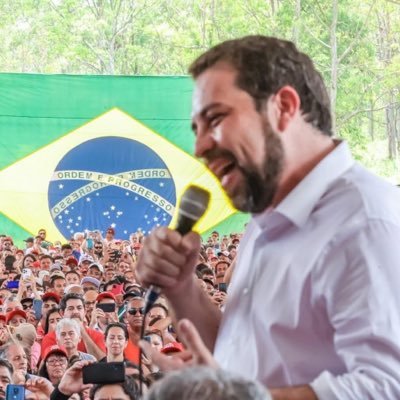
Guilherme Boulos 2d

Guilherme Boulos stated that the outskirts concentrated the majority of the votes he needed to turn the result in the second round and mentioned Cidade Tiradentes, in the East Zone. He also called on supporters to move forward. https://t.co/MgZs7LH2mK #CidadeTiradentes #Periferia #Eleições (translated)

2583
Mario Sechi 3d

The author shared an article that described a power struggle and a crime map of Rome, from the center to the outskirts, evoking scenarios that went beyond fiction. https://t.co/k3FqMjJ8TL #Roma #crimine #guerra #IT (translated)

3361
Elias Jabbour 🇧🇷 🇱🇧 🇵🇸 5d

Elias Jabbour wrote that, a day after a student protest against Flávio Bolsonaro, students from UFPE received threats in his name that mentioned a bomb. Hours later, according to Jabbour, a large fire hit the university's Innovation Directorate, responsible for intellectual property and technology transfer. He stated that the fire destroyed samples of research on cancer, autism, and COVID, as well as years of work from master's, doctoral, and post-doctoral students, attributing the destruction to intolerance and denialism. Jabbour called for an immediate investigation by the Federal Police and the Federal Public Ministry. The author also stated that the affected location was symbolic for transforming knowledge into patents, technology, and industry. In his assessment, countries like China, Japan, Germany, and Norway had understood the importance of strong universities and state planning in science and technology, while treating the university as an enemy would leave Brazil in a peripheral position. #Fascismo #Educação #Ciência (translated)

3042
ABC TU DIARIO EN ESPAÑOL 6d

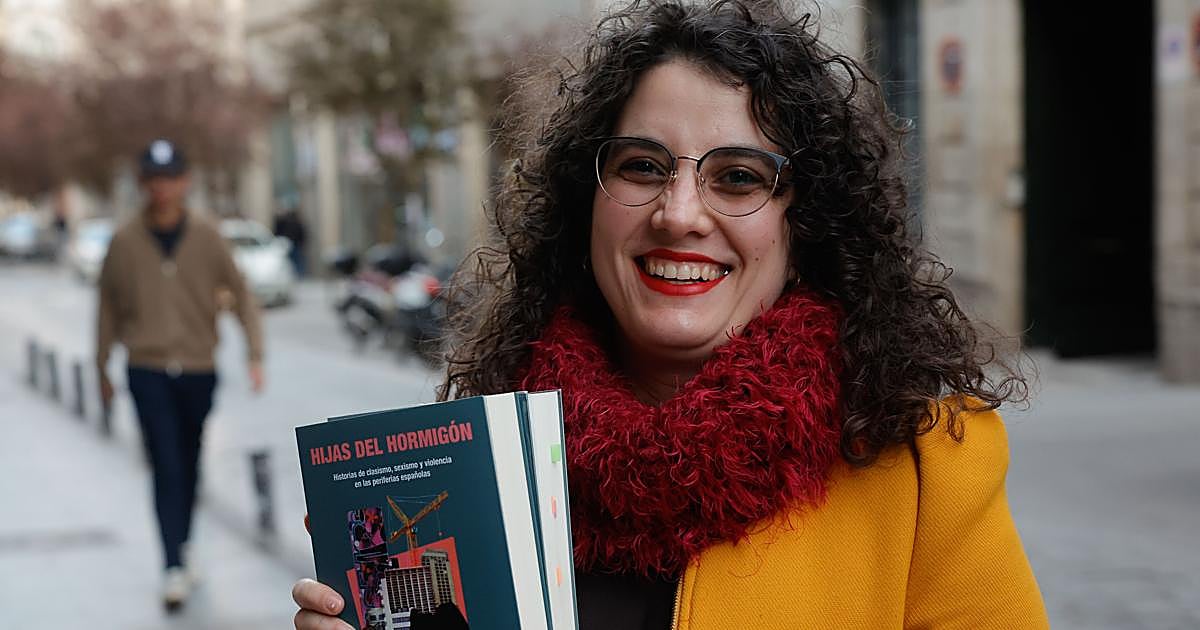
The writer and political scientist Aida dos Santos has been awarded the National Essay Prize 2026 for her work 'Daughters of Concrete,' a crucial analysis of social inequality and the violence faced by women in the Spanish peripheries. #PremioNacionalDeEnsayo #HijasDelHormigón #AidaDosSantos (translated)

www.abc.es
Aida dos Santos, Premio Nacional de Ensayo 2026 por 'Hijas del hormigón'
1583
20 minutos 6d

The Portuguese writer Aida dos Santos has been awarded the National Essay Prize 2026 for her work Daughters of Concrete, which addresses classism, sexism, and violence in Spanish peripheries, highlighting the importance of women's experiences in these communities. #AidaDosSantos #PremioNacional #Ensayo (translated)

www.20minutos.es
La portuguesa Aida dos Santos, Premio Nacional de Ensayo por un libro sobre las periferias españolas
1698
Lula 7d

Bolsonarism has infiltrated the periphery. Lula is taking a risk in the state that predicts the election results: "Bolsonarism has infiltrated the periphery." #EleccionesBrasil #FlávioBolsonaro #Lula (translated)

De las posibles alianzas a la abstención: qué puede pasar en la segunda vuelta de Brasil tras la victoria de Flávio Bolsonaro
www.eldiario.es
2154
Renato Souza 7d

Renato Souza wrote that democracy was indisputable and that whoever won the second round would take office in January 2027. Regarding a potential right-wing government, he said he was concerned about animals, which, according to him, would suffer from the destruction of environmental policies, and about the poorest. Souza stated that one of Flávio's first measures would be to unlink the BPC from the minimum wage, which, in his assessment, would drive the poorest to the poverty line in a few years. He also said that Flávio would attack increases in the minimum wage and retirement, as well as reduce vacancies in competitions and universities, limiting opportunities for advancement for residents of the periphery. #democracia #direitoshumanos #justiça_social (translated)

3292
Luciano Magaldi Sardella (PhD) 7d

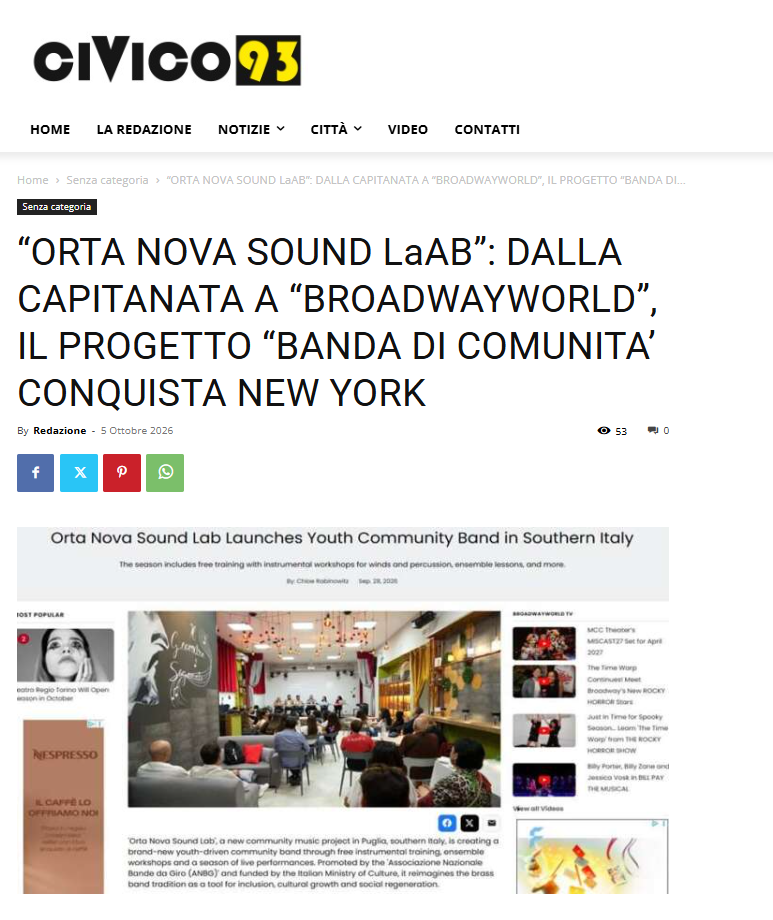
CIVICO 33 - "ORTA NOVA SOUND LAB": FROM CAPITANATA TO "BROADWAY WORLD", THE "COMMUNITY BAND" PROJECT CONQUERS NEW YORK The social laboratory promoted by ANBG and the Ministry of Culture lands on the largest theatrical network in the world thanks to the article co-written by Chris Rabinowitz and the Orthese author Luciano Magaldi Sardella. There is a brass thread connecting Piazza Mario Frasca to Broadway. "Orta Nova Sound Lab" is the Community and Social Regeneration Band through Music, the project officially presented on September 21 at the C-Lab MAO FM 19.77 by brothers Luca and Erminio Ferrandina, which is experiencing unprecedented media attention for a band initiative born in the province of Foggia. The journalistic success is marked by its appearance on September 28 in Broadway World, the most authoritative global portal dedicated to theater and live performance, based in New York with over 1.5 million monthly global visits. This is not an insignificant result, projecting a story from the Apulian periphery into the realm of international cultural information. The article, titled "Orta Nova Sound Lab Launches Youth Community Band in Southern Italy," is co-authored by New York editor Chris Rabinowitz, a journalist for the American publication, and his Italian co-author Luciano Magaldi Sardella, an international author originally from Orta Nova, an engineer, academic journalist, and researcher active between Italy and abroad. The dual Italian-American signature symbolizes how a "good local practice" can become global news when told with expertise and roots. The Project: the Band as Social Regeneration "Orta Nova Sound Lab" is promoted by the National Association of Marching Bands (ANBG), chaired by Benedetto Grillo, and has been approved for funding under the public notice of the Ministry of Culture as per D.D.G. April 7, 2026, rep. n. 149, aimed at "Enhancing research and dissemination of musical practices in peripheral and areas of high social vulnerability." It is realized with the support of the Municipality of Orta Nova and with the collaboration of a solid civic network: the A.P.S. MAO FM 19.77, the "A. Olivetti" Higher Education Institute, the "Sandro Pertini" Comprehensive Institute, the Music Art association, and the C.I.S.A. of Foggia. As highlighted by "Broadway World," this is the first initiative in Italy to reinterpret the distinctive tradition of marching bands and youth orchestras within a ministry grant dedicated to urban peripheries and social vulnerability. A model that explicitly dialogues with the spirit of the so-called "Caivano Decree" (D.L. 123/2023) for combating youth discomfort, educational poverty, and juvenile delinquency. The idea, in its disarming simplicity, was summarized by the project director for ANBG, Antonella Spagnoletti: "The band is aggregation! The band is cohesion. Bringing these kids together to learn and live differently from the social world is among the primary objectives of our association." This concept was reiterated by the Mayor of Orta Nova, Ing. Domenico Di Vito: "This is an important project that can definitely make a difference compared to the past because it has all the ingredients to connect the entire world of culture and social issues that exists in Orta Nova and needs to be valued. The administration's commitment is to ensure sustainability, structure, and continuity over time." At the press conference presentation, moderated by journalist Giuseppe Di Bisceglie, participated alongside President Grillo, Director Spagnoletti, and Mayor Di Vito, Regional Councillor Grazia Maria Starace, Councillor for relationships with the third sector Sebastiano Battista, Councillor for Culture Vittoria Mastrogiacomo, and educational professor Alfredo Coppola, delegate of the Olivetti Institute. Why the News Became International The "Orta Nova Sound Lab" marching band project demonstrates that when a project has anti-mafia roots, pedagogical value, and a credible institutional network, the press responds. From local and national outlets like Cassa Armonica, Ansa Puglia, TGNorba, Corriere della Sera Bari, RaiNews TGR Puglia, La Gazzetta del Mezzogiorno, Amica9TV, Brindisi In, Blasting News Italia, TRM Network, Secolo XIX, FoggiaToday, PlayNews24, Stato Quotidiano, and many others that well-documented the conference, it reached BroadwayWorld, which viewed the Orthese experience as a "social laboratory" capable of responding to the mafia with music. This leap in scale comes from joint efforts and the bridging work done by Luciano Magaldi Sardella, who managed to translate for the English-speaking audience alongside New York editor Chris Rabinowitz the deep meaning of a village band that in Apulia is not folklore, but a civil presence, a concrete alternative to screens and disintegration. In a South often narrated only for its emergencies, Orta Nova chooses to be told for its ability to generate community. And this time, the news has made its way around the world, starting from a square in Daunia. The Schedule The path, entirely free, includes instrumental workshops for brass and percussion, ensemble music lessons, and collective rehearsals with qualified teachers and conductors, open to aspiring musicians, families, schools, and citizens. The program that attracted the attention of national and now international press is organized as follows: October 2026: parade of bands marching through the streets and public spaces of Orta Nova, to recover the historical value of the band as a popular and identity expression. November-December 2026: high-profile concert season with the Grand Band Concert of Conversano and the Grand Band Concert "Biagio Abbate" City of Bisceglie, artistic training for the young students. Focus on inclusion: a special evening dedicated to female music with the Orchestra Note di Puglia, a formation composed entirely of professionals, to reinforce the values of equal opportunities. January 2027: first official concert of the newly formed Community Band of Orta Nova, a foundational act and public restitution of the work done. (translated)

www.civico93.it
"ORTA NOVA SOUND LaAB": DALLA CAPITANATA A "BROADWAYWORLD", IL PROGETTO “BANDA DI COMUNITA’ CONQUISTA NEW YORK - Civico93 | Be original
568
Lula 1w

"Bolsonarism has infiltrated the periphery." Lula is betting in the state that predicts the election results: "Bolsonarism has infiltrated the periphery." #EleccionesBrasil #LulaDaSilva #Bolsonarismo (translated)

Una virgen negra, injerencias de Trump y un país dividido: Brasil elige entre Lula y el proyecto ultra del clan Bolsonaro
www.eldiario.es
1936
POPTime 1w

POPTime reported that Veigh declared his vote for Lula for president. He said that for many years, his mother depended on Bolsa Família to feed the family and stated that this was the reality for millions of Brazilians. Veigh also criticized meritocracy in the country, which, according to him, turned class privileges into individual virtues. He said he desired a Brazil with access to food, education, health, safety, and freedom, without personal characteristics or place of residence reducing rights and opportunities. He stated that supporting and voting for a candidate did not mean acting with political fanaticism and said that his positioning reflected what he stood for, his community, his past, and his expectations for the future. #Lula2022 #BolsaFamília #MudançaSocial (translated)

15153
poponze 1w

Veigh declared that he would vote for Lula the next day. He said that for many years, his mother relied on Bolsa Família to feed him and his sister, and that millions of Brazilians lived in a similar situation. Reporting that he came "from absolute nothing," he stated that, for him, meritocracy in the country served to justify inequality and treat class privileges as individual merit. Veigh said he dreamed of a country where children from the periphery had access to food, quality education, health, security, and freedom to choose their path, without characteristics such as skin color, address, gender, or sexual orientation affecting their rights and opportunities. He also stated that supporting and voting for someone did not mean acting out of political fanaticism, because, according to him, those in public office should serve the population. He explained that his position reflected what he defended, his connection to the community, his past, and his expectations for the future. #Lula #BolsaFamília #Meritocracia (translated)

16870
UpdateCharts 1w

UpdateCharts reported that Veigh reaffirmed that he would vote for Lula. He said that, for many years, his mother relied on Bolsa Família to feed him and his sister and stated that millions of Brazilians were in a similar situation. Veigh also criticized meritocracy in the country, which, in his view, turned class privileges into individual virtues and legitimized inequality. The artist said he dreamed of a country where children from the periphery had access to food, quality education, health care, security, and freedom to choose their path, without characteristics such as skin color, address, gender, or orientation affecting their rights and opportunities. He stated that supporting and voting for a candidate did not mean acting with political fanaticism and said that his position reflected his ideas, his community, his past, and his expectations for the future. #Lula #Eleições2023 #PolíticaBrasil (translated)

45028
eldiario.es 1w

Lula seeks to consolidate his electoral advantage in Minas Gerais, a key state for the presidential elections in Brazil, while facing the challenge of Bolsonarismo that has infiltrated the periphery. #Lula #MinasGerais #Elecciones2026 (translated)

www.eldiario.es
Lula se la juega en el estado que predice los resultados de las elecciones: "El bolsonarismo se ha infiltrado en la periferia"
1712
UpdateCharts 2w

Luana Coutto GAVE UP voting for Flávio Bolsonaro and declares SUPPORT for Lula: “Lula said he would remove the BETS, then I got angry, then I thought well, Ray Pugliese made me rethink, I will vote for Lula, I will no longer vote for Bolsonaro, I am a trans person from the outskirts and I didn't know that Bolsonaro was transphobic, homophobic.” #Lula #Eleições2024 #DireitosHumanos (translated)

13858
Sr Ruqueza 2w

Mi novia me ha pedido ir a Madrid a pasar unos días. Es la capital de España y nosotros al ser de la periferia, nunca la hemos pisado por sus desorbitados precios🤦‍♂️ Airbnb: 500€ 3 noches 💀 Booking: 450€ 3 noches 🤢 Acampar en la Puerta del Sol: 0€ ✅ Los sacos de dormir y la tienda de campaña se los pedimos prestados a un amigo. El Alsa nos costó aproximadamente 25€ por persona 💰👫 Comida: Con 2 comidas al día durante 3 aprovechando las ofertas del Taco Bell 🌮 y la comida que ofrecen las asociaciones: 35€ (12.5€ el día) ✅📈 Así que, por menos de 70€ entre los dos vamos a pasar 3 maravillosos días en la capital de España arropados además por nuestra gente en un espacio seguro 💪 A veces las oportunidades están hay, solo ahí que salir a buscarlas 🫡🙌 #Madrid #Viajes #Aventura

14819
Guilherme Boulos 2w

E a picanha? Todo mundo já ouviu essa pergunta sobre o Lula. Ouvi hoje num açougue no Valo Velho durante nossa caravana nas periferias de SP. Tá aí a resposta! https://t.co/77CJQKwNgg #Lula #Picanha #SP

26652
Papa Leone XIV 2w

La comunità cristiana non si costituisce come enclave in cui ritrarsi per difendersi dal proprio tempo. Si offre, al contrario, come le antiche cattedrali, quale spazio di accoglienza, di rispetto, di rivelazione e di senso per tutti. Qui sta la forza di una Chiesa viva: accogliere la periferia che si trova già nel suo cuore, il lontano che in realtà è già vicino, l’estraneo nel quale Cristo già sta bussando alla porta. #ViaggioApostolico #Francia https://t.co/2wZWCTRr8r #Chiesa #Accoglienza #Cristianesimo

15101
Papa Leão XIV 2w

A comunidade cristã não é um refúgio onde retirar-nos para nos protegermos do próprio tempo. Pelo contrário, ela oferece-se, à semelhança das antigas catedrais, como um espaço de acolhimento, respeito, revelação e sentido para todos. Aqui reside a força de uma Igreja viva: acolher a periferia, que já se encontra no seu coração; o distante, que, na realidade, já está próximo; o estrangeiro em quem Cristo já bate à porta. #ViagemApostólica #França https://t.co/t3H9YVqkc3 #ComunidadeCristã #Igreja #Acolhimento

15447
Papa León XIV 2w

La comunidad cristiana no constituye un refugio en el que replegarse para protegerse de nuestra propia época. Al contrario, se ofrece, al igual que las antiguas catedrales, como un espacio de acogida, respeto, revelación y sentido para todos. Aquí reside la fuerza de una Iglesia viva: acoger la periferia que ya se encuentra en su corazón, acoger a quien está lejos, pero en realidad ya está cerca, acoger al extranjero en quien Cristo llama ya a la puerta. #ViajeApostólico #Francia https://t.co/ymw9K1frpE #Iglesia #Comunidad #Acogida

15563