WRLD

Search

#Pound
Prem Sikka 4d

Private equity Poundland staff could be out of work for years if retailer collapses. 12,000 direct jobs + thousands more in supply chain will go. PE destroyed high street, owns Morrisons, Asda, care homes, housing, vets, dentists. What next? Govts besotted with finance industry court disaster.

www.theguardian.com
Poundland staff could be out of work for years if retailer collapses, founder says

2701
Adam Bienkov 6d

Kemi Badenoch suggesting on the BBC this morning that the Conservative party could somehow save tens of billions of pounds by axing a few quangos, rather than slashing essential services. Just not serious

2492
BBC 7d

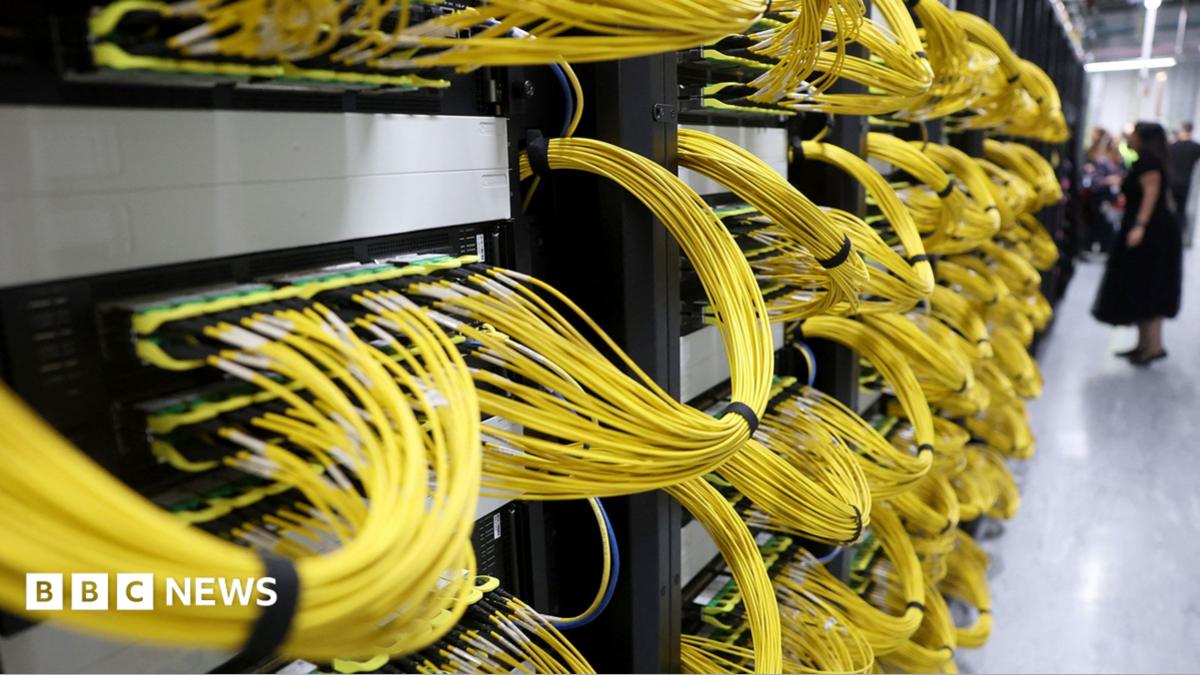
The amount of debt held by data centres is measured in the tens of billions of pounds. #Neocloud #AIbubble #TechInvestment

www.bbc.co.uk
These firms you've never heard of are feeding fears the AI bubble could burst
2834
Prem Sikka 1w

Poundland, owned by US-based private equity firm Gordon Brothers, on brink of administration, 12,000 jobs at risk. Gordon Brothers rejected a management-backed rescue bid. Probably thinks it can raise more from a breakup of Poundland. Destruction of town centres continues.

www.theguardian.com
Poundland on brink of administration, with 12,000 jobs at risk
2964
David Henig 2w

UK offering Freedom of Movement would be the game changer for conversations with the EU, one of the trio of people, pounds and positivity I identified earlier this year as crucial to any significant move to removing barriers.

2527
Krzysztof Graj 2w

AFRICA DAILY REPORT — 22 OCTOBER 2026 1. Africa / Nigeria — Africa CDC convenes emergency Ebola summit Importance: 10/10 — Critical Africa CDC invited African health ministers to an emergency virtual meeting on 28 October after Nigeria reported its first Ebola case in the current outbreak. Nigerian authorities are tracing 44 contacts, including healthcare workers. The Bundibugyo outbreak began in DR Congo and has also affected Uganda and Kenya. Africa CDC called for urgent regional coordination; the precise source of Nigeria's imported infection remains uncertain. https://apnews.com/article/africa-health-summit-ebola-nigeria-spread-c1329a2cad0a18dda4dff2e3adadb6ca 2. Sudan — Geneva peace consultations end without a ceasefire Importance: 10/10 — Critical UN- and Swiss-backed consultations concluded with appeals for Sudan's unity, reduced foreign interference and coordinated mediation. Neither Sudan's army nor the Rapid Support Forces participated, and the discussions did not produce a ceasefire. https://www.abc.com.py/internacionales/2026/10/21/reunion-sobre-sudan-en-la-onu-concluye-con-llamadas-a-la-unidad-del-pais-y-no-injerencia/ 3. Sudan — Pound falls to 10,000 per dollar on parallel market Importance: 9/10 — Very High Sudan's currency reached a new low of 10,000 pounds to the US dollar in parallel-market trading. Wartime disruption, import demand and changes to customs valuation have intensified depreciation and pressure on household purchasing power. https://www.reuters.com/world/africa/sudans-currency-tumbles-new-low-war-hammers-economy-2026-10-21/ 4. Egypt — Sisi limits potential Saudi military support to defence Political/security development — Neutral coverage President Abdel Fattah el-Sisi said any Egyptian military assistance to Saudi Arabia would be restricted to defending Saudi territory and borders and would not involve an attack on Yemen. Parliament postponed debate on possible military assistance until 26 October. No deployment was announced. https://www.reuters.com/world/middle-east/egypts-sisi-says-saudi-defence-role-would-not-include-attack-yemen-2026-10-21/ 5. Libya — Armed men attempt to force appointment at Audit Bureau Political/security development — Neutral coverage Masked men in military-style uniforms attempted to enter Libya's Audit Bureau headquarters in Tripoli. The UN mission said force and intimidation were used in an effort to install a disputed deputy head. The bureau suspended work pending restoration of safe conditions. https://www.reuters.com/world/africa/masked-men-try-storm-libyas-financial-oversight-body-2026-10-21/ 6. South Africa — Government announces R10 billion fuel-tax relief Importance: 9/10 — Very High Finance Minister Enoch Godongwana announced temporary fuel-levy reductions costing approximately R10 billion to ease living costs. The mid-year budget revised the deficit forecast to 3.9% of GDP and reported additional revenue, while the 2026 growth forecast fell to 1.2%. https://www.reuters.com/business/energy/south-africas-finance-minister-announces-two-months-fuel-price-relief-mid-year-2026-10-21/ 7. Ghana / Sahel — President supports broad counterterrorism cooperation Political/security development — Neutral coverage President John Dramani Mahama said Ghana would welcome security assistance from partners committed to combating terrorism in West Africa, including in discussion of Russia's role in the Sahel. No new security agreement was announced. https://www.reuters.com/world/africa/ghana-president-anybody-committed-fight-terrorism-is-welcome-west-africa-2026-10-21/ 8. Nigeria — Finance minister rules out return of petrol subsidies Importance: 9/10 — Very High Nigeria's finance minister said the next growth phase should be financed primarily by private domestic and foreign capital rather than additional state borrowing. He ruled out reinstating petrol subsidies and said the government targets average growth of roughly 7% over five years. https://www.reuters.com/world/africa/nigeria-says-private-capital-drive-next-growth-phase-petrol-subsidy-gone-2026-10-21/ 9. Kenya / Nigeria — Dangote acquires 25% of Kenya Pipeline Company Importance: 9/10 — Very High Aliko Dangote announced that his group acquired a 25% stake in Kenya Pipeline Company, extending his East African energy footprint. The transaction forms part of Kenya's wider effort to attract private capital to infrastructure. https://www.reuters.com/business/energy/nigerias-dangote-buys-25-stake-kenyas-oil-pipeline-network-2026-10-21/ 10. Kenya — $160 million conservation financing agreement signed Importance: 8/10 — High Kenya and international donors agreed on a ten-year, $160 million conservation programme covering about 173,000 square kilometres of ecologically important landscapes. The initiative combines donor and Kenyan government funding and links long-term financing to policy commitments. https://www.reuters.com/business/environment/kenya-seals-160-million-conservation-finance-deal-2026-10-21/ Keywords: #Africa #AfricaNews #TopNewsOfAfrica #AfricaCDC #EbolaOutbreak #EbolaSummit #PublicHealth #HealthSecurity #Nigeria #Kenya #DRCongo #Sudan #SudanConflict #SudanEconomy #SouthAfrica #FuelTaxRelief #EnergyPrices #CostOfLiving #Egypt #SaudiArabia #MiddleEastSecurity #AfricanEconomy #AfricanSecurity #Ghana #Sahel #Counterterrorism #Dangote #KenyaPipeline #ConservationFinance #wrldorg

1037
Christophe Barraud🛢🐳 2w
French economist

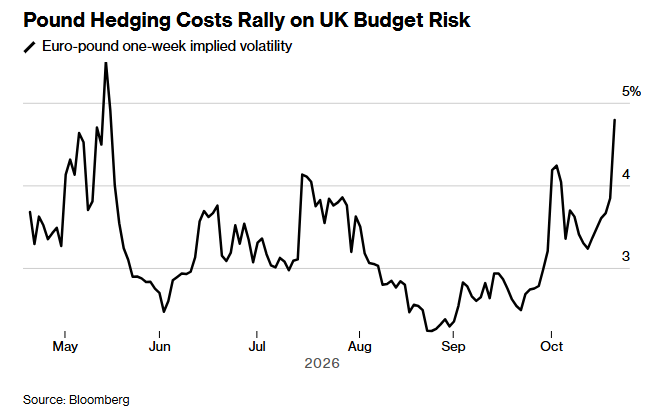
The post linked to a Bloomberg report stating that the cost of hedging against movements in the pound had reached a five-month high amid risks related to the UK budget. https://t.co/8kTkw21cD2 https://t.co/aKzMuUrioS #Pound #Hedging #UKEconomy #GB

2995
Krzysztof Graj Sep 30

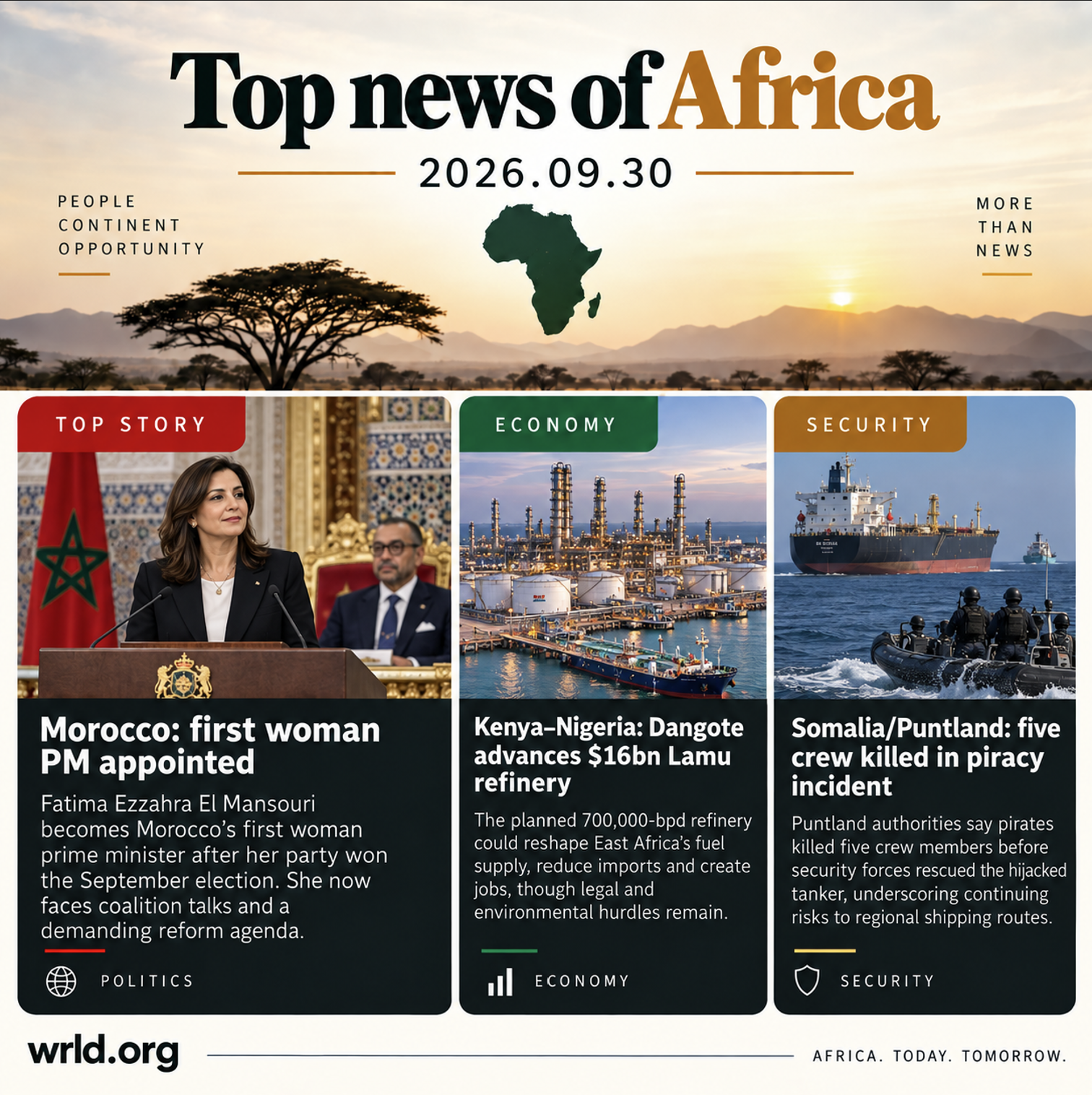
Africa Daily Report — 30 September 2026 Major developments reported during the previous 24 hours. 1. Morocco — Fatima Ezzahra El Mansouri appointed first woman prime minister. King Mohammed VI appointed El Mansouri following the September 23 parliamentary election. Her Authenticity and Modernity Party won the largest number of seats, and she now has to form a coalition. The appointment is historic, while the next government will also inherit major economic reforms and preparations for the 2030 World Cup. Direct source: https://www.reuters.com/world/africa/moroccos-king-appoints-first-woman-pm-following-sept-23-election-2026-09-29/ 2. Ethiopia — Fighting intensifies around Tigray amid wider regional accusations. Fighting between federal and Tigrayan forces has escalated, with territorial shifts and concern that the conflict could again spread across northern Ethiopia. Ethiopian officials have accused regional rivals of supporting armed groups, while communications disruptions and displacement are complicating independent assessment and humanitarian access. The renewed conflict threatens the fragile post-2022 settlement. Direct source: https://www.aljazeera.com/news/2026/9/29/fighting-in-ethiopia-intensifies-whats-the-latest 3. Somalia/Puntland — Five tanker crew members killed in piracy incident. Puntland authorities said Somali pirates killed five crew members of the petroleum-products tanker MT Honour 25 before security forces rescued the hijacked vessel. The incident is a serious reminder that piracy remains an operational security threat off the Horn of Africa despite years of international maritime-security efforts. Importance: HIGH — maritime security and Red Sea/Indian Ocean trade routes. Direct source: https://www.reuters.com/world/africa/somali-pirates-killed-5-crew-members-hijacked-tanker-before-rescue-mission-2026-09-29/ 4. Kenya/Nigeria — Dangote advances $16 billion Lamu refinery. Dangote is moving ahead with the planned 700,000-barrel-per-day refinery at Lamu. The project is intended to reduce East Africa's dependence on imported refined fuels and could generate more than 50,000 jobs, but it faces infrastructure, environmental and land-rights challenges. A Kenyan court dispute could restrict some site activity pending an October 14 hearing. Importance: VERY HIGH — potentially transformative for East African energy supply, fuel imports, logistics and industrial development. Direct source: https://www.reuters.com/business/energy/dangote-begin-construction-16-billion-east-africa-refinery-kenya-2026-09-30/ 5. South Africa — Foreign direct investment more than doubles in Q2. South Africa's central bank reported FDI inflows of 49.8 billion rand in the second quarter, up from 20.3 billion rand in Q1. The increase is an encouraging investment signal, although it needs to be considered alongside the country's broader growth, fiscal and structural indicators. Importance: HIGH — investment flows are a key indicator for Africa's most industrialised economy. Direct source: https://www.reuters.com/world/africa/south-africas-foreign-direct-investment-inflows-pick-up-q2-2026-09-29/ 6. Ghana — Environmental regulator intensifies mining-sector enforcement. Ghana's Environmental Protection Authority issued a pre-closure notice to Chinese-owned Cardinal Namdini Mining over an alleged unreported incident and is reviewing an inspection of Gold Fields' Tarkwa operation. The regulator says it is moving from periodic inspections toward continuous monitoring and enforcement as Ghana seeks stronger environmental compliance, state revenue and local participation in its gold industry. Importance: HIGH — regulatory tightening can materially affect major international mining investors and Ghana's gold industry. Direct source: https://kfgo.com/2026/09/29/exclusive-ghanas-environmental-authority-targets-chinese-owned-cardinal-and-others-in-mining-crackdown/ 7. DR Congo — Annual audits of major miners planned from 2027. The DRC plans annual audits of major mining companies' subcontracting practices and compliance with local-content requirements beginning in 2027. The world's largest cobalt producer and Africa's leading copper producer is tightening oversight to direct more procurement and contracts toward Congolese-owned businesses. Importance: HIGH — potentially significant for global copper/cobalt supply chains and mining contractors operating in DRC. Direct source: https://ca.marketscreener.com/news/congo-to-audit-major-miners-annually-from-2027-as-part-of-local-content-drive-regulator-says-ce785adddc81f221 8. Tunisia/Mediterranean — Migrant shipwreck leaves at least two dead. Sea-Watch said it rescued 28 people after a shipwreck off Tunisia and recovered two bodies, including a child. Survivors reported at least six people missing, including three children. More than 1,970 people have died or gone missing attempting Mediterranean crossings in 2026, according to Sea-Watch, even as arrivals in Italy have fallen sharply from 2025. Importance: HIGH — migration, humanitarian protection and EU–North Africa policy remain closely linked. Direct source: https://www.straitstimes.com/world/europe/migrant-shipwreck-off-tunisia-leaves-at-least-two-dead-six-reported-missing 9. Guinea-Bissau — Ousted president plans return ahead of December election. Former president Umaro Sissoco Embalo, removed in the November 2025 coup, plans to return on October 4 and seek the presidency in elections scheduled for December 6, according to a source cited by Reuters. A recently approved constitutional residency requirement could become relevant to his eligibility. The military-led authorities have reportedly said he is welcome to return. Direct source: https://kfgo.com/2026/09/29/ousted-guinea-bissau-leader-to-run-in-december-election-source-says/ 10. Sudan — Currency collapse brings fuel queues back to Khartoum. Long fuel queues have returned in Khartoum and several other areas as the Sudanese pound reportedly weakened beyond 8,000 to the US dollar on the parallel market. The currency deterioration is adding to transport and commodity pressures in an economy already devastated by war and disrupted production and trade. Importance: VERY HIGH — the currency/fuel shock compounds Sudan's humanitarian and economic crisis. Direct source: https://sudantribune.com/article/319408 #TopNewsOfAfrica #Africa #AfricaNews #AfricaDaily #Morocco #FatimaEzzahraElMansouri #WomenInLeadership #FirstWomanPrimeMinister #MoroccanPolitics #NorthAfrica #Kenya #Nigeria #Dangote #LamuRefinery #EastAfrica #EnergySecurity #RefineryProject #IndustrialDevelopment #Infrastructure #Investment #Somalia #Puntland #Piracy #MaritimeSecurity #HornOfAfrica #ShippingSecurity #IndianOcean #RedSea #AfricanEconomy #AfricanSecurity #Geopolitics #wrldorg

818
Gunther Fehlinger-Jahn Sep 27
Austrian economist

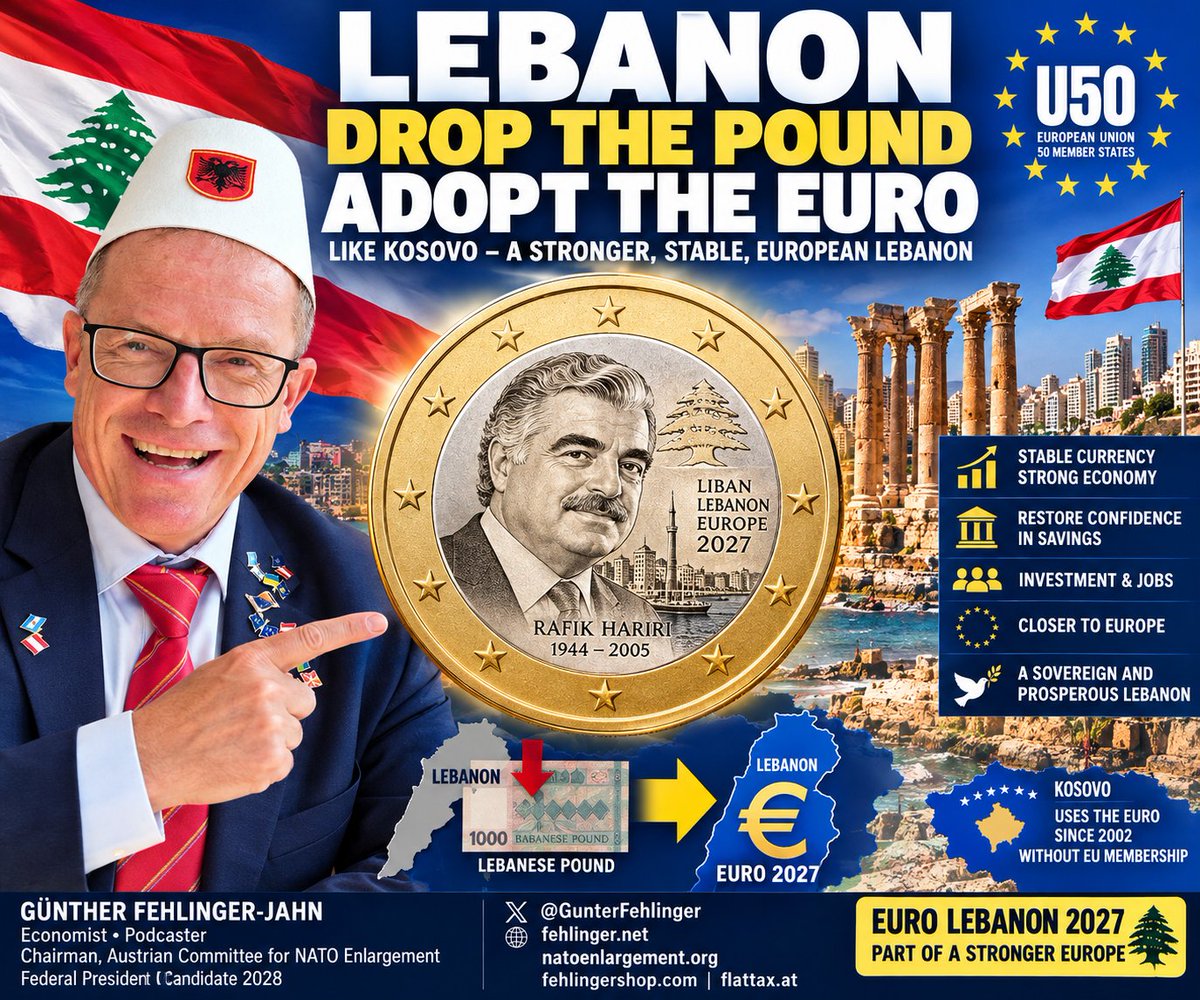
🇱🇧💶🇪🇺 LEBANON — DROP THE POUND, ADOPT THE EURO My proposal for Lebanon is clear: study unilateral euroisation on the Kosovo model and prepare for a transition from the Lebanese pound to the euro. @LBpresidency Kosovo uses the euro as its de facto domestic currency despite not https://t.co/IdwN2mVmxO #Lebanon #Euroisation #Euro #LB #EU #XK

Krzysztof Graj Sep 23

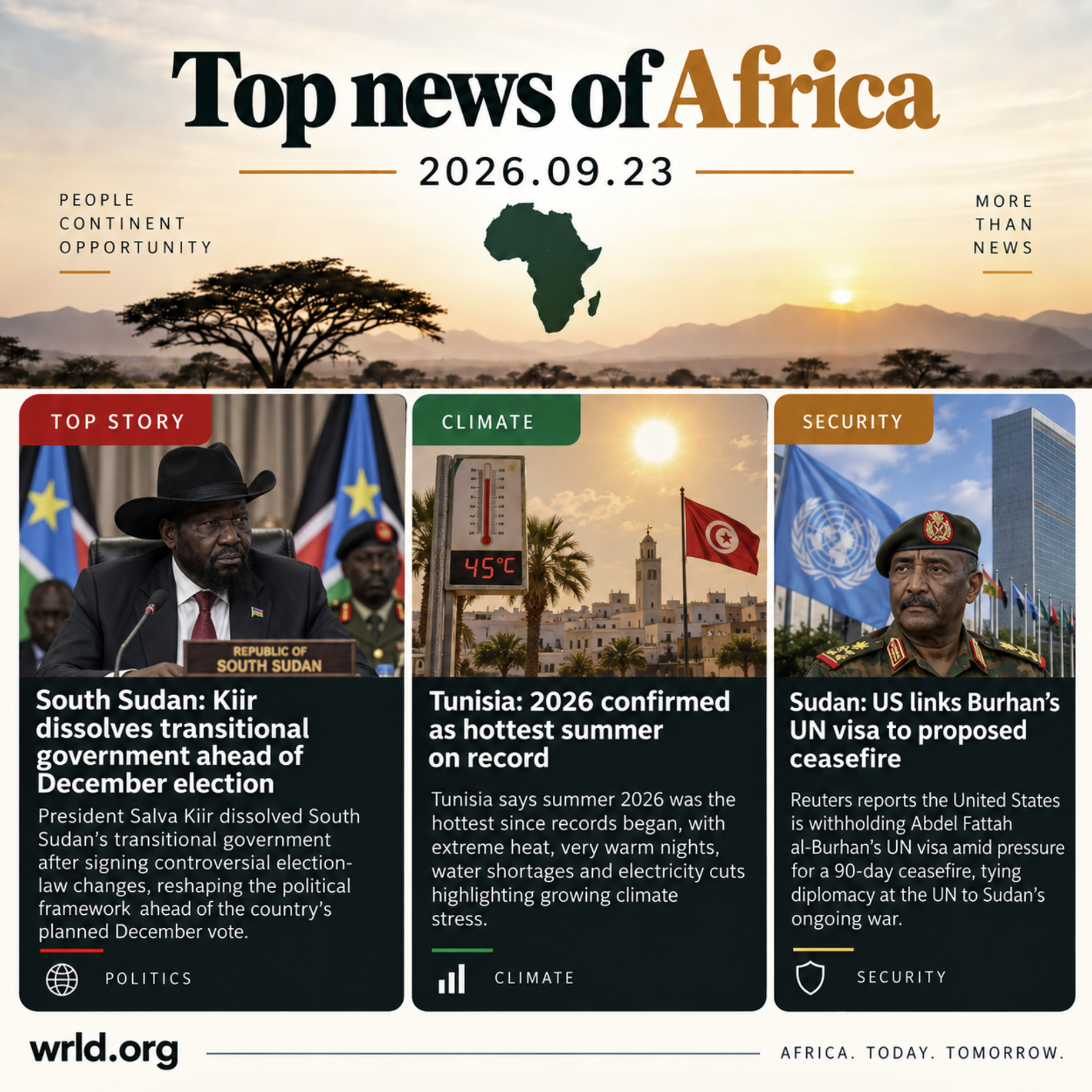
AFRICA DAILY REPORT — 23 SEPTEMBER 2026 Major developments reported during the previous 24 hours 1. SOUTH SUDAN — Kiir dissolves transitional government ahead of December election Importance: 10/10 — Critical President Salva Kiir dissolved South Sudan’s transitional government after signing amendments that remove requirements to complete a permanent constitution and census before the long-delayed national election. The opposition has challenged the changes, while the move fundamentally reshapes the political framework ahead of what is intended to be the country’s first national election since independence. Source: Reuters — https://www.reuters.com/world/africa/south-sudans-president-signs-election-law-changes-ahead-december-vote-2026-09-22/ Additional source: Africanews — https://www.africanews.com/2026/09/22/south-sudan-president-dissolves-govt-as-controversy-engulfs-december-poll/ 2. SUDAN — US links Burhan’s UN visa to proposed ceasefire Importance: 9.5/10 — Very High The United States is withholding a visa for Sudanese army chief Abdel Fattah al-Burhan ahead of the UN General Assembly, according to Reuters sources, in connection with a US-backed proposal for a 90-day ceasefire that Khartoum has resisted. Sudan has asked the UN to intervene, and its foreign minister is expected to address the General Assembly instead if the dispute is not resolved. Source: Reuters — https://www.reuters.com/world/africa/us-withholding-sudanese-leaders-visa-over-ceasefire-plan-sources-say-2026-09-22/ 3. SUDAN — Currency collapse deepens civilian economic crisis Importance: 9/10 — Very High Sudan’s pound has lost nearly half its value in army-controlled territory since May, trading at around 7,500 pounds to the dollar on the black market versus about 4,100 in May. Reuters links the collapse to the economic fragmentation created by the war, reduced state revenues and wartime spending. The depreciation is driving up the cost of basic goods and worsening hardship for civilians and returning refugees. Source: Reuters — https://www.reuters.com/world/africa/currency-collapse-heaps-more-pain-civilians-divided-sudan-2026-09-22/ 4. DR CONGO — Government orders investigation into violence at anti-government protest Importance: 8.5/10 — Very High DR Congo’s justice minister ordered a judicial investigation into violence during the September 15 opposition protest in Kinshasa, including reports of injuries, arrests, property destruction and a death. The demonstration opposed a proposed constitutional change that could allow President Félix Tshisekedi to seek another term. Police used tear gas, while clashes were also reported between opposition demonstrators and pro-government groups. Source: Africanews — https://www.africanews.com/2026/09/22/dr-congo-to-probe-violence-death-of-protestor-at-anti-govt-rally/ 5. RWANDA / BELGIUM — Diplomatic relations restored after 18-month rupture Importance: 8/10 — High Belgium and Rwanda have resumed diplomatic relations 18 months after breaking ties amid their dispute over the conflict in eastern DR Congo. The restoration is diplomatically significant because Belgium has been a prominent European actor in the Great Lakes region and relations deteriorated sharply over allegations concerning Rwanda’s role in the Congolese conflict. Source: Reuters — https://www.reuters.com/world/africa/belgium-rwanda-resume-diplomatic-relations-after-drc-conflict-dispute-2026-09-22/ 6. LIBYA — Armed group shuts pipeline valve, reducing Sharara oil production Importance: 8/10 — High An unidentified armed group closed a valve on the pipeline connecting Libya’s major Al-Sharara oil field with Zawiya, reducing production. The National Oil Corporation warned that a prolonged shutdown could force it to declare force majeure and could also affect the Zawiya refinery. The disruption again demonstrates the vulnerability of Libya’s oil-dependent economy to armed-group pressure and political fragmentation. Source: Africanews — https://www.africanews.com/2026/09/22/libya-oil-production-hit-after-armed-group-shuts-pipeline-valve/ 7. MOROCCO — Parliamentary election puts youth participation and social pressures in focus Importance: 7.5/10 — High Nearly 16 million registered voters are eligible to elect Morocco’s 395-member House of Representatives today. Youth disengagement is a major issue: Africanews/AFP reports that only around 4% of registered voters are aged 18–24. Employment, housing, public services and the legacy of the Gen Z-led protests are central themes surrounding the vote. Source: Africanews — https://www.africanews.com/2026/09/23/i-expect-nothing-morocco-elections-test-young-peoples-faith-in-politics/ 8. TUNISIA — 2026 confirmed as hottest summer on record Importance: 7.5/10 — High Tunisia’s National Meteorological Institute says summer 2026 was the country’s hottest since records began in 1950. Average temperatures were about 2.9°C above the previous record, with prolonged heatwaves, exceptionally warm nights, water shortages and electricity cuts. Kairouan reached 49.7°C in July. Source: AFP via FMT — https://www.freemalaysiatoday.com/category/world/2026/09/22/tunisia-says-2026-summer-hottest-on-record 9. GUINEA — Exiled opposition leader says authorities revoked his passport Importance: 7/10 — Significant Guinean opposition figure Cellou Dalein Diallo says his passport was revoked as he prepared to travel from Abidjan to New York for meetings on the sidelines of the UN General Assembly. Diallo has lived in exile since 2022. His UFDG party was dissolved in March along with other opposition parties, adding the passport case to wider concerns about political restrictions under President Mamady Doumbouya. Source: Africanews — https://www.africanews.com/2026/09/22/exiled-guinean-opposition-leader-says-his-passport-has-been-revoked/ 10. KENYA / AFRICA AT UNGA — Ruto presses for reform of global financial architecture Importance: 7/10 — Significant At the Partners for Multilateralism summit during UN General Assembly High-Level Week, Kenyan President William Ruto argued that international financial institutions should act more as catalysts for African capital rather than simply as lenders. The intervention forms part of a broader African push at UNGA for reforms to global financial governance and greater representation in multilateral institutions. Source: Africanews / AP — https://www.africanews.com/2026/09/22/ruto-pushes-for-global-finance-reforms-at-summit-for-multilateralism/ #Africa #AfricaNews #TopNewsOfAfrica #SouthSudan #SalvaKiir #SouthSudanElections #PoliticalTransition #TransitionalGovernment #ElectoralReform #AfricanPolitics #Tunisia #NorthAfrica #ClimateChange #ClimateCrisis #RecordHeat #ExtremeHeat #Heatwave #GlobalWarming #WaterScarcity #ClimateSecurity #Sudan #SudanConflict #AbdelFattahAlBurhan #UnitedStates #Ceasefire #PeaceNegotiations #Diplomacy #UnitedNations #UNGA2026 #AfricanSecurity #RegionalStability #Geopolitics #AfricaToday #wrldorg

1641
BOOP.PL Aug 28

Nieoficjalnie 9 września nowe menu w polskim McDonald's. Maple BBQ & Bacon Quarter Pounder Podwójny Maple BBQ & Bacon Quarter Pounder McCrispy Teriyaki McNuggets Black Pepper & Garlic (6 szt.) + 1 sos do wyboru Sprite X Sakura 0,4 l WYŁĄCZNIE w aplikacji – Loyalty: Cheese Empanadas (3 szt.) od 16.09 do 30.09 Sos Szechuan Style Sos Truffle Cheese McFlurry Popcorn Caramel #McDonalds #NoweMenu #FastFood

13822
Nello Paolo Aug 15

L'Arsenal @Arsenal ha accettato l'offerta del Napoli @sscnapoli per Gabriel Jesus di 17M di POUND. E sta cercando un potenziale sostituto. Ora definizione contrattuale. SIETE PRONTI? https://t.co/usDA9kCu5L #Arsenal #Calcio #Calciomercato

16705
Adham Hasanin Aug 11

A Crown Instead of the Barracks: An Idea From Outside the Box Could Egypt’s exiled opposition use constitutional monarchy to dismantle the legitimacy of the 1952 coup? By Adham Hasanin Egyptian journalist and political writer, based in the Netherlands To understand what follows, a reader unfamiliar with Egypt needs one basic fact: since 1952, Egypt has never been governed by anyone who did not first wear a military uniform. Gamal Abdel Nasser, Anwar Sadat, Hosni Mubarak, and today Abdel Fattah el-Sisi four men, four eras, one common origin. All rose through the armed forces. All inherited a state built by a coup that year, when a group of officers calling themselves the "Free Officers" overthrew King Farouk I and, within a year, abolished the monarchy altogether and declared a republic. For seventy-three years, the underlying equation has not changed: the army rules, power passes from one officer to the next, and legitimacy is drawn from the barrel of a gun rather than the ballot box. Every conceivable form of opposition has been tried legal parties and banned ones, Islamist movements, liberal and leftist coalitions, the 2011 popular uprising, and the 2013 elections whose result was overturned by force within a year. All of them hit the same wall: a military institution that reproduces itself under different names, while the core of the system remains untouched. So what if the problem, all along, has not simply been who rules, but the constitutional framework that makes military rule possible in the first place? And what if the answer lies not in swapping one president for another, but in dismantling the underlying equation itself, through a framework Egyptian opposition movements have never seriously tried: a purely ceremonial constitutional monarchy, on the model of Belgium, the Netherlands, or Spain where the head of state becomes a symbol above the political fray, while the army is permanently expelled from politics and returned to its barracks. This is not a call to revive a particular family, nor nostalgia for a golden age that never quite existed. It is a proposal for a political and strategic tool that has not yet been used in the intellectual arsenal of Egypt’s opposition in exile a tool that deserves serious discussion, regardless of whether it is ever literally realised or simply serves to expand the boundaries of what is politically thinkable. I. Why 1952, Not 2013 or 2011, Is the Root The strategic error made by most Egyptian opposition movements from the Muslim Brotherhood to the April 6 Youth Movement to the various civil opposition parties has been treating each political crisis as an isolated case: Mubarak was corrupt and had to be toppled; Sisi staged a coup that must be condemned; the interim military council was a transitional phase to be endured. This piecemeal approach treats the symptoms while leaving the original illness untouched. That original illness is the very structure of legitimacy established by the coup of 23 July 1952. The Egyptian republican system, from Nasser to today, has never built its legitimacy on a genuine democratic social contract. Instead, it has rested on a fixed trinity: the rhetoric of "revolution against feudalism and colonialism," charismatic individual leadership, and military protection of the regime framed as the guarantor of stability. This trinity has repeated itself from Nasser to Sadat to Mubarak to Sisi, with only cosmetic variations. Each new president was never a break from the system he was its continuation. When the opposition says "let us return to the constitutional framework that preceded the coup," it is not criticising a particular policy. It is declaring that the legal foundation of everything that came after 1952 was illegitimate from the start. Here lies the rhetorical power of "returning to the pre-1952 order": it does not merely demand swapping one ruler for another. It withdraws historical legitimacy from the entire republican military system including today’s regime, which draws its own declared legitimacy from that same "1952 legacy." II. Why a "Ceremonial Crown," Not "the Return of a Ruling Family" Here is the most important distinction anyone advocating this idea seriously must grasp: the project does not rest on restoring any particular individual from the Muhammad Ali dynasty, nor on nostalgia for King Farouk or his ancestors. The real power of the idea lies in the constitutional form, not in the person who happens to sit on the throne. Three successful European democracies illustrate the model clearly. Belgium, where King Philippe is a purely constitutional symbol with no real executive power, while the state is run through an elected parliament and a complex coalition government reflecting the country’s linguistic and political diversity. The Netherlands, where King Willem-Alexander formally opens the parliamentary year and signs laws, but where actual decision-making rests with the prime minister and the elected parliament. And Spain, where the king represents symbolic continuity of the state above party politics, while the military and security services answer entirely to civilian authority a transition achieved after the death of the dictator Francisco Franco in 1975, when King Juan Carlos I voluntarily relinquished the extensive executive powers he had inherited and backed free elections, most dramatically in February 1981, when he personally ordered the armed forces to remain loyal to the constitution during an attempted military coup, causing it to collapse within hours. The common thread across these three models is not "the presence of an ancient royal family." It is the principle of separating symbol from power. The monarch in these countries does not rule; he represents. He issues no political decisions; he provides the continuity and symbolic stability that allows party political competition to revolve beneath him, without every transfer of power becoming an existential crisis of legitimacy. This is precisely what Egypt’s military republican system lacks: a neutral mechanism for guaranteeing state continuity that does not depend on the person of the ruler or his security apparatus. When Egypt’s military-republican president is absent, it is always the army that fills the vacuum, because it is the only institution built to be the "guarantor of stability." Under a ceremonial monarchical model, by contrast, it is the king not the army who represents that symbolic guarantee, genuinely opening the door to removing the military institution from the political equation altogether. III. Egypt’s Standing Under the Monarchy: An Honest Reckoning, Not Blind Nostalgia For a Western reader with little prior knowledge of Egypt’s monarchical period (1922–1952), it helps to know this: Egypt was nominally independent under its own king from 1922, but Britain retained enormous informal control over the country’s foreign policy, military bases, and the Suez Canal throughout the period a reality that shaped everything that follows. Any honest invocation of "Egypt’s standing under the monarchy" must avoid the trap of mythologised nostalgia that many advocates of this idea fall into. Egypt in that era was no lost paradise, and any honest article must say so plainly. The Egyptian pound, for instance, often invoked as a symbol of "national currency strength" in that period, was not strong because of independent Egyptian monetary policy. It was pegged to the British pound sterling as part of Egypt’s complete colonial financial dependency until 1947, with Egypt exercising no independent oversight of its own currency whatsoever. The pound’s strength, in other words, was not a sovereign Egyptian achievement it was a reflection of British imperial power ruling Egypt from behind the throne. But this does not mean Egypt lacked a genuine regional standing worth studying. Cairo, in the 1930s and 1940s, was the undisputed cultural capital of the entire Arab world: the Egyptian film industry produced more than half of all Arabic-language cinema; its theatre scene, led by figures like Youssef Wahbi and Naguib al-Rihani, and its music, with Umm Kulthum and Mohammed Abdel Wahab, set the standard across the region; Cairo University was the first modern university in the Arab world; and the Egyptian press was the reference point for Arab public opinion from the Atlantic to the Gulf. Cairo was, quite simply, to the Arab world what Paris was to Francophone Europe: an unrivalled centre of cultural and intellectual gravity. This standing was not necessarily a product of monarchy itself, so much as a product of a relative space of political and press pluralism that allowed Egyptian civil society to flourish, despite all the flaws of the political system and the interference of both palace and occupier. The lesson here is not "bring back the king and the standing will return." It is: when even a limited margin of civic freedom exists, Egypt flourishes culturally and intellectually almost by its own nature. And that margin is precisely what has been entirely absent across the past seven decades of unchallenged military rule. IV. What Reform Would Actually Require Not Repeating the Old Mistakes Any serious advocacy of this model must include, even briefly, a clear vision for avoiding the flaws of the old monarchical system itself otherwise the proposal collapses into simply replacing one form of authoritarianism with another wearing a different crown. First, the armed forces would need to be placed fully under a civilian ministry of defence, with its budget subject to transparent parliamentary oversight the exact opposite of its current status as a state-within-a-state, and equally opposed to its role under the monarchy, when it often served as an instrument of British influence. Second, a judiciary fully independent of both palace and government alike, unlike the old model, which saw direct royal interference in political life as when King Fuad I dismissed the elected government of Prime Minister Saad Zaghloul’s successor, Mustafa al-Nahhas, in 1928, in one of the clearest "constitutional coups" in modern Egyptian history. Third, a parliament that genuinely represents the people rather than landowners and the aristocracy, as was the case before 1952, when membership in the Senate was effectively conditional on the ability to pay land taxes meaning political representation was, by law, restricted to the wealthy. Fourth, genuine economic sovereignty, with a truly independent national currency rather than one pegged to a foreign power’s currency, unlike the historical dependency of the Egyptian pound on sterling. These four principles are enough to clarify that the project on offer is not a literal "return to the past," but a borrowing of the constitutional form (symbolic monarchy) combined with an explicit rejection of its old substance (colonial dependency, palace interference, parliamentary feudalism). V. The Role of Egyptian Movements in Exile: Between Goal and Instrument This raises the most practical question of all: how might Egypt’s opposition abroad actually adopt this idea, and in what capacity? The honest answer is that the power of this proposal does not necessarily lie in its literal fulfilment, but in its dual strategic function. On one hand, it can be advanced as a genuine political goal adopted by broad coalitions of Egyptian movements coalitions that might include Islamists, liberals, leftists, and traditional monarchists, united around a single shared premise: rejecting the legitimacy of the 1952 order and everything that followed from it, even if they later disagree over the precise final shape of the state. On the other hand and this matters more in practice the idea can be deployed as a rhetorical instrument of pressure to widen a Egyptian political debate currently trapped between two false choices: "continued military rule" or "no alternative, chaos awaits." When the opposition puts forward a clearly defined third model a European-style constitutional monarchy it breaks this false binary and opens new intellectual space in Egyptian public discourse, even if the project is never realised in its literal form. This kind of "leverage idea" is common in the history of political movements worldwide: it is not necessarily proposed to be fulfilled immediately in full, but to redraw the boundaries of the politically possible, and to force the existing regime to defend its legitimacy rather than simply assume it. Conclusion: An Invitation to Debate, Not a Ready-Made Prescription This article does not claim that restoring a monarchical form would magically resolve Egypt’s chronic crisis of legitimacy, nor does it ignore the immense difficulties facing any transformative project under a military institution as economically and securitywise entrenched as Egypt’s is today. But it raises a question that deserves serious debate among Egypt’s opposition in exile, rather than automatic dismissal simply for being unfamiliar: Has the Egyptian opposition exhausted every available tool for dismantling the legitimacy of 1952, or has it remained trapped in the same old binary swapping one ruler for another while the framework that makes military rule possible remains untouched? The idea is on the table now, not as a finished solution, but as an overdue invitation to think outside the box.

356
Daniele Longo Aug 4

Reijnders via del Manchester City? Secondo @SimonJones_DM il Nottingham Forest avrebbe pronta un’offerta da 55 milioni di pound #TransferMarket #NottinghamForest #ManchesterCity

12584
Patryk Prokulski Aug 1

Wzorowa robota Mateusza Rębeckiego 🙏🔥 Był największym faworytem tej gali nie bez przyczyny. Typowałem TKO przez ground and pound w R2, ale nie potrzebował aż tyle czasu 👏 #MMA #FightNight #TKO

11997
Stirile ProTV Jul 4

Într-un videoclip, Donald Trump a recunoscut că ar putea deveni cel mai corpolent președinte din istoria SUA, menționând că trebuie să fie atent la greutatea sa, după ce a câștigat recent 14 pounds și se află la doar 0,3 puncte BMI sub pragul de obezitate. #DonaldTrump #președinte #SUA

stirileprotv.ro
VIDEO. Donald Trump a recunoscut că ar putea deveni cel mai corpolent președinte din istoria SUA: ”Trebuie să fiu atent”
12525
Marsha Collier Jun 30
British writer

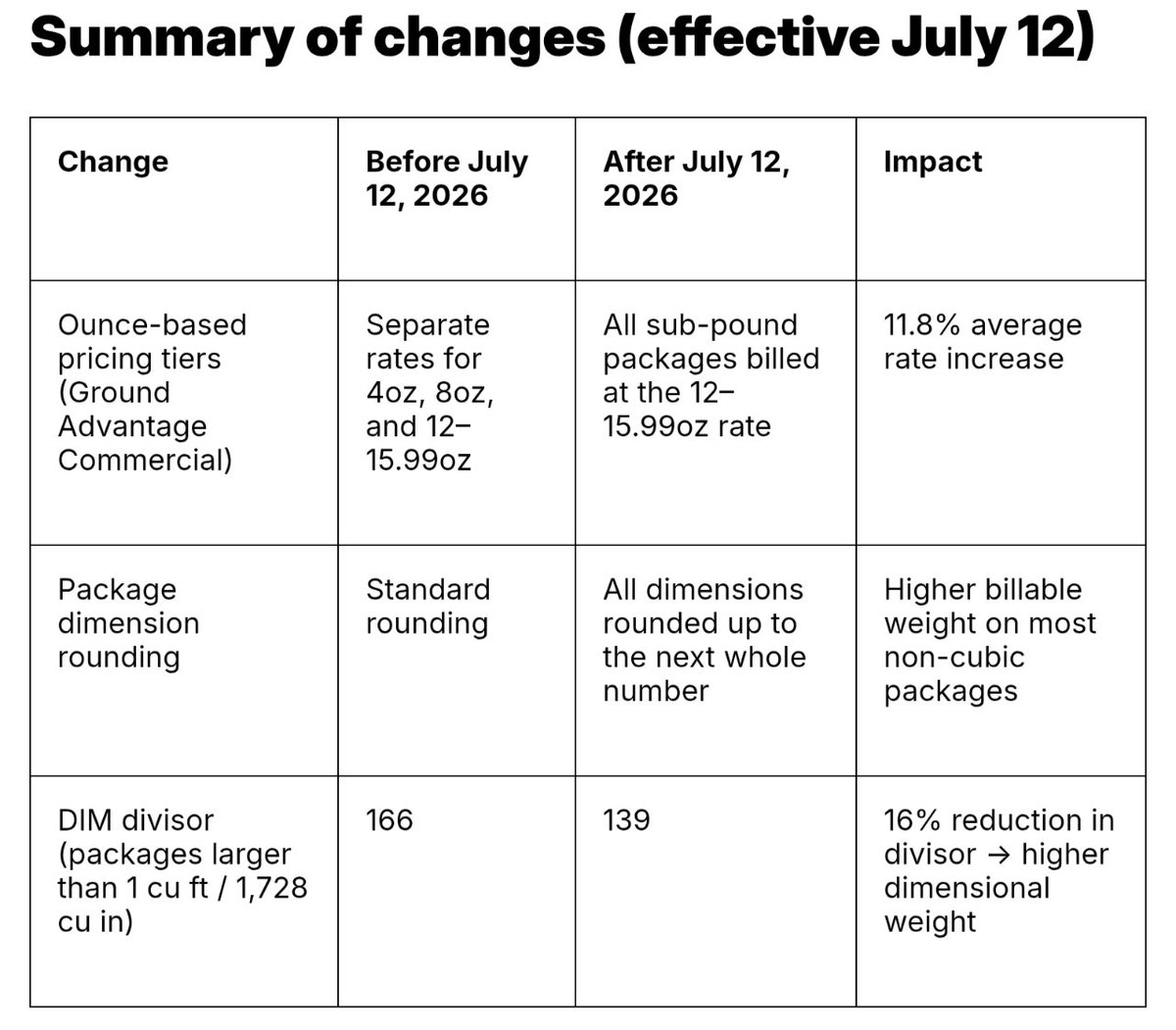
USPS plans to do away with the 4-ounce and 8-ounce pricing tiers entirely, instead applying the existing 12-ounce to 15.99 ounce rate across the entire sub-one-pound range. Small e-commerce sellers and high-volume parcel shippers that rely on lightweight packages or ship https://t.co/s1xcfBwqQO #USPS #Ecommerce #Shipping #Nospecificcountrycodesarementionedinthetweet.

Gianluca Di Marzio Jun 20
Italian sports journalist

Passo importante del @SpursOfficial verso Sandro Tonali: la richiesta è di 85 milioni di pounds, gli Spurs ne hanno offerti 75 @SkySport #Tottenham #SandroTonali #Calciomarket #IT

13144
Sexyy Red Jun 19
American rapper (born 1998)

Tay Keith también desempeñó un papel clave en mi ascenso a la fama, produciendo mi éxito revelación de 2023, Pound Town, antes de trabajar conmigo en temas como Pound Town 2 y Get It Sexyy.

Encuentran muerto en su casa al productor de hip-hop Tay Keith, de 29 años
www.20minutos.es
8963
Alfons López Tena 🦇 Jun 15
Spanish politician and lawyer

UK economy is significantly smaller than it would otherwise have been, trade has suffered, business investment and productivity growth have stalled, families are on average thousands of pounds a year worse off: How Brexit has made Britain poorer– in charts https://t.co/QtvxUWgezj #Brexit #UKEconomy #BusinessInvestment #UK