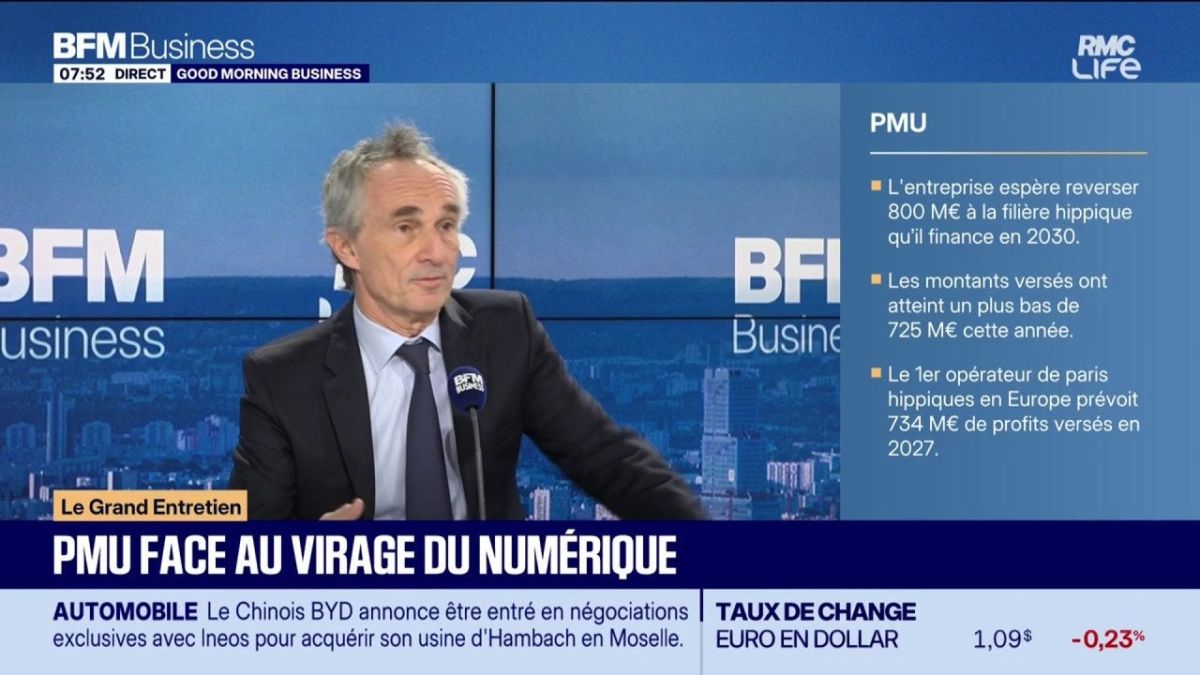
The PMU, which is seeing a decline in the number of bettors and an aging audience, has announced an ambitious recovery plan to reverse its decline in the face of competition from online sports betting. #PMU #ParisHippiques #Reconversion (translated)
The PMU, which is seeing a decline in the number of bettors and an aging audience, has announced an ambitious recovery plan to reverse its decline in the face of competition from online sports betting. #PMU #ParisHippiques #Reconversion (translated)

Horse racing bets are struggling to regain popularity, but the PMU is relying on various levers to boost its growth by 2027, according to its CEO Cyrille Giraudat. #ParisHippiques #PMU #Reconversion (translated)

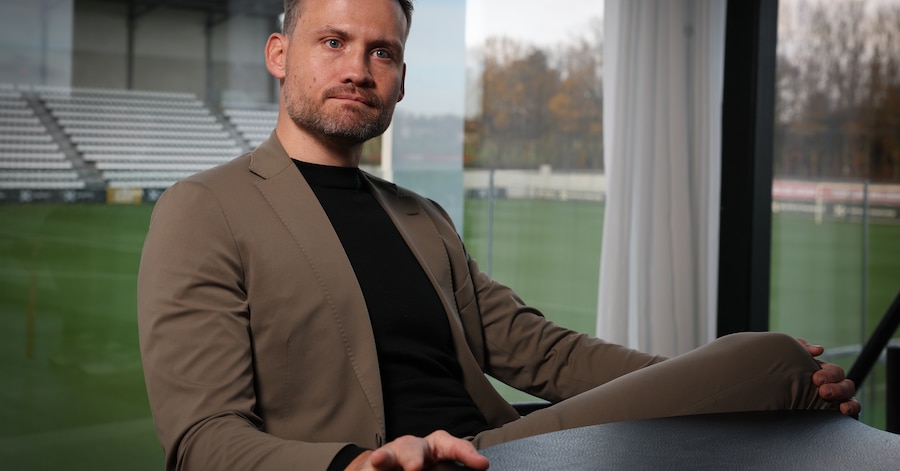
Simon Mignolet, the former goalkeeper, expresses his satisfaction in his new role as technical director at the Belgian Football Federation, stating that this life suits him better than that of a footballer. #SimonMignolet #Football #Reconversion (translated)

Gijbels Group is refocusing its real estate ambitions in Belgium with the launch of the new brand Pylar, aimed at the development of commercial and industrial real estate projects, while also exploring the reconversion of industrial sites as a growth strategy. #Immobilier #Belgique #Reconversion (translated)

The complaint filed by the association AC!! Anti-Corruption regarding the conversion of an old Michelin site into housing has been dismissed by the national financial prosecutor, who deemed the legal reasoning incomplete to qualify an offense. #Corruption #Pollution #Logement (translated)

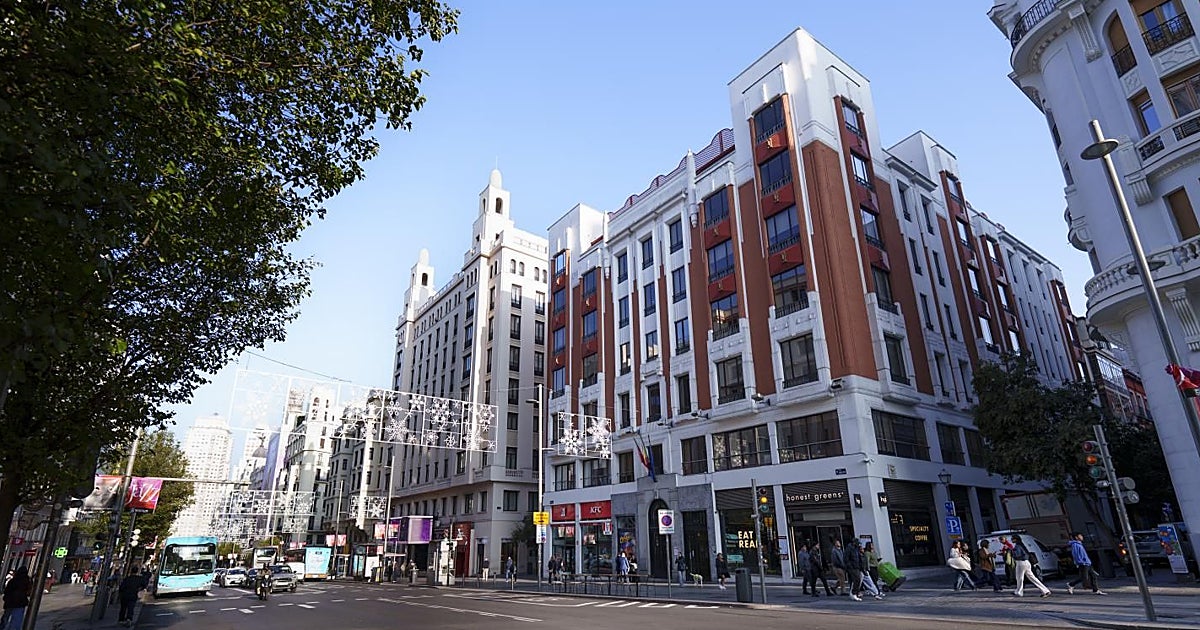
The transformation of buildings into hotels or housing in Madrid has led to a significant increase in the change of use of office properties, primarily affecting the most sought-after areas in the city center. #TransformaciónUrbana #Madrid #ReconversionesInmobiliarias (translated)

Gaël Monfils takes on the role of captain of the Davis Cup, a surprising career change that promises to reveal him in a new light. #Tennis #GaelMonfils #CoupeDavis (translated)
Nans, 39 years old, submitted 1,093 applications for an internship or a job as an accountant without success, ultimately abandoning his career change due to repeated rejections and the difficult labor market context, exacerbated by artificial intelligence and the reduction of aid for apprentices. #Alternance #Emploi #Comptabilité (translated)

The reconversion of the former coking plant of Ougrée in Seraing will be supported with 8.1 million euros from the FEDER fund, with the aim of transforming 18.3 hectares of industrial land into a business park that is expected to be operational by 2029. #Ougrée #FEDER #reconversion工业 (translated)
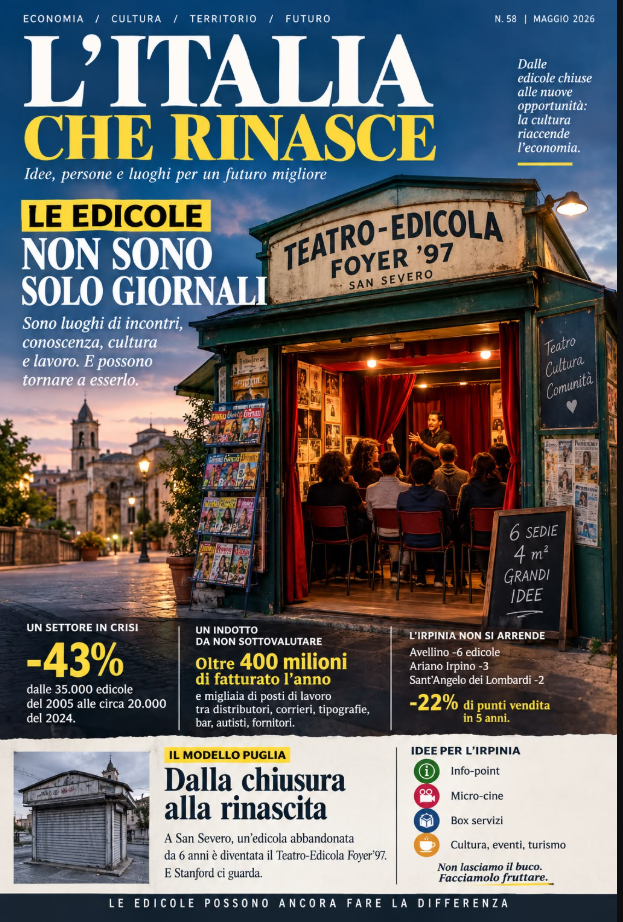
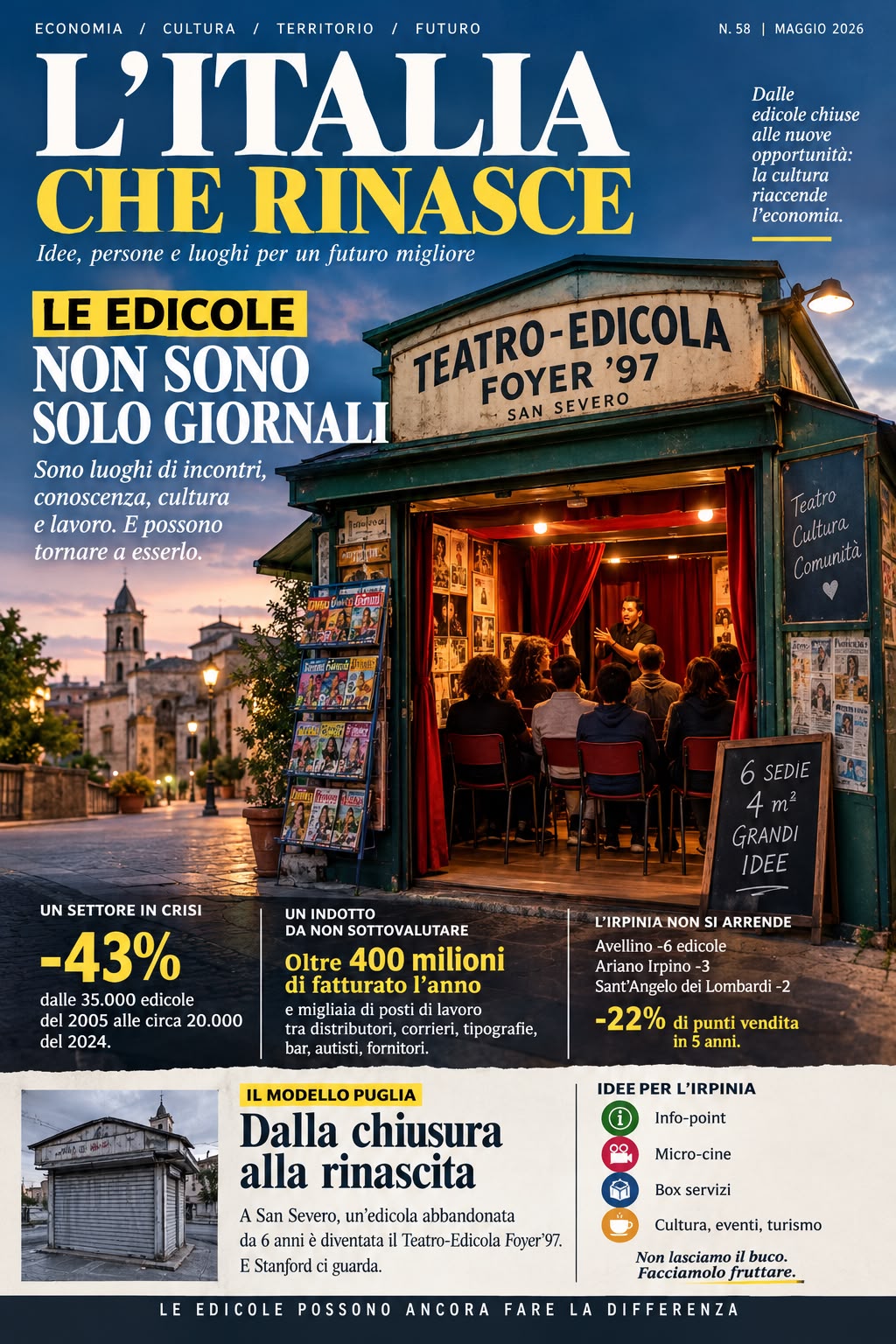
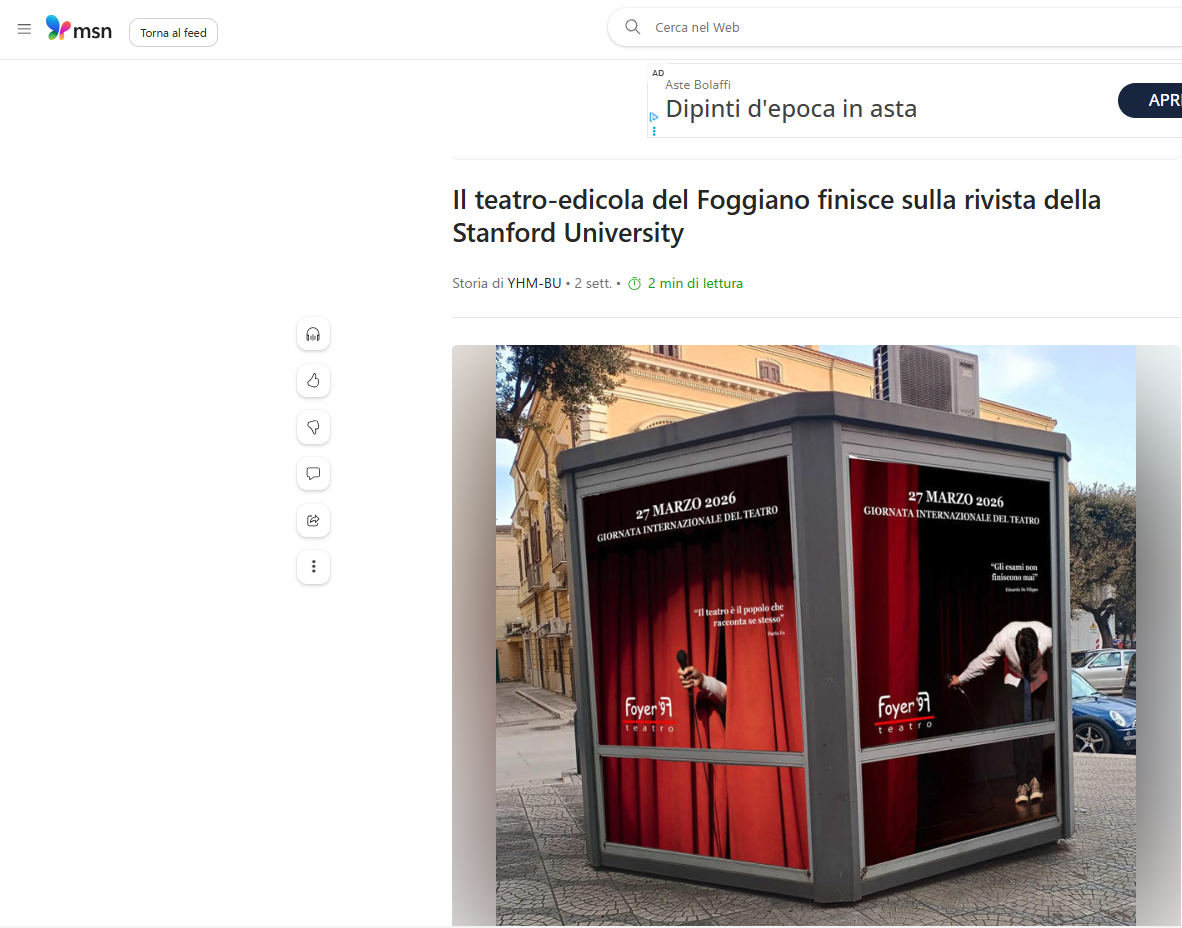
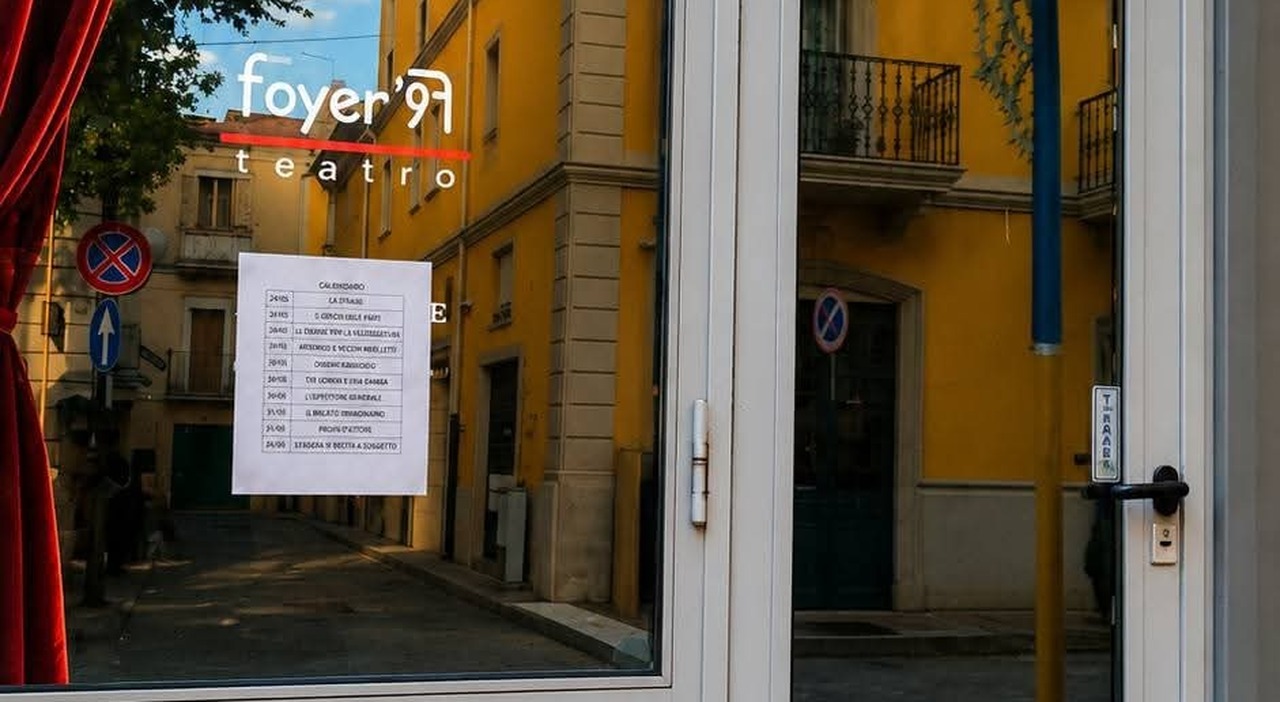
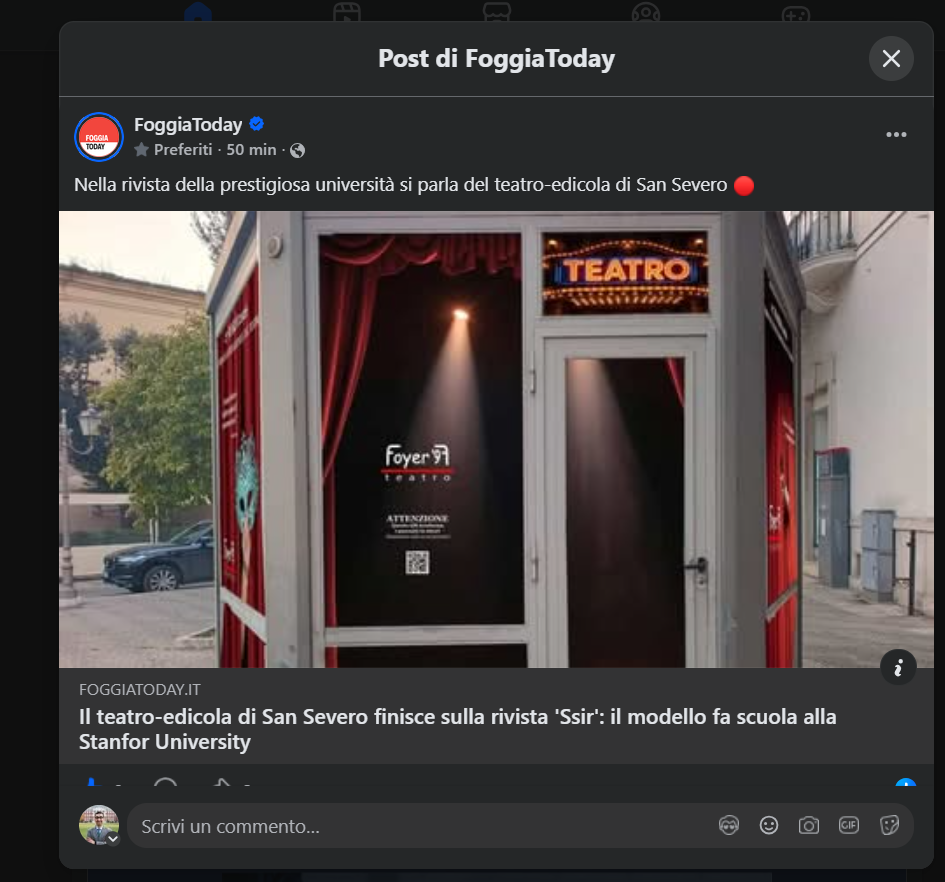
RADIO ARC 101:“NEWSSTANDS, ‘ENDANGERED SPECIES’ LIKE CAFÉS: MONEY LOST AND HOPES FROM STANFORD” by NANDO SILVESTRI SOURCE: https://radioarc.it/edicole-razze-in-estinzione-come-i-bar-soldi-persi-e-speranze-da-stanford/ Newsstands are another repository of humanity and knowledge, in many respects similar to cafés, at least as far as the unfortunate fate that has befallen many of them is concerned. The smell of printed paper, coloured card, variegated covers, surprise packets and cellophane was an olfactory molasses that once intoxicated young and old alike and represented, at the same time, a sought-after destination for daily walks and pauses. Stopping by the newsstand meant drawing upon knowledge, entertainment, culture, imagination and creativity. All prerogatives lost on account of the shapeless and amorphous surrogates disseminated by the web. This is the principal reason for the cumulative and recurring closure of a great many Italian newsstands: in economics, one speaks of a sector in demand collapse. But it is not merely a newsstand that closes; a piece of the local and national economy closes with it. From 35,000 newsstands in 2005 to about 20,000 in 2024: -43%. With them goes direct turnover of over €400 million per year, but the real hole is the indirect economy that is never calculated. Each average newsstand in a small town generated distribution worth €15,000 per year in margins for local distributors, couriers, and printers. Moreover, the customer who bought the newspaper would have a coffee, buy a bus ticket, place a bet. Download the Medium App One must consider that without a newsstand, the village cinema loses its only physical promotional outlet, not to mention the losses in terms of advertising. When it closes, it is not only the newsagent who loses. The café loses, the driver loses, the printer loses. In Irpinia, over the last five years, Avellino has lost six newsstands, Ariano Irpino three, Sant’Angelo dei Lombardi two. The total loss in Irpinia amounts to about 22% of outlets. All this means that many of the closures mentioned above have deprived Irpinian cafés of several dozen customers, harming workers, distributors and suppliers. These are jobs that do not make the news, but they exist. Another hard blow inflicted upon the local and national economy in the name of a false progress that almost always favours the business of fixers and the usual suspects. However, what is happening in Puglia, a few kilometres from Irpinia, opens up scenarios of renewal based precisely upon the reconversion of disused newsstands. These are prospects so unique and innovative as to have aroused interest worldwide, especially at Stanford University. This is news of enormous significance that few news programmes have disseminated, in the name of a perennial pre-emption by technologies contemptuous of common sense, tradition and art. In San Severo, 40 km from Upper Irpinia, a newsstand abandoned for six years in Via Matteo Tondi became, on 27 March 2026, the Teatro-Edicola Foyer’97: six chairs, four square metres, an idea by Francesco Gavino. The well-received 10- to 15-minute shows have piqued the curiosity of Stanford University. Its academic journal, the Stanford Social Innovation Review [SSIR], has chosen the Teatro Edicola in San Severo as an international case study with the reportage “The Six-Seat Revolution”. Why is Stanford watching us? Because it has realised that those four square metres can once again generate indirect economic activity. Indeed, 60 spectators in an afternoon can become 60 coffees at the neighbouring café. With a symbolic ticket price of €5, we are talking about a cultural micro-economy. Not to mention the indirect income from tourists and journalists who arrive and frequent B&Bs and restaurants. It is the model Irpinia needs: not to leave the void, but to reconvert it virtuously. Every closed newsstand can become an information point, a micro-cinema, a service hub. Otherwise we shall continue to count only the lowered shutters, without counting the money that no longer circulates.

Starting today/Wednesday, we will call on the various political leaders, across all levels of government. For Gilles Vanden Burre, supporting laid-off workers must also be a "major political priority," just like the timely establishment of conversion cells. #GSK #PharmaValley #Licenciements (translated)
The former printing house of the National Bank is undergoing a transformation into 'Le Mix' in the heart of Brussels, which will accommodate housing, offices, a hotel, restaurants, and sports facilities starting in 2029. #Immobilier #Bruxelles #Reconversion (translated)

Actu Foot reported, citing Diario AS, that Toni Kroos wanted to obtain his coaching licenses in order to pursue this profession in the future. https://t.co/cqpN4tr1cT #ToniKroos #Football #Entraîneur (translated)
MSN ITALIA - ANSA ITALIA: "THE TEATRO-EDICOLA FEATURED IN STANFORD UNIVERSITY'S REVIEW" SOURCE: https://www.msn.com/.../il-teatro-edicola-del.../ar-AA2cyMWR (ANSA) - FOGGIA, 19 SEPT - The idea of the newspaper-kiosk theatre in San Severo, in the province of Foggia, renamed the smallest theatre in the world, has become a case study for Stanford University. The article "The Six-Seat Revolution" by the Foggian researcher Luciano Magaldi, supervised by editor David V. Johnson, has been published in Ssir (an award-winning publication covering multi-sectoral solutions to global problems). The article is in the "Dispatches" section of the "Stanford Social Innovation Review". "It is a result that rewards our work - emphasises Francesco Gravino, artistic director of the theatre company Foyer 97 - . Requests to replicate the model have come from other areas of Italy, such as Lucca and Rome. We thought of creating a cultural activity from a place that was disused and in a state of abandonment. There ought to be a regional law that allows for the reconversion of these disused places in which numerous activities could be created. Veritable cultural outposts". Gravino and the actors of the company are preparing the new programme. "Next year our company will be 30 years old - he said - , an important milestone which we shall celebrate with some new developments". Six chairs, less than two square metres, performances every 15 minutes and a sold-out audience of young people and adults. An experiment that has aroused curiosity and interest in the world of entertainment as well. Between the end of July and the beginning of August, during the tour in Lucera (Foggia), Biagio Antonacci made a surprise stop at the newspaper-kiosk theatre and sang his Iris. "It was truly a wonderful encounter which captured the attention of passers-by," concludes Gravino. (ANSA). (translated)
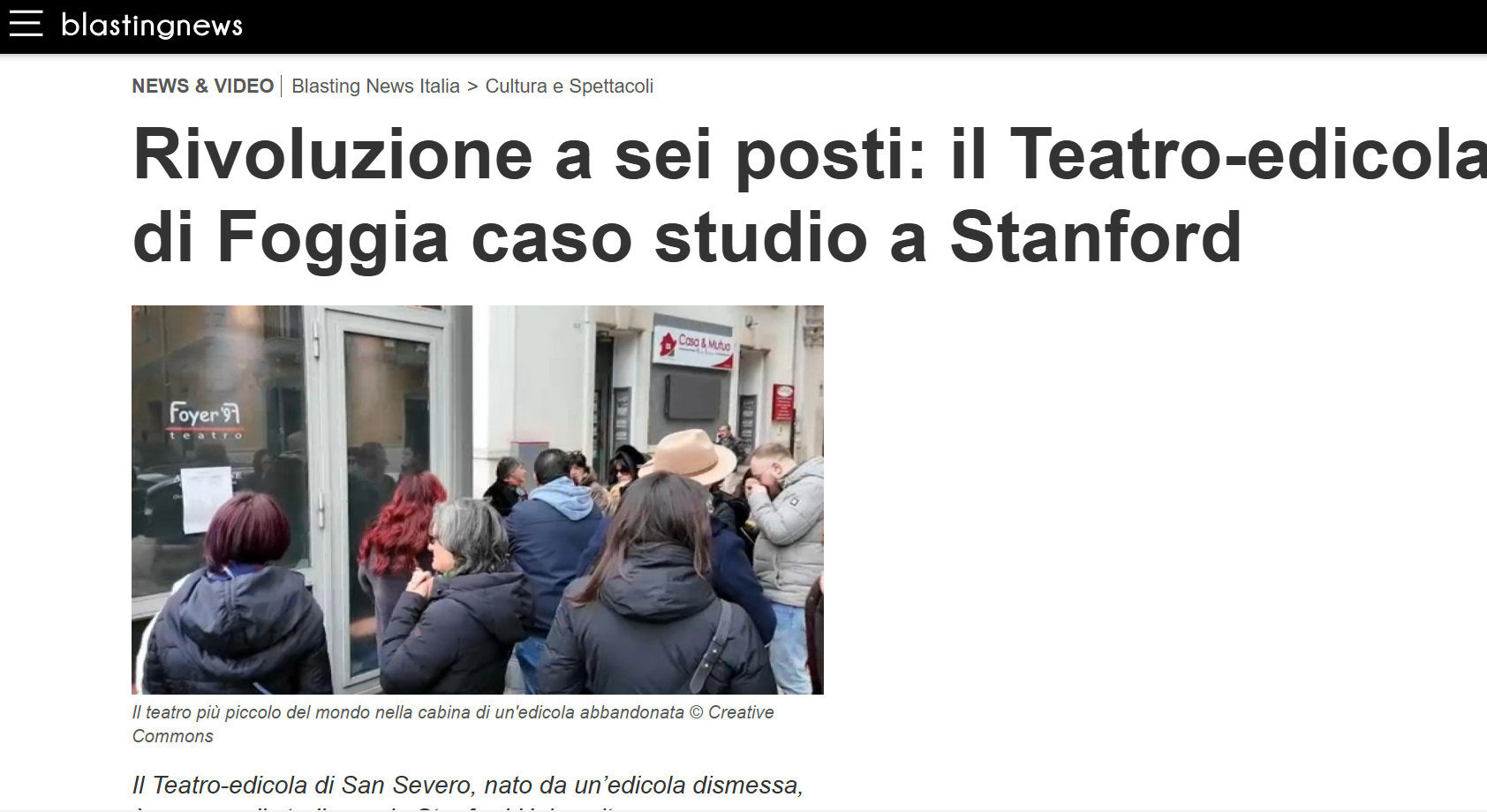
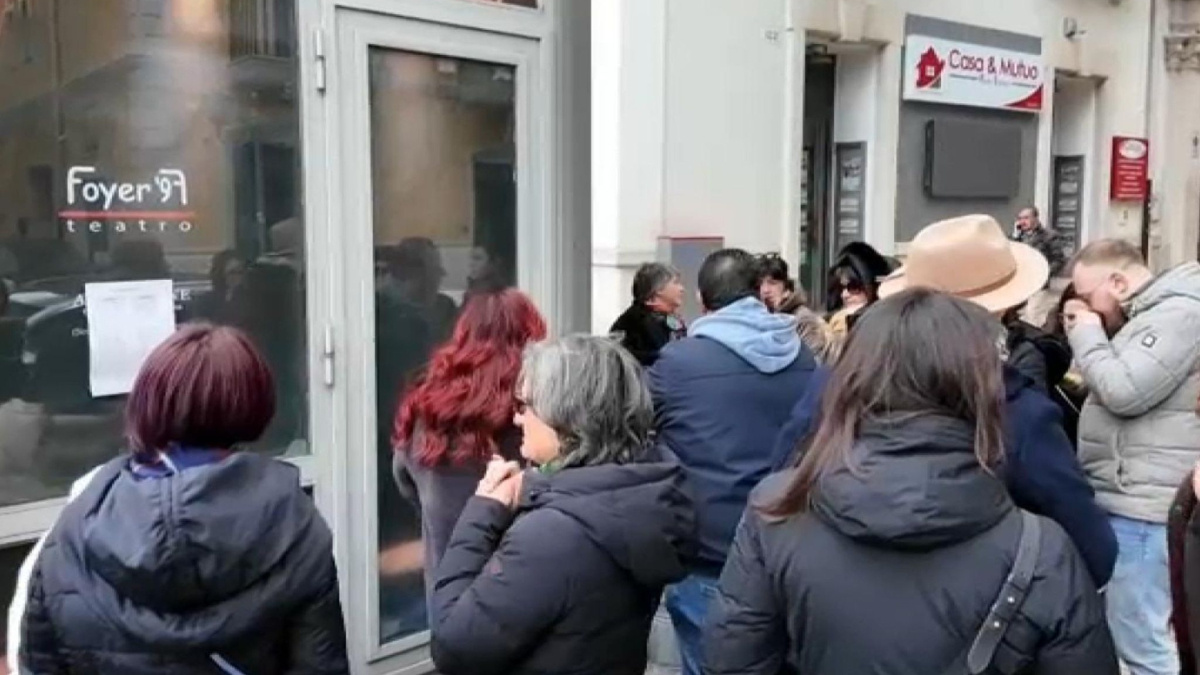
"BLASTING NEWS ITALIA": SIX-SEAT REVOLUTION: FOGGIA'S NEWSSTAND THEATRE BECOMES A CASE STUDY AT STANFORD SOURCE: https://it.blastingnews.com/cultura-spettacoli/2026/09/rivoluzione-a-sei-posti-il-teatro-edicola-di-foggia-caso-studio-a-stanford-004141773.html SAN SEVERO (FG) - The Newsstand Theatre of San Severo, created from a disused news-stand, is a case study for Stanford University by Chiara Valentini The Newsstand Theatre of San Severo, in the province of Foggia, known as the smallest theatre in the world, has become a prestigious case study for Stanford University. The news, released on 19 September 2026, concerns the publication in the Stanford Social Innovation Review of the reportage entitled "The Six-Seat Revolution". The feature is entirely devoted to the innovative cultural project of the theatre company Foyer 97 and its artistic director, Francesco Gravino. The article, authored by the Foggia-born researcher Luciano Magaldi and supervised by editor David V. Johnson, appears in the magazine's Dispatches section. The Stanford Social Innovation Review is a publication that focuses on cross-sectoral solutions to global problems. The Apulian project, at the heart of this international recognition, was born from the transformation of a disused and abandoned site into a vibrant space dedicated to very small-scale theatrical performances. A six-seat stage for a unique experience The Newsstand Theatre is distinguished by its extremely small dimensions: it has just six chairs and occupies less than two square metres. Its innovative format provides for performances every 15 minutes, ensuring a high turnover of audiences. Attendance has been sold out, attracting a heterogeneous audience of young people and adults. This particular configuration drastically reduces the distance between actors and spectators, concentrating the theatrical experience in an intimate and original space created from a former news-stand. Francesco Gravino expressed his pride, linking this important recognition to the journey undertaken by the Foyer 97 company. The artistic director also mentioned the numerous requests to replicate the model received from other Italian cities, including Lucca and Rome. Gravino emphasised the urgent need to introduce specific regional regulations to facilitate the reconversion of disused sites into cultural activities, describing them as genuine "cultural outposts" for the community. Currently, Gravino and the company's actors are engaged in preparing the new programme. Foyer 97: thirty years of activity and new challenges The theatre company Foyer 97 is about to celebrate a significant anniversary. Francesco Gravino announced that "next year our company will be 30 years old", a milestone that will be celebrated with the introduction of some important innovations. This anniversary is closely linked to the resumption of activities scheduled for October and to the presentation of the new programme for the Newsstand Theatre. The "Stanford Social Innovation Review" reportage recalled that the Newsstand Theatre was inaugurated on the morning of 27 March 2026, coinciding with World Theatre Day. This event marked the beginning of a project that continues to generate interest and to demonstrate the potential of urban regeneration through culture.

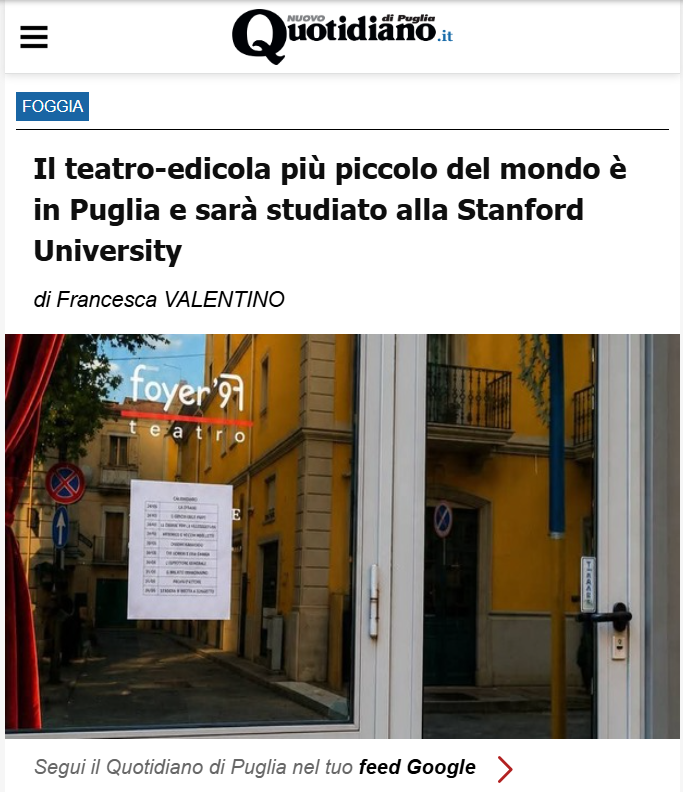
"QUOTIDIANO DI PUGLIA": THE WORLD'S SMALLEST KIOSK-THEATRE IS IN PUGLIA AND WILL BE STUDIED AT STANFORD UNIVERSITY SOURCE: https://www.quotidianodipuglia.it/AMP/foggia/san_severo_teatro_edicola_puglia_stanford_university-9773347.html SAN SEVERO (FG) - On the eve of the new season, worldwide recognition has come for the kiosk-theatre, the smallest theatre in the world, built in San Severo, in the Province of Foggia: it is to become a case study at Stanford University. The concept of the kiosk-theatre was published in SSIR - the multi-award-winning publication covering cross-sector solutions to global problems - in the article 'The Six-Seat Revolution' by the Foggian researcher Luciano Magaldi Sardella, supervised by editor David V. Johnson. The article appears in the 'Dispatches' section of the Stanford Social Innovation Review. 'It is an achievement that rewards our work,' said Francesco Gravino, artistic director of the theatre company Foyer 97, with pride. In the meantime, he announced that requests have been made to replicate the model in other Italian cities. 'Requests to replicate our theatre model have come from Lucca and Rome. We thought of creating a cultural activity from a place that had been decommissioned and abandoned. What is needed is a regional law that allows for the reconversion of these disused places, in which numerous activities could be brought to life. Genuine cultural outposts.' The new programme, which Francesco Gravino and the actors of the company are preparing, is already in the pipeline. 'Next year our company will celebrate its 30th anniversary,' he said, 'an important milestone that we shall mark with some new developments.' Six chairs, less than two square metres, performances repeated every 15 minutes, and sold-out audiences of young people and adults. An experiment that has aroused curiosity and interest even in the world of show business. Amongst the curious theatre enthusiasts, last summer they also welcomed Biagio Antonacci as a guest. In Lucera, in the Province of Foggia, with his new tour between July and August, during his travels he made a surprise stop at the kiosk-theatre and sang 'Iris'. 'It was truly a wonderful encounter that captivated the attention of passers-by,' Gravino concluded.

"LOCAL NEWS": FOGGIA-PROVINCE-BASED NEWSSTAND THEATRE IN A STANFORD UNIVERSITY REVIEW SOURCE: https://www.newslocali.it/foggia/teatro-edicola-foggiano-su-rivista-stanford-university SAN SEVERO (FG) - The 'smallest theatre in the world' in San Severo becomes an international case study. Its singularity has been chronicled in the prestigious journal of Stanford University, thereby commanding global attention. A diminutive theatre conquers Stanford University The innovative teatro edicola of San Severo, in the Province of Foggia, has attained an extraordinary milestone. This space, styled the 'smallest theatre in the world', is now the subject of academic study. Its history and operational model have been expounded in a publication of considerable international repute. The journal Stanford Social Innovation Review (SSIR), renowned for its much-lauded analyses of global solutions, has devoted attention to the initiative. The article, entitled "Six-Seat Revolution", was authored by the Foggian researcher Luciano Magaldi Sardella. Editorial supervision was entrusted to David V. Johnson. The piece appears in the 'Dispatches' section of the review. This publication constitutes a point of reference for social innovations and impact strategies. The success of the model and future prospects Francesco Gravino, artistic director of the theatrical company Foyer 97, has expressed profound satisfaction. "It is an achievement that rewards our labour," Gravino declared. The notion of transfiguring a disused site into a cultural centre has met with resounding success. The newsstand theatre model has generated requests for replication from sundry Italian cities. Amongst these, Lucca and Rome have evinced interest. The objective was to create a cultural enterprise within a derelict space. Gravino advocates for regional legislation that would facilitate the reconversion of disused areas. These might become veritable 'cultural outposts' for communities. The Foyer 97 company is already labouring upon its forthcoming programme. The coming year shall mark a significant anniversary for the company. It shall indeed celebrate 30 years of activity. This milestone shall be commemorated with sundry novelties. A success with public and critics alike The newsstand theatre is distinguished by its diminutive dimensions. It comprises but six chairs and occupies less than two square metres. Notwithstanding its limited space, performances are reprised every 15 minutes. This frequency ensures a substantial influx of spectators, with consistently sold-out houses. The experiment has captured the interest of young and old alike. It has also aroused curiosity within the world of entertainment. A significant episode occurred between late July and early August. During a stop of his tour in Lucera, the singer Biagio Antonacci paid a surprise visit. Antonacci paused at the newsstand theatre and performed his song 'Iris'. "It was truly a most beautiful encounter," Gravino remarked. The event captivated the attention of passers-by, demonstrating the capacity of the diminutive theatre to engender memorable moments. Questions and Answers What is the newsstand theatre of San Severo? The newsstand theatre of San Severo is a cultural space of exceedingly reduced dimensions, defined as 'the smallest theatre in the world'. It affords a mere six seats and offers continuous reprises of performances. Why was the newsstand theatre published in the Stanford University journal? The newsstand theatre was the subject of a study published in the Stanford Social Innovation Review by virtue of its innovative model for reconverting disused spaces into successful cultural centres. The article The Six-Seat Revolution analyses its uniqueness and its impact.

"FOGGIATODAY": SAN SEVERO'S KIOSK THEATRE FEATURED IN THE "STANFORD SOCIAL INNOVATION REVIEW": THE MODEL WAS A CASE STUDY AT STANFORD UNIVERSITY SOURCE: https://www.foggiatoday.it/attualita/teatro-edicola-san-severo-rivista-stanford-university.html SAN SEVERO (FG) - An article authored by the researcher Luciano Magaldi Sardella in the Stanford Social Innovation Review analyseth the experience of the company 'Foyer 97'. The Artistic Director, Gravino: "Requests for replication have been received from Lucca and Rome; a regional statute for the reconversion of abandoned sites is required." The initiative of the kiosk theatre of San Severo, situated in the Province of Foggia and renowned as the smallest theatre in the world, hath become the object of scholarly analysis at Stanford University. In SSIR - an award-winning periodical devoted to innovative solutions to global problems - there had indeed been published the article The Six-Seat Revolution, written by the Foggia-based researcher Luciano Magaldi under the supervision of the editor David V. Johnson. The article appeareth in the Dispatches section of the "Stanford Social Innovation Review". "It is an achievement that crowneth our labour upon labour," emphasised to ANSA Francesco Gravino, artistic director of the theatre company Foyer 97. "Requests to replicate the model have reached us from other parts of Italy, such as Lucca and Rome. We conceived the idea of engendering a cultural enterprise from a place hitherto disused and in a state of dereliction. What is requisite is a regional law that affordeth the possibility of reconverting these disused places, wherein one might engender a multitude of activities. Veritable cultural outposts." Gravino and the actors of the company are preparing the new programme. "Next year our company shall attain its thirtieth anniversary," he said, "a momentous occasion which we shall celebrate with sundry novelties." Six chairs assembled in less than two square metres, performances repeated every quarter of an hour, and audiences at full capacity, amongst both the young and the adult. An experiment that hath attracted attention and curiosity even within the profession of the stage. Between the end of July and the beginning of August, during the engagement at Lucera (Foggia), Biagio Antonacci paid a surprise visit to the kiosk theatre and performed his Iris. "It was truly a most beautiful encounter that captivated the attention of passers-by," Gravino concluded.

L'IMPROBABLE RECONVERSION D'ANDY DIOUF 🇫🇷 À L'INTER MILAN 🤩💙🖤 Milieu de formation et pur gaucher, il s'impose désormais… comme piston droit sous Cristian Chivu 🇷🇴. Une trouvaille aussi inattendue que payante. 💪 « Ceux qui me connaissent sont un peu choqués. MAIS SI C'EST COMME PISTON QUE JE PEUX M'IMPOSER À L'INTER, JE LE FAIS SANS SOUCI », sourit le joueur de 23 ans. 😁 (@lequipe) #InterMilan #Football #Reconversion