BETA nonprofit public democratic european moderated

Search

#Regime

De Iraanse vlag van het Ayatollah regime wappert tijdens de pro-Hamas / anti-Israël demonstraties in Amsterdam. 74 zweepslagen voor het zingen van liedje door deze Iraanse zangeres is voor de ‘River to the sea’ aanhangers kennelijk geen probleem #Hamas #Teheran @AmsterdamNL #Iran #Hamas #Amsterdam

Är det inte märkligt hur svenska medier gång på gång väljer samma ideologiskt förutsägbara kommentatorer i frågor om Israel och Iran? När Israel ska diskuteras går man gärna till Dror Feiler, Göran Rosenberg och Cecilia Uddén – vänsterextrema röster med en tydligt antisionistisk och starkt Israelkritisk utgångspunkt. När Iran ska analyseras återkommer Rouzbeh Parsi och Mohammad Fazlhashemi, trots att deras perspektiv och förhållande till den iranska regimen länge varit omdiskuterade. Är de upptagna tar man in odågan Carl Bildt. Problemet är inte att dessa personer får komma till tals. Problemet är att de presenteras som neutrala experter när de i själva verket är propagandister. Resultatet blir inte analys utan ett närmast slutet kommentariat, där samma världsbild reproduceras från studio till studio. Svenska medier tycks inte ens eftersträva balans. De söker bekräftelse. #SvenskaMedier #Israel #Iran

El presidente de Nicaragua, Daniel Ortega, ha descartado la posibilidad de futuras elecciones en el país, afirmando que su régimen no permitirá procesos electorales que amenacen su control, en un contexto de acusaciones de crímenes de lesa humanidad por parte de expertos de la ONU y críticas internacionales a la reciente reforma constitucional que otorga poder total a su gobierno. #Nicaragua #DanielOrtega #Elecciones

Ortega dice que Nicaragua no celebrará más elecciones

| JULY 2026 | The Guard State How the largest Arab nation became a security contractor at the gates of its own people By Adham Hasanin Egyptian journalist and political writer, based in the Netherlands In June 2025, hundreds of activists from forty countries landed at Cairo airport. Doctors from France, lawyers from Australia, students from the United States, pensioners from the Netherlands. They carried no weapons and no banned slogans; they carried backpacks, walking shoes, and a single intention: to march from Arish to the Rafah crossing — entirely on Egyptian soil — to demand that food be allowed through to a people starving behind the gate. Not one of them reached Rafah. More than two hundred were detained before the march could begin. Around five hundred foreign nationals were deported from airports, hotels, and checkpoints. Passports were confiscated, activists were pulled out of downtown Cairo cafés, and the Global March to Gaza was cancelled on 16 June without taking its first step. And the world watched. This was no secret operation in a dark basement; it happened in the open, documented by the deportees’ own phone cameras, carried by every international news agency. The world watched an Arab state arrest Europeans, Americans, and Africans for wanting to walk towards Palestine. A state guarding the gate of a siege — from the side that was supposed to be the side of rescue. Hold that image, because it is the key to everything that follows. This was not an aberration in Egyptian policy, nor an isolated security decision. It is the function — the complete function around which the Egyptian state has been redefined over the past decade, and which it is time to call by its proper name: the Guard State. I. The Name — What Do We Mean by the Guard State? Political economy has long described states that live off the rent of their location rather than the production of their people. But what has crystallised in Egypt over the past decade goes beyond traditional geographic rent — the Suez Canal, say — into something far graver: the conversion of sovereignty itself into a commodity for hire. The Guard State does not sell its location; it sells its function. It collects its wages not for what it produces, but for what it prevents: it prevents the refugee from reaching Europe, the activist from reaching Gaza, its own people from reaching politics, and the resistance’s weapons from reaching their destination. Four gates, guarded by a single machine, whose wages are paid in loans, deposits, and perpetually renewed rescue packages. This is not a rhetorical metaphor; it is an economic structure with numbers attached. When the Egyptian economy collapsed in 2024, it was rescued not by productive reform but by a single deal whose subject was location: Ras el-Hekma — thirty-five billion dollars for a stretch of coastline. And whenever negotiations with the IMF stall, the tranches are unlocked by explicit European pressure whose subject is migration: nine billion euros from the European Union in the 2024 “Strategic Partnership,” whose own documents place “migration management” at its core. Europe does not pay Egypt to prosper. It pays Egypt to guard. Thus the model is complete: income in exchange for prevention, external legitimacy in exchange for guarding, and international silence about domestic tyranny in exchange for keeping the gates controlled. To see how the model works on the ground, consider the bloodiest gate of all: the gate of Gaza. II. The Gaza Gate — The Guard Who Is Himself Searched The first paradox must be nailed down with facts: Egypt is not a sovereign guard of its own crossing; it is a searched guard. Egyptian relief trucks — ninety-two thousand food parcels in a single convoy this month — are subject to Israeli inspection before entering the Strip: from Egyptian soil, through a crossing that bears an Egyptian name. The state that guards the gate does not hold its key. It owns the threshold, but not the door. Then the October 2025 truce added a new layer to the function. Under the fifteen-point roadmap sponsored by the international envoy together with the “guarantor states” — Egypt foremost among them — Cairo is to train the civilian police force that will replace Hamas in administering the Strip, under the slogan of “one authority, one law, one weapon.” Let us call things by their names: the state that could not — or would not — deliver a loaf of bread without Israeli permission is now qualifying to graduate the security apparatus that will oversee the disarming of the resistance. From guarding the siege to administering what comes after the siege — a promotion within the same project. And meanwhile, what is happening behind the guarded gate? Since the truce, more than one thousand one hundred Palestinians have been killed by Israeli fire — the latest, just two days ago, a ten-year-old boy named Motaz Abu Shaar, carried to his grave in Khan Younis by his mother, Warda. A United Nations commission of inquiry has concluded that Israel is “deliberately targeting children in an ongoing genocide.” This is what the guarantors’ official language calls a “ceasefire.” What meaning is left in the word “guarantor”? A guarantor that the gate stays firmly shut — however high the dead pile up behind it. III. The Mediterranean Gate — The Guard Europe Pays For The second gate faces north. Since 2016, Cairo has boasted — through its officials at every European forum — that “not a single irregular migration boat has departed from Egyptian shores.” This is very nearly true. But the forbidden question is: at what political price has this “efficiency” become an instrument of mutual blackmail? Europe — which condemns Egypt’s human rights record in its parliamentary resolutions — is the same Europe that signed the nine-billion-euro partnership, and the same Europe that stays silent about sixty thousand political prisoners because the alternative, in its calculations, is boats that never stop. And Cairo understands the game and has mastered it: whenever human rights pressure intensifies, the official discourse turns up the volume on “Egypt hosts millions of refugees” and “the last line of defence.” The result is a perfect structure of mutual blackmail: Europe buys its conscience’s silence, the regime sells its location, and the people — Egyptian and refugee alike — are the commodity in the transaction. The democracies that lecture on values are financing the guard who keeps the victims from knocking on their doors. This is not passing hypocrisy; it is a structural partnership in the Guard State model — one that makes Brussels and Berlin shareholders in everything this state produces, from domestic repression to external siege. IV. The Interior Gate — Guarding the People Against Politics But the most dangerous gate is not on any border; it is inside. The Guard State cannot perform its external function unless it first guards an internal gate: the people’s gate to politics. The function requires a people that does not ask: why are we guarding the siege of our brothers? Why are our trucks searched on our own soil? Why are guests deported for coming to walk in peace? To guarantee the question is never asked, the largest silencing machine in the country’s history was built: sixty thousand prisoners of opinion, a press ranked 166th out of 180 worldwide, and a state security case number waiting for anyone who writes. I write these lines from experience, not from reading reports. When I continued writing from my Dutch exile, the machine reached me across continents: accounts shut down by coordinated mass-reporting campaigns, documented threats, a family harassed inside Egypt as leverage — and my name entered into Case 1282 of 2024, not for any act I committed, but for opinions written from free European soil. This is not a personal complaint; it is a job description: the Guard State guards even beyond its borders, because the free word — wherever it is written — threatens the entire contract of guardianship. The logic is perfectly self-consistent: a regime that sells “stability” abroad cannot tolerate a voice revealing that the stability on offer is the stillness of graveyards. This is why the arrest of the foreign activists in June 2025 was inevitable, not incidental: a peaceful march reaching Rafah would have revealed, before the world’s cameras, that the gate opens when it is wanted open — and that the one keeping it shut is a partner, not a mediator. V. What Has Egypt Lost? — The Guard’s Bill An apologist might argue: what is the harm? A state monetising its location as Norway monetises its oil. The answer lies in the essential difference: Norway sells a resource; Egypt leases its will. And the difference between the two is the difference between trade and bondage. Let us tally what Egypt has paid for this model, in bare facts. It lost its water sovereignty: the Renaissance Dam was completed and filled without the state — owner of “the largest defence headquarters in the world” — daring anything beyond statements of concern; for the guard does not make trouble for the international order that employs him. It lost its regional standing: in the Iran–America war halted just weeks ago, Cairo was neither party nor mediator nor even consultant — Pakistan brokered the deal, while Egypt absorbed the economic shrapnel of Hormuz’s closure like a bystander caught in a battle whose parties it does not know. It lost its place in the conscience of its nation: the state that liberated its land in 1973 and led the Arab world for a century has become, in the eyes of the Arab street from the Atlantic to the Gulf, the gatekeeper of the siege. This loss, specifically, no loan or deposit can repay — because it is the only capital that cannot be printed. And it lost — here is the crux — the very national security in whose name the guarding is justified. The model proved its fragility at the moment of testing: when Israel feared an Iranian response last year, it cut off Egypt’s gas by unilateral decision within hours. The guard who believed himself a partner discovered he was merely a hireling whose wages stop the moment danger arrives. VI. The Alternative Is Not a Slogan — It Is the Recovery of the Original Function I will not close with an essay on “the solution lies in Arab unity”; worn-out words kill more surely than silence. The alternative is specific, and it begins with redefining the function. The state is not a guard; the state is the agent of its people’s will. Every foreign policy not derived from that will is — by definition — functional servitude, however it is wrapped in the language of wisdom and moderation. And the Egyptian will is known and needs no referendum: no people in this region accepts that its country serve as warden of the siege of Gaza, or as Europe’s border post. Practically, the recovery begins with three measurable steps. Open the Rafah crossing fully and sovereignly, by purely Egyptian decision — that alone would overturn the equation of the siege. Break the negotiating bondage by linking any cooperation on migration to concrete European positions on Palestine, not statements of concern. And open the interior gate — release the prisoners and lift the hand from the written word — because a state that fears an article will never dare face an occupier. I know the current regime will do none of this; guarding is its founding contract and its financial artery. But this article is not written for the regime. It is written for memory, and for the generation that will inherit the gates — so that it knows that what is presented to it today as “the fate of geography” is no fate at all. It is an employment contract, signed by a regime without a mandate from its people. And contracts, however long they run, end when one of their parties does. And the world — I return to where I began — is a witness that requires no further proof. It watched the deportees at Cairo airport; it watched the searched trucks; it watched Warda Abu Shaar carry her son to his grave behind a firmly guarded gate. The question is no longer: what is happening? The only question left is: who dares to name it? This article is a naming. Adham Hasanin is an Egyptian journalist and political writer based in the Netherlands, covering Arab and European political affairs.

Gestern las ich in einer angesehenen deutschen Zeitung: "Ein Ende von Putins Regime ist nicht absehbar“. Warum dieser Satz? Man kann viele Thesen aufstellen, aber dass Putins Zeit abgelaufen ist und viele Eliten ihn nicht mehr ernst nehmen, wird jeden Tag offensichtlicher. /1 #Putin #Russland #Politik

La mia successione rafforza l'ala dura del regime.

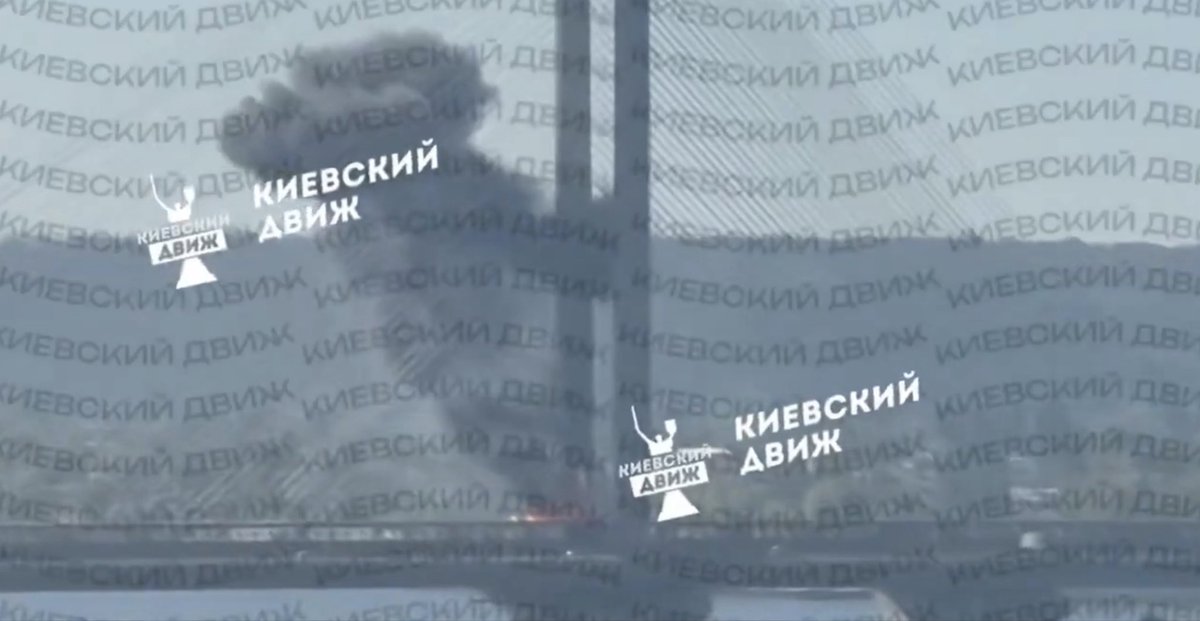
Dal Golfo a Kiev: la nuova normalità della guerra
www.lastampa.it
D

Der Artikel beschreibt, wie regimetreue Funktionäre in Serbien das renommierte Bitef Theaterfestival in Belgrad unterminieren, während die Regierung gleichzeitig repressiven Maßnahmen im Kultursektor ausübt, was zu Akten der Gewalt gegen Kulturverantwortliche führt und Proteste gegen die politischen Missstände anheizt. #Kulturpolitik #Serbien #Regierungsproteste

Wie die serbische Rechte ein renommiertes Theaterfestival abmontiert

La Casa Blanca ha alertado sobre la infiltración del régimen cubano en el Partido Demócrata de EE.UU., respaldada por un informe del Departamento de Estado que denuncia décadas de espionaje y manipulación a través de redes de activistas y organizaciones de izquierda, con el objetivo de influir en la política estadounidense. #Cuba #PartidoDemócrata #infiltración

La Casa Blanca alerta de la infiltración del castrismo en el Partido Demócrata de EE.UU.

Nicaraguas Präsident Daniel Ortega hat angekündigt, dass zukünftige Wahlen abgeschafft werden, was seine autoritäre Herrschaft weiter festigt und der Opposition den Zugang zur Macht verweigert, während er gleichzeitig internationale Kritik an seinem Regime und den vorangegangenen repressive Maßnahmen zurückweist. #Nicaragua #Ortega #Diktatur

Nicaragua: Präsident Daniel Ortega kündigt Abschaffung von Wahlen an

Parabéns @BolsonaroSP pela obtenção da residência permante ("Green Card") nos EUA como indivíduo de habilidades extraordinárias. Você merece! Aqui, na Terra dos Livres, você está protegido. Seguiremos juntos lutando para que o Brasil não tenha mais exilados e para que a nosso povo também se livre do jugo deste regime. Aproveito para registrar públicamente o agradecimento ao presidente @realDonaldTrump e a todos da sua administração que tornaram isso uma possibilidade. Que venham mais novidades boas! #GreenCard #HabilidadesExtraordinárias #Brasil

Daniel Ortega hat angekündigt, dass Nicaragua künftig keine Wahlen mehr stattfinden werden, was seinen Übergang von einem autoritär regierten Staat zu einer offen erklärten Diktatur bestätigt, während sein Regime bereits aufgrund von Repression und der Ausschaltung politischer Gegner stark in der Kritik steht. #Nicaragua #Ortega #Diktatur

Ortega vollzieht Wandel zu erklärter Diktatur

Deze Leden van de Tweede Kamer, deze kampioenen van de vrije en open democratie die een voorbeeldfunctie zouden moeten hebben als bewakers van onze open democratie, van de vrijheid van meningsuiting en expressie, zullen willens en wetens de enige publieke omroep met een iets afwijkend geluid uit het publieke bestel jagen. Niet de omroepen die ons dag in dag uit, jaar in jaar uit, vergiftigen met de wokelinkse dogma’s rond klimaat, gender, westerse zelfhaat, open grenzen en massa-immigratie. Nee, het kleinste omroepje dat zich af en toe keert tegen het staatsnarratief, dat moet eraan geloven. Kennelijk allemaal geen herinneringen aan regimes die schrijvers en journalisten het leven zuur maakten, kranten verboden en tv-zenders uit de lucht haalden. Ze zullen het verwijt dat ze tiranniek en autoritair zijn en onliberaal tot in hun botten, verontwaardigd van de hand wijzen. Want hun motieven zijn nobel: zij sluiten een dissident omroepje om de persvrijheid en de vrijheid van meningsuiting te beschermen. Net zoals zij straks politieke partijen gaan verbieden om de democratie te beschermen. Oorlog is vrede, vrijheid is slavernij, onwetendheid is kracht, wie het verleden beheerst, beheerst de toekomst, wie het heden beheerst, beheerst het verleden. #ouafaoualhadj, @MoMohandis @EJvanderMaas en @HarmenKrul hebben geen idee waar ik het over heb als ze deze voorbeelden van omkering van de werkelijkheid lezen. We zullen hen niet vergeten. De parlementaire geschiedenis ook niet. En als laatste: alle ouders weten dat kinderen op de basisschool worden bestookt met gender- en transgenderpropaganda. Vraag voor de lol eens aan uw kind in de brugklas hoeveel van hun medescholieren twijfels hebben over hun gender. #persvrijheid #democratie #vrijheid

This is also hidden by the media! They are no longer media, they do not do their basic job: to inform! They choose based on the orders received! Protests against the regime of Volodymyr Zelenskyy continue in Ukraine! As Zelenskyy reorganizes (translated)

🚨 | Lo que revela The New Yorker: - El presidente Trump le dice constantemente a Delcy Rodríguez que “no se acomode tanto, que en cualquier momento te envío a María Corina contra ti”. - Justo después del terremoto, Trump llamó a Delcy Rodríguez y le exigió que respetara a María Corina. - Estando en Panamá, fue el régimen de Delcy Rodríguez el que amenazó a Copa Airlines. #Trump #Venezuela #Política

la extensa red de inteligencia e ideológica del régimen cubano contribuyó a la formación de la extrema izquierda en nuestro país y en nuestro hemisferio, y sigue estando inextricablemente vinculada a los grupos y movimientos de extrema izquierda en Occidente y más allá

Trump pone en la diana a los socialistas democráticos de Mamdani y organizaciones sociales en su cruzada contra Cuba
www.eldiario.es

The debate on the Iran issue has been remarkable in Swedish media. One of the largest single massacres carried out by a state in modern times was forgotten by the media after four to five months. Tens of thousands of Iranians were murdered by the regime on January 8-9. How often is it mentioned in Swedish? (translated)

Many of us know everything that the State Department now says about the level of danger and enemy activity of the communist regime of the Cuban dictatorship and its colossal apparatus of subversion, disinformation, and criminal activity throughout the West, across all of America, and especially. (translated)
EUA 🇺🇸/ Cuba 🇨🇺: URGENTE Os EUA devem acusar o regime cubano de desempenhar um papel indispensável em praticamente todas as insurgências, revoluções e movimentos militantes de extrema esquerda notáveis dentro e fora do Hemisfério Ocidental e de construir uma sofisticada rede de espionagem e influência focada em infiltrar-se e minar os interesses americanos. #Cuba #EUA #Geopolítica

Deadly blackout in Berlin: Suspects identified - but no one is in custody - the cells are probably already overcrowded with regime critics. (translated)
💣CORINTHIANS ESTUDA RECUPERAÇÃO JUDICIAL PARA PREPARAR CAMINHO RUMO À SAF‼️ O Corinthians pode estar prestes a mudar completamente a estratégia para enfrentar sua crise financeira. O Blog do Macedo apurou que ganhou força nos bastidores do Parque São Jorge a discussão sobre uma eventual migração do atual Regime Centralizado de Execuções (RCE) para um pedido de Recuperação Judicial (RJ), movimento que é visto internamente como um passo estratégico para viabilizar uma futura Sociedade Anônima do Futebol (SAF). Segundo fontes ouvidas do clube, o entendimento é de que o RCE cumpriu um papel importante ao proteger o clube das execuções individuais, mas passou a ser considerado insuficiente diante do tamanho do passivo Corinthiano e da necessidade de uma reestruturação financeira mais profunda. A Recuperação Judicial é vista por integrantes do núcleo que acompanha a situação financeira do clube como um mecanismo capaz de permitir uma renegociação mais ampla das dívidas, com a apresentação de um plano aos credores, possibilidade de alongamento dos pagamentos e outras medidas previstas na legislação. A avaliação feita internamente é que uma eventual RJ também poderia trazer mais previsibilidade ao mercado, tornando o Corinthians mais atrativo para investidores interessados em participar de um futuro projeto de SAF. Pessoas que acompanham as conversas afirmam que a ideia é reorganizar o passivo antes de qualquer negociação envolvendo o futebol. Na prática, um investidor encontraria um cenário financeiro mais definido, com regras estabelecidas para o pagamento das dívidas e menor grau de incerteza sobre o tamanho das obrigações do clube. Apesar da discussão ter avançado nos bastidores, ainda não existe uma decisão formal da diretoria para ingressar com um pedido de Recuperação Judicial. O tema segue sendo analisado sob os aspectos jurídico, financeiro e político, já que uma medida dessa magnitude exige amplo planejamento e pode impactar diretamente o futuro institucional do Corinthians. Caso a estratégia seja efetivamente adotada, o Corinthians passará a seguir um caminho semelhante ao estudado por outros clubes brasileiros que recorreram aos instrumentos da legislação empresarial para reorganizar suas finanças antes de avançar em projetos ligados à SAF. O cenário ainda está em construção, mas a possibilidade de uma Recuperação Judicial deixou de ser apenas uma hipótese distante e passou a fazer parte das discussões sobre o futuro financeiro do clube. #BlogdoMacedo Apoio: #1908CoffeeStation #Corinthians #RecuperacaoJudicial #Futebol