BETA nonprofit public democratic european moderated

Search

#Strikes

Another horrific attack against civilian objects in Ukraine. Today Russian strikes have hit the building of Ukraine’s National Academy of Sciences. This is more than a war crime – it is an attempt to obliterate Ukraine’s academic excellence and future. Our thoughts and prayers #Ukraine #WarCrimes #AcademicFreedom #UA #RU

THOMAS MÜLLER ARE YOU KIDDING 🤯🇩🇪 Raumdeuter takes the run and strikes from outside the box🔥 #VANvDC | #VAN 3 - 2 #DC https://t.co/qEdEPvFB5O #Bundesliga #Müller #Fussball

BBC 5d

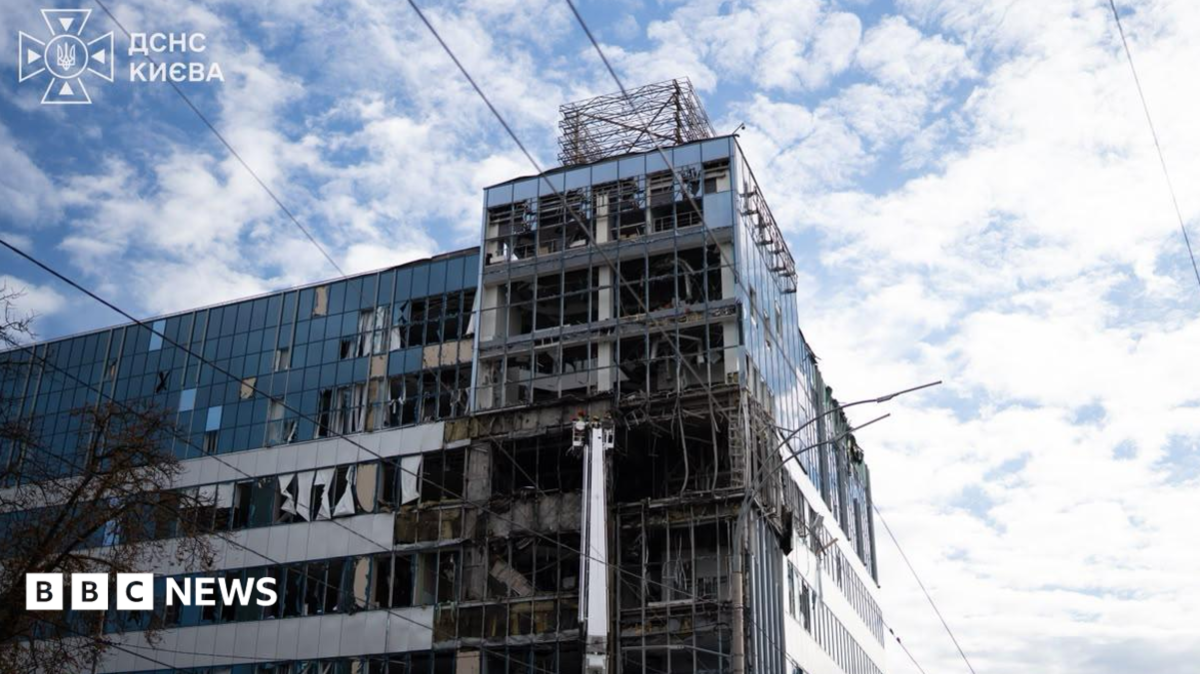
Such strikes aim to disrupt "people's ability to stay connected, study, work", says Ukraine's president. #UkraineUnderAttack #CyberWar #Zelensky

Russia targeting 'ordinary life' with attacks on Ukraine's data centres, Zelensky says
H

No victims in any category below have been double-counted. Outside Peru, no war-related deaths or imprisonments have been included. Communism vs. Villagers 400,000 dead — Cambodian rural (1) 19.5 million dead — Chinese peasants (2) 250,000 dead — Ethiopian nomads (3) 5 million dead — Soviet peasants (4) 340,000 dead — Tibetan rural (5) Communism vs. Landowners 3 million dead — Chinese landowners (6) 100,000 dead — Vietnamese landowners (8) Note: Soviet kulaks are counted among the villagers. Communism vs. Religion 47,000 dead — Cambodian Buddhists (9) 13,000 imprisoned — Czech priests / religious (10) 7,000 imprisoned — Mozambican Jehovah’s Witnesses (11) 100,000 imprisoned — North Korean Christians (12) 2,100 imprisoned — Polish priests & Jehovah’s Witnesses (13) 200,000 dead — Soviet clergy (15) 2,000 dead — Tibetan monks & pilgrims (18) 400 dead — Romanian Christians (14) Moreover, Christians suffered the following in Romanian prison: In a “baptism of immersion,” inmates’ heads were plunged into buckets of urine and feces, while guards chanted baptismal rites. Near the point of drowning the Christian’s head was let up for air and then plunged back into the sewage (65). Communism vs. Cossacks 400,000 dead or deported ethnics (20) Photo: Bolshevik instructions on “the need to do away with the cossacks.” (21) “Order no.7: In the event of an unauthorized exit of a registered [Cossack] family, the family shall be shot.” “Order no. 8: This execution shall be carried out among every family member.” “Order no. 9: All property of the executed [Cossack] shall be confiscated and given to the poor.” Communism vs. Native Americans 6,000 dead — Ashaninka (Peru/luminoso-22) 5,000 imprisoned — Ashaninka (Peru/luminoso-22) 10,000 forcibly relocated — Ashaninka (Peru/luminoso-22) 35 destroyed — Ashaninka communities (Peru/luminoso-22) 35,000 imprisoned or forcibly relocated — Nicaraguan tribesmen (Sandinistas-23) Communism vs. Unclassified Dissidents* 5,000 dead — Albanian dissidents (24) 10,000 dead — Angolan dissidents (25) 29,000 dead — Bulgarian dissidents (26) 1 million dead — Cambodian dissidents (27) 43 million dead — Chinese dissidents (28) 16,000 dead — Cuban dissidents (29) Moreover, in Cuba’s concentration camps, inmates faced the following “punishments.” They were forced to “cut grass with their teeth,” endure “mock executions,” live in iron cages “1 meter wide, 1.8 meters high,” sit for hours in toilet ditches, withstand shock treatment, die by the hundreds from starvation and lack of medical attention (30). 44,000 dead — East German dissidents (31) 10,000 dead — Ethiopian dissidents (32) 50,000 dead — Hungarian dissidents (33) 3,000 dead — Nicaraguan dissidents (34) Moreover, 11,000 Nicaraguans were tortured at the hands of the Sandinistas. This included their being skinned alive & then executed; drawn & quartered; forced to watch wives and daughters sexually assaulted; caged in cubicles less than a square meter; “punished” via electric shock; deprived food and water (35). 1.6 million dead — North Korean dissidents (36) 21,857 dead — Polish dissidents (37) 120,000 dead — Romanian dissidents (38) 8 million dead — Soviet dissidents (39) 425,000 dead — Tibetan dissidents (40) Moreover, Tibetans suffered the following atrocities at the hands of the Chinese. They faced: crucifixion drowning beheading boiling alive burying alive mutilation (41) Communism vs. Gay Rights 25,000 imprisoned — Cuban gays and other “deviants” (42) 500 dead — Peruvian gays, bisexuals, and transgendered (43) 11,000 arrested — Polish gays (44) 100,000s imprisoned — Soviet gays in slave labor camps (45) Moreover, Chinese gays were targeted for persecution although numbers are impossible to quantify (46). Communism vs. Collective Laborers 160 dead — East German strikers (47) demonstrators killed after protesting a 10% increase in work quotas. 110 dead — Nicaraguan strikers executed by the Sandinistas after demanding back pay (48). 31 dead — Novocherkassk strikers (Kruschev) 24 killed on the spot; 7 later executed; over 100 workers arrested. (49) 51 dead — Peruvian union leaders (50) 106 dead — Polish strikers Poznan demonstrators killed after protesting working conditions & pay issues; others killed in later strikes; thousands attacked by military (51). 3,000 dead — Soviet strikers (Lenin / Trotsky) some shot / others, as N. Werth describes, “loaded onto barges and then thrown by the hundreds into the Volga with stones around their necks” (52). Moreover; Massive factory protests in China — strikers beaten back by 30,000 red soldiers after disputing wages (53). Striking outlawed in Cuba (54). Organizers sentenced to as many as 26 years in prison (55).

BBC 6d

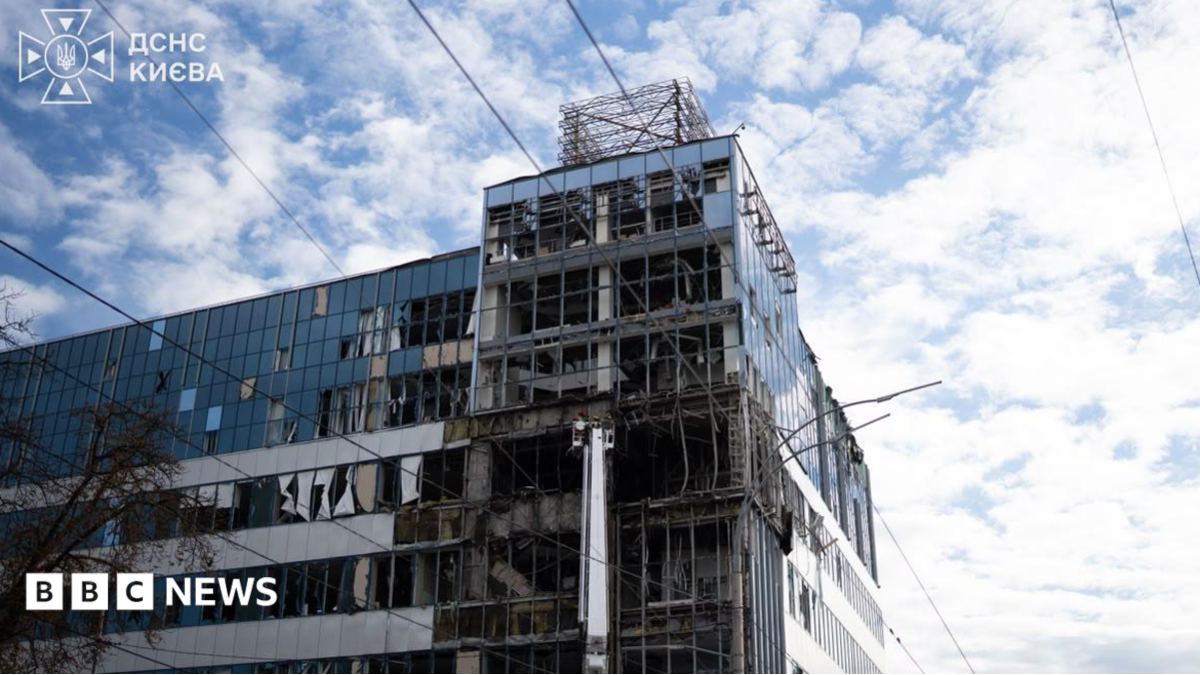
Such strikes aim to disrupt "people's ability to stay connected, study, work", says Ukraine's president. #Ukraine #RussianAttack #CyberWar

Zelensky says Russia has widened attacks to hit Ukraine's data centres

We are responding to Russia’s brutal strikes against life. Last night, thanks to our long-range sanctions, two oil refineries were hit – in Perm and Novoshakhtinsk. There were also hits on the Iskra Plant defense enterprise in Ulyanovsk, and the occupiers now have two fewer radar… pic.twitter.com/jZF4OL5Epa #Uļjanovska #droni #raķetes

VIDEO ⟩ Ukraiņi ar droniem uzbrukuši trim ar raķešu ražošanu saistītiem uzņēmumiem Krievijā
pmo.ee
BBC 6d

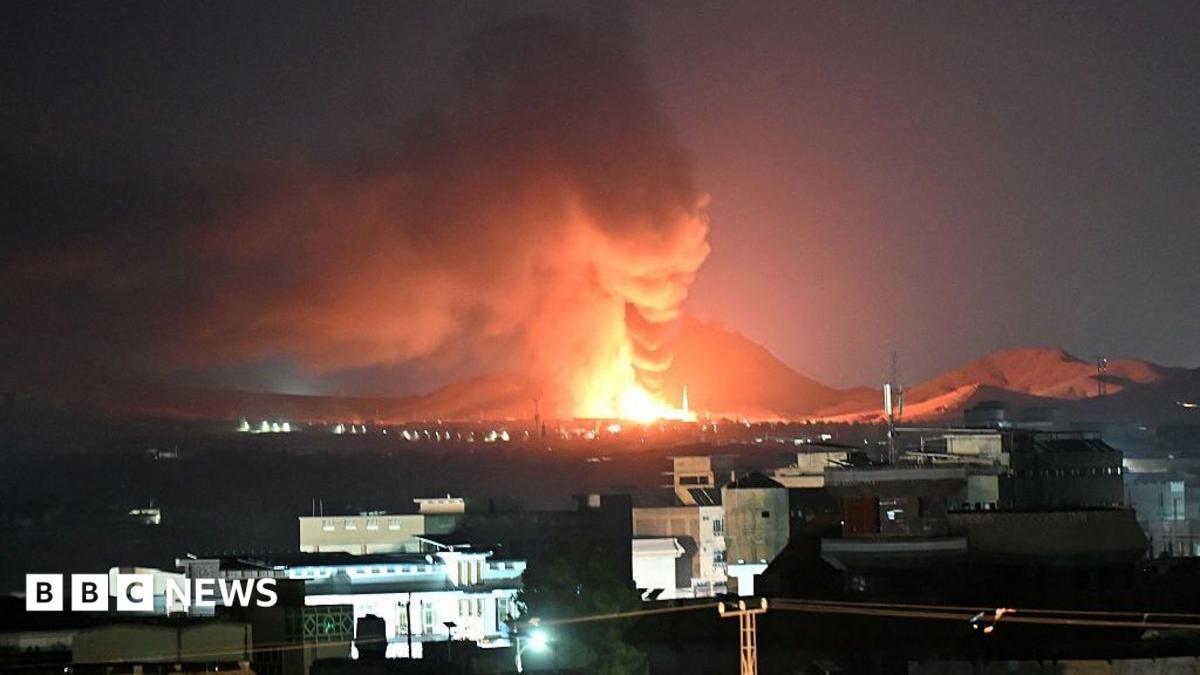
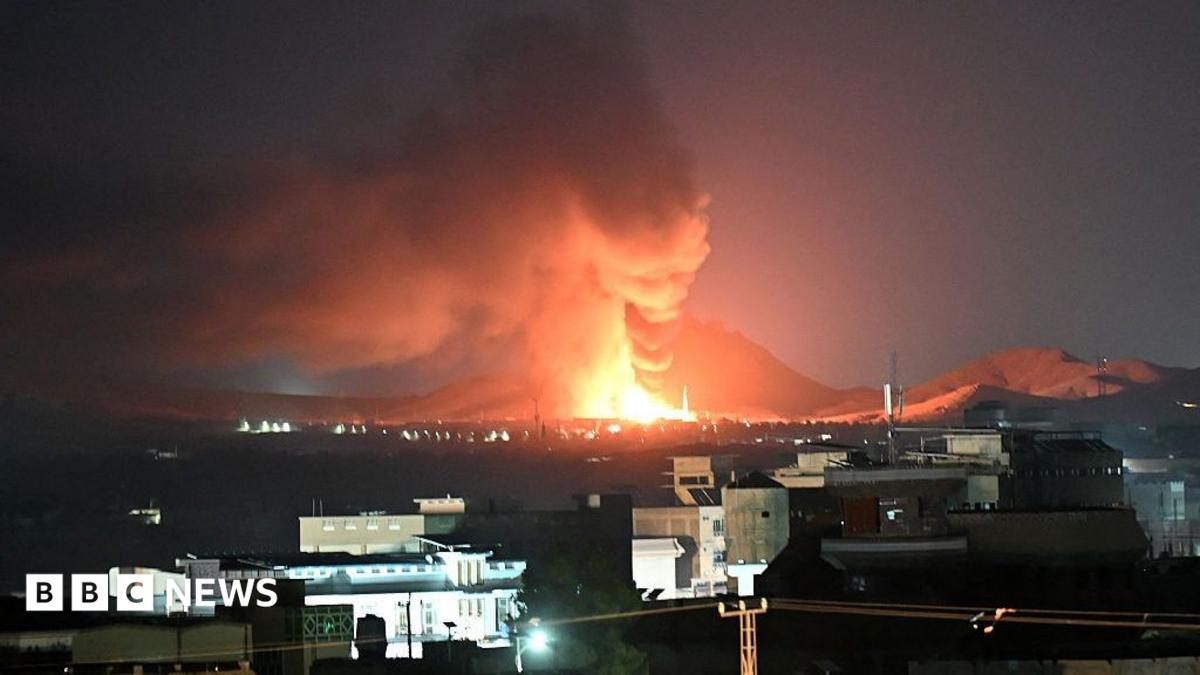
Pakistan says it struck 10 targets, adding the strikes were "strictly limited to identified military objectives". #Afghanistan #Pakistan #Taliban

Four civilians killed in Pakistani strikes in Afghanistan, Taliban says

Russia keeps up air strikes on Ukraine with an expanding fleet of drones, from the Shahed-136 to the jet-powered Geran-4 and Geran-5, while boosting production in Alabuga. #RussianDrones #MilitaryTechnology #DefenseIndustry

The drones Russia could use to strike Europe from its Mediterranean ghost fleet

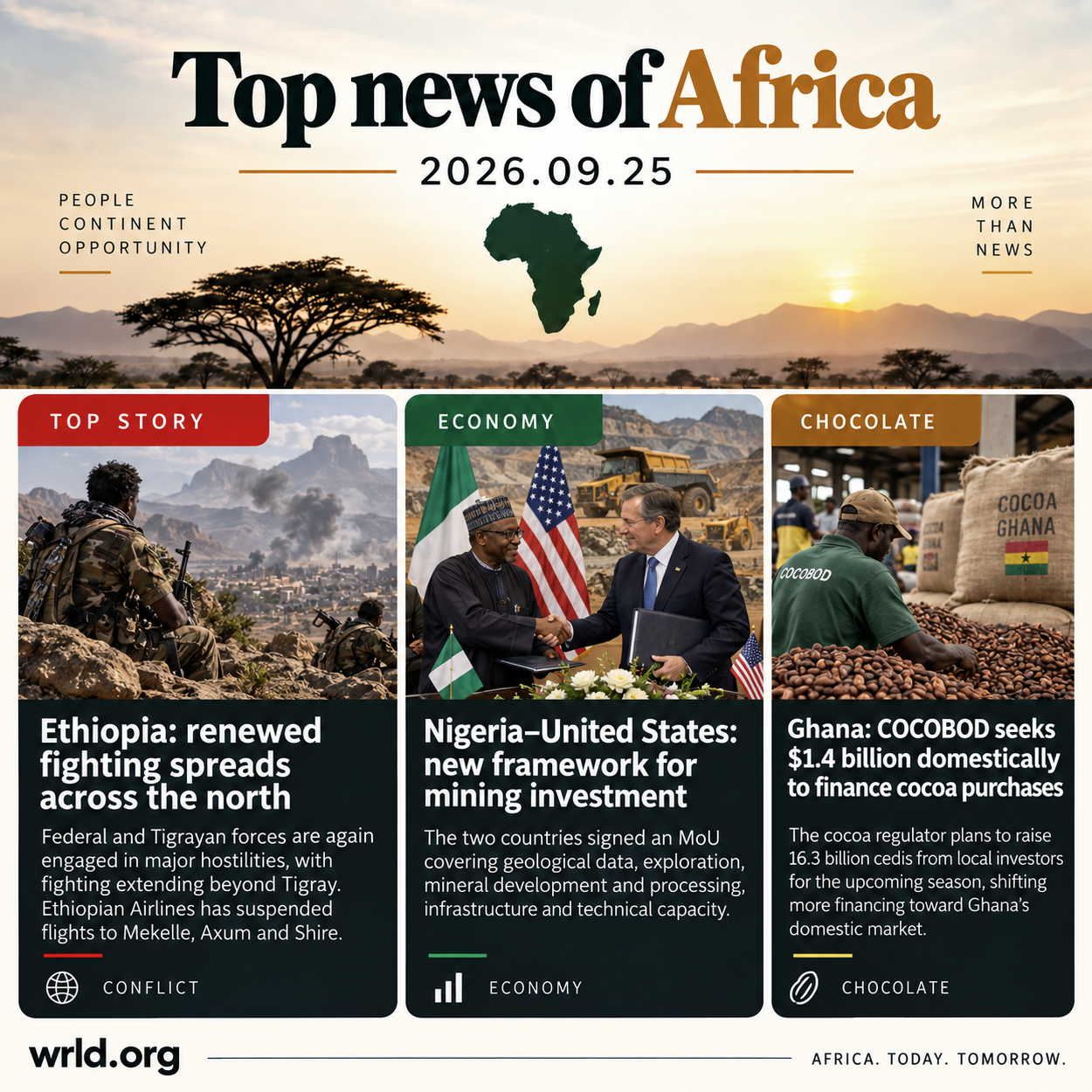
AFRICA DAILY REPORT — 25 SEPTEMBER 2026 Major developments reported during the previous 24 hours. 1. ETHIOPIA — Renewed fighting spreads across the north Federal and Tigrayan forces are again engaged in major hostilities, with fighting extending beyond Tigray. Ethiopian Airlines suspended flights to Mekelle, Axum and Shire amid the escalation and concerns over renewed conflict. Source: https://abcnews.com/International/wireStory/ethiopian-airlines-cancels-flights-tigray-amid-concerns-renewed-136676469 2. DR CONGO — Ebola outbreak continues to expand Updated European CDC data reported 7,773 confirmed cases and 3,759 deaths, with Ituri remaining the most affected province and North Kivu also recording substantial transmission. Public-health impact: Critical. Source: https://www.ecdc.europa.eu/en/ebola-outbreak-democratic-republic-congo-and-uganda 3. DR CONGO — Fatal violence during Ebola burial highlights resistance to response teams One person was killed and several wounded after security forces opened fire during unrest surrounding the burial of a suspected Ebola victim in Beni. The incident illustrates the public-trust and security challenges complicating containment efforts. Public-health/security impact: Very High. Source (Reuters report): https://www.internazionale.it/ultime-notizie-reuters/2026/09/24/one-dead-after-security-forces-open-fire-during-ebola-burial-in-congo-sources-say 4. SUDAN — RSF intensifies drone attacks in North Kordofan Reuters reported a renewed campaign of drone strikes against government-held towns in North Kordofan, including attacks affecting Um Ruwaba and El Obeid. Drones are playing an increasingly important role in Sudan's war. Humanitarian/security impact: Very High. Source (Reuters): https://www.internazionale.it/ultime-notizie-reuters/2026/09/24/sudan-s-rsf-steps-up-deadly-drone-attacks-on-frontline-cities 5. MOROCCO — PAM finishes first in parliamentary election Preliminary official results gave the Authenticity and Modernity Party (PAM) 97 of 395 seats, followed by the National Rally of Independents with 66, Istiqlal with 65 and the Justice and Development Party with 54. Source (official Moroccan government portal): https://maroc.ma/en/news/2026-legislative-elections-pam-leads-97-seats-according-preliminary-results-minister-interior 6. NIGERIA–UNITED STATES — New framework for mining investment Nigeria and the United States signed a memorandum of understanding covering geological data and exploration, mineral development and processing, infrastructure and technical capacity. Economic/strategic impact: High. Source (Channels Television): https://www.channelstv.com/2026/09/24/nigeria-us-sign-mineral-investment-pact/ 7. NIGER — Madaouela uranium agreement increases state participation Niger and Atomic Eagle finalized an agreement concerning the Madaouela uranium project, with the arrangement providing for Nigerien state participation and renewed activity at the project. Economic/strategic impact: High. Source: https://www.nigertoday.com/articles/en/niger-and-atomic-eagle-finalize-madaouela-uranium-deal-ending-dispute.html 8. SOUTH AFRICA — Financing costs constrain $98 billion energy-transition programme South Africa warned at the UN Climate Summit that high borrowing costs and shrinking international grants are limiting its clean-energy transition. A $550 million credit guarantee has been secured to attract private investment in electricity transmission. Economic/energy impact: High. Source (SABC News): https://www.sabcnews.com/sabcnews/1163387-2/ 9. GHANA — COCOBOD seeks $1.4 billion domestically to finance cocoa purchases Ghana Cocoa Board is seeking to raise 16.3 billion cedis ($1.4 billion) from domestic investors to finance cocoa purchases for the upcoming season, shifting more financing toward Ghana's domestic capital market. Economic impact: High. Source (Reuters report republished by Business Recorder): https://www.brecorder.com/news/40440904/ghanas-cocoa-regulator-pitches-usd14bn-domestic-financing-plan 10. UGANDA — Refugee programme remains heavily underfunded Uganda's response plan for more than two million refugees remains substantially underfunded, increasing pressure on food, healthcare, water, sanitation and host communities. Humanitarian impact: High. Source (Uganda Business News): https://ugbusiness.com/2026/09/politics-policy/ugandas-refugee-plan-is-a-third-funded-as-kampala-seeks-eu-help #Africa #AfricaNews #TopNewsOfAfrica #Ethiopia #Tigray #NorthernEthiopia #EthiopiaConflict #HornOfAfrica #RegionalSecurity #AfricanSecurity #Nigeria #UnitedStates #NigeriaUS #MiningInvestment #CriticalMinerals #MineralDevelopment #MiningSector #GeologicalData #StrategicMinerals #AfricanEconomy #Ghana #COCOBOD #Cocoa #CocoaIndustry #Chocolate #CocoaFinance #Agriculture #Agribusiness #DomesticMarkets #CapitalMarkets #Trade #Investment #EconomicDevelopment #Geopolitics #AfricaToday #wrldorg

Ethiopian Airlines cancels flights to Tigray capital as soldiers take over airport
BBC 7d

Pakistan says it struck 10 targets, adding the strikes were "strictly limited to identified military objectives". #Afghanistan #Taliban #Pakistan

Four civilians killed in Pakistani strikes in Afghanistan, Taliban says

🚨 Afghan govt summons Pakistan diplomat in Kabul after Pakistani strikes killed many Afghan Civilians. #Afghanistan #Pakistan #Civilians

What is Putin’s response to 51 UN Member States calling on Russia to accept a full, immediate and unconditional ceasefire? More ballistic missile strikes on Ukraine. In Kyiv and Odesa, missiles hit a maternity hospital, residential buildings, schools and other civilian #Putin #Ceasefire #UkraineWar #UA #RU #UN

We may be separated by the vast Atlantic Ocean, but when disaster strikes, distance disappears. The Community of Latin American & Caribbean States can count on Europe. In Venezuela, Colombia, Haiti & Cuba, we’ve also been working together on disaster preparedness & resilience. https://t.co/mOLW7tmpmh #DisasterRelief #LatinAmerica #GlobalSolidarity #VE #CO #HT #CU #EU

P

The Return to Feudalism in 21st Century Garb A simple observer's viewpoint, with no claim to hold any absolute truth. The Veneer Cracks There is something strangely archaic about the world unfolding before our eyes, despite its satellites, artificial intelligence, and promises of infinite progress. Here and there, we witness heads of state behaving like feudal lords of another age, patiently nibbling away at the neighboring territory, redrawing borders through force rather than law, as if governing a nation mattered less than expanding one's fiefdom. No names need be mentioned here: current events provide plenty of illustration, and each reader will recognize, according to their own geography and moment of reading, the faces that embody this observation. But this return to the archaic is not confined to grand geopolitical stages. It also permeates the most ordinary daily life—that of social media, where anyone can pour out venom against another without filter, without form, and often without the slightest argument. The verbal jousting of yesteryear, with its codes, its rhetoric, its tacit limits, has given way to raw invective, snap judgment, instant condemnation. We no longer debate: we execute, verbally—and sometimes it doesn't stop at words. The Vanished Inhibition What strikes one, in this dual observation—macro-political and micro-social—is the lifting of an inhibition we thought firmly anchored. Centuries of cultural construction, education, philosophy, sometimes religion, had patiently shaped mechanisms of restraint: politeness as social ritual, argumentation as a mode of resolving disagreement, respect for one's opponent as the very foundation of democratic debate. This civilizational veneer, however fragile it always was, seemed to hold. Today it is cracking, and the question—which for me remains a simple hypothesis, not a certainty—is why. A convenient explanation would blame social media: anonymity, the distance of the screen, the instantaneousness of publication would favor verbal acting-out without the usual mediation of reflection. This is probably true, but likely insufficient. For technology here is only an accelerant, an amplifier—not necessarily a root cause. A Poorly Formatted Neocortex? The more unsettling hypothesis—and I frame it explicitly as hypothesis, not scientifically established fact—is that of a failure in the formation of moral judgment and tolerance toward otherness. The human brain possesses the neural structures enabling empathy, the distancing of impulsive reaction, the acceptance of difference—but these capacities are not innate in their full exercise: they must be built, educated, cultivated, like a muscle that needs patient training from childhood onward. If this education in otherness, nuance, and tolerance of disagreement erodes—for multiple and undoubtedly complex reasons that are not mine to settle here—then older reflexes resurface: instinctive distrust of the stranger outside the clan, the law of the strongest, the logic of territorial or symbolic predation. The other ceases to be a possible interlocutor and becomes once again a potential threat, unless they belong to my tribe, my clan, my party, my digital bubble. Two Scales, One Logic What is striking, in this deliberately provocative reading, is the structural similarity between these two scales. The leader who invades a neighbor in the name of a rediscovered greatness or a reinvented historical right, and the anonymous internet user who insults a stranger in the name of an unnegotiable conviction, may obey the same underlying grammar: that of territory to defend, clan to protect, the other to subdue or exclude rather than understand. The form has changed—satellites instead of horses, tweets instead of heralds—but the substance, in this reading that remains mine alone and commits no one else, seems strangely identical to that of feudal rivalries: the absence of a recognized third party, of an accepted common rule, of a respected arbitrating authority. Everyone becomes judge and party, lord of their own digital or territorial fiefdom. A Civilization on a Knife's Edge Norbert Elias, in his Civilizing Process, showed how Western societies had historically built, with remarkable slowness, an increasing control over impulses and direct violence, in favor of more sublimated forms of social regulation. What we may be observing today—and I stress again the conditional—is a form of regression in this process, or at least a fragilization of the veneer it had patiently laid down. Should we see this as an effect of great technological accelerations, which shake up our cognitive rhythms without leaving education time to adapt? A deeper crisis of the institutions tasked with transmitting these values of tolerance—school, family, religion, the rule of law? Or simply a cyclical movement of human history, where phases of policed civilization alternate with darker backlashes? I have no certain answer, and I would be wary of anyone claiming to hold one. In Conclusion, a Shared Concern This text is only a viewpoint, necessarily partial and subjective, on a world that sometimes seems to replay ancient logics in new clothing. Perhaps I am wrong to perceive a continuity between the feudal lord and the contemporary dictator, between the anonymous online insult and the absence of education in nuance. Perhaps these phenomena are unrelated, or too complex to be thus summarized. But if this reading, even partially, hits the mark, then the question that arises is less one of technological regulation—though necessary—than the far more arduous question of how to rebuild, generation after generation, this capacity to accept the other in their difference, to debate without destroying, to coexist without necessarily dominating. This undertaking, if it exists, will not be resolved by an algorithm nor by an international treaty. It plays out, patiently, in the most elementary education—the one that teaches a child that the other is not a threat, but a possibility. Bibliography Elias, N. (1939). Über den Prozess der Zivilisation [The Civilizing Process]. Oxford: Blackwell (Eng. trans. 1978-1982). Lorenz, K. (1963). Das sogenannte Böse [On Aggression]. London: Methuen (Eng. trans. 1966). Arendt, H. (1970). On Violence. New York: Harcourt, Brace & World. Han, B.-C. (2013). Im Schwarm [In the Swarm: Digital Prospects]. Cambridge, MA: MIT Press (Eng. trans. 2017).

Laut dem Funk-Jugendformat "Cinema strikes back" ist Herr der Ringe rassistisch. #OerrBlog https://t.co/sEI7VY7Zgk #HerrDerRinge #Rassismus #Funk

Trucker strikes and protests seem inevitable which will further crush the supply chain. In Ireland in April of this year there were severe fuel shortages. Truckers blocked the roads. The public overwhelmingly backed the truckers. 🚛🚚 https://t.co/hREBwpS694 #TruckerProtests #SupplyChainCrisis #FuelShortages #IE

Trump: Ukraine’s refinery strikes are causing the diesel shortage — “this isn’t done by the Middle East.” IEA data: Gulf diesel exports collapsed to ~¼ of pre-war levels after Hormuz was disrupted in February. Both wars tightened supply. His is by far the larger one. #Trump #Ukraine #DieselShortage #UA #US #AE

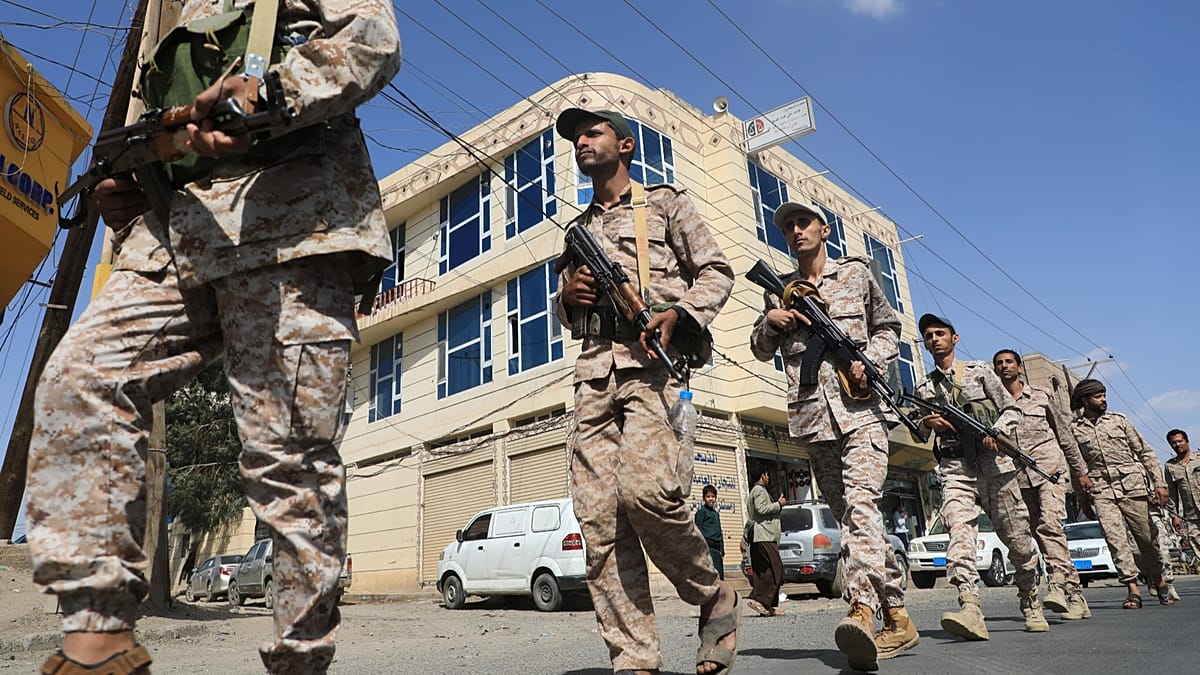
A senior Houthi official said Washington reached out after the group's advance to Bab el-Mandeb, as US media reported Trump cancelled planned strikes at the last minute after a call with Crown Prince Mohammed bin Salman. #Yemen #Houthis #BabElMandeb

Yemen's Houthis pledge not to target US ships after Trump cancels strikes