"One is almost tempted to measure the degree of totalitarian infection by the extent to which the concerned governments use their sovereign right of denationalization." - Hannah Arendt, "The Origins of Totalitarianism" www.wsj.com/politics/pol...
"One is almost tempted to measure the degree of totalitarian infection by the extent to which the concerned governments use their sovereign right of denationalization." - Hannah Arendt, "The Origins of Totalitarianism" www.wsj.com/politics/pol...
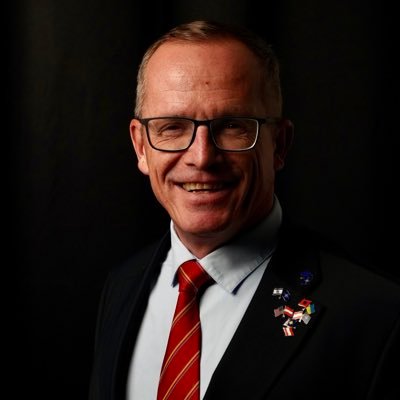
The author argued that dictators copied one another, citing the Reichstag fire on 27 February 1933 and writing that Hitler blamed his political enemies, suspended freedoms and accelerated his dictatorship. They also cited the murder of Sergei Kirov on 1 December 1934, saying Stalin immediately turned it to political ends. https://t.co/aL9gXit2ba #Dictatorship #History #Totalitarianism #DE #RU

Russia is a totalitarian dictatorship and Putin has never before been as scared of being lynched as he is now. https://t.co/dJk1mII3qI #Russia #Putin #Totalitarianism #RU

For the past century, all totalitarian parties have seized power by denouncing “the system”—a catch-all term that serves to channel all forms of anger without offering any concrete solutions other than overthrowing the institutions. This is what Trump is doing today in the United #Totalitarianism #Trump #PoliticalAnalysis #US
The LGBT orphanages have opened in @magyarpeterMP’s Hungary. Hungary looks set to be Europe’s first truly totalitarian, non-democratic liberal regime. 🇭🇺🏳️⚧️ #LGBT #Hungary #Totalitarianism #HU
The dictatorship of @magyarpeterMP is now nationalising independent media outlets. This is after announcing arbitrary and illegal (under EU law) asset seizures. The Eurocrats have created a full-on totalitarian state in Hungary. Europe is a collapsing craphole. Leave. 🇪🇺 #Hungary #Totalitarianism #EU #HU #EU

allvarligt om en statsministerkandidat inte kan se skillnaden mellan regeringar och regimer, inte minst eftersom hon inte förmår dra en gräns mot V som uppenbart präglas av totalitära ideal och antisemitism, socialdemokraterna har en lång historia av detta i utrikespolitiken, #politics #totalitarianism #antisemitism #SE
The Sweetened Lie I once dated a girl who said she’d go along with “2+2=5” if someone truly believed it—she wouldn’t correct them if it might upset them. In her mind, sharing a delusion was safer than truth and conflict. This mirrors what’s happening in the West: we’re losing the capacity to seek truth. Two forces may play roles: declining testosterone among young men and the feminization of institutions. Testosterone is linked to assertiveness and resistance to social pressure, and research suggests it can reduce short-term deception and conformity to group norms. Testosterone has also fallen in men across wealthy nations since the late twentieth century, making pressure easier to accept. Meanwhile, healthcare, universities, media, and other institutions are increasingly female-dominated. Critics argue that female-led cultures may prize consensus and harmony, making dissent costlier. Combined with less internal resistance, external penalties for resisting pressure can produce enforced conformity. Jung warned that failing to integrate the “masculine” side of the psyche can lead to rigidity and ideological capture. Arendt noted that totalitarianism doesn’t require belief in lies—only behavior that acts as if one believes. My ex embodied that dynamic. Nietzsche argued strength is tolerating truth, while the weak require truth diluted and sweetened. The first step is personal: refuse to participate. Accept the cost of nonconformity, build physical strength to support mental strength, and above all, refuse to tell the lie.
The 7 Types of People Who Create Evil Societies Andrew Łobaczewski, a psychiatrist who lived under Nazism and Communism in Poland, proposed political ponerology: pathological personalities and social dynamics can generate totalitarian systems. He describes seven recurring types: 1) **Psychopaths**: power seekers who gain control via coercion, intimidation, and violence. 2) **Schizoids**: ideological engineers who craft abstract systems and utopian theories; if reality conflicts, they rationalize more rather than revise. 3) **Spellbinders**: propagandists who convert ideology into slogans, moral stories, and emotional appeals that sort “good/evil” and define the in‑group. 4) **The Spellbound**: true believers who absorb the message and enforce it socially, driven by moral certainty; they often recruit through institutions and peer networks. 5) **Adapted Conformists**: quiet enablers who comply from fear and self‑preservation, often within bureaucracy (“I’m just doing my job”). 6) **Resistors**: a moral minority who refuse cooperation and prioritize conscience, often paying costs like isolation or punishment. 7) **Bystanders**: a passive majority who stay silent through fear, confusion, and disengagement. Together: psychopaths hold power; schizoids supply ideology; spellbinders publicize it; the spellbound enforce it; conformists administer; bystanders tolerate; resistors challenge. Crucially, totalitarianism doesn’t require everyone to be fanatical—enforcers and ideologues can pressure the wider population to comply. It can arise under many systems (communist, fascist, theocratic, etc.), not just left vs right.
Orwell’s Five Warnings About the Psychology of Totalitarianism Orwell understood totalitarianism’s psychology: unlike dictators who seek wealth and status, totalitarians aim to reshape humanity. They often claim to act “for our own good,” with conscience on their side. After reading Orwell, five lessons stand out: 1. Political correctness can become mind control “If thought corrupts language, language can also corrupt thought.” Words frame reality and limit solutions. 2. Doublethink is the hallmark of propaganda “War is peace. Freedom is slavery. Ignorance is strength.” When contradictions become acceptable, rational thought collapses. 3. Control the past and you control the future “Who controls the past controls the future.” Rewriting history turns gratitude into guilt and inheritance into theft. 4. You cannot fight for freedom with a shackled mind “Until they become conscious they will never rebel.” Team loyalties replace judgment; challenging the narrative grants permission to ask questions. 5. True power is the power to shape perception “Power is in tearing human minds to pieces and putting them together again in new shapes…” The goal isn’t mere obedience, but surrendering the ability to distinguish truth from what authority declares true. Orwell’s warning: don’t let it happen—resist arbitrary power by holding to truth, conscience, family, community, faith, and the people you love.
Five Warnings Carl Jung Left Us Totalitarianism grows where people stop knowing themselves. In The Undiscovered Self (1957), Jung warned that individuality must be lost before oppression can take hold. Here are five of his clearest warnings. 1) Reason fails when fear takes over. Rational debate works only until emotional intensity passes a threshold—then slogans replace thought. 2) The most dangerous people can look normal. “Latent” destructive tendencies can hide under ordinary appearances, especially when society becomes a mob. 3) You don’t really know yourself. Conscious awareness is only the surface; the unconscious (“shadow”) pushes you to project what you refuse to face onto others. 4) When people lose God, they may make the State their god. The religious impulse can shift into politics, turning leaders into sacred figures. 5) The defense is the formed individual. Resistance to the mass requires someone “organized in his individuality”—disciplined self-knowledge, not crowd identity. Where love stops, power begins—and violence and terror follow.
Pathocracy: How Institutions Become Captured by the Pathological **Pathocracy** is the process by which institutions are gradually converted to serve the pathological. It often starts when normal people lose the ability to distinguish honest, well-intentioned behavior from manipulative and perverse motives. The institution may keep its name, image, and stated purpose long after it has changed in practice. A key warning sign is the normalization of pathological individuals: when a community treats the judgments of manipulative, conscienceless people as equal to those of everyone else, pathocracy is already underway. These individuals are rarely obviously unstable; they are often composed, confident, and even charming—so alarms don’t trigger. As more institutions are pathocratized, the pathological begin coordinating across them, reshaping society to match their impulses. Lobaczewski described roles such as ideological architects (producing simplistic “two camps” doctrines), marketing teams (simplifying reality into emotionally compelling narratives), and then psychopaths taking command to capture institutions. He estimated about 6% could become the new authority class and ~12% the intermediaries who make the system function, with at most around a fifth genuinely backing it. The rest usually build quiet networks of resistance. The central lesson of political ponerology: totalitarianism isn’t made only by a single tyrant—it emerges when society can no longer tell the pathological from the honest.
Who Gets Promoted in a Broken Society? In Harry Potter, J.K. Rowling created a villain: Dolores Umbridge. She gains power not through competence, but conformity, loyalty, and bureaucracy. Evil rarely looks like Voldemort. Umbridge resembles Hannah Arendt’s “banality of evil”: ordinary people pursuing advancement by playing the institutional game. She enforces ideology through bureaucracy. Loyalists replace competent people, dissenters are labelled extremists, and punishment becomes a tool of conformity. The goal is not truth, but compliance. Political Ponerology Polish psychologist Andrew Lobaczewski studied how institutions can be captured by pathological individuals. He called the resulting system pathocracy, and the transformation of normal institutions into ones serving pathological interests ponerization. The danger begins when institutions lose the ability to distinguish competence from manipulation. Those willing to conform can rise precisely because others will not. Ideologues create doctrines, propagandists spread them, and ruthless operators capture institutions. The lesson: totalitarianism does not require one tyrant. It emerges when institutions lose the ability to distinguish the pathological from the honest. The Case of Mao Mao’s China offers a striking example. During the Cultural Revolution, Zhang Tiesheng became famous for submitting a blank exam paper while denouncing intellectuals. Political loyalty mattered more than academic ability. Mao elevated being politically “red” over being technically “expert.” Specialists were displaced by ideologically reliable outsiders. Officials who honestly reported collapsing harvests were purged, while those telling Mao what he wanted to hear advanced. False information helped sustain the Great Leap Forward, whose famine killed tens of millions. China abolished university entrance exams in 1966; they were not restored until 1977. A system that selects against competence eventually loses the ability to see reality. Mediocrity protects power; moral compromise enforces it. Capture education, and you shape a generation unable to challenge the system.
Why Weak Societies Choose Tyranny The pinnacle of tyranny would be a system that allows politicians, elites, and bureaucrats to control a population without force or coercion because the people love their servitude. Aldous Huxley wrote Brave New World, an eerily relatable dystopian novel, with this idea at the forefront. Unlike Orwell’s 1984, there is no overt oppression. The state does not have to stamp on human faces with its jackboots or erect an inescapable surveillance state. Rather, the people of Brave New World happily chain themselves with meaningless pleasure and distractions. The authorities do not rule through terror and rage, the central elements of 1984, but instead give the people everything they ever wanted. A pharmaceutical called Soma becomes the opiate of the masses. Mustapha Mond, the World Controller, likens it to Christianity without tears. While religion requires years of moral training, Soma allows citizens to achieve peace simply by swallowing tablets. It is the perfect escape from reality, a holiday from the facts. Lenina, the female counterpart to the protagonist Bernard, cannot comprehend why he refuses Soma, preferring discomfort to something that can remove it. When Bernard states, “I’d rather be myself, myself and nasty, not somebody else, however jolly,” Lenina sees this as a sort of pathology and repeatedly encourages him to take the wonder drug. Bernard explains, “I want to know what passion is.” He understands that there is more to life than merely being content, craving genuine experience, including suffering and intensity, rather than being emotionally regulated by the World State. Lenina’s bewilderment stems from her conditioning to regard unhappiness as a technical problem, encapsulated in the society’s common saying that “a gram is better than a damn.” The people of Brave New World are not captives but satisfied customers. Children are produced by the scientific state, relieving people of the responsibility of parenthood. This grants them the ability to engage in promiscuity, where everyone belongs to everyone else, while filling their free time with cheap entertainment and endless sporting events—what would be referred to as slop today. As Neil Postman observed, Orwell saw totalitarianism through the lens of fear, while Huxley saw it through pleasure. There was no need to ban a book in Brave New Worldbecause there was no one who wanted to read one. An abundance of low-quality information rendered censorship unnecessary because no one could hear the truth through all the noise. Huxley threw shade at civil libertarians who passionately opposed tyranny because they failed to take into account man’s almost infinite appetite for distractions. Humanity in its rawest form is portrayed by John the Savage, an outsider free from the World State’s conditioning. Upon coming face-to-face with this spiritually neutered society, he completely rejects it: “I don’t want comfort, I want God, I want poetry, I want real danger, I want freedom, I want goodness, I want sin.” Huxley’s dystopia is not imposed on an unwilling population but instead requested by a hollow one. Which leads us to the question: How do people become so weak that they get on their knees and beg for totalitarianism? Good times make bad times possible. Once a certain level of luxury and safety is achieved, people start to resemble the hobbits from the Shire. They are so far removed from evil that they forget it even exists and become defenseless in the face of it. Andrew Lobaczewski, who studied the psychology of totalitarianism from inside Poland’s communist takeover, wrote: “During good times, people progressively lose sight of the need for profound reflection. They lose the capacity to differentiate human nature, and emotion begins to dominate intellect. Once a critical mass starts operating on the pleasure principle, any excess mental effort seems like pointless labor.” Lobaczewski warned that it is not as simple as some people losing the ability to think rationally. It is worse, because those people then shame anyone capable of doing so. A clever, liberal, and merry individual is a good sport. A more far-sighted person predicting dire results becomes a wet blanket, a killjoy. The ability to have uncomfortable conversations without emotion taking over is, in Lobaczewski’s view, an indicator of whether a society’s future will be good or bad. It is easier to think about pleasant things. This leads people to eliminate any data or facts that cause them discomfort. That becomes a habit and eventually a custom accepted by society at large. Once the general populace accepts that inconvenient truths should be left unsaid, it becomes incapable of reaching correct conclusions. After all, how could you ever describe a picture that you refuse to look at? “Catastrophe waits in the wings of the communities that lose the capacity for psychological reason and moral criticism,” Lobaczewski wrote. “It is on the other side of this weakening of thought that the processes of the generation of evil are intensified at every social scale until they give rise to bad times.” It is precisely man’s dreams of happiness that can lead to chaos and suffering. This hedonistic view of happiness contains the seeds of misery, feeding the eternal cycle whereby good times give birth to bad times. Friedrich Nietzsche viewed socialism as demanding comfort for the greatest number of people possible. To question whether it is good for the masses to live in comfort has become a form of heresy. This reveals the spiritual atrophy that so many suffer from. Considering only the weak believe comfort to be a virtue, it is what Carl Jung would describe as the infantile dream state of mass dependency: the desire to gently slip back into the kingdom of childhood, into the paradise of parental care. Except this lack of friction has consequences. The perfect state destroys the soil in which great intellect grows. Genius, struggle, passion, strength, and wisdom are required to build a safe and abundant society. Yet once a certain level of comfort is achieved, it can destroy the very virtues required to obtain it. Nietzsche observed that it is the warmest heart that aims to alleviate suffering and hardship but fails to realize that it thereby wills the destruction of its own foundation. Comfort breeds mediocrity, which is then called good. Small people want one thing above all: that no one hurt them. We have taken this pathology to such a degree that we now obsess over hurt feelings and call this virtue. Pleasure, in its proper place, is a byproduct of meaningful goals, not a goal in itself. Aristotle saw that pleasure and comfort distort perception and proper judgment. While they do not cause us to misjudge something like geometry or mathematics, they can destroy our ability to decide what is worth pursuing and, therefore, what to do. Consider The Odyssey. Homer depicts Odysseus’ men on the island of the Lotus-Eaters, where they taste the fruit and lose all desire to go home. Much like Huxley’s Brave New World, they are not imprisoned. Rather, they simply stop wanting anything more. Odysseus has to drag his men back to the ships while they weep to stay. This is what comfort can do to men. It empties them of purpose. We intuitively understand this but fail to apply it to our own lives. We must make the same choice as Odysseus when he refuses Calypso’s offer of endless comfort and immortality. He knows she is more beautiful than his wife Penelope waiting at home. He knows that he and Penelope will grow old and die, a fate he could avoid by staying with Calypso. No one who reads these stories wishes he had stayed. We want him to choose the hard way home because if he took the offer, he would stop being admirable. Yet staying is exactly what our modern society asks of us. We are told that the island is the good life. But what happens to the man who caves to this temptation? In Thus Spoke Zarathustra, Nietzsche imagines a risk-averse society taken to its logical endpoint. The elimination of all struggle produces a man so diminished that he fails to possess even self-contempt or higher aspiration. Safety and sameness become the highest goals, creating “no shepherd in one herd.” Anyone who seeks to be anything more than normal becomes an aberration to be dealt with. Or, as Nietzsche puts it, they have “made the wolf a dog in man himself, man’s best domestic animal.”
When the Fog Begins to Lift If you feel as though the world is going crazy, you’re not imagining things. Over the past decade, a media-driven “woke” movement gripped Western societies, creating what Michael Shellenberger calls “mass psychosis.” He argues that Democrats and media figures labeled opponents of DEI, racial quotas, and open borders as far-right—not because those people had changed, but because the political left had moved dramatically further left on cultural issues. Evidence continues to support this view. U.S. General Social Survey data suggests that center- and right-leaning opinions have remained relatively stable since the early 2000s, while left-wing views have shifted substantially. Meanwhile, publications such as *The New York Times* and *The Washington Post* sharply increased their use of terms like “racist” and “white privilege” after 2012. Shellenberger writes: “The media did this. The mass brainwashing came from college-educated elites in control of the most powerful propaganda machine in world history. These elites convinced the public that the West had grown more racist than ever, a blatant contradiction of the evidence. While the public was distracted by manufactured culture wars, governments exploited the chaos to consolidate power. Authoritarianism, spiraling debt, and economic devastation were the crippling costs of this deception.” He describes the political consequences just as bluntly: “By the time we got to 2016, Democrats had become completely unhinged. They made everything political, hunted heretics, and weaponized the government—three core characteristics of totalitarianism.” The fallout has been severe. Institutions lie in ruins, public trust has collapsed, and communities remain deeply divided. This was not simply a political miscalculation. It was ideological warfare, designed to divide and control. As the fog begins to lift, one question remains: Have we learned enough to resist the next wave of fearmongering and manipulation—or will we once again accept the same tactics from new faces?
The Pinnacle of Tyranny The pinnacle of tyranny would allow politicians, elites, and bureaucrats to control a population without force or coercion—because the people love their servitude. Aldous Huxley’s *Brave New World* explores this idea through an eerily relatable dystopian society. Unlike Orwell’s *1984*, Huxley’s world contains no obvious oppression. The state does not need to “stamp on a human face—forever.” Instead, citizens willingly chain themselves to pleasure and distraction. Authorities do not rule through terror, but by giving people everything they think they want. Soma, a government-approved drug, becomes the opiate of the masses. Mustafa Mond, the World Controller, compares it to Christianity without the suffering. By swallowing a few tablets, citizens can escape reality—a temporary holiday from the facts. Lenina cannot understand why Bernard refuses Soma, preferring discomfort to something that can remove it. When Bernard says, “I’d rather be myself, myself and nasty, not somebody else, however jolly,” Lenina views his desire for authenticity as a kind of illness. Bernard wants to experience passion and recognizes that life involves more than contentment. He craves genuine experience, including suffering and intensity, rather than emotional regulation by the World State. Lenina’s confusion results from her conditioning, which teaches her to view unhappiness as a technical problem. This belief is captured by the saying, “A gram is better than a dam.” The citizens of *Brave New World* are not captives but satisfied customers. Children are produced by the state, relieving people of the responsibilities of parenthood. Their free time is filled with promiscuity, cheap entertainment, and endless sporting events—what might be called “slop” today. As Neil Postman observed, Orwell saw totalitarianism through fear, while Huxley imagined a society where oppression would be unnecessary because people would willingly surrender themselves to pleasure. There would be no need to ban books, because no one would want to read them. An abundance of low-quality information would make censorship unnecessary; the truth would be drowned out by noise. Huxley warned that people’s “almost infinite appetite for distractions” could make tyranny not only possible, but welcome.
Wanna see cancel culture in action? Look at the comments, the swarming, deliberately creating a climate of fear around me and my work. There are a few thousand of these totalitarian culture killers and this is exactly how they do it. https://t.co/d03cbJRiTw #CancelCulture #Totalitarianism #FearMongering #Nospecificcountrycodesidentifiedinthetweet.

107 years young. A warrior saluting the flag he fought under to crush totalitarianism. America salutes you Sir. @WhiteHouse https://t.co/DNv2B59JlT #VeteransDay #Patriotism #NeverForget #US
Warum wollten beziehungsweise wollen Stalin, Hitler und Putin die Ukraine auslöschen? Ein spannender Podcast von @fpiatov. https://t.co/NAAZtglvWr #UkrainianHistory #PodcastRecommendation #Totalitarianism #UA #RU #de #US