BETA nonprofit public democratic european moderated

Search

#Unbroken

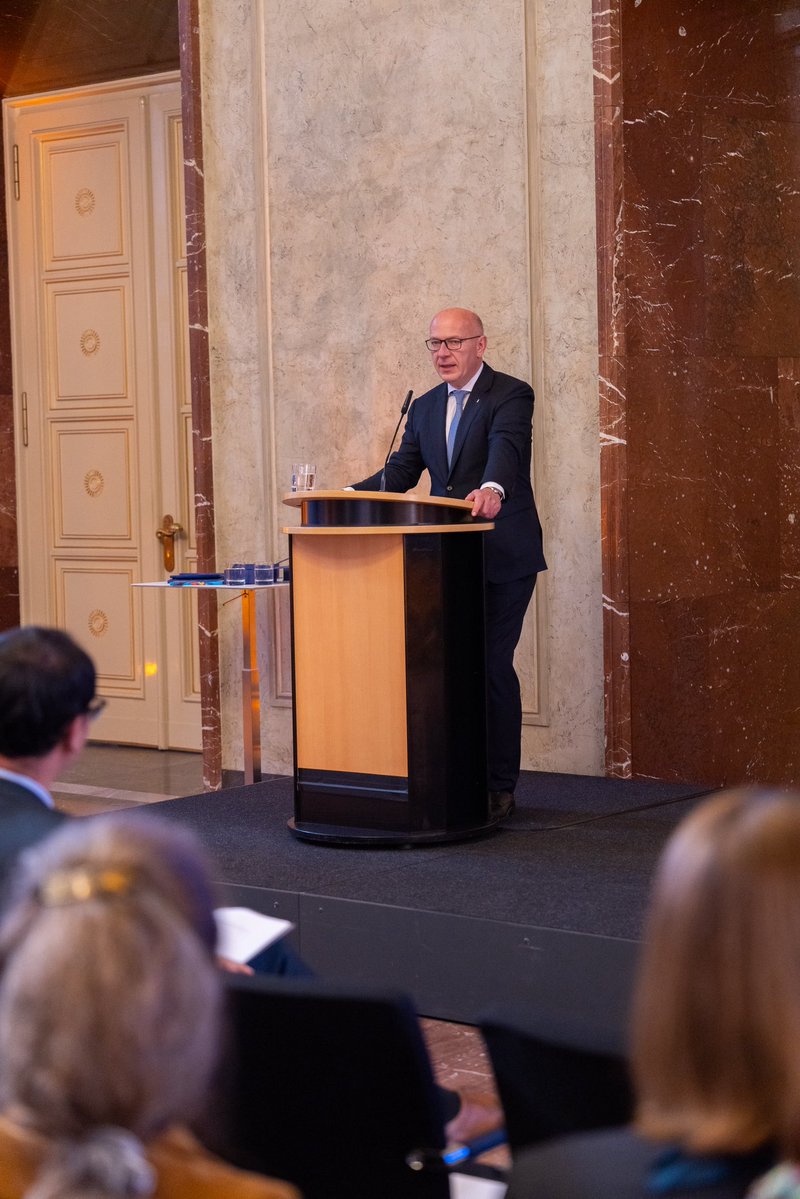
The announcement stated that the exhibition "Unbroken" would be shown from October 5 to 16 at the Red Town Hall. It highlighted personal experiences and the handling of the consequences of the Hamas terrorist attack on October 7, 2023. https://t.co/RR6HeLYJqC #Unbroken #Berlin #Terrorismus #DE #IL (translated)
H

The Deconstructionists and the Preservers The average person assumes that everyone wants the same things and merely disagrees about how to achieve them. But the social fracture we are living through is deeper: people no longer agree on what they want at all. Consider the conflicts dominating the news—crime, the border, online speech, and who raises children. Beneath each is a question rarely acknowledged: Does society corrupt human beings, or does it elevate them above their animal nature? If social constructs are oppressive, then every institution becomes suspect. Hierarchy, cultural norms, the family, and the nation appear to be cages designed to restrain a free creature. The only honest response, in this view, is to tear them down. The belief that society corrupts the individual is not fringe doctrine. It is the creed of much of the elite class governing the West. From Rousseau, who argued that man was born free until society placed him in chains, through Marx, who identified those chains as capital and class, to the postmodernists, who reduced institutions to masks for power, the thread remains unbroken. It is the philosophy of universities, the cultural industry, and the bureaucrats shaped by both. Opposing it is the older conviction of Hobbes and Hegel: that a person stripped of structure is not free, but frightened and dangerous, and that order is what improves him. Hobbes saw that without order, life becomes a war of all against all. Hegel believed that people become fully themselves through family, community, and the rational state. The divide, then, is not simply left against right. It is the deconstructionists against the preservers. The irony the demolishers never grasp is that freedom does not remain after every structure is cleared away. It requires personal responsibility as a cultural habit. When order is destroyed in the name of liberty, society begins to collapse. Something must bear the weight, and the state eventually fills the void—without moving gently. Liberty pursued through demolition produces, with grim reliability, the conditions of slavery. The deconstructionist imagines himself a liberator striking mankind’s chains. In truth, he is the architect of the cage.

H
Sandfeen Aug 28

The Three Roads to Evil We live in an age of unlimited access to information. Most of it is a gift, but it also gives us an unbroken view into horror—images on screens, the Epstein files, and constant stories once confined to nightmares. Some shut it off; others stare until it stares back, leaving them cynical. But it has always been this way. Long before Epstein, there was Caligula—years of sadism and cruelty on Capri. In every era, there have been people whose evil makes rationality struggle to explain it. I see three roads to evil: worshipping the wrong things, succumbing to ideology, and becoming so bitter you resent life itself. First: worshipping wrong values. Some make wealth, lust, power, or status their highest good. They lie, cheat, and steal to obtain it, then declare morality and law for the weak. Everyone else becomes an instrument. Second: ideology. When someone abandons a religious worldview, they may fill the vacuum with an ideology that claims to explain everything and promise a perfect world. Communists reduce history to class struggle; Nazis to racial struggle. The ideologue believes society can be remade by controlling causes and effects—people become cogs, sacrificed for utopia. Third: resentment. Those who see themselves as helpless victims can come to hate life itself. They treat hardship as injustice and life as something done to them. Their values invert: strength becomes evil, weakness virtue; love is attacked while lust is celebrated; wealth is theft—and criminals become victims while their victims are the privileged. These roads always exist, and always will. You can’t stop others from walking them. But it’s your responsibility not to.

Obecnie pracuję już w Düsseldorfie, gdzie jutro wraz z burmistrzem miasta podpiszemy umowę o przystąpieniu Düsseldorfu do sieci UNBROKEN Cities. Kolejne europejskie miasto zostanie partnerem Lwowa we wspieraniu Ukrainy i rozwijaniu projektów rehabilitacyjnych

Mer Lwowa zjawił się w Gdańsku bez zaproszenia. Podpisał sześć umów i zniknął
wiadomosci.wp.pl
Dominik Hasek Dec 12

Včera s @CLOVEKVTISNI v lvivském nemocničním komplexu UNBROKEN vytvořeném pro válečné veterány jsem se s mnohými setkal. Příští rok poblíž bude otevřen hokejový stadionek speciálně pro parahokejisty. Někteří z nich (ti 2 na fotce)už začínají hrát👍 https://t.co/OiI1S3Ae7o -