

The Return to Feudalism in 21st Century Garb A simple observer's viewpoint, with no claim to hold any absolute truth. The Veneer Cracks There is something strangely archaic about the world unfolding before our eyes, despite its satellites, artificial intelligence, and promises of infinite progress. Here and there, we witness heads of state behaving like feudal lords of another age, patiently nibbling away at the neighboring territory, redrawing borders through force rather than law, as if governing a nation mattered less than expanding one's fiefdom. No names need be mentioned here: current events provide plenty of illustration, and each reader will recognize, according to their own geography and moment of reading, the faces that embody this observation. But this return to the archaic is not confined to grand geopolitical stages. It also permeates the most ordinary daily life—that of social media, where anyone can pour out venom against another without filter, without form, and often without the slightest argument. The verbal jousting of yesteryear, with its codes, its rhetoric, its tacit limits, has given way to raw invective, snap judgment, instant condemnation. We no longer debate: we execute, verbally—and sometimes it doesn't stop at words. The Vanished Inhibition What strikes one, in this dual observation—macro-political and micro-social—is the lifting of an inhibition we thought firmly anchored. Centuries of cultural construction, education, philosophy, sometimes religion, had patiently shaped mechanisms of restraint: politeness as social ritual, argumentation as a mode of resolving disagreement, respect for one's opponent as the very foundation of democratic debate. This civilizational veneer, however fragile it always was, seemed to hold. Today it is cracking, and the question—which for me remains a simple hypothesis, not a certainty—is why. A convenient explanation would blame social media: anonymity, the distance of the screen, the instantaneousness of publication would favor verbal acting-out without the usual mediation of reflection. This is probably true, but likely insufficient. For technology here is only an accelerant, an amplifier—not necessarily a root cause. A Poorly Formatted Neocortex? The more unsettling hypothesis—and I frame it explicitly as hypothesis, not scientifically established fact—is that of a failure in the formation of moral judgment and tolerance toward otherness. The human brain possesses the neural structures enabling empathy, the distancing of impulsive reaction, the acceptance of difference—but these capacities are not innate in their full exercise: they must be built, educated, cultivated, like a muscle that needs patient training from childhood onward. If this education in otherness, nuance, and tolerance of disagreement erodes—for multiple and undoubtedly complex reasons that are not mine to settle here—then older reflexes resurface: instinctive distrust of the stranger outside the clan, the law of the strongest, the logic of territorial or symbolic predation. The other ceases to be a possible interlocutor and becomes once again a potential threat, unless they belong to my tribe, my clan, my party, my digital bubble. Two Scales, One Logic What is striking, in this deliberately provocative reading, is the structural similarity between these two scales. The leader who invades a neighbor in the name of a rediscovered greatness or a reinvented historical right, and the anonymous internet user who insults a stranger in the name of an unnegotiable conviction, may obey the same underlying grammar: that of territory to defend, clan to protect, the other to subdue or exclude rather than understand. The form has changed—satellites instead of horses, tweets instead of heralds—but the substance, in this reading that remains mine alone and commits no one else, seems strangely identical to that of feudal rivalries: the absence of a recognized third party, of an accepted common rule, of a respected arbitrating authority. Everyone becomes judge and party, lord of their own digital or territorial fiefdom. A Civilization on a Knife's Edge Norbert Elias, in his Civilizing Process, showed how Western societies had historically built, with remarkable slowness, an increasing control over impulses and direct violence, in favor of more sublimated forms of social regulation. What we may be observing today—and I stress again the conditional—is a form of regression in this process, or at least a fragilization of the veneer it had patiently laid down. Should we see this as an effect of great technological accelerations, which shake up our cognitive rhythms without leaving education time to adapt? A deeper crisis of the institutions tasked with transmitting these values of tolerance—school, family, religion, the rule of law? Or simply a cyclical movement of human history, where phases of policed civilization alternate with darker backlashes? I have no certain answer, and I would be wary of anyone claiming to hold one. In Conclusion, a Shared Concern This text is only a viewpoint, necessarily partial and subjective, on a world that sometimes seems to replay ancient logics in new clothing. Perhaps I am wrong to perceive a continuity between the feudal lord and the contemporary dictator, between the anonymous online insult and the absence of education in nuance. Perhaps these phenomena are unrelated, or too complex to be thus summarized. But if this reading, even partially, hits the mark, then the question that arises is less one of technological regulation—though necessary—than the far more arduous question of how to rebuild, generation after generation, this capacity to accept the other in their difference, to debate without destroying, to coexist without necessarily dominating. This undertaking, if it exists, will not be resolved by an algorithm nor by an international treaty. It plays out, patiently, in the most elementary education—the one that teaches a child that the other is not a threat, but a possibility. Bibliography Elias, N. (1939). Über den Prozess der Zivilisation [The Civilizing Process]. Oxford: Blackwell (Eng. trans. 1978-1982). Lorenz, K. (1963). Das sogenannte Böse [On Aggression]. London: Methuen (Eng. trans. 1966). Arendt, H. (1970). On Violence. New York: Harcourt, Brace & World. Han, B.-C. (2013). Im Schwarm [In the Swarm: Digital Prospects]. Cambridge, MA: MIT Press (Eng. trans. 2017).


Glowworms shine again in North Yorkshire for the first time in a century after larvae reared in garden shed. They have vanished from the British countryside in recent decades and are notoriously difficult to re-establish https://t.co/ZLoLNs8L4D #Glowworms #NorthYorkshire #Biodiversity #GB
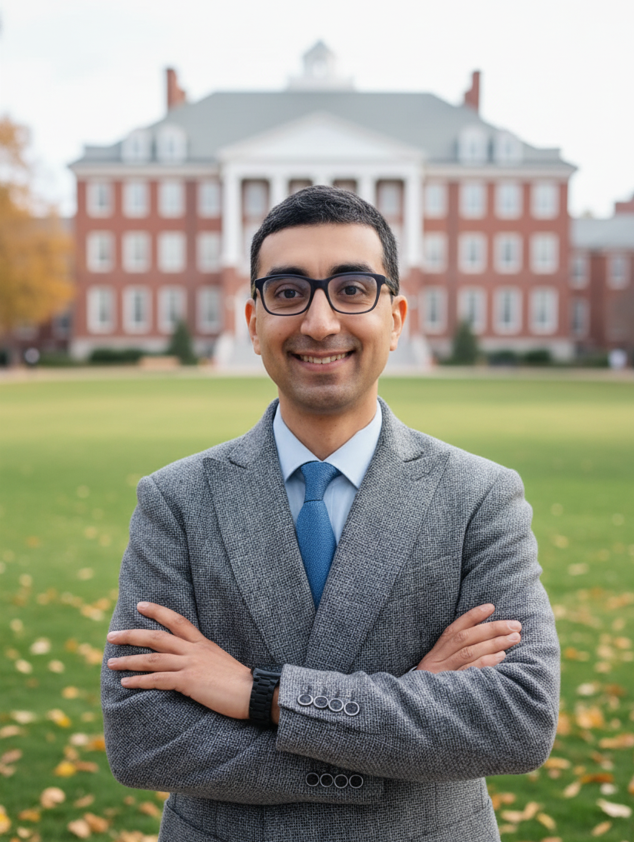
From Yale University to Foggia: World Staging Premiere of Umberto Giordano's “Marina” at Foggia's Teatro Umberto Giordano SOURCE: https://www.linkedin.com/pulse/from-yale-university-foggia-world-premi%C3%A8re-scenic-sardella-ph-d--id9de/ SOURCE: https://www.foggiareporter.it/dalla-yale-university-a-foggia-la-prima-mondiale-in-forma-scenica-di-marina-al-teatro-giordano.html (With heartfelt thanks to the distinguished journalist, Dr Christiana Lenoci…) From the Frederick R. Koch Collection of the Beinecke Rare Book and Manuscript Library at Yale University to Foggia. Such is the extraordinary journey of Marina, Umberto Giordano’s first opera, which—after 138 years of oblivion—received its World Première in scenic form on 5 June 2026 at the Umberto Giordano Theatre in Foggia, inaugurating the GIO Festival – Giordano International Opera Festival. This remarkable rediscovery is recalled by Luciano Magaldi Sardella, Contributing Review of Books Critic at the London School of Economics (LSE). The project, conceived by Gianna Fratta and the artistic direction of the GIO Festival, seeks to transform Foggia, the Tavoliere plain, the Monti Dauni and the Gargano into a widespread stage dedicated to the city’s native composer, following the model of the great festivals devoted to Verdi, Rossini and Bellini. The vanished score At the age of twenty‑one, Umberto Giordano entered the Sonzogno Competition in Milan with Marina, a one‑act melodrama. Among seventy‑two competitors, he ranked within the top twelve. The prize was awarded to Pietro Mascagni’s Cavalleria rusticana. Giordano received an honourable mention, withdrew the score, and recycled part of its music in his later Mala Vita (1892). After his death in 1948, the manuscript disappeared and—entirely legally—ended up catalogued and forgotten within Yale’s collection. It was brought back to light by the musicologist and conductor Andreas Gies who, while studying the works of Leoncavallo, identified the autograph score in Yale’s online catalogue. Together with his colleague from San Severo, Emanuele d’Angelo, Gies prepared a rigorous critical edition that restored the work’s readability. Following its absolute première in concert form at the Teatro Dal Verme in Milan in February 2026—the very theatre that witnessed the early steps of Puccini and Leoncavallo—recorded live by Decca Classics with Eleonora Buratto in the title role and Freddie De Tommaso as Giorgio, praised by Gramophone and The Times of London, Marina finally returned home. Foggia reclaims it On 5 June 2026, the Umberto Giordano Theatre hosted the World Première in scenic form. The production was directed by Giandomenico Vaccari, who transposed the action to the era of the First World War; conducted by Matteo Dal Maso, winner of the Donatella Flick LSO Conducting Competition; and featured Valeria Sepe as Marina. A historic event for a city that lends its name to both its Theatre and its Conservatoire, yet until now had been the only among the cities of Italy’s great opera composers without a festival entirely dedicated to its own. The GIO Festival, from 5 to 20 June, unfolded across sixteen days and more than twenty events in seven municipalities of the Capitanata—Foggia, Manfredonia, Peschici, Vieste, Biccari, Roseto Valfortore and Torremaggiore—uniting opera, jazz, cinema and dance. The finale: opera as urban intervention On the evening of 20 June 2026, thirteen lorries arrived in Piazza Cavour in Foggia from Milan. They carried the entire production apparatus of Teatro alla Scala. The square was transformed into an open‑air theatre for Giordano’s Andrea Chénier, conducted by Gianna Fratta and featuring Maria Agresta and Jorge de León, before thousands of citizens. The opera of a revolutionary, erupting into the summer air of the city where Giordano was born. A gesture of proximity theatre demonstrating what a manuscript can achieve: turning a forgotten archive into a driver of economic and touristic development for the region, with Confcommercio’s puzzle‑based itineraries, Giordano‑themed menus, and QR codes featuring a digital avatar of the composer. Marina was lost for 138 years. To bring it back, six months, a library card, and a festival were enough.

Trump is facing intense scrutiny over the $13 billion his administration has raked in from Venezuela that now appear to have vanished into thin air https://t.co/WY42Zev06q #Trump #Venezuela #Corruption #VE

Joseph Haydn is rightfully remembered as a titan of Western classical music. The “Father of the Symphony” and the “Father of the String Quartet” spent his long life building the structural foundations of the Classical era, mentoring a young Wolfgang Amadeus Mozart, and teaching a tempestuous Ludwig van Beethoven. When he passed away in Vienna in 1809 at the age of 77, the musical world wept. Yet, while his musical legacy remained perfectly intact, his physical body was about to endure one of the most grotesque and surreal misadventures in music history. Haydn’s death coincided with the Napoleonic occupation of Vienna. Because of the wartime chaos, the celebrated composer was hastily buried in a simple, unglamorous grave at the Hundsturm cemetery. A proper, grand burial would have to wait. But just days after his funeral, under the cover of darkness, two men bribed the local gravedigger, exhumed the composer’s fresh corpse, and cleanly severed his head. They stuffed the skull into a sack and vanished into the night, leaving a headless icon behind. https://tunitemusic.com/post/the-composer-with-two-heads-the-bizarre-macabre-afterlife-of-joseph-haydn/
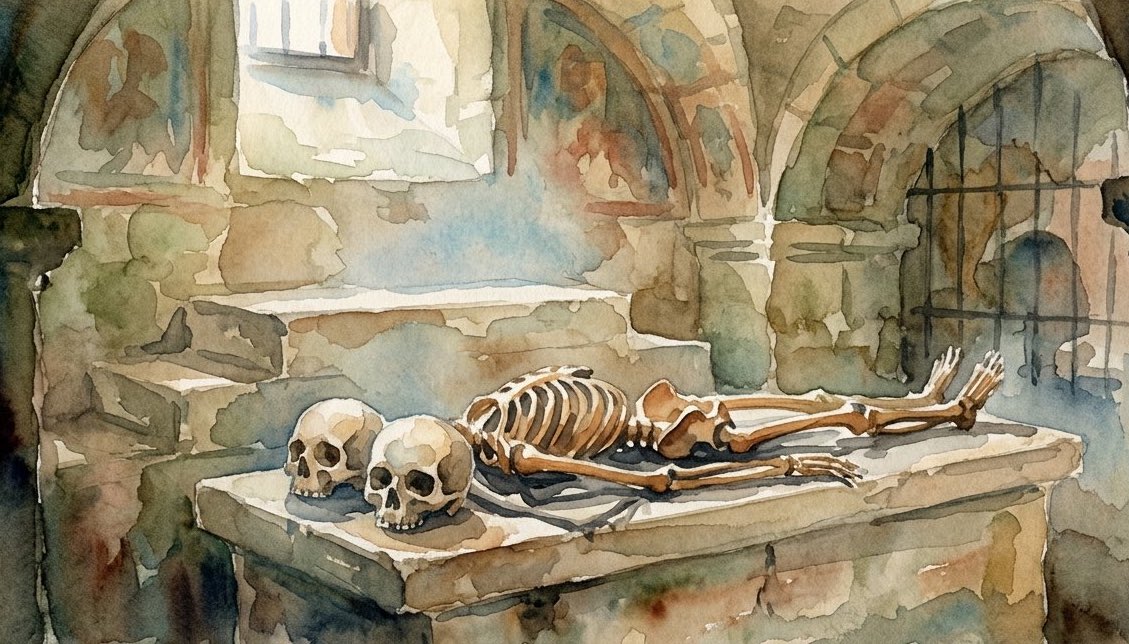

"It is not hopeless. Things do recover." 🐦 Elizabeth Gray, CEO of @audubonsociety, on how Project Puffin brought Atlantic puffin colonies back to coastal Maine using decoys, mirrors, and habitat work — after they'd nearly vanished in the 70s. Watch more from https://t.co/iBftp0fSn6 #Conservation #PuffinRecovery #WildlifeRestoration #US
What still doesn't seem to be understood is that this is basic safeguarding advice, the kind any father would give his daughter. UK police have become so institutionally misogynist that women have simply vanished from the equation. Their own daughters, mothers, sisters, #Misogyny #Safeguarding #WomenSafety #UK

The parents of missing soldier L/Cpl Ryan Rudd, who vanished three months ago after a night out in Selby, have expressed their anguish and desperation for answers, urging anyone with information to come forward as they grapple with the uncertainty of his disappearance. #MissingPerson #UnsolvedMystery #HelpFindRyan #GB #US
The parents of missing soldier L/Cpl Ryan Rudd, who vanished three months ago after a night out in Selby, are enduring a "living hell" as they plead for information, expressing their anguish over the uncertainty and hope that he may still be alive despite fears he could have entered the River Ouse. #MissingPerson #PublicAppeal #Hope #GB #US
In December 2023, delivery driver Fabien Accidini discovered 17-year-old Alex Batty, who had vanished six years earlier during a holiday with his mother and grandfather in Spain, leading to a BBC documentary titled "Kidnapped by My Mum," where Alex recounts his nomadic lifestyle across Europe and his complex feelings towards his family's actions. #MissingPersons #Documentary #ChildAbduction #FR #ES #GB
In December 2023, delivery driver Fabien Accidini discovered 17-year-old Alex Batty, who had vanished at age 11 while on holiday with his mother and grandfather in Spain, leading to his return to the UK after years of living a nomadic lifestyle across France and Spain, a story he shares in the BBC documentary "Kidnapped by My Mum." #MissingPersons #TrueCrime #Documentary #FR #ES #GB

Investigators in California are probing the backyard of Susan Flores, mother of Paul Flores—convicted of murdering Kristin Smart, who vanished in 1996—after finding soil evidence indicative of potential human remains, although none have been located yet. #TrueCrime #MissingPersons #ColdCase #US #CAL
Investigators are examining the backyard of Susan Flores, mother of convicted murderer Paul Flores, for soil evidence suggesting the possible presence of human remains linked to Kristin Smart, who vanished in 1996, as authorities continue their search for closure in this long-standing mystery. #TrueCrime #MissingPerson #JusticeForKristin #US

A 72-year-old woman named Milce Daniel Pessoa disappeared suddenly while collecting mangoes with her friend in Bayeux, Brazil, after they returned from a medical appointment; her friend reported that she vanished "in the blink of an eye," prompting a police investigation following searches by local authorities. #MissingPerson #ElderlyCare #CommunitySupport

RT @UgWrites: If key FBI records vanished, the issue isn’t politics anymore—it’s whether the justice system is being deliberately sabotaged.





