🇺🇸 *US AUG. AVG WORKWEEK 34.4 HOURS; EST. 34.3 - BBG *US AUG. AVERAGE HOURLY EARNINGS RISE 0.3% M/M; EST. +0.3% #USAEarnings #WorkforceData #EconomicReport #US
🇺🇸 *US AUG. AVG WORKWEEK 34.4 HOURS; EST. 34.3 - BBG *US AUG. AVERAGE HOURLY EARNINGS RISE 0.3% M/M; EST. +0.3% #USAEarnings #WorkforceData #EconomicReport #US

We are cutting our global workforce by 10%.

Trump's deportation campaign is a historic reversal for a nation of immigrants. It is contributing to a shrinking workforce and slower growth https://t.co/EHjZ9mhr15 #Immigration #Workforce #Economy #US
The Great Feminization, Measured Seventy-two percent of men under thirty hold a positive view of women; among women under thirty, 50% (a 22-point gap). Among women under twenty-five, the share is 35% (a 37-point gap). Where the manosphere and “toxic masculinity” dominate headlines, the data points elsewhere: young women increasingly sort men into the enemy column. The class divide is sharp. Among working-class young women, 61% view men positively; among professional-class women, 36%—a 25-point gap tied to exposure to universities, HR departments, media organizations, and NGOs. The pattern runs through institutional conditioning. Helen Andrews argued this in 2020: between 2015 and 2020 many Western institutions became majority-female, including the New York Times newsroom (2018), law schools (2016), medical schools and the college-educated workforce (2019). Affirmative-action mandates, discrimination settlements, and diversity requirements helped drive the shift. As institutions changed, so did missions: justice increasingly focused on protecting “oppressed” minorities; newsrooms shifted from reporting toward narrative enforcement; universities moved from arguing to “safe spaces.” The result is a “daycare governance model”: infants to be protected (the oppressed), caregivers to provide protection (the allies), and predators to be removed (the dissenters). Research shows the same frame in speech: FIRE’s 2026 college speech rankings found women less tolerant than men across ideologies, including less tolerance for their allies. A woman entering kindergarten in 2005 has spent twenty years inside this system—she didn’t invent it, she inherited it. The 35% figure suggests sorting into victim, ally, and predator, with no grey zones. Working-class women, less conditioned by these pipelines, still view men positively (61–36). None of this is entirely new; Gustave Le Bon described the mechanism in 1895.
How Feminism Turned Government Into a Daycare For decades, we heard “the future is female.” That future is here—if not in the way people expected. The slogan surfaced in the 1970s among feminist and lesbian activists, resurfaced in 2015 after designer Rachel Burks rediscovered a 1975 photo, and then spread through merchandise and mainstream politics. By 2016 it was used by Hillary Clinton supporters; after her loss, Clinton embraced it. But the real story isn’t the phrase—it’s the institutional shift. Helen Andrews, in “The Great Feminization,” notes that feminism is often framed as progress through votes, universities, or jobs. Yet the decisive tipping point came later, especially from 2015 to 2020, when whole institutions began turning female. The numbers show it: in 1974, women were 10% of New York Times reporters; now they’re about 55%. The Atlantic’s editorial staff shifted from 53% male in 2013 to 36% male in 2024. This reaches beyond journalism: medical schools became majority-female in 2019; women formed the majority of the college-educated workforce that year, became a majority of college instructors by 2023, and now make up about 46% of managers. This isn’t just individuals moving into male-coded fields. It’s institutions changing with their demographics—shifting preferences, priorities, and norms. In many ways, feminism has already won access; now the question is what happens when institutions are increasingly shaped by women. We haven’t studied this before. We’re the experiment.
Contraception and Western Culture In the 1960s, the birth-control pill became widely available. Sexual liberation is usually presented as a story of freedom and progress, but its biological consequence is rarely discussed: sex could now be separated from reproduction. Every Western nation has experienced below-replacement fertility for decades. Oxford anthropologist J. D. Unwin anticipated this pattern in *Sex and Culture*, a study of 86 societies. He expected to disprove any link between sexual restraint and civilizational achievement. Instead, he concluded that cultures practicing strict monogamy generated energy expressed through art, science, conquest, and commerce. Relaxing sexual restraint, he argued, consistently weakened that energy within three generations. Unwin also predicted that such societies would abandon rationalism, deism, and monogamy. Three generations after 1960 brings us near the present, and some of his predictions appear increasingly visible. Religious affiliation has collapsed, marriage is declining, the median age at first marriage is at a record high, and a record share of people will never marry. Rationalism also appears to be giving way to egoism, identity, and emotion. Contraception helps explain this transformation. Evolutionary theory distinguishes between a behavior’s immediate purpose—such as pleasure—and its ultimate function, such as reproduction. Sex traditionally served both purposes. Contraception severed that connection, preserving the behavior while disconnecting it from reproduction. Female education, urbanization, workforce participation, economic growth, and the rising cost of living also correlate with declining fertility. Yet many of these changes depend on technological control over reproduction. Career-first lifestyles, extended education, and mass female workforce participation would be far more difficult without it. Women may have gained freedom from child-rearing, but they may have fewer daughters to inherit that freedom. Institutions that promoted this transformation now import replacement populations that may not share its values and could eventually reverse them.
⚠ Friday Brief ⚠ 🇺🇸 Focus on U.S. Retail Sales 🇨🇳 #China’s Slowest-Ever Credit Growth 🇩🇪 German Autos Workforce Shrinks ... https://t.co/XLYCSyzOpV #RetailSales #China #GermanAutos #US #CN #DE
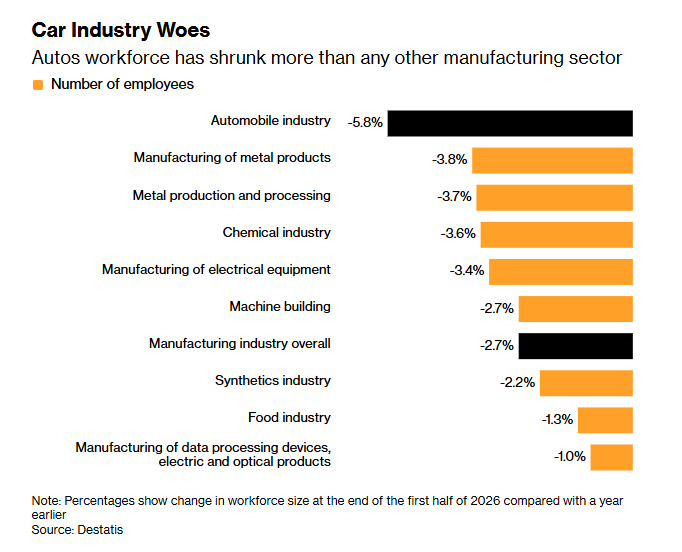
🇩🇪 German Autos Workforce Shrinks to Smallest in More Than 20 Years - Bloomberg https://t.co/o8bgOSxpzl https://t.co/qk1jqSbPGM #GermanAutos #Workforce #Economy #DE

“as demonstrated by the stunningly rapid disruption of microdramas, AI has the power to erase jobs in a keystroke” China’s AI drive threatens the world’s largest workforce https://t.co/sqKUf5l0fb via Instapaper #AI #JobDisruption #Microdramas #CN

Based on current information, the Cebreros station appears to have remained unharmed. My deepest thanks go to the Spanish emergency services whose efforts helped protect the site as wildfires approached. The safety of our people remains my highest priority. All ESA workforce is https://t.co/mk8kVMBSIS #Cebreros #Wildfires #EmergencyServices #ES


Intel’s €5 billion investment in Leixlip is a powerful vote of confidence in Ireland, our skilled workforce, and our position at the heart of Europe’s most advanced manufacturing ecosystem. A significant day for the Irish economy. https://t.co/gIuu9LJNU9 #Intel #Ireland #Manufacturing #IE


Why US multinationals keep choosing Ireland. It’s not just the tax or workforce It’s down to ‘clustering’. ‘Having 16 of the top 20 global tech firms here, including celebrity names such as Apple, Microsoft and Alphabet, gives the IDA an ideal sales pitch.’✅ #Ireland #TechCluster #Multinationals #US #IE
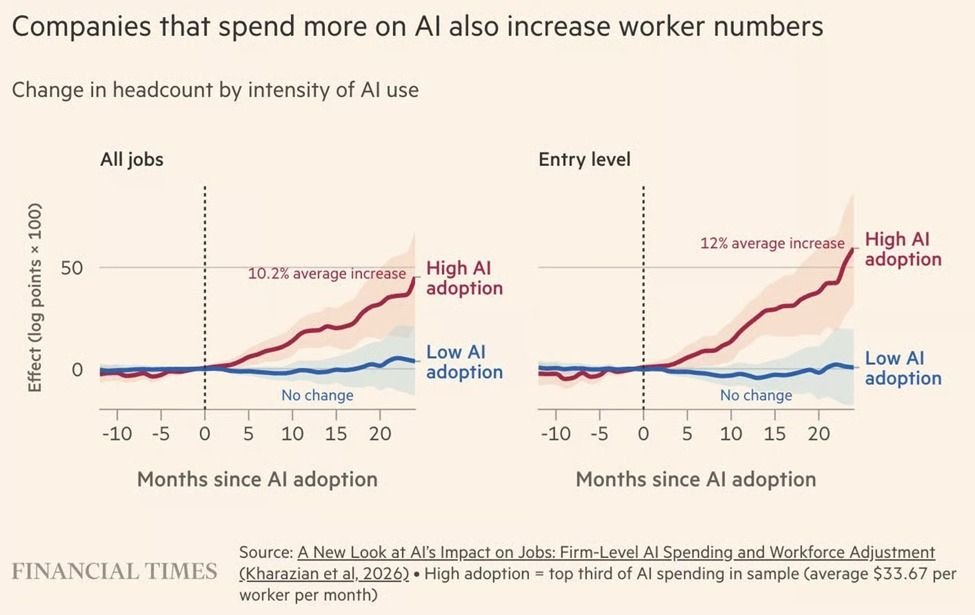
💼 We keep hearing that AI is going to replace workers but the first serious data tells another story. 📊 Companies with high AI adoption saw their workforce increase by around +10.2% in the two years following adoption. The signal is even stronger for junior roles with around https://t.co/Wmcq977CHL #AI #WorkforceGrowth #FutureOfWork #Nospecificcountrycodesidentifiedinthetweet.

8⃣A future US-Cuba partnership needs a functioning government and society -- and a stable and healthy workforce. Instead, collapsing services are driving emigration -- over 1 million Cubans since 2021 -- and malnutrition threatens decades of productivity. #Cuba #USPartnership #Emigration #US #CW

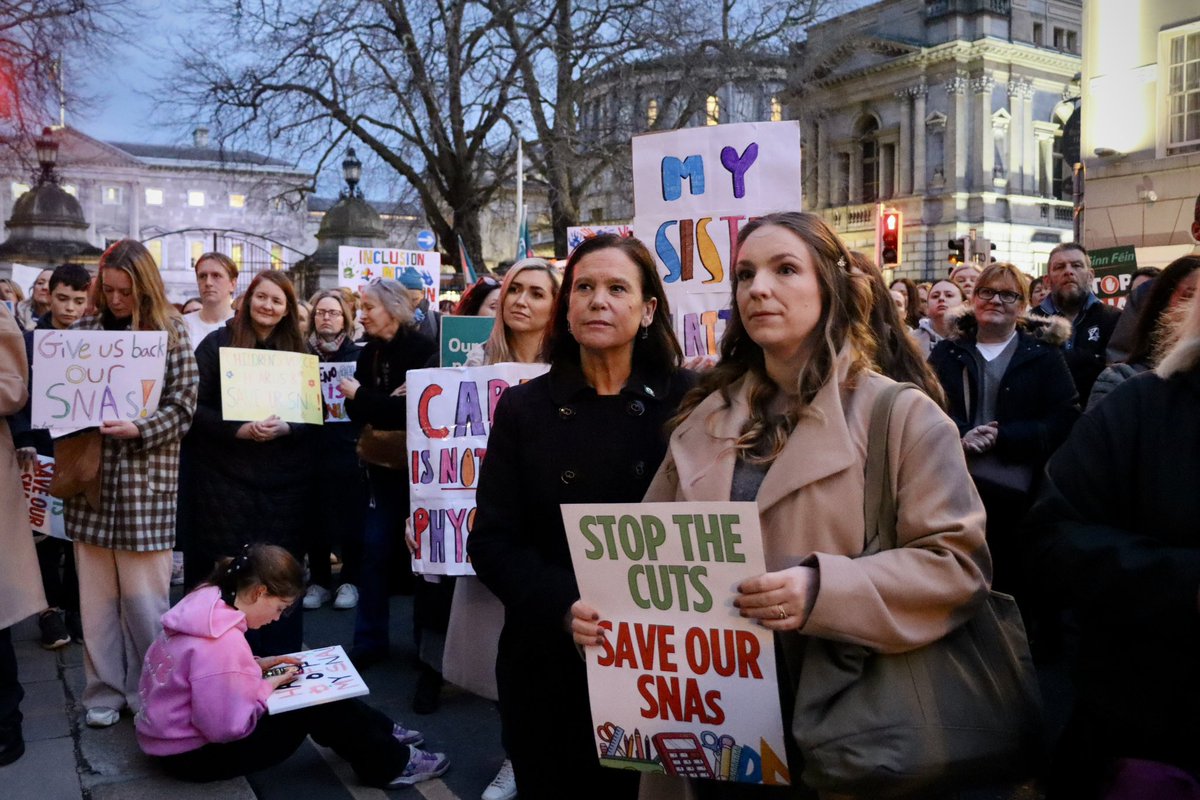
Special Needs Assistants have sent a clear message, decisively rejecting the government’s workforce development plan. SNAs play a vital role in our schools, supporting children and helping them to reach their full potential. They deserve to be valued, respected and properly https://t.co/IjxRUtGlui #SpecialNeeds #Education #SupportSNAs #Thetweetdoesnotmentionanyspecificcountries.Therefore #therearenocountrycodestoreturn.

Europe’s healthcare promise is simple: care for everyone, when they need it, wherever they live. But ageing, chronic diseases, stretched workforces & rising costs mean we must act differently. At #HLTHEurope in 🇳🇱, I made clear: prevention and innovation are the way forward.⤵️ https://t.co/c6KTJwJTAb #Healthcare #Innovation #Prevention #NL