WRLD

Search

#biblioteche
Emanuele Orsini Just Now

A project that Confindustria has enthusiastically joined, because "reading means investing in human capital and in the country," explained the president Emanuele Orsini, who went to donate and extended the invitation to do the same to all associated entities, as did the vice president for Education and Open Innovation Riccardo Di Stefano. #ioleggoperché #donazionelibri #bibliotechescolastiche (translated)

1080
Emanuele Orsini 19h

A project that Confindustria has wholeheartedly supported as well, because "reading means investing in human capital and in the country," explained President Emanuele Orsini, who went to donate and extended the invitation to do the same to all associated entities, as did Vice President for Education and Open Innovation Riccardo Di Stefano. (translated)

2299
Luciano Magaldi Sardella (PhD) 1w

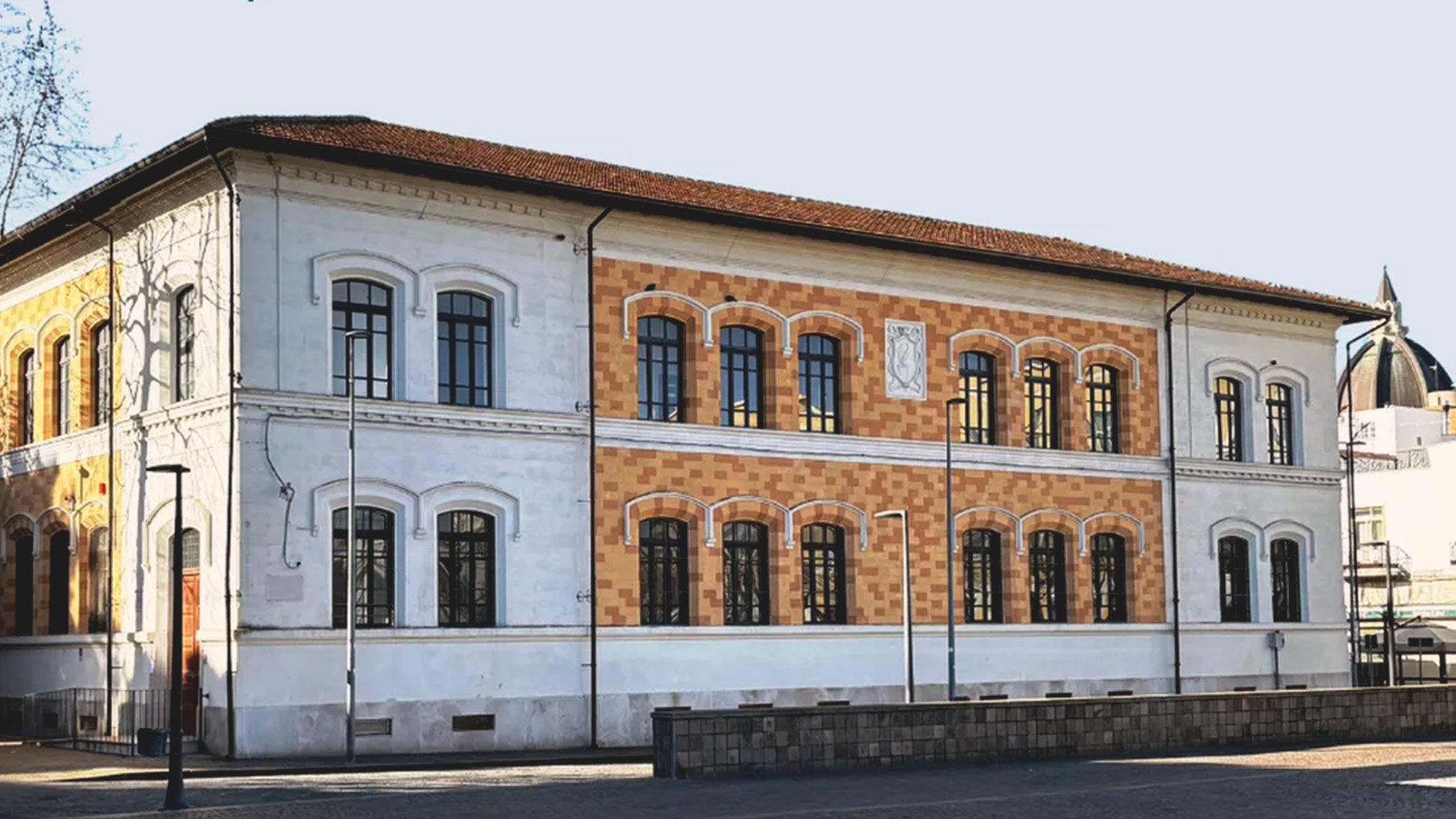
THE COMMUNITY LIBRARY AND DICTIONARY "NICOLA ZINGARELLI" ON THE PRESTIGIOUS "GLOBAL CAMPUS OF HUMAN RIGHTS" And if the health of a community began not in a clinic, but among the shelves of a library? Cerignola, March 13, 2026. A chain of hands crosses the city. From the old municipal library to the new home, built in the renovated schools, books pass from hand to hand. A man hands a volume, a little girl receives it, an elderly person passes it on. It’s not a move but a declaration. The new Community Library, in a city of 57,700 inhabitants in the heart of Puglia, bears the name of Nicola Zingarelli, the founder of one of Italy's most beloved dictionaries. And to every user, it offers the use of that very dictionary. As the “Community Dictionary”. Here lies the point that questions us, as jurists and as citizens. In Italy, many elderly people in the South and many migrants live daily in another language: dialect, mother tongue, Romance varieties. Law 482/1999 protects historical linguistic minorities, not these varieties. When a leaflet, an informed consent, a prescription remains only partially understood, the quality and safety of care are compromised. Not due to negligence. Due to linguistic distance. The dictionary of the great philologist and purist Nicola Zingarelli does not translate dialects and does not replace interpreters and cultural mediators. Let it be clear: it is a monolingual dictionary of standard Italian. Its strength, in terms of human rights, lies elsewhere. It removes economic and symbolic barriers to access to standard language and creates what we have called a “linguistic common resource”: a common space where anyone, regardless of income and education, can check the meaning of a diagnosis, a prescription, an administrative form. This is what we mean by “public bibliotherapy”. The right to health, as interpreted by the Committee on Economic, Social and Cultural Rights in General Comment No. 14, includes the right to health information. General Comment No. 21 recalls that libraries are cultural institutions whose accessibility is a priority. Article 32 of the Constitution protects health as a fundamental right and collective interest. Article 12 of the International Covenant on Economic, Social and Cultural Rights obliges states to ensure services that are available, accessible, acceptable, and of good quality, with accessibility expressly including information. Yet almost half of Europeans, according to a 2024 Council of Europe report, have limited health literacy. In Chisinau, on March 26, 2026, it was reiterated that this is a major obstacle to the implementation of Article 11 of the European Social Charter. Reading, understanding, choosing: without these abilities, the right to health remains an abstract promise. Cerignola responds concretely. And the first three months tell this story with numbers, not slogans: more than 7,500 new visitors, 526 new members, 1,293 participants in workshops. A study from Yale University in 2016, on 3,635 participants over 50 followed for 12 years, observed that those who read books died on average 20 percent less frequently than those who did not read. It is not proof that reading extends life but a strong hint that reading contributes to health. Not every library is a clinic, nor do we want it to become one. But a boxed collection, in transit, cannot be borrowed, consulted, shared. And an inaccessible collection does not benefit anyone's health. The human chain in Cerignola has restored availability and accessibility, transforming a stored inventory into a vibrant public service. England has integrated social prescribing into its National Health Service since 2019. The UNESCO Manifesto for Public Libraries promotes them as social and health hubs. When a library is forced to close, the issue is not just the cost. It is the legitimacy of a regressive measure, for which the state must bear the burden of proof. From here, four steps to ensure Cerignola is not an exception. First: integrate health literacy into national planning, with information in clear language and, where appropriate, in dialects and migrant languages, disseminated through libraries. Second: recognize public libraries as relevant infrastructure for the right to health, with stable funding and a human rights impact assessment before any closure. Third: support the Coalition for Health Literacy and Human Rights and the Rome Declaration, which the Council of Europe will discuss in Rome on December 4, 2026, and measure health literacy with ISTAT data disaggregated by language and age. Fourth: rigorously assess community libraries, not for attendance but for health literacy and access to services. Rights, like the books of Cerignola, if left boxed do not heal anyone. They must come out of boxes, pass from hand to hand, become comprehensible words. If you believe that a library can also be a health hub, spread this story. Cerignola has shown the way. Now it is up to the institutions to follow it. (translated)

www.gchumanrights.org
Claiming a community library under the right to health of linguistically marginalised communities in South Italy
568
Innocenzo Cipolletta 1w
Italian economist and manager

"Starting Saturday, every participating bookstore becomes a point of access to reading for schools and, this year, for nurseries throughout Italy," said the president of Aie, Innocenzo Cipolletta. #ioleggoperché #biblioteche #donazionilibri (translated)

3305
Luciano Magaldi Sardella (PhD) 3w

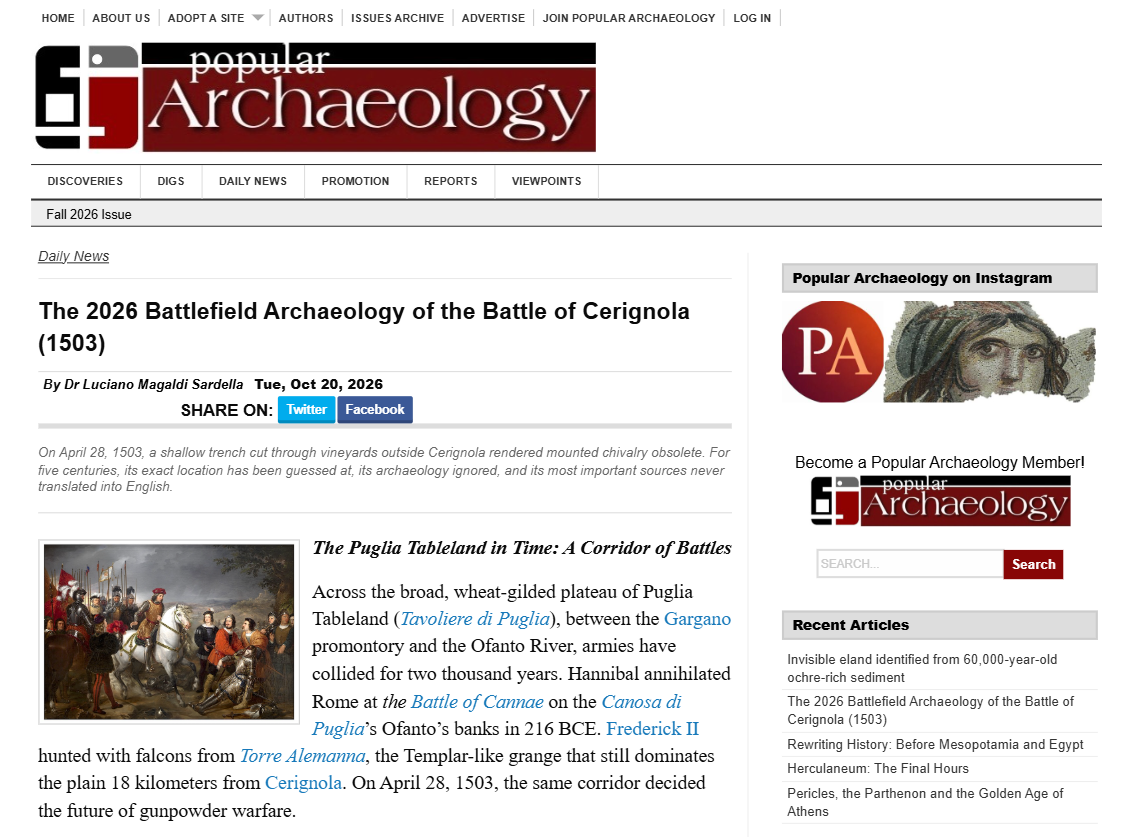
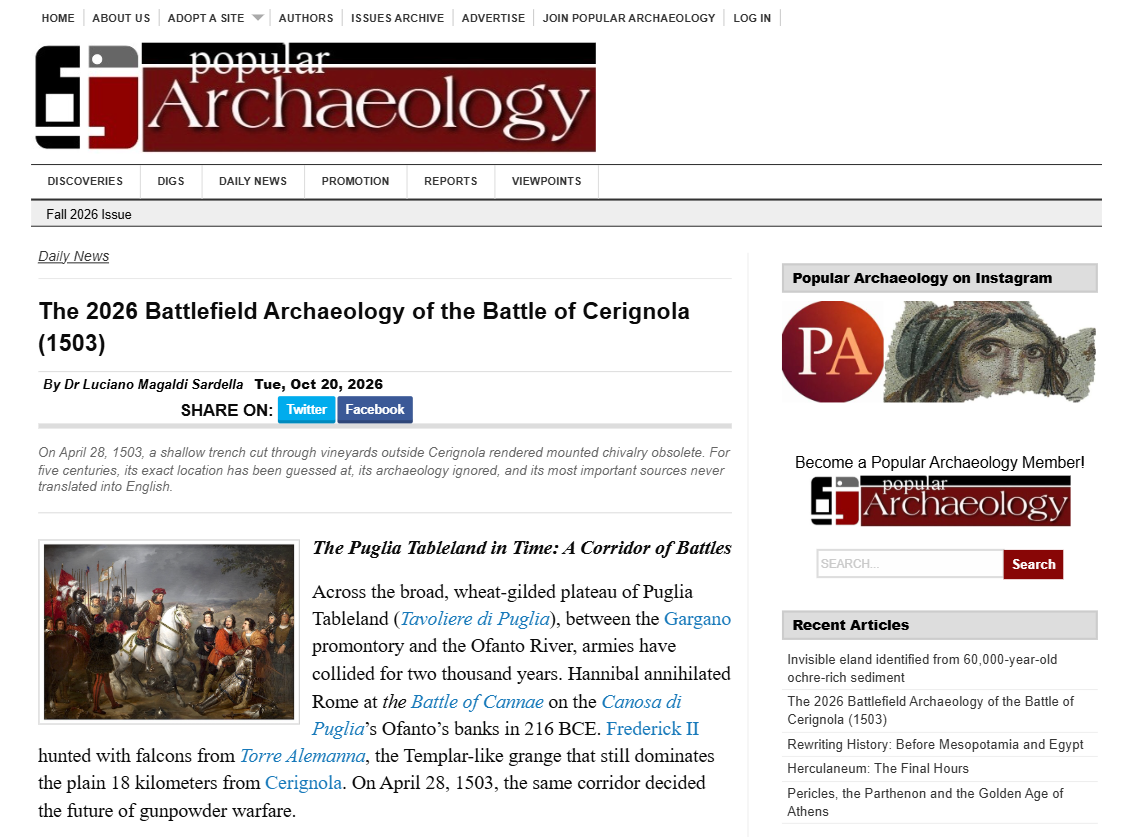
THE "BATTLE OF CERIGNOLA (1503)" ON "POPULAR ARCHAEOLOGY USA" (by LUCIANO MAGALDI SARDELLA) SOURCE 1: https://popular-archaeology.com/author/sardella/ SOURCE 2: https://popular-archaeology.com/article/the-2026-battlefield-archaeology-of-the-battle-of-cerignola-1503/ -------------------------------------------------------------------- CERIGNOLA (FG) — On April 28, 1503, at sunset, a shallow trench cut between the vineyards outside Cerignola rendered heavy cavalry obsolete. For five centuries, its exact location has only been conjectured, its archaeology ignored, its most important sources never translated into English. We are on the Tavoliere of Puglia, a corridor of battles for two thousand years: from Cannae in 216 BC to the falcon hunt of Frederick II from Torre Alemanna. Cerignola, at that time, was not a city but a rural village of 350 families at 120 meters above sea level, custodian of the Mena della Dogana delle Pecore, the great pastoral system of transhumance that financed the Kingdom of Naples. Its possession was fiercely contested. Facing each other were two worlds. Louis d’Armagnac, Duke of Nemours, Viceroy of Naples for Louis XII, in his thirties, splendidly armored, confident of victory. On the other side was Gonzalo Fernández de Córdoba, the Gran Capitán, who on April 27-28 marched from Barletta with about 9,000 exhausted men and decided to settle on a low ridge. He deepened what was already there: not an invention, but an agricultural ditch. The French gendarmes, the last heirs of the medieval knight, lowered their lances and never reached the line. From behind a parapet reinforced with vine stakes, over 1,000 Spanish arquebusiers opened fire. Nemours fell, almost certainly the first European army commander to die from a portable firearm. With him, the charge of cavalry as a dominant tactic died. And here is the scandal denounced by the article: no cartographer of the 17th-18th centuries ever mapped the battlefield. No monument commemorates it. It is not protected as a cultural landscape under the Code of Cultural Heritage. Every deep plowing of the Tavoliere, standard practice since the Bourbon reforms, destroys an archaeology never recorded. Yet the perimeter can be reconstructed. By cross-referencing the 16th-century descriptions of "vine-covered slopes fifteen miles north of the Ofanto" with the Via Traiana, the engagement area is a rectangle of 3-4 square kilometers northeast of the current settlement. With the 1m LiDAR DTM from ISPRA, it could reveal anomalous linear depressions, and the lower filling of a ditch 2-3 meters deep, under the plowed layer, is still readable with magnetometry and ground radar. Why did we arrive late? Not for lack of sources, but for lack of translation. The Municipality of Cerignola and the Torre Alemanna Research and Study Center of Prof. Matteo Stuppiello, who in 1978 obtained the first monumental protection for Torre Alemanna, have digitized a corpus that has never entered Anglophone historiography. Here are the 3 pillars: 1. The letter that still smells of gunpowder. The “Letter from Consalvo de Córdoba to the Spanish royals dated April 29, 1503,” edited by Stuppiello in 2003 and updated to 2025 on comune.cerignola.fg.it/biblioteche-digitali. A handwritten page written in Cerignola the day after the battle, “rich in flashes, twilight lights, and gunfire.” Not a polished chronicle like that of Giovio, but a field dispatch: the fatigue of the night march, the decision to entrench upon arrival, the recovery and honorable burial of Nemours, the intact capture of the French artillery. 2. The graffiti, a monument inside the monument. In the 14th-century church of Santa Maria delle Grazie, known as the Incoronatella, on the Via Trinitapoli Vecchia, where tradition holds that the body of Nemours was brought. On the triumphal arch, a 1503 graffiti gives, in almost notarized form, the date, sixth indiction, Friday at the hour XXIII-XXIIII. It was indeed Friday, as confirmed by the perpetual calendar of Cappelli. Decoded in 1995 by Prof. Francesco Magistrale, Latin paleographer at the University of Bari, in *The Battle of Cerignola (1993)* and in the municipal monograph *S.M. delle Grazie (1999)*. Today it is fading due to humidity and neglect. 3. The land registry that explains the ditch. The Survey of 1672 preserved at the State Archive of Naples, Pignatelli Aragona Cortes fund, Scanzia 63, fasc.1: “At the time of the battle, thick vineyards covered the hill reaching to the plain, and were distinctly separated from the rest of the countryside by a not very deep ditch.” Córdoba did not improvise; he adapted. This is confirmed by the catasti of the Giustiniani: 277 households in 1532, 699 in 1595. The landscape of 1503 was intensely horticultural, not the deeply plowed monoculture of today. In addition to these, there is the first monograph by Vincenzo Buonassisi, *The Battle of Cerignola* (1908, died in Via Fanfulla 10 on June 27, 1928), and the first modern military analysis by Piero Pieri, “Consalvo de Córdoba and the Battle of Cerignola,” Archivio Storico Pugliese 1952, which 30 years before the Anglophone rediscovery of the “pike-and-shot” defined Cerignola as an engineered killing ground. While Cerignola forgot, others remembered. The “Regimiento de Infantería Cerinola n.42”, later “Fuerteventura n.56”, carried the name of Cerignola until the 20th century. The coat of arms, described in *Heraldica e Historiales del Ejercito, Tomo V” (Madrid, 1981): silver field, dying white swan entangled in a hedge, golden wall crown, with the scroll “Cerignola.” Dossier officially transmitted on April 30, 1986, prot. 4565/509, from the Servicio Histórico Militar of Madrid to the Torre Alemanna Center thanks to Col. Alessio Antonutti and Gen. José Cifuentes. And in Amsterdam, at the Rijksmuseum, the anonymous bronze commemorative medal: Hercules with lion skin and club and Janus with the keys next to an eagle-armed coat of arms, legend “Consalvus Agidarius… Janum clausit,” on the reverse a battle scene “Consalvi Agidari Victoria de Gallis ad Cannas,” an artist's mistake that confuses Cerignola with Cannae. It belonged to Mrs. J.M. van Gelder-Nijhoff, donated in 1885. The author's conclusion is clear: Gonzalo's ditch is the most consequential earthwork in European military history. It inaugurates the infantry armed with firearm and conditions the Mediterranean for 160 years. It may still be there, filled, plowed, invisible to the naked eye but accessible to a magnetometer. It is not a matter of medieval archaeology but of the will to protect. (translated)

694
Luciano Magaldi Sardella (PhD) 3w

THE “BATTLE OF CERIGNOLA (1503)” ON “POPULAR ARCHAEOLOGY USA” (by LUCIANO MAGALDI SARDELLA) SOURCE 1: https://popular-archaeology.com/author/sardella/ SOURCE 2: https://popular-archaeology.com/article/the-2026-battlefield-archaeology-of-the-battle-of-cerignola-1503/ __________________________________________________________________ CERIGNOLA (FG) — On 28 April 1503, at sunset, a shallow trench cut through the vineyards outside Cerignola rendered heavy cavalry obsolete. For five centuries its exact position has been merely conjectured, its archaeology ignored, its most important sources never translated into English. We are on the Puglian Tablelanda, a corridor of battles for two thousand years: from Cannae in 216 BC to Frederick II’s falconry from Torre Alemanna. Cerignola, at that time, was not a town but a rural hamlet of 350 families at 120 metres above sea level, guardian of the Mena of the Dogana delle Pecore, the great customs system of transhumance that financed the Kingdom of Naples. It was for its possession that the battle was fought. Opposed, two worlds. Louis d’Armagnac, Duke of Nemours, Viceroy of Naples for Louis XII, thirty years old, splendidly armed, certain of victory. On the other side, Gonzalo Fernández de Córdoba, the Great Captain, who on 27–28 April marches from Barletta with some 9,000 exhausted men and decides to entrench himself upon a low ridge. In front of it he has deepened what was already there: not an invention, but an agrarian ditch. The French gendarmes, the last heirs of the mediaeval knight, lower their lances and never reach the line. From behind an embankment reinforced with vine stakes, more than 1,000 Spanish arquebusiers open fire. Nemours falls, almost certainly the first European army commander to die by a portable firearm. With him dies the cavalry charge as a dominant tactic. And here lies the scandal denounced by the article: no cartographer of the seventeenth or eighteenth century ever mapped the field. No memorial stone recalls it. It is not protected as a cultural landscape under the Code of Cultural Heritage. Every deep ploughing of the Tavoliere, standard practice since the Bourbon reforms, destroys an archaeology never recorded. Yet the perimeter is reconstructable. By cross-referencing sixteenth-century descriptions of “slopes covered with vineyards fifteen miles north of the Ofanto” with the Via Traiana, the engagement zone is a rectangle of 3–4 sq km to the north-east of the present settlement. With ISPRA’s 1m DTM LiDAR, anomalous linear depressions could be revealed, and the lower fill of a 2–3 metre ditch, beneath the ploughed layer, is still legible by magnetometry and ground-penetrating radar. Why have we arrived so late? Not for lack of sources, but for lack of translation. The Comune di Cerignola and the Centro Studi e Ricerche Torre Alemanna of Prof. Matteo Stuppiello, who in 1978 obtained the first monumental protection for Torre Alemanna, have digitised a corpus that has never entered Anglophone historiography. Here are the 3 pillars: 1. The letter that still smells of powder. The “Letter of Consalvo da Cordova to the Sovereigns of Spain of 29 April 1503,” edited by Stuppiello in 2003 and updated in 2025 on comune.cerignola.fg.it/biblioteche-digitali. A manuscript page written at Cerignola the day after the battle, “rich in flashes, twilight gleams, and gunfire.” Not a polished chronicle à la Giovio, but a field dispatch: the exhaustion of the night march, the decision to entrench upon arrival, the recovery and honourable burial of Nemours, the intact capture of the French artillery. 2. The graffito, a monument within the monument. In the fourteenth-century church of Santa Maria delle Grazie, known as the Incoronatella, on the Via Trinitapoli Vecchia, where tradition holds the body of Nemours was taken. On the triumphal arch, a graffito of 1503 gives in quasi-notarial form the date, sixth indiction, Friday at the twenty-third to twenty-fourth hour. It truly was a Friday, as confirmed by Cappelli’s perpetual calendar. Deciphered in 1995 by Prof. Francesco Magistrale, Latin palaeographer at the University of Bari, in La Battaglia di Cerignola (1993) and in the municipal monograph S.M. delle Grazie (1999). It is now fading through damp and neglect. 3. The cadastre that explains the ditch. The Apprezzo of 1672 preserved in the Archivio di Stato di Napoli, fondo Pignatelli Aragona Cortes, Scanzia 63, fasc.1: “At the time of the battle, dense vineyards covered the hill reaching down to the plain, and were clearly separated from the rest of the countryside by a not very deep ditch”. Córdoba did not improvise; he adapted. This is confirmed by the Giustiniani cadastres: 277 hearths in 1532, 699 in 1595. The landscape of 1503 was one of intensive horticulture, not the deep-ploughed cereal monoculture of today. To these are added the first monograph by Vincenzo Buonassisi, La Battaglia di Cerignola (1908, died at Via Fanfulla 10 on 27 June 1928), and the first modern military analysis by Piero Pieri, “Consalvo di Cordova e la battaglia di Cerignola”, Archivio Storico Pugliese 1952, which 30 years before the Anglophone rediscovery of “pike-and-shot” defined Cerignola as an engineered killing ground. While Cerignola forgot, others remembered. The “Regimiento de Infantería Cerinola n.42”, later “Fuerteventura n.56”, bore the name of Cerignola until the twentieth century. Its coat of arms, described in Heráldica e Historiales del Ejército, Tomo V (Madrid, 1981): argent field, a dying white swan entangled in a hedge, a gold mural crown, with scroll “Cerignola”. Dossier officially transmitted on 30 April 1986, prot. 4565/509, by the Servicio Histórico Militar in Madrid to the Centro Torre Alemanna through Col. Alessio Antonutti and Gen. José Cifuentes. And in Amsterdam, in the Rijksmuseum, the anonymous commemorative bronze medal: Hercules with lion-skin and club and Janus with keys beside an eagled coat of arms, legend “Consalvus Agidarius… Janum clausit”, on the reverse a battle scene “Consalvi Agidari Victoria de Gallis ad Cannas” — an error by the artist who confuses Cerignola with Cannae. It belonged to Mrs J.M. van Gelder-Nijhoff, donated in 1885. The author’s conclusion is unequivocal: Gonzalo’s ditch is the most consequential earthwork in European military history. It inaugurates the infantryman armed with a firearm and conditions the Mediterranean for 160 years. It may still be there, infilled, ploughed over, invisible to the naked eye but accessible to a magnetometer. It is not a question of mediaeval archaeology but of the will to protect.

925
pier luigi pinna Sep 10

La gente di solito va nei musei e guarda quattrocento quadri in un’ora e mezza. Torna con dei piedi gonfi così e va alla ricerca di una Coca - Cola tiepida per dimenticare l’esperimento. I luoghi dove stanno i quadri si chiamano pinacoteche, come esistono i luoghi dove stanno i libri che si chiamano biblioteche. Nessuno va in biblioteca e legge tutti i libri. Uno che va in una pinacoteca, in un museo, dovrebbe andare a vedere due quadri. All’inizio, a mio parere, addirittura uno solo. Quello che l’ha fatto il quadro spesso ci ha messo due anni a farlo. O anche due mesi a farlo… Cosa mi dà il diritto a me di guardarlo in venticinque secondi? Quando erano in Chiesa, la gente li vedeva da quando nasceva a quando moriva: tutta la vita. E adesso deve vederlo in un minuto mentre stai correndo al quadro prossimo? ». Philippe Daverio (1949 - 2020), #Musei #Cultura #Arte

14392
Luciano Magaldi Sardella (PhD) Sep 5

La Rivincita del “GIO Festival”: “Broadway World” Celebra “Marina” e il Teatro Umberto Giordano di Foggia (Lettere Meridiane.org by Geppe Inserra) SOURCE: https://www.linkedin.com/pulse/la-rivincita-del-gio-festival-broadway-world-celebra-e-asgue/ SOURCE: https://www.letteremeridiane.org/2026/08/la-rivincita-del-gio-festival-broadwayworld-celebra-marina-e-foggia/ Il GIO Festival è stato a dir poco snobbato da Rai3 Puglia e da altre testate regionali. Ma il festival dedicato a Umberto Giordano, promosso dalla Camera di Commercio di Foggia insieme al Comune e alla Provincia, con il sostegno della Regione Puglia e della Fondazione Monti Uniti, si è preso una bella rivincita, finendo nella home page di BroadwayWorld grazie alla prima mondiale dell’opera Marina, andata in scena il 5 giugno scorso al Teatro Umberto Giordano di Foggia. Non è poco, visto che BroadwayWorld è tra i più importanti siti statunitensi dedicati al teatro e allo spettacolo. Lo sbarco oltreoceano dell’opera del grande compositore foggiano non è sfuggito a Luciano Magaldi Sardella, che ha inviato alla redazione di Lettere Meridiane un approfondito e interessante contributo che potete leggere di seguito. Nell’articolo, l’autore ricostruisce con maestria la straordinaria vicenda della prima opera di Giordano, composta nel 1888 e rimasta per 138 anni senza un allestimento scenico, fino alla storica rappresentazione del 5 giugno scorso al Teatro Giordano. Ma soprattutto racconta come la prima edizione del GIO Festival abbia riportato Foggia al centro della scena lirica internazionale, attraverso il ritrovamento e la valorizzazione di Marina, il coinvolgimento di importanti istituzioni musicali e l’attenzione della stampa americana. Una stimolante riflessione sul riscatto culturale e identitario di una città che troppo a lungo ha portato il nome di Giordano sul frontone del proprio teatro senza riuscire a farne leva di visibilità internazionale. (g.i.) + + + + + Ci sono momenti nella storia di una città in cui il passato e il futuro si stringono la mano sul palcoscenico del presente. Foggia ha vissuto uno di questi momenti la sera del 5 giugno 2026, quando il sipario del Teatro Umberto Giordano si è alzato su Marina, un’opera composta nel lontano 1888 da un pressappoco ventunenne di nome Umberto Giordano, ancora studente al Conservatorio di Musica San Pietro a Majella di Napoli. E quella partitura ha finalmente trovato, dopo centotrentotto anni di silenzio, il suo primo respiro scenico nel mondo. “Non è un evento ordinario. È una svolta. Un vuoto colmato. Una storia riscritta.” Umberto Giordano, uno dei più celebri compositori veristi della fin-de-siècle, nato a Foggia, autore di capolavori come Andrea Chénier, Fedora, Siberia, era rimasto fino ad oggi l’unico grande operista italiano senza un festival interamente dedicato alla sua opera. Un paradosso che pesava come un’ingiustizia storica su una città che porta il suo nome inciso sul frontone del proprio teatro più bello. È il viaggio incredibile di Marina, la prima opera di Umberto Giordano, che dopo 138 anni di oblio ha avuto la sua prima mondiale in forma scenica il 5 giugno 2026 al Teatro Umberto Giordano di Foggia, come evento di apertura del GIO Festival, durante la prima edizione del Giordano International Opera Festival. Il manoscritto, custodito nella Frederick R. Koch Collection della Beinecke Rare Book and Manuscript Library dell’Università di Yale, ha compiuto un viaggio straordinario: dalle biblioteche d’élite della costa est americana al cuore pulsante della Daunia. Nella notte del 5 giugno 2026, al Teatro Umberto Giordano di Foggia, quel silenzio si è finalmente spezzato. Il GIO Festival è nato a Foggia come un grande nuovo progetto culturale promosso dalla Camera di Commercio di Foggia insieme al Comune e alla Provincia, con il sostegno della Regione Puglia, con l’obiettivo di trasformare l’eredità artistica del compositore verista in un motore di valorizzazione territoriale e turismo culturale. Sotto la direzione artistica della direttrice d’orchestra Gianna Fratta e del violinista Dino De Palma, l’evento colma finalmente un vuoto storico. Il modello di riferimento è esplicito e ambizioso: un progetto ispirato ai grandi festival dedicati ai compositori italiani come il Verdi Festival, il Puccini Festival, il Rossini Opera Festival (e così via…) , pur mantenendo una forte dimensione territoriale e partecipativa. Foggia, in altri termini, si candida ufficialmente al tavolo dei grandi. E lo fa con le credenziali che servono: una prima mondiale scenica irripetibile (parallela a quella concertistica del teatro milanese Dal Verme registrata dalla prestigiosa casa discografica lirica Decca Classics), una produzione operistica di qualità (tutta la macchina organizzativa), istituzioni culturali di primo piano al suo fianco (Teatro dell’Opera di Milano, Fondazione Teatro Petruzzelli di Bari). Il festival si è avvalso della collaborazione dell’Orchestra del Conservatorio e del Coro della Fondazione Teatro Petruzzelli di Bari, del Conservatorio Umberto Giordano di Foggia, della Fondazione dei Monti Uniti e della Fondazione Apulia Felix. Una rete di eccellenze che ha conferito alla manifestazione spessore e risonanza nazionale. Il Teatro Umberto Giordano è uno scrigno ottocentesco di rara bellezza, il più antico teatro funzionante storico a ferro di cavallo in Puglia. Eppure per decenni ha vissuto in una sorta di semiclandestinità culturale, relegato ai margini delle rotte liriche che contano, condannato anche da ritari di lavorazioni che ne hanno bloccato l’utilizzo dal 2007 al 2014, inclusa la recente richiesta di adeguamento antincendio. Inoltre, Qualcuno lo chiamava, con quel misto di condiscendenza e rassegnazione tutta provinciale, “teatro di provincia”, destinato solo a raccogliere la denominazione storica di Umberto Giordano. Quell’etichetta è ora destinata a cadere. È proprio a Foggia che questo piccolo capolavoro giovanile ha visto il suo primo allestimento scenico, inserendo la città nella toponomastica internazionale dell’opera lirica. Un posizionamento che non ha precedenti nella storia recente della città. Il Teatro Giordano ha registrato il tutto esaurito nella storica prima in formato scenico della Marina giordaniana, accogliendo centinaia di spettatori, mentre altrettanti hanno seguito lo spettacolo dall’esterno grazie a un maxi schermo allestito per l’occasione. La produzione ha risposto con piena dignità artistica alle aspettative: l’allestimento ha trasportato la vicenda nel periodo della Prima Guerra Mondiale, accentuando il carattere drammatico e realistico dell’opera. Sul podio, l’Orchestra Sinfonica del Conservatorio Umberto Giordano di Foggia diretta da Matteo Dal Maso. Scene e costumi affidati ad Alfredo Troisi, luci curate da Massimo Russo. Un ensemble di talenti che ha reso onore al nome che il teatro porta con orgoglio. Il sigillo definitivo dell’importanza storica di questo momento è arrivato dall’altra parte dell’Atlantico. Broadway World, la più influente testata mondiale di critica e informazione sullo spettacolo dal vivo, arricchito dalle sue oltre 5,5 visualizzazioni mensili nel mondo, ha dedicato all’evento una copertura esclusiva, pubblicando una galleria fotografica integrale della première mondiale scenica a cura di Chloe Rabinowitz e un approfondimento critico di notevole spessore a cura di Rachel Stone. L’articolo della testata americana ha sottolineato il valore storico dell’operazione e il legame tra il compositore e la sua città natale, evidenziando la qualità musicale della partitura, definita sorprendentemente matura rispetto all’età del compositore. Il Teatro Umberto Giordano è così approdato per la prima volta sul sito newyorchese affiancandosi a leggendo comer Los Angeles Opera House, Houston Opera, BBC Classical Music at Royal Opera House, e via dicendo. È lì il suo posto naturale. Doveva esserci già da almeno diversi decenni. Ma finora il mondo conosceva Umberto Giordano, ricordandosi i suoi successi milanesi e non l’opera giovanile scritta tra Foggia e il conservatorio di Napoli, la perduta (e poi ritrovata) Marina (1888). Ma sottolineiamolo: non è un dettaglio secondario. Broadway World non dedica gallerie esclusive ai teatri di provincia. Lo fa per gli eventi che spostano le coordinate della storia della musica, dell’opera, del teatro nei circuiti che contano. E questa volta, quelle coordinate si sono spostate su Foggia grazie al GIO Festival, in nome di Umberto Giordano. Ricordiamo per onor di cronaca, o per chi ancora non lo sapesse, che Il GIO Festival è un nuovo e ambizioso evento a cadenza biennale ideato dalla Camera di Commercio di Foggia, con l’obiettivo di celebrare il genio del compositore foggiano Umberto Giordano e trasformarlo in un potente volano di sviluppo per l’intera Capitanata. Biennale significa continuità, progettualità, visione. Significa che Foggia non vuole essere una meteora nel firmamento operistico, ma una presenza stabile e riconoscibile nel panorama dei festival lirici del circuito internazionale. Andrea Chénier, Siberia e Fedora avevano già portato da almeno un secolo il nome di Giordano al Metropolitan Opera House di New York, dove l’opera viene eseguita ancora oggi con grande partecipazione di pubblico. Ora è Foggia stessa, non solo le sue opere sparse per il mondo, a reclamare il proprio “posto al sole”. Il compositore che la sua città aveva faticato a riconoscere in vita, e di cui conserva il nome sul teatro, sulla piazza e sul conservatorio, può diventare finalmente leva di un riscatto culturale, economico e identitario senza precedenti. Il GIO Festival 2026 non è un punto d’arrivo, spero. Dovrebbe essere il primo capitolo di una storia nuova per Foggia, per la Capitanata, per il Mezzogiorno culturale italiano. Il Teatro Umberto Giordano non è più soltanto un gioiello architettonico da preservare: è diventato ora un luogo di creazione e di ispirazione, capace di attrarre l’attenzione della stampa internazionale e di ospitare eventi che entrano nei libri della lirica mondiale. A chi ancora sussurra che Foggia è una città di provincia, la risposta ora è scritta sui palchi del mondo: la sera del 5 giugno 2026, la periferia è diventata centro.

www.linkedin.com
La Rivincita del “GIO Festival”: “Broadway World” Celebra “Marina” e il Teatro Umberto Giordano di Foggia (Lettere Meridiane.org by Geppe Inserra)
1181
Silvia Salis Aug 10

Contro il caldo intenso di questi giorni, anche la cultura vuole fare la sua parte. A Genova dieci musei e dieci biblioteche climatizzati sono aperti gratuitamente per tutti gli over 65. Mi raccomando, proteggete voi stessi e le persone che avete intorno. https://t.co/tcFC1aGakB https://t.co/v1jtSSZQNb #Genova #Cultura #Salute

18167
Giorgio Gori Jul 24
Italian journalist, entrepreneur and politician

Aria condizionata e spettacolo gratuito in undici cinema di Roma, nelle ore più calde della giornata, e possibilità di accedere a biblioteche, teatri e altri spazi pubblici climatizzati. Ci voleva il pragmatismo di Roberto Gualtieri per spazzare via i pregiudizi - “l’aria #Roma #Estate2023 #Cultura #IT

Giulio Cavalli Jun 11
Italian actor, writer and director (1977-)

Domani, venerdì 12 giugno, si fermano musei, biblioteche, archivi e teatri: è lo sciopero generale della cultura, secondo gli organizzatori il primo in questa forma nella storia del Paese e il primo sciopero nazionale per musei e biblioteche dopo quasi cinquant’anni. Lo hanno #ScioperoCultura #Musei #Biblioteche #IT

120