BETA nonprofit public democratic european moderated

Search

#complaint

This internal email from a tenured professor at Nathan Cofnas’ department shows not only that the “barrage” of complaints about the “negative effects on well-being” was perfectly coordinated, but that it was explicitly encouraged by rector Petra De Sutter herself. If this is https://t.co/AUwzygmP8y #HigherEducation #AcademicFreedom #FreedomOfSpeech #BE

Here is the full letter from Ghent University suspending @nathancofnas. As you can see, it’s one long heckler’s veto: the decision is not so much about Cofnas’ actual violations as about the flood of complaints and protests the rector has received, the reputational damage to the https://t.co/M6MGMfzJ3M #FreeSpeech #AcademicFreedom #Censorship #BE

8/17/2026: FORMAL COMPLAINT — VERBAL AGGRESSION & INTIMIDATION IN FINLAND COURT — On behalf of PM Simon Ekpa supporters in Finland Date: 17 August 2026 Location: Itä-Suomen hovioikeus, Istuntosali 2, Finland (Appeal from Lahti Magistrate Court — Päijät-Häme District Court) Purpose of Attendance: A delegation of Biafran supporters, attended court peacefully on 17.08.2026 in solidarity as PM Simon Ekpa's appeal continues. Incident Reported: Two individuals engaged in verbal aggression and intimidation directed at members of the delegation who had come to support PM. The individuals identified by witnesses as: Individual 1: Mary Ike Lasuba aka Adadioranma (France-based) Individual 2: Madam NkyNky @deborahsal82 (Evidences and Exhibits attached) The alleged conduct included insulting , demeaning languages, verbal aggression, crossing boundaries, intimidating remarks toward innocent Biafran supporters inside/near the courthouse area. Impact: The supporters felt harassed, unsafe and discouraged. Such conduct, if confirmed, undermines safety, unity and peaceful advocacy required during an active appeal, especially if confirmed that one of the women involved has verbally attacked our PM Simon Ekpa in the past (exhibits attached). Requested Action by USB Administration for; - Impartial fact-finding — obtain witness statements, camera exhibits from those present in Istuntosali 2 and the court house - Whom these 2 women represents and Caution to them to refrain from aggressive conduct during PMs court process moving forward. Assurance from Finland government of safety and respect for all supporters who travel for court solidarity. Resolution and commitment to non-violence and rule of law. Dr Ngozi Orabueze DPM USB/Head of BRGIE/DEFACTO @alexstubb @yleuutiset @Huuhkajat @MobilePunch @channelstv @SaharaReporters #HumanRights #Justice #PeacefulProtest

Somebody has filed copyright complaints against two of my music-related X posts. My X account is now at risk of being permanently suspended within 24 hours, along with all its content and its ~37 400 followers, and the visibility of my posts has already been reduced. When I try https://t.co/w66r5zR3Vh #CopyrightIssues #MusicCommunity #SocialMediaSafety #Nospecificcountrycodesarementionedinthetweet.

My Name Is on a File On a case I was never summoned to, and a price I do not pay alone By Adham Hasanin Egyptian journalist and political writer, based in the Netherlands | July 2026 In 2024, I learned that my name had been entered into a case. Case number 1282. Listed as a "defendant." I was never summoned, and no one called to tell me the exact charge. I found out the way anyone in my position finds out — from a colleague, from a quick search of my own name, from another journalist who called to ask: "Did you know your name is on file?" I do not want to overdramatise the story. No cinematic manhunt, no car tailing me down a European street. What happened is simpler and crueller than that: a state thousands of kilometres away opened a file bearing my name, without my knowledge, without any way for me to defend myself within it, without even anyone standing before me to answer. The charge is not based on any act I committed. The charge is that I wrote. An article, an opinion, a tweet — it makes no difference. What matters is that the words were read, and someone decided they were dangerous enough to become a case number. I. How Do You Know You Are Accused? This question seems like a technicality, but it is in fact the heart of the whole matter. I received no official letter. No lawyer knocked on my door carrying documents. No one from an embassy or consulate called to inform me. The knowledge itself arrived by accident — a passing search, or a message from a friend asking: "Where did you see your name?" This small detail reveals something far larger than a mere administrative oversight. When you are not formally notified that you are accused, you do not even have a clear starting point from which to act. You do not know exactly when the file was opened. You do not know who decided to include your name. You do not know whether a hearing was held, a decision was made, or even whether an investigation took place at all. You simply discover, one day, that you have become "accused" within a legal system that never gave you the chance to know its rules. This ambiguity is not a flaw in the procedure; it is the procedure itself. A case opened without a clear announcement, with no trial date set, performs its full function even while suspended indefinitely. It does not need a conviction to frighten; it is enough that it simply exists. II. The Charge That Needs No Crime In conventional legal systems, a case begins with an act: theft, assault, fraud — something material that can be proven or disproven. But my case, like many others, began with a word. I stole nothing. I assaulted no one. I incited no violence, called for no chaos. I wrote an opinion. I analysed a policy. I criticised a decision. That is the entirety of it. And yet this simple act — writing — became the basis for a legal file bearing a number and classified under a security heading. The paradox is that this kind of charge requires no fixed standard. What counts as "dangerous" today may not be tomorrow, and vice versa. There is no published list of forbidden words, no clear criterion distinguishing incitement from opinion. This deliberate ambiguity — or perhaps unintentional, but effective regardless — leaves every writer living in a state of permanent unease: will this sentence be the one that opens a file bearing my name? III. The Real Danger Is Not to Me Many ask me: "Can they reach you in the Netherlands?" The honest answer: no, not directly. I am here, in a country governed by the rule of law, physically protected by Dutch police, and no one can arrest me on the basis of a case in another country absent a valid extradition treaty and supporting facts. This is not my first concern. My real concern is that this case does not target me alone. It targets those around me. My family in Egypt. People walking down the street, opening their front door, with no connection to politics whatsoever — and suddenly someone is asking about them because I wrote a word from here. This is not a threat spoken aloud. No one calls to say: "If you continue, we will do such-and-such." The message arrives without anyone saying it — through the kind of questions asked of my family, through their timing, through the silence that meets me when I try to learn the details. Sometimes it is a "routine" phone call from some office, asking about my place of residence, my activities, or people I am in contact with. None of it is an explicit threat, but the timing alone is enough to deliver the message. This is precisely the mechanism by which this kind of pursuit operates: it does not need to touch me physically to affect me. It is enough to make me know that the people I love are exposed to harm because of what I write. IV. I Am Not an Exception It would be easy for an article like this to turn into a personal complaint, and I am careful that it should not. Case 1282 is not an isolated incident, and if I stay silent about it I become complicit — unintentionally — in concealing a pattern that genuinely exists. There are others like me — far more than me — whose names sit in similar files, some of whom have no platform to speak from as I do. Journalists, activists, even ordinary people who never practised journalism but shared a post or left a comment. Case 1282 is not an exception; it is a method of operation. Someone writes from abroad, someone else decides they are "dangerous," and the matter shifts from opinion to legal file, without a real trial, without even a clear official announcement that a charge exists at all. More dangerously, this pattern is not confined to Egyptians alone, nor to any single country. It is a recurring tactic used by several regimes seeking to pursue voices beyond their borders without bearing the burden of actual proof or a transparent legal process. The open, unannounced file serves the same purpose everywhere: it frightens without convicting, and keeps the writer in a permanent state of tension without ever offering him the chance to defend himself. V. What Has Actually Changed in Me I will not say this made me stronger. The phrase is worn out, usually deployed to prettify a painful experience, and I refuse to do that. What actually happened is simpler and more honest: I began writing more slowly. Not less candidly — I still say what I believe, still criticise what deserves criticism. But I have become more aware that every sentence I write from here may carry a price I am not the only one paying. This awareness slows the writing, not because I am censoring myself out of fear for my own safety, but because I am thinking about who might pay the price on my behalf. And this is precisely the point of such a case, whether intended or a by-product of a broader mechanism. Actual arrest is not required for censorship to function. No summons is required, no trial, not even a clear charge. It is enough to know your name is written on a piece of paper somewhere, to make you think twice before writing the next time. VI. Why I Continue Regardless A reader might ask: if the price is this clear, why keep writing? Would silence not be safer, for you and for your family? The answer is not as heroic as it might sound, but it is honest: because silence does not solve the problem, it postpones and expands it. If I stopped, and others like me stopped, the mechanism that produced Case 1282 would keep operating with no voice to expose it. Files would keep opening, names would keep being entered, families would keep being questioned, with no one outside the circle of direct victims ever knowing this was happening at all. Writing about this experience, for all its risks, is the only way I have to make this pattern visible. When an article like this is published, the file no longer remains a secret between a government body and an isolated writer; it becomes part of a public record that other journalists, human rights organisations, and even international institutions can follow and document. Conclusion: A Price Not Paid Once I am still writing. More slowly than before, but still writing. And Case 1282 remains open, suspended, with no set date for a hearing or a verdict, exactly as it began. This very ambiguity is the message. An authority that opens a file and never closes it, never tries its subject, never even clearly states what the charge is — is not pursuing justice. It is pursuing something else entirely: that everyone who thinks of writing knows the price is possible, even if not certain. And that everyone who has already written carries that price with them wherever they go, however far they travel from the source of the case. This is the true price of a single word: not one arrest at one moment, but a continuous state of uncertainty that lives with you every time you open a blank page to write. Adham Hasanin is an Egyptian journalist and political writer based in the Netherlands.

dariknews.bg Jul 24

Ч article discusses a financial pyramid scheme led by Ginka Borisova, a former treasurer of the GERB party, where she convinced dozens of Bulgarians to take out loans totaling over 1 million euros under the pretense of a government program aimed at helping citizens, leading to her arrest amid growing complaints from victims. #финансоваПирамида #ГинкаБорисова #партияГЕРБ

„Втората Ружа Игнатова“: Как Гинка Борисова използвала името на ГЕРБ в схема за над 1 млн. евро
Adham Hasanin Jul 21

| JULY 2026 | The Guard State How the largest Arab nation became a security contractor at the gates of its own people By Adham Hasanin Egyptian journalist and political writer, based in the Netherlands In June 2025, hundreds of activists from forty countries landed at Cairo airport. Doctors from France, lawyers from Australia, students from the United States, pensioners from the Netherlands. They carried no weapons and no banned slogans; they carried backpacks, walking shoes, and a single intention: to march from Arish to the Rafah crossing — entirely on Egyptian soil — to demand that food be allowed through to a people starving behind the gate. Not one of them reached Rafah. More than two hundred were detained before the march could begin. Around five hundred foreign nationals were deported from airports, hotels, and checkpoints. Passports were confiscated, activists were pulled out of downtown Cairo cafés, and the Global March to Gaza was cancelled on 16 June without taking its first step. And the world watched. This was no secret operation in a dark basement; it happened in the open, documented by the deportees’ own phone cameras, carried by every international news agency. The world watched an Arab state arrest Europeans, Americans, and Africans for wanting to walk towards Palestine. A state guarding the gate of a siege — from the side that was supposed to be the side of rescue. Hold that image, because it is the key to everything that follows. This was not an aberration in Egyptian policy, nor an isolated security decision. It is the function — the complete function around which the Egyptian state has been redefined over the past decade, and which it is time to call by its proper name: the Guard State. I. The Name — What Do We Mean by the Guard State? Political economy has long described states that live off the rent of their location rather than the production of their people. But what has crystallised in Egypt over the past decade goes beyond traditional geographic rent — the Suez Canal, say — into something far graver: the conversion of sovereignty itself into a commodity for hire. The Guard State does not sell its location; it sells its function. It collects its wages not for what it produces, but for what it prevents: it prevents the refugee from reaching Europe, the activist from reaching Gaza, its own people from reaching politics, and the resistance’s weapons from reaching their destination. Four gates, guarded by a single machine, whose wages are paid in loans, deposits, and perpetually renewed rescue packages. This is not a rhetorical metaphor; it is an economic structure with numbers attached. When the Egyptian economy collapsed in 2024, it was rescued not by productive reform but by a single deal whose subject was location: Ras el-Hekma — thirty-five billion dollars for a stretch of coastline. And whenever negotiations with the IMF stall, the tranches are unlocked by explicit European pressure whose subject is migration: nine billion euros from the European Union in the 2024 “Strategic Partnership,” whose own documents place “migration management” at its core. Europe does not pay Egypt to prosper. It pays Egypt to guard. Thus the model is complete: income in exchange for prevention, external legitimacy in exchange for guarding, and international silence about domestic tyranny in exchange for keeping the gates controlled. To see how the model works on the ground, consider the bloodiest gate of all: the gate of Gaza. II. The Gaza Gate — The Guard Who Is Himself Searched The first paradox must be nailed down with facts: Egypt is not a sovereign guard of its own crossing; it is a searched guard. Egyptian relief trucks — ninety-two thousand food parcels in a single convoy this month — are subject to Israeli inspection before entering the Strip: from Egyptian soil, through a crossing that bears an Egyptian name. The state that guards the gate does not hold its key. It owns the threshold, but not the door. Then the October 2025 truce added a new layer to the function. Under the fifteen-point roadmap sponsored by the international envoy together with the “guarantor states” — Egypt foremost among them — Cairo is to train the civilian police force that will replace Hamas in administering the Strip, under the slogan of “one authority, one law, one weapon.” Let us call things by their names: the state that could not — or would not — deliver a loaf of bread without Israeli permission is now qualifying to graduate the security apparatus that will oversee the disarming of the resistance. From guarding the siege to administering what comes after the siege — a promotion within the same project. And meanwhile, what is happening behind the guarded gate? Since the truce, more than one thousand one hundred Palestinians have been killed by Israeli fire — the latest, just two days ago, a ten-year-old boy named Motaz Abu Shaar, carried to his grave in Khan Younis by his mother, Warda. A United Nations commission of inquiry has concluded that Israel is “deliberately targeting children in an ongoing genocide.” This is what the guarantors’ official language calls a “ceasefire.” What meaning is left in the word “guarantor”? A guarantor that the gate stays firmly shut — however high the dead pile up behind it. III. The Mediterranean Gate — The Guard Europe Pays For The second gate faces north. Since 2016, Cairo has boasted — through its officials at every European forum — that “not a single irregular migration boat has departed from Egyptian shores.” This is very nearly true. But the forbidden question is: at what political price has this “efficiency” become an instrument of mutual blackmail? Europe — which condemns Egypt’s human rights record in its parliamentary resolutions — is the same Europe that signed the nine-billion-euro partnership, and the same Europe that stays silent about sixty thousand political prisoners because the alternative, in its calculations, is boats that never stop. And Cairo understands the game and has mastered it: whenever human rights pressure intensifies, the official discourse turns up the volume on “Egypt hosts millions of refugees” and “the last line of defence.” The result is a perfect structure of mutual blackmail: Europe buys its conscience’s silence, the regime sells its location, and the people — Egyptian and refugee alike — are the commodity in the transaction. The democracies that lecture on values are financing the guard who keeps the victims from knocking on their doors. This is not passing hypocrisy; it is a structural partnership in the Guard State model — one that makes Brussels and Berlin shareholders in everything this state produces, from domestic repression to external siege. IV. The Interior Gate — Guarding the People Against Politics But the most dangerous gate is not on any border; it is inside. The Guard State cannot perform its external function unless it first guards an internal gate: the people’s gate to politics. The function requires a people that does not ask: why are we guarding the siege of our brothers? Why are our trucks searched on our own soil? Why are guests deported for coming to walk in peace? To guarantee the question is never asked, the largest silencing machine in the country’s history was built: sixty thousand prisoners of opinion, a press ranked 166th out of 180 worldwide, and a state security case number waiting for anyone who writes. I write these lines from experience, not from reading reports. When I continued writing from my Dutch exile, the machine reached me across continents: accounts shut down by coordinated mass-reporting campaigns, documented threats, a family harassed inside Egypt as leverage — and my name entered into Case 1282 of 2024, not for any act I committed, but for opinions written from free European soil. This is not a personal complaint; it is a job description: the Guard State guards even beyond its borders, because the free word — wherever it is written — threatens the entire contract of guardianship. The logic is perfectly self-consistent: a regime that sells “stability” abroad cannot tolerate a voice revealing that the stability on offer is the stillness of graveyards. This is why the arrest of the foreign activists in June 2025 was inevitable, not incidental: a peaceful march reaching Rafah would have revealed, before the world’s cameras, that the gate opens when it is wanted open — and that the one keeping it shut is a partner, not a mediator. V. What Has Egypt Lost? — The Guard’s Bill An apologist might argue: what is the harm? A state monetising its location as Norway monetises its oil. The answer lies in the essential difference: Norway sells a resource; Egypt leases its will. And the difference between the two is the difference between trade and bondage. Let us tally what Egypt has paid for this model, in bare facts. It lost its water sovereignty: the Renaissance Dam was completed and filled without the state — owner of “the largest defence headquarters in the world” — daring anything beyond statements of concern; for the guard does not make trouble for the international order that employs him. It lost its regional standing: in the Iran–America war halted just weeks ago, Cairo was neither party nor mediator nor even consultant — Pakistan brokered the deal, while Egypt absorbed the economic shrapnel of Hormuz’s closure like a bystander caught in a battle whose parties it does not know. It lost its place in the conscience of its nation: the state that liberated its land in 1973 and led the Arab world for a century has become, in the eyes of the Arab street from the Atlantic to the Gulf, the gatekeeper of the siege. This loss, specifically, no loan or deposit can repay — because it is the only capital that cannot be printed. And it lost — here is the crux — the very national security in whose name the guarding is justified. The model proved its fragility at the moment of testing: when Israel feared an Iranian response last year, it cut off Egypt’s gas by unilateral decision within hours. The guard who believed himself a partner discovered he was merely a hireling whose wages stop the moment danger arrives. VI. The Alternative Is Not a Slogan — It Is the Recovery of the Original Function I will not close with an essay on “the solution lies in Arab unity”; worn-out words kill more surely than silence. The alternative is specific, and it begins with redefining the function. The state is not a guard; the state is the agent of its people’s will. Every foreign policy not derived from that will is — by definition — functional servitude, however it is wrapped in the language of wisdom and moderation. And the Egyptian will is known and needs no referendum: no people in this region accepts that its country serve as warden of the siege of Gaza, or as Europe’s border post. Practically, the recovery begins with three measurable steps. Open the Rafah crossing fully and sovereignly, by purely Egyptian decision — that alone would overturn the equation of the siege. Break the negotiating bondage by linking any cooperation on migration to concrete European positions on Palestine, not statements of concern. And open the interior gate — release the prisoners and lift the hand from the written word — because a state that fears an article will never dare face an occupier. I know the current regime will do none of this; guarding is its founding contract and its financial artery. But this article is not written for the regime. It is written for memory, and for the generation that will inherit the gates — so that it knows that what is presented to it today as “the fate of geography” is no fate at all. It is an employment contract, signed by a regime without a mandate from its people. And contracts, however long they run, end when one of their parties does. And the world — I return to where I began — is a witness that requires no further proof. It watched the deportees at Cairo airport; it watched the searched trucks; it watched Warda Abu Shaar carry her son to his grave behind a firmly guarded gate. The question is no longer: what is happening? The only question left is: who dares to name it? This article is a naming. Adham Hasanin is an Egyptian journalist and political writer based in the Netherlands, covering Arab and European political affairs.

Thanks to @DropSiteNews' reports from #Gaza and other open source info, @HindRFoundation has filed a criminal complaint against an #IDFSoldier in Italy. Since 2015,we've been exposing #IDFSoldiers touring #Italy, also protected by police [Italian] https://t.co/TMCgDZfM6a #Gaza #IDFSoldier #Italy #GZ #IT

NOTE: @HindRFoundation's criminal complaint in #Italy for #WarCrimes allegedly committed by #BenAsulin (409th #CombatEngineeringBattalion) in #Gaza entirely relies on open source info: @DropSiteNews' articles+ UN reports +posts on social media (translated)

Over the last year,we've exposed #IDFSoldiers touring #Italy disguised as tourists and,in some cases, protected by the #DIGOS police Today we dig into @HindRFoundation's criminal complaint filed in Italy for alleged #WarCrimes against #BenAsulin [Italian] https://t.co/TMCgDZfM6a #IDFSoldiers #WarCrimes #Italy #IT

🚨 Atlético Madrid CEO Miguel Angel Gil: “Our responsibility is to defend the interests of Atlético and that is why we are going to file a complaint with FIFA against Barcelona for negotiating with a player under an active contract during the protected period”. https://t.co/pO4vAszGPm #AtléticoMadrid #FIFA #Barcelona #ES #AR

🚨🔴⚪️ OFFICIAL: Atlético Madrid to file complaint against Barcelona to FIFA for Julián Álvarez deal. Club CEO Gil Marin: “Our responsibility is to defend the interests of Atlético and that is why we are going to file a complaint with FIFA against Barcelona for negotiating with https://t.co/YqwKaPKiiJ #AtleticoMadrid #Barcelona #FIFA #ES #AR

🚨🔴⚪️ OFFICIAL: Atlético Madrid to file complaint against Barcelona to FIFA for Julián Álvarez deal. Club CEO Gil Marin: “Our responsibility is to defend the interests of Atlético and that is why we are going to file a complaint with FIFA against Barcelona for negotiating with https://t.co/kdqzNipPYn #AtléticoMadrid #Barcelona #FIFA #ES #AR

🚨🇧🇪 Today, the #HindRajabFoundation filed a criminal complaint in Belgium against Alon ben Sira, a Belgian-Israeli dual national who served as a sniper in the Israeli army's Ghost Unit in Gaza. The complaint is supported by victim testimony and documented evidence, including the https://t.co/hs1ZC2RT3d #Belgium #HumanRights #Justice #BE #IL #GA

🚨🇧🇪 Today, the #HindRajabFoundation filed a criminal complaint in Belgium against Alon ben Sira, a Belgian-Israeli dual national who served as a sniper in the Israeli army's Ghost Unit in Gaza. The complaint is supported by victim testimony and documented evidence, including the https://t.co/cqWbL2QOqc #HindRajabFoundation #Belgium #Gaza #BE #IL #GA

An Italian judge will rule soon on #USNuclearWeapons at the #USAirForceBase of #Aviano. #Italy has the highest number of #USNuclearWeapons on its soil and is the only EU country with 2 nuclear bases, 16 activists filed a criminal complaint against them. A judge will rule on it https://t.co/X5b5ucWZoh #USNuclearWeapons #Aviano #Italy #IT #US

BBC Jun 15

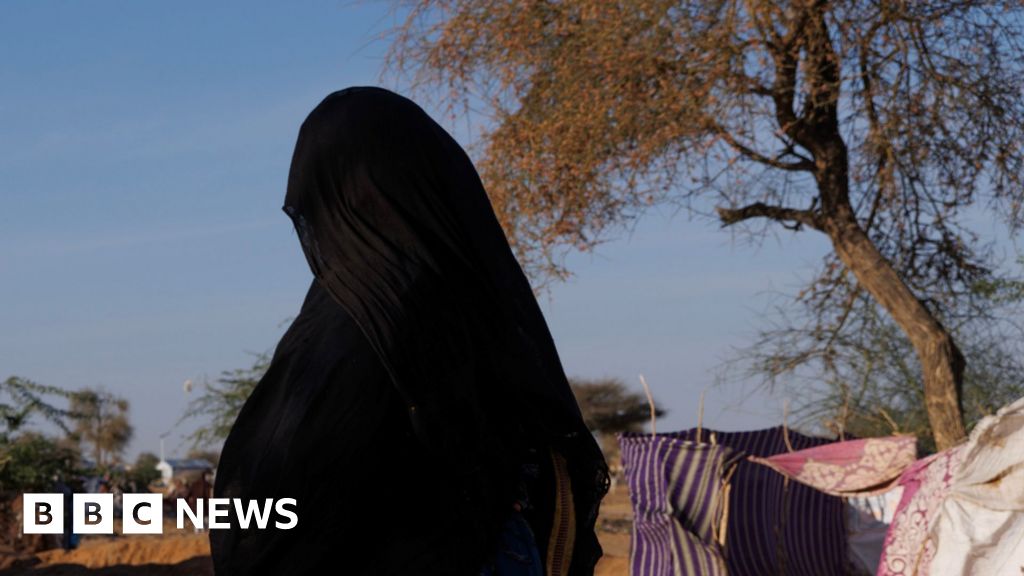
Medical charity Doctors Without Borders (MSF) has acknowledged that at least 59 Sudanese refugees were sexually abused by its staff in Chad, with victims often coerced into sexual acts in exchange for food or jobs, sparking concerns of potential sexual trafficking and drawing criticism for their inadequate response to victims' complaints. #SexualExploitation #HumanitarianCrisis #SudanConflict

MSF staff abused Sudanese refugees in sex-for-food scandal

16 Italian citizens filed a criminal complaint against the presence of #USNuclearWeapons at the #AvianoUSAF and #Ghedi air base. This morning an Italian judge held a judicial hearing on their criminal complaint. I'll share more info when the judge's ruling will be issued. https://t.co/Nvv2LKiOBg #ItalianJustice #NuclearWeapons #Aviano #IT #US