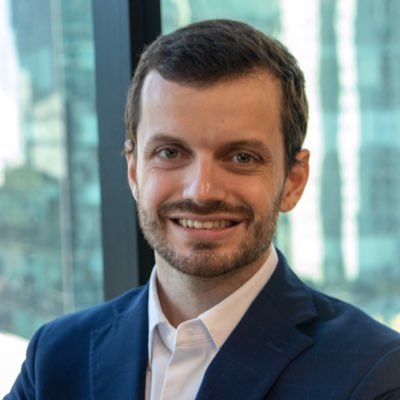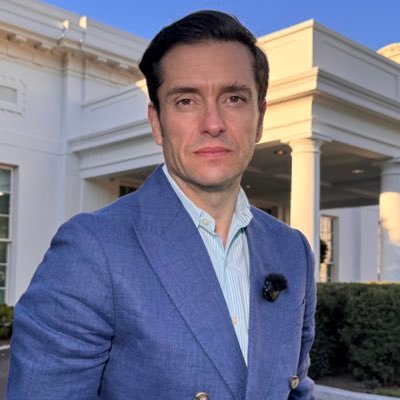
David Alandete argued that asking about Venezuela was an essential part of journalism and stated that those who asked journalists to stop doing so showed a limited view of press freedom and democracy. He asserted that it was just as legitimate to ask about Venezuela at the White House or the State Department as it was to ask about Ukraine, Iran, or France. According to Alandete, it was not the journalists who placed Venezuela among the priorities of U.S. policy: he recalled that Donald Trump threatened in the summer of 2017 to resort to military force against Nicolás Maduro and that, nine years later, he fulfilled that threat. He also pointed out that Trump dedicated a good part of his first speech before the United Nations General Assembly in September 2017 to denouncing the Venezuelan dictatorship. Alandete said that journalists were asking about Delcy Rodríguez, María Corina Machado, oil, political prisoners, elections, and the future of the country. He added that Machado had been received in the Oval Office by George W. Bush in 2005, that Marco Rubio had supported her candidacy for the Nobel Peace Prize, and that Trump had met with her twice in the White House at his own discretion. Finally, he maintained that stopping questions about Machado, Rodríguez, or other protagonists of the crisis for fear of uncomfortable answers confused journalism with something else. He stated that the job of journalists was to ask, verify, and report what was happening, not to protect politicians or limit themselves to asking questions favorable to a cause. #Periodismo #LibertadDePrensa #Venezuela (translated)