
Thanks to President @realDonaldTrump, America is back in the business of killing terrorists. @WhiteHouse https://t.co/UtBSFNaMjY #Terrorism #Trump #America #US
Thanks to President @realDonaldTrump, America is back in the business of killing terrorists. @WhiteHouse https://t.co/UtBSFNaMjY #Terrorism #Trump #America #US
It’s sad that, thanks to a bunch of hysterical lunatics, actual experts and smart people dont bother to share their ideas on a platform, created for publishing and discussing ideas, anymore. AI and DLSS5 are hot topics and definitely something that’s here to stay and will #AIDiscussion #DLSS5 #ExpertVoices #Nospecificcountrycodesarepresentinthetweet.

Ο Σαλάχ-Εντιν μόλις έμαθε το ενδιαφέρον του γαύρου ρώτησε ποια είναι η μεγαλύτερη επιτυχία του στην Ευρώπη.Οταν του είπαν.."το κύπελλο Συνδιάσκεψης",έσκασε στα γέλια κ είπε.."No,thanks"! Ρώτησε και για Παναθηναϊκό.Μόλις του είπαν "Ch.League finalist" είπε "deal done"!! #paofc💦💦 #ΣαλάχΕντιν #ΠΑΟ #Σπορ
The Embers of Europe are Dying—a stunning Wake Up ballad by Michael Walsh. So many people appreciate your music, and I am sure your sales and exposure will only grow because of your hard work and compassion for truth and justice for all. Good luck on the rest of your journey. Thanks for being along for the ride. Yours truly, Carey Wong. https://www.youtube.com/watch?v=LRWJ9jpROso&feature=youtu.be

Really important and timely conversation around the safety of recursive self-improving superintelligence. Extraordinary claims of extinction probabilities require extraordinary evidence not extrapolation plus handwaving about progress. Thanks @nxthompson for asking the hard and #Superintelligence #AIethics #ExtinctionRisk #Thetweetdoesnotmentionanyspecificcountries.Therefore #therearenocountrycodestoreturn.
The Embers of Europe are Dying—a stunning Wake Up ballad by Michael Walsh. So many people appreciate your music, and I am sure your sales and exposure will only grow because of your hard work and compassion for truth and justice for all. Good luck on the rest of your journey. Thanks for being along for the ride. Yours truly, Carey Wong. https://www.youtube.com/watch?v=LRWJ9jpROso&feature=youtu.be
Why we still need multilateralism in today’s world. Thanks to @oss_romano for hosting me https://t.co/fva3b0kFGQ #Multilateralism #GlobalCooperation #InternationalRelations #Nospecificcountrycodesarementionedinthetweet.
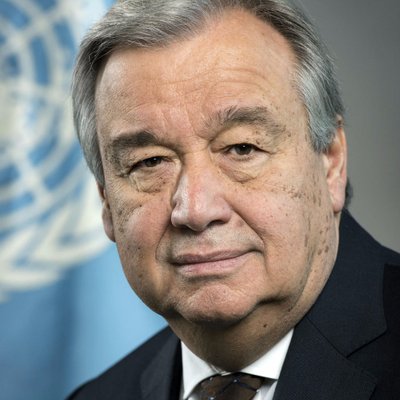
The @UN General Assembly has been the place where the world’s toughest & most consequential problems are confronted head-on. As I join the 81st #UNGA session for the last time as Secretary-General, I have enormous hope for a better, healthier & more peaceful future thanks to the #UNGA #GlobalGoals #PeaceForAll #Nospecificcountrycodesarementionedinthetweet.
The Embers of Europe are Dying—a stunning Wake Up ballad by Michael Walsh. So many people appreciate your music, and I am sure your sales and exposure will only grow because of your hard work and compassion for truth and justice for all. Good luck on the rest of your journey. Thanks for being along for the ride. Yours truly, Carey Wong. https://www.youtube.com/watch?v=LRWJ9jpROso&feature=youtu.be

Jo pane Tusk, kdyby jenom v Polsku 🇵🇱 😂 U nás jsou i takoví experti, kteří výhru AFD slaví jako “porážku levice”, ačkoliv v Sasku-Anhaltsku vládne posledních 24 let konzervativní CDU 😂 U nás je to proti Polsku vylepšené ještě o to, že AFD podporují naši “vlastenci a národovci” ačkoliv AFD zpochybňuje Benešovy dekrety. 🥰😅 @donaldtusk In any case, thanks for your clear and straightforward opinion.😎👍 #Politics #Polsko #AFD

After “Broadway World”, Marina (1888) from the Teatro Umberto Giordano’s “GIO Festival” in Foggia now reaches the Belgian “Opera Gazet” SOURCE: https://medium.com/@ingnucllms/after-broadway-world-marina-1888-from-the-teatro-umberto-giordanos-gio-festival-in-foggia-73ba01e5f50a SOURCE: https://www.operagazet.com/marina-by-giordano-its-world-stage-premiere-in-foggia/ SOURCE: https://www.operagazet.com/marina-by-giordano-its-world-stage-premiere-in-foggia/ From the homepage of “Broadway World” to the pages of an authoritative international magazine: the world stage première of Umberto Giordano’s youthful melodrama now consecrates Foggia as the capital of a “rediscovered verismo”. There is a destiny that waits, patiently, to be fulfilled. It is the destiny of Marina, a one‑act melodrama with music by Umberto Giordano and a libretto by Enrico Golisciani, composed in 1888 for the celebrated Sonzogno competition and subsequently withdrawn by the composer himself, falling into an oblivion that lasted 138 years. That destiny was fulfilled on 5 June 2026 at the Teatro Umberto Giordano in Foggia, with the World Staging Première of the opera, the inaugural event of the first edition of the “GIO Festival” — “Giordano International Opera Festival”, the new international showcase which, from 5 to 20 June, transformed the Capitanata into a widespread stage devoted to the Maestro from Foggia. A cultural enterprise of European breadth, promoted by the Chamber of Commerce of Foggia together with the Municipality and the Province, supported by the Region of Puglia and the Fondazione Monti Uniti, and capable of restoring to history a fundamental fragment of nascent verismo. The Foggia production — directed by Giandomenico Vaccari, conducted and coordinated by Matteo Dal Maso, with sets and costumes by Alfredo Troisi, lighting by Massimo Russo, and soprano Valeria Sepe in the eponymous role — represented not a mere performance, but the scenic resurrection of an opera long believed lost. Its autograph score was rediscovered only recently at Yale University’s “Beinecke Rare Book and Manuscript Library”, within the “Frederick R. Koch” Collection, thanks to the philological work of the conductor and musicologist of Venetian and German heritage, Andreas Gies, who prepared its critical edition. After the transatlantic resonance that saw the “GIO Festival” reach the homepage of “Broadway World” thanks to the world première of Marina, complete with exclusive photographs of the historic debut, a new and prestigious international recognition now arrives. The authoritative Belgian opera magazine “Opera Gazet” dedicates an extensive musicological review to the Foggia event with the article: “ “MARINA” (by Giordano) — ITS WORLD STAGE PREMIÈRE IN FOGGIA”. An arrival far from secondary. If “Broadway World” marked the opera’s transatlantic debut, “Opera Gazet” now seals its critical consecration among the most discerning and specialised audiences: the melomaniacs, scholars, and professionals of the operatic world. From Foggia to New York, from New York to the circuit of the international opera press. The trajectory of Marina confirms what the “GIO Festival” has sought to demonstrate since its inception: Giordano’s legacy is not a local memory, but a living repertoire, capable of conversing with major stages and with the world’s most prestigious cultural outlets. The rediscovery born in Foggia is now a heritage shared by all.
The Vindication of the “GIO Festival”: “BroadwayWorld” Celebrates Marina and the Umberto Giordano Theatre of Foggia SOURCE: https://www.linkedin.com/pulse/vindication-gio-festival-broadwayworld-celebrates-sardella-ph-d--8zzce/ SOURCE: https://www.letteremeridiane.org/2026/08/la-rivincita-del-gio-festival-broadwayworld-celebra-marina-e-foggia/ The GIO Festival has been, to put it mildly, overlooked by Rai3 Puglia and several regional outlets. Yet the festival dedicated to Umberto Giordano — promoted by the Chamber of Commerce of Foggia together with the Municipality and the Province, and supported by the Apulia Region and the Fondazione Monti Uniti — has achieved a remarkable vindication, landing on the homepage of BroadwayWorld thanks to the world première of the opera Marina, staged on 5 June at the Umberto Giordano Theatre in Foggia. This is no small feat, considering that BroadwayWorld is among the most influential American platforms devoted to theatre and the performing arts. The transatlantic debut of the opera by Foggia’s great composer did not escape the attention of Luciano Magaldi Sardella, who submitted to the editorial board of Lettere Meridiane an in‑depth and compelling contribution, reproduced below. In the article, the author masterfully reconstructs the extraordinary story of Giordano’s first opera, composed in 1888 and left without a staged production for 138 years, until its historic performance on 5 June at the Giordano Theatre. Above all, he recounts how the inaugural edition of the GIO Festival has restored Foggia to the centre of the international operatic stage, through the rediscovery and valorisation of Marina, the involvement of major musical institutions, and the attention of the American press. It is a stimulating reflection on the cultural and identity‑driven renaissance of a city that, for far too long, bore Giordano’s name on the façade of its theatre without managing to turn it into a lever of international visibility. (g.i.) + + + + + There are moments in the life of a city when past and future clasp hands upon the stage of the present. Foggia experienced one of these moments on the evening of 5 June 2026, when the curtain of the Umberto Giordano Theatre rose upon Marina, an opera composed in 1888 by a young man of twenty‑one — Umberto Giordano — then a student at the San Pietro a Majella Conservatoire in Naples. After one hundred and thirty‑eight years of silence, that score finally found its first scenic breath in the world. “It is not an ordinary event. It is a turning point. A void filled. A story rewritten.” Umberto Giordano, one of the most celebrated verismo composers of the fin‑de‑siècle — born in Foggia, author of masterpieces such as Andrea Chénier, Fedora, Siberia — had remained, until now, the only great Italian opera composer without a festival entirely dedicated to his oeuvre. A paradox that weighed like a historical injustice upon a city that bears his name engraved on the pediment of its most beautiful theatre. This is the extraordinary journey of Marina, Giordano’s first opera, which after 138 years of oblivion received its world première in scenic form on 5 June 2026 at the Umberto Giordano Theatre in Foggia, as the opening event of the GIO Festival — the inaugural edition of the Giordano International Opera Festival. The manuscript, preserved in the Frederick R. Koch Collection at Yale University’s Beinecke Rare Book and Manuscript Library, has travelled an astonishing path: from the elite libraries of America’s East Coast to the beating heart of the Daunia. On the night of 5 June 2026, at the Umberto Giordano Theatre, that silence was finally broken. The GIO Festival was conceived in Foggia as an ambitious cultural project promoted by the Chamber of Commerce, the Municipality, and the Province, with the support of the Apulia Region, aiming to transform the artistic legacy of the verismo composer into a driver of territorial development and cultural tourism. Under the artistic direction of conductor Gianna Fratta and violinist Dino De Palma, the event at last fills a historical void. Its model is explicit and ambitious: a project inspired by the great festivals dedicated to Italian composers — such as the Verdi Festival, the Puccini Festival, the Rossini Opera Festival — while maintaining a strong territorial and participatory dimension. In other words, Foggia formally claims its seat at the table of the greats. And it does so with the credentials required: an unrepeatable world scenic première (parallel to the concert première at Milan’s Teatro Dal Verme, recorded by the prestigious opera label Decca Classics), a high‑quality operatic production, and the support of leading cultural institutions (Teatro dell’Opera di Milano, Fondazione Teatro Petruzzelli of Bari). The festival benefitted from the collaboration of the Orchestra of the Conservatoire and the Chorus of the Fondazione Teatro Petruzzelli of Bari, the Umberto Giordano Conservatoire of Foggia, the Fondazione Monti Uniti, and the Fondazione Apulia Felix. A network of excellence that lent the event national resonance and stature. The Umberto Giordano Theatre is a nineteenth‑century jewel of rare beauty — the oldest functioning horseshoe‑shaped historic theatre in Apulia. Yet for decades it lived in a state of semi‑clandestine cultural marginality, relegated to the periphery of the operatic routes that matter, hindered by long interruptions in its use from 2007 to 2014, including recent fire‑safety compliance requirements. Some referred to it, with a mixture of condescension and provincial resignation, as a “provincial theatre”, destined merely to bear Giordano’s name. That label is now destined to fall. It is precisely in Foggia that this youthful gem received its first scenic staging, placing the city on the international map of opera. A positioning without precedent in the city’s recent history. The Giordano Theatre recorded a full house for the historic première of Marina, welcoming hundreds of spectators, while many more followed the performance from outside via a large screen installed for the occasion. The production met expectations with full artistic dignity: the staging transposed the narrative to the First World War, heightening the opera’s dramatic and realist character. On the podium, the Symphony Orchestra of the Umberto Giordano Conservatoire conducted by Matteo Dal Maso. Sets and costumes by Alfredo Troisi; lighting by Massimo Russo. An ensemble of talents worthy of the name the theatre proudly bears. The definitive seal of this moment’s historical significance arrived from across the Atlantic. BroadwayWorld, the world’s most influential outlet for live performance criticism and reporting — with over 5.5 million monthly views — dedicated exclusive coverage to the event, publishing a complete photographic gallery of the world scenic première curated by Chloe Rabinowitz and a substantial critical review by Rachel Stone. The American article emphasised the historical value of the undertaking and the bond between the composer and his native city, highlighting the musical quality of the score, deemed surprisingly mature for the composer’s age. For the first time, the Umberto Giordano Theatre appeared on the New York‑based site alongside institutions such as the Los Angeles Opera House, Houston Opera, and BBC Classical Music at the Royal Opera House. It is its natural place. It should have been there decades ago. Until now, the world knew Giordano through his Milanese triumphs, not through the youthful opera written between Foggia and the Naples Conservatoire — the lost (and later rediscovered) Marina of 1888. Let us be clear: this is no minor detail. BroadwayWorld does not grant exclusive galleries to provincial theatres. It does so for events that shift the coordinates of musical and theatrical history within the circuits that matter. This time, those coordinates shifted to Foggia thanks to the GIO Festival, in the name of Umberto Giordano. For the record — and for those who may not yet know — the GIO Festival is a new and ambitious biennial event conceived by the Chamber of Commerce of Foggia, with the aim of celebrating the genius of Umberto Giordano and transforming it into a powerful engine of development for the entire Capitanata. Biennial means continuity, planning, vision. It means that Foggia does not intend to be a meteor in the operatic firmament, but a stable and recognisable presence within the international festival circuit. Andrea Chénier, Siberia, and Fedora had already carried Giordano’s name to the Metropolitan Opera House in New York for more than a century, where his works are still performed to great acclaim. Now Foggia itself — not merely its scattered operatic legacy — claims its rightful “place in the sun”. The composer whom his city struggled to recognise in life, and whose name it preserves on its theatre, its square, and its conservatoire, may finally become the lever of an unprecedented cultural, economic, and identity‑driven renaissance. The GIO Festival 2026 is not, one hopes, a point of arrival. It should be the first chapter of a new story for Foggia, for the Capitanata, and for the cultural South of Italy. The Umberto Giordano Theatre is no longer merely an architectural jewel to be preserved: it has now become a place of creation and inspiration, capable of attracting international press attention and hosting events that enter the annals of world opera. To those who still whisper that Foggia is a provincial city, the answer is now written upon the world’s stages: on the evening of 5 June 2026, the periphery became the centre.

From Yale University to Foggia: World Staging Premiere of Umberto Giordano's “Marina” at Foggia's Teatro Umberto Giordano SOURCE: https://www.linkedin.com/pulse/from-yale-university-foggia-world-premi%C3%A8re-scenic-sardella-ph-d--id9de/ SOURCE: https://www.foggiareporter.it/dalla-yale-university-a-foggia-la-prima-mondiale-in-forma-scenica-di-marina-al-teatro-giordano.html (With heartfelt thanks to the distinguished journalist, Dr Christiana Lenoci…) From the Frederick R. Koch Collection of the Beinecke Rare Book and Manuscript Library at Yale University to Foggia. Such is the extraordinary journey of Marina, Umberto Giordano’s first opera, which—after 138 years of oblivion—received its World Première in scenic form on 5 June 2026 at the Umberto Giordano Theatre in Foggia, inaugurating the GIO Festival – Giordano International Opera Festival. This remarkable rediscovery is recalled by Luciano Magaldi Sardella, Contributing Review of Books Critic at the London School of Economics (LSE). The project, conceived by Gianna Fratta and the artistic direction of the GIO Festival, seeks to transform Foggia, the Tavoliere plain, the Monti Dauni and the Gargano into a widespread stage dedicated to the city’s native composer, following the model of the great festivals devoted to Verdi, Rossini and Bellini. The vanished score At the age of twenty‑one, Umberto Giordano entered the Sonzogno Competition in Milan with Marina, a one‑act melodrama. Among seventy‑two competitors, he ranked within the top twelve. The prize was awarded to Pietro Mascagni’s Cavalleria rusticana. Giordano received an honourable mention, withdrew the score, and recycled part of its music in his later Mala Vita (1892). After his death in 1948, the manuscript disappeared and—entirely legally—ended up catalogued and forgotten within Yale’s collection. It was brought back to light by the musicologist and conductor Andreas Gies who, while studying the works of Leoncavallo, identified the autograph score in Yale’s online catalogue. Together with his colleague from San Severo, Emanuele d’Angelo, Gies prepared a rigorous critical edition that restored the work’s readability. Following its absolute première in concert form at the Teatro Dal Verme in Milan in February 2026—the very theatre that witnessed the early steps of Puccini and Leoncavallo—recorded live by Decca Classics with Eleonora Buratto in the title role and Freddie De Tommaso as Giorgio, praised by Gramophone and The Times of London, Marina finally returned home. Foggia reclaims it On 5 June 2026, the Umberto Giordano Theatre hosted the World Première in scenic form. The production was directed by Giandomenico Vaccari, who transposed the action to the era of the First World War; conducted by Matteo Dal Maso, winner of the Donatella Flick LSO Conducting Competition; and featured Valeria Sepe as Marina. A historic event for a city that lends its name to both its Theatre and its Conservatoire, yet until now had been the only among the cities of Italy’s great opera composers without a festival entirely dedicated to its own. The GIO Festival, from 5 to 20 June, unfolded across sixteen days and more than twenty events in seven municipalities of the Capitanata—Foggia, Manfredonia, Peschici, Vieste, Biccari, Roseto Valfortore and Torremaggiore—uniting opera, jazz, cinema and dance. The finale: opera as urban intervention On the evening of 20 June 2026, thirteen lorries arrived in Piazza Cavour in Foggia from Milan. They carried the entire production apparatus of Teatro alla Scala. The square was transformed into an open‑air theatre for Giordano’s Andrea Chénier, conducted by Gianna Fratta and featuring Maria Agresta and Jorge de León, before thousands of citizens. The opera of a revolutionary, erupting into the summer air of the city where Giordano was born. A gesture of proximity theatre demonstrating what a manuscript can achieve: turning a forgotten archive into a driver of economic and touristic development for the region, with Confcommercio’s puzzle‑based itineraries, Giordano‑themed menus, and QR codes featuring a digital avatar of the composer. Marina was lost for 138 years. To bring it back, six months, a library card, and a festival were enough.

LONDON SCHOOL OF ECONOMICS REVIEW OF BOOKS for MIT (MASSACHUSSETS INTITUTE OF TECHNOLOGY) PRESS by Dr. Luciano Magaldi Sardella SOURCE: https://medium.com/@ingnucllms/london-school-of-economics-review-of-books-for-mit-massachussets-intitute-of-technology-press-by-95330de802b5 SOURCE: https://blogs.lse.ac.uk/.../book-review-the-credibility.../ “The Credibility Crisis in Science: Tweakers, Fraudsters, and the Manipulation of Empirical Results” by Thomas Plümper, Eric Neumayer, pubblicato dal prestigioso “The MIT Press”. DOI: https://lnkd.in/e-eUHf-5 ISBN elettronico: 9780262051293 Publication date: 2026 FONTE: https://lnkd.in/eK3pimi3... “The Credibility Crisis in Science: Tweakers, Fraudsters, and the Manipulation of Empirical Results” by Thomas Plümper, Eric Neumayer, published on The MIT Press DOI: https://lnkd.in/e-eUHf-5 ISBN electronic: 9780262051293 Publication date: 2026 Thanking in advance: - Eric Neumayer, Deputy President and Vice Chancellor & Vice President (Planning and Resources) at The London School of Economics and Political Science (LSE); - Thomas Plümper, Professor of Quantitative Social Research at the Vienna University of Economics, Department of Socioeconomics. - Anna D’Alton, Managing Editor at London School of Economics (LSE) Review of Books. Sources: https://lnkd.in/eUFy-AB2, https://lnkd.in/eBy5XZB4, https://lnkd.in/eg4dCNND, https://lnkd.in/ebwPrUSa, I am genuinely delighted — and deeply grateful — for the gracious words shared by Eric Neumayer regarding my review of The Credibility Crisis in Science, co‑authored with Thomas Plümper and published by The MIT Press. To read that my analysis was received as “crisp” and “clearly written” is profoundly rewarding, particularly when such appreciation comes directly from the authors themselves. Their book confronts a question of pressing significance: what becomes of scientific inquiry when the imperative to publish begins to overshadow the pursuit of truth? For anyone interested in understanding the structural pressures that shape contemporary research practices, I warmly encourage you to explore my review for the LSE Review of Books, and then immerse yourselves in the book itself. It is a lucid, incisive, and essential contribution to an increasingly urgent debate. My sincere thanks once again to the authors for their generosity of spirit and for the intellectual rigour they continue to bring to the international conversation on scientific credibility.
“THE BATTLE OF CERIGNOLA (1503)” RETURNS TO THE CENTRE OF EUROPEAN HISTORY: FEATURED IN THE 'LONDON DAILY NEWS' SOURCE: https://www.linkedin.com/pulse/battle-cerignola-1503-returns-centre-european-history-sardella-ph-d--9urse/ SOURCE: https://www.londondaily.news/why-britons-should-recall-the-battle-of-cerignola-1503-the-battlefield-where-guns-killed-chivalry/ The prestigious London-based newspaper London Daily News—a publication exceeding 250,000 monthly readers and more than two million annual contacts—has released the first in-depth historical feature devoted to the Battle of Cerignola (1503), long regarded by scholars as Europe’s first modern battle: the moment when the arquebus and new tactical doctrines heralded the end of heavy cavalry and inaugurated a radically different way of waging war. A TRIBUTE TO PAST AND PRESENT MUNICIPAL ADMINISTRATIONS Due praise is owed to Cerignola’s current "Municipal Administration", including the Mayor and the Councillor for Culture, who in recent years—together with many other civic leaders—have steadfastly championed the valorisation of local history. Their commitment to initiatives, research programmes, and identity-building projects is now resonating well beyond Italy’s borders. A WELL-DESERVED RECOGNITION FOR PROF. MATTEO STUPPIELLO Heartfelt gratitude is extended to Professor Matteo Stuppiello, founder and president of Cerignola’s Centro Studi Torre Alemanna, who has devoted decades of archival, archaeological, cultural, and educational work to the Battle of Cerignola. His tireless scholarship has played a decisive role in restoring this event to the international historical debate. His contribution is now acknowledged not only within Foggia and Apulia, but across the national and European sphere. CERIGNOLA AT THE HEART OF EUROPEAN AND GLOBAL HISTORY The battlefield of 1503—where the Spanish forces of the “Great Captain”, Gonzalo Fernández de Córdoba, defeated the French army of Louis d’Armagnac, Duke of Nemours, through innovative strategy and the extensive deployment of arquebusiers—is today recognised by military historians worldwide, particularly in Spain, as a true turning point in global military history. Thanks to the synergy between institutions, scholars, and the local community, Cerignola is finally receiving the international visibility it has long deserved.

E' un segnale di non piccolo rilievo trovarsi citati dal Professore Luca Enriques, della Bocconi e della Oxford University, una circonstanza di cui siamo profondamente grati. SOURCE: https://www.linkedin.com/posts/luciano-magaldi-s-05a4a71b3_it-is-a-distinction-of-no-small-consequence-share-7473484771407622145-v1bS/ We extend our sincerest and warmest thanks, Dr. Luciano Magaldi Sardella Prof. Matteo Mantuano

It is a distinction of no small consequence to find oneself cited by Professor Luca Enriques, of Bocconi and the University of Oxford — a circumstance for which we are most profoundly grateful. SOURCE: https://www.linkedin.com/posts/luciano-magaldi-s-05a4a71b3_it-is-a-distinction-of-no-small-consequence-share-7473484771407622145-v1bS/ We extend our sincerest and warmest thanks, Dr. Luciano Magaldi Sardella Prof. Matteo Mantuano
Luciano Magaldi Sardella, LSE Review of Books, “A currency in crisis — the euro’s structural fragility” SOURCE: https://medium.com/@ingnucllms/luciano-magaldi-sardella-lse-review-of-books-a-currency-in-crisis-the-euros-structural-1bb7a4c8b16a Source: https://lnkd.in/dBJpcU3n With my sincerest thanks in advance to: - Ms Anna D’Alton, Managing Editor of the LSE Review of Books, London School of Economics and Political Science. - Dr John H. Cochrane, Rose Marie and Jack Anderson Senior Fellow of the Hoover Institution at Stanford University, and author of such foundational works as The Fiscal Theory of the Price Level and Asset Pricing (both Princeton University Press). - Dr Luis Garicano, Professor of Public Policy at the London School of Economics and Political Science, and former Member of the European Parliament from 2019 to 2022. - Dr Klaus Masuch, who has accompanied the euro from its very inception, having held positions of the highest responsibility at the European Central Bank for over two decades — from the stewardship of monetary policy strategy to the oversight of EU member states. This is an honour I shall not readily forget. I have had the distinct privilege of continuing my role as academic reviewer for the LSE Review of Books — one of the most authoritative scholarly publications in the world — with the volume: “Crisis Cycle: Challenges, Evolution, and Future of the Euro,” published by Princeton University Press of Princeton University, Ivy League, USA. This quite remarkable work examines the evolution of the euro from its founding idealism to its present institutionalised fragility, laying bare how the monetary union has found itself ensnared in a self-reinforcing cycle of crisis and improvisation. It is a work of rare distinction, blending scholarly rigour with the hard-won wisdom of those who have shaped European economic policy at the very highest level. I extend my most heartfelt gratitude to Professors Cochrane, Garicano and Masuch for producing a volume of such depth, lucidity and intellectual courage. To review a work of this calibre is, before all else, an uncommon privilege.
PORTAL-ANALITIKA.ME publishes the “Edicola Teatro” of Foyer ’97, Founded by Francesco Gravino of San Severo, Puglia, Italy SOURCE: https://www.linkedin.com/pulse/portal-analitikame-publishes-edicola-teatro-foyer-97-sardella-ph-d--6i2of/ The format devised by the Pulgian theatre company Foyer ’97 — already described as “the smallest theatre in the world” — has now reached the international stage through its feature on the global platform Europe Says. A story born from an abandoned news kiosk in the province of Foggia is now crossing every conceivable boundary. It is a genuine pleasure and an honour to share the brilliant idea of the artistic director of Teatro ’97, the distinguished actor and director from San Severo, Francesco Gravino, and his remarkable theatre company, as they gain international visibility with this marvellous and innovative creation: a true “Teatro Edicola”. Source: https://www.portalanalitika.me/clanak/na-drugoj-obali-jadrana-otvoreno-najmanje-pozoriste-na-planeti Only a few square metres, six chairs, and the passion of a theatre company are enough to make history. The Edicola Teatro, conceived by Francesco Gravino, Artistic Director of the historic San Severo-based company Foyer ’97, is receiving significant media recognition, “taking to the stage” of leading national and international outlets thanks to his talented intuition, inspired by Edicola Fiore, the celebrated format created by the Italian entertainment icon Rosario Fiorello. An abandoned kiosk, a record‑breaking theatre It has already been dubbed “the smallest theatre in the world” and, with merely six seats, may well aspire to a Guinness World Record. Since its launch a few days ago, the original venue has drawn hundreds of curious visitors who queued to attend the performances—scheduled every fifteen minutes—inside a former abandoned news kiosk in San Severo, in the province of Foggia. The initiative stems from the distinctive vision of the long‑established San Severo company Foyer ’97, led by Gravino, who sought to celebrate World Theatre Day with an unprecedented experiment that has already been widely reported by national‑level media. The idea, seemingly simple in its striking essentiality, in fact conceals a profound reflection on the nature of theatrical practice. “The idea of the smallest theatre in the world was born from a creative provocation: to return theatre to its most direct essence. Together with the company, we asked ourselves how far the space could be reduced without losing intensity, and the kiosk became the perfect symbol: a place that suddenly transforms into a stage. From a space of news to a space of emotions,” Gravino explained. Foyer ’97 has been active since 1997 and is based in San Severo. Next year it will celebrate its thirtieth anniversary—an occasion approaching at the moment of greatest visibility in its history. The format: sixteen giants of literature in fifteen minutes With only six seats available at a time and performances following one another every fifteen minutes, the audience is quite literally immersed in the work. From 11:00 to 20:45, eleven actors alternate in bringing to life the giants of literature: from Goldoni to Chekhov, via the wit of Gaber and the dramatic force of Euripides. Inside the small theatre carved out of the disused kiosk owned by Mr Pino Grau, there is no traditional separation between stage and auditorium; instead, an intimate encounter takes place in which spectators and actors become, in effect, a single entity. Admission is free, reflecting Gravino’s aim: to restore theatre’s accessibility, returning it to a place that welcomes everyone. At the kiosk’s threshold, a QR code and a cryptic notice encapsulate the spirit of the project: “Warning. This QR code turns passers‑by into actors. Scan only if you are ready.” From the crisis of print media to cultural rebirth The project also carries with it a reflection on urban transformation and the decline of traditional commerce. The kiosk had been unused for around six years and has now been transformed into an intimate and surprising performance space in which less than a metre separates actors from spectators. At a time when kiosks in town and city centres are increasingly converted into drink stands, flower stalls, or souvenir shops, the Edicola Teatro comes closer to the original spirit of knowledge with which such kiosks were conceived—as places for the sale of newspapers and books. It is a symbolic short circuit of remarkable eloquence: a bastion of written culture becoming a bastion of live culture. The idea draws inspiration from Edicola Fiore, Fiorello’s cult programme, which first brought performance into a Roman kiosk. Gravino and his collaborators have also embraced the invitation of Willem Dafoe, the renowned actor and current director of the Theatre Section of the Venice Biennale, regarding the importance of theatre as a force for cohesion among peoples. The Grokipedia entry: a leap to global scale The theatre company Foyer ’97, led by Francesco Gravino, has now been granted its own dedicated encyclopaedic entry, “Teatro Edicola”. This Grokipedia listing represents more than a mere media acknowledgement. Launched in October 2025, Grokipedia is an AI-generated encyclopaedia managed by xAI, the artificial-intelligence research company founded by Musk. The fact that Grok’s knowledge engine has deemed the micro‑theatre worthy of an autonomous encyclopaedic entry—on a par with established cultural institutions—confirms the international resonance of an idea born in a side street of a southern Italian town. The objective is now to export the format beyond the borders of Apulia; with Grokipedia’s recognition, that prospect appears more concrete than ever. The praise of local institutions “We extend our heartfelt congratulations to Franco Gravino and to all the actors and artists for this wonderful initiative,” declared Mayor Lidya Colangelo and Deputy Mayor for Culture Anna Paola Giuliani. The municipal administration has announced its intention to welcome the company to Palazzo Celestini to celebrate the achievement together. Perhaps the most striking aspect has been the audience’s reaction. Many emerged with glistening eyes or with a suspended smile, as though they had experienced something secret. This is the theatre that Francesco Gravino and Foyer ’97 have chosen to pursue: not the theatre that waits for its audience on velvet seats, but the theatre that goes out to find them in the street, surprises them, and transforms them.

WP TURYSTYKA.PL publishes the “Edicola Teatro” of Foyer ’97, Founded by Francesco Gravino of San Severo, Puglia, Italy SOURCE: https://www.linkedin.com/pulse/wp-turystykapl-publishes-edicola-teatro-foyer-97-san-sardella-ph-d--hs5pf/ The format devised by the Pulgian theatre company Foyer ’97 — already described as “the smallest theatre in the world” — has now reached the international stage through its feature on the global platform Europe Says. A story born from an abandoned news kiosk in the province of Foggia is now crossing every conceivable boundary. It is a genuine pleasure and an honour to share the brilliant idea of the artistic director of Teatro ’97, the distinguished actor and director from San Severo, Francesco Gravino, and his remarkable theatre company, as they gain international visibility with this marvellous and innovative creation: a true “Teatro Edicola”. Source: https://turystyka.wp.pl/najmniejszy-teatr-swiata-ustawiaja-sie-kolejki-7273686077245632a Only a few square metres, six chairs, and the passion of a theatre company are enough to make history. The Edicola Teatro, conceived by Francesco Gravino, Artistic Director of the historic San Severo-based company Foyer ’97, is receiving significant media recognition, “taking to the stage” of leading national and international outlets thanks to his talented intuition, inspired by Edicola Fiore, the celebrated format created by the Italian entertainment icon Rosario Fiorello. An abandoned kiosk, a record‑breaking theatre It has already been dubbed “the smallest theatre in the world” and, with merely six seats, may well aspire to a Guinness World Record. Since its launch a few days ago, the original venue has drawn hundreds of curious visitors who queued to attend the performances—scheduled every fifteen minutes—inside a former abandoned news kiosk in San Severo, in the province of Foggia. The initiative stems from the distinctive vision of the long‑established San Severo company Foyer ’97, led by Gravino, who sought to celebrate World Theatre Day with an unprecedented experiment that has already been widely reported by national‑level media. The idea, seemingly simple in its striking essentiality, in fact conceals a profound reflection on the nature of theatrical practice. “The idea of the smallest theatre in the world was born from a creative provocation: to return theatre to its most direct essence. Together with the company, we asked ourselves how far the space could be reduced without losing intensity, and the kiosk became the perfect symbol: a place that suddenly transforms into a stage. From a space of news to a space of emotions,” Gravino explained. Foyer ’97 has been active since 1997 and is based in San Severo. Next year it will celebrate its thirtieth anniversary—an occasion approaching at the moment of greatest visibility in its history. The format: sixteen giants of literature in fifteen minutes With only six seats available at a time and performances following one another every fifteen minutes, the audience is quite literally immersed in the work. From 11:00 to 20:45, eleven actors alternate in bringing to life the giants of literature: from Goldoni to Chekhov, via the wit of Gaber and the dramatic force of Euripides. Inside the small theatre carved out of the disused kiosk owned by Mr Pino Grau, there is no traditional separation between stage and auditorium; instead, an intimate encounter takes place in which spectators and actors become, in effect, a single entity. Admission is free, reflecting Gravino’s aim: to restore theatre’s accessibility, returning it to a place that welcomes everyone. At the kiosk’s threshold, a QR code and a cryptic notice encapsulate the spirit of the project: “Warning. This QR code turns passers‑by into actors. Scan only if you are ready.” From the crisis of print media to cultural rebirth The project also carries with it a reflection on urban transformation and the decline of traditional commerce. The kiosk had been unused for around six years and has now been transformed into an intimate and surprising performance space in which less than a metre separates actors from spectators. At a time when kiosks in town and city centres are increasingly converted into drink stands, flower stalls, or souvenir shops, the Edicola Teatro comes closer to the original spirit of knowledge with which such kiosks were conceived—as places for the sale of newspapers and books. It is a symbolic short circuit of remarkable eloquence: a bastion of written culture becoming a bastion of live culture. The idea draws inspiration from Edicola Fiore, Fiorello’s cult programme, which first brought performance into a Roman kiosk. Gravino and his collaborators have also embraced the invitation of Willem Dafoe, the renowned actor and current director of the Theatre Section of the Venice Biennale, regarding the importance of theatre as a force for cohesion among peoples. The Grokipedia entry: a leap to global scale The theatre company Foyer ’97, led by Francesco Gravino, has now been granted its own dedicated encyclopaedic entry, “Teatro Edicola”. This Grokipedia listing represents more than a mere media acknowledgement. Launched in October 2025, Grokipedia is an AI-generated encyclopaedia managed by xAI, the artificial-intelligence research company founded by Musk. The fact that Grok’s knowledge engine has deemed the micro‑theatre worthy of an autonomous encyclopaedic entry—on a par with established cultural institutions—confirms the international resonance of an idea born in a side street of a southern Italian town. The objective is now to export the format beyond the borders of Apulia; with Grokipedia’s recognition, that prospect appears more concrete than ever. The praise of local institutions “We extend our heartfelt congratulations to Franco Gravino and to all the actors and artists for this wonderful initiative,” declared Mayor Lidya Colangelo and Deputy Mayor for Culture Anna Paola Giuliani. The municipal administration has announced its intention to welcome the company to Palazzo Celestini to celebrate the achievement together. Perhaps the most striking aspect has been the audience’s reaction. Many emerged with glistening eyes or with a suspended smile, as though they had experienced something secret. This is the theatre that Francesco Gravino and Foyer ’97 have chosen to pursue: not the theatre that waits for its audience on velvet seats, but the theatre that goes out to find them in the street, surprises them, and transforms them.






