
SPACE LIBERDADE reported that Deputy Nikolas Ferreira said he would make several videos and that the second round had just begun. https://t.co/F9plxukLY7 #Eleições2022 #NikolasFerreira #Política (translated)

SPACE LIBERDADE reported that Deputy Nikolas Ferreira said he would make several videos and that the second round had just begun. https://t.co/F9plxukLY7 #Eleições2022 #NikolasFerreira #Política (translated)

Jorginho, from Flamengo, said in an interview with Danilo Gentili that defeating Palmeiras in the World Cup final had a special significance because, according to him, the club had closed its doors to his signing in the past. The player mentioned that he tried to finalize a deal with Palmeiras, but it did not work out. When asked about the significance of the tournament for Europeans, Jorginho stated that they valued the Champions League more. He also said that coach Tuchel showed the squad videos of the Palmeiras fans welcoming the team to illustrate the importance of the competition in Brazil and what to expect from the opponent. When asked if Palmeiras had a World Cup, Jorginho replied that, as far as he knew, they did not. #Mundial #Flamengo #Palmeiras (translated)


Andrés Vaca wrote that there were only minutes left for Messi's last match and that there wouldn't be enough clips and videos to see everything that would be generated. He described the match as unmissable. #Messi #Fútbol #PartidoImperdible (translated)
Minderjährige wurden mit intimen Videos erpresst, was zu Bewährungsstrafen für die Täter führte. Sure! Please provide the article you'd like to analyze for hashtags.

Fdesouche.com, a news review, reported that Grégoire de Lasteyrie, Horizon mayor of Palaiseau (91), expressed outrage at the dissemination by "the far right" of videos of the city during the high school movement. The publication stated that he had alerted the prosecutor and claimed that the city had never experienced a leak. https://t.co/70a86LJNBP https://t.co/nI86jXaSgv #Palaiseau #ExtrêmeDroite #Lycéens (translated)


A complaint for attempted murder filed by a 17-year-old high school student against a police officer in Belfort, after a violent arrest, has been transferred to Vesoul for jurisdictional reasons, while videos of the incident are causing controversy. #Justice #Police #Lycéens (translated)


Diana said she had found many viral videos on TikTok about the streams from the previous day and described what she saw as "crazy." She also included the tags #TeamKarola and #EidevinLopez. #TeamKarola #EidevinLopez #TikTok #streams #viral (translated)
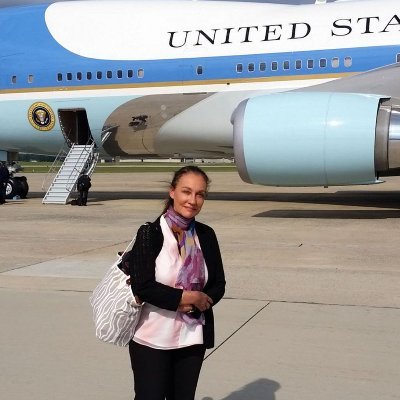
The post said demonstrations were taking place in France and that cellphone footage filmed by activists and demonstrators was spreading widely on social media, with some videos going viral within hours. #France #Manifestation #Viral #FR

Anitta Golden stated that artists, influencers, musicians, and DJs of any size who wanted to express their support for Lula could send videos via direct message. She said that the profile would share the recordings and give visibility to the participants, highlighting the importance of everyone's expression. #Lula #Arte #Música (translated)

POPTime reported that Lula's social media team had resumed posting videos focused on the political contest and compromising information about the Bolsonaro family. The profile urged its followers to share the content and engage with the posts to give a voice to supporters, saying it was "now or never." https://t.co/PLKfTCItFP #Lula #Política #Brasil (translated)


Legal Jake Gyllenhaal asked what the difficulty would be for Lula's team in publishing on Instagram the videos they had been posting on X. https://t.co/BedHhv8Xfp #Lula #Brasil #Política (translated)


Jones Manoel reported that he prepared a link on Drive with critical communication materials regarding the Bolsonaro family, intended for circulation in WhatsApp groups and on platforms like Instagram, TikTok, and Kwai. He said that he used many of the videos in his campaign and that all reached audiences in the millions. https://t.co/jvnXAFuAS9 #Bolsonaro #Comunicação #Campanha (translated)

Cindy Waratin shared that Charlotte considered her greatest achievement to have been able to take care of her parents before turning 30. She said that starting to work young allowed her to save and help them while they were still with her. Charlotte expressed the desire for her mother to stay healthy and happy, and asked her not to push herself too hard due to her knee problems. Regarding her father, she said she hoped he would be happy and strong, and that he could accompany her to the altar. She also asked him not to stress or read everything that was published about her online. When talking about herself ten years from now, Charlotte said she wanted to remain grounded. She described herself as a "fossil" due to the many difficulties she had faced and stated that she had managed to move forward, just as others could. Waratin wished her success and a love with whom she could achieve the goal that she still lacked. #CharlotteAustin https://t.co/bfBOiBWTeJ #Éxito #Familia #Amor (translated)

A readable text, a subtitled video, a described image: five principles and concrete actions to make digital resources accessible. Digital accessibility in the service of the quality of learning Delphine Ducarme. Foreword: Yves Deville (p. 3). Louvain Learning Lab (LLL), UCLouvain (Belgium), "The Keys of LLL" collection Audio Capsules on Health Practices 🎙️🎥 https://www.youtube.com/watch?v=aCKvkJIZAxE An illustrated Key from UCLouvain, written for higher education, with glossary, annotated examples and a ready-to-use mini-feedback survey. Analysis of Health Practices and link to source ℹ️➕ https://www.pratiquesensante.com/blog/pratiques-15/l-accessibilite-numerique-au-service-de-la-qualite-de-l-apprentissage-6236 The document presents itself as a set of concrete guidelines to improve the digital accessibility of teachings (p. 2). It proposes five principles with precise implementations (p. 10), a glossary of key concepts (p. 11), annotated examples for texts, videos and audios, images and Moodle (p. 12-17), as well as suggestions for checking resources and gathering feedback from students (p. 18-19). It is written for higher education; its use for prevention, training, or information resources involves transposition (analysis Health Practices). #️⃣ #pratiquesensante #DigitalAccessibility #UniversalDesign #Inclusion #Disability #AccessibleResources #OpenEducation #Pedagogy #pratiquesensante #AccessibilitéNumérique #ConceptionUniverselle #Inclusion #Handicap #SupportsAccessibles #ÉducationOuverte #Pédagogie (translated)

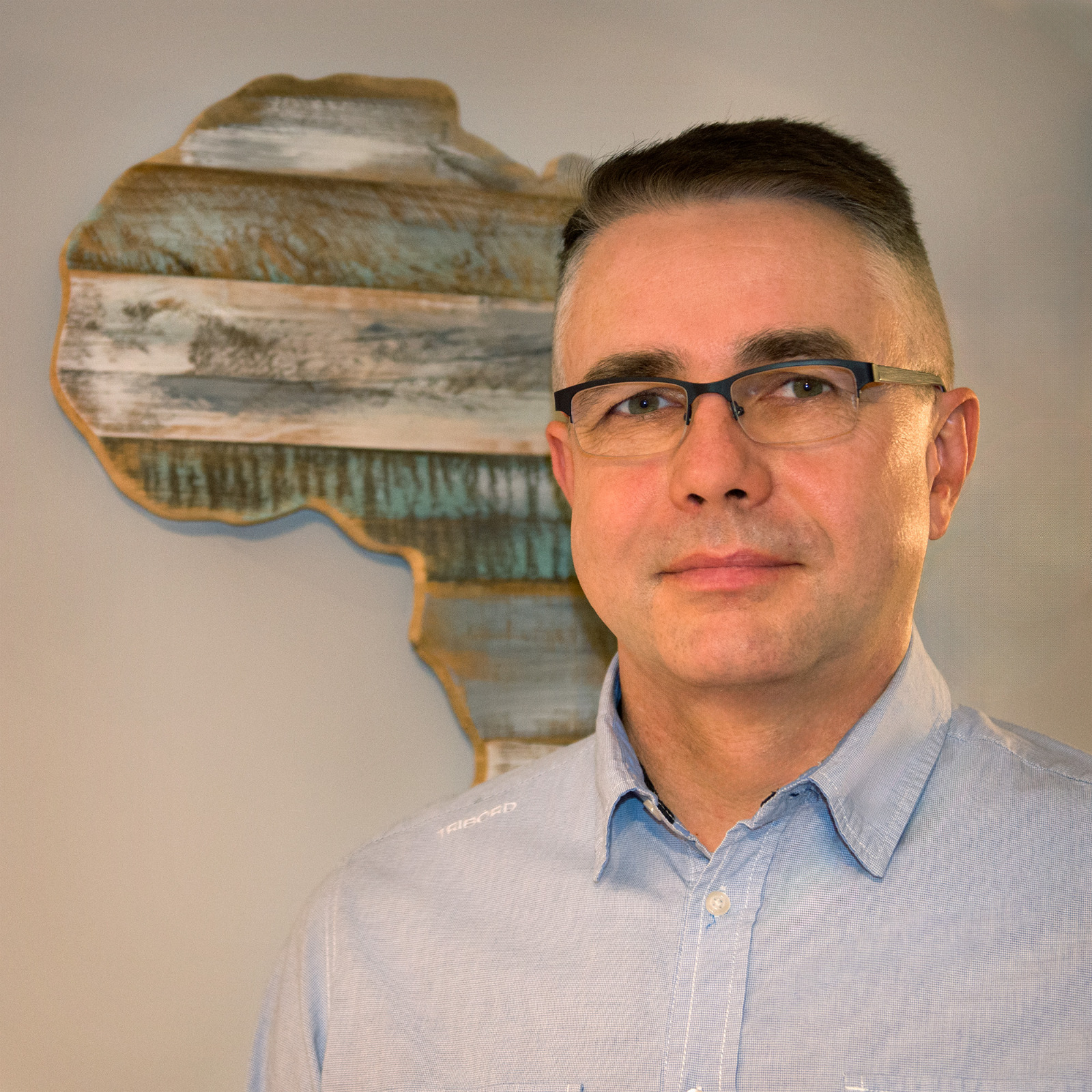
Brazil’s synthetic voters – when AI manufactures public opinion They look like ordinary street interviews. A reporter approaches a passer-by in a Brazilian square and asks a simple question: who will you vote for? A young voter explains why Luiz Inácio Lula da Silva deserves another term. An elderly woman says Brazil needs Flávio Bolsonaro because he represents political renewal and greater security. The locations look plausible, the microphones are visible and the answers sound much like the brief political opinions heard in television vox pops around the world. None of the people are real. Ahead of Brazil’s presidential election on 4 October, fact-checking organisation Aos Fatos identified at least 50 TikTok videos in which artificial intelligence was used to manufacture voters, reporters and apparently spontaneous political interviews. Together, the videos had accumulated around 7.4 million views by mid-August. Some promoted Lula, others Flávio Bolsonaro, while another group used synthetic characters to ridicule or stereotype supporters of one side. Aos Fatos found no apparent evidence linking the accounts producing the videos to either presidential campaign. The opinion poll that never took place The format is important. These were not conventional deepfakes in which a recognisable politician is made to say something he never said. Instead, the creators reproduced the visual language of the vox pop – the short street interview used by broadcasters and social-media creators to illustrate what ordinary people supposedly think. In pro-Lula videos, synthetic voters described themselves as beneficiaries of social programmes or credited the president with improving their lives. In videos supporting Flávio Bolsonaro, artificial interviewees associated him with political renewal, public security and fighting corruption. Other clips were openly hostile: AI-generated characters presented as poor or living in parts of Brazil’s north-east were shown in dirty clothes or run-down surroundings, declaring support for Lula because they supposedly preferred welfare payments to work. The deception is therefore subtler than fabricating a candidate’s statement. It manufactures something that political communication normally treats as evidence of public sentiment. A real vox pop may be unscientific, but the people interviewed at least exist. These videos created the appearance that identifiable social groups – young people, pensioners, welfare recipients or residents of particular regions – were spontaneously expressing political preferences when no such encounters had taken place. An electoral-law specialist interviewed by Aos Fatos described the technique as the fabrication of a “social fact that never occurred”. That captures the central innovation: AI is being used not merely to falsify political speech, but to manufacture the impression of grassroots opinion. Fifty videos, but not one proven network The available evidence does not support describing the 50 posts as a centrally controlled influence operation. Aos Fatos located them through TikTok searches and recommendations produced by the platform itself, then examined the accounts responsible for publication. Most had relatively small individual audiences, although their combined reach was substantial. The first examples identified by the investigation appeared as early as March 2026. Activity increased in June and was concentrated particularly in July and the first half of August as Brazil’s election calendar intensified. Some accounts specialised in AI-generated videos generally, including fabricated podcast-style material. Others were explicitly political or supportive of a candidate, but Aos Fatos found no apparent links between those profiles and the official Lula or Bolsonaro campaigns. That distinction is essential. The evidence demonstrates a common technique and a shared political environment, not a single command structure. Some creators may have been motivated by ideology, others by engagement or monetisation. Publicly available evidence does not establish who commissioned the individual videos or whether any coordination existed between the accounts. This decentralised model also creates a different enforcement problem from a traditional bot network. There may be no headquarters to expose and no infrastructure whose removal disables the entire operation. The format itself can be copied by anyone with access to inexpensive generative-video tools. When the algorithm mixes real and synthetic citizens Aos Fatos documented another important feature of the phenomenon: TikTok’s recommendation system placed AI-generated interviews alongside genuine street interviews. For a user scrolling quickly through the platform, the transition between an authentic citizen and an entirely fabricated one could therefore be almost invisible. In 18 per cent of the 50 videos analysed, there was no indication that the people shown had been generated using AI. After Aos Fatos provided TikTok with the videos, the company said it had removed all of them for violating its rules on edited and AI-generated media. TikTok said its policies require creators to identify synthetic content and prohibit manipulated media capable of misleading users about matters of public importance or impersonating genuine journalistic material. The issue extends beyond one platform. Factchequeado’s review of Brazil’s 2026 election campaign found that synthetic endorsements and other deepfakes had become one of the most visible forms of AI-assisted electoral misinformation, alongside fabricated candidate statements and invented scenes. Brazil already had rules for synthetic politics Brazil entered the campaign with unusually detailed electoral rules governing artificial intelligence. The Superior Electoral Court, the TSE, requires electoral propaganda using synthetic multimedia to disclose clearly that AI was used. More importantly for the fake-voter videos, its rules prohibit synthetic audio or video used to favour or harm a candidacy when it creates or alters the image or voice of a living, deceased or fictitious person. The difficulty is attribution and enforcement. When a synthetic video is published by an official campaign, responsibility can be relatively straightforward to investigate. When it comes from an apparently independent account with no demonstrated relationship to a candidate, lawyers interviewed by Aos Fatos said responsibility is more likely to fall on the individual creator, while imposing electoral sanctions on a campaign would require evidence of a connection. For the final 72 hours before the election and the 24 hours following it, the TSE has imposed additional restrictions on newly published or republished synthetic material involving candidates or public figures, reflecting the particular difficulty of correcting fabricated content immediately before voting. From deepfake politicians to synthetic electorates The Brazilian case illustrates a broader change in political manipulation. The first generation of electoral deepfakes concentrated on famous people: make a politician appear to say something damaging, or fabricate an endorsement from a celebrity. Synthetic vox pops reverse the perspective. The politician can remain completely authentic; it is the electorate around the politician that is fabricated. That changes the psychological proposition of the message. Instead of saying the candidate believes this, the video suggests people like you believe this. Age, clothing, accent, neighbourhood and social class can all be generated to construct an artificial constituency around almost any political claim. There is no evidence that the 50 Brazilian videos identified by Aos Fatos constitute a single centrally directed campaign, nor evidence that they changed voting intentions. What they demonstrate is a technique whose barrier to entry has become extremely low. AI no longer needs to forge the politician. #DISINFORMED #Episode14 #Brazil #BrazilElection2026 #Elections #ElectionDisinformation #ArtificialIntelligence #AI #GenerativeAI #SyntheticVoters #SyntheticMedia #AIAvatars #AIGeneratedVideo #VoxPop #FakeInterviews #Astroturfing #AIPropaganda #PoliticalDisinformation #InfluenceOperations #InformationWarfare #SocialMediaManipulation #TikTok #PublicOpinion #ManufacturedConsent #SyntheticPublicOpinion #DigitalInfluence #Deepfakes #ElectionIntegrity #TSE #AosFatos #FactChecking #OSINT #MediaManipulation #WRLD (translated)

Juan de Dios expressed his frustration with women who, as he wrote, traveled to Bali to heal and posted videos in their stories of four undernourished Indian people drinking from a puddle, with a message that described them as happy without having anything. He also used derogatory terms to refer to them and to the people appearing in the videos. #Bali #Viajes #Reflexiones (translated)

Vai Desmaiar wrote that, after the jokes, it was time to focus on two points: he stated that Flávio Bolsonaro defended the murderer of the girl Ana Clara and that his vice was under investigation for the rape of a vulnerable person. He also said he would publish videos in the thread and asked for them to be downloaded and shared on social networks, indicating a website. https://t.co/LI5EsqBQxW #Justiça #DireitosHumanos #Feminismo (translated)

Colombia Oscura reported that the young man expelled from a Delta Air Lines flight after refusing to give up his seat and recording the situation with his Meta Glasses claimed on social media that the airline offered him $150 in compensation. According to the post, Delta also asked him to remove the videos from his social media, but he rejected the proposal and said he would continue to seek justice for what he considered an abuse and an irregular procedure by the crew. #DeltaAirLines #Justicia #DerechosDelPasajero (translated)

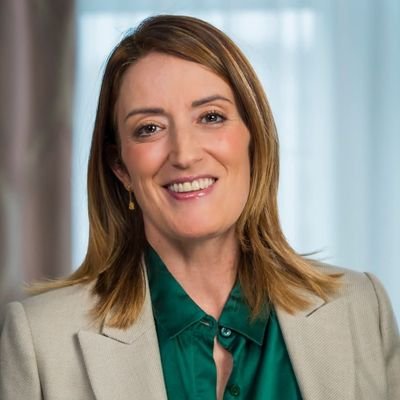
"I was informed that around 60 members of this house have been targets of deepfakes [images, videos or audios generated by artificial intelligence] on pornography sites that publish false and manipulated images, especially of women," said Roberta Metsola at the beginning of the plenary session of the European Parliament (EP) in Strasbourg. #ParlamentoEuropeu #Deepfakes #ViolênciaContraAsMulheres (translated)

Flavia Ferronato asked the PT to quickly release the videos that, according to her, the party claimed to have of Flávio wearing underwear. She stated that she was making the request on behalf of several Brazilian women and complained about the presence of men she considered unattractive. #Flávio #PT #MulheresBrasileiras (translated)





