The author of the post described the images from the destroyed town hall of Limoges in France as shocking and noted that its historic bell tower had collapsed. https://t.co/roi6uuxMLV #Γαλλία #Λιμόζ #Καταστροφή #FR #FR (translated)
The author of the post described the images from the destroyed town hall of Limoges in France as shocking and noted that its historic bell tower had collapsed. https://t.co/roi6uuxMLV #Γαλλία #Λιμόζ #Καταστροφή #FR #FR (translated)

New images reveal the extensive destruction of the historic town hall of Limoges, which suffered serious damage from a fire caused by hooded individuals during protests. #Λιμόζ #καταστροφή #πολιτιστικήκληρονομιά (translated)

Chris Avramidis wrote that, in a briefing for political reporters, he asked government spokesman Pavlos Marinakis if the government agreed with Kyrianakis, whom he presented as the secretary of New Democracy, that the KKE is an authoritarian party that does not believe in democracy. According to him, he asked the question three times, without Marinakis stating whether he agreed or disagreed. Avramidis noted that Kyrianakis, while he had started to criticize Ilia Kasidiaris, attacked the KKE and equated communism with Nazism. He also mentioned that he reminded Marinakis of the photos from the execution of 200 communists in Kaisariani and asked if there is any historical evidence that equates the executioners with the executed. In his description, Marinakis referred to victims of Stalinism, European Day of Remembrance, and the legalization of the KKE by New Democracy, instead of answering the question. Avramidis said he countered with the names of Chalkidis, Tsarouhas, and Halvatzis, whom he connected with persecutions and torture by the Greek dictatorship. The journalist ultimately accused New Democracy of politically covering Nazis and argued that Kyrianakis's stance politically legitimized Kasidiaris. He compared the climate to that of 2013 and referred to Takis Baltakos, who, as he wrote, had conversed with Kasidiaris back then. #antifa #ΚΚΕ #Ναζισμός #Κομμουνισμός (translated)


Amalia compared the events that, as she wrote, were happening during those days in France with the "Red May" of 1968. She argued that there were similarities in the demands and images of conflicts with the police, arsons, and vandalism. She presented the leftists as the main actors of the mobilizations at that time and, in a secondary role, their descendants, while stating that the leading role was now taken by people of French origin from Africa. According to her narrative, the unrest of 1968 began on March 22 with an occupation at the University of Nanterre. After its closure on May 2, the clashes spread to the Sorbonne and the streets of Paris. Amalia stated that on May 6 there were about 500 injured, and that the tension peaked on May 10, during the "Night of the Barricades," when Daniel Cohn-Bendit, known as "Red Dani," emerged. Amalia wrote that on May 13, unions controlled by the Socialist and Communist Parties declared a 24-hour strike and participated in the demonstrations. In the following days, according to her, factory occupations and strikes in various sectors paralyzed production, with the country being, as she claimed, on the brink of a civil war by May 20. She mentioned that on May 22, Cohn-Bendit went to Germany and the Netherlands, but the French government revoked his residence permit and did not allow him to return. According to Amalia, this development led to new incidents, while the leftists were left without guidance. Amalia said that General Charles de Gaulle ultimately chose to address the people instead of deploying the army on the streets. On May 30, he announced the dissolution of the National Assembly and elections within 22 days, while, as she wrote, about 500,000 people demonstrated in Paris in support of him. She added that in the elections on June 23 and 30, the Right won 358 out of 485 seats. She also noted that leftists later accused the French Communist Party of abandoning the revolution under orders from Moscow. She cited Mattei Dogan's work "How Civil War Was Avoided in France" as a source. #Γαλλία #ΚόκκινοςΜάης #Ιστορία (translated)
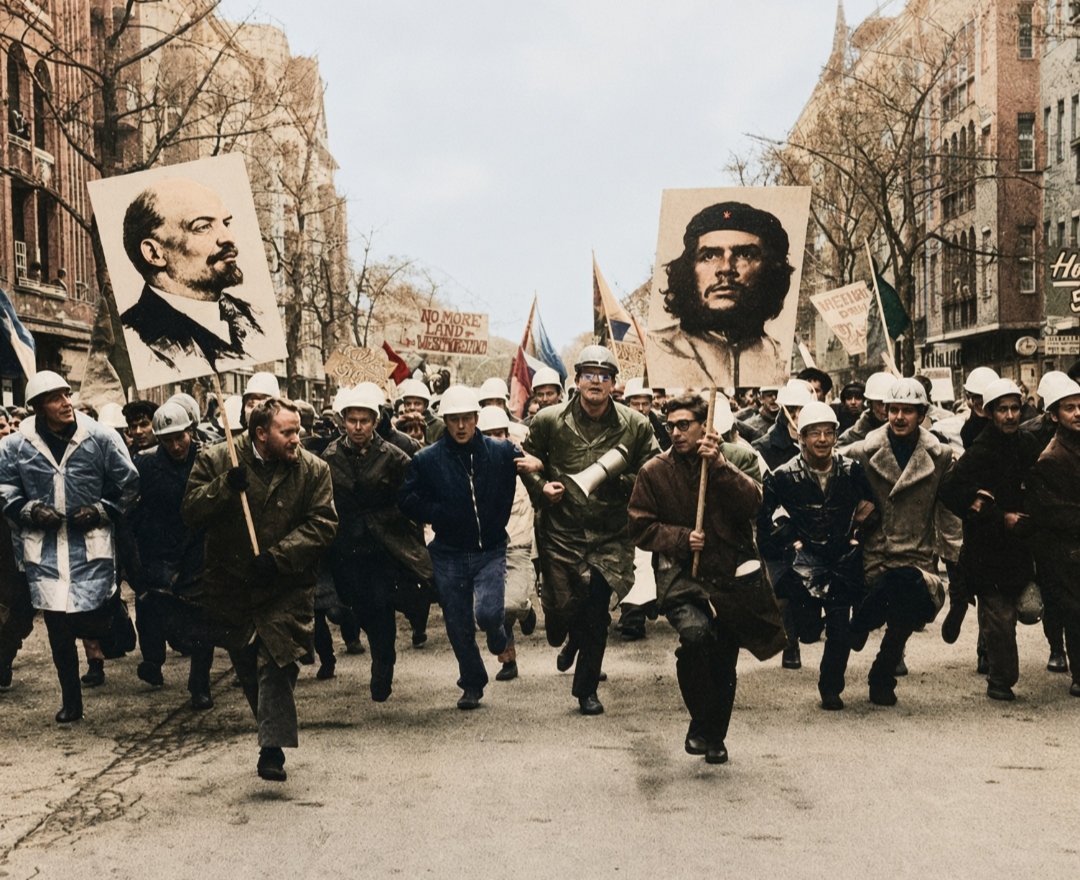
The oldschoolfileles wrote that the images from France were terrifying and described Greece as lucky to have a stable and strong government. He called on the readers to imagine Tsipras, Prokopis Pavlopoulos, Dourou, Polakis, and Yanis Varoufakis in Mitsotakis's position and then continue doing what they did. #Γαλλία #πολιτική #Ελλάδα (translated)


Maria Denaxa stated that the images presented by the minister did not come from the current protests in France. She wrote that the video had been recorded at a demonstration for Palestine in Paris on 22/10/2023, citing Brut as a source, and requested that the post be corrected. https://t.co/ttXc0MluhU #Γαλλία #Διαμαρτυρίες #Παλαιστίνη (translated)

Constantinos Bogdanos referred to images of assimilation from France, to second and third generation immigrants who loved their new homeland, to the moderation of Islam, and to grateful refugees. He wrote that these, in his opinion, justified the Greek rulers, who had filled Greece with such settlers. https://t.co/fqTD37xTEz #Μετανάστευση #Πολιτισμός #Ελλάδα (translated)

"We are very disturbed by these images." The U.S. government is "very disturbed" by the images of the attack on an American photojournalist from the Washington Post by Israeli settlers in the occupied West Bank, U.S. Secretary of State Marco Rubio said yesterday, Saturday, urging Israel to "crack down" on such incidents. #Ισραήλ #ΔυτικήΌχθη #Εποικισμός (translated)
Maria Denaxa described the images as the "hunger games" of European reality and wrote that demonstrators were starting a march towards the west of Paris. She estimated that barricades would be set up later along the route and mentioned that the gendarmerie was following right behind them. https://t.co/GkzWqh1Ld6 #Διαδήλωση #Παρίσι #Ευρώπη (translated)


Zastro wrote that the death of Georgios Vardinogiannis closed a historical cycle in Greek football. He described him as an imposing and contradictory personality, with old-fashioned values, who clashed with his environment and, as he noted, at times became trapped in his stubbornness. Recalling images from his presence at Leoforos and OAKA, Zastro also referred to his characteristic mustache, suits, and tinted glasses. In a memorial post, he recorded him as Georgios Vardinogiannis (1936–2026). https://t.co/TCS9mtLdB7 #ποδόσφαιρο #ελληνικόποδόσφαιρο #ιστορία (translated)

Amalia challenged the leftist narrative regarding the participation of women in the Democratic Army of Greece (DSE) during the Civil War, arguing that their enlistment did not necessarily indicate emancipation. She cited data indicating that about 10,000 women served in the DSE, approximately a quarter of its total strength. Of these, she wrote, 30% participated in combat units while the rest worked in the rear. At the time of the posting, 3,000 of the women were "Slavo-Macedonians." Amalia mentioned that these women were connected to the Anti-Fascist Women’s Front of Macedonia (AFŽ), which was established in Skopje on December 14, 1944, and functioned as the women's section of the NOF. The NOF, she wrote, was founded in Skopje in April 1945 with the initiative and support of Tito and, after an agreement between the KKE and Tito, was incorporated into the DSE. She argued that these organizations aimed for the incorporation of Greek Macedonia into the "Yugoslav Republic of Macedonia." Amalia stated that after the Stalin-Tito split in 1948, the KKE established the Nationwide Democratic Women’s Union (PDEG), as it could no longer control the AFŽ. According to the posting, the first event of the PDEG took place on October 25, 1948, in Kallithea Prespa, with 44 women, seven of whom were "Slavo-Macedonians." Chrysa Chatzivassiliou was elected president, who, as she wrote, was described in a misogynistic manner by party officials. She also cited a report by Nikos Zachariadis to Stalin on October 17, 1950, regarding the condemnation of Chatzivassiliou by the 3rd Conference. Regarding the other 7,000 women, Amalia argued that the majority were forcibly recruited. She referenced Markos Vafeiadis's estimate that from mid-1947, recruitment into the DSE had become "entirely violent" and that volunteers did not exceed 10%. She also cited research by the author Tasoula Ververioti on the educational level of women, as well as testimonies about difficult living conditions, shortages of clothing and hygiene products, and health issues. She added that many had suffered sexual assaults. As sources, Amalia cited works by Tasoula Ververioti and Margarita Lazaridou, as well as material from the Philip Hiliou Archive at the ASKI. In the end, she mentioned Mirka Ginova (Irene Gkin), Katina Andrejeva (Andreopoulou), Afrodita Dovalovska, and Jordana Slatnikova, along with their places of origin. #Γυναίκες #Αριστερά #Ιστορία (translated)


The account redcentre.gr reported that, after Olympiakos's impressive away victory in Marseille, at the Velodrome, the team's coach showed in the locker room the glove of Stefan Ortega. He described the images as beautiful. #olympiacosfc #olympiacos https://t.co/NC1Jyw16bL #Ολυμπιακός #Μασσαλία #ποδόσφαιρο (translated)

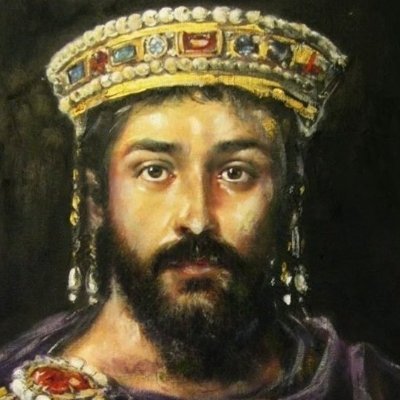
The article states that, after the massacres on Chios in 1822, women and children were transported as captives to the slave markets of Smyrna and Constantinople. It invoked a letter sent that spring from Constantinople by Dutch diplomat Gaspar Testa, in which he described captured children and women from Chios, some of whom had papers with the name and address of their owners. According to the post, by May 1, 1822, more than 41,000 slave ownership documents, known as "teskeredes," had been issued. The article mentioned that, according to the French-language newspaper of Smyrna, Spectateur Oriental, by May 10, customs duties for about 40,000 slaves had been paid at the city's customs. It also cited English sources, stating that the population of Chios before the destruction was approximately 110,000: about 20,000 fled or remained on the island to cultivate mastic, approximately 45,000 were killed, and the rest were sold as slaves. The post stated that the attack began on March 30, 1822, and that, according to the orders attributed to the Sultan, boys aged 3–12 and women aged 12–40 would be captured, while the others would be slaughtered. It described rapes, torture, and murders of civilians, as well as women who committed suicide or resisted to avoid capture. Citing the account of the priest Welsh from the English embassy in Constantinople, the article noted that about 500 women from Chios were sold in the fish market and that their prices ranged from 100 groats to 3 pounds per person. It added that similar scenes unfolded in Smyrna, where women and children were transported in chains and sent to the homes of those who had bought them. Finally, it cited Chian journalist Panagiotis Xenakis and "The Machine of Time," mentioning that the island remained devastated for years after 1822. #Χίος #ΕλληνικήΕπανάσταση #Σκλαβιά (translated)

Forecast Weather Greece reported that cars were swept into the sea in Rhodes and described the images as dramatic. According to the post, the video was by Axantek. https://t.co/YzL3t1cTO5 #Ρόδος #καιρός #φύση (translated)


Karditsastakra described the country as plunged into chaos under Mitsotakis and claimed that they had taken everything and had destroyed all the infrastructure. He wrote that he had never seen such disorder and characterized the images as unbelievable. https://t.co/qvNMePYHtV #Ελλάδα #Μητσοτάκης #Χάος (translated)


Antonis Morgan K wrote that images of Olympiacos lions standing over Panathinaikos fans, whom he referred to with a derogatory term, had been repeated many times over the years. He added that the images captured the "two different worlds" that had been mentioned. #OlympiacosFC #paofc https://t.co/JqEBoC0CqV #Ολυμπιακός #Παναθηναϊκός #ποδόσφαιρο (translated)

Maria Denaxa argued that the conflicts in France should not distract from the wave of anger that, as she wrote, continued to intensify despite police violence, mutilations, and what she perceived as efforts to downplay it. She warned that announcements and images projected by media outlets and paid social media accounts would represent attempts at manipulation. Denaxa stated that 86% of citizens rejected Emmanuel Macron and claimed that he had misled 60 million citizens. She also wrote that "Macronism" had ended as it had begun, with violence against those who demanded a better future, leaving behind, in her view, a France in an irreversible state. At the same time, she argued that Europeans should not tolerate leaders who, as she claimed, undermine the future of their children and may lead them into an irrational war to maintain their positions. She named Macron, Ursula, and Merz, saying that they were trying to create the impression that everything was going smoothly, while the situation in France was at risk of spiraling out of control. #Γαλλία #Ευρώπη #Μακρονισμός (translated)

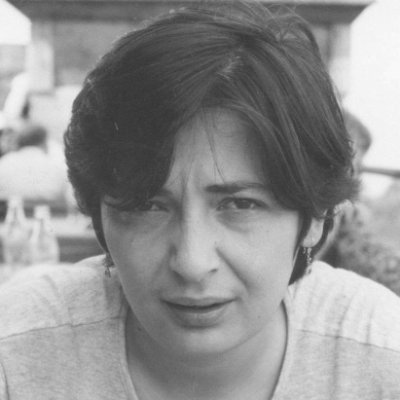
Aretí Athanasiou wrote that those who saw someone kissing pictures and making large crosses in front of the cameras should be cautious and fearful. As an example, she mentioned the president of LAOS, Filippos Kampouris, who, as she wrote, was arrested for fraud against e-EFKA and tax evasion, with the damage exceeding 5,000,000 euros. https://t.co/cd2pbZvJl6 #πολιτική #σκάνδαλο #λαός (translated)