WRLD

Search

#Anarchism
RomanaTomc Wrld summary 2d
Slovene politician and economist

The post’s author claimed that anarchist, anti-European protests were spreading across the EU and that Slovenia was next, allegedly under the pretext of education reform. They said the NGOs involved received EU funding to undermine the EU and governments they opposed, and called for the funding to stop. https://t.co/R6aT5dXPsy #Anarchism #Protests #EUDebate #SI #EU


2795
Wierd Duk ܦܝܪܬ ܕܘܟ Wrld summary Oct 18
Dutch journalist and historian

Weird Duk referred to an earlier explanation at News of the Day about the riots in France and the forces that he believes fueled the anarchistic uprising. https://t.co/nfLTmGHL23 #Frankrijk #rellen #anarchisme (translated)

2799
BFMTV Oct 15

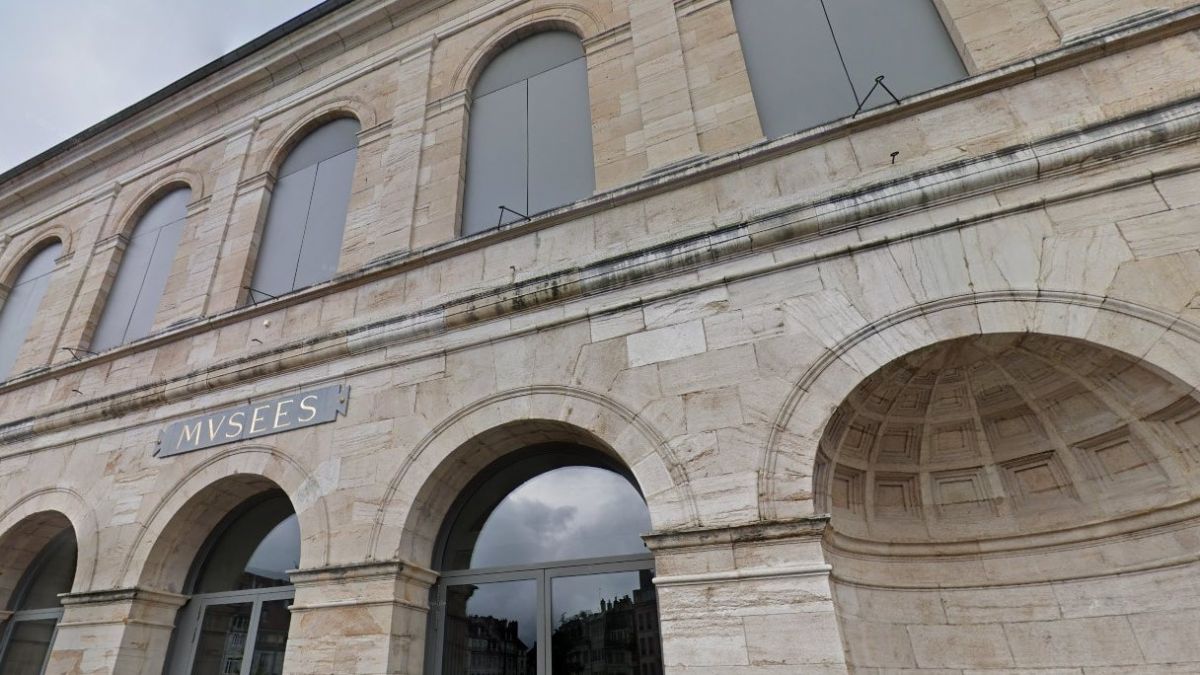
The town hall of Besançon has changed the title of the exhibition on anarchist thought from "Neither God nor Master" to "Art in Freedom" in order to remove any political dimension, causing controversy among the opposition who see it as an attempt to depoliticize the event. #Besançon #Exposition #Anarchisme (translated)

www.bfmtv.com
"Ni Dieu ni maître": la mairie de Besançon modifie le titre d'une exposition sur la pensée anarchiste
2453
Eppo Tjuchem Wrld summary Oct 11

Eppo Tjuchem wrote that people he referred to as Antifa supporters and anarchists had given him the middle finger during the housing protest yesterday. He said they remained unrecognizable behind scarves and hoods and acted anonymously tough in front of a reporter. #Woonprotest https://t.co/gmAvOaXFo0 #Antifa #Protest #Anarchisme (translated)

3043
Il Messaggero Oct 3

An Italian anarchist has been arrested in Rome on charges of terrorism for possessing instructions on how to prepare explosive devices and sabotage essential public services. #terrorismo #anarchismo #Roma (translated)

www.ilmessaggero.it
Roma, regole per preparare bombe nel cellulare: arrestato un anarchico con l'accusa di terrorismo
1996
ANSA.it Oct 3

An Italian anarchist has been arrested in Rome on charges of terrorism after instructions for making explosives and sabotaging essential public services were found on his cell phone. #Terrorismo #Anarchismo #Roma (translated)

www.ansa.it
Regole per bombe nel cellulare: arrestato anarchico, accusa di terrorismo
1996
Deník N Sep 10

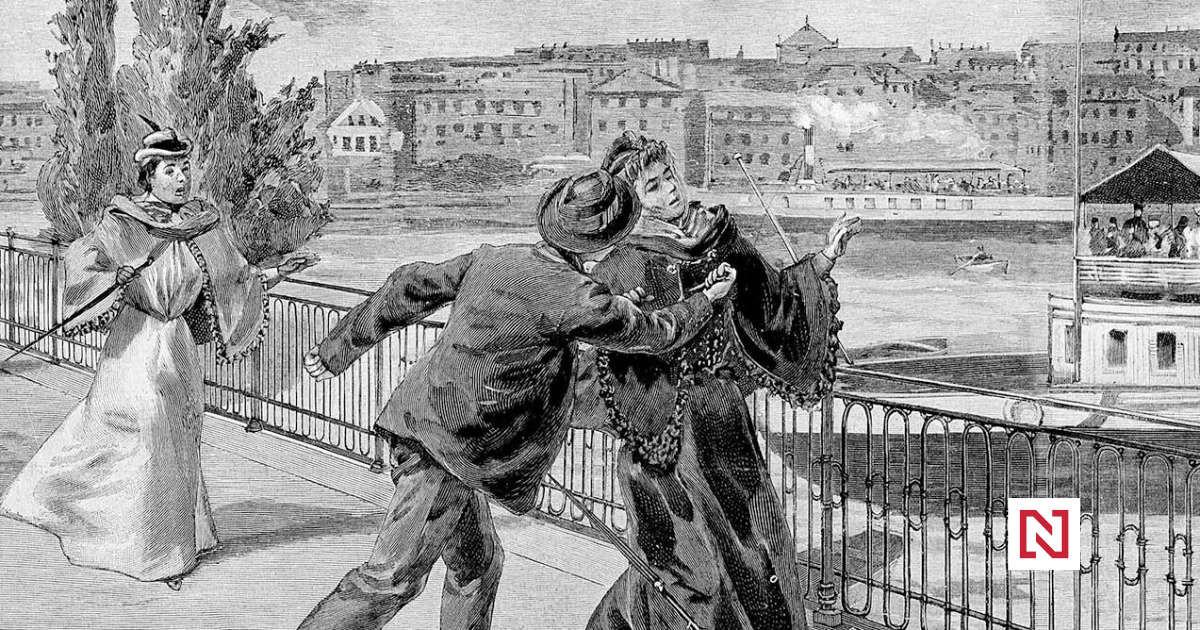
Mladý anarchista Luigi Lucheni v roce 1898 zavraždil rakouskou císařovnu Alžbětu v Ženevě pilníkem, čímž se stal součástí širšího fenoménu první vlny terorismu, který cílil na významné osobnosti pod vlivem radikálních ideologií. #historie #terorismus #anarchismus

denikn.cz
Rád bych zabil někoho důležitého, řekl si mladý muž a probodl císařovnu Sisi pilníkem
9453
Arno Wellens Wrld summary Aug 27
Dutch journalist

Je kunt als ambtenaar dus oproepen tot het breken van de wet en in georganiseerd verband plegen van strafbare feiten. Waar moet ik me dan nog wel ergens aan houden? Ik krijg een New Kids gevoel (eerste film). Trek dan al het gezag met anarchisme omver. https://t.co/u1JDY8TGNz #anarchisme #rechtsstaat #wetgeving

13036
Tom Nesky Aug 6

Metaphysics of the Solitary Absolute: Philosophical and Legal Analysis of the Thesis of Solitary Amorality ​The Thesis of Solitary Amorality, formulated by Tom Nesky under the banner of the Axiom of Relationality of Law and Being, constitutes a radical challenge to classical and contemporary normative theories. Its central premise—stating that law, morality, and the category of crime are not inherent properties of reality, but artificial products of social relations—requires a rigorous deconstruction at the intersection of legal positivism, phenomenological existentialism, ontological anarchism, and monistic metaphysics. This paper attempts a systematic analysis of the intellectual pillars of this thesis, examining its internal coherence, genealogical roots, and consequences for the understanding of freedom and human subjectivity. ​The Systemic Construction of Crime vs. Pure Theory of Law ​The first pillar of the Thesis of Solitary Amorality, designated as Nullum Crimen Sine Systema, posits that law does not discover pre-legal categories of evil, but brings them into existence through the very act of establishing a boundary of permissibility. This assertion exhibits a profound convergence with 20th-century legal positivism, particularly with Hans Kelsen's Pure Theory of Law (Reine Rechtslehre). Kelsen advocated for a methodological purification of legal science from ethical, sociological, and political elements, defining law as a normative system founded upon a hypothetical basic norm (Grundnorm). ​In the Kelsenian view, the legal system functions as a coercive apparatus devoid of inherent moral value. A crucial point of intersection with Nesky's thesis is the elimination of the traditional dualism between acts that are inherently evil (mala in se) and acts prohibited merely by law (mala prohibita). Kelsen argued that an act becomes unlawful solely when a legal norm attaches state-enforced coercion to it. Unlawfulness is not an ontological property of the act, but the result of a relationship of normative imputation. This implies that the law does not penalize an act because it is intrinsically evil; rather, an act is considered evil solely because it has been subjected to systemic penalization. ​This clash became prominent during the debates surrounding the Nuremberg trials, where positions based on natural law and legal positivism collided. While prosecutors such as Robert Jackson invoked universal moral norms (mala in se) as the basis for punishing criminals despite the previously binding positive law of the Third Reich, Kelsen pointed out the theoretical inconsistency of such an approach. He argued that judging on the basis of retroactive law (ex post facto) constitutes a breach in the systemic coherence of positivism, even if it might be justified by political and historical necessity. ​Nesky's project imparts an existential dimension of oppression to this structure, bringing it close to the critique of the state formulated by Friedrich Nietzsche. Nietzsche famously described the state as "the coldest of all cold monsters," which devours the individual's singularity and imposes herd morality upon them. The gaze of the state, mediated through the Other, paralyzes the sovereignty of the individual and forces them to navigate within arbitrarily designated normative boundaries. Every stroke drawn across the chaos of reality establishes a boundary, and every boundary instantly creates the concept of its transgression. ​The Paradox of the Systemic Cage and the Limits of Ontological Anarchism ​The second pillar of the thesis—The Paradox of the Systemic Cage—points to the impossibility of escaping the system through rules alone. Every attempt to negate the existing order, from establishing anarchist structures to escaping into geographical isolation, immediately transforms into a new system whose primary imperative becomes the defense and maintenance of that very absence of rules. This process of structural looping finds its reflection in the current of ontological anarchism formulated by Hakim Bey (pseudonym of Peter Lamborn Wilson). ​Bey, drawing on a synthesis of Nietzscheanism, Situationist theory of the spectacle, and chaos esotericism, recognized that classical revolutions striving to overthrow the state inevitably reproduce structures of domination, becoming new forms of confinement. As an alternative, he proposed the concept of the Temporary Autonomous Zone (TAZ). TAZ is a tactic for creating temporary, non-hierarchical spaces that deliberately evade formal structures of state control. The key element of TAZ is its ephemerality: before the system can map, define, and absorb the autonomous zone, it must dissolve itself and relocate to another point in space-time. ​Attempts to transform TAZ into Permanent Autonomous Zones (PAZ) immediately encounter the paradox noted by Nesky. The need to defend and codify freedom within a lasting community gives rise to internal rules, mechanisms of exclusion, and hierarchy. For this reason, Murray Bookchin criticized ontological anarchism (calling it "lifestyle anarchism" or "bourgeois anarchism") for its lack of political realism and its flight from systemic struggle against capital and state in favor of aesthetic rebellion. The convergence of these perspectives demonstrates that freedom defined as reactive resistance to a system remains structurally determined by it. ​The Dissolution of the Relational Mirror: The Existential Gaze and the Collapse of Morality ​The third pillar of the thesis, designated as The Dissolution of the Mirror (L'Autre), posits that good and evil require the presence of an external witness and judge. This assertion represents a direct application of Jean-Paul Sartre's existential phenomenology, particularly his analysis of the Gaze (le look / le regard) and the relation to the Other (l'Autre) presented in Being and Nothingness. ​Sartre illustrates the constitutive role of the Other through an analysis of the voyeur's situation. At the moment of complete absorption in the act of peeping through a keyhole, the subject's consciousness is pre-reflective—the voyeur does not reflect on himself; his consciousness completely merges with the act being performed. Only the sudden sound of footsteps in the hallway shatters this unity. The voyeur realizes that he himself is seen, and is instantly paralyzed by shame. ​For Sartre, shame is not a purely internal emotion; it is shame of oneself before the Other. The Gaze of the Other objectifies the free subject (being-for-itself—pour-soi), freezing them into a specific role and moral evaluation (being-for-others—pour-autrui). As Ellie Anderson points out, Descartes' formula "I think, therefore I am" is replaced in Sartre by "I feel shame, therefore Others exist." The Gaze of the Other marks the birth of social morality, wherein the individual learns to view themselves from a third-person perspective. ​This existential dynamic corresponds to the Nietzschean genealogy of "bad conscience." Nietzsche demonstrates that morality and guilt are products of the forced internalization of human instincts that could no longer be discharged outwardly due to social barriers. Forced into the constraints of society, man turns against himself, creating an internal judge (conscience) modeled on the external tyrant. ​This vision also resonates with the classical theory of Thomas Hobbes. In Leviathan, Hobbes explicitly declares that in the state of nature, where there is no common power, there is no law, and where there is no law, no notion of injustice exists. Concepts of good, evil, justice, and property are attributes of man living in society, not in solitude. Removing the social fabric reverts the individual to a state in which theft and injury lose their raison d'être due to the absence of relational reference to the Other. #philosophy # metaphysics # thesis # morality

714
Roman Maca Wrld summary Jul 16

To je tím, s kým se taháš. S nějakým anarchistickým bohémem, rudým bolševickým nokem... 🤷‍♂️🤷‍♂️🤷‍♂️ https://t.co/d2GE7r0fki #anarchismus #politika #bohémskýživot

12527
Aktuálně.cz - Víte, co se právě děje Jun 16

Na primátora Poznaně Jacka Jaśkowiaka dnes zaútočil anarchista, který ho zasáhl dortem a způsobil mu škodu na obleku, což vyvolalo protesty vůči jeho politice a následné hlasování o důvěře, v němž primátor uspěl. #Polsko #primátor #anarchismus

zpravy.aktualne.cz
„Pýcha předchází pád!“ Na primátora Poznaně zaútočil anarchista dortem
8381
NOS Jun 16

Italská policie zadržela sedm lidí kvůli sabotování železničního provozu během Zimních olympijských her v Itálii, kde byli obviněni z příslušnosti k anarchistické skupině a z podkopávání demokratického pořádku, přičemž kvůli jejich útoku na vysokorychlostní trať vznikly škody až 455 000 eur. #sabotage #Winterspelen #anarchisme

nos.nl
Zevental opgepakt voor sabotage op het spoor tijdens Winterspelen in Italië
10177
Giorgia Meloni Wrld summary Jun 16
Prime Minister of Italy since 2022

L’operazione della Polizia di Stato che ha portato alla disarticolazione di una rete anarco-insurrezionalista attiva sul territorio nazionale infligge un duro colpo a chi pensa di poter minacciare la sicurezza della Nazione, colpire infrastrutture strategiche e mettere in #Polizia #SicurezzaNazionale #Anarchismo #IT

8142
Il Fatto Quotidiano Jun 16

Sette persone, legate a un gruppo anarchico, sono state arrestate a Roma con l'accusa di terrorismo per un attentato alla rete ferroviaria dell'Alta velocità, avvenuto il 14 febbraio 2026, che ha causato gravi danni e ritardi nei servizi, con il coinvolgimento di esplosivi rudimentali. #Terrorismo #Anarchismo #AltaVelocità

www.ilfattoquotidiano.it
Roma, sette arresti per terrorismo: “Gruppo anarchico responsabile del sabotaggio all’Alta velocità a febbraio”
11375
L
lastampa.it Jun 16

Sedici persone sono state arrestate in tutta Italia, cinque delle quali sono in carcere e due ai domiciliari, in un'inchiesta per terrorismo anarchico legata a sabotaggi sulle linee dell'Alta velocità, rivendicati come parte di una campagna contro il potere, l'alimentazione della speculazione edilizia e le Olimpiadi di Milano-Cortina. #Terrorismo #Anarchismo #Sabotaggio

www.lastampa.it
Terrorismo anarchico, sette arresti in tutta Italia per i sabotaggi sull’Alta velocità
11375
Stephen Miller Wrld summary Feb 25
American political advisor and Trump administration official (born 1985)

An entire American political party refusing to stand for the principle that actual American citizens matter more than illegal alien invaders is a degree of nihilism, anarchism and extremism that defies categorization. -

339086